
⚡ Quick Answer
You should have about one thumb-width of space between your longest toe and the front of your running shoes. This translates to roughly half an inch (1.2 to 1.5 cm) of clearance to account for natural foot swelling and forward foot slide during high-impact runs.
Key measurements for running shoe fit:
- Thumb-width clearance: Distance from your longest toe to the shoe tip.
- Half size up: Standard adjustment from your casual dress shoe size.
- Forefoot spread: Enough width to wiggle all toes freely without friction.
Essential fit rules to remember:
-
✓
Shop for shoes late in the afternoon. -
✓
Wear your running socks when testing fit. -
✓
Never expect tight running shoes to stretch.
Lacing up your running shoes should feel secure, but your feet need room to breathe. When Steven Tyler laces up for a long training session, the very first thing checked is toe clearance. If your toes brush the front wall, you are setting yourself up for painful miles ahead.
Most runners make the mistake of buying the exact same size they wear in casual sneakers. Running mechanics demand extra physical space because gravity and high-impact strikes alter your foot structure with every single stride you take.
📌 Key Takeaways
-
→
One thumb-width of space is the gold standard for toe clearance. -
→
Feet swell significantly during endurance runs due to increased blood flow. -
→
Black toenails occur when toes repeatedly smash against restricted shoe fronts. -
→
Sizing up by a half size is standard practice for most runners.
How Much Toe Room Should You Have in Running Shoes?
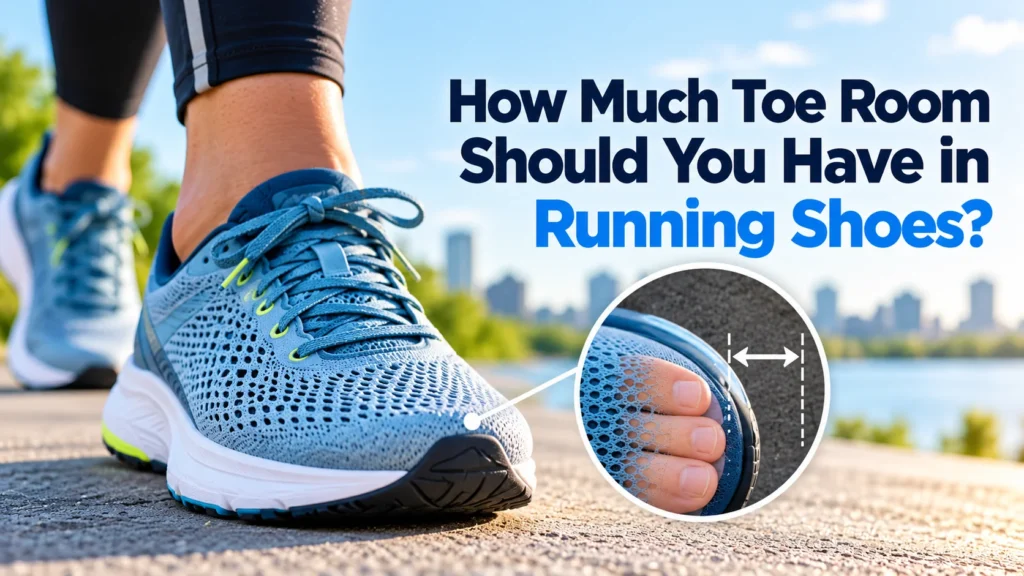
You need about one thumb-width of space between your longest toe and the inside front of your running shoes. This gap equals roughly half an inch, giving your foot safe operating room. Without this buffer, every step forward forces your toes to absorb repetitive frontal impacts.
Your longest toe is not always your big toe. Many runners have a second toe that extends further out, and that specific digit determines your true size requirement. Always measure from your absolute longest point to avoid painful friction hotspots.
0.5 in
Ideal Front Clearance
0.5 Size
Typical Size Increase
10 mm
Minimum Width Buffer
You might be wondering if your running shoes should fit snugly like climbing shoes. Here is why that approach fails: running requires dynamic foot expansion. If your toes cannot spread naturally, your balance suffers and blisters form rapidly.
Why Running Shoes Require More Space Than Casual Shoes
Running shoes demand extra room because high-impact cardiovascular exercise changes foot dimensions. When you run, your foot elongates and widens under the intense pressure of bearing two to three times your body weight with every stride.
Furthermore, blood rushes to your extremities as your core temperature rises during long workouts. This vascular response causes your feet to swell by up to a full half-size during a marathon or long weekend jog.
📋 Factors Driving Running Shoe Space Needs
-
Impact elongation: Feet flatten and stretch forward upon ground contact. -
Vascular swelling: Heat and exertion increase overall foot volume. -
Socks thickness: Technical running socks add bulk compared to bare feet. -
Downhill momentum: Gravity slides your foot forward into the front wall.
Research highlighted in [AUTHORITY LINK NEEDED: Podiatry association study on foot expansion and footwear fit] shows that failing to accommodate this natural expansion leads directly to structural foot fatigue.
What Happens If Your Running Shoes Have Too Little Toe Room?
Running in restrictive shoes triggers immediate physical consequences. When your toe box is cramped, your toes jam against the upper mesh with every stride, causing immense pressure on your nail beds.
This repetitive trauma results in subungual hematomas, commonly known as runner’s black toenails. Blood pools beneath the nail, causing severe pain and eventual nail loss if the footwear sizing is not corrected.
⚠️ Warning
Tight toe boxes also cause painful blisters between your toes, nerve compression like Morton’s neuroma, and chronic bunion aggravation.
According to guidelines from [AUTHORITY LINK NEEDED: American Academy of Orthopaedic Surgeons guide on running injury prevention], proper shoe volume is vital for maintaining long-term musculoskeletal health.
How to Test Your Running Shoe Fit Correctly
Testing shoe fit requires a specific routine to ensure accuracy. Never rely on sitting down in a retail store; your feet change shape entirely when supporting your standing weight.
🔢 Step-by-Step: Running Shoe Fitting Routine
-
1
Shop late in the day
Your feet naturally reach maximum daily volume in the afternoon.
-
2
Wear your running socks
Match the exact sock thickness you plan to use on runs.
-
3
Press your thumb down
Verify horizontal thumb-width clearance at the longest toe.
-
✓
Test movement dynamically
Jog lightly to confirm heels do not slip and toes remain free.
That simple test ensures you never purchase restrictive running gear. Now let’s explore common misconceptions about shoe dimensions.
What Most People Get Wrong About Running Shoe Sizing
A widespread myth is that running shoes will stretch out over time just like leather dress shoes. Modern running shoes use synthetic mesh and engineered foams that retain their structural dimensions throughout their lifespan.
Another common error is assuming that a wide width solves a short shoe problem. If your toes touch the front wall, buying a wider model (like a 2E) adds side volume without adding the necessary length. You must size up instead.
Recommended Product
Altra Lone Peak 8 Trail Running Shoe
★★★★☆ Highly rated on Amazon
Featuring a signature foot-shaped toe box, this shoe allows your toes to relax and spread naturally, eliminating cramped forefoot pressure during long runs.
As an Amazon Associate, we earn from qualifying purchases.
Understanding these sizing nuances ensures your training remains pain-free. Check the quick answers below for any remaining questions.
Frequently Asked Questions
How much space should you have in the toe box of running shoes?
You should have about one thumb-width of space between your longest toe and the front of the shoe. This equals roughly half an inch, giving your feet safe clearance during impact.
Should your toes touch the front of running shoes?
No, your toes should never touch the front wall of running shoes. Contact against the front wall causes bruised toenails, blisters, and severe forefoot discomfort.
Why do running shoes need to be bigger than regular shoes?
Running shoes need extra room because feet expand significantly under high-impact stress and warm temperatures. Sizing up prevents painful rubbing and pressure.
How to tell if running shoes are too small?
If you feel your toes hitting the front tip when running downhill, or if you develop blisters on your tips or toenails discoloration, your shoes are too small.
Do running shoes stretch over time?
Modern running shoes do not stretch significantly over time. Synthetic uppers and supportive foam midsoles retain their original dimensions throughout their mileage lifespan.
Are wide toe box running shoes better?
Wide toe box running shoes are better for runners who experience forefoot crowding or bunions. They allow natural toe splay, improving stability and overall running comfort.
How often should running shoes be replaced?
Running shoes should generally be replaced every 300 to 500 miles. Worn-out midsoles lose cushioning, which changes your stride mechanics and foot placement inside the shoe.
Getting your toe room right transforms every run into a comfortable experience. Protect your feet by prioritizing proper clearance over standard casual sizing conventions.
Take out your current running shoes right now and check your thumb-width clearance to ensure your next workout is completely pain-free.


Steven is a former sportsperson and now a full-time businessman and research writer. He is the mastermind of this site, and he created this site to help people who need specialized shoes for different activities. When he was a sportsperson, he was very passionate about different types of shoes for his sports purpose. The passion he had for shoes at that time now turned into his profession. Besides his shoe business, he loves sharing his knowledge and experience with people and helping them maintain healthy feet.
More Posts