
Quick Answer
No, running shoes don’t need extra arch support for every runner. Most people can start with comfortable running shoes that fit their feet and movement patterns. Additional arch support may help with certain foot problems, discomfort, or stability needs, but it isn’t automatically necessary for flat feet or high arches. The American Podiatric Medical Association’s running shoe guidance explains how foot type can help inform footwear choices.
When might you need additional support?
- Persistent arch discomfort: Your feet hurt during or after running despite a comfortable fit.
- Excessive inward movement: A stability shoe feels noticeably more comfortable than your current neutral shoe.
- Existing foot conditions: A qualified clinician recommends support for a diagnosed problem.
- Inadequate shoe fit: Your current shoes don’t accommodate your foot shape or prescribed inserts.
- Improved comfort: A properly fitted supportive option feels better during a gradual running trial.
Best starting point
- No foot pain: Start with a comfortable neutral or moderately supportive running shoe.
- Recurring pain: Get the cause assessed before purchasing stronger arch supports.
Arch support sounds like something every running shoe should have. But more support doesn’t always mean more comfort, and foot shape alone rarely tells the whole story.
In this guide, I’ll explain when arch support helps, when it may be unnecessary, and how to compare running shoes without getting distracted by marketing claims.
What Is Arch Support in Running Shoes?
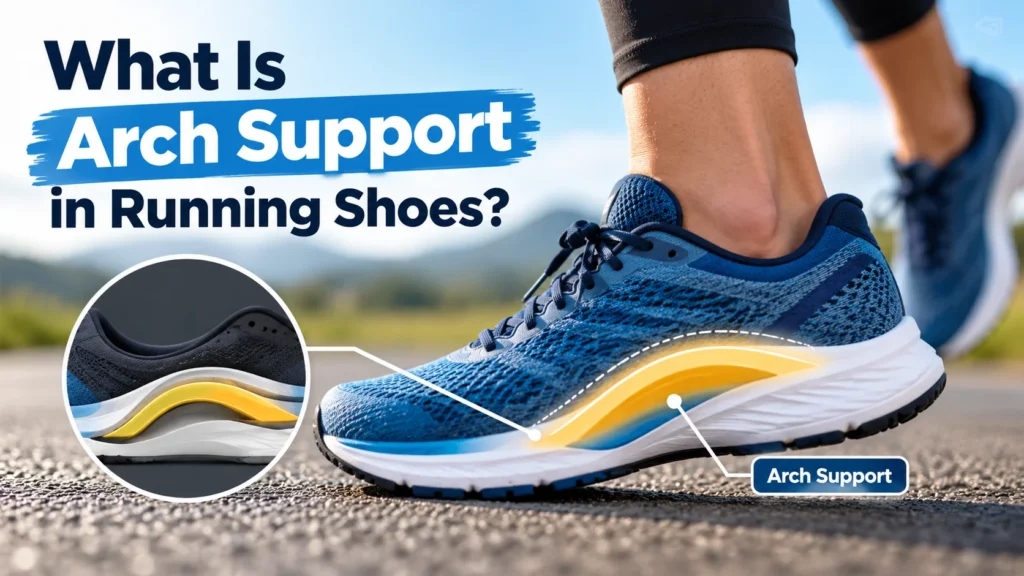
Arch support refers to a shoe or insert feature that supports part of the curved underside of your foot. It can change pressure distribution and influence how your foot moves inside the shoe.
Your foot arches help manage forces as you walk and run. They work with muscles, ligaments, tendons, and joints rather than acting as rigid structures.
Simple definition: Arch support is a feature intended to provide contact or structural assistance beneath the foot’s arch. It is not the same thing as cushioning or motion-control technology.
Where Does Arch Support Come From?
Running shoes can provide different kinds of underfoot support. Understanding these differences makes shopping easier.
- Contoured footbed: An insole shaped to follow the foot’s natural curves.
- Supportive midsole: Foam and shoe geometry that help provide a stable platform.
- Stability technology: Structural features designed to guide foot movement.
- Removable arch-support insert: An additional footbed that replaces the original insole.
- Custom orthotic: A device designed or prescribed to address individual needs.
A heavily cushioned shoe isn’t necessarily an arch-support shoe. Similarly, a stability shoe doesn’t always contain a pronounced arch-shaped footbed.
That distinction matters when deciding whether you need a different shoe or simply a better-fitting insert.
Do All Runners Need Arch Support?
No. Not every runner needs extra arch support. If your shoes fit comfortably and you run without recurring symptoms, you may not benefit from additional inserts.
Running naturally involves foot movement and changing pressure beneath the arch. The goal isn’t to eliminate normal movement.
The American Academy of Orthopaedic Surgeons’ athletic shoe guidance describes neutral and stability footwear as different options for different running needs.
Does Your Arch Height Determine Your Shoe Type?
Arch height can provide useful information, but it isn’t a complete shoe-selection test. Two runners with similar-looking feet can move differently and prefer different shoes.
| Foot type | Reasonable starting option | Important consideration |
|---|---|---|
| Low or flat arches | Comfortable neutral or stability shoes | Flat feet don’t automatically require inserts. |
| Medium arches | Neutral daily trainers | Comfort and fit remain more useful than arch height alone. |
| High arches | Cushioned neutral shoes | Extra-high inserts aren’t automatically better. |
Think of this table as a starting point rather than a prescription. Foot comfort, movement, training history, and existing symptoms can change the best choice.
How Can You Tell If You Need More Arch Support?
You may benefit from additional support if a properly fitted shoe or insert consistently improves comfort. However, no single symptom proves that your arches need supporting.
Five Signs Worth Paying Attention To
- Recurring arch pain: Discomfort develops repeatedly during running or afterward.
- Heel discomfort: Pain beneath the heel affects your normal activities or training.
- Frequent midfoot pressure: Your shoes create uncomfortable contact beneath the arch.
- Discomfort with inward rolling: You notice excessive movement alongside pain or instability.
- Better comfort with support: A suitable alternative shoe or insert reduces discomfort without creating new pressure points.
These signs can have several causes, including footwear fit, training changes, and underlying injuries. They aren’t reliable self-diagnostic tests for arch problems.
How to Check Your Support Needs at Home
I would start by comparing comfort and fit before purchasing an expensive orthotic. A simple, controlled comparison can reveal whether your current shoes are part of the problem.
- Inspect your shoes: Check uneven wear, damaged midsoles, and distorted heel areas.
- Check the fit: Make sure your toes have room and your heel stays comfortably secure.
- Try a comparable shoe: Compare neutral and stability designs at a specialty running store.
- Walk before running: Notice pressure beneath the arches and along the sides of your feet.
- Start with a short run: If you’re pain-free, gradually test the shoes over familiar distances.
- Watch for new symptoms: Stop using an option that causes rubbing, numbness, or worsening pain.
A wet-foot imprint may offer a rough idea of arch shape. It cannot reliably determine how much support your feet need while running.
Do Flat Feet Need Arch Support for Running?
Flat feet don’t automatically need arch supports. Many people with low arches run comfortably without specialized inserts or corrective footwear.
Flat feet describe a low or absent visible arch, especially while standing. They don’t necessarily indicate injury or abnormal running mechanics.
What About Overpronation?
Pronation is the natural inward movement of the foot after landing. Overpronation generally describes greater inward movement than expected, although there is no universal threshold that identifies an injury risk.
Some runners who experience discomfort with excessive movement prefer stability shoes. Others remain comfortable in neutral designs.
Modern stability shoes can use wider platforms, sidewalls, shaped midsoles, and guidance systems rather than a rigid raised arch.
The key is whether the design improves your running experience. Don’t assume that visible pronation must always be corrected.
Should You Use Insoles for Flat Feet?
Insoles can be useful when they address a specific comfort or clinical need. They shouldn’t be considered compulsory equipment for everyone with flat feet.
A 2025 systematic review of foot orthoses in runners with asymptomatic flat feet found that certain posted orthoses influenced running mechanics, while simple arch-support-only devices showed no significant changes in its analyzed outcomes.
That doesn’t prove one insert is best for everyone. It reinforces the importance of choosing support based on individual needs.
Do High Arches Need More Arch Support?
High arches don’t necessarily require high-profile arch inserts. Some runners with high arches benefit more from comfortable cushioning and adequate room through the midfoot.
High-arched feet can sometimes be relatively rigid and may distribute pressure differently. But arch height alone doesn’t tell you how your foot absorbs impact.
What If You Underpronate?
Underpronation, also called supination, describes a running pattern that places relatively more load toward the outside of the foot. It is sometimes associated with high arches, but the two aren’t interchangeable.
If you underpronate, a neutral shoe with comfortable cushioning may be a sensible starting point. A motion-control shoe designed to reduce inward movement may not suit your needs.
- Choose cushioning that feels stable rather than excessively soft.
- Avoid inserts that create uncomfortable pressure under the arch.
- Check whether your heel feels secure while running.
- Allow sufficient room across the forefoot and midfoot.
For persistent outside-foot pain or ankle instability, seek an individualized assessment rather than guessing at an arch-support level.
Arch Support vs. Neutral vs. Stability Running Shoes: What’s Different?
Neutral shoes, stability shoes, and arch-support inserts solve different footwear problems. They are not interchangeable products.
| Option | Main feature | Verified example |
|---|---|---|
| Neutral shoe | Cushioning without a traditional corrective stability system | Brooks Ghost 17 — 10 mm heel-to-toe drop |
| Stability shoe | Geometry and structural features that help guide movement | ASICS GT-2000 14 — 3D Guidance System |
| Arch-support insole | Removable insert offering a particular support contour | Superfeet Run Support Medium Arch |
| Custom orthotic | Individually designed device for specific needs | Clinician-prescribed foot orthosis |
The Ghost 17 provides a neutral running platform, while the GT-2000 14 adds stability-focused design features. An insert changes the footbed inside an existing compatible shoe.
These differences are more useful than looking for a product labeled simply “maximum arch support.”
Can Too Much Arch Support Cause Foot Pain?
Yes, excessive or poorly positioned arch support can create discomfort. An insert may place pressure against sensitive areas or change how your foot fits inside the shoe.
A taller arch contour isn’t automatically healthier. The correct support level depends on fit, tolerance, and the reason you’re using it.
Warning Signs of Poorly Fitted Arch Supports
- Sharp or persistent pressure beneath the midfoot
- New rubbing, blisters, or skin irritation
- Numbness or tingling after inserting a footbed
- Uncomfortable crowding across the top of the foot
- New heel, knee, or ankle discomfort during running
Remove an insert that causes new symptoms and reassess the fit. If pain continues, consult a qualified healthcare professional.
Don’t try to force your feet to tolerate sharp pain while breaking in an insert.
Does Arch Support Prevent Running Injuries?
Arch support may help some runners, but it cannot guarantee injury prevention. The research shows that shoe and orthotic effects depend on the person and the outcome being studied.
A 2024 systematic review of running foot orthoses found changes in plantar pressure and certain biomechanical measures. However, those changes do not automatically prove better performance or fewer injuries for every runner.
Different studies have also reported potential injury-prevention benefits from orthoses. The evidence doesn’t establish that all healthy runners should wear them.
Can Arch Support Help Plantar Fasciitis?
Supportive footwear or inserts may help some people manage plantar heel pain. The best option depends on the cause of pain, symptom severity, and overall treatment plan.
Plantar fasciitis involves irritation or degeneration affecting the plantar fascia, a strong tissue band beneath the foot. Morning heel pain is a common symptom, but other conditions can cause similar discomfort.
Reducing aggravating activity, adjusting footwear, and following clinician-recommended exercises may be appropriate. An insert alone isn’t a guaranteed cure.
Do You Need Custom Orthotics?
Most runners don’t need custom orthotics simply because they run regularly. Custom devices are more relevant when an individualized clinical assessment identifies a reason for them.
The APMA’s guidance on orthotics and shoe inserts recommends considering activity, medical conditions, and shoe compatibility.
People with diabetes, reduced sensation, circulation problems, or other significant foot conditions should get professional advice before trying new inserts.
How Do You Choose Running Shoes With the Right Support?
Choose running shoes by combining comfort, secure fit, movement, and intended use. Don’t buy extra arch support simply because a shoe advertisement promises better alignment.
Step 1: Start With Your Current Comfort
Ask whether your existing shoes cause pain or feel unstable. If not, you may have no practical reason to increase arch support.
Step 2: Find Your Correct Shoe Size
Your toes should move comfortably without hitting the front of the shoe. The heel should remain secure without excessive rubbing.
Try shoes with your usual running socks. Measure both feet because size and width can change over time.
Step 3: Compare Neutral and Stability Shoes
Test both categories if you’re unsure what works best. Focus on natural movement, midfoot comfort, and how secure the shoes feel.
A stability model isn’t necessarily better for every flat-footed runner. A neutral shoe can also provide a stable ride through its overall geometry.
Step 4: Check the Arch Area
Stand and walk in each pair before jogging. Notice whether the midfoot feels gently supported, unrestricted, or uncomfortably pressured.
A noticeable arch bump isn’t proof of superior support. Comfortable contact matters more.
Step 5: Consider Removable Insoles
If you use orthotics, check that the original insole can be removed. The replacement should sit flat without making the shoe excessively tight.
Don’t automatically stack a full-length orthotic on top of the existing insole.
Step 6: Test the Shoes Gradually
Start with walking and short, easy runs. Observe your comfort during activity and afterward.
Change only one major footwear variable at a time. That makes it easier to recognize which adjustments help.
Step 7: Recheck Worn Shoes
Running shoes gradually lose their original cushioning and structural properties. Their useful lifespan depends on mileage, terrain, body weight, running mechanics, and shoe construction.
Inspect midsoles, outsoles, and fit regularly. Don’t assume that new arch inserts can fully restore a worn-out running shoe.
What Are the Biggest Arch Support Mistakes Runners Make?
The most common mistake is treating arch support as a universal upgrade. More expensive or more aggressive support doesn’t automatically mean better running.
- Buying by arch height alone: Static foot shape doesn’t fully explain running movement.
- Choosing the strongest insert: High support can introduce uncomfortable pressure.
- Ignoring shoe width: Tight footwear can cause discomfort unrelated to arch support.
- Changing shoes too quickly: Sudden footwear changes may alter how tissues are loaded.
- Treating recurring pain with shopping: Persistent pain deserves assessment rather than repeated product experiments.
- Using inserts in unsuitable shoes: Poor compatibility can affect fit and stability.
My preferred approach is simple: identify the problem before buying the solution. This avoids replacing an otherwise comfortable shoe with one that introduces new issues.
What Should You Do If Your Arches Hurt While Running?
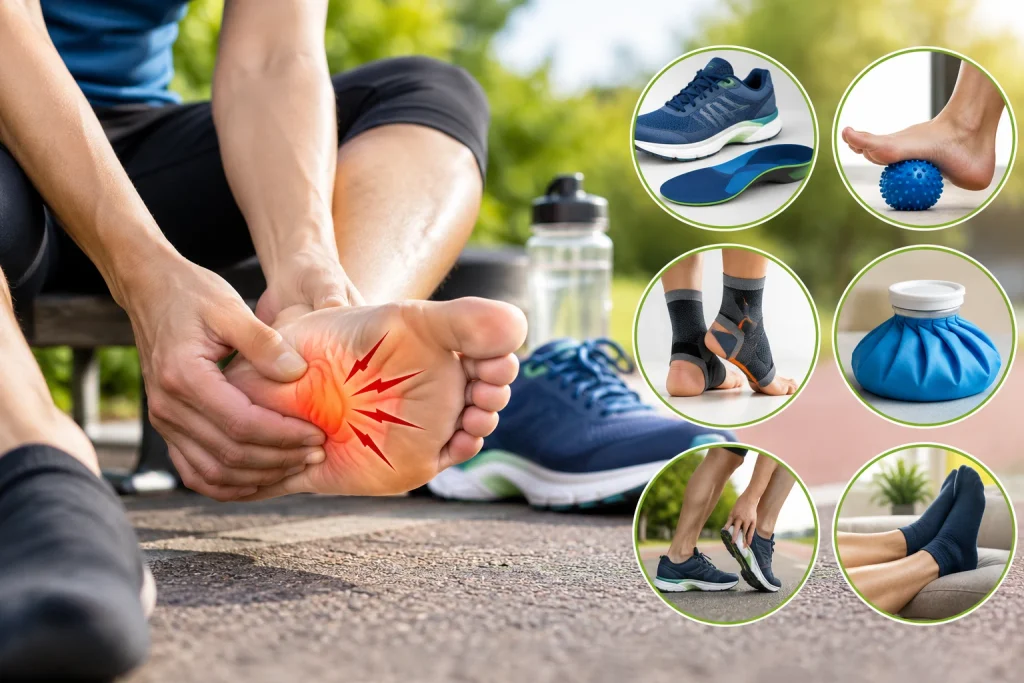
If arch pain develops during running, reduce or stop the activity that aggravates it. Repeatedly running through worsening pain may turn a manageable problem into a longer interruption.
Arch pain can arise from plantar fascia problems, tendon irritation, bone stress injuries, or other conditions. Shoes are only one possible contributing factor.
Practical Next Steps
- Reduce painful running activity and avoid workouts that worsen symptoms.
- Check whether the pain began after a change in footwear, training volume, or terrain.
- Inspect your shoes for poor fit or unusual wear.
- Use comfortable footwear while symptoms settle.
- Seek a podiatrist or sports-medicine assessment if discomfort persists or returns.
Seek prompt medical care for severe pain, significant swelling, inability to bear weight, or pain following an injury. Don’t rely on arch supports to diagnose or treat these symptoms.
Which Running Shoes and Arch-Support Insoles Are Worth Considering?
If you’re comparing footwear, these three options address different needs. I would start with the shoe category that suits your comfort and movement rather than assuming everyone needs an insert.
Product note: The ratings below are editorial use-case assessments, not verified customer ratings or claims of personal product testing. Fit and comfort will vary between runners.
🏆 Neutral Daily Trainer
Brooks Ghost 17
★★★★☆ 4/5 — Editorial fit score
A neutral daily running shoe with DNA LOFT v3 cushioning and a 10 mm heel-to-toe drop. I’d consider it a starting option for runners who want comfortable cushioning without traditional motion-control features.
🛡️ Stability-Focused Option
ASICS GT-2000 14
★★★★☆ 4/5 — Editorial fit score
A stability running shoe featuring ASICS’ 3D Guidance System and FF BLAST MAX cushioning. I’d consider it when a runner prefers extra movement guidance while maintaining a cushioned daily-training feel.
👟 Removable Insole Option
Superfeet Run Support Medium Arch
★★★☆☆ 3/5 — Editorial fit score
A contoured running insole intended for compatible athletic shoes with removable footbeds. I’d consider it for runners who specifically want a medium-arch insert, provided its shape and volume fit comfortably.
Affiliate disclosure: As an Amazon Associate, we may earn from qualifying purchases. Product availability, sizes, and pricing may change.
Frequently Asked Questions About Running Shoe Arch Support
Do Running Shoes Already Have Arch Support?
Most conventional running shoes provide some underfoot structure through their midsoles and footbeds. However, not every running shoe includes a pronounced arch-support contour. Neutral and stability designs may feel different beneath your feet, so judge whether the shoe provides comfortable support rather than relying on the category label alone.
Are Running Shoes Without Arch Support Bad for Your Feet?
No. Running shoes without aggressive arch support aren’t inherently harmful. Some runners prefer flexible, neutral designs and experience no problems. Others benefit from more structured footwear. The important factors are appropriate fit, comfort, individual foot function, and a gradual transition when switching to substantially different shoe designs.
Do Beginners Need Arch Support in Running Shoes?
Beginners don’t automatically need additional arch supports. A comfortable, well-fitting running shoe is usually a reasonable starting point. New runners should also increase training gradually because sudden mileage changes can contribute to discomfort regardless of footwear. Persistent foot pain warrants assessment rather than immediately purchasing stronger inserts.
Should You Buy Insoles for New Running Shoes?
Not necessarily. First try the shoes with their original footbeds. If they feel comfortable and cause no recurring problems, additional insoles may offer little practical benefit. If you use prescribed orthotics or need a specific support contour, select shoes with adequate room and removable original insoles.
Can Arch Supports Weaken Your Feet?
There isn’t enough consistent evidence to conclude that ordinary arch-support use inevitably weakens healthy feet. Long-term effects can depend on the device, activity, and individual condition. Foot and lower-leg strengthening may still be useful, but don’t discontinue prescribed orthotics without discussing the reason for their use with your clinician.
Final Verdict: Do Running Shoes Really Need Arch Support?
Running shoes need comfortable, appropriate support, but they don’t all need additional arch-support inserts. Many runners do well with neutral shoes, while others prefer stability features or benefit from an individually selected orthotic.
Start with proper sizing, a comfortable fit, and a shoe that works with your running pattern. Add extra support only when it solves a real problem or follows a qualified professional’s recommendation.
Your next step: Compare how neutral and stability shoes feel during a short, comfortable trial before spending money on specialized arch-support products.


Steven is a former sportsperson and now a full-time businessman and research writer. He is the mastermind of this site, and he created this site to help people who need specialized shoes for different activities. When he was a sportsperson, he was very passionate about different types of shoes for his sports purpose. The passion he had for shoes at that time now turned into his profession. Besides his shoe business, he loves sharing his knowledge and experience with people and helping them maintain healthy feet.
More Posts