
Quick Answer
To protect running shoes from rain, clean them before applying a shoe-compatible water-repellent treatment, wear moisture-wicking socks, avoid deep puddles, and dry your shoes naturally after each wet run. For frequent cold-weather running, consider waterproof running shoes. However, breathable shoes often work better in warm, rainy conditions. The REI running-in-the-rain guide also recommends quick-drying socks and suitable footwear.
6 Quick Steps to Protect Your Running Shoes
- Clean your shoes: Remove dirt before applying protection.
- Choose a suitable spray: Check compatibility with mesh, fabric, or leather.
- Apply the treatment: Follow the manufacturer’s application and drying instructions.
- Wear quick-drying socks: Choose synthetic fibers or merino wool instead of cotton.
- Avoid standing water: Walk around deep puddles and flooded surfaces.
- Dry shoes naturally: Remove insoles and use airflow instead of direct heat.
Important: Water-repellent spray can reduce surface wetting, but it cannot turn ordinary mesh running shoes into completely waterproof footwear.
Rain doesn’t have to ruin your favorite running shoes. However, wet mesh, muddy outsoles, and slow drying can make your next run uncomfortable.
The best approach is to protect your shoes before heading outside and care for them afterward. This guide covers practical rain-protection methods, useful products, and common mistakes to avoid.
What Does Protecting Running Shoes from Rain Actually Mean?
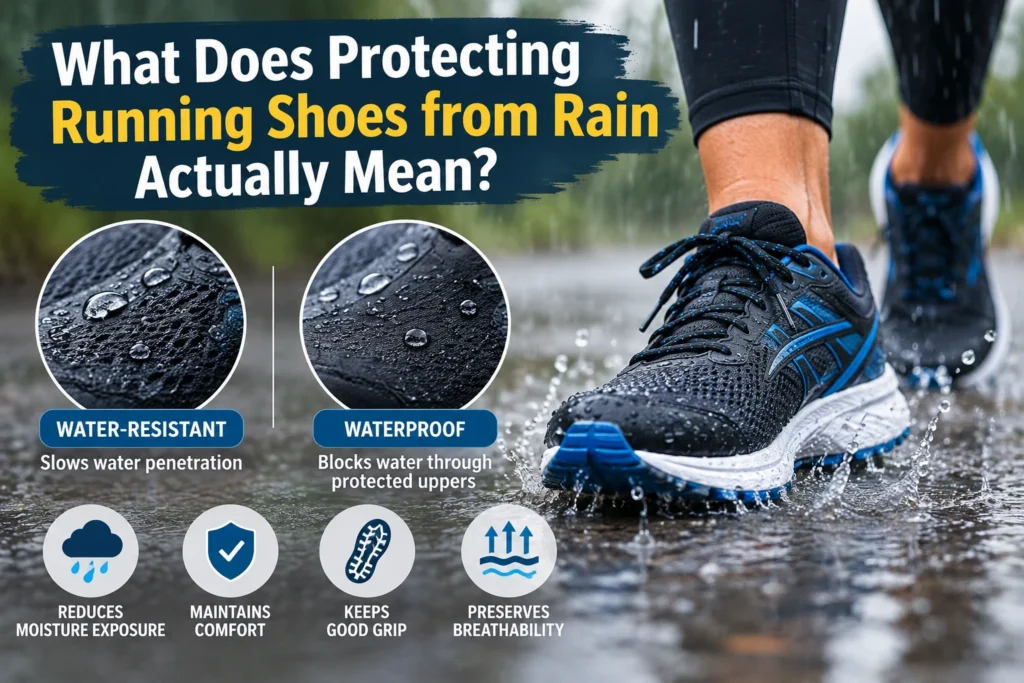
Protecting running shoes from rain means reducing unnecessary moisture exposure while maintaining their comfort, grip, and breathability. It also involves cleaning and drying them correctly after wet runs.
Most everyday running shoes use breathable fabric or engineered mesh. Those materials help heat and moisture escape, but rainwater can pass through them.
Water-Resistant vs. Waterproof Running Shoes
Water-resistant shoes slow water penetration. Waterproof running shoes use a protective barrier, often a waterproof-breathable membrane, to resist water entering through the upper.
Neither design guarantees completely dry feet. Water can still enter around the ankle opening, particularly in heavy rain or deep puddles.
| Feature | Water-Resistant | Waterproof |
|---|---|---|
| Light rain | Limited protection | Strong protection through the upper |
| Heavy rain | Water may penetrate | Better resistance, but ankle entry remains possible |
| Breathability | Generally higher | Often lower |
| Drying | Often faster | Can take longer once soaked inside |
| Best use | Warm weather and occasional showers | Cold, consistently wet conditions |
In my view, the most useful question isn’t whether a shoe is waterproof. It’s whether that protection suits the weather and the way you run.
How Do You Protect Running Shoes from Rain Before Running?
The best preparation starts with clean shoes, appropriate water-repellent protection, and suitable socks. These measures are especially useful when light rain is expected.
1. Clean Your Running Shoes First
Water-repellent treatments work best when applied according to the product instructions. Dirt and residue can interfere with how evenly a treatment covers the surface.
- Remove loose dirt using a soft brush.
- Wipe fabric uppers gently with a damp cloth.
- Use a cleaner appropriate for the shoe material.
- Remove excess cleaning product before treatment.
- Follow the protectant’s instructions concerning wet or dry application.
Never assume every spray requires completely dry footwear. For example, some Nikwax treatments specifically require damp shoes during application.
2. Apply a Running-Shoe-Compatible Water-Repellent Spray
A suitable spray can help water bead on the shoe’s outer material rather than immediately soaking into it. This is commonly called durable water repellency, or DWR.
Before applying any product, check whether your running shoes contain mesh, synthetic fabric, leather, or specialty membranes.
- Read the shoe manufacturer’s care recommendations.
- Choose a treatment approved for the upper material.
- Test it on a small, hidden section.
- Apply according to the product label, preferably in a well-ventilated location.
- Allow the treatment to dry or cure fully before running.
Some treatments can alter the color or finish of footwear. Testing a hidden area helps identify potential problems before treating both shoes.
Practical tip: Do not spray shoe interiors, traction surfaces, or skin unless the product instructions specifically allow that application.
3. Wear Moisture-Wicking Running Socks
Your socks matter almost as much as your shoes. Wet cotton tends to retain moisture, increasing discomfort during longer runs.
Choose running socks made from synthetic moisture-wicking fibers or merino wool blends.
- Synthetic socks: Often lightweight and quick-drying.
- Merino wool blends: Useful for moisture management and cooler weather.
- Seamless designs: Can help reduce rubbing around sensitive areas.
- Spare socks: Helpful when rain is likely during longer outings.
4. Consider Lightweight Running Gaiters
Running gaiters cover the opening around the shoe and ankle. They can reduce the amount of splashing water, mud, and debris entering from above.
They are particularly useful on wet trails. However, lightweight gaiters aren’t necessarily waterproof and won’t protect against submerged footwear.
5. Check Your Outsole Grip
Water protection isn’t useful if your shoes slip on wet surfaces. Inspect the outsole for excessive wear before heading out.
- Look for smooth or heavily worn tread areas.
- Remove mud trapped between outsole grooves.
- Match shoe traction to road or trail conditions.
- Reduce speed on wet tiles, painted markings, and slippery pavement.
Road running shoes and trail running shoes have different traction designs. A deeper tread isn’t automatically better on every wet surface.
How Can You Keep Running Shoes Dry While Running in Rain?
You cannot control the weather, but you can reduce unnecessary water exposure. Route selection and running habits make a noticeable difference.
Avoid Deep Puddles and Flooded Roads
Water entering over the shoe collar can soak your socks even when the upper contains a waterproof membrane. Once trapped inside, moisture may escape slowly.
- Choose routes with effective drainage.
- Avoid standing water when its depth is unclear.
- Slow down on slippery corners.
- Don’t run through floodwater, which may conceal hazards or contamination.
Choose Your Route Based on Rainfall
For light rain, ordinary running routes may work well. Heavy rainfall requires greater attention to visibility, traction, flooding, and traffic.
Consider a treadmill or indoor workout if thunderstorms, dangerous flooding, or poor visibility make outdoor running unsafe.
Keep Water from Entering Around Your Ankles
A waterproof upper cannot stop rainwater running down your legs into the shoe opening. Loose or poorly fitted rain gear can make this problem worse.
Consider rainwear that directs water away from your footwear without restricting movement. Avoid sealing the ankle area so tightly that it traps moisture or affects circulation.
Can You Waterproof Regular Running Shoes?
You can improve the water resistance of some regular running shoes, but you generally cannot make them completely waterproof. Sprays protect surface fibers without adding a sealed waterproof membrane.
Does Waterproofing Spray Work on Mesh Running Shoes?
Some water-repellent sprays are suitable for technical fabric and mesh footwear. However, large mesh openings, seams, and the shoe collar still permit water entry.
A spray may help during light showers or wet-grass exposure. It won’t reliably protect against continuous heavy rain or deep puddles.
Will Waterproofing Spray Damage Running Shoes?
Using an incompatible treatment may change fabric appearance or performance. Some products can also affect breathability or damage materials when misapplied.
Always follow both the shoe manufacturer’s recommendations and the treatment’s product label.
How Often Should You Reapply Waterproofing Spray?
There is no universal reapplication schedule. Treatment durability depends on product chemistry, shoe material, cleaning frequency, abrasion, and weather exposure.
Inspect how water behaves on clean shoe uppers. If water stops beading, consult the product instructions about cleaning and reapplying the treatment.
What Should You Do After Running Shoes Get Wet?
Remove trapped moisture promptly and dry the shoes at room temperature. Correct drying helps reduce lingering odors and avoids unnecessary heat exposure.
Step 1: Remove the Insoles and Loosen the Laces
Open the shoes to encourage airflow. Remove detachable insoles so moisture can escape from both sides.
Avoid forcefully removing components that are permanently attached.
Step 2: Remove Mud and Dirt
Use a soft brush or damp cloth to remove surface dirt. Pay attention to outsole grooves where mud can become trapped.
Do not aggressively scrub delicate mesh fabric.
Step 3: Absorb Excess Water
Place plain absorbent paper or a clean cloth inside each shoe. Replace the material once it becomes saturated.
Avoid printed paper if you’re concerned about ink transfer onto light-colored interiors.
Step 4: Air-Dry in a Ventilated Room
Set the shoes somewhere with steady air circulation. A fan providing room-temperature airflow may help moisture evaporate.
Do not use direct heat from a radiator, hair dryer, or tumble dryer. Excessive heat can affect adhesives and shoe materials.
Step 5: Confirm They’re Fully Dry
Check the toe box, heel lining, and removable insole. The outer mesh may feel dry while internal padding remains damp.
Drying can take a day or longer, depending on the shoe construction, saturation, and room conditions. Do not put damp shoes into a closed storage container.
Which Rain-Protection Methods Work Best?
The ideal method depends on the amount of rain, the temperature, and your footwear. A combination of compatible treatments, good socks, and proper aftercare is often more practical than relying on one product.
| Method | Main Benefit | Limitation |
|---|---|---|
| Water-repellent spray | Reduces surface wetting | Doesn’t seal open mesh |
| Waterproof running shoes | Blocks water through protected uppers | Can retain heat and trapped water |
| Moisture-wicking socks | Improves wet-foot comfort | Doesn’t stop rain entering |
| Running gaiters | Reduces debris and splashes entering the collar | Limited protection during submersion |
| Air-drying routine | Removes moisture after runs | Requires drying time |
Should You Buy Waterproof Running Shoes for Rain?
Waterproof running shoes make sense when you regularly encounter cold, wet weather without deep water crossings. For warm climates, breathable non-waterproof shoes can be more comfortable.
According to REI’s waterproof trail-running advice, waterproof membranes can also trap heat and moisture once water enters the shoe.
When Waterproof Running Shoes Make Sense
- Cold-weather runs with light or moderate rainfall.
- Wet grass and damp trails.
- Frequent exposure to cold, shallow surface moisture.
- Situations where additional warmth is beneficial.
When Breathable Running Shoes May Be Better
- Hot and humid rainy weather.
- Runs involving repeated deep-water crossings.
- Conditions where rapid drainage matters most.
- Runners who overheat easily.
For many everyday runners, keeping a second suitable pair available is a useful alternative. You can rotate shoes when one pair needs extra drying time.
What Mistakes Should You Avoid When Protecting Running Shoes?
Many rain-related shoe problems come from unsuitable treatments or poor drying habits. These mistakes are usually avoidable with basic care.
- Using the wrong spray: A treatment intended for leather may not suit engineered mesh.
- Skipping the spot test: Protective products can alter shoe color or finish.
- Expecting complete waterproofing: Surface sprays cannot seal every seam and mesh opening.
- Running through deep water: Water can enter around the ankle collar.
- Using direct heat: Excessive temperatures can damage adhesives and materials.
- Storing damp footwear: Trapped moisture encourages unpleasant odors.
- Ignoring worn tread: Poor grip increases slipping risk on wet surfaces.
- Reapplying too frequently: Follow the treatment label instead of repeatedly spraying without checking performance.
How Can You Make Running Shoes Last Longer During Rainy Weather?
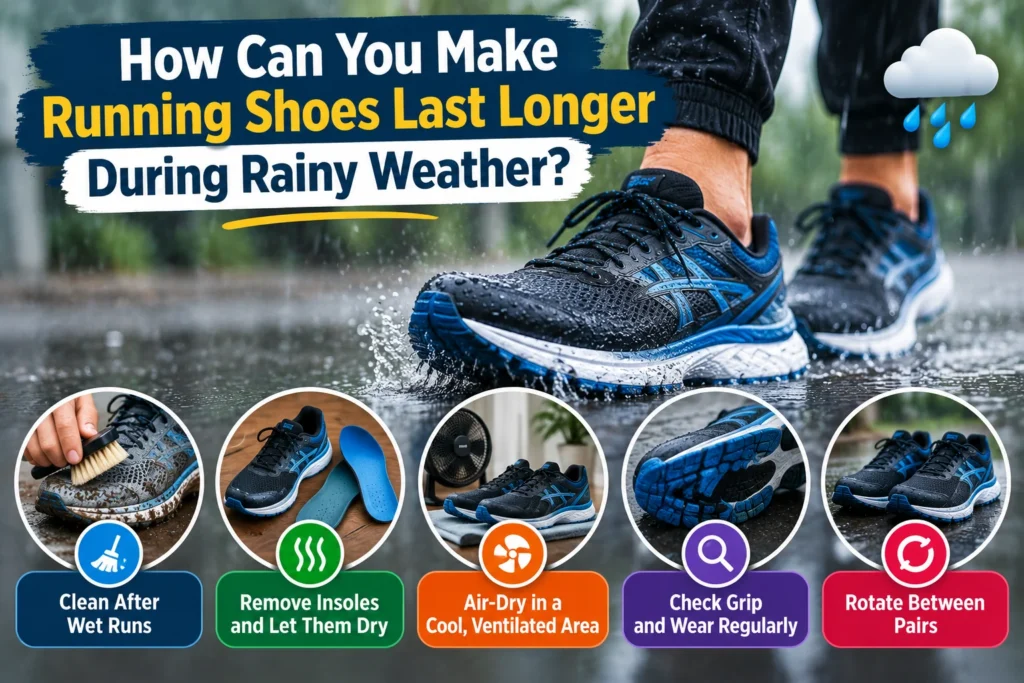
Consistent care is more important than any single protective product. Clean footwear, appropriate use, and proper drying help reduce avoidable wear.
Create a Simple Rainy-Weather Shoe Care Routine
- Inspect the outsole before wet-weather runs.
- Clean off mud shortly after returning.
- Remove detachable insoles when the shoes become soaked.
- Dry the shoes using room-temperature airflow.
- Check whether protective treatments need renewal.
- Store completely dry shoes in a cool, ventilated location.
If you run frequently, consider rotating between two suitable pairs. That provides additional drying time between wet-weather sessions.
When Should You Replace Rain-Damaged Running Shoes?
A rainy run alone doesn’t mean your shoes require replacement. However, persistent structural damage or unreliable grip deserves attention.
Check for these warning signs:
- Outsoles separating from the upper or midsole.
- Flattened or unevenly worn cushioning.
- Large holes or tears in the upper.
- Noticeably reduced traction on wet pavement.
- Unusual fit changes or damaged heel support.
- Persistent dampness or odor that proper cleaning and drying cannot resolve.
Do not rely only on mileage when deciding whether to replace shoes. Inspect their physical condition and how they feel during running.
Which Products Help Protect Running Shoes from Rain?
If you want additional protection, choose products that match the materials used in your running shoes. These two established footwear treatments address different material combinations.
Affiliate disclosure: As an Amazon Associate, we may earn from qualifying purchases. The links below open Amazon search results rather than individual product listings.
Best for Fabric and Leather Combinations
Nikwax Fabric & Leather Proof Spray-On
A water-based treatment designed for compatible fabric and leather footwear. It adds surface water repellency while helping maintain breathability.
I’d consider this for shoes with mixed fabric and leather uppers. Follow Nikwax’s cleaning and damp-application instructions, and check material compatibility first.
Best for Compatible Technical Fabrics
Gear Aid Revivex Suede & Fabric Water Repellent
A spray-on protectant intended for suede, nubuck, fabric, and certain technical footwear. Gear Aid describes it as compatible with waterproof-breathable materials.
This is another option I’d compare for fabric-based shoes. Confirm compatibility with your particular mesh or synthetic upper before application.
Frequently Asked Questions About Protecting Running Shoes from Rain
Can rain damage running shoes?
Occasional rain doesn’t automatically ruin running shoes. However, repeated soaking combined with poor drying, abrasive dirt, or inappropriate heat can affect certain materials. Clean wet shoes gently and allow them to dry naturally before wearing them again.
Can I use waterproofing spray on running shoes?
Yes, provided the spray is compatible with the shoe’s materials and manufacturer guidance. It may improve surface water repellency, but it won’t make ordinary mesh running shoes completely waterproof. Always perform a small spot test and follow the label instructions.
Should I run in waterproof or breathable shoes during rain?
Waterproof running shoes can be useful in cold, damp weather. In warm or humid conditions, breathable running shoes may feel more comfortable because moisture can escape more easily. Choose based on temperature, terrain, rainfall, and your comfort.
How long do wet running shoes take to dry?
Drying time depends on material, airflow, humidity, and how thoroughly the shoes were soaked. Some shoes may dry within a day, while heavily soaked models can require longer. Remove detachable insoles and use room-temperature airflow rather than direct heat.
Can I put wet running shoes in the dryer?
A tumble dryer isn’t recommended unless your shoe manufacturer explicitly permits it. High heat and mechanical tumbling may damage adhesives, fabrics, and cushioning components. Brooks Running’s shoe-care guidance recommends natural air-drying away from excess heat.
Final Thoughts: How Should You Protect Running Shoes from Rain?
The most effective strategy is straightforward: use suitable footwear, apply compatible water-repellent treatments when appropriate, avoid unnecessary soaking, and dry your shoes properly after rainy runs.
You don’t always need expensive waterproof running shoes. In many situations, breathable footwear, good running socks, and consistent care provide a practical solution.
Before your next rainy run, inspect your shoes, check the forecast, and choose a safe route. A few simple habits can make wet-weather running more comfortable while helping maintain your footwear.


Steven is a former sportsperson and now a full-time businessman and research writer. He is the mastermind of this site, and he created this site to help people who need specialized shoes for different activities. When he was a sportsperson, he was very passionate about different types of shoes for his sports purpose. The passion he had for shoes at that time now turned into his profession. Besides his shoe business, he loves sharing his knowledge and experience with people and helping them maintain healthy feet.
More Posts