
Quick Answer
To tell if running shoe cushioning is worn out, check whether the midsole feels flat, firm, uneven, or less responsive than before. Deep foam creases, new discomfort during familiar runs, and reduced rebound are additional warning signs. Most running shoes deserve closer inspection after 300–500 miles, although actual lifespan varies. The American Academy of Podiatric Sports Medicine explains how repeated loading can reduce midsole performance.
Six signs your cushioning may be worn out
- Flat cushioning: Your shoes feel less protective during familiar runs.
- Reduced rebound: The foam feels less responsive underfoot.
- Deep creases: The midsole shows significant compression or deformation.
- Uneven support: One shoe feels noticeably different from the other.
- New discomfort: Familiar workouts cause unusual foot or leg soreness.
- High mileage: The shoes have accumulated substantial running distance.
Best way to confirm
- Compare two pairs: Walk or jog briefly in your older shoes and a newer, similar model. Notice differences in comfort, stability, and cushioning feel.
Your running shoes may look perfectly fine while their cushioning slowly loses its original feel. That’s why judging shoe condition by appearance alone can be misleading.
I prefer checking cushioning performance, visible wear, and running comfort together. This guide explains how to recognize worn-out midsoles and decide when replacement makes sense.
What Does Worn-Out Running Shoe Cushioning Actually Mean?
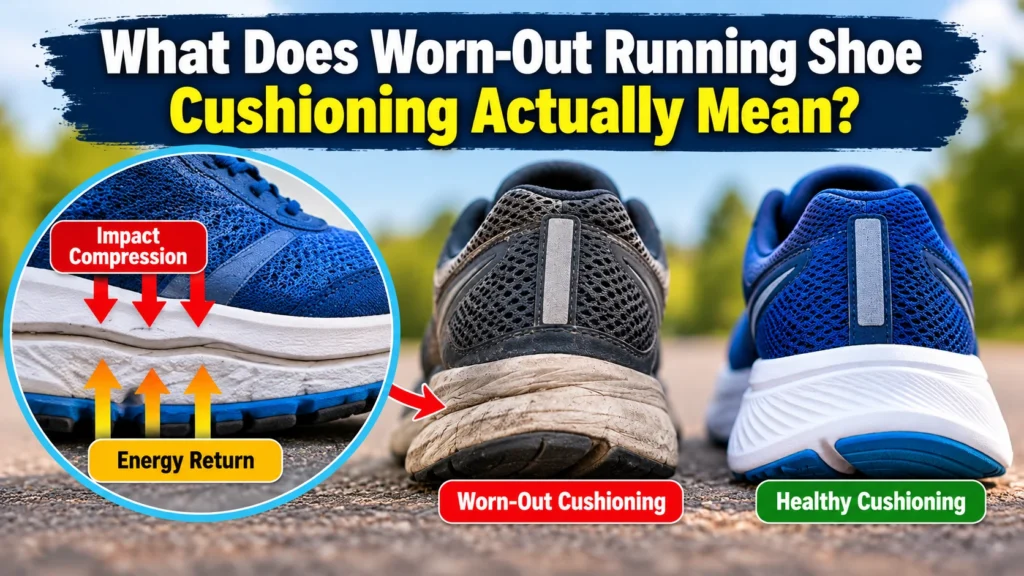
Worn-out running shoe cushioning means the midsole no longer provides its intended comfort, compression behavior, or responsiveness. Repeated loading can gradually change the structure and feel of cushioning foam.
The midsole sits between the outer rubber sole and the shoe’s upper. It’s responsible for much of the cushioning experience you notice while running.
How Does Running Shoe Cushioning Work?
Running shoes typically use specialized foam to compress when your foot lands. The material then rebounds as the load decreases.
Different foam constructions create different sensations underfoot. Some feel soft and protective, while others deliver a firmer, more responsive ride.
- Impact comfort: Cushioning helps manage the sensation of repeated foot strikes.
- Compression: Foam changes shape under body weight and impact.
- Energy return: Responsive materials return some stored mechanical energy.
- Ride consistency: A healthy midsole should feel predictable during normal use.
- Platform support: Midsole geometry also influences how stable the shoe feels.
Why Does Running Shoe Foam Wear Out?
Every running step places mechanical stress on the midsole. Thousands of repeated compressions can gradually change the material’s behavior.
Foam may become permanently compressed, lose rebound, or deform unevenly. Heat, storage conditions, running surfaces, and shoe construction can influence deterioration.
Important: Softer cushioning doesn’t automatically mean better shock protection. Midsole geometry, foam formulation, running mechanics, and individual comfort all matter.
What Are the Signs That Running Shoe Cushioning Is Worn Out?
The clearest signs involve changes in cushioning feel, midsole appearance, and comfort during familiar activities. No single symptom provides a perfect diagnosis.
1. Your Running Shoes Feel Flat Underfoot
Flat-feeling cushioning is one of the most recognizable warning signs. Your usual running route may suddenly feel harder or less comfortable.
The foam may no longer compress and rebound in the way you remember. This is especially noticeable when comparing old and newer shoes.
2. The Midsole Has Deep Creases or Deformation
Inspect the foam along both sides of the shoe. Significant wrinkles, compressed sections, or changes in shape can indicate wear.
Small creases aren’t always a problem. Some running shoe foams develop visible lines during normal break-in.
Look for creases alongside reduced comfort or uneven compression. Those combined signs deserve more attention than cosmetic marks alone.
3. Your Shoes Have Lost Their Original Bounce
Responsive running shoes often feel lively during push-off. With prolonged use, that sensation may become noticeably weaker.
However, rebound is partly subjective. A shoe designed with firm cushioning shouldn’t be judged against a soft, high-rebound model.
4. One Shoe Feels Firmer or More Compressed
Compare your left and right shoes on a flat surface. Look for differences in midsole height, shape, and compression.
Uneven loading can make one side deteriorate differently. A noticeable lean or collapse may indicate that the cushioning platform has changed.
5. Familiar Runs Cause Unusual Discomfort
Your feet, ankles, shins, or knees may feel different when cushioning performance changes. Unexpected soreness after ordinary runs can be a useful warning.
Still, pain has many possible causes. Training increases, fatigue, injuries, and changes in running technique also deserve consideration.
If pain persists, worsens, or affects walking, reduce running and seek advice from a qualified healthcare professional.
6. Your Running Shoes Have High Mileage
Most everyday running shoes are commonly assessed around 300–500 miles (approximately 480–800 kilometers). This range is a guideline rather than an expiration date.
Some shoes deteriorate earlier, while others remain comfortable beyond that range. Shoe design, usage, and running conditions influence the result.
According to Brooks Running’s replacement guidance, compressed midsoles and reduced comfort are important replacement indicators.
How Can You Test Running Shoe Cushioning at Home?
You can evaluate cushioning using several simple checks. Combining visual inspection with a short comfort comparison provides more useful information than any single test.
Step 1: Inspect the Midsole Carefully
Place both shoes on a clean, flat surface. Examine the sidewalls from the heel through the forefoot.
- Check for unusually deep creases.
- Look for compressed or distorted foam.
- Compare the heel height on both shoes.
- Check whether either shoe leans noticeably.
- Inspect exposed foam for cracking or damage.
Remember that unusual foam shapes aren’t always damage. Compare your shoes with photographs of the same model when possible.
Step 2: Perform a Gentle Thumb-Press Test
Press your thumb gently against an accessible section of midsole foam. Observe how the foam compresses and returns toward its previous shape.
Repeat the check on both shoes at corresponding locations. Significant differences in firmness or shape may suggest uneven wear.
Limitation: This isn’t a standardized measurement of cushioning performance. Different foam formulations naturally respond differently to hand pressure.
Step 3: Check Whether the Shoes Stand Evenly
Put both shoes on a level table or floor. Examine them from behind to identify leaning or asymmetric deformation.
A severely tilted shoe may have unevenly compressed cushioning or outsole wear. Either condition can change the platform’s feel.
Step 4: Compare Old Shoes With Newer Shoes
A comparison with a newer pair of the same model can be particularly useful. Keep the socks, surface, and activity similar.
- Walk briefly in your older running shoes.
- Notice cushioning comfort and stability.
- Change into your newer comparison shoes.
- Walk or jog at the same comfortable pace.
- Compare underfoot comfort and perceived responsiveness.
Try not to draw conclusions from differences between unrelated shoe categories. A firm racing shoe and a plush daily trainer naturally feel different.
Step 5: Review Your Running Mileage
Check your running app, training diary, or GPS watch. Estimate the distance accumulated since you began using the shoes.
If you run 20 miles weekly, you’ll accumulate roughly 400 miles in 20 weeks. That makes mileage tracking a useful reminder to inspect cushioning.
How Can You Tell Normal Cushioning Wear From Serious Midsole Damage?
Normal wear may include light creasing and gradual changes in comfort. More serious wear typically involves obvious deformation, instability, or reduced performance.
| Condition | Possible normal wear | Potential replacement warning |
|---|---|---|
| Foam appearance | Light surface creases | Deep compression or visible collapse |
| Cushioning feel | Comfortable and consistent | Noticeably flat or uncomfortable |
| Responsiveness | Similar to previous runs | Major decline in familiar ride feel |
| Stability | Shoes feel predictable | Noticeable tilting or uneven support |
| Running comfort | Usual comfort maintained | Repeated unexplained discomfort |
| Mileage | Low mileage with no warning signs | High mileage combined with performance changes |
Use these differences as practical observations, not laboratory results. The strongest replacement decision usually comes from several consistent warning signs.
How Many Miles Does Running Shoe Cushioning Usually Last?
Many everyday running shoes provide useful cushioning for approximately 300–500 miles. However, the exact distance depends on their construction and how you use them.
The ASICS explanation of running shoe wear also identifies this common mileage range.
What Factors Affect Cushioning Lifespan?
- Foam composition: Different materials tolerate repeated compression differently.
- Runner characteristics: Loading patterns and individual mechanics affect wear.
- Running surface: Pavement, treadmills, and trails create different demands.
- Training volume: Frequent running accumulates compression cycles faster.
- Storage: Excessive heat and moisture can damage footwear materials.
- Shoe construction: Midsole geometry and outsole design influence durability.
Does More Cushioning Mean a Running Shoe Lasts Longer?
Not necessarily. A thicker midsole doesn’t guarantee greater durability.
Foam formulation, density, construction, and use patterns matter more than stack height alone. Maximum-cushion shoes can lose their original feel despite retaining substantial foam thickness.
Can Running Shoe Cushioning Wear Out Before the Outsole?
Yes. Midsole foam can lose responsiveness before the outsole shows significant damage.
Outsoles use abrasion-resistant rubber to handle ground contact. Midsoles have a different job: managing repeated compression and influencing the running experience.
These components can deteriorate at different rates. That’s why clean tread doesn’t guarantee healthy cushioning.
What’s the Difference Between Midsole Wear and Outsole Wear?
- Midsole wear: Changes cushioning, compression, responsiveness, and platform shape.
- Outsole wear: Reduces tread depth, grip, and potentially the shoe’s contact geometry.
- Upper wear: Can affect fit, foot security, and overall comfort.
Inspect all three components when deciding whether shoes remain suitable for running. A damaged outsole can require replacement even when cushioning still feels comfortable.
Can You Restore Worn-Out Running Shoe Cushioning?
You generally cannot restore a permanently compressed midsole to its original condition. Cleaning, drying, or adding insoles won’t reverse structural foam deterioration.
A replacement insole may improve surface comfort. However, it cannot fully repair a damaged cushioning platform underneath.
Does Resting Running Shoes Restore Their Cushioning?
Some foam materials recover their shape after compression. Giving shoes time between runs may allow short-term deformation to relax.
Rest doesn’t reverse permanent material fatigue. A heavily degraded midsole won’t become new simply because you stop wearing it temporarily.
Can New Insoles Fix Dead Running Shoes?
New insoles may improve fit or underfoot comfort when the original sockliner is worn. They do not replace the entire cushioning midsole.
If the shoe feels unstable or the foam has permanently collapsed, replacement is more appropriate. Avoid using thick inserts to disguise substantial structural wear.
How Can You Make Running Shoe Cushioning Last Longer?
Good maintenance can help protect shoe materials from unnecessary damage. It cannot prevent the normal effects of repeated running loads.
- Rotate your shoes: Use different pairs when practical to spread total mileage across them.
- Air-dry after wet runs: Remove insoles when appropriate and dry shoes at room temperature.
- Avoid direct heat: Keep running shoes away from heaters, dryers, and intense sunlight.
- Clean gently: Remove dirt using mild soap, water, and a soft brush when suitable.
- Store properly: Choose a dry, ventilated space away from extreme temperatures.
- Track mileage: Use your running app or training log to schedule wear inspections.
- Use suitable shoes: Match footwear to your preferred terrain and running activities.
Proper maintenance helps preserve the materials you already have. It shouldn’t be viewed as a way to extend cushioning life indefinitely.
When Should You Replace Running Shoes Instead of Continuing to Use Them?
Replace your running shoes when cushioning deterioration noticeably affects comfort, stability, or normal running performance. Major deformation or structural damage can also justify immediate replacement.
I recommend considering several factors together instead of following a strict mileage deadline.
- Replace promptly: Significant collapse, instability, or damaged cushioning compromises normal use.
- Investigate further: New soreness appears alongside a clear change in shoe comfort.
- Monitor regularly: Shoes have high mileage but still feel consistent and show no significant damage.
- Continue cautiously: Minor cosmetic creases appear without other warning signs.
Persistent pain should never be treated as proof that your shoes are the only problem. A healthcare professional can evaluate recurring symptoms.
Can You Still Walk in Running Shoes With Worn Cushioning?
Sometimes, if the shoes remain comfortable, stable, and sufficiently grippy. Running footwear may remain useful for light casual activities after retirement from training.
Don’t reuse shoes that are severely distorted, slippery, or uncomfortable. Their condition matters more than finding another purpose for them.
Which Running Shoes Are Worth Considering When Cushioning Wears Out in 2026?

If your current shoes have lost their comfortable ride, compare replacement models that match your preferred cushioning feel. These established daily-training models offer different starting points.
Affiliate disclosure: Shopping links below may earn a commission at no additional cost to you. These are comparison suggestions, not personal wear-test results or independently rated products.
🏆 Everyday cushioning
Brooks Ghost 17
Customer rating not verified
The Brooks Ghost 17 is a neutral road-running shoe intended for daily mileage. I’d shortlist it when comparing comfortable, versatile trainers with a familiar everyday-running feel.
☁️ Soft daily training
ASICS GEL-Cumulus 27
Customer rating not verified
The GEL-Cumulus 27 is a neutral daily trainer with a comfort-focused cushioning design. I’d compare it when looking for a softer underfoot experience without switching to a specialized racing shoe.
⚡ Versatile training feel
Saucony Ride 18
Customer rating not verified
The Saucony Ride 18 is a neutral training model designed for regular road running. I’d include it in a fitting comparison when seeking a balanced daily trainer with a responsive-feeling ride.
Model availability, specifications, and prices can change. Always confirm sizing and try the shoes when possible before purchasing.
Frequently Asked Questions About Worn-Out Running Shoe Cushioning
How do I know if my running shoes have lost their cushioning?
Look for a noticeably flatter ride, deep midsole compression, uneven support, or reduced responsiveness. Compare the shoes with a newer pair of the same model when possible.
Repeated discomfort during familiar runs can provide another clue, but it doesn’t establish cushioning damage by itself.
Can running shoe cushioning wear out after 200 miles?
Yes, although 200 miles is below the commonly quoted 300–500-mile range for many daily trainers. Durability depends on foam construction, running conditions, loading, and individual use.
If significant compression or discomfort appears early, inspect the shoes rather than assuming they’ll remain suitable until a mileage target.
Does worn-out cushioning cause knee pain?
Changes in cushioning may affect running comfort and how loads feel, but worn shoes aren’t a definitive explanation for knee pain. Training volume, strength, previous injuries, and other factors may contribute.
If knee pain continues, seek professional assessment instead of relying only on new footwear.
Can running shoes look new but have worn-out cushioning?
Yes. Midsole material may change through repeated compression before substantial external wear becomes visible.
Inspect cushioning feel, shoe alignment, and mileage together. A clean outsole or undamaged upper doesn’t prove that the cushioning still performs as intended.
Should I replace both running shoes if only one has damaged cushioning?
Usually, replacing the pair makes sense when one shoe has significant midsole deterioration. Both shoes have typically experienced similar overall use, even if their wear patterns differ.
Check for unusual asymmetry and fit problems. If one shoe repeatedly deteriorates much faster, professional fitting advice may help.
Final Takeaway: How Do You Know When Running Shoe Cushioning Is Finished?
The best way to recognize worn-out cushioning is to evaluate how your shoes look, feel, and perform. Flat foam, significant deformation, and declining comfort are more informative together than mileage alone.
Use the 300–500-mile range as an inspection reminder, not an automatic replacement deadline. Compare older shoes with newer ones whenever possible.
My practical recommendation: Don’t keep running in shoes that feel unstable or noticeably uncomfortable simply because their tread still looks good.
Inspect your current shoes today, record their approximate mileage, and compare their cushioning with a fresh pair. Those simple checks can make your next replacement decision much clearer.


Steven is a former sportsperson and now a full-time businessman and research writer. He is the mastermind of this site, and he created this site to help people who need specialized shoes for different activities. When he was a sportsperson, he was very passionate about different types of shoes for his sports purpose. The passion he had for shoes at that time now turned into his profession. Besides his shoe business, he loves sharing his knowledge and experience with people and helping them maintain healthy feet.
More Posts