
Quick Answer
Yes, old running shoes can cause discomfort when their cushioning, fit, traction, or stability deteriorates. Worn-out shoes may contribute to foot soreness, heel pain, rubbing, and increased fatigue. However, discomfort does not always mean your shoes are responsible. The American Academy of Orthopaedic Surgeons’ footwear guidance recommends checking athletic shoes for wear and proper fit.
6 Signs Your Old Running Shoes May Be Causing Discomfort
- New foot soreness: Your feet ache after runs that previously felt comfortable.
- Reduced cushioning: The midsole feels unusually firm, flat, or uneven.
- Heel discomfort: Your heels feel more sensitive during or after running.
- Uneven wear: The sole or heel leans noticeably to one side.
- More rubbing: Damaged lining or a loose upper creates new friction points.
- Less stability: Your feet move around more than they did when the shoes were newer.
Quick Check
- Inspect: Check the outsole, midsole, heel counter, and inner lining.
- Compare: Walk in a newer, correctly fitted pair and notice any difference.
- Respond: Stop running through pain and seek professional advice if symptoms persist.
Those familiar running shoes may still look perfectly usable. Yet your feet might tell a different story after a few miles.
When evaluating older running shoes, I prefer to examine how they feel alongside their visible condition. This guide explains why discomfort develops, how to inspect worn shoes, and when replacement makes sense.
Why Can Old Running Shoes Cause Discomfort?
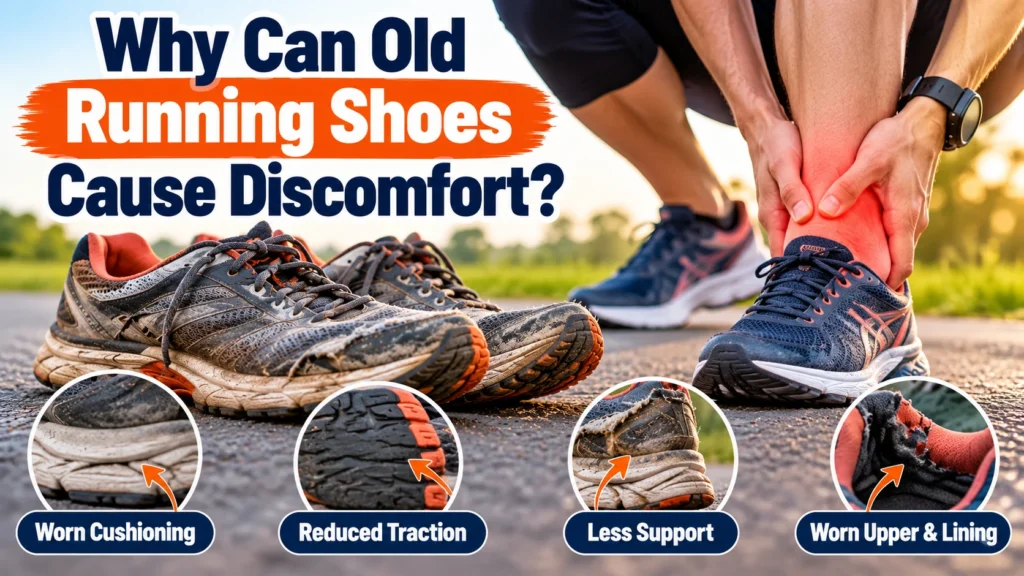
Old running shoes can cause discomfort because repeated use gradually changes their cushioning, structural support, and fit. Their foam midsoles may compress, while rubber outsoles and upper materials wear down.
These changes can affect how the shoe feels beneath your feet. However, the effects differ by shoe construction, running habits, and individual needs.
1. Cushioning Loses Its Original Feel
The midsole is the foam layer between your foot and the outsole. It cushions landings and influences how the shoe feels during running.
Repeated loading may reduce the foam’s ability to recover its original shape. Some shoes begin feeling firmer or less comfortable before obvious exterior damage appears.
- Notice whether the shoes feel harder underfoot than before.
- Look for pronounced or uneven midsole compression.
- Compare the feeling with a newer pair of similar shoes.
- Check whether discomfort increases during familiar runs.
Not every visible crease indicates a failed midsole. Focus on significant changes in comfort and performance.
2. Uneven Sole Wear Changes the Ride
The outsole is the rubber layer that contacts the ground. Over time, repeated contact wears away portions of this material.
When wear becomes substantial or uneven, a shoe may feel less stable. Severe tread loss can also reduce grip on certain surfaces.
Place both shoes on a flat table and examine them from behind. A noticeable lean, collapsed heel, or distorted sole deserves attention.
3. The Upper Stops Holding Your Foot Securely
The upper includes the fabric, overlays, laces, and surrounding structure. It helps hold your foot comfortably inside the shoe.
With use, fabric may stretch, padding may compress, and interior seams may deteriorate. This can create rubbing or unwanted foot movement.
- Loose heel: Your heel moves upward during each step.
- Worn lining: Exposed seams rub against the skin.
- Damaged upper: The material no longer holds your foot securely.
- Compressed collar: Padding around the ankle no longer feels comfortable.
A shoe can have adequate outsole tread but still fit poorly because its upper has deteriorated.
What Types of Discomfort Can Old Running Shoes Cause?
Worn running shoes may contribute to discomfort in the feet, heels, lower legs, and sometimes other joints. However, symptoms alone cannot confirm that footwear is the cause.
Training volume, running surfaces, existing injuries, and individual movement patterns also matter.
Foot and Arch Discomfort
Running in deteriorated shoes may change how pressure feels beneath your feet. Some runners notice arch fatigue or soreness after longer sessions.
However, arch pain can have several causes, including tissue irritation and training overload. Don’t assume that buying more supportive shoes will automatically fix it.
Heel Pain
Heel discomfort may occur when shoes become poorly supportive or cushioning changes. Worn footwear is one possible contributing factor.
The NHS running injury guide identifies worn-out footwear among possible contributors to heel pain.
Persistent heel pain deserves careful assessment. Conditions such as plantar fasciitis cannot be diagnosed from shoe wear alone.
Ankle, Shin, and Knee Discomfort
Older shoes sometimes feel unstable because the heel counter or sole structure has deteriorated. A runner may notice unfamiliar movement or discomfort during a run.
Still, ankle, shin, and knee symptoms often involve multiple contributing factors. Sudden mileage increases or inadequate recovery may be more important than footwear age.
Blisters and Toe Rubbing
Discomfort isn’t always related to cushioning. Torn linings, loosened uppers, and damaged heel padding can create friction.
Watch for recurring hot spots or blisters that develop in places that previously felt comfortable.
How Can You Tell If Old Running Shoes Are Causing Your Pain?
The best starting point is to inspect your shoes, review recent training changes, and compare their fit with a newer pair. No single home test can prove that a shoe caused an injury.
Use this practical inspection process before deciding what to do next.
Step 1: Examine the Outsole
Turn each shoe over and inspect the rubber tread. Look for areas where rubber has worn through or one side has become noticeably flatter.
Minor tread wear is normal. Severe or uneven wear may indicate that the shoe is nearing retirement.
Step 2: Check Midsole Compression
Look along the foam layer for distortion, deep compression, or uneven height. Compare the inside and outside edges.
Try gently pressing the midsole, but don’t rely on a squeeze test alone. Different foam materials have different natural firmness.
Step 3: Test Heel Stability
Inspect the heel counter, which supports the back of the shoe around your heel. Check for collapse, deformation, or excessive movement.
Then put on the shoes with your usual running socks. Your heel should feel secure without uncomfortable pressure.
Step 4: Compare With a Newer Pair
If you own a newer pair with similar characteristics, compare how both feel while walking. Notice differences in fit, pressure, and cushioning.
Don’t continue running just to test painful footwear. A comfortable comparison is useful, but it doesn’t establish a medical diagnosis.
Step 5: Review Your Training
Ask whether anything else changed before the discomfort began. Your running routine may provide an important clue.
- Did your weekly mileage increase recently?
- Have you started running faster or farther?
- Did you switch from softer trails to pavement?
- Are you recovering from a previous injury?
- Does the same discomfort appear without the old shoes?
These questions help prevent you from blaming every new ache on worn footwear.
Old Running Shoes vs New Running Shoes: What’s the Difference?
New running shoes generally provide their intended original fit, cushioning, and traction. Older shoes may retain some of these qualities or lose them with repeated use.
The following comparison describes common differences, not guarantees for every pair.
| Feature | New Running Shoes | Heavily Worn Shoes |
|---|---|---|
| Cushioning | Original foam performance | May feel compressed or firmer |
| Outsole | Original tread depth | May have smooth or uneven areas |
| Heel Support | Intact original structure | May become distorted or loose |
| Upper | Intact fabric and padding | May stretch, tear, or rub |
| Comfort | Depends on proper fit and design | May decline as materials deteriorate |
| Running Mileage | 0 miles at purchase | Often hundreds of miles of use |
A new shoe is not automatically more comfortable if the size or shape is wrong. Proper fit remains essential.
How Many Miles Before Running Shoes Start Causing Discomfort?
Many traditional running shoes are assessed for replacement around 300–500 miles (480–800 kilometers). However, this range is a planning guideline rather than a fixed expiration point.
The American College of Sports Medicine notes that shoe materials and use patterns affect longevity. Some shoes wear faster, while others remain comfortable beyond common replacement estimates.
How Long Does That Mean in Practice?
| Weekly Running | 300 Miles Reached | 500 Miles Reached |
|---|---|---|
| 10 miles/week | 30 weeks | 50 weeks |
| 15 miles/week | 20 weeks | 33 weeks |
| 20 miles/week | 15 weeks | 25 weeks |
| 30 miles/week | 10 weeks | 17 weeks |
These calculations assume consistent weekly mileage in one pair. They estimate accumulated distance rather than predicting when discomfort will begin.
What Makes Running Shoes Wear Out Faster?
Shoe longevity depends on several interacting factors. A runner who wears one pair for every activity may experience different wear than someone who uses separate shoes.
- Surface: Rough pavement and abrasive terrain can accelerate outsole wear.
- Frequency: More running sessions accumulate wear faster.
- Construction: Foam compounds and outsole materials vary in durability.
- Other activities: Daily walking and gym use contribute additional wear.
- Storage: Excessive heat, moisture, and poor storage conditions may damage materials.
Track mileage, but also inspect how the shoes perform. Distance alone cannot tell the whole story.
Can Old Running Shoes Cause Discomfort Even If They Look Fine?
Yes. Running shoes can lose some cushioning performance before the upper or outsole develops obvious damage.
The midsole experiences repeated compression during running. Its condition may not be visible without comparing the shoe’s original shape and feel.
The American Academy of Podiatric Sports Medicine explains that midsole materials can lose their recovery properties through repeated loading.
This is why appearance alone is an unreliable way to judge remaining life. Comfort, fit, mileage, and structural condition all matter.
When Should You Replace Running Shoes Instead of Trying to Fix Them?
Replace running shoes when significant structural wear develops or they no longer provide a comfortable, secure fit. Cleaning or changing laces cannot restore a deteriorated midsole.
Some small problems are worth addressing before discarding an otherwise functional pair.
Problems You May Be Able to Fix
- Loose laces: Adjust the lacing pattern or replace worn laces.
- Dirty shoes: Clean the uppers using the manufacturer’s recommended method.
- Wet shoes: Air-dry them away from direct heat.
- Minor rubbing: Check sock fit, lacing, and shoe sizing.
Problems That Usually Call for Replacement
- Outsole rubber worn through to the underlying foam.
- A severely compressed or distorted midsole.
- A collapsed heel counter that no longer holds your heel securely.
- A torn upper that allows excessive foot movement.
- Recurring discomfort associated with obvious structural wear.
A replacement pair should address the actual problem. Buying the same poorly fitting design may simply repeat the discomfort.
Can You Keep Wearing Old Running Shoes for Walking?
Sometimes, but only if they remain structurally sound and comfortable. Shoes that are unsuitable for running are not automatically safe or comfortable for walking.
Walking places different demands on footwear, yet adequate grip and fit still matter. Avoid repurposing shoes with severe tread loss, collapsed heels, or damaged structural components.
If your old pair remains comfortable for occasional casual use, inspect it regularly. Stop wearing it if new discomfort or instability appears.
How Can You Prevent Running Shoe Discomfort in the Future?
You cannot prevent every footwear problem, but good habits make deterioration easier to identify. Consistent monitoring also helps you make replacement decisions before visible damage becomes severe.
1. Track Your Running Mileage
Record your shoes when you add them to a running app or training log. Update the mileage as you run.
Begin checking them more carefully as they approach several hundred miles. Don’t wait for a specific number if significant damage appears earlier.
2. Choose Shoes That Fit Properly
Your heel should feel secure, your midfoot should be comfortable, and your toes should move freely. Avoid shoes that pinch or create pressure immediately.
The American Orthopaedic Foot & Ankle Society’s FootCareMD provides guidance on selecting appropriate athletic footwear.
3. Rotate Between Suitable Pairs
Some runners use two pairs to distribute mileage and accommodate different workouts. This makes accumulated wear easier to manage across each shoe.
However, rotation does not make foam last indefinitely. Each pair still accumulates wear whenever you use it.
4. Keep Running Shoes Clean and Dry
Remove excess dirt after outdoor runs and allow wet shoes to dry in a ventilated space. Follow the manufacturer’s cleaning instructions.
Avoid placing shoes directly against heaters or other intense heat sources. Excessive heat can affect certain footwear materials and adhesives.
5. Check Your Shoes Every Few Weeks
Regular inspections take little time. They help you notice damage that develops gradually.
- Inspect outsole tread and exposed foam.
- Check both midsoles for noticeable distortion.
- Look for torn lining and damaged stitching.
- Examine the heel counter and collar.
- Notice changes in comfort on familiar routes.
When Is Running Discomfort a Reason to See a Doctor?
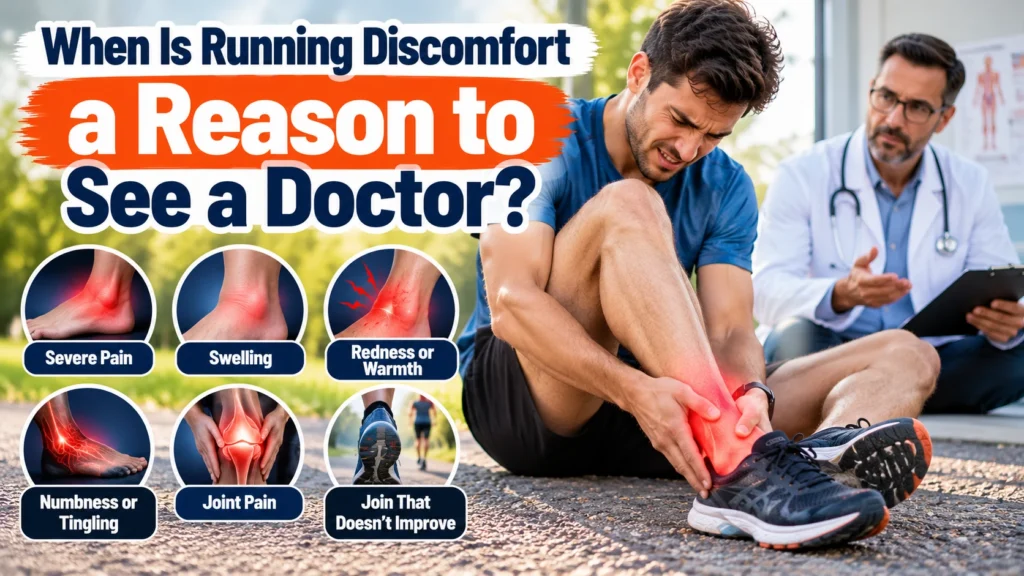
Seek professional advice when pain persists, repeatedly returns, or limits ordinary movement. Do not continue running through worsening pain simply to determine whether the shoes are responsible.
Contact a healthcare professional promptly if you experience any of these warning signs:
- Severe pain or inability to bear weight.
- Significant swelling, redness, or warmth.
- Persistent numbness or tingling.
- Localized bone pain that worsens with activity.
- Discomfort that continues despite reducing activity or changing footwear.
A podiatrist or sports medicine clinician can assess your symptoms and running history. Proper evaluation may identify factors unrelated to footwear.
Which Running Shoes Are Worth Considering as Replacements in 2026?
If your current shoes have deteriorated, start by choosing a replacement suited to your foot shape and running needs. The following models represent different footwear priorities.
Product note: Ratings below are editorial suitability assessments, not verified customer review averages or claims of hands-on testing. Actual comfort depends on fit, and availability may change.
🏆 Neutral Daily Trainer
Brooks Ghost 17
★★★★☆ 4/5 — Editorial Suitability
The Brooks Ghost 17 is a neutral daily trainer with nitrogen-infused DNA LOFT v3 cushioning. I would shortlist it for runners replacing a worn neutral shoe who prefer a familiar, cushioned everyday training feel.
🛡️ Stability-Focused Choice
ASICS GT-2000 14
★★★★☆ 4/5 — Editorial Suitability
The ASICS GT-2000 14 incorporates a guidance-oriented design with cushioned daily-running construction. I would consider it for runners who prefer additional stability, while emphasizing that stability shoes are not necessary for everyone.
👟 Width Options
New Balance Fresh Foam X 880v15
★★★★☆ 4/5 — Editorial Suitability
The Fresh Foam X 880v15 is a neutral training shoe with cushioned foam construction. I would consider it when fit flexibility matters, particularly for runners looking for available width options in a daily trainer.
Affiliate disclosure: As an Amazon Associate, FootwearHiker may earn from qualifying purchases. Product pricing, sizing, and availability are subject to change.
Frequently Asked Questions
Can worn-out running shoes make your feet hurt?
Yes, worn-out running shoes may contribute to foot discomfort when cushioning, fit, or structural support deteriorates. However, foot pain can also result from training changes, injury, or other conditions. Inspect your footwear and consider medical assessment if pain continues or interferes with normal activities.
Can old running shoes cause knee pain?
Old running shoes may be one contributing factor to knee discomfort, particularly when their structure or fit changes significantly. However, knee pain has many possible causes. Replacing footwear is not a guaranteed treatment, especially when symptoms involve an underlying injury or training overload.
Can running shoes lose cushioning without showing damage?
Yes. Repeated compression can change the properties of midsole foam even when the shoe looks acceptable externally. Noticeable changes in underfoot comfort, combined with accumulated mileage and structural inspection, can help identify deterioration. Visible appearance alone does not reliably measure remaining cushioning performance.
Is it safe to run in shoes that are two years old?
Age alone does not determine whether running shoes remain suitable. Their condition depends on mileage, materials, storage, and usage. A lightly used pair may still perform adequately, while frequently worn shoes can deteriorate sooner. Check the fit, cushioning, outsole, and structural condition before using them.
Will buying new running shoes immediately stop discomfort?
Not necessarily. Replacing severely worn shoes may improve comfort when footwear deterioration is contributing to the problem. However, new shoes cannot resolve every running injury or source of pain. Choose an appropriate fit, transition gradually when needed, and seek professional assessment for persistent symptoms.
Final Takeaway: Should You Replace Old Running Shoes?
Old running shoes can cause discomfort when cushioning, fit, traction, or structure deteriorates. Your feet may notice these changes before the shoes look completely worn out.
Pay attention to recurring discomfort, visible damage, and changes in the way your shoes feel. Use mileage as a guide, not an absolute replacement deadline.
My recommendation: Inspect your shoes today, compare them with a properly fitted replacement, and avoid running through pain. If symptoms continue, seek professional advice rather than assuming your shoes are the only cause.


Steven is a former sportsperson and now a full-time businessman and research writer. He is the mastermind of this site, and he created this site to help people who need specialized shoes for different activities. When he was a sportsperson, he was very passionate about different types of shoes for his sports purpose. The passion he had for shoes at that time now turned into his profession. Besides his shoe business, he loves sharing his knowledge and experience with people and helping them maintain healthy feet.
More Posts