
Quick Answer
To recycle old running shoes, inspect their condition, clean off loose dirt, and find a participating shoe recycling program. Donate wearable pairs instead of recycling them. For damaged shoes, check a specialist recycling collection, such as the Nike Recycling + Donation program, before dropping them off.
Follow These Six Steps
- 1. Check condition: Decide whether the shoes remain wearable.
- 2. Clean the shoes: Remove mud, loose dirt, and debris.
- 3. Choose a destination: Donate usable shoes or recycle damaged pairs.
- 4. Find a collection point: Check local running stores, recycling programs, and charities.
- 5. Confirm the rules: Ask about accepted brands, materials, and preparation.
- 6. Drop them off: Deliver or ship the shoes following the program’s instructions.
Old running shoes often end up forgotten in closets, even when they’re no longer comfortable for running. Throwing them away might seem easiest, but there are better options.
In this guide, I’ll explain how to recycle old running shoes, where to take them, and when donation makes more sense. You’ll also learn how to avoid common recycling mistakes in 2026.
What Does Recycling Old Running Shoes Actually Mean?
Recycling old running shoes means collecting worn-out footwear and processing suitable materials for use in other products. Unlike donation, recycling may involve separating, shredding, or recovering materials from shoes that people can no longer wear.
Running shoes are difficult to recycle because they combine several materials. These components often connect through adhesives, stitching, or molding.
What Materials Are Found in Running Shoes?
A typical running shoe contains several components with different properties. Each presents a different recycling challenge.
- Rubber outsoles: The bottom layer provides traction and may be suitable for material recovery.
- Foam midsoles: EVA, TPU, or other foams provide cushioning but require specialized processing.
- Mesh uppers: Polyester, nylon, and other textiles form breathable upper sections.
- Plastic components: Reinforcements, heel counters, and eyelets may contain various polymers.
- Adhesives: Glue bonds the layers and complicates material separation.
- Laces and insoles: These may need separate handling depending on collection rules.
The mixture explains why most ordinary household recycling bins cannot process complete running shoes. Specialized footwear collection programs are usually the better option.
What Happens After Shoes Enter a Recycling Program?
The exact process depends on the facility and available technology. Some programs sort footwear before sending suitable items to material recovery partners.
- Collection: Customers deposit footwear at approved locations.
- Inspection: Workers identify pairs suitable for reuse or recycling.
- Sorting: Shoes are categorized according to condition and recycling requirements.
- Processing: Eligible footwear may be shredded or separated into recoverable materials.
- Material recovery: Suitable rubber, foam, or textile fractions enter manufacturing streams.
- Reuse: Recovered materials may become components in new products.
Not every shoe becomes a new pair of running shoes. Recycled footwear materials may instead serve other industrial or sporting applications.
Nike describes its material recovery work through its circular solutions initiatives. The company also sorts collected footwear according to its condition and program eligibility.
How Do You Recycle Old Running Shoes Step by Step?
The most reliable approach starts with checking the shoes rather than immediately choosing a recycling bin. This helps prevent usable footwear from entering unnecessary disposal streams.
Step 1: Inspect Your Running Shoes
Start by examining the soles, uppers, midsoles, and overall structure. Your goal is to decide whether another person could wear the shoes safely and comfortably.
Look for these common signs of significant wear:
- Deeply worn or missing outsole tread.
- Large holes in the upper material.
- Separated soles or damaged heel counters.
- Flattened cushioning that no longer feels supportive.
- Persistent moisture damage or visible mold.
- Structural damage that makes walking uncomfortable.
Minor cosmetic damage does not always prevent donation. However, shoes with serious structural problems should not be passed on as wearable footwear.
Step 2: Clean the Shoes Before Collection
Cleaning removes dirt that could interfere with handling and sorting. Most programs do not require shoes to look new, but excessively muddy footwear may be rejected.
- Remove loose mud with a soft brush.
- Wipe the uppers with a damp cloth.
- Clean stubborn dirt using mild soap when appropriate.
- Remove excess moisture with a dry towel.
- Allow the shoes to air-dry completely.
Avoid bleach, excessive heat, and harsh cleaning chemicals. These can damage footwear materials without improving recycling suitability.
Step 3: Separate Reusable Shoes From Damaged Shoes
Donation and recycling solve different problems. Reusable shoes should generally stay in use instead of being broken down into raw materials.
For example, a pair with good cushioning but an outdated color may still be useful. A pair with a torn upper and collapsed sole usually needs another solution.
- Good condition: Consider resale, donation, or giving them away.
- Moderate wear: Evaluate whether they remain suitable for walking or casual use.
- Severe wear: Check footwear-specific recycling services.
- Contaminated or moldy: Ask the collection program whether it can accept them.
Step 4: Find a Running Shoe Recycling Program
Search for collection services that specifically handle footwear. General textile recycling locations do not always accept complete shoes.
Potential collection locations include:
- Participating athletic footwear stores.
- Brand-operated recycling collection points.
- Specialized textile and footwear recyclers.
- Community collection events.
- Local waste management facilities with footwear programs.
Contact the organization before visiting. Store participation, footwear eligibility, and collection capacity can change.
Step 5: Prepare the Shoes for Drop-Off
Different recycling programs have different preparation rules. Always follow the collection organization’s instructions rather than assuming every drop-off works identically.
- Keep pairs together when requested.
- Remove excessive dirt and debris.
- Ensure footwear is reasonably dry.
- Remove laces or insoles only when instructed.
- Use approved packaging for mail-in programs.
- Check whether shipping costs apply.
Do not automatically dismantle shoes into separate materials. Some programs prefer complete footwear because their sorting systems handle the separation.
Step 6: Deliver Your Shoes to the Correct Collection Point
Once you’ve confirmed eligibility, take the shoes to the approved location. Ask staff where the footwear collection area is located.
If mailing shoes, check the destination address and packaging requirements. Keep the shipping confirmation when the organization provides one.
That completes the process. You have directed your old footwear toward an appropriate reuse or recycling channel.
Where Can You Recycle Old Running Shoes in 2026?
Several organizations provide footwear collection, donation, or recycling guidance. However, the services are not interchangeable, and availability depends on your location.
1. Nike Recycling and Donation
Nike operates footwear collection services through participating stores. Its programs may direct eligible collected products toward donation or material recycling.
Some Nike locations accept used athletic shoes, but exclusions apply. Sandals, boots, dress shoes, and footwear containing metal may not qualify.
Before traveling, review the Nike shoe recycling guidance and confirm participation with your chosen store.
2. Soles4Souls Shoe Donation
Soles4Souls focuses on keeping usable footwear in circulation. Its donation program accepts many footwear styles when they remain wearable.
For example, running shoes with intact uppers, functional soles, and no mold may be suitable. Shoes with severe damage should not be sent as ordinary wearable donations.
Visit the Soles4Souls donation page to check current drop-off and shipping options.
3. Brooks Running Recycling Guidance
Brooks recommends recycling worn-out running shoes or finding appropriate alternative uses. It also encourages customers to ask footwear stores about available collection services.
Brooks ReStart is a resale program for eligible lightly used products, not a universal recycling service for severely damaged shoes.
Review Brooks’ official recycling guidance before choosing your next step.
4. Local Running Stores and Community Programs
Independent running stores sometimes organize shoe collection drives. Some work with charities, while others connect with specialized recycling providers.
Ask these questions before donating:
- Do you accept old running shoes?
- Can you take heavily worn shoes?
- Are all athletic brands eligible?
- Do shoes need cleaning or special preparation?
- Where do collected shoes go afterward?
These questions help distinguish genuine recycling from programs that accept only reusable donations.
Should You Donate, Recycle, or Throw Away Old Running Shoes?
Donate shoes that remain wearable and recycle those that cannot safely serve another person. Disposal should be the last option when reuse and recycling services are unavailable or unsuitable.
| Shoe Condition | Recommended Action | Reason |
|---|---|---|
| Almost new | Resell or donate | Significant useful life remains |
| Light cosmetic wear | Donate or reuse | Still suitable for ordinary wear |
| Worn for running, comfortable for walking | Reuse cautiously | May serve a less demanding purpose |
| Severe tread or structural damage | Specialized recycling | No longer suitable for regular use |
| Moldy or contaminated | Ask local waste authorities | Collection programs may reject them |
The most important distinction is whether the shoes are safe to wear. Appearance alone does not determine their remaining usefulness.
Can You Put Old Running Shoes in a Household Recycling Bin?
Usually, you should not put complete running shoes into a household recycling bin. Standard curbside programs commonly handle materials such as paper, metal cans, and approved containers rather than mixed-material footwear.
Running shoes combine rubber, foam, synthetic textiles, and adhesives. These materials can require specialized collection and processing equipment.
Why Do Ordinary Recycling Systems Struggle With Shoes?
Most running shoes are not designed for easy material separation. Their components have different recycling properties.
- Mixed materials complicate sorting.
- Adhesives make parts difficult to separate.
- Foam materials may require specialized equipment.
- Dirt and contamination complicate processing.
- Some material combinations have limited recycling markets.
Even when individual components are technically recyclable, that does not mean a local facility can process them. Recycling availability matters as much as material composition.
What Should You Do If Your City Has No Shoe Recycling Program?
First, contact nearby running stores and municipal waste services. Ask specifically about footwear collection rather than general household recycling.
If no local option exists, investigate mail-in programs or suitable reuse opportunities. Compare shipping requirements before deciding whether an out-of-area program makes sense.
Never leave unwanted shoes beside a closed donation bin. Such items may become litter or create additional sorting work.
Can You Reuse Old Running Shoes Instead of Recycling Them?
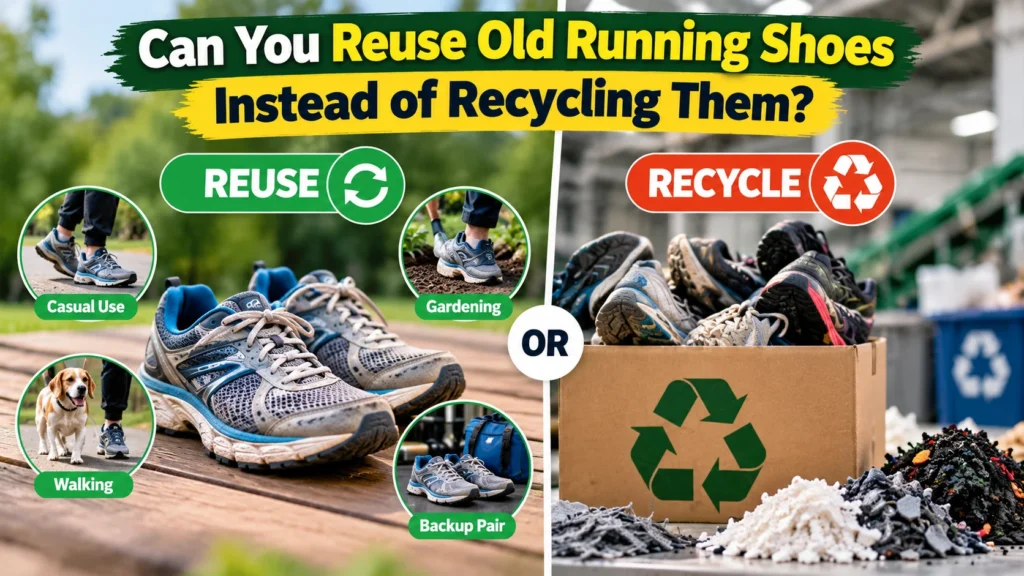
Yes, reuse can extend a shoe’s useful life when its condition remains suitable. Keeping a usable product in service often avoids the immediate need for another item.
However, footwear that causes discomfort or has serious structural damage should not become everyday walking shoes. Choose reuse based on condition, not just convenience.
Practical Ways to Reuse Old Running Shoes
- Casual footwear: Use structurally sound shoes for short, low-demand outings.
- Gardening shoes: Reserve a serviceable older pair for light yard work.
- Backup footwear: Keep a comfortable pair for suitable occasional activities.
- Craft projects: Use clean, unwanted footwear for art or educational activities.
- Community donation: Offer wearable shoes through local reuse groups.
A pair that no longer performs well for distance running may still have a different purpose. The critical question is whether its condition supports that activity.
When Is Reuse No Longer a Good Idea?
Stop using old shoes when they become uncomfortable, unstable, or structurally unreliable. Significant sole separation and damaged heel support are especially important warning signs.
Do not continue wearing shoes solely to avoid waste. Responsible consumption should also account for comfort and safety.
How Do You Know When Running Shoes Are Too Worn to Donate?
Shoes are generally too worn for ordinary donation when they have major holes, mold, detached soles, or serious functional damage. Charities commonly expect footwear that someone can still wear.
Examine the shoes from several angles before deciding.
- Outsole: Check for severe wear that affects grip.
- Midsole: Look for noticeable distortion or structural deterioration.
- Upper: Identify large tears or broken support components.
- Heel: Check for damage that affects fit or stability.
- Interior: Look for mold, deterioration, or substantial damage.
A useful question is whether you would feel comfortable giving the shoes to someone you know. If their condition makes you hesitate, specialized recycling may be the better route.
What Mistakes Should You Avoid When Recycling Running Shoes?
The most common mistake is assuming every donation location also recycles damaged shoes. Many organizations accept only footwear that remains usable.
A few simple checks can prevent rejected donations and unnecessary waste.
1. Putting Shoes in the Wrong Recycling Bin
Do not place shoes in ordinary recycling containers without permission. Incorrect materials can interfere with local collection systems.
2. Donating Unwearable Footwear
Sending severely damaged shoes to a charity can create additional sorting and disposal work. Confirm that the receiving organization accepts their condition.
3. Assuming Every Brand Has a Take-Back Program
Recycling services differ between brands, countries, and individual stores. A retailer selling running shoes does not automatically collect them.
4. Forgetting to Check Collection Requirements
Some programs exclude particular footwear types or materials. Confirm accepted products before visiting or shipping anything.
5. Throwing Away Reusable Shoes Too Early
Running performance and overall wearability are not identical. Shoes retired from running may remain useful for appropriate low-impact activities.
6. Buying Unnecessary Products Just to Recycle Shoes
You generally do not need special cleaning kits, storage boxes, or recycling equipment. Basic preparation and an eligible collection point are usually sufficient.
How Can You Reduce Running Shoe Waste in the Future?
Recycling is helpful, but reducing unnecessary replacements is another important part of responsible footwear use. Good maintenance can help prevent avoidable damage.
Choose Shoes That Suit Your Running Needs
Select footwear that fits properly and matches your usual running conditions. A suitable shoe is more likely to remain comfortable throughout its intended service life.
Pay attention to heel fit, toe room, width, and support. Avoid buying shoes solely because they are fashionable or heavily discounted.
Clean Shoes Without Damaging Their Materials
Remove dirt after muddy runs and allow footwear to dry naturally. Avoid placing running shoes directly beside heaters or in intense heat.
Use gentle cleaning methods suitable for the shoe materials. Follow the manufacturer’s care instructions whenever available.
Store Running Shoes Properly
Keep clean, dry footwear in a ventilated location away from excessive heat. Avoid storing wet shoes inside sealed bags for extended periods.
Storage habits cannot restore worn cushioning, but they can help prevent avoidable moisture-related damage.
Rotate Shoes When Appropriate
Some runners benefit from alternating pairs that suit different workouts. Rotation also provides time for damp shoes to dry between sessions.
However, purchasing extra shoes solely for rotation does not automatically reduce environmental impact. Buy additional pairs only when they serve a practical purpose.
Replace Shoes Based on Condition, Not Just Mileage
Mileage is one useful indicator of running shoe wear, but it is not a universal replacement rule. Running style, terrain, construction, and individual differences all matter.
Watch for changes in comfort, stability, traction, and cushioning. Use those observations alongside your mileage records.
Is Recycling Running Shoes Better for the Environment?
Recycling can reduce the need to discard suitable materials, but environmental benefits vary by collection and processing system. Material recovery also requires transportation, energy, and specialized equipment.
There is no guarantee that every collected shoe becomes a new product. Some materials may have limited recovery options.
Why Reuse Often Comes Before Recycling
Reuse preserves more of the original product. Recycling usually requires additional processing to recover material from the footwear.
For a wearable pair, donation or resale may be more practical than immediate material recovery. For an unwearable pair, recycling becomes more relevant.
Does Shipping Shoes for Recycling Make Sense?
Mail-in recycling may be useful when local options are unavailable. However, shipping adds transportation and packaging requirements.
Consider these points before sending shoes long distances:
- Does the program genuinely accept your footwear?
- Is local collection available?
- Can several eligible pairs be shipped together?
- What packaging does the provider require?
- Does the service recycle material or only redistribute wearable shoes?
Choosing a verified nearby program may be simpler than arranging a distant shipment. The best option depends on local availability and the shoes’ condition.
Frequently Asked Questions About Recycling Running Shoes
Can All Old Running Shoes Be Recycled?
No. Recycling eligibility depends on the materials, condition, and collection provider. Some programs accept heavily worn athletic footwear, while others handle only particular brands or shoe types. Check the current program rules before dropping off your shoes.
Does Nike Accept Old Running Shoes for Recycling?
Nike operates recycling and donation services at participating locations. Eligibility depends on the store, shoe type, and program requirements. Contact the specific Nike store before visiting because not every location offers identical collection services.
Can I Donate Running Shoes With Worn-Out Soles?
Only donate shoes that remain safe and functional for their intended use. Minor cosmetic wear may be acceptable, but serious tread loss, separated soles, or structural damage usually make footwear unsuitable for ordinary donation. Check the organization’s condition standards.
Do I Need to Remove Shoelaces Before Recycling?
Not necessarily. Some recycling services accept complete pairs, while others have specific preparation requirements. Avoid removing laces, insoles, or other components until you confirm the collection program’s instructions.
What Can I Do With Old Running Shoes If No Recycling Center Is Nearby?
Contact local running stores, footwear retailers, and waste management services. You can also investigate approved mail-in programs or reuse options for wearable shoes. If a pair is severely damaged and no recycler accepts it, follow your municipality’s waste disposal guidance.
Final Thoughts: Give Your Old Running Shoes a Better Ending
Learning how to recycle old running shoes starts with understanding their condition. Wearable pairs may deserve another owner, while damaged footwear may qualify for specialized material recovery.
Before discarding your next pair, check local recycling and donation opportunities. Confirm what each organization accepts, prepare your shoes correctly, and choose the most practical responsible option.
Your next step: Inspect one unused pair today and contact a participating footwear collection program. A small, informed decision can keep useful footwear or recoverable materials in circulation longer.


Steven is a former sportsperson and now a full-time businessman and research writer. He is the mastermind of this site, and he created this site to help people who need specialized shoes for different activities. When he was a sportsperson, he was very passionate about different types of shoes for his sports purpose. The passion he had for shoes at that time now turned into his profession. Besides his shoe business, he loves sharing his knowledge and experience with people and helping them maintain healthy feet.
More Posts