
Quick Answer
To choose running shoes for your running style, start with where you run, your usual distance, how your feet move, and which shoes feel comfortable. Match the outsole to your terrain, choose cushioning for your training needs, and test the fit before buying. The American Academy of Podiatric Sports Medicine recommends considering individual running needs rather than relying on foot shape alone.
Six Quick Steps to Choose Your Shoes
- Identify your terrain: Choose road, trail, or mixed-surface footwear.
- Check your training: Consider your running distance, pace, and weekly mileage.
- Evaluate foot movement: Compare neutral and stability shoes without relying on arch height alone.
- Choose cushioning: Select a comfortable balance of softness, support, and ground feel.
- Measure both feet: Allow space for your toes while keeping your heel secure.
- Test before buying: Jog briefly and check for pressure, slipping, or discomfort.
Learning how to choose running shoes for your running style can save you from uncomfortable miles and disappointing purchases. I’ve found that the most useful starting point isn’t the brand name or the shoe’s appearance.
It’s understanding what your feet need during a typical run. This guide explains shoe categories, cushioning, foot movement, fitting methods, and practical buying decisions for 2026.
What Does Choosing Running Shoes for Your Running Style Mean?
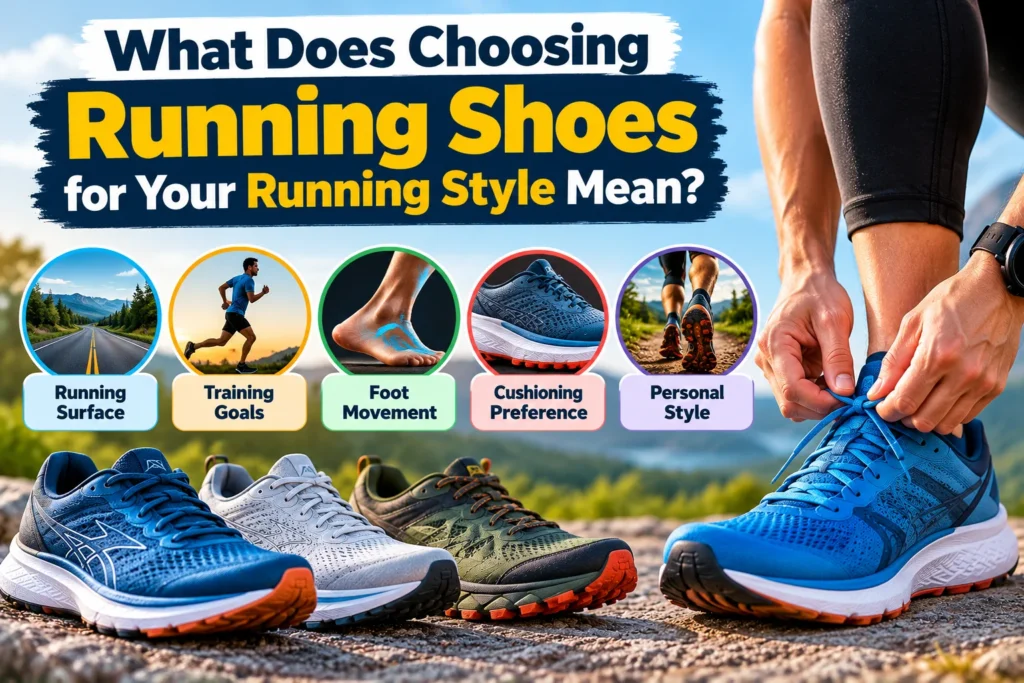
Choosing running shoes for your running style means matching footwear features to how, where, and how often you run. Your stride, training goals, preferred surfaces, and foot comfort all influence that decision.
Two runners covering the same distance may prefer completely different shoes. One might enjoy soft cushioning, while the other prefers a firmer and more responsive ride.
Running style includes several connected factors:
- Running surface: Roads, treadmills, trails, tracks, or mixed terrain.
- Training distance: Short jogs, daily runs, or long-distance sessions.
- Running pace: Relaxed jogging, steady workouts, or faster training.
- Foot movement: Natural pronation, foot strike, and overall stability.
- Personal preference: Cushioning, flexibility, weight, and fit.
These factors help narrow your choices. However, no single measurement can identify the perfect shoe for everyone.
How Does Your Running Surface Affect Shoe Choice?
Your running surface determines the traction, protection, and outsole design you need. Road shoes and trail shoes serve different purposes, even when their cushioning feels similar.
Road Running
Road running shoes work well on pavement, sidewalks, and other firm, relatively even surfaces. They usually feature smoother outsoles and cushioning designed for repeated forward movement.
For most recreational road runners, a comfortable daily trainer is a practical starting point. It can handle easy jogging, regular training, and many longer runs.
Trail Running
Trail running shoes provide traction on dirt, rocks, mud, and uneven ground. Their outsoles often feature deeper rubber lugs that grip loose or slippery surfaces.
Some models include protective toe bumpers or rock plates. Those features become more useful on technical trails with sharp stones and exposed roots.
Treadmill Running
Treadmill running usually doesn’t require a specialized shoe. A well-fitting road running shoe can work for most treadmill sessions.
Focus on comfort, a secure fit, and your preferred cushioning level. Aggressive trail lugs generally aren’t necessary for an indoor treadmill.
Mixed-Surface Running
Mixed-surface runners travel between pavement, gravel paths, and maintained dirt trails. A road-to-trail hybrid can provide a useful balance of traction and everyday comfort.
However, loose mud and technical mountain terrain may require more specialized grip. Choose based on the most demanding surfaces you regularly encounter.
Which Running Shoes Match Different Running Styles?
The right running shoe category depends on your training priorities and running environment. Use this comparison to create a practical shortlist.
| Running Style | Shoe Category | Main Priority |
|---|---|---|
| Beginner jogging | Daily trainer | Comfort and versatility |
| Long-distance running | Cushioned trainer | Sustained comfort |
| Speed workouts | Lightweight tempo shoe | Responsive ride |
| Uneven trails | Trail running shoe | Traction and protection |
| Treadmill sessions | Road trainer | Reliable fit and comfort |
| Extra support preference | Stability trainer | Guidance and secure feel |
These categories describe common design priorities, not strict rules. A comfortable daily trainer can serve several types of workouts.
How Does Your Foot Strike Affect Running Shoe Selection?
Foot strike describes which part of your foot contacts the ground first. Most runners use a heel, midfoot, or forefoot landing pattern.
Foot strike can influence what feels comfortable, but it shouldn’t determine your footwear alone. A runner’s movement changes with speed, fatigue, and terrain.
Heel Striking
Heel strikers initially contact the ground toward the rear of the foot. Many traditional trainers feature a cushioned heel and a noticeable heel-to-toe drop.
A comfortable heel transition may matter more than maximum foam thickness. Avoid choosing shoes solely from a video of one landing.
Midfoot Striking
Midfoot strikers contact the ground closer to the middle of the foot. They may appreciate balanced cushioning and a smooth heel-to-toe transition.
Still, there is no universal midfoot-striker shoe. Test different cushioning arrangements before deciding.
Forefoot Striking
Forefoot strikers initially contact the ground toward the front of the foot. Forefoot cushioning and flexibility can influence their comfort.
Lower-drop shoes may appeal to some forefoot runners. However, sudden changes in shoe geometry can increase demands on the calves and Achilles tendon.
Practical tip: Don’t force yourself to change foot strike just to match a particular shoe. Choose comfortable footwear first, and address persistent movement-related pain with a qualified professional.
Should You Choose Neutral or Stability Running Shoes?
Neutral running shoes offer cushioning without prominent motion-guidance features. Stability shoes add design elements intended to provide a more guided or supportive ride.
Neither category is automatically safer or better for every runner. Your comfort, movement, and previous footwear experience matter more than a simple label.
When Neutral Shoes Make Sense
Neutral shoes are a reasonable first option when you run comfortably without extra guidance. They come in many cushioning levels, widths, and heel-to-toe drops.
Neutral doesn’t mean unsupported. A neutral shoe can still have a broad platform and a stable-feeling base.
When Stability Shoes Might Help
Stability shoes may appeal to runners who feel more comfortable with additional guidance. Certain designs use wider platforms, sidewalls, or structured midsoles.
If you have recurring discomfort or an injury history, ask a sports podiatrist or physical therapist for individualized advice.
Does Overpronation Mean You Need Stability Shoes?
No. Pronation is a normal inward movement that helps the foot adapt to loading.
Excessive motion sometimes contributes to individual concerns, but arch height alone cannot identify your ideal shoe. The American College of Sports Medicine emphasizes that foot shape and arch height aren’t reliable standalone shoe-selection tools.
- Neutral pronation: Natural inward movement without a clear need for extra guidance.
- Overpronation: Greater inward rolling, which doesn’t automatically require correction.
- Underpronation: Relatively limited inward movement, sometimes called supination.
Worn outsole patterns can offer clues about how you use your shoes. They cannot diagnose pronation problems or prescribe a footwear category.
How Much Cushioning Do You Need for Your Running Style?
Choose cushioning based on comfort, distance, surface, and your preferred ride. More cushioning isn’t always better, and softer foam doesn’t guarantee fewer injuries.
Running shoes generally fall into several cushioning categories:
- Low cushioning: Offers more ground feel and less foam underfoot.
- Moderate cushioning: Balances comfort, responsiveness, and versatility.
- High cushioning: Provides substantial foam for runners who prefer a softer ride.
Short and Easy Runs
For short recreational runs, moderate cushioning often provides a useful starting point. The shoe should feel comfortable without being unnecessarily heavy or restrictive.
Long-Distance Training
Long-distance runners may appreciate cushioning that remains comfortable through repeated steps. Fit, stability, and midsole behavior matter alongside foam thickness.
Test shoes during easy runs before using them for demanding sessions. Comfort over several miles can differ from how a shoe feels while standing.
Speed and Tempo Sessions
Faster running sometimes feels easier in lightweight, responsive footwear. However, highly aggressive racing shoes aren’t necessary for every speed workout.
A versatile tempo trainer often makes more sense for recreational runners. Prioritize control and comfort before chasing performance features.
What Do Heel Drop, Stack Height, and Shoe Weight Mean?
These three measurements describe different parts of running-shoe design. Understanding them helps you compare models without relying entirely on marketing labels.
Heel-to-Toe Drop
Heel-to-toe drop is the height difference between the heel and forefoot beneath your foot. Manufacturers typically express it in millimeters.
A shoe with a 32 mm heel stack and 24 mm forefoot stack has an 8 mm drop. Lower-drop designs can alter how running loads the ankle and calf.
Stack Height
Stack height describes the amount of material between your foot and the ground. Shoes with a taller stack often contain more midsole foam.
That doesn’t automatically make them more comfortable. Foam firmness, platform width, and geometry also affect the ride.
Shoe Weight
Lighter footwear can feel easier to move during faster running. Heavier shoes sometimes provide additional structure, cushioning, or trail protection.
Compare weights in the same shoe size whenever possible. Manufacturer-listed weights can vary by size and measurement method.
Important: If you’re changing from a high-drop shoe to a low-drop design, transition gradually. Reduce training demands while your feet and lower legs adapt.
How Should Running Shoes Fit Your Feet?
Running shoes should hold your heel and midfoot securely while leaving space around your toes. A correctly sized shoe shouldn’t pinch, cause numbness, or require a painful break-in period.
The American Academy of Orthopaedic Surgeons recommends checking toe space, heel security, and fit while wearing your normal athletic socks.
Check the Toe Box
Leave approximately a thumb’s width of space between your longest toe and the shoe’s front. The exact space depends on your foot shape and personal fit.
Your toes should spread naturally without rubbing against the upper. If the front feels cramped, try a wider shoe rather than automatically increasing length.
Check Heel and Midfoot Security
Your heel should stay reasonably secure while jogging. Excessive slipping can make a shoe uncomfortable and interfere with a consistent fit.
The midfoot should feel supported without squeezing. Changing the lacing pattern sometimes helps fine-tune pressure.
Check Both Feet
Many people have one foot slightly larger than the other. Fit your shoes to the larger foot rather than forcing a smaller size.
Feet can also swell during the day and while running. Trying footwear later in the day may help reveal fit problems.
How Can You Test Running Shoes Before Buying?
A useful fitting test combines measuring, walking, and jogging in both shoes. Standing still cannot reveal everything about how footwear behaves during movement.
- Measure your feet: Check length and width before choosing a size.
- Wear running socks: Use the socks you’ll normally train in.
- Lace both shoes: Secure them without creating uncomfortable pressure.
- Check toe clearance: Make sure your toes can move naturally.
- Walk and jog: Test the shoes briefly on an appropriate surface.
- Notice your heel: Check for excessive movement or rubbing.
- Compare alternatives: Try another width, model, or cushioning style if necessary.
- Review the return policy: Confirm whether the retailer allows indoor or outdoor testing.
For online purchases, confirm the exact model’s sizing guide. Running-shoe sizing can differ between brands and even between models from one manufacturer.
What Running Shoe Mistakes Should You Avoid?
Some buying mistakes are easy to overlook, particularly when a discounted shoe looks appealing. Avoid treating marketing claims or a single foot measurement as definitive.
- Buying for appearance: Choose fit and function before color or design.
- Ignoring width: A longer shoe may not solve a narrow toe box.
- Copying another runner: Their preferred shoe may not suit your feet.
- Assuming more cushioning is safer: Cushioning preference and injury prevention aren’t identical.
- Overreacting to pronation: Natural inward foot movement doesn’t automatically require correction.
- Changing shoe geometry suddenly: Abrupt transitions can alter loading demands.
- Ignoring discomfort: Persistent pain or numbness deserves attention.
I’ve found a useful way to narrow a shortlist is to compare three shoes back-to-back. Focus on comfort, toe room, and how naturally each shoe moves with your stride.
A shoe that feels comfortable immediately deserves more consideration than one that requires you to tolerate pressure. That simple comparison can prevent an expensive mistake.
How Should Beginners Choose Their First Running Shoes?
Beginners should usually start with versatile daily trainers that fit comfortably and suit their main running surface. Specialized racing shoes and multiple-shoe rotations aren’t essential at the beginning.
Start by prioritizing these features:
- Comfortable fit: Enough toe room without excessive heel movement.
- Appropriate outsole: Suitable grip for your regular training surface.
- Manageable cushioning: A ride that feels comfortable while jogging.
- Practical durability: Construction intended for regular training.
- Reasonable price: A shoe that fits your budget without compromising comfort.
Beginners can often manage easy runs, treadmill sessions, and longer training in one pair. Add more specialized footwear only when your training creates a clear need.
How Do You Know When Your Running Shoes Need Replacing?
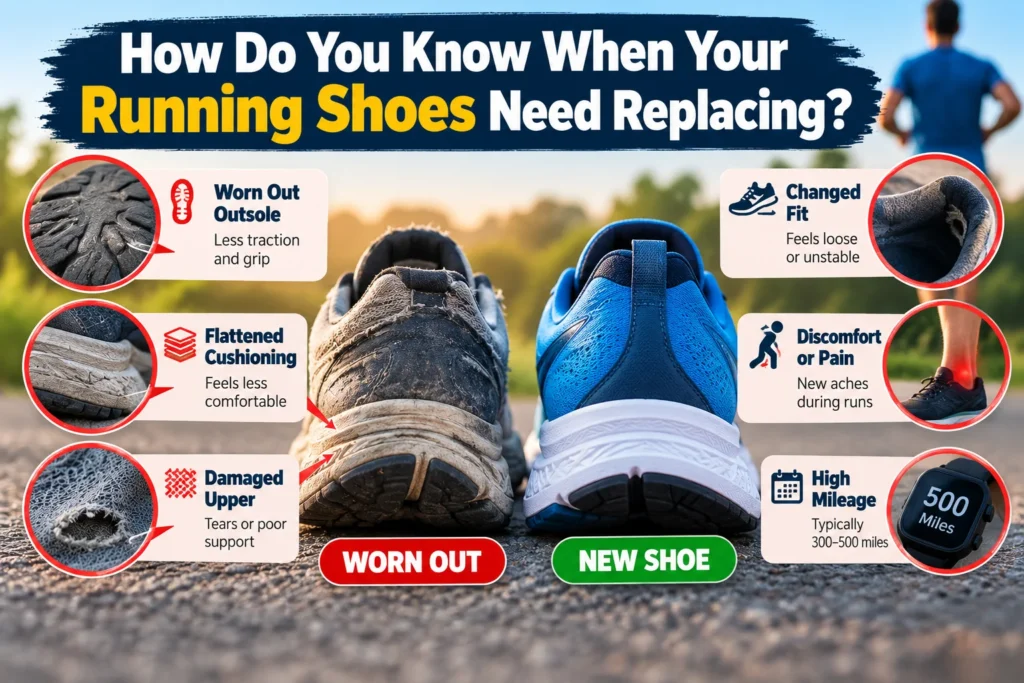
Replace running shoes when their cushioning, traction, or fit no longer meets your needs. Mileage provides a rough guide, but actual wear varies considerably.
Many conventional daily trainers are evaluated around the 300–500 mile range, approximately 480–800 km. This is a planning estimate, not a universal replacement deadline.
Look for these warning signs:
- Outsole rubber has worn away in important contact areas.
- Cushioning feels noticeably flatter than before.
- The shoe develops new instability or uneven wear.
- The upper no longer holds your foot securely.
- Comfort decreases despite normal training conditions.
Compare older shoes with a newer pair if possible. However, recurring pain isn’t proof that footwear is the cause.
If discomfort persists, consider training load, recovery, and professional assessment rather than relying on a replacement shoe alone.
Which Running Shoes Are Worth Considering in 2026?
Once you’ve identified your running style, compare models designed for that use. The following are three examples representing different shoe categories, not universal winners.
Check the exact model specifications and available sizing before purchasing. Recommendations below are based on intended use and design, not personal wear-testing or verified customer-review scores.
🏆 Neutral Daily Training
Brooks Ghost 17
Editorial category fit: Daily road running
A neutral road trainer designed for regular mileage and comfortable transitions. I’d put this model on a shortlist for runners looking for a traditional everyday training shoe.
🛡️ Extra Guidance
ASICS GT-2000 14
Editorial category fit: Stability training
A stability-oriented daily trainer for runners who prefer a guided underfoot feel. I’d compare its comfort against a neutral model rather than choosing it from arch height alone.
🌲 Off-Road Running
Saucony Peregrine 15
Editorial category fit: Trail running
A trail-focused model intended for off-road traction and protection. I’d consider it for runners who regularly encounter dirt paths, uneven ground, and loose surfaces.
Affiliate disclosure: As an Amazon Associate, this website may earn from qualifying purchases. Product availability and prices can change.
Frequently Asked Questions
How do I know which running shoes are right for me?
Start with your usual running surface, distance, foot measurements, and comfort preferences. Compare shoes within the appropriate category and jog briefly in each pair. Choose the model that fits securely without pinching or excessive heel movement.
Do I need stability running shoes if I have flat feet?
Not necessarily. Flat feet don’t automatically mean you need stability shoes. Some runners with low arches prefer neutral footwear, while others feel better with additional guidance. Comfort, movement, and any recurring symptoms should influence your decision.
Are expensive running shoes better for beginners?
Expensive running shoes aren’t automatically better for beginners. A moderately priced daily trainer may offer everything you need for comfortable recreational running. Prioritize fit, suitable traction, and cushioning over premium racing technology.
Can I use the same running shoes for road and trail running?
Yes, for some conditions. Road shoes can handle occasional smooth, dry dirt paths, while hybrid models suit mixed terrain. Technical trails, slippery mud, and rocky surfaces may require dedicated trail shoes with more aggressive traction and protection.
Should running shoes feel tight or loose?
Running shoes should feel secure around the heel and midfoot without squeezing. Your toes need room to move, usually with approximately a thumb’s width of front clearance. Avoid shoes that cause pressure, numbness, or significant heel slipping.
Final Thoughts: Choose Running Shoes That Match Your Needs
Understanding how to choose running shoes for your running style starts with knowing your terrain, training goals, and personal comfort requirements. Foot movement and shoe technology matter, but they shouldn’t override a proper fit.
For most beginners, a comfortable daily trainer is the most practical starting point. More experienced runners can explore specialized shoes as their workouts become more demanding.
Before buying, compare several models, check both feet, and test how each pair feels in motion. The best running shoe is the one that suits your running needs and keeps you comfortable.
Ready to choose your next pair? Use the fitting checklist above, compare models within your preferred category, and prioritize comfort over marketing claims.


Steven is a former sportsperson and now a full-time businessman and research writer. He is the mastermind of this site, and he created this site to help people who need specialized shoes for different activities. When he was a sportsperson, he was very passionate about different types of shoes for his sports purpose. The passion he had for shoes at that time now turned into his profession. Besides his shoe business, he loves sharing his knowledge and experience with people and helping them maintain healthy feet.
More Posts