
Quick Answer
To choose road vs trail running shoes, start with the surfaces you run on most often. Road shoes suit pavement, sidewalks, and treadmills. Trail shoes provide extra grip and protection for dirt, rocks, roots, and mud. If your routes combine both surfaces, consider hybrid road-to-trail shoes. The REI road and trail shoe comparison explains these design differences.
Five quick steps to choose correctly
- Check your terrain: Identify whether pavement, dirt, gravel, or technical trails dominate your routes.
- Inspect the outsole: Choose smooth road tread, moderate hybrid tread, or deeper trail lugs.
- Compare protection: Rough trails may require toe guards, durable uppers, and rock plates.
- Test the fit: Keep your heel secure while allowing comfortable toe movement.
- Match your routine: Choose shoes you can comfortably use for most weekly runs.
Choosing between road and trail running shoes becomes easier once you understand where each design performs best. A shoe that feels excellent on pavement may struggle with muddy paths.
In this guide, I’ll explain the practical differences, how to match footwear to your routes, and which mistakes to avoid before buying.
What Is the Difference Between Road and Trail Running Shoes?
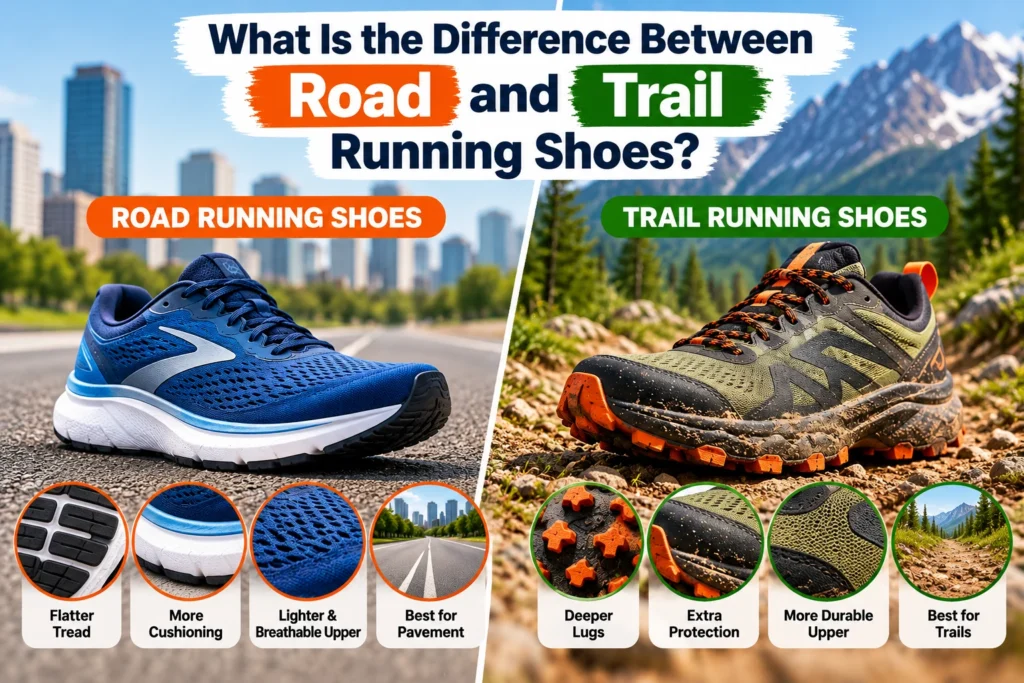
Road running shoes are designed mainly for smooth, firm surfaces. Trail running shoes are built for uneven ground that demands additional traction, stability, and protection.
Both categories use cushioning, supportive uppers, and durable soles. Their biggest differences involve how these components handle changing ground conditions.
| Feature | Road Shoes | Trail Shoes |
|---|---|---|
| Best terrain | Pavement, sidewalks, treadmills | Dirt, rocks, roots, gravel, mud |
| Outsole | Relatively flat tread | Pronounced gripping lugs |
| Cushioning | Often emphasizes smooth road transitions | Balances cushioning with ground control |
| Upper protection | Usually lighter and breathable | Often reinforced against debris |
| Rock plate | Generally unnecessary | Available on selected models |
| Typical feel | Smooth and flexible | More structured and secure |
These are general design differences, not absolute rules. Some modern trail shoes feel highly cushioned, while certain road shoes have firm, stable platforms.
How Do You Choose Running Shoes Based on Terrain?
Choose footwear according to your most challenging recurring surface, not simply your preferred running location. A park route can be smooth pavement, loose gravel, or slippery woodland trail.
1. Running on pavement and sidewalks
Road shoes are usually the simplest choice for concrete, asphalt, and paved paths. Their outsole designs support repeated contact with hard, predictable surfaces.
- Look for cushioning that feels comfortable during your usual distance.
- Choose an outsole that grips securely on dry and wet pavement.
- Prioritize a comfortable upper and reliable heel fit.
- Avoid paying extra for trail protection you won’t use.
If your running routine includes frequent city streets, a versatile road trainer is a sensible starting point.
2. Running on gravel and packed dirt
Firm gravel paths fall between traditional road and technical trail running. Road shoes may work on smooth, dry gravel, but loose stones demand greater traction.
For mixed surfaces, I would compare a lightly treaded trail shoe against a hybrid model. Deep mud-specific lugs are usually unnecessary on well-maintained gravel paths.
3. Running on rocky and uneven trails
Technical trails require dependable foot placement and protection from sharp objects. Trail shoes typically use reinforced uppers and more aggressive outsole patterns.
- Toe protection: Helps shield the front of the shoe against accidental impacts.
- Secure midfoot: Limits unwanted foot movement over uneven terrain.
- Protective midsole: Reduces discomfort from sharp stones.
- Trail rubber: Provides traction suited to loose ground and varied surfaces.
A rock plate is a protective layer within the shoe that helps distribute pressure from sharp objects. Not every trail runner needs one.
4. Running through mud and wet conditions
Muddy routes need tread that can penetrate soft surfaces and release collected dirt. Trail shoes with deeper, widely spaced lugs often perform better here.
However, wet-rock traction depends on rubber compound and surface conditions, not lug depth alone. No outsole guarantees grip on slippery rock.
For further terrain-specific selection guidance, see REI’s trail running shoe buying guide.
How Important Are Outsole Grip and Lug Depth?
Outsole grip is one of the clearest reasons to choose one running shoe category over another. The outsole is the rubber layer touching the ground.
Trail outsoles often feature raised tread blocks called lugs. These dig into loose surfaces and help the shoe maintain contact.
| Outsole Type | Illustrative Tread Depth | Best Use |
|---|---|---|
| Road-style tread | Flat or shallow pattern | Paved routes |
| Hybrid lugs | Around 2–3 mm | Road, gravel, firm dirt |
| Versatile trail lugs | Around 3–5 mm | Mixed off-road trails |
| Aggressive trail lugs | Around 5 mm or deeper | Soft mud and loose ground |
These ranges are useful shopping examples, not standardized classifications. Lug shape, spacing, and rubber compound also affect traction.
Should You Choose More Cushioning or More Ground Feel?
Choose cushioning based on your comfort, terrain, and running style. More foam does not automatically make a running shoe better.
Cushioning for road running
Road runners often appreciate cushioning that provides smooth transitions during repeated steps. Softer models may feel comfortable for easy and long-distance runs.
However, excessive softness can feel unstable to some runners. The right balance depends on personal preference and shoe geometry.
Cushioning for trail running
Trail cushioning needs to balance comfort with stability on unpredictable surfaces. Thick foam may increase separation between your foot and the ground.
Low-profile designs can improve ground awareness, but they may expose sensitive feet to more pressure. Neither extreme works for everyone.
What about heel-to-toe drop?
Heel-to-toe drop measures the height difference between a shoe’s heel and forefoot. A 10 mm drop means the heel sits 10 mm higher than the forefoot inside the shoe.
- Higher drop: May feel familiar to runners accustomed to traditional trainers.
- Moderate drop: Offers another option for varied running preferences.
- Low or zero drop: Changes lower-leg loading and may require gradual adaptation.
Choose a drop that feels comfortable and suits your running history. Terrain alone should not determine this measurement.
How Should Road and Trail Running Shoes Fit?
Both shoe types should hold your heel securely without squeezing your toes. Trail shoes demand particular attention to foot movement during descents.
A useful starting point is approximately a thumb’s width of space ahead of your longest toe. Check the fit while standing, preferably later in the day.
Road running fit checklist
- The heel stays in place without excessive slipping.
- The midfoot feels supported without tight pressure.
- Your toes can move comfortably inside the toe box.
- The shoe bends naturally during walking and jogging.
- No seams or overlays cause rubbing.
Trail running fit checklist
- Your toes don’t strike the front during downhill movement.
- Your heel remains secure when changing direction.
- The upper holds your foot on uneven ground.
- Your toes have enough room for natural movement and swelling.
- The outsole feels stable when stepping on angled surfaces.
One practical test is to walk down a gentle incline before committing to trail footwear. Forward toe pressure can reveal a fit problem that standing still misses.
Can You Wear Trail Running Shoes on the Road?
Yes, trail running shoes can handle occasional pavement sections. However, aggressive trail footwear is generally less suitable for extended road running.
Deep lugs may feel awkward on asphalt and can wear more quickly with repeated pavement use. The cushioning and sole geometry may also feel different from road trainers.
For example, a runner traveling one paved kilometer before entering a forest trail can reasonably wear trail shoes throughout. Dedicated road shoes make more sense when nearly the entire route follows asphalt.
The Decathlon road-use guide discusses these compromises.
Can You Use Road Running Shoes on Trails?
Yes, road running shoes may work on smooth, dry, well-maintained trails. They become less suitable as surfaces grow slippery, loose, or rocky.
The biggest concerns are traction and protection. Road shoes generally lack the deep tread and reinforced construction found in dedicated trail models.
- Usually manageable: Flat, dry park paths and firm dirt tracks.
- Use more caution: Loose gravel, uneven ground, and exposed roots.
- Choose trail footwear: Mud, technical descents, sharp rocks, and sustained rough terrain.
When testing road shoes on a new dirt route, begin slowly. Turn around if traction feels unreliable.
Are Hybrid Road-to-Trail Running Shoes Worth Buying?
Hybrid running shoes are designed for routes that combine pavement with relatively moderate off-road terrain. They usually offer more tread than road trainers without the aggressive outsole of mud-focused trail shoes.
These shoes can be a practical one-pair solution for runners using neighborhood streets, park paths, and packed gravel.
Who should consider hybrid shoes?
- Runners combining pavement and park trails in one workout.
- Beginners exploring light off-road running.
- Travelers who want one versatile running shoe.
- Runners spending time on gravel paths and firm dirt.
When should you avoid them?
A hybrid shoe may not provide enough traction for deep mud or steep technical trails. It may also feel less smooth than a dedicated road trainer on long pavement sessions.
For more detail on these categories, see Salomon’s road, trail, and gravel shoe explanation.
How Many Pairs of Running Shoes Do You Need?
One well-chosen pair may be enough when your routes use similar surfaces. Owning separate road and trail shoes becomes more useful when you run regularly on both.
| Running Routine | Practical Choice |
|---|---|
| Mostly pavement | One road pair |
| Mostly technical trails | One suitable trail pair |
| Road plus light gravel | One road or hybrid pair |
| Frequent road and technical trail runs | Separate road and trail pairs |
I recommend choosing a suitable primary pair before buying additional footwear. A second pair should solve a genuine terrain or comfort problem.
What Mistakes Should You Avoid When Choosing Road vs Trail Running Shoes?
The most common selection errors come from judging shoes by appearance instead of terrain and fit.
- Choosing by appearance: A rugged-looking shoe isn’t automatically suitable for technical running.
- Ignoring surface conditions: Dry gravel and deep mud need different outsole designs.
- Buying excessive cushioning: Maximum foam doesn’t guarantee comfort or stability.
- Overlooking toe room: Tight shoes can become uncomfortable during longer runs.
- Ignoring heel security: Excessive foot movement creates rubbing and reduces control.
- Assuming waterproof is always better: Waterproof uppers can reduce breathability and may drain slowly when water enters from above.
- Using aggressive trail shoes mainly on pavement: Deep tread can wear unnecessarily.
- Buying without testing: Comfortable walking shoes don’t always feel comfortable while running.
A useful purchase decision should answer three questions: Where will I run, how does the shoe fit, and does its outsole suit that surface?
How Can Beginners Test Shoes Before Buying?
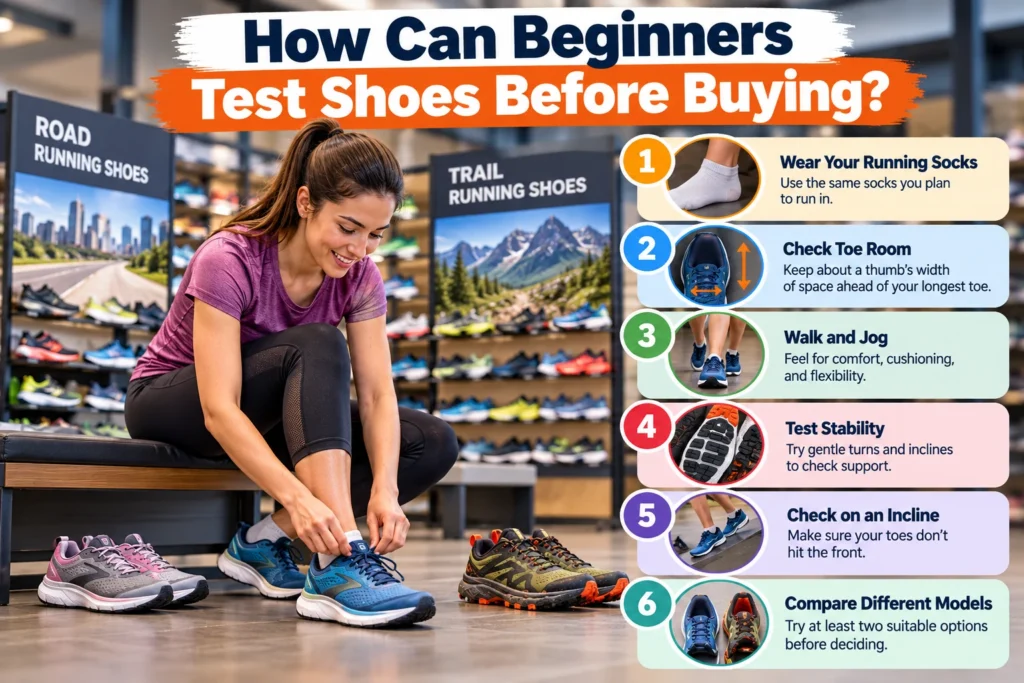
Beginners should compare shoes through a short, structured fitting process. This provides more useful information than relying on labels or marketing descriptions.
- Wear your running socks. Use the same thickness you expect during workouts.
- Check standing toe room. Confirm your longest toe isn’t crowded.
- Walk briskly. Notice rubbing, heel slipping, or unusual pressure.
- Jog briefly. Check cushioning, flexibility, and stability when possible.
- Test directional changes. Trail runners should check lateral foot security.
- Check a gentle incline. Make sure your toes don’t hit the shoe front.
- Compare both feet. Fit the larger foot if their sizes differ.
- Review the return policy. Outdoor testing may affect eligibility for returns.
If your first pair causes persistent pressure or numbness, reconsider the fit. Don’t assume every uncomfortable shoe needs a long break-in period.
For more general fitting advice, explore REI’s running shoe selection guide.
Which Running Shoes Are Worth Considering in 2026?
The following three models illustrate different footwear categories. They’re useful starting points rather than guaranteed choices for every foot.
Affiliate disclosure: As an Amazon Associate, we may earn from qualifying purchases. Product availability, prices, and ratings can change.
🏙️ Road running choice
Brooks Ghost 17
★★★★★ Category suitability: 5/5
A neutral road trainer with a 10 mm heel-to-toe drop and balanced cushioning. I’d shortlist it for runners who prioritize comfortable everyday pavement miles rather than technical off-road grip.
⛰️ Dedicated trail choice
Saucony Peregrine 15
★★★★★ Category suitability: 5/5
A trail-focused model designed around traction and off-road control. I’d consider it when loose dirt, rocks, and uneven paths are regular features of a running route.
🌳 Mixed-surface choice
Hoka Challenger 8
★★★★☆ Category suitability: 4/5
A road-to-trail design intended for pavement and moderate off-road surfaces. I’d compare it when a typical run includes sidewalks, park paths, and firm gravel rather than deep mud.
Category suitability scores describe how closely these shoes match their intended use cases. They are editorial judgments, not customer reviews or hands-on laboratory test results.
Frequently Asked Questions About Road vs Trail Running Shoes
Are trail running shoes better than road running shoes?
Neither category is universally better. Trail shoes generally offer stronger traction and protection on rough surfaces, while road shoes prioritize comfort and smooth movement on pavement. The better choice depends on where you run most often, the conditions you encounter, and which shoe fits comfortably.
Can beginners use trail running shoes for everyday running?
Yes, beginners can use trail running shoes for everyday workouts when their routes include regular off-road sections. However, deep-lugged trail footwear isn’t the most practical option for predominantly paved routes. Consider road or hybrid shoes for everyday city running.
Do trail running shoes prevent ankle injuries?
Trail shoes can improve traction and help secure your foot on uneven surfaces, but they don’t guarantee injury prevention. Ankle injuries can still occur. Terrain awareness, gradual training, suitable fit, and careful movement matter alongside footwear selection.
Are road-to-trail shoes good for hiking?
Hybrid road-to-trail shoes can work for easy hikes on well-maintained paths. Their suitability depends on traction, terrain, weather, and your load. Rough mountain trails or heavy backpacks may call for more protective footwear with greater stability and durability.
Should I buy separate road and trail running shoes?
Separate pairs are helpful when you regularly run on both pavement and technical trails. They allow you to match grip and cushioning to each surface. If you mainly run on smooth, mixed routes, one suitable hybrid shoe may be enough.
Final Verdict: How to Choose Road vs Trail Running Shoes
The easiest way to choose road vs trail running shoes is to match the footwear to your actual running environment. Start with terrain, then evaluate traction, fit, cushioning, and protection.
- Choose road shoes for pavement, sidewalks, treadmills, and other smooth surfaces.
- Choose trail shoes for loose dirt, mud, rocks, roots, and uneven off-road routes.
- Choose hybrid shoes for mixed pavement and moderate natural surfaces.
- Consider two pairs when you frequently run on both roads and demanding trails.
Don’t buy shoes simply because they look more technical or have more cushioning. The most useful running shoe is the one that fits comfortably and performs reliably on your usual routes.
Before purchasing, identify your main running surface and test at least two suitable models. A careful fit check is worth more than choosing by appearance alone.


Steven is a former sportsperson and now a full-time businessman and research writer. He is the mastermind of this site, and he created this site to help people who need specialized shoes for different activities. When he was a sportsperson, he was very passionate about different types of shoes for his sports purpose. The passion he had for shoes at that time now turned into his profession. Besides his shoe business, he loves sharing his knowledge and experience with people and helping them maintain healthy feet.
More Posts