
Quick Answer
To choose running shoes for a treadmill, start with comfortable road-running shoes that fit securely, provide suitable cushioning, and grip the moving belt. Most treadmill runners don’t need specialized shoes. Prioritize fit, moderate cushioning, a breathable upper, and a stable sole. The REI running shoe buying guide explains why foot shape and running style matter.
Six Steps to Choosing Treadmill Running Shoes
- Choose road shoes: Look for smooth-surface running shoes rather than aggressive trail footwear.
- Check your fit: Allow roughly a thumb’s width of space beyond your longest toe.
- Select cushioning: Start with moderate cushioning unless your preferences suggest otherwise.
- Consider support: Compare neutral and stability shoes based on comfort and individual needs.
- Look for ventilation: Breathable mesh helps manage heat during indoor workouts.
- Test before buying: Walk and jog in both shoes while checking grip, heel movement, and pressure points.
Best Starting Point
- Beginners: Comfortable neutral daily trainers are a sensible first option.
- Regular runners: Choose cushioning and responsiveness according to workout duration and pace.
- Support needs: Consider stability features when a neutral shoe feels insufficiently supportive.
Choosing treadmill running shoes can feel confusing when every model promises better cushioning, comfort, or performance. I recommend approaching the decision through fit and workout needs rather than marketing claims.
In this guide, I’ll explain which shoe features matter indoors, what mistakes to avoid, and how to compare practical options in 2026.
What Are Treadmill Running Shoes?
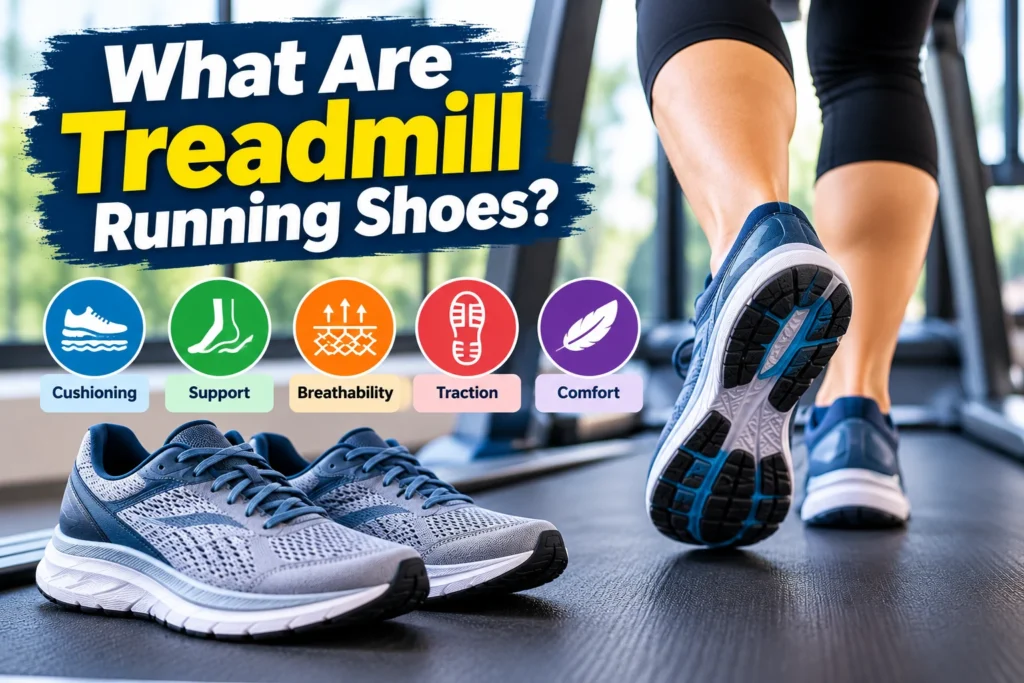
Treadmill running shoes are athletic shoes suitable for running on a motorized or manual treadmill belt. They aren’t necessarily a separate footwear category.
Most runners can use conventional road-running shoes for treadmill workouts. The important distinction is how the shoe performs during repeated forward movement on a consistent surface.
A suitable treadmill shoe should offer:
- Secure fit: Holds the heel and midfoot without painful pressure.
- Appropriate cushioning: Feels comfortable throughout your intended workout.
- Reliable traction: Maintains grip against the treadmill belt.
- Breathable materials: Help reduce heat buildup.
- Natural movement: Allows a comfortable transition from landing to toe-off.
You generally don’t need an expensive racing shoe or unusually thick outsole. A well-fitting everyday trainer often makes more practical sense.
How Are Treadmill Running Shoes Different From Outdoor Shoes?
Treadmill running takes place on a relatively even moving surface, while outdoor running introduces changing pavement, terrain, and weather. These differences affect which footwear features deserve priority.
A treadmill belt and deck may provide some shock absorption, but the amount depends on the machine. Running shoes still need cushioning that feels appropriate for your body and training.
Treadmill vs Road vs Trail Running Shoes
| Feature | Treadmill Use | Outdoor Road | Trail Running |
|---|---|---|---|
| Ideal outsole | Road-style rubber tread | Durable pavement tread | Deeper lugs for loose terrain |
| Cushioning | Preference-based | Preference-based | Varies with terrain |
| Breathability | High priority | Important | Balanced with protection |
| Foot protection | Little terrain protection required | Everyday protection | Often includes reinforced materials |
| Best shoe category | Road daily trainer | Road running shoe | Trail running shoe |
One useful way to simplify this decision is to shop for a road-running shoe first. Then evaluate whether its fit and feel suit your treadmill sessions.
How Do You Choose the Right Running Shoes for a Treadmill?
Start with fit, then narrow your choices by cushioning, support, ventilation, and traction. Your usual treadmill pace and workout duration should guide the final decision.
Step 1: Choose Shoes Designed for Forward Running
Road-running shoes are a natural starting point because their design supports repeated forward movement. Many models also provide flexible uppers and relatively smooth outsoles.
Aggressive trail shoes usually offer features that aren’t needed indoors. Large lugs and protective materials can add weight without improving your treadmill experience.
Cross-training shoes may work for walking or short jogging sessions. However, running-specific footwear is generally the better starting point for regular or longer runs.
Step 2: Find the Right Shoe Size and Width
A comfortable fit matters more than a shoe’s brand or price. Your feet need enough room to move naturally without excessive sliding.
Use this checklist during fitting:
- Leave approximately a thumb’s width between your longest toe and the shoe’s front.
- Make sure your toes can move without rubbing the sides.
- Keep the heel comfortably secure.
- Check that the midfoot feels supported without being squeezed.
- Try both shoes while wearing your usual running socks.
- Fit the larger foot if your feet differ in size.
For additional guidance, see REI’s running shoe fit recommendations.
Don’t assume your casual shoe size will work across every running brand. Different models can feel noticeably narrower or shorter.
Step 3: Select the Right Cushioning Level
For treadmill running, moderate cushioning is a sensible starting point. The best amount depends on comfort, pace, body mechanics, and personal preference.
The midsole is the foam or cushioning layer between your foot and the outsole. Its firmness affects how the shoe feels during each landing.
- Low cushioning: Offers more ground feel but may not suit runners who prefer softness.
- Moderate cushioning: Balances protection, responsiveness, and versatility.
- High cushioning: Can feel plush during easy runs but may feel unstable to some runners.
More cushioning doesn’t automatically mean better injury prevention. A shoe should feel comfortable and stable at your normal treadmill speed.
Step 4: Decide Between Neutral and Stability Shoes
Neutral running shoes work well for many runners. Stability models provide additional design features intended to guide or support foot movement.
Pronation describes how the foot rolls inward during the running stride. Some inward movement is normal.
Consider your options based on how the shoe feels:
- Neutral shoes: A good first category when you don’t need additional guidance.
- Stability shoes: Worth comparing if you prefer extra support or experience excessive inward movement.
- Wide-platform shoes: May provide a more stable feeling without traditional stability features.
Flat feet alone don’t prove that you need a stability shoe. A running-specialist fitting can help when your needs are unclear.
The Cleveland Clinic running shoe guide also discusses fit, gait, and support choices.
Step 5: Prioritize a Breathable Upper
Indoor running can become warm because there’s usually less natural airflow around your feet. A breathable upper can make longer sessions more comfortable.
Look for engineered mesh, lightweight knit, or other ventilated materials. The upper should also hold your foot without excessive stretching.
Waterproof membranes generally provide little benefit on an indoor treadmill. They may also retain more heat than breathable alternatives.
Step 6: Check Outsole Traction
The outsole is the bottom layer that contacts the treadmill belt. It should provide consistent traction without feeling excessively bulky.
Look for durable rubber coverage and a tread pattern appropriate for smooth running surfaces. Avoid relying on worn, slippery outsoles.
Most everyday road-running shoes already provide suitable traction. You don’t normally need deep trail lugs for a clean treadmill belt.
Step 7: Test the Shoes at Your Regular Pace
A shoe can feel comfortable while standing but behave differently when running. Testing at your normal pace is one of the most useful selection steps.
If a store permits treadmill trials, try this short fitting routine:
- Walk comfortably for two minutes.
- Jog at an easy pace for three minutes.
- Increase to your usual running speed for two minutes.
- Notice heel movement, toe pressure, and arch comfort.
- Check for rubbing, unusual instability, or slipping.
These durations are a practical fitting suggestion, not a standardized scientific test. Stop the trial if the shoes cause pain or numbness.
How Much Cushioning Do You Need for Treadmill Running?
The ideal cushioning level depends on your running experience and preferred underfoot feel. A moderate-cushioned daily trainer is a useful place to begin.
Use this comparison to narrow your choices:
| Workout Type | Suggested Starting Point | Main Priority |
|---|---|---|
| Walking and easy jogging | Moderate cushioning | Comfort and fit |
| Daily easy running | Moderate or plush cushioning | Comfortable repeated strides |
| Speed intervals | Responsive cushioning | Secure fit and controlled movement |
| Long steady runs | Comfort-focused cushioning | Sustained comfort |
A common shopping mistake is choosing the softest shoe available. Very soft foam can feel pleasant initially but may not give every runner a stable platform.
Try different cushioning levels when possible. Your comfort during movement should carry more weight than the amount of foam advertised.
Should Treadmill Running Shoes Have a High or Low Heel Drop?
Heel-to-toe drop is the height difference between a shoe’s heel and forefoot. It is usually measured in millimeters.
There is no single ideal drop for every treadmill runner. Your current footwear, running mechanics, and comfort should guide your choice.
- 0–4 mm: Low-drop footwear that may require adaptation if you’re accustomed to higher-drop shoes.
- 5–8 mm: A moderate range found in many versatile running shoes.
- 9–12 mm: A higher-drop range some runners prefer, particularly when accustomed to traditional trainers.
These ranges are descriptive categories, not medical prescriptions. Changing drop substantially can shift loading across the foot, ankle, and lower leg.
If your existing running shoes feel comfortable, consider a similar drop before making a major change. Transition gradually when trying something different.
What Running Shoes Are Best for Beginners on a Treadmill?
Beginners should start with comfortable, versatile daily trainers. A shoe that fits properly and supports repeatable easy runs matters more than advanced racing technology.
Focus on these beginner-friendly features:
- A comfortable, nonrestrictive toe box.
- Secure heel and midfoot fit.
- Moderate or comfortably soft cushioning.
- Breathable upper materials.
- Reliable rubber traction.
- Reasonable weight and straightforward construction.
Premium carbon-plated racing shoes aren’t essential when learning to run. Their design priorities may not match slower, relaxed treadmill sessions.
A practical beginner strategy is to compare two or three everyday trainers. Choose the one that feels most natural rather than the most expensive model.
Do You Need Different Running Shoes for Treadmill and Outdoor Running?
No, most runners can use the same road-running shoes indoors and outdoors. Separate pairs become useful when they serve different training needs or simplify maintenance.
For example, an indoor-only pair may stay cleaner and avoid carrying outdoor dirt onto the treadmill. Rotating shoes can also give you a second option when one pair is wet or uncomfortable.
If you frequently run on muddy trails, use appropriate trail shoes outdoors. Those aggressive outsoles aren’t generally necessary for treadmill sessions.
What Mistakes Should You Avoid When Choosing Treadmill Shoes?
Most treadmill shoe mistakes come from ignoring fit or choosing features that don’t suit the workout. Avoid these common problems before purchasing.
- Buying shoes that are too small: Toe pressure can become more noticeable as your feet swell.
- Choosing by appearance alone: A fashionable design doesn’t guarantee comfortable running.
- Assuming maximum cushioning is best: Softer footwear isn’t automatically better for every runner.
- Ignoring shoe width: Length alone doesn’t determine whether a shoe fits.
- Using worn-out footwear: Damaged cushioning or outsoles may change the shoe’s feel and traction.
- Buying trail shoes unnecessarily: Aggressive lugs rarely add value on a treadmill belt.
- Skipping a running test: Standing comfort doesn’t prove that a shoe works while jogging.
Another mistake is continuing to use shoes that cause persistent discomfort. Pain, repeated numbness, or significant rubbing deserves attention rather than being dismissed as normal break-in.
How Long Do Treadmill Running Shoes Last?
Many conventional running shoes are evaluated for replacement around 300–500 miles, or approximately 480–800 kilometers. This is a broad guideline rather than a guaranteed lifespan.
Treadmill footwear can wear differently from shoes used on outdoor pavement. Cushioning condition, running mechanics, workout frequency, and shoe construction all affect longevity.
Watch for these replacement signs:
- Outsole rubber becomes significantly worn or slippery.
- The midsole feels uneven or noticeably different from when it was new.
- The upper develops holes or loses its ability to hold your foot.
- One shoe tilts or deforms significantly.
- Comfort declines despite appropriate sizing and lacing.
Visible tread wear isn’t the only consideration. Cushioning and structural changes can occur before the bottom of the shoe looks completely worn out.
Use mileage as one reference and physical condition as another. If unexplained discomfort persists, consider professional advice instead of assuming the shoes are the only cause.
How Can You Make Treadmill Running Shoes Last Longer?
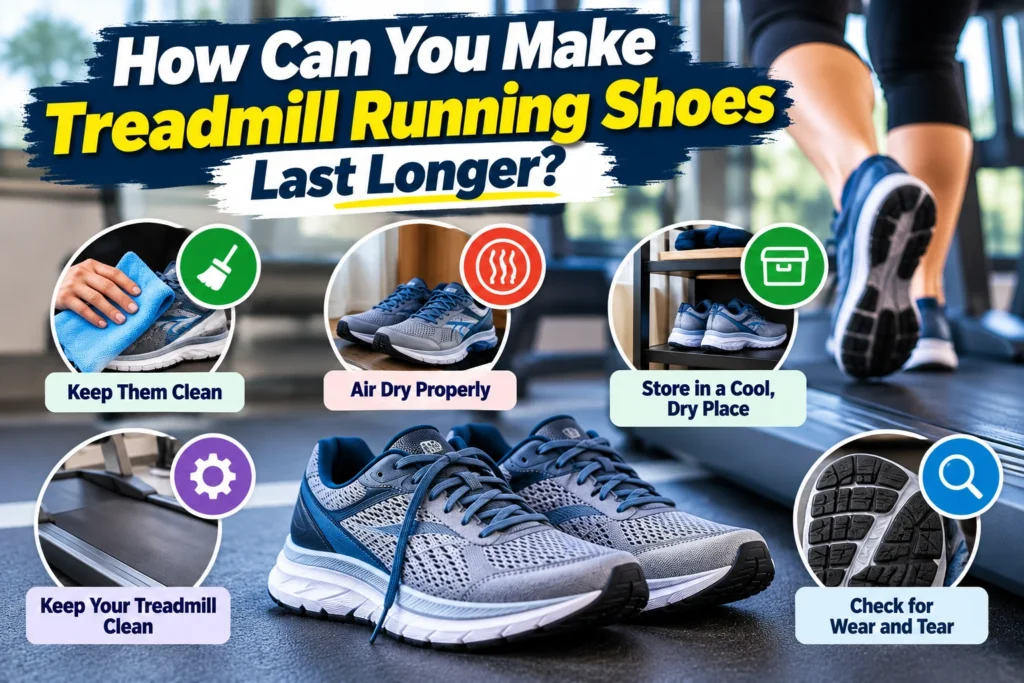
Simple maintenance can help preserve shoe condition. The goal is to reduce unnecessary moisture, dirt accumulation, and avoidable damage.
- Dry after workouts: Allow damp footwear to air-dry at room temperature.
- Avoid direct heat: Don’t use a radiator or hot dryer to accelerate drying.
- Remove surface dirt: Wipe the upper and outsole with a soft, damp cloth.
- Store properly: Keep shoes in a ventilated, dry location.
- Check wear: Inspect the outsole and midsole periodically.
- Follow care instructions: Use the manufacturer’s recommended cleaning method.
Keep the treadmill belt clean according to its manufacturer’s guidance. A properly maintained machine also provides a more consistent running surface.
Which Running Shoes Are Worth Considering for Treadmill Use in 2026?
Several conventional road-running models are sensible candidates for indoor training. The following shoes illustrate different cushioning and running-feel priorities.
These are specification-based recommendations, not personal wear-test results. The suitability scores are editorial judgments, not customer review averages or laboratory ratings.
🏆 Versatile Daily Trainer
Brooks Ghost 17
★★★★☆ 4.5/5 Editorial Suitability
A neutral daily trainer with a 10 mm heel-to-toe drop, breathable mesh upper, and a stable-feeling platform. I would shortlist this model for runners who prefer a traditional, dependable daily-training design. It is particularly worth comparing against softer alternatives.
☁️ Soft Everyday Cushioning
ASICS GEL-CUMULUS 27
★★★★☆ 4.5/5 Editorial Suitability
This neutral trainer combines FF BLAST PLUS cushioning, rearfoot PureGEL technology, and an engineered mesh upper. I would consider it for runners who enjoy a softer daily-training feel without choosing a dedicated racing shoe.
⚡ Responsive Training Option
Saucony Ride 18
★★★★☆ 4/5 Editorial Suitability
The Ride 18 features PWRRUN+ cushioning, an 8 mm offset, and a breathable engineered mesh upper. I would include it in a shortlist for treadmill runners who want a versatile shoe for easy sessions and moderately faster training.
Product generations and availability can change during 2026. Compare current sizes, width options, retailer information, and return policies before purchasing.
Affiliate disclosure: As an Amazon Associate, I earn from qualifying purchases. This does not affect the price you pay.
Frequently Asked Questions
Can I use regular running shoes on a treadmill?
Yes. Most conventional road-running shoes are suitable for treadmill workouts. Choose a pair that fits properly, offers adequate cushioning, and provides reliable traction on the belt. Specialized treadmill shoes aren’t necessary for most recreational runners.
Are cushioned running shoes better for treadmill running?
Cushioned running shoes can improve comfort, but more cushioning isn’t always better. Moderate cushioning is a useful starting point for many runners. Choose the level that feels comfortable and stable during your typical pace and workout duration.
Should treadmill running shoes be lightweight?
Lightweight shoes can feel comfortable during faster treadmill sessions, but low weight shouldn’t come at the expense of fit or support. Everyday trainers offer a practical balance for most runners. The best choice depends on your training goals and preferences.
Are stability shoes necessary for treadmill running?
No. Stability shoes aren’t automatically required because you’re running indoors. Neutral shoes suit many runners, while stability designs may help those who prefer additional guidance. Compare shoes while running, and seek a professional fitting if recurring discomfort makes selection difficult.
How often should I replace treadmill running shoes?
A commonly used guideline is roughly 300–500 miles, but actual shoe lifespan varies. Replace footwear when structural wear, deteriorating cushioning, or poor traction affects performance. Don’t rely on mileage alone, especially when your shoes show clear damage earlier.
Final Verdict: How Should You Choose Treadmill Running Shoes?
Choosing the best running shoes for a treadmill doesn’t require complicated equipment. Start with well-fitting road-running shoes and prioritize comfort, cushioning, breathability, and reliable grip.
For beginners, a versatile neutral daily trainer is often a sensible first choice. Experienced runners can refine their selection around pace, cushioning preferences, and specific support needs.
Before buying, compare several models and test them at your normal running pace whenever possible. The best treadmill shoe is the one that feels comfortable, secure, and natural throughout your workout.


Steven is a former sportsperson and now a full-time businessman and research writer. He is the mastermind of this site, and he created this site to help people who need specialized shoes for different activities. When he was a sportsperson, he was very passionate about different types of shoes for his sports purpose. The passion he had for shoes at that time now turned into his profession. Besides his shoe business, he loves sharing his knowledge and experience with people and helping them maintain healthy feet.
More Posts