

Quick Answer
Yes, if you want a firm, durable daily trainer for heel-led road running. The Mizuno Wave Rider 28 has a 12mm drop and weighs 9.7 oz in a men’s size 9. Its firm cushioning and structured heel suit steady miles, but soft-foam fans and forefoot strikers should look elsewhere.
What makes the Wave Rider 28 worth considering?
- ENERZY NXT foam adds cushioning to the heel.
- The Wave Plate supports a stable, controlled transition.
- Firm foam and the high drop won’t suit everyone.
| Best for | Neutral runners who like firm, high-drop trainers. |
| Not ideal for | Forefoot strikers and runners seeking soft cushioning. |
| Amazon price | About $129 at the latest price check. |
Category scores are editorial estimates based on independent reviews and available lab data.
Category Scores
If you want a reliable running shoe but dislike soft, unstable foam, the Wave Rider 28 deserves attention. I’m Steven Tyler, and I compared its official specifications, independent lab measurements, and hands-on reviews. I did not personally test this shoe. The strongest finding is its firm, durable construction, while its high drop and fit details deserve careful attention. Here’s what matters before spending your money.
What Is the Mizuno Wave Rider 28 and Who Is It For?
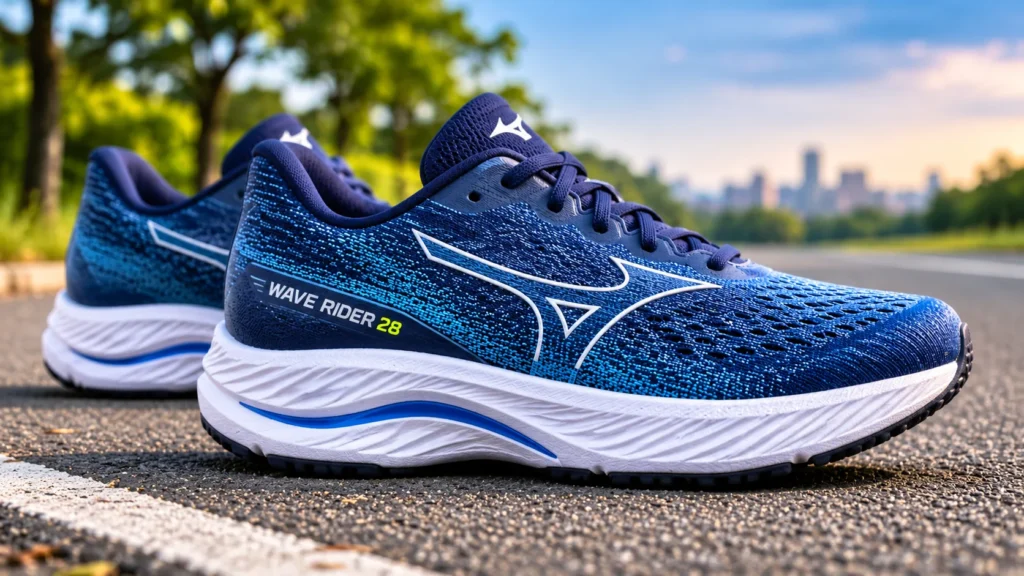
The Mizuno Wave Rider 28 is a neutral road-running shoe built for everyday training. It combines MIZUNO ENERZY foam, ENERZY NXT cushioning, and a Wave Plate to create a firm, controlled ride.
Mizuno designed it for runners who want consistent cushioning without a very soft feel. The 12mm heel-to-toe drop makes it especially appealing to heel strikers. It also suits runners who enjoy a traditional running shoe with a structured heel.
The shoe works best for regular road miles, walking, and moderate training sessions. It can handle faster efforts, but it isn’t a racing shoe.
- Prefer a firm daily running shoe.
- Want a structured heel and stable platform.
- Run mostly on roads and pavements.
- You prefer low-drop running shoes.
- You need soft, plush long-run cushioning.
- You want a lightweight racing shoe.
Mizuno Wave Rider 28 Pros and Cons
The biggest advantage is its durable construction and dependable daily-running platform. Its main weakness is the firm ride, which can become uncomfortable during longer efforts for some runners.
- Durable X10 carbon rubber outsole construction.
- Stable heel with a supportive Wave Plate.
- Breathable Jacquard Air Mesh upper.
- Responsive transitions for steady daily training.
- Firm foam feels harsh on longer runs.
- 12mm drop won’t suit every running style.
- Heavier than the average daily trainer.
- Heel collar can irritate some runners’ ankles.
Mizuno Wave Rider 28 Key Features — What Matters?
Does ENERZY NXT Provide Enough Cushioning?
ENERZY NXT improves heel cushioning, but the Wave Rider 28 remains a firm shoe. RunRepeat measured midsole softness at 44.3 AC, compared with its 35.5 AC running-shoe average. A higher reading means firmer foam.
Takeaway: This shoe favors controlled cushioning over a plush sensation.
The heel offers useful shock absorption, while the forefoot feels less protective. Runners who like a firm platform will appreciate this setup. Those who want a soft landing should consider the ASICS Novablast instead.
Is the 12mm Heel Drop Too High?
The 12mm drop is one of the shoe’s biggest defining features. It creates a noticeable height difference between the heel and forefoot, making the shoe more appealing to runners who land toward the heel.
Takeaway: The high drop is a benefit for some runners and a drawback for others.
RunRepeat measured a different drop in its laboratory sample, showing that measurement methods can change reported geometry. Mizuno’s official specification remains 12mm. Midfoot and forefoot strikers should try the shoe before buying.
Compare the shoe’s heel height with your current trainer before changing to a 12mm drop.
Does the Wave Plate Improve Stability?
Yes, the Wave Plate gives the rearfoot and midfoot a more structured feel. It helps distribute impact and supports a controlled transition without turning the shoe into a formal stability model.
Takeaway: You get mild guidance, not strong motion-control support.
RunRepeat measured torsional rigidity at 4/5, above its 3.6 category average. This supports the shoe’s structured feel. However, runners who need dedicated stability features should consider a model such as the ASICS GT 2000.
Is the Jacquard Mesh Upper Comfortable?
The Jacquard Air Mesh upper provides ventilation and a secure fit. Its gusseted tongue helps hold the foot in place during regular training. Independent testers generally found good lockdown through the midfoot.
Takeaway: The upper feels secure, but the heel collar needs attention.
Doctors of Running reported pressure around the lateral ankle from the collar. Another tester noticed toe pressure from the toe guard on longer runs. Check both areas during a proper fitting.
Don’t assume your old Mizuno size will fit perfectly. Some testers reported a slightly short fit and ankle irritation.
Can the X10 Outsole Handle Regular Running?
The X10 carbon rubber outsole is designed for repeated road use. RunRepeat measured an outsole thickness of 4.3mm, compared with a 3.1mm category average. That provides a substantial layer of rubber underfoot.
Outsole Durability — Estimated Comparison
Takeaway: The thick outsole supports the shoe’s daily-training purpose.
There is one important detail: RunRepeat’s abrasion test recorded 1.3mm of wear, slightly above its 1.1mm average. So thicker rubber does not guarantee less abrasion. Running Shoes Guru, however, reported excellent appearance after more than 60 miles.
Check the heel and forefoot rubber regularly if you run mostly on rough pavement.
How Does the Mizuno Wave Rider 28 Perform in Real Tests?
Independent testing shows a stable, firm daily trainer with good structural qualities. Its strongest areas are heel support and construction, while softness and weight are less impressive.
Measured Performance — Editorial Estimates
The main performance finding is simple: this shoe favors structure over softness. Its heel support and rubber coverage make it a sensible training option, but its weight and firm foam limit its appeal for runners who want a light, plush ride.
Mizuno Wave Rider 28 Full Specifications
These specifications use Mizuno’s US product information where available. Independent laboratory measurements can differ because of sample size and measurement methods.
The 12mm drop and dual-foam construction define this shoe. It is a traditional daily trainer, not a carbon-plated racing model.
How Does the Mizuno Wave Rider 28 Compare to Competitors?
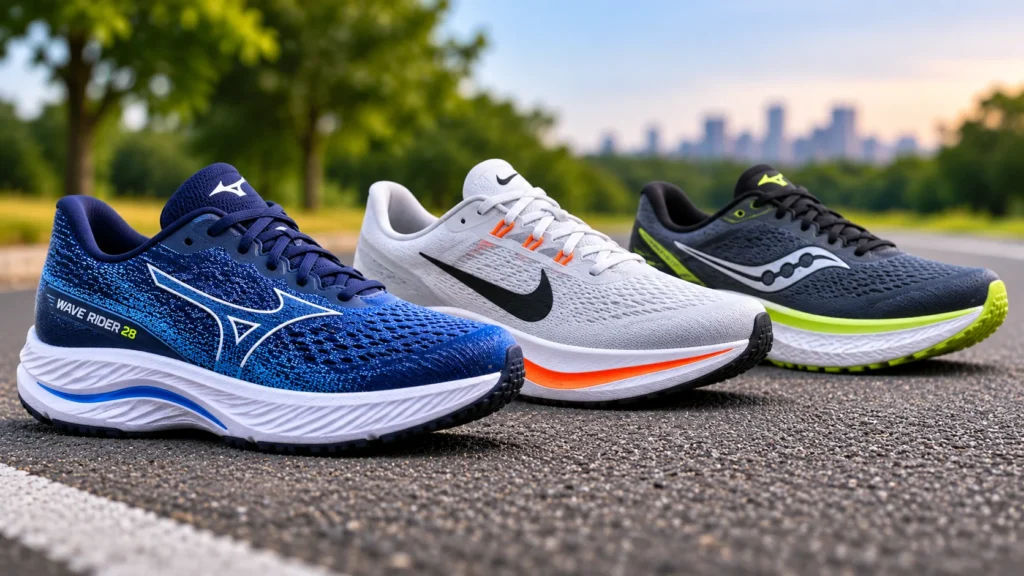
The Wave Rider 28 wins on its structured heel and traditional high-drop feel. The Nike Pegasus 41 offers a more familiar versatile ride, while the Saucony Ride 17 provides a lower 8mm drop.
Mizuno Wave Rider 28 vs Nike Pegasus 41
The Nike Pegasus 41 is the better option if you want a versatile trainer with a slightly lower drop. The Wave Rider 28 offers a more structured heel and a firmer traditional feel. The Pegasus has a 10mm drop compared with Mizuno’s 12mm.
Mizuno Wave Rider 28 vs Saucony Ride 17
The Saucony Ride 17 is a better choice if you prefer a lower-drop trainer. Its 8mm drop and PWRRUN+ foam provide a different ride from Mizuno’s firm, heel-focused platform. Choose the Wave Rider if you specifically want its Wave Plate and traditional geometry.
Here are the main differences using the available expert comparison data and current retailer prices.
| Feature | Wave Rider 28 | Pegasus 41 | Ride 17 |
|---|---|---|---|
| Current tracked price | $129 | $72.50 | $76.99 |
| Expert score | 8/10 | 7/10 | 9/10 |
| Weight | 9.5 oz | 10 oz | 10.1 oz |
| Heel drop | 12 mm | 10 mm | 8 mm |
| Midsole | ENERZY / NXT | ReactX | PWRRUN+ |
| Ride feel | Firm and structured | Balanced | Plush and responsive |
| Best for | Traditional daily training | Versatile road running | Lower-drop daily running |
The Wave Rider 28 costs more at the latest tracked prices. The Pegasus and Ride are stronger value options if their ride characteristics suit you better.
For independent guidance on shoe fit, see Harvard Health’s footwear advice. For research on shoe drop and injury risk, read this randomized running-shoe study on PubMed.
Mizuno Wave Rider 28 Pricing — Is It Worth the Price?
The original retail price was $139.95. The latest tracked Amazon price was about $129 for the men’s model, an 8% discount. That is not a strong deal for an older shoe with newer Wave Rider versions already available.
A separate price tracker recorded a $71.61 low across 11 retailers. That figure is not an Amazon-only historical low, but it shows that much better discounts have existed.
My value recommendation is to look for a price near $90 to $100. At $129, compare the Pegasus 41 and Ride 17 before buying.
Mizuno Wave Rider 28 Daily Running Shoe
A good option for runners who prefer a structured heel and firm daily cushioning.
Who Should Buy the Mizuno Wave Rider 28?
The Wave Rider 28 suits neutral runners who prefer a firm ride, a noticeable heel drop, and a stable-feeling daily trainer. It is not the best match for runners who want maximum softness or a low-drop design.
- Heel strikers who enjoy a structured landing.
- Runners who prefer firm daily cushioning.
- Road runners seeking a traditional neutral trainer.
- You prefer soft, highly responsive cushioning.
- You use low-drop shoes for daily training.
- You need a dedicated racing shoe.
Bottom line: Buy it for a firm, reliable daily ride, not maximum softness or speed.
What Are Real Buyers Saying About the Mizuno Wave Rider 28?
Customer feedback is generally positive, but fit and heel comfort deserve attention. A Zappos review page reported 390 reviews, with 85% giving five stars and 9% giving four stars. Its fit survey also showed that 67% felt true to size and 87% felt true to width.
Customer Feedback Summary
- Comfortable feel for regular daily use.
- Secure width and moderate arch support.
- Familiar ride for long-time Wave Rider fans.
- Some runners find the fit slightly short.
- Heel collar can press against the ankle.
- Firm cushioning can feel harsh over distance.
Buyer takeaway: Most available feedback supports its everyday comfort, but fit differences and firm cushioning are worth checking. Amazon.com review count and average rating were not independently available for verification.
Final Verdict — Is the Mizuno Wave Rider 28 Worth Buying?
The Mizuno Wave Rider 28 is a good daily trainer for runners who want firm cushioning, a structured heel, and a traditional 12mm drop. Its strongest advantage is its durable construction and controlled ride. Its biggest weakness is the firm midsole, which can feel harsh during longer runs. At around $129, it faces cheaper alternatives with different cushioning and geometry. I would choose it only if its high-drop, firm ride matches your natural running preference.
The independent review consensus supports its build quality and daily-training use. However, the high drop, weight, and heel-collar feedback make trying it on important.
If you find it below $100, the value becomes more attractive. At its latest tracked Amazon price, I would compare the alternatives first.
Mizuno Wave Rider 28 Road Running Shoe
Choose it if you value a firm, structured ride over plush cushioning.
Frequently Asked Questions
Is the Mizuno Wave Rider 28 good for long-distance running?
It can handle regular long-distance training, but its firm cushioning isn’t ideal for everyone. Independent reviewers found the ride less comfortable beyond 15km for some runners. Lighter runners who prefer firm support may enjoy longer sessions more than runners seeking plush cushioning.
Does the Mizuno Wave Rider 28 run true to size?
Many testers found a true-to-size fit, but some reported a slightly short feeling. RunRepeat’s owner survey also suggested sizing up for certain runners. Try your normal size and a half-size larger, especially if you have longer toes or prefer extra space.
Is the Mizuno Wave Rider 28 a stability shoe?
No, it is officially a neutral daily trainer. However, its Wave Plate and firm heel provide some additional structure. It can suit runners who enjoy a stable-feeling neutral shoe, but it does not replace a dedicated stability model.
How much does the Mizuno Wave Rider 28 weigh?
Mizuno lists the men’s model at 9.7 ounces in a size 9. RunRepeat measured approximately 9.7 ounces or 276 grams in its laboratory sample. Actual weight changes with shoe size and manufacturing variation.
What is the Mizuno Wave Rider 28 heel drop?
Mizuno specifies a 12mm heel-to-toe drop. This creates a noticeable heel elevation and favors runners who enjoy traditional high-drop shoes. Midfoot and forefoot strikers should compare the geometry with their current running shoes before purchasing.
Is the Mizuno Wave Rider 28 worth buying at $129?
At $129, it is not an especially strong value because its original retail price was $139.95. Better discounts have appeared at other retailers. I would look for a price near $90 to $100 or compare newer alternatives before paying more.
Affiliate Disclosure: As an Amazon Associate, I earn from qualifying purchases. Links on this page may earn me a small commission at no extra cost to you.