
Quick Answer
Are expensive running shoes worth it? Sometimes. Premium running shoes can offer lighter materials, responsive cushioning, and specialized racing technology. However, a $200 shoe isn’t automatically more comfortable, durable, or protective than a $100 pair. For most recreational runners, a properly fitting daily trainer offers better value than an expensive racing shoe. The American Academy of Orthopaedic Surgeons emphasizes appropriate fit and sport-specific footwear.
What makes running shoes worth the money?
- Comfort and fit: The shoe should feel comfortable without pinching, rubbing, or excessive heel movement.
- Cushioning: Choose an underfoot feel that suits your preferences and running routine.
- Performance: Advanced foams and plates may benefit runners pursuing faster times.
- Durability: Consider usable mileage rather than purchase price alone.
- Running frequency: Regular runners may appreciate features that occasional runners don’t need.
Running shoes can cost less than $70 or more than $250. That huge price difference raises a reasonable question: what are you actually paying for?
My approach is simple: judge the shoe by what it does for your running, not its price tag. This guide explains where premium shoes earn their price and where budget-friendly models can be enough.
What Makes Running Shoes Expensive?
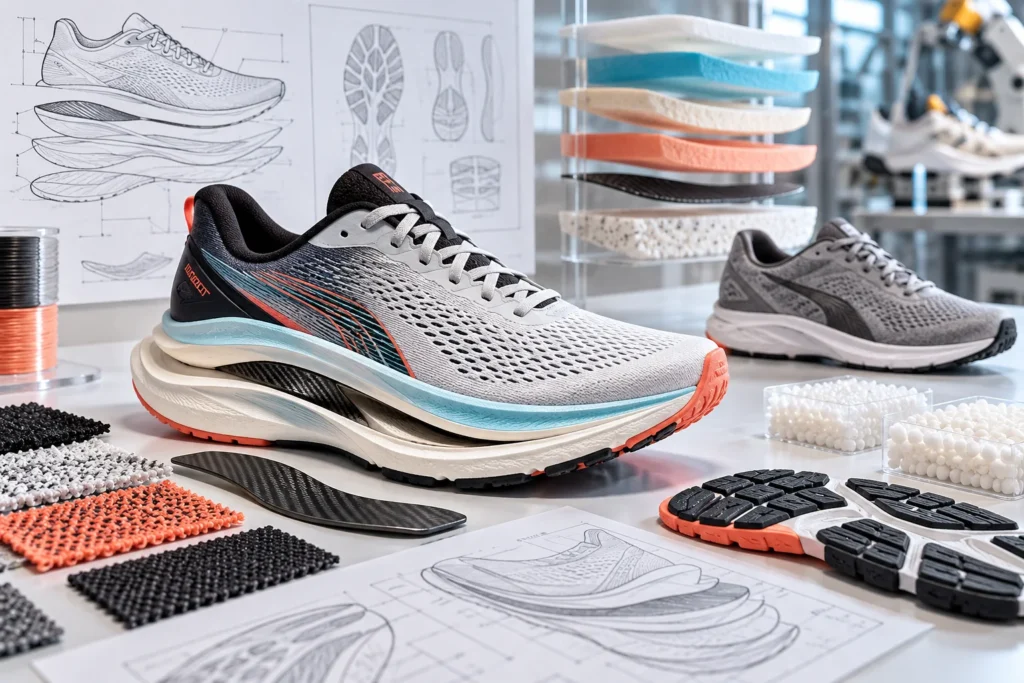
Expensive running shoes are models priced above typical everyday trainers, often because they use specialized materials or performance-focused construction. A higher price may reflect technology, manufacturing costs, branding, or limited production.
In 2026, a practical way to compare running shoe prices is to divide them into three broad categories. These ranges are shopping guides rather than official industry classifications.
| Price category | Typical US price | Main characteristics | Best fit |
|---|---|---|---|
| Budget | $60–$100 | Basic cushioning and practical construction | Beginners and occasional runners |
| Midrange | $110–$170 | Refined cushioning, fit, and daily-training features | Regular recreational runners |
| Premium and racing | $175–$300+ | Specialized foams, lightweight designs, and sometimes plates | Performance-oriented runners |
Price categories overlap. A $175 performance trainer and a $250 marathon racing shoe may serve completely different purposes.
Why do premium running shoes cost more?
Manufacturers can justify higher prices through materials, engineering, and more complex designs. But some of the price also reflects marketing and product positioning.
- Advanced midsole foams: Some premium compounds offer high energy return while keeping weight relatively low.
- Carbon-fiber or nylon plates: These add stiffness and can help shape transitions through the stride.
- Lightweight uppers: Engineered mesh and specialized constructions can reduce weight or improve lockdown.
- Outsole design: Rubber placement may balance traction, weight, and resistance to wear.
- Research and development: Companies spend money refining geometry, materials, and performance features.
- Brand positioning: Advertising, endorsements, and exclusive releases may influence the retail price.
Not every premium feature is useful to every runner. A racing plate may add little practical value to someone jogging twice a week.
Are Expensive Running Shoes Better Than Cheap Ones?
Expensive running shoes aren’t universally better than affordable models. The answer depends on what you measure: comfort, running economy, durability, or suitability for your foot.
A shoe can outperform another in one category while falling behind elsewhere. That’s why I wouldn’t use price alone to rank running shoes.
Do expensive running shoes have better cushioning?
Not necessarily. More expensive shoes may use lighter or more resilient foams, but neither price nor softness guarantees better cushioning for an individual runner.
A 2008 study published in the British Journal of Sports Medicine compared low-, medium-, and higher-priced shoes from three manufacturers.
Researchers found that cheaper models provided comparable or sometimes better plantar-pressure cushioning. The study also found no significant comfort advantage for higher-priced shoes.
That research was small and predates modern superfoams. It doesn’t prove today’s budget shoes match today’s premium models in every performance measure.
Does more cushioning mean more comfort?
No. Cushioning describes how a shoe responds to loading, while comfort describes how it feels to the person wearing it.
Some runners prefer soft, high-stack shoes. Others feel more balanced in lower, firmer designs.
When trying on shoes, look for:
- Enough toe room without excessive sliding.
- A secure heel that doesn’t rub.
- Comfortable arch contact without unwanted pressure.
- A stable feeling at your normal running pace.
- No immediate pinching, numbness, or hot spots.
A comfortable $90 shoe is often a smarter purchase than an uncomfortable $220 model. Don’t assume an irritating fit will disappear after a break-in period.
Do Expensive Running Shoes Make You Run Faster?
Some premium racing shoes can improve running economy, meaning they may reduce the energy needed to maintain a given pace. However, the benefit varies by runner and shoe design.
Modern performance footwear often combines lightweight, resilient foam with carefully designed geometry. Carbon-fiber plates are another common feature.
A 2026 systematic review and meta-analysis reported approximately 2–3% lower metabolic demand with carbon-plated footwear across pooled outcomes.
That doesn’t mean every runner becomes 2–3% faster. The researchers also cautioned that benefits couldn’t be attributed to the plate alone.
When does premium racing technology matter?
Advanced footwear can make more sense when you have a specific training or racing objective. Faster workouts and competitive events give these designs a clearer purpose.
- Race-focused training: Responsive foams may feel more efficient during sustained faster efforts.
- Personal records: Small performance advantages can matter when you’re chasing a time goal.
- Long-distance racing: Some specialized shoes aim to preserve efficiency over demanding distances.
- Speed sessions: Lightweight, responsive trainers can make fast workouts feel smoother.
For easy jogging, those benefits may not justify a major price increase. Training consistency will usually matter more than buying the most expensive shoe.
Can Expensive Running Shoes Prevent Injuries?
There’s no convincing evidence that paying more for running shoes automatically reduces injury risk. Fit, training progression, previous injuries, and personal comfort deserve greater attention.
A 2026 review of running footwear and injuries found limited evidence that footwear design features translate into meaningful injury-prevention benefits.
Higher prices shouldn’t be treated as medical protection. Likewise, a lower-priced shoe isn’t automatically unsafe.
What matters more for injury prevention?
Running involves repeated loading, so training habits and recovery are important. Footwear should complement those habits rather than replace them.
- Comfortable fit: Avoid shoes that create pressure or unstable movement.
- Gradual progression: Increase running distance and intensity at a manageable rate.
- Strength training: Build capacity in your feet, legs, and hips.
- Recovery: Allow time between demanding sessions.
- Appropriate footwear: Use shoes suited to the running surface and activity.
If you have persistent foot pain or recurring injuries, consult a qualified clinician. Buying a premium shoe without understanding the problem may waste money.
Are Expensive Running Shoes More Durable?
Not always. Premium running shoes may use excellent materials, but performance-focused construction doesn’t necessarily maximize lifespan.
Lightweight racing shoes sometimes trade outsole coverage or material thickness for lower weight. Everyday trainers may prioritize sturdier construction instead.
How long should running shoes last?
Replacement timing depends on the shoe, running surface, training volume, and how its performance changes. Mileage estimates are helpful starting points, not expiration dates.
The American Orthopaedic Society for Sports Medicine discusses replacing shoes around 500–600 miles. Other guidance recommends earlier replacement, and individual experiences vary.
Watch the shoe’s condition rather than waiting for a specific number.
- Outsole rubber is worn through in important contact areas.
- The midsole has become noticeably uneven or compressed.
- Heel structure or upper material no longer holds the foot securely.
- The shoes feel substantially different from when they were new.
- Persistent discomfort appears alongside visible deterioration.
Is a more expensive shoe cheaper per mile?
Cost per mile measures the purchase price divided by usable running mileage. It’s a practical way to compare value after you know how long your shoes last.
| Example | Price | Assumed mileage | Cost per mile |
|---|---|---|---|
| Budget trainer | $90 | 300 miles | $0.30 |
| Daily trainer | $150 | 450 miles | $0.33 |
| Premium shoe | $220 | 350 miles | $0.63 |
These are illustrative calculations, not tested lifespan predictions or claims about specific models.
As the table shows, paying more doesn’t guarantee lower ownership costs. Your actual cost per mile depends on the mileage you achieve.
Who Should Spend More on Running Shoes?
Premium running shoes are most defensible when they address a specific requirement or deliver a feature you can appreciate. There isn’t a mileage threshold that makes expensive shoes mandatory.
Regular runners
If you run several times weekly, a well-fitted midrange shoe can be a worthwhile investment. Reliable comfort and consistent feel matter over repeated sessions.
I’d generally prioritize a dependable daily trainer before buying specialized race-day footwear.
Competitive runners
Runners pursuing faster race times may benefit from modern performance technology. A dedicated faster shoe can also complement a comfortable daily trainer.
That doesn’t mean every workout requires premium footwear. Save specialized shoes for the sessions where their characteristics make sense.
Runners with specific fit requirements
Some runners need unusual widths, carefully shaped toe boxes, or specific underfoot characteristics. Spending more can be worthwhile when a shoe genuinely provides a better fit.
However, expensive doesn’t automatically mean more supportive. Compare actual fit and stability instead of relying on marketing labels.
When Are Expensive Running Shoes Not Worth It?
Premium running shoes offer poor value when their special features don’t match your routine. Several situations make a budget or midrange alternative more sensible.
- You’re beginning to run: Establish your preferred fit and running habits before buying advanced racing footwear.
- You run occasionally: An affordable daily trainer may meet your needs comfortably.
- You mostly walk: A comfortable walking or versatile road shoe can be more appropriate than a racing model.
- You’re shopping for appearance: Extra performance technology isn’t worthwhile if you won’t use it.
- The fit is wrong: No premium material can compensate for a shoe that causes significant discomfort.
- Your budget is tight: Consistent training in suitable footwear is more valuable than overspending.
I also wouldn’t buy an expensive model solely because an elite athlete wears it. Professional performance demands may differ substantially from everyday running.
How Can You Choose Running Shoes Without Overspending?
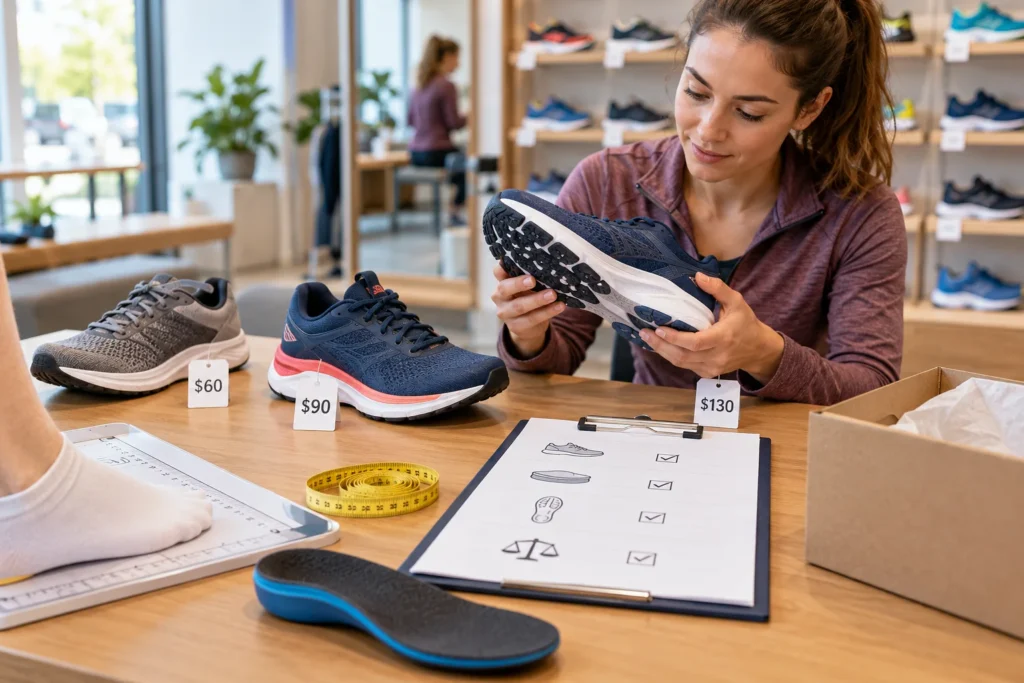
Start with your intended use, foot comfort, and budget. Compare features only after you’ve identified shoes that fit well.
- Decide how you’ll use them. Separate easy running, speed workouts, trail running, and walking.
- Set a comfortable budget. For many recreational runners, the $90–$160 range offers useful options.
- Measure both feet. Shoe sizes can vary between brands and models.
- Check toe room. Leave enough space for movement without excessive sliding.
- Try both shoes. Walk and, where possible, jog at your normal pace.
- Evaluate the ride. Consider cushioning, stability, weight, and how naturally you move.
- Check return policies. They matter when buying a model you haven’t worn before.
- Compare final prices. A discounted midrange model may offer better value than a newly released budget shoe.
Is buying last year’s running shoes a good idea?
Often, yes. Previous-generation running shoes can offer an attractive combination of proven features and lower sale prices.
Check whether the design changed between generations rather than assuming the newest release is better. Also confirm the shoes are new, properly stored, and covered by a reasonable return policy.
Which Running Shoes Are Worth Considering in 2026?
Three different models illustrate how spending more can change what you receive. Each serves a different purpose, so these aren’t interchangeable recommendations.
These are specification-based editorial picks, not claims of personal wear-testing. The ratings reflect feature suitability and trade-offs rather than customer review averages.
💰 Best budget option
ASICS Gel-Excite 11
★★★★☆ 4.0/5 editorial
Listed at a $90 original US price, this neutral road shoe uses Amplifoam Plus cushioning and an 8 mm heel-to-toe drop. Its versatile construction makes it a sensible option for occasional runs and general fitness.
I’d shortlist it when affordability matters more than speed-focused technology. Runners wanting a lighter, more energetic ride may prefer an upgrade.
🏆 Best for steady daily runs
Brooks Ghost 18
★★★★☆ 4.0/5 editorial
With a $150 US list price, the Ghost 18 features DNA Loft v3 cushioning, a 10 mm drop, and a RoadTack rubber outsole. Its neutral design emphasizes steady road running and comfortable everyday use.
I’d consider it for predictable easy miles rather than fast racing. Its weight and modest propulsion are meaningful limitations for speed-focused runners.
⚡ Best for faster workouts
Saucony Endorphin Speed 5
★★★★½ 4.5/5 editorial
With a $175 original US price, the Endorphin Speed 5 combines PWRRUN PB foam, an 8 mm offset, and a semi-rigid nylon plate. Its design targets faster training and racing rather than maximum simplicity.
I’d favor this style when responsive transitions are a genuine priority. It isn’t a carbon-plated marathon super-shoe, and casual runners may not need its specialized construction.
Prices are US reference prices checked in October 2026, not guaranteed live selling prices. Colors, sizes, discounts, and regional availability can change.
Frequently Asked Questions
Are $200 running shoes worth it?
A $200 running shoe can be worthwhile if you benefit from its cushioning, fit, or performance features. However, recreational runners don’t need to spend that much for a suitable pair. A well-fitted midrange trainer may offer better everyday value than a premium racing model.
Can cheap running shoes be good for running?
Yes. Affordable running shoes can work well when they fit comfortably and suit the intended activity. Look for secure heel fit, adequate toe space, suitable traction, and cushioning you enjoy. Price alone doesn’t establish whether a shoe is comfortable, durable, or appropriate.
Do expensive running shoes last longer?
Not necessarily. Some premium shoes prioritize reduced weight and performance over maximum durability. A sturdy everyday trainer may outlast a lightweight racing model, although results depend on usage and construction. Compare actual wear patterns and usable mileage rather than assuming higher prices guarantee longer life.
Should beginners buy expensive running shoes?
Most beginners don’t need premium racing technology. A comfortable entry-level or midrange running shoe is usually a practical starting point. Focus on developing a consistent routine and learning which fit and cushioning characteristics you prefer before spending more on specialized footwear.
Are carbon-plated running shoes worth the extra money?
They can be worthwhile for runners pursuing performance goals, particularly in races. Research supports running-economy benefits from modern carbon-plated footwear, although effects vary. They aren’t essential for ordinary jogging, don’t guarantee injury prevention, and shouldn’t be purchased solely because they’re expensive.
Final Verdict: Are Expensive Running Shoes Worth the Money?
Expensive running shoes are worth it when their additional features genuinely improve your running experience or support a specific performance goal. They’re not automatically better because they cost more.
For most casual and recreational runners, I would start with a comfortable budget or midrange daily trainer. If you’re training seriously for faster races, premium performance footwear becomes easier to justify.
The smartest buying decision isn’t finding the most expensive shoe you can afford. It’s finding the least expensive shoe that comfortably meets your actual running needs.
Before buying: Compare fit, intended use, cushioning, and return policies. Then decide whether the extra features justify the extra cost.


Steven is a former sportsperson and now a full-time businessman and research writer. He is the mastermind of this site, and he created this site to help people who need specialized shoes for different activities. When he was a sportsperson, he was very passionate about different types of shoes for his sports purpose. The passion he had for shoes at that time now turned into his profession. Besides his shoe business, he loves sharing his knowledge and experience with people and helping them maintain healthy feet.
More Posts