

Quick Answer
To find discounts on running shoes, check previous-generation models, compare authorized retailers, explore clearance sections, and watch for seasonal promotions. Start with shoes that fit your feet, then compare their final prices. Retailer outlets such as REI Outlet are useful places to investigate genuine markdowns.
Five Quick Steps to Save Money
- Identify your fit: Choose the correct shoe category, size, and width before searching for deals.
- Check older models: Compare the previous generation with the newest release.
- Search clearance sections: Check brand outlets and established running retailers.
- Compare final prices: Include shipping, taxes, and any eligible discounts.
- Verify return policies: Make sure the savings justify any restrictions.
My Favorite Money-Saving Rule
- Buy fit, not hype: A comfortable previous-generation running shoe can offer better value than a discounted shoe that doesn’t suit your feet.
Running shoes can become expensive when you’re replacing them regularly. Fortunately, paying full retail price isn’t your only option.
I’ve found that the smartest way to approach shoe discounts is to compare models first and prices second. This guide explains where to look, when to shop, and how to recognize savings worth taking.
What Does Finding Discounts on Running Shoes Mean?
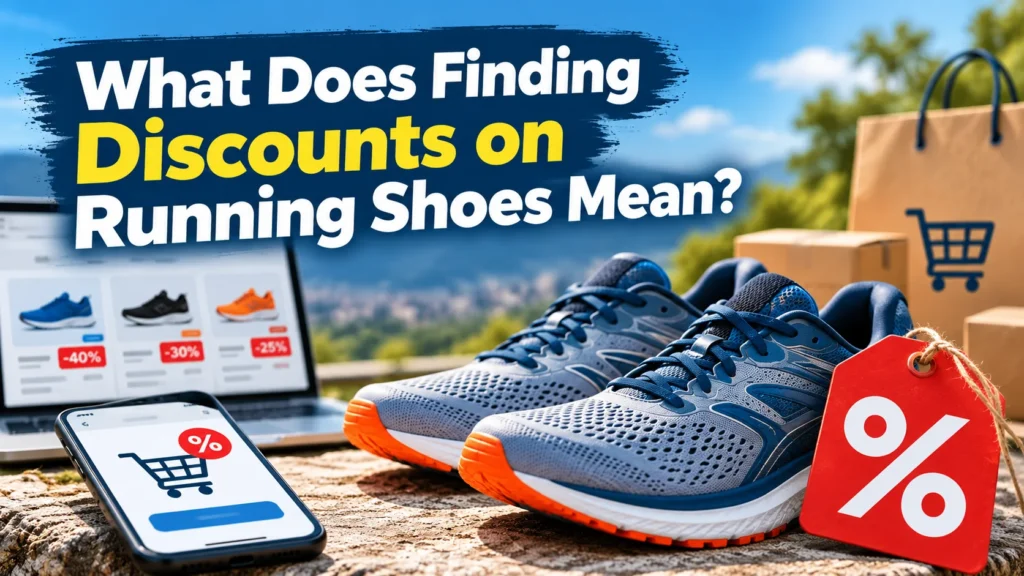
Finding discounts on running shoes means locating suitable running footwear below its regular selling price through verified promotions, clearance inventory, or retailer offers. The goal is to lower your purchase cost without sacrificing fit or function.
A markdown doesn’t automatically make a shoe valuable. You still need the right size, appropriate cushioning, and a design suited to your running activities.
Why Do Running Shoes Get Discounted?
Running shoe discounts often result from inventory changes rather than poor quality. Retailers need space for newer products and different seasonal collections.
- New model launches: Earlier generations may become less expensive when replacement models arrive.
- Discontinued colors: Less popular color combinations sometimes receive deeper markdowns.
- Limited sizes: Remaining inventory may contain only a few sizes or widths.
- Seasonal promotions: Retailers may temporarily lower prices during major shopping events.
- Excess inventory: Stores sometimes discount products purchased in larger quantities than expected.
These factors create opportunities for shoppers who aren’t committed to having the newest color or release.
How Can You Find Discounts on Running Shoes?
The most effective approach combines model research, retailer comparisons, and careful timing. Follow these steps before placing your next order.
1. Start With a Shortlist of Running Shoes
Pick two or three models that match your running needs before looking at their prices. This prevents advertisements from pushing you toward unsuitable footwear.
Consider these details:
- Running surface: Road, treadmill, track, or trail.
- Shoe category: Neutral, stability, or another appropriate design.
- Cushioning preference: Firm, balanced, or soft.
- Foot width: Standard, narrow, wide, or extra-wide.
- Intended use: Daily training, easy runs, long distances, or racing.
If you already own comfortable running shoes, their model name offers a useful starting point. Compare that model with its newer and older generations.
2. Search for Previous-Generation Models
Older running shoe versions are often excellent discount candidates. A new release can reduce demand for the previous model even when it remains suitable for everyday running.
For example, compare a Brooks Ghost 17 with the newer Ghost generation. Check what changed before deciding whether the newest version deserves the higher price.
- Search for the full model name and generation number.
- Compare official specifications with the replacement model.
- Check available sizes and widths.
- Read independent reviews for meaningful design changes.
- Choose the older version only when its fit and features suit you.
A newer model isn’t automatically better for every runner. Changes to foam, geometry, or upper construction can alter how a familiar shoe feels.
3. Check Official Brand Sale Sections
Brand websites provide a useful starting point for identifying legitimate promotions. They also make it easier to compare products within the same shoe family.
Brooks, ASICS, Saucony, Nike, adidas, and New Balance are worth checking when their running shoes match your needs.
Brooks specifically recommends browsing its sale collection and checking promotional notifications. Its official promotions guidance also notes that authorized retailers may offer different deals.
4. Compare Specialized Running Retailers
Running specialty stores can carry older generations after brands shift attention to new releases. These stores may also provide detailed sizing information.
Check the Running Warehouse specials section for clearance footwear and changing promotions.
- Compare identical model numbers rather than similar product names.
- Check men’s and women’s collections separately when appropriate.
- Filter by your actual size and width.
- Review shipping charges and return restrictions.
Retailer stock changes frequently. A strong advertised discount may not apply to your preferred size.
5. Use Price Alerts Instead of Checking Every Day
Price tracking helps when you don’t need new shoes immediately. The goal is to receive a notification when a specific model reaches your budget.
You can use retailer wish lists, promotional emails, or price-tracking services that support your chosen store.
- Record the exact model and size.
- Choose a realistic target price.
- Enable notifications where available.
- Recheck the product details before purchasing.
Don’t assume every tracker covers every retailer. Some services also show incomplete price histories.
6. Check Color-Specific Discounts
Running shoe prices sometimes vary by color. A less popular colorway can cost less despite sharing the same basic model design.
Compare every available color in your size before purchasing. However, don’t assume two shoes are technically identical merely because their product names resemble each other.
7. Look for Legitimate Membership Offers
Retailer accounts and brand membership programs sometimes unlock special promotions. Student, military, healthcare, and other eligibility-based offers may also exist.
- Read eligibility requirements before applying a code.
- Check whether discounted products qualify.
- See whether multiple offers can be combined.
- Calculate the final price before choosing a membership.
Never buy an unnecessary membership solely because a discount sounds attractive. Compare the membership cost with your expected savings.
8. Compare the Final Checkout Price
A lower advertised shoe price doesn’t always mean a cheaper order. Shipping charges, taxes, and return costs can change the result.
My preferred comparison is simple: calculate the total amount payable for the exact pair I want.
Where Are the Best Places to Look for Running Shoe Deals?
Different shopping channels offer different advantages. Your best option depends on available sizes, return conditions, and how quickly you need the shoes.
| Shopping Channel | Main Advantage | What to Check |
|---|---|---|
| Official brand sale | Direct product information | Size availability and promotional exclusions |
| Running specialty retailer | Older models and detailed specifications | Shipping and return conditions |
| Outlet or clearance store | Closeout and discontinued inventory | Final-sale restrictions |
| Major online marketplace | Multiple competing sellers | Seller authenticity and exact model |
| Local running store | Opportunity to check fit | In-store clearance and available widths |
For beginners, trying shoes at a reputable local store can reduce sizing uncertainty. Experienced runners may feel more comfortable ordering a known model online.
When Is the Best Time to Buy Discounted Running Shoes?
Running shoes can be discounted throughout the year. However, new model releases and major retail events often create additional opportunities.
After a New Shoe Generation Launches
Watch for inventory reductions when a replacement version reaches stores. Previous models may receive markdowns as retailers make room for new stock.
There is no universal release calendar for every brand. Track the particular shoe family rather than assuming all running shoes become cheaper during one month.
During Major Retail Promotions
Retail events can be useful comparison opportunities, particularly when several stores promote the same shoe.
- Black Friday: Usually occurs in late November.
- Cyber Monday: Follows the Thanksgiving weekend.
- End-of-season clearance: Timing varies by retailer.
- Holiday promotions: Offers vary by brand and region.
- Anniversary sales: Some stores hold recurring promotional events.
Don’t assume the biggest advertisement provides the lowest annual price. Compare the offer against the product’s recent selling price.
When Your Preferred Size Is Still Available
A discount loses its value when the only remaining shoes don’t fit. Popular sizes and widths may disappear before the deepest markdown appears.
If you discover a comfortable shoe at an acceptable price, purchasing before inventory disappears can be reasonable. Waiting for another small reduction isn’t always worthwhile.
How Can You Tell Whether a Running Shoe Discount Is Genuine?
A genuine discount lowers the amount you would normally pay for the same product. Compare actual selling prices instead of relying entirely on a crossed-out manufacturer’s suggested retail price.
Calculate the Discount Percentage
Use this formula to measure a simple percentage markdown:
Discount percentage = (Reference price − Sale price) ÷ Reference price × 100
Here is an illustrative comparison using a $150 reference price. These are calculation examples, not live offers.
| Reference Price | Example Sale Price | Savings | Discount |
|---|---|---|---|
| $150 | $135 | $15 | 10% |
| $150 | $120 | $30 | 20% |
| $150 | $105 | $45 | 30% |
| $150 | $90 | $60 | 40% |
A 40% reduction looks attractive, but the reference price must be meaningful. A product regularly available for $95 isn’t necessarily a bargain at $90.
Check the Total Cost and Return Risk
Suppose one retailer lists shoes for $95 with $12 shipping, while another charges $102 with free shipping. Before taxes, the second option costs $5 less.
Also consider return shipping, restocking fees, and whether the item is final sale. These factors matter most when you’re uncertain about fit.
How Do You Choose Discounted Running Shoes Without Sacrificing Fit?
Proper fit matters more than the discount percentage. A running shoe should feel comfortable, secure, and appropriate for your intended activity.
The American Orthopaedic Foot & Ankle Society offers helpful athletic shoe fitting guidance for evaluating footwear.
Check These Five Fit Details
- Toe room: Your toes should move freely without pressing against the front.
- Heel security: The shoe should hold your heel without excessive slipping.
- Midfoot comfort: Avoid uncomfortable pressure across the middle of your foot.
- Proper width: Don’t replace a needed wide size with a tight standard width.
- Running comfort: Walk or jog briefly in the shoes when possible.
Try footwear while wearing your usual running socks. Checking fit later in the day can also account for normal changes in foot size.
Should You Buy a Different Size Because It’s Cheaper?
No. A larger or smaller size isn’t a sensible compromise when it creates slipping, pressure, or an unstable fit.
Sizing also differs across brands and models. Always check the specific manufacturer’s size chart before ordering online.
What Mistakes Should You Avoid When Buying Running Shoes on Sale?
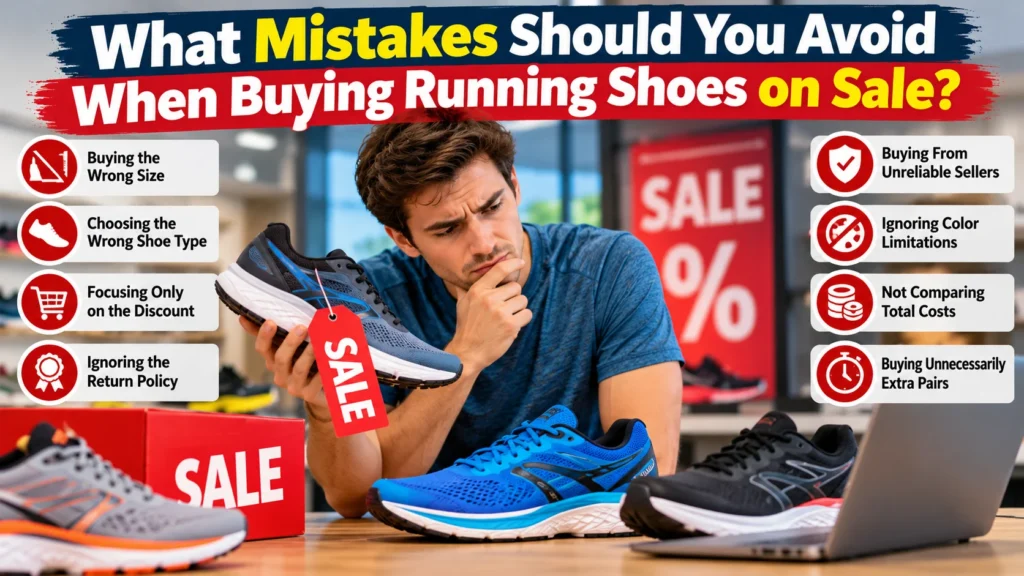
Most unsuccessful discount purchases involve incorrect fit, unsuitable designs, or overlooked purchasing restrictions. These mistakes can turn apparent savings into wasted money.
- Buying only for the discount: A low price doesn’t guarantee comfort or appropriate performance.
- Ignoring shoe width: A discounted standard-width shoe may not suit wider feet.
- Choosing the wrong category: Trail shoes, racing shoes, and daily trainers serve different purposes.
- Trusting every coupon website: Expired or misleading promotional codes can waste time.
- Overlooking return rules: Final-sale shoes can be risky when you haven’t tried the model.
- Ignoring seller reputation: Suspiciously low prices from unknown sellers may signal authenticity problems.
- Buying unnecessary extra pairs: Stored shoes can age, and your fit preferences may change.
- Assuming older means identical: Model generations can differ in cushioning, fit, and geometry.
Pay special attention to third-party marketplace listings. Confirm the seller, exact version, condition, and applicable return protections.
Are Older Running Shoe Models Worth Buying in 2026?
Yes, previous-generation running shoes can offer strong value when their design suits you. The key is to compare actual features rather than assuming age determines quality.
For example, an older neutral daily trainer may still provide suitable cushioning for regular road running. However, a stability shoe or aggressive racing design shouldn’t be purchased simply because its price has dropped.
When an Older Model Makes Sense
- You have already worn that version comfortably.
- The sizing and available width match your feet.
- The features meet your current training needs.
- The seller is reputable and the shoes are new.
- The final price is meaningfully below suitable alternatives.
Avoid purchasing shoes with signs of age-related material deterioration. Clearance stock should still be inspected for condition and authenticity.
Which Running Shoes Are Worth Watching for Discounts?
As of 2026, these three previous-generation daily trainers provide practical starting points for discount searches. Their recommendations are based on published construction details and intended use, not claimed hands-on testing.
The ratings below are conditional editorial assessments of their suitability as discounted purchases, not customer ratings. Actual value depends on price, condition, and fit.
🏆 Balanced Daily Trainer
Brooks Ghost 17
★★★★☆ 4.0/5
The Ghost 17 features DNA LOFT v3 cushioning and a 10 mm heel-to-toe drop. I’d shortlist it for runners seeking a conventional neutral daily trainer, especially when their preferred width is discounted. Its value weakens if a newer model costs nearly the same.
💰 Versatile Value Candidate
Saucony Ride 18
★★★★☆ 4.0/5
The Ride 18 uses PWRRUN+ cushioning with an 8 mm drop and a neutral road-running design. I’d compare it against newer Ride models before paying full price. The primary limitation is that its fit may not suit every forefoot shape.
👟 Soft Everyday Cushioning
ASICS GEL-CUMULUS 27
★★★½☆ 3.5/5
The GEL-CUMULUS 27 combines FF BLAST PLUS cushioning, PureGEL technology, and a FLUIDRIDE outsole. It’s worth considering for neutral runners who prefer a softer everyday ride. I’d require a meaningful price advantage because comparable cushioned trainers offer alternatives.
Affiliate disclosure: As an Amazon Associate, this site may earn from qualifying purchases. Prices, sellers, colors, and inventory can change without notice.
Frequently Asked Questions About Running Shoe Discounts
How Much Should You Spend on Discounted Running Shoes?
Spend enough to purchase shoes that fit your feet and meet your running needs. Instead of choosing an arbitrary budget, compare the final price of several suitable models. A previous-generation daily trainer can be a sensible purchase when discounted below comparable alternatives.
Is It Better to Buy Running Shoes Online or In-Store?
Online shopping makes comparing retailers and prices easier, while physical stores let you evaluate fit before purchasing. First-time buyers may benefit from an in-store fitting. Experienced runners can sometimes shop online more confidently when ordering a familiar model.
Do Running Shoe Discounts Include New Models?
Sometimes. Current-generation running shoes can receive promotional discounts, but exclusions vary by brand and retailer. Previous-generation products may offer more consistent clearance opportunities. Always compare the exact model and size rather than assuming every advertised discount applies.
Are Clearance Running Shoes Lower Quality?
Not necessarily. Clearance footwear often includes discontinued colors, remaining sizes, and previous-generation products. However, condition and storage history still matter. Purchase from reputable sellers and inspect shoes for visible defects, deterioration, or discrepancies in their stated model information.
Should You Wait for Black Friday to Buy Running Shoes?
Waiting can make sense when your current shoes remain suitable and you have time to compare offers. However, Black Friday doesn’t guarantee the lowest price or availability in your size. Buy earlier if you find an appropriate shoe at a worthwhile price.
Final Takeaway: Save Money Without Compromising Your Run
Finding discounts on running shoes is easier when you know which models fit and where trustworthy sellers list clearance stock. Start with previous generations, compare actual prices, and watch for legitimate promotions.
My main recommendation is to judge every sale against comfort, suitability, and total cost. A discount should help you buy the right shoe for less—not convince you to buy the wrong shoe.
Ready to shop smarter? Shortlist your favorite running shoe models, compare authorized sellers, and choose the best-fitting option within your budget.