
Quick Answer
Yes, buying running shoes online is a good idea if you know your foot measurements, understand your running needs, and choose a retailer with a clear return policy. Online shopping offers more choices and makes comparing prices easier, but sizing mistakes can be costly. Follow a trusted running shoe fitting guide before ordering.
What to check before buying:
- Foot measurements: Measure both feet and use the brand’s current size chart.
- Running surface: Choose road or trail shoes based on where you run.
- Comfort and width: Allow toe movement without excessive heel slipping.
- Return policy: Confirm deadlines, shoe condition rules, and return shipping costs.
- Seller authenticity: Buy from established retailers or authorized sellers.
Should you buy running shoes online or visit a running store first? It’s a question worth asking before spending money on shoes you cannot try on immediately.
I recommend approaching online shoe shopping as a fit decision, not simply a search for discounts. This guide explains the benefits, risks, sizing process, and practical ways to make a confident choice.
What Does Buying Running Shoes Online Actually Mean?
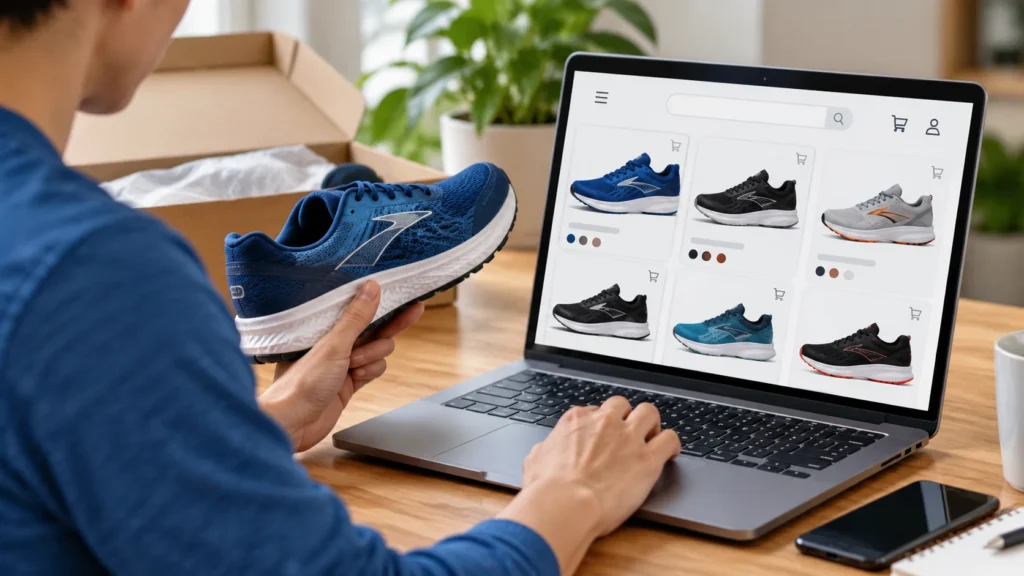
Buying running shoes online means choosing and ordering footwear through a brand website, online retailer, or marketplace without physically trying on that pair before purchase.
You’ll use product descriptions, measurement charts, customer feedback, and return policies to narrow your options.
The challenge is that running shoes are not ordinary fashion sneakers. Their shape, cushioning, support, and fit can affect your comfort during repeated running sessions.
- Brand stores: Usually provide official specifications, sizing information, and manufacturer support.
- Running specialty retailers: Often offer detailed footwear filters and knowledgeable customer service.
- Online marketplaces: May provide competitive prices, but seller authenticity deserves extra attention.
- Clearance retailers: Can offer older models at discounts, sometimes with stricter return conditions.
For a repeat purchase, ordering online may be straightforward. Buying an unfamiliar model requires more preparation.
Is It Better to Buy Running Shoes Online or In-Store?
Neither shopping method is automatically better. Online shopping favors convenience and selection, while physical stores make immediate fit testing easier.
The most reliable option depends on your experience, foot shape, and willingness to handle a return.
| Factor | Buying Online | Buying In-Store |
|---|---|---|
| Selection | Broad catalog across brands and sizes | Limited to available stock |
| Fit testing | After delivery | Before purchase |
| Price comparison | Easy across several retailers | Requires more effort |
| Expert fitting | Limited or remote | Often available at specialty stores |
| Returns | May require shipping or drop-off | May allow immediate assistance |
| Best for | Repeat buyers and informed shoppers | Beginners and difficult-to-fit feet |
My preferred approach is to establish a comfortable fit first, then compare online prices for that specific model.
Remember that new versions can fit differently. Even a familiar model deserves another fit check after an update.
What Are the Benefits of Buying Running Shoes Online?
Online running shoe shopping can save shopping time and increase your access to models, widths, and colors. The advantages are strongest when you already understand what fits.
1. More Sizes and Width Options
Physical stores cannot stock every version of every running shoe. Online catalogs may offer additional narrow, wide, and extra-wide options.
This matters when standard-width shoes consistently squeeze your toes or feel loose around your feet.
2. Easier Price Comparison
Checking several retailers can reveal differences in prices, shipping fees, and promotions. You can also compare previous-generation models with newer releases.
A discounted older model may offer better value when its fit already works for you.
3. Access to Detailed Product Information
Manufacturer listings often explain cushioning materials, outsole designs, intended running surfaces, and available widths.
Use these details to identify suitable candidates before reading customer reviews.
4. Convenient Shopping
You can compare shoes outside store hours without traveling between shops. This is useful when local selection is limited.
However, convenience disappears if a poorly fitting pair requires several returns.
What Are the Risks of Buying Running Shoes Online?
The biggest risk is selecting shoes that appear suitable but feel uncomfortable when worn. Size numbers alone cannot describe every aspect of fit.
- Incorrect sizing: A familiar size may fit differently between brands.
- Narrow toe boxes: Product pictures may not reveal insufficient forefoot space.
- Heel slipping: An otherwise comfortable shoe might not secure your heel.
- Unexpected cushioning: A shoe described as soft may feel too firm or unstable for your preferences.
- Return restrictions: Clearance products or third-party sellers may impose stricter terms.
- Counterfeit products: Unverified sellers may offer imitation or misrepresented footwear.
The most expensive mistake is buying a shoe because the price looks attractive while ignoring its shape and intended use.
How Do You Choose the Right Running Shoe Size Online?
Start by measuring both feet and comparing the larger foot with the manufacturer’s official size chart. Check width as carefully as length.
Use the following procedure before placing your order.
Step 1: Measure Your Feet
- Place a sheet of paper against a wall on a hard floor.
- Wear the socks you normally use for running.
- Stand with your heel against the wall.
- Mark the end of your longest toe.
- Measure the distance from the wall to that mark.
- Repeat for the other foot.
- Measure foot width at the widest part of your forefoot.
Measure while standing, preferably later in the day. Feet can become larger after prolonged activity.
Step 2: Compare the Brand’s Size Chart
US, UK, and EU sizes are not interchangeable across every brand. Use the official chart for the exact shoe you’re considering.
When available, compare your foot measurement in centimeters or millimeters rather than relying only on a familiar size number.
Step 3: Allow Enough Toe Room
Running shoes commonly need about a thumbnail’s width between your longest toe and the front of the shoe when standing.
This is a fitting guideline, not a reason to order every shoe one size larger.
Step 4: Check the Heel and Midfoot
Your heel should feel secure without painful pressure. The midfoot should feel supported rather than squeezed.
Excessive movement can cause rubbing, while overly tight shoes may create numbness or discomfort.
Step 5: Review the Width Options
Do not automatically increase shoe length to solve a width problem. Look for an appropriate wide version when the toe box feels restrictive.
For more detailed fitting guidance, consult Fleet Feet’s running shoe fit advice.
How Can Beginners Buy Running Shoes Online Safely?
Beginners can buy running shoes online, but a first in-person fitting reduces uncertainty. If that is unavailable, focus on measurements and flexible return conditions.
A sensible first purchase is usually a comfortable daily trainer appropriate for your primary running surface.
Choose Your Main Running Surface
- Paved roads: Look at road-running shoes with suitable cushioning and durable outsoles.
- Gravel and dirt paths: Consider traction, stability, and surface conditions.
- Technical trails: Prioritize trail-specific grip, protection, and foothold.
- Treadmills: Comfortable road-running shoes are often suitable.
Do not choose aggressive trail shoes solely because their tread looks durable. Specialized features should match the surfaces you run on.
Understand Neutral and Stability Shoes
Neutral shoes generally provide cushioning without a pronounced guidance system. Stability shoes include design features intended to guide or support foot motion.
Neither category is universally safer or more comfortable. Your fit, preferences, and running experience matter more than a label.
Start With One Comfortable Pair
New runners usually do not need several specialized shoes immediately. A versatile daily trainer can handle many beginner workouts.
You can explore racing and trail-specific options after learning what feels comfortable during regular training.
How Do You Know Whether an Online Running Shoe Review Is Trustworthy?
Useful reviews describe measurable fit differences and actual running conditions. Generic praise without context offers limited help.
When comparing customer feedback, prioritize comments from runners with similar foot shapes and intended uses.
- Verified purchases: Give greater weight to reviews connected to completed orders.
- Fit descriptions: Look for comments on toe width, heel hold, and sizing.
- Running distance: Reviews after repeated runs can reveal issues missed during first impressions.
- Surface details: Pavement feedback may not apply to muddy trails.
- Balanced observations: Reviews that mention drawbacks alongside benefits are often more informative.
Ignore the assumption that a five-star average guarantees a good personal fit. Even excellent shoes can have a shape that does not suit your feet.
What Should You Check Before Ordering Running Shoes Online?
A short pre-purchase checklist can prevent most avoidable mistakes. Review the exact listing instead of assuming all retailers follow identical rules.
- Confirm the model: Check the brand, product name, version, and intended use.
- Verify the size: Compare your measurements with the official chart.
- Check width availability: Select the correct width designation.
- Confirm the seller: Prefer an authorized retailer or official store.
- Read return terms: Check deadlines, accepted condition, and refund restrictions.
- Calculate total cost: Include delivery charges, taxes, and possible return fees.
- Save order details: Keep the receipt, listing information, and purchase confirmation.
Watch for products labeled final sale. A discount becomes less attractive when an unsuitable pair cannot be returned.
Can You Return Running Shoes After Trying Them On?
Sometimes, but it depends on the seller and its specific policy. Indoor fitting is not equivalent to permission for an outdoor test run.
As of 2026, some specialist retailers and manufacturers offer more generous running shoe trials than others.
| Retailer | Published US Policy Example | Important Detail |
|---|---|---|
| Brooks Running | Up to 90 days after purchase | Its Run Happy Promise covers running in eligible shoes purchased directly from Brooks. |
| Fleet Feet | Generally 30 days from purchase | Most returns must meet condition requirements; exceptions apply. |
These examples are not universal return guarantees. Policies can change and may vary by country, product, or sales channel.
Before purchasing, review the current policies on the Brooks support website or Fleet Feet help center.
How Should You Test Running Shoes After Online Delivery?
Inspect your shoes immediately after delivery and test the fit indoors before removing labels or using them outside. Follow the retailer’s specific return rules.
- Check the model, size, width, and condition against your order.
- Put on your normal running socks and any usual insoles.
- Stand and check toe space in both shoes.
- Walk indoors and notice pressure around the midfoot and toes.
- Check whether your heels slip excessively.
- Assess comfort after several minutes of ordinary indoor movement.
- Keep the original packaging until you decide to keep the shoes.
A running shoe should feel reasonably comfortable from the beginning. Do not depend on a painful shoe becoming comfortable after a long break-in period.
If you experience numbness, sharp pressure, or substantial heel slipping, reconsider the fit rather than forcing yourself to adapt.
What Mistakes Should You Avoid When Buying Running Shoes Online?
The most common mistakes involve choosing by appearance, ignoring foot width, or overlooking return restrictions. A lower price cannot compensate for a poor fit.
- Copying your casual shoe size: Running footwear may require different dimensions.
- Ignoring the model version: Updated shoes may use revised uppers, cushioning, or sizing.
- Choosing by color: Appearance should come after comfort and intended use.
- Trusting every review: A stranger’s fit experience may not match yours.
- Buying the cheapest listing: Inspect the seller and total purchase cost.
- Assuming all returns are free: Shipping and restocking rules vary.
- Keeping uncomfortable shoes: Return or exchange them within the permitted window.
One practical example is a runner replacing a comfortable daily trainer with its newest version. Even when the name barely changes, the fit may be different.
That is why I recommend comparing the exact model generation and reading fit-specific feedback before ordering.
Are Expensive Running Shoes Better When Shopping Online?
Expensive running shoes are not automatically a better choice. Higher prices can reflect specialized materials or design features you may not need.
Consider three broad shopping categories rather than assuming one budget works for everybody.
| Illustrative US Budget | What to Consider | Best Shopping Strategy |
|---|---|---|
| Under $100 | Entry-level models or discounted previous generations | Prioritize fit and legitimate sellers |
| $100–$160 | Many established daily trainers | Compare comfort and width choices |
| Over $160 | Premium cushioning or specialized designs | Pay extra only for features you value |
These are shopping budget examples, not verified current prices for every shoe. Prices change by retailer and promotion.
Which Running Shoes Are Worth Considering Online in 2026?
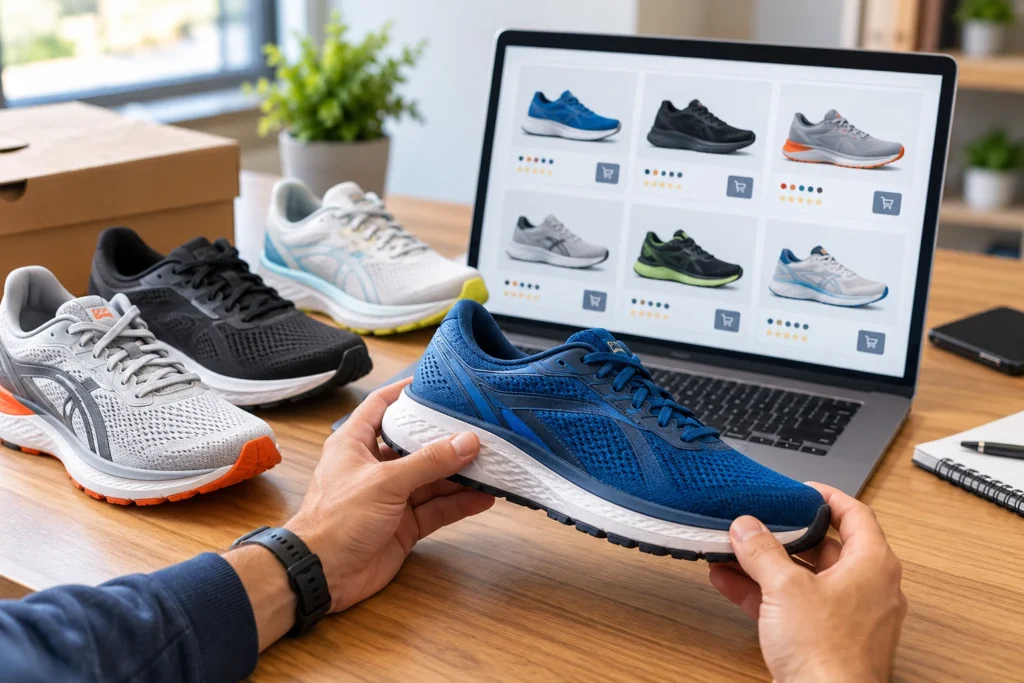
If you’re comfortable comparing sizes and specifications, these established daily-training models are useful starting points. They serve different fit and cushioning preferences.
The suitability scores below are editorial comparisons based on intended use and published features, not laboratory testing or verified customer ratings.
🏆 Daily Training Pick
Brooks Ghost 17
★★★★☆ 4/5 – Editorial suitability
A neutral road-running shoe with nitrogen-infused cushioning and a 10 mm heel-to-toe drop. I would shortlist this model for buyers seeking a conventional, cushioned daily trainer, provided its shape fits comfortably.
☁️ Cushioned Comfort Pick
ASICS GEL-Cumulus 27
★★★★☆ 4/5 – Editorial suitability
This neutral trainer uses FF BLAST PLUS cushioning and PureGEL technology, with a breathable engineered mesh upper. I would consider it for everyday road runs when smooth cushioning matters more than racing-specific features.
👟 Versatile Everyday Pick
New Balance Fresh Foam X 880 v15
★★★★☆ 4/5 – Editorial suitability
The 880 v15 combines Fresh Foam X cushioning with an engineered mesh upper for daily training. It deserves consideration if you want a versatile neutral running shoe and can find the right size and width.
Affiliate disclosure: As an Amazon Associate, we earn from qualifying purchases. Product availability, sizing, and prices may change.
Frequently Asked Questions About Buying Running Shoes Online
Is it safe to buy running shoes online?
Yes, buying running shoes online can be safe when you use a reputable retailer, verify product information, and understand return conditions. Check that the website uses secure payment methods and clearly identifies the seller. Avoid listings with suspiciously low prices or incomplete product details.
Should beginners buy their first running shoes online?
Beginners can buy running shoes online, but an in-person fitting is helpful when possible. If ordering online, measure both feet, choose shoes designed for your main running surface, and select a retailer offering suitable returns. Avoid purchasing several unfamiliar models without understanding their fit.
Should you order a bigger size when buying running shoes online?
Not automatically. Running shoes generally need some space in front of the longest toe, but sizing up without measuring can create heel slipping or instability. Check the manufacturer’s chart, consider foot width, and evaluate the fit after delivery. Size recommendations vary between models.
Can you buy running shoes from Amazon?
Yes, Amazon can be a convenient option when the listing matches the exact brand, model, and size you need. Verify the seller, product condition, authenticity, and return eligibility. Marketplace listings can have different terms, so check the individual order details before purchasing.
Is it cheaper to buy running shoes online?
Sometimes. Online stores make price comparisons easier and may discount previous-generation models or offer seasonal promotions. However, shipping charges, taxes, and return fees can reduce the savings. Compare the complete purchase cost rather than choosing solely by the advertised discount.
Final Verdict: Should You Buy Running Shoes Online?
Yes, buying running shoes online is worthwhile when you understand your fit requirements and choose a trustworthy retailer. It can offer convenient shopping, broad selection, and competitive pricing.
For first-time buyers or people with recurring fit difficulties, I favor an in-person fitting when available. After identifying a model that suits your feet, online shopping becomes a more predictable choice.
My final advice: Measure first, confirm the exact shoe model, review its return policy, and prioritize comfort over discounts. The best deal is a pair of running shoes you can wear comfortably and confidently.