

Quick Answer
It depends. The New Balance FuelCell Propel v5 is a good-value daily running shoe for those who want soft cushioning, not a fast racing plate. RunRepeat measured 143 SA of heel shock absorption, above its 131 SA category average. The trade-offs are modest bounce, fragile upper materials, and only average grip.
Is the Propel v5 worth buying?
- Best for relaxed road runs and value-focused runners.
- Its plate is TPU plastic, not carbon fiber.
- Skip it for race-level speed or rugged durability.
Soft-ride budget pick
Independent reviews vary: OutdoorGearLab scores it 64/100, while RunRepeat scores it 82/100. Their methods differ. Both identify meaningful compromises despite the attractive price.
OutdoorGearLab overall
RTINGS stability
RTINGS cushioning
Best for: Easy-paced training on roads and treadmills.
Not ideal for: Race-day speed or runners who wear through shoe uppers.
Price: $120 original US list; one tracked Amazon variant was $89.96 at review time.
Independent RTINGS laboratory scores (each out of 10)
I’m Steven Tyler. For this assessment, I compared published lab measurements, independent road tests, manufacturer specifications, and tracked pricing. The evidence reveals where this affordable New Balance trainer shines—and where it falls short.
What Is the New Balance FuelCell Propel v5 and Who Is It For?
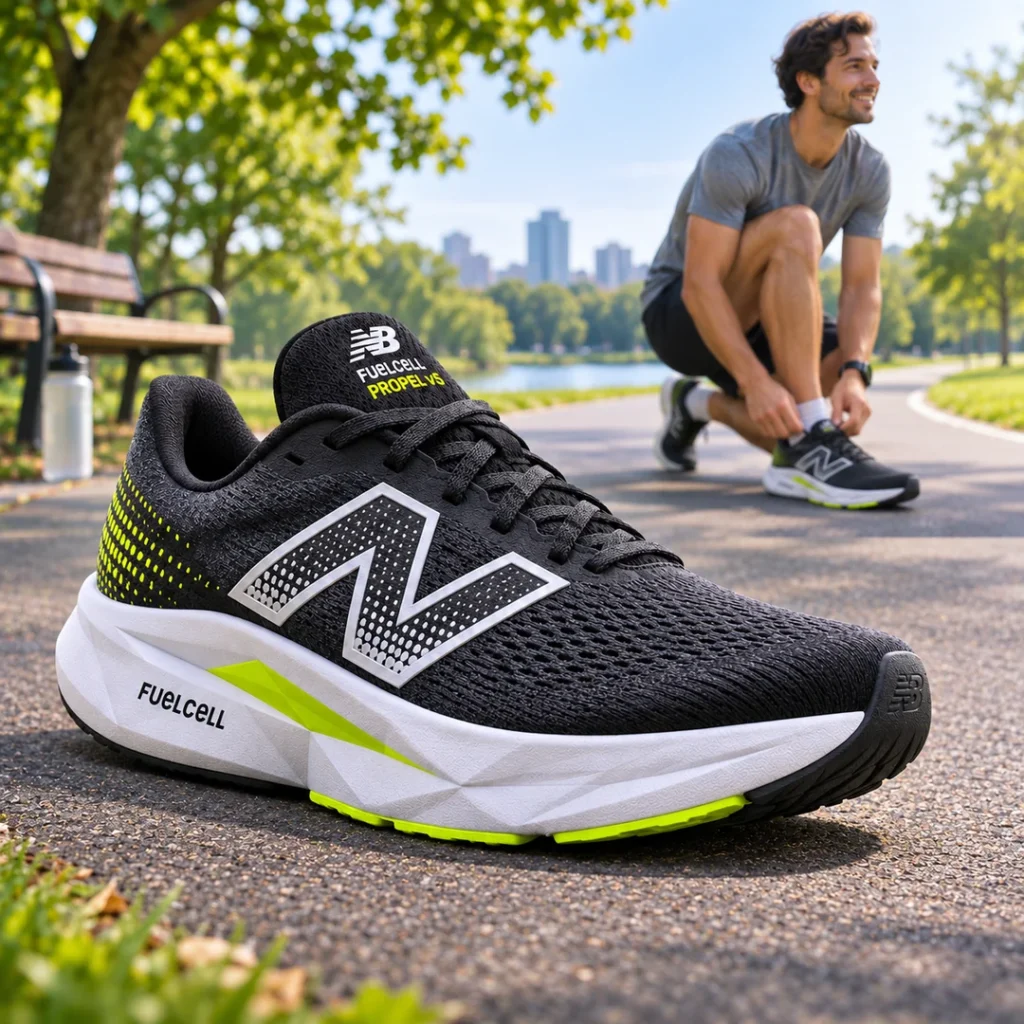
The Propel v5 is a neutral road-running shoe with soft FuelCell foam and a full-length TPU plate. It targets everyday runs, steady efforts, and treadmill sessions rather than competitive racing.
- Like a soft underfoot feel.
- Run mostly on smooth roads.
- Want a plated trainer at a modest price.
- You need lively speed-work performance.
- You need dependable wet-surface grip.
- You often wear through shoe linings.
New Balance FuelCell Propel v5 Pros and Cons
Softness and price lead its strengths. Weak upper durability and limited racing snap are its clearest weaknesses.
- 143 SA heel shock absorption in RunRepeat’s laboratory test.
- Excellent 5/5 breathability in RunRepeat’s older testing method.
- 6 mm listed drop suits runners who prefer lower drops.
- $120 original price undercuts many premium daily trainers.
- Toe mesh scored only 1/5 for lab abrasion durability.
- Heel padding also scored 1/5 for abrasion durability.
- Forefoot traction measured 0.42 versus 0.53 category average.
- TPU plate lacks the snap some buyers expect.
- Outsole grooves can trap small stones.
New Balance FuelCell Propel v5 Key Features: What Does Testing Show?
Does the FuelCell Foam Feel Soft Enough for Long Runs?
Yes. RunRepeat recorded 143 SA of heel shock absorption against its 131 SA category average. That supports the shoe’s comfort-first appeal.
Heel shock absorption: RunRepeat lab
Bars use a 0–150 SA display scale; the lab values are shown above.
Takeaway: Soft landings are a stronger reason to buy than speed.
Tip: Test the shoe on flat pavement before using it for mixed-surface runs.
Does the TPU Plate Make the Propel v5 Fast?
No. RTINGS gives its energy return 6.6/10 and bounciness 5.8/10. Those numbers do not suggest elite race-shoe propulsion.
Takeaway: The plate helps shape the ride more than it boosts speed.
RunRepeat found 62.5% forefoot energy return, just above its 61.5% category average. Faster runners should not treat the TPU plate as carbon-fiber performance.
How Stable Is the Soft Midsole?
Stability is mixed. RTINGS rates it 8.0/10, yet OutdoorGearLab describes the soft foam as less predictable on uneven surfaces.
Warning: Avoid assuming its plastic plate replaces dedicated stability support.
Is the Upper Breathable and True to Size?
Breathability is a standout strength, but fit deserves care. RunRepeat scored airflow 5/5 using its earlier method.
Its lab measured 93.1 mm internal width against a 95.2 mm average. RunRepeat’s fit feedback trends slightly small, while RTINGS reports strong true-to-size performance.
Tip: Try a wide option where sold and check toe clearance while standing.
Does the Outsole Grip Wet Roads and Last?
Grip is below average in RunRepeat’s forefoot traction test. It measured 0.42 against a 0.53 category average.
Forefoot traction: RunRepeat lab
Bars display the original friction measurements on a 0–1 scale.
Takeaway: Be cautious on damp, slick roads.
Is the Propel v5 Heavy for a Daily Trainer?
It is not especially light. New Balance lists 280 g, while RTINGS measured 273.2 g in its test sample.
How Does the New Balance FuelCell Propel v5 Perform in Real Tests?
New Balance FuelCell Propel v5 Full Specifications
| Specification | Propel v5 |
|---|---|
| Category and build | |
| Shoe type | Neutral road daily trainer |
| Midsole | New Balance FuelCell foam |
| Plate | Full-length TPU plastic |
| Bio-based foam content | About 3% (brand specification) |
| Upper | Structured synthetic mesh |
| Fit and geometry | |
| Listed men’s weight | 280 g / 9.9 oz |
| RTINGS measured weight | 273.2 g / 9.64 oz |
| Listed drop | 6 mm |
| RunRepeat heel stack | 35.2 mm |
| RunRepeat forefoot stack | 28.5 mm |
| RunRepeat forefoot fit width | 93.1 mm |
| Other details | |
| Removable insole | ✓ Yes |
| Carbon-fiber plate | ✗ No |
| Reflective details (RunRepeat) | ✗ No |
| Original US list price | $120 |
How Does the New Balance FuelCell Propel v5 Compare to Competitors?
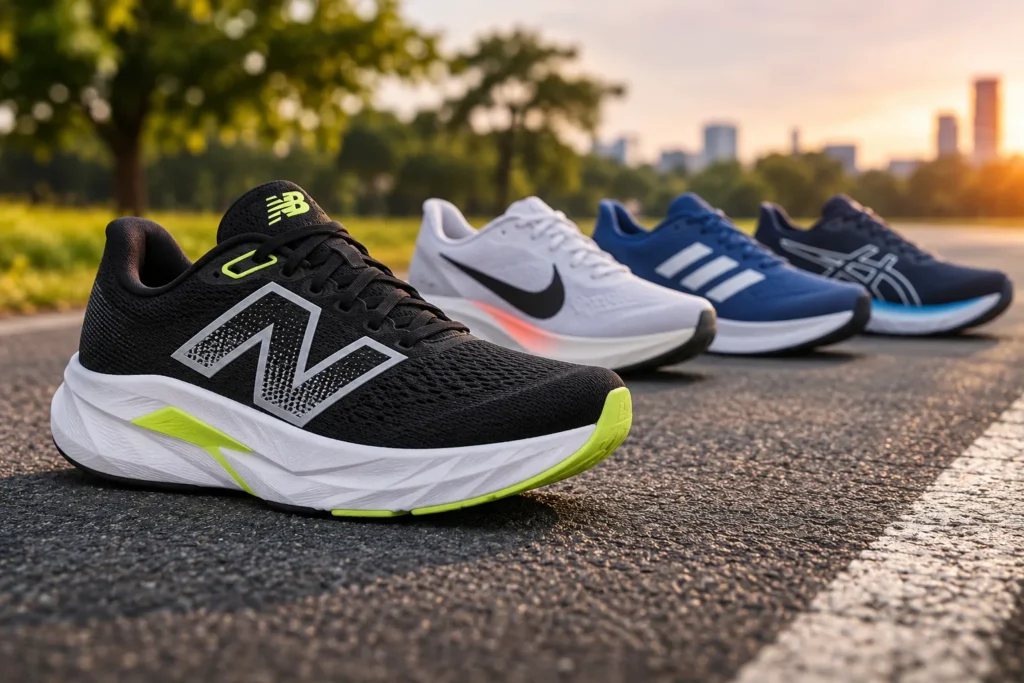
Propel v5 vs Reebok FloatZig 1: Which Is Better?
Choose Propel for a softer feel and lower list price. Choose FloatZig 1 if you prefer a firmer, rocker-shaped training ride.
Propel v5 vs HOKA Skyflow: Which Is Better?
Choose Propel for value. The Skyflow costs more at its original $160 list, but RunRepeat reports better traction and a more balanced ride.
| Feature | Propel v5 | FloatZig 1 | Skyflow |
|---|---|---|---|
| Original price | $120 | $130 | $160 |
| RunRepeat overall | 82/100 | 78/100 | 83/100 |
| Listed drop | 6 mm | 6 mm | 5 mm |
| Brand weight | 9.7 oz* | 9.8 oz | 10.0 oz |
| Cushion feel | Soft | Firm | Balanced |
| Traction | Moderate | Moderate | High |
| Best use | Soft daily miles | Firm daily miles | Smooth longer runs |
*RunRepeat’s comparative brand listing uses 9.7 oz; New Balance’s current displayed color listing states 9.9 oz.
For independent technical context, see RTINGS testing, RunRepeat’s lab measurements, and New Balance’s product specifications.
New Balance FuelCell Propel v5 Pricing: Is It Worth the Price?
Yes, at a genuine discount, if soft daily cushioning is your priority. The original US list price is $120.
A third-party tracker observed $89.96 on one Amazon listing near this review. Its lowest recorded price was $71.38 within a 135-day window. Prices vary by color, size, stock, and date.
New Balance FuelCell Propel v5 Soft Daily Running Shoes
Check the exact size and color price before buying.
Who Should Buy the New Balance FuelCell Propel v5?
Buy it if you value soft, affordable road cushioning more than all-out speed. The Propel v5 is a daily trainer first.
- Runners doing relaxed miles on flat road surfaces.
- Buyers who find the exact pair discounted below list.
- People who prefer soft foam over sharp rebound.
- Fast intervals and racing define most of your training.
- Wet traction and tough upper materials matter most.
What Are Real Buyers Saying About the New Balance FuelCell Propel v5?
A tracked Amazon listing showed 4.4/5 stars from 630 ratings. That sample is below a broad 4,000-review threshold, and its individual verified review text was not independently audited here.
Buyer Rating and Independently Reported Feedback
4.4/5 from 630 tracked Amazon ratings; count changes over time.
- Independent testers praise the soft foam underfoot.
- Breathable mesh helps keep warm runs more comfortable.
- Sale prices improve an already approachable value proposition.
- Independent abrasion testing found vulnerable toe and heel fabrics.
- Some testers found the plate less lively than expected.
- Lab traction and small-stone trapping raise surface concerns.
Final Verdict: Is the Propel v5 a Smart Budget Buy?
Yes for soft, easy daily miles at a fair sale price; no for runners who expect a speedy plated trainer. The FuelCell Propel v5 offers genuine cushioning, but the TPU plate delivers limited extra bounce. Weak toe and heel fabric durability is the bigger long-term concern. Even though one tracked Amazon listing had a 4.4/5 rating from 630 ratings, independent labs offer the clearest evidence. Buy it for comfort and value. Skip it if you need a tough upper or race-day response.
New Balance FuelCell Propel v5 Soft Plated Daily Trainer
A good deal for easy miles, not a substitute for a racing shoe.
Frequently Asked Questions
Does the New Balance FuelCell Propel v5 have a carbon plate?
No. It uses a TPU plastic plate, not a carbon-fiber plate. New Balance confirms that construction. RTINGS rates energy return 6.6/10, so buyers should not assume it provides the aggressive rebound of high-end carbon-plated racing shoes.
Is the New Balance FuelCell Propel v5 true to size?
Fit reports differ. RTINGS gives its true-to-size performance 9.6/10, while RunRepeat reports a slightly small fit. The latter measured 93.1 mm internal forefoot width. Check your usual running-shoe length and try a wide option if needed.
Is the FuelCell Propel v5 good for beginner runners?
It can suit beginners who want soft cushioning for relaxed road runs. But OutdoorGearLab recommends a more predictable shoe for new runners due to the mushy feel. The listed 6 mm drop is another fit factor worth considering.
Can you run a half marathon in the Propel v5?
Yes, if its cushioning and fit suit your training. The shoe’s 143 SA heel shock absorption supports comfort over distance. Still, its moderate bounce and less secure feel on uneven ground make it a weaker choice for racing fast.
Is the FuelCell Propel v5 waterproof?
No waterproof membrane is specified by New Balance. The structured mesh upper prioritizes breathability, and RunRepeat rated airflow 5/5 using its older method. Treat the shoe as a breathable road trainer rather than a waterproof rain-running option.
How durable is the New Balance Propel v5?
Upper durability is a real concern. RunRepeat awarded both toe mesh and heel padding just 1/5 in abrasion tests. The outsole wear figure matched its category average at 1.1 mm, so the upper is the clearer weak point.
Affiliate Disclosure: As an Amazon Associate, I earn from qualifying purchases. Links may earn a commission at no extra cost to you.