

Quick Answer
Yes, you can walk in running shoes. Most everyday running shoes work well for walking because they provide cushioning, traction, and support. The best choice depends on fit, stability, and comfort rather than the label. The American Orthopaedic Foot & Ankle Society’s footwear guidance recommends choosing athletic shoes that feel comfortable from the start.
What to know before walking in running shoes
- Everyday walking: Neutral daily running shoes often work well for errands and commuting.
- Long walks: Look for stable cushioning and enough toe room.
- Standing at work: Prioritize a stable platform and comfortable fit.
- Road surfaces: Road running shoes usually offer suitable grip for pavement and sidewalks.
- Specialized running shoes: Racing shoes may feel less practical for routine walking.
- Foot discomfort: Stop using shoes that repeatedly cause pain, numbness, or rubbing.
Quick fit check
- Check toe space: Leave approximately a thumb’s width beyond your longest toe.
- Check heel security: Your heel should remain comfortably in place.
- Test walking: Walk indoors before committing to longer distances.
Running shoes aren’t limited to running. If you already own a comfortable pair, you may not need separate walking shoes.
However, some running shoes feel better for walking than others. I’ll explain the differences, show what features matter, and help you choose the right pair.
What Does Walking in Running Shoes Actually Mean?
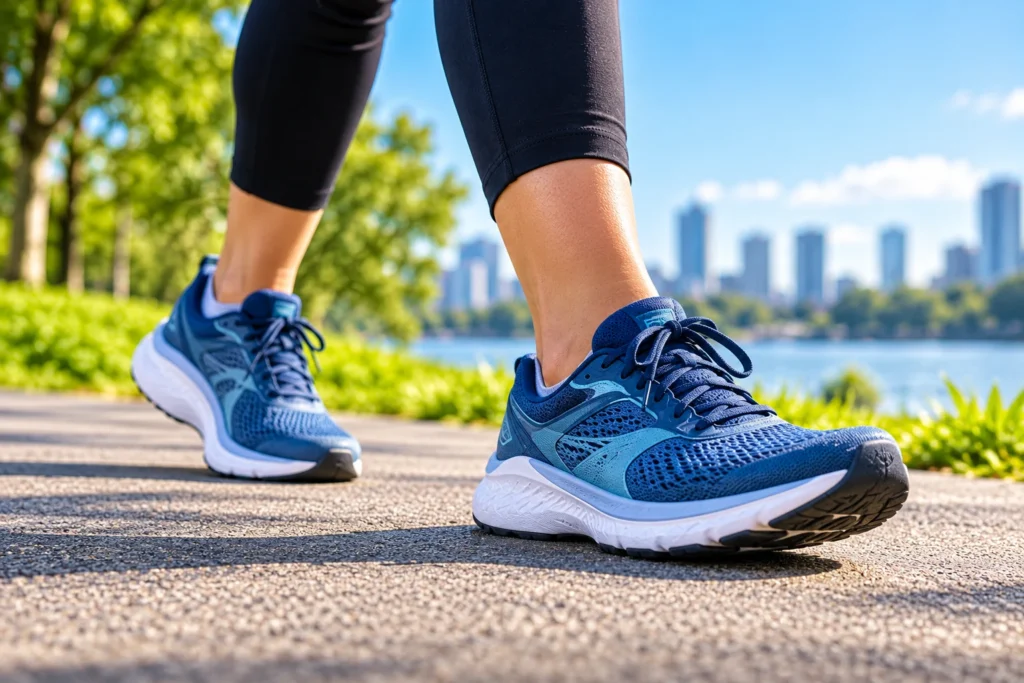
Walking in running shoes means using footwear designed for running during everyday walking, exercise walks, commuting, or other activities on foot.
Running shoes usually feature cushioning, breathable uppers, and outsoles designed for forward movement. These characteristics can also make them useful walking shoes.
However, running and walking create different movement patterns. This affects how shoes feel during each activity.
How do your feet move when walking?
Walking normally involves a heel-to-toe rolling movement. One foot stays in contact with the ground throughout the walking cycle.
Running involves greater impact forces and includes moments when neither foot touches the ground. Foot strike patterns can also vary between runners.
These differences explain why walking footwear often emphasizes smooth transitions, while running footwear accommodates greater loading.
Why are running shoes comfortable for walking?
Many running shoes have features that suit walking naturally. The following characteristics are especially useful:
- Cushioned midsoles: Help reduce the harsh feeling of repeated ground contact.
- Breathable uppers: Allow heat and moisture to escape.
- Secure heel construction: Helps limit unnecessary movement inside the shoe.
- Flexible forefoot: Allows comfortable forward movement.
- Durable outsoles: Provide grip on common walking surfaces.
Comfort still depends on your foot shape and how the shoe fits. Even an expensive running shoe can feel wrong for walking.
Can You Walk in Running Shoes Every Day?
Yes. Comfortable daily running shoes can be suitable for everyday walking, including shopping, commuting, and casual fitness activities.
In fact, running shoes are a practical option if you alternate between walking and running.
Are running shoes good for walking around town?
Road running shoes typically work well on sidewalks, paved paths, and indoor floors. Their cushioning and lightweight construction may help make longer periods on foot more comfortable.
However, wet tiles and slippery floors require particular attention to outsole traction. Not every running shoe grips every surface equally well.
Can you wear running shoes for walking at work?
Yes, provided your workplace allows athletic footwear. Stable, comfortable running shoes can work well for jobs involving frequent walking.
Standing for hours is different from moving continuously. A shoe that feels excellent during running may feel too soft or unstable during prolonged standing.
Consider these factors before wearing running shoes at work:
- Choose a stable sole rather than extreme softness.
- Make sure the heel feels secure.
- Select breathable materials for warm conditions.
- Check traction on workplace flooring.
- Follow any required slip-resistant or safety-footwear standards.
If you work around heavy objects, sharp materials, or hazardous surfaces, ordinary running shoes may not provide adequate protection.
Running Shoes vs. Walking Shoes: What’s the Difference?
The main difference is their intended movement. Walking shoes emphasize comfortable heel-to-toe motion, while running shoes accommodate higher-impact strides.
There is considerable overlap. Some running shoes work exceptionally well for walking.
| Feature | Running Shoes | Walking Shoes |
|---|---|---|
| Primary purpose | Running and repeated higher-impact movement | Walking and heel-to-toe movement |
| Cushioning | Often moderate to very thick | Varies; often focused on walking comfort |
| Flexibility | Varies from flexible to stiff or rockered | Often encourages smooth forefoot movement |
| Weight | Usually designed to limit unnecessary weight | Varies by design and materials |
| Typical surfaces | Road, track, or trail depending on model | Sidewalks, paths, and everyday surfaces |
| Best choice | People who run and walk | People who primarily walk |
Neither category automatically guarantees superior comfort. Fit, stability, flexibility, and personal preference matter more.
For further footwear guidance, see Harvard Health’s comparison of walking and running footwear.
What Are the Benefits of Walking in Running Shoes?
Running shoes can offer several practical benefits for walkers. These advantages depend on selecting a suitable everyday model.
1. Comfortable cushioning
Cushioning helps soften the sensation of repeated footsteps. This can be appealing when walking on pavement or other firm surfaces.
However, softer cushioning isn’t always better. Excessively soft shoes may feel unstable for some walkers.
2. Lightweight construction
Many running shoes use lightweight foam and breathable fabrics. This can make them pleasant for extended daily use.
Look for shoes that feel natural rather than bulky. Comfort matters more than a small difference in weight.
3. Breathable materials
Running shoes frequently use engineered mesh uppers. These materials can improve airflow compared with less breathable footwear.
Good ventilation is especially useful during warm-weather walks. Moisture-wicking socks can also improve comfort.
4. Versatility for different activities
A daily running shoe can often handle walking, jogging, travel, and errands. This versatility makes one pair practical for several activities.
You don’t necessarily need separate footwear for every workout. Specialized activities may still require dedicated shoes.
5. Multiple fit options
Many established running-shoe brands offer different widths and cushioning styles. Some also provide shoes with additional stability features.
These choices can help you find a closer match for your foot shape. Always verify the fit rather than relying on marketing labels.
Are There Any Disadvantages to Walking in Running Shoes?
Yes. Some running shoes can be less suitable for walking because of their shape, cushioning, stiffness, or intended use.
These are the main limitations to consider:
- Very soft cushioning: May feel unstable during slow walking or long periods of standing.
- High platform: May reduce ground feel and increase instability for some wearers.
- Stiff racing design: May feel awkward during casual walking.
- Specialized outsole: May provide unsuitable traction on certain surfaces.
- Faster shared wear: Walking mileage contributes to the wear of shoes also used for running.
- Higher cost: Performance-oriented running shoes may include features unnecessary for walking.
For example, a carbon-plated racing shoe can feel quite different from a conventional daily trainer. Its stiff platform may be unnecessary for relaxed walking.
That doesn’t make running shoes unsafe for walking. It means the shoe’s specific design matters.
How Do You Choose Running Shoes for Walking?
Choose running shoes that feel stable, fit securely, and allow comfortable forward movement. Don’t select a pair based only on cushioning thickness or brand popularity.
Step 1: Check your shoe size
Measure both feet while standing. Your larger foot should guide the size selection.
Leave approximately 1 cm, or about a thumb’s width, between your longest toe and the shoe’s front.
Step 2: Examine the cushioning
Look for cushioning that feels supportive without allowing excessive wobbling. Moderate cushioning is a sensible starting point.
Different walkers prefer different underfoot sensations. A short walking test helps reveal what feels right.
Step 3: Check stability
Your heel should sit securely inside the shoe. The midfoot should feel supported without uncomfortable pressure.
If the platform causes your ankle to wobble, try another model. Stability is especially important on uneven paths.
Step 4: Test flexibility and transitions
Walk naturally and pay attention to how your foot rolls forward. The shoe should not force an uncomfortable motion.
A curved or rockered sole may help some walkers transition smoothly. Others may prefer a conventional flexible forefoot.
Step 5: Check outsole traction
Examine the rubber outsole and tread pattern. Choose a design suitable for your usual walking surfaces.
Road shoes generally suit pavement, while trail shoes are intended for rougher terrain. Neither guarantees slip resistance on wet indoor floors.
Step 6: Walk before buying
Try the shoes with your usual walking socks. Walk around the store and pay attention to pressure, heel slipping, or rubbing.
Don’t assume uncomfortable shoes will become perfect after breaking in. A good fit should feel comfortable immediately.
The NHS athletic footwear guide also emphasizes appropriate space, secure fastening, and suitable support.
Can You Walk Long Distances in Running Shoes?
Yes. Running shoes can be suitable for long walks, provided they fit properly and remain comfortable over time.
For longer distances, choose footwear based on support, available toe space, cushioning, and traction.
Are running shoes good for walking five miles?
Many everyday running shoes can comfortably handle a five-mile walk. However, the right shoe depends on your walking habits and foot comfort.
Gradually increase walking distance when testing unfamiliar footwear. A shoe that feels fine for ten minutes may become uncomfortable later.
Can you walk ten miles in running shoes?
Yes, some running shoes are suitable for ten-mile walks. Secure fit and dependable cushioning become particularly important over long distances.
Consider testing your shoes on shorter walks first. Watch for hot spots, rubbing, numbness, and unusual discomfort.
What about walking on trails?
Road running shoes may work on smooth, dry, maintained paths. Rough trails and loose surfaces may require more specialized traction.
Trail running shoes usually feature outsoles designed for outdoor terrain. For rocky routes, hiking footwear may provide useful additional protection.
Can You Use the Same Running Shoes for Walking and Running?
Yes. One comfortable pair of daily running shoes can serve both activities.
However, frequent walking adds mileage and wear. Dedicated running shoes may last longer in terms of calendar time if you reserve them for training.
When should you use one pair?
- You run occasionally and walk regularly.
- You prefer minimizing the number of shoes you own.
- Your running shoes already feel comfortable while walking.
- You mainly use paved surfaces.
- You have no activity-specific footwear requirements.
When should you consider separate shoes?
- You run frequently and want to preserve your training shoes.
- Your workplace requires special footwear.
- You need different traction for different surfaces.
- Your running shoes feel uncomfortable while standing.
- You prefer different cushioning for running and walking.
For casual exercise, owning two pairs isn’t mandatory. Practical needs should guide your decision.
How Can You Tell If Running Shoes Are Good for Walking?
A suitable running shoe should feel comfortable immediately and remain stable during normal walking. Your foot should move naturally without painful pressure.
Use this checklist to evaluate your current shoes:
- Toe comfort: Your toes move freely without touching the front.
- Heel security: Your heel doesn’t repeatedly slip.
- Midfoot fit: The shoe feels secure without squeezing.
- Walking motion: Each step feels natural and smooth.
- Traction: The outsole grips your usual walking surfaces.
- Longer-walk comfort: No recurring rubbing, numbness, or unusual pain develops.
Try a short indoor walk first. Then increase the distance gradually if the shoes remain comfortable.
What Mistakes Should You Avoid When Walking in Running Shoes?
The most common mistake is assuming every running shoe will make a comfortable walking shoe. Model design and fit matter.
Choosing shoes only for maximum cushioning
Extra cushioning can feel pleasant, but thick foam doesn’t automatically mean better support. A stable platform is just as important.
Ignoring toe room
Tight shoes can cause rubbing, pressure, and discomfort. Make sure your toes have room to spread naturally.
Using worn-out shoes
Cushioning and outsole materials gradually wear down. Shoes that once felt comfortable may eventually lose support or traction.
Wearing racing shoes for every walk
High-performance racing shoes are designed for specific running demands. Their stiff plates or unusual geometry may feel unnecessary for walking.
Assuming walking shoes and running shoes are identical
These categories overlap, but their designs can differ significantly. Choose based on comfort and intended activity.
Ignoring persistent foot discomfort
Repeated pain, tingling, or numbness shouldn’t be dismissed as normal. Recheck your fit and stop wearing shoes that consistently cause problems.
If symptoms persist, consult a qualified healthcare professional. Appropriate footwear can help comfort but doesn’t replace medical assessment.
How Long Do Running Shoes Last If You Use Them for Walking?
Running shoes have no universal replacement date. Lifespan depends on materials, mileage, walking surfaces, gait, and wear patterns.
The American Orthopaedic Foot & Ankle Society gives approximately 300–500 running miles as a common replacement guideline. Walking wear varies, so don’t treat that range as a strict walking-shoe deadline.
Instead, watch for these signs:
- The outsole tread has become noticeably smooth or uneven.
- The midsole feels compressed or less supportive.
- The heel counter has lost its original shape.
- The upper has developed holes or structural damage.
- The shoe causes discomfort that wasn’t present before.
A simple mileage log may help you notice gradual deterioration. Inspect the shoes regularly rather than relying only on their age.
Which Running Shoes Are Worth Considering for Walking in 2026?
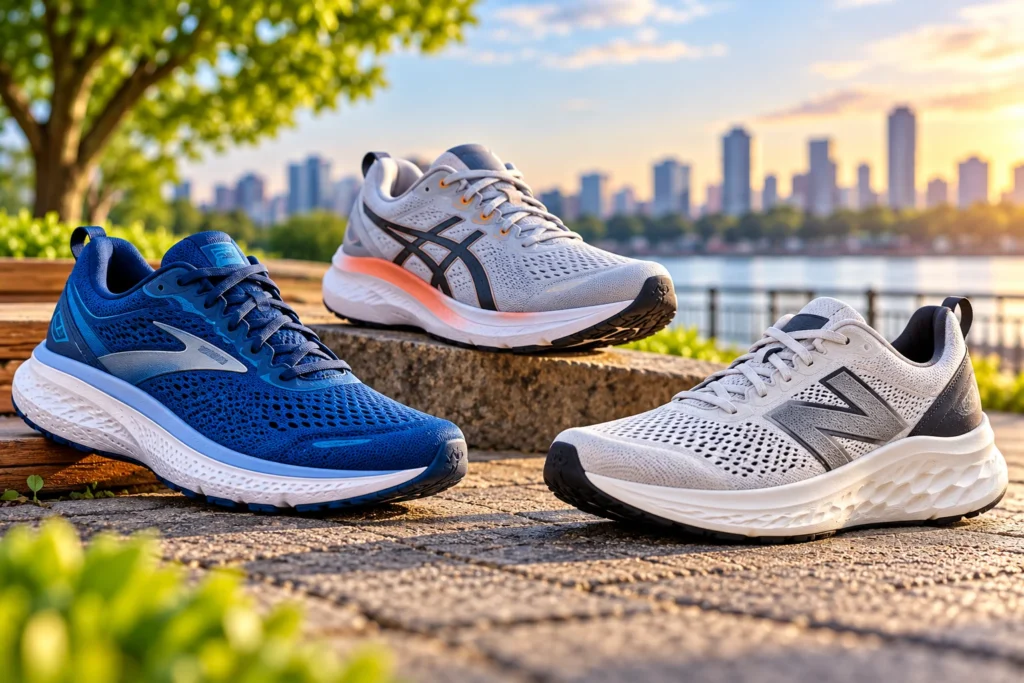
For walking, I would start with everyday neutral running shoes rather than specialized racing models. Balanced cushioning and dependable fit are the priorities.
These established models are useful starting points for comparison. They aren’t guaranteed to suit every foot, so check current sizing and availability.
🏆 Balanced Everyday Choice
Brooks Ghost 17
★★★★☆ 4/5 Editorial Fit Rating
The Ghost 17 features balanced cushioning, a breathable upper, and a 10 mm heel-to-toe drop. I would shortlist it for someone wanting a conventional daily trainer for both walking and running.
👟 Soft Daily Trainer
ASICS Gel-Cumulus 27
★★★★☆ 4/5 Editorial Fit Rating
This neutral trainer combines FF Blast Plus cushioning, PureGel technology, and an 8 mm drop. I would consider it for walkers who prefer a smooth, cushioned feel without choosing a racing shoe.
🚶 Alternative Cushioning Feel
New Balance Fresh Foam X 880 v15
★★★★☆ 4/5 Editorial Fit Rating
The 880 v15 uses Fresh Foam X cushioning, an engineered mesh upper, and a 6 mm drop. I would compare it with the other two options when looking for a versatile daily shoe with a different underfoot feel.
Affiliate disclosure: As an Amazon Associate, we may earn from qualifying purchases. These links open Amazon search results rather than a specific product listing. Editorial fit ratings are subjective comparisons, not customer review averages or hands-on test scores.
Frequently Asked Questions
Is it okay to wear running shoes for normal walking?
Yes, running shoes are generally suitable for normal walking if they fit properly and feel comfortable. Everyday running shoes often provide useful cushioning, support, and traction. Avoid models that feel unstable, restrict movement, or repeatedly cause discomfort.
Are running shoes better than sneakers for walking?
Not necessarily. The term sneakers covers many casual and athletic shoes, including running shoes. A properly fitted running shoe may provide more suitable cushioning than a flat fashion sneaker, but a comfortable walking-specific sneaker can work equally well.
Can walking in running shoes cause foot pain?
Walking in running shoes doesn’t automatically cause foot pain. However, incorrect sizing, unsuitable cushioning, poor stability, or worn materials can contribute to discomfort. Persistent pain warrants a footwear assessment and potentially advice from a qualified healthcare professional.
Can you wear trail running shoes for everyday walking?
Yes, although trail running shoes may feel less smooth on pavement because of their aggressive outsoles. They can be useful on dirt paths, gravel, and uneven ground. For predominantly urban walking, road running shoes are often more practical.
Do you need separate running and walking shoes?
No, separate pairs aren’t essential for everyone. One comfortable daily trainer can support walking and running. Dedicated shoes may make sense if you train frequently, have different footwear preferences, or need specialized traction or workplace protection.
Final Verdict: Should You Walk in Running Shoes?
Yes, you can confidently use suitable running shoes for walking. For many people, a comfortable everyday running shoe is a practical choice for both activities.
Prioritize proper fit, balanced cushioning, secure heel support, and reliable traction. Avoid choosing shoes simply because they have the thickest foam or the highest price.
If your current running shoes feel comfortable throughout your normal walks, there’s usually no reason to replace them with separate walking shoes solely because of their label.
My recommendation: Start with a comfortable neutral daily trainer, test it on your usual surfaces, and let your feet guide the final decision.