

QUICK ANSWER
It depends. The Salomon Sense Ride 5 is stable and secure on gravel and mixed paths. However, its firm ride, modest forefoot cushioning, and weak wet-rock grip limit its appeal on rugged trails. It best suits runners who mix pavement with moderate dirt routes.
- Heel stack: 29.6 mm claimed; 27.2 mm measured by RunRepeat.
- 3.5 mm lugs suit mixed, mainly dry terrain.
- Consider softer footwear for frequent rocky descents.
Best for: Daily runs on gravel, park paths, and smooth singletrack.
Not ideal for: Wide forefeet, sharp rocks, or slippery technical routes.
Price reference: $140 original list price; Amazon was listed at $149 on a recent tracker check.
Ratings above are from OutdoorGearLab, not this website. Amazon link opens product search results.
INDEPENDENT TEST CATEGORY SCORES — OUTDOORGEARLAB
Source: OutdoorGearLab’s independent test. These are its scores, not new tests by Steven Tyler.
The Sense Ride 5 aims to bridge pavement and trail running.
I’m Steven Tyler. This evidence-based review uses independent testing and retailer feedback, not my own wear tests.
What Is the Salomon Sense Ride 5 and Who Is It For?
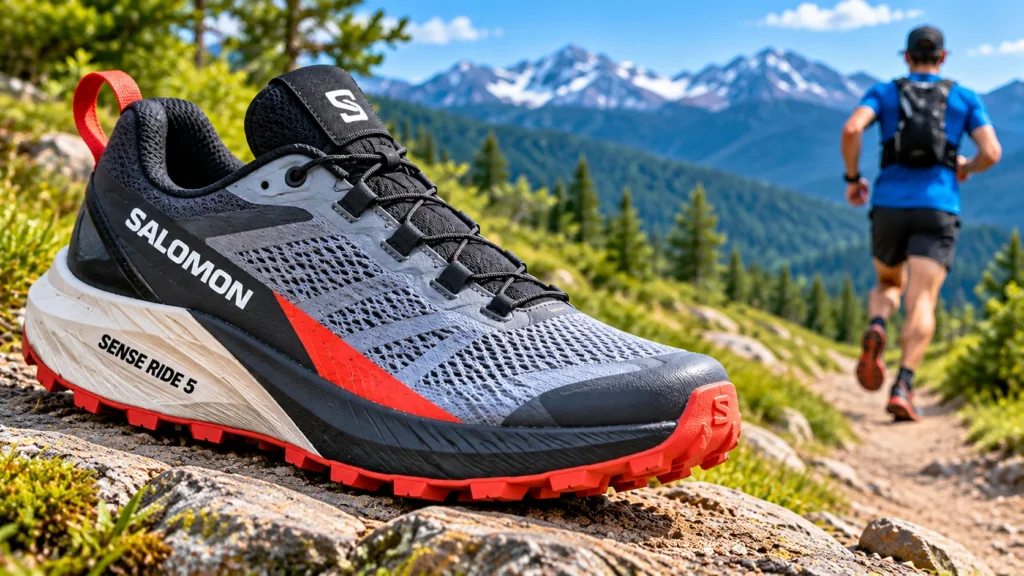
The Salomon Sense Ride 5 is a neutral mixed-terrain shoe with Energy Foam, Contagrip rubber, and Quicklace.
Its 3.5 mm lugs suit pavement links better than aggressive mountain tread.
Reviewers praise stability but flag firm cushioning and fit concerns.
- Run mostly on gravel and smooth forest trails.
- Prefer secure midfoot lockdown over plush softness.
- Need one shoe for occasional road connections.
- Long rocky runs demand greater shock absorption.
- Wet slabs and mud dominate your routes.
- Your toes need a generous, wide shape.
Salomon Sense Ride 5 Pros and Cons
The Sense Ride 5 is stable and versatile, but firm, snug-fitting, and less secure on wet rock.
- Stable ride earned 8.0/10 from OutdoorGearLab testers.
- Foot protection earned 8.8/10 in the same test.
- 3.5 mm lugs work across road-to-trail routes.
- Quicklace closure provides efficient, secure midfoot lockdown.
- Heel shock absorption trails RunRepeat’s tested category average.
- Toe box may feel short or narrow.
- Wet rock and deep mud expose traction limits.
- Lace-storage pocket can frustrate runners during adjustments.
Salomon Sense Ride 5 Key Features — What Do Independent Tests Show?
Does Energy Foam Feel Cushioned Enough?
Energy Foam feels responsive, not plush. RunRepeat measured 108 SA heel shock absorption versus a 122 SA average.
HEEL SHOCK ABSORPTION (SA; HIGHER MEANS MORE IMPACT DAMPING)
Scale uses 160 SA as the upper end of RunRepeat’s reported sample range.
Takeaway: Responsive foam does not guarantee soft landings.
Forefoot damping measured just 65 SA, a concern for toe strikers.
Choose this shoe for smooth daily miles before using it on sharp, rocky trails.
Is Contagrip Reliable on Wet and Loose Trails?
Contagrip works best on dry dirt and gravel. Its 3.5 mm lugs also tolerate pavement.
Takeaway: Mixed-terrain range is not the same as technical-trail grip.
Slick rock, snow, and deep mud demand better traction.
Slow down on wet stone and steep, slick descents; traction varies with surface conditions.
Does the Quicklace System Secure the Foot?
Quicklace and SensiFit provide secure, single-pull lockdown.
Takeaway: Secure lockdown is an advantage, but lace storage is fiddly.
Reviewers found lace storage awkward. Tuck the cord before running.
Is the Upper Breathable and Comfortable?
The mesh scored 4/5 for breathability in RunRepeat testing.
Takeaway: Airflow is a strength; toe-room tolerance is personal.
Some found it narrow. Compare your normal size with a half size up.
Try shoes late in the day with your actual running socks.
Can the Sense Ride 5 Handle Long-Term Wear?
Blister reported good outsole condition after 110 mixed-terrain miles.
Takeaway: Early outsole wear looks promising, not proven for every runner.
Durability still depends on gait, terrain, and use.
Does It Have Enough Protection for Rocky Terrain?
It lacks a rock plate. OutdoorGearLab scored protection 8.8/10, though RunRepeat noted rock feedback.
Takeaway: Protection and ground feel can vary with impact and foot strike.
Frequent sharp scree favors a mountain-focused shoe.
How Does the Salomon Sense Ride 5 Perform in Lab Tests?
RunRepeat found 60.2% forefoot energy return versus a 59.8% average, but below-average heel shock absorption.
MEASURED PERFORMANCE — THIRD-PARTY LAB DATA
Slightly above RunRepeat’s 59.8% test-set average.
Below the 122 SA test-set average.
RunRepeat’s lab smoke-test result.
Less than the 14.9 N category average.
RunRepeat’s men’s sample; weights vary by size.
Good energy return does not guarantee soft landings.
Salomon Sense Ride 5 Full Specifications
Men’s brand specs and independently measured lab values follow.
| Specifications | |
|---|---|
| FIT AND BUILD | |
| Category | Neutral trail runner |
| Upper | Engineered mesh with SensiFit |
| Closure | Quicklace, single pull |
| Waterproof (standard model) | ✗ No |
| CUSHIONING AND GEOMETRY | |
| Midsole | Energy Foam |
| Heel / forefoot stack (brand) | 29.6 / 21.3 mm |
| Heel-to-toe drop (brand) | 8.3 mm |
| Heel / forefoot stack (lab) | 27.2 / 18.5 mm |
| Rock plate | ✗ No |
| OUTSOLE AND WEIGHT | |
| Outsole | All Terrain Contagrip rubber |
| Lug depth | 3.5 mm |
| Men’s weight (lab) | 291 g / 10.3 oz per shoe |
| Removable insole | ✓ Yes |
Its moderate tread favors mixed routes.
How Does the Sense Ride 5 Compare to Competitors?
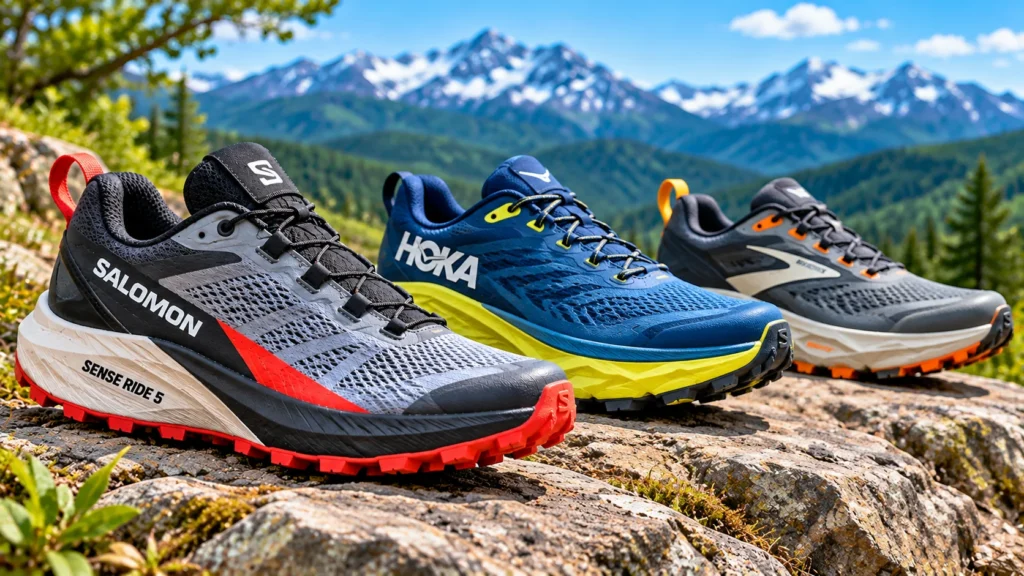
Speedgoat 5 prioritizes cushioning and traction; Cascadia 17 adds rock-plate protection. Sense Ride 5 suits roads better.
Sense Ride 5 vs Hoka Speedgoat 5
Speedgoat 5 wins on rough terrain with 5 mm Vibram lugs and a 4 mm drop.
Sense Ride 5 vs Brooks Cascadia 17
Cascadia 17 wins for rocky terrain with its Trail Adapt rock plate and 8 mm drop.
The prices below are original US list prices, not verified live offers.
| Feature | Sense Ride 5 | Speedgoat 5 | Cascadia 17 |
|---|---|---|---|
| Original list price | $140 | $155 | $140 |
| Drop | 8.3 mm | 4 mm | 8 mm |
| Lugs | 3.5 mm | 5 mm stated | About 4 mm |
| Rock plate | No | No dedicated plate | Yes |
| Best use | Road and easy trails | Long, rugged runs | Rocky mixed trails |
Choose by terrain and fit before price.
Salomon Sense Ride 5 Pricing — Is It Worth the Price?
The original US list price was $140. A recent tracker listed Amazon near $149.
The same tracker saw $96.97 elsewhere, its lowest since November 9—not a lifetime low.
Near full price, compare alternatives. Discounts make Salomon more attractive.
Salomon Sense Ride 5 — Mixed-Terrain Trail Running Shoe
Check size-specific pricing; older models can vary widely between sellers.
Who Should Buy the Salomon Sense Ride 5?
Buy it for mixed, moderate trails; skip it for soft cushioning or slick rock.
- Runners mixing city roads with hardpacked paths each week.
- People who prize heel hold and stable foot placement.
- Shoppers finding a genuine discount in their correct size.
- You regularly descend slippery rock or run deep mud.
- You need roomy toes and thick forefoot impact padding.
Bottom line: Buy for your usual terrain, not occasional extremes.
What Are Real Buyers Saying About the Sense Ride 5?
REI shows 4.1/5 from 203 reviews. Buyers praise lockdown but differ on fit and firmness.
This is not an Amazon rating; its current review count was unverified.
- Secure fit and easy adjustments during mixed-terrain outings.
- Comfortable transitions from pavement to packed dirt trails.
- Useful grip for routine runs and light hiking.
- Small-fitting sizes can leave toes short of space.
- The lace pocket takes practice to use smoothly.
- Firm landings divide opinions on longer rough outings.
Read reviews from runners with similar feet and routes.
Final Verdict — Does the Sense Ride 5 Suit Your Trails?
The Salomon Sense Ride 5 suits roads, gravel, and smooth trails. Independent tests favor its stability, upper, and outsole, but reveal firm landings and traction limits. Buy only if its shape fits comfortably and the price makes sense. Rocky ultras and wet technical terrain call for softer cushioning or deeper tread. Its strength is everyday versatility within moderate conditions, not all-terrain mastery.
Prioritize fit and everyday terrain over versatility claims.
Salomon Sense Ride 5 — Secure Everyday Trail Trainer
A practical pick for mixed surfaces when cushioning demands stay moderate.
Frequently Asked Questions
Is the Salomon Sense Ride 5 true to size?
Fit reports vary, but several testers found it slightly short or snug at the toes. RunRepeat recorded a slightly-small trend from owner feedback. Try your usual running size and half a size up, then choose the pair that holds your heel without crowding your toes.
Is the Salomon Sense Ride 5 waterproof?
No. The standard Sense Ride 5 uses breathable mesh rather than a waterproof membrane. That helps airflow in warm conditions, but rain and stream water can enter. Check the exact product name if you need a separate waterproof GTX version.
Is the Sense Ride 5 good for hiking?
Yes, for lighter hikes on established trails. Its Contagrip outsole and secure midfoot hold suit gravel paths and dry dirt. The 3.5 mm lugs and lack of a dedicated rock plate make it a weaker match for constant scree, wet slab, or heavy-load backpacking.
Can you run on roads in the Sense Ride 5?
Yes. Road-to-trail transitions are among its best uses. The 3.5 mm lugs are less obtrusive on pavement than deep mountain tread, although a road shoe may feel smoother for long highway sections. Choose this pair when off-road miles remain part of the run.
Does the Salomon Sense Ride 5 have a rock plate?
No. The standard model does not have a separate rock plate, according to REI’s specification listing. Its foam and outsole still provide some protection. If your runs cross frequent sharp stones, consider the Brooks Cascadia 17 and its integrated plate system.
How long does the Salomon Sense Ride 5 last?
There is no reliable guaranteed mileage for every runner. Blister reported good outsole condition after 110 miles of mixed use, which supports promising early durability. Your terrain, gait, weight, and road mileage will change wear, so inspect tread and midsole feel regularly.
Affiliate Disclosure: As an Amazon Associate, I earn from qualifying purchases. Affiliate links may earn a commission at no extra cost to you.


