

Quick Answer
Yes, the Puma Deviate Nitro 2 is worth buying at a discount. This Puma Deviate Nitro 2 review finds strong wet-road grip, soft foam, and a useful carbon plate. It suits tempo runs and marathon training. However, its narrow toe box and 257g weight make it less suitable for wide feet and fast racing.
Why consider the Deviate Nitro 2?
- Above-average traction in independent lab tests.
- Suitable for both fast workouts and longer runs.
- Best value when priced well below its original $160.
🏆 Standout Wet-Road Grip
*RunRepeat score converted to five stars. **PUMA customer value rating. Grip and cushioning scores come from OutdoorGearLab.
| Best for | Tempo runs and marathon training |
| Not ideal for | Wide feet and lightweight racing |
| Retail price | $160 |
| Recent offer | From $64.95, subject to availability |
Check the price for your size before ordering.
Category Scores
8/10
7.5/10
7/10
7/10
6/10
Source: OutdoorGearLab independent testing.
A good speed shoe should handle more than fast laps. It should also feel comfortable when your legs get tired.
I’m Steven Tyler. This review draws on independent lab tests, published road tests, and buyer feedback rather than personal wear testing.
Published tests include a 75km trial and extensive marathon-pace workouts. The results reveal an interesting trade-off between grip, speed, and weight.
What Is the Puma Deviate Nitro 2 and Who Is It For?

The Puma Deviate Nitro 2 is a neutral, carbon-plated road running shoe. It bridges the gap between daily trainers and race shoes.
PUMA pairs Nitro Elite foam with its PWRPLATE to support faster running. PumaGrip adds traction on wet roads without relying on a bare foam outsole.
Its main appeal is versatility. You can complete a tempo workout without buying a separate race shoe for every hard session.
- Train for half marathons or full marathons.
- Run on wet roads and damp paths.
- Want one shoe for mixed training sessions.
- Your toes need extra room to spread.
- You prefer flexible shoes for easy runs.
- You need the lightest possible race shoe.
Puma Deviate Nitro 2 Pros and Cons
Grip is its biggest strength, while the narrow fit deserves the most care. Several reviewers also found the shoe heavy for faster workouts.
- Strong PumaGrip traction scored 8/10 in independent gear testing.
- Soft dual-layer foam helps cushion longer road running sessions.
- Carbon composite plate supports smooth transitions during faster efforts.
- Thick 3.7mm outsole rubber offers strong potential for durability.
- Breathable mesh upper helps release heat during warm runs.
- Narrow toe box can squeeze feet during long runs.
- Weighs 257g, making it heavier than lighter speed trainers.
- Stiff forefoot can feel uncomfortable during slow recovery runs.
- Heel energy return falls short of leading performance foams.
- Neutral platform lacks dedicated support for runners needing guidance.
Puma Deviate Nitro 2 Key Features — What Tests Reveal
1. How Comfortable Is the Nitro Elite Foam?
The foam feels soft without making the shoe excessively tall. RunRepeat measured midsole softness at 16.6 HA, softer than its tested average.
Heel shock absorption reached 130 SA, close to the lab average of 131 SA. Softness alone does not guarantee superior impact protection.
Use the Deviate for steady long runs if you enjoy a firmer forefoot beneath soft foam.
Takeaway: The dual foam design offers comfort without excessive bulk.
2. Does the Carbon Plate Make You Faster?
The carbon composite plate helps the shoe roll forward during faster runs. However, it cannot guarantee faster race times.
Independent testing measured 63.2% forefoot energy return. That exceeds the tested average but falls below leading shoes.
Forefoot Energy Return — Lab Comparison
Source: RunRepeat lab dataset. Higher values indicate greater measured energy return.
Takeaway: Its plate offers useful assistance, but the foam does not lead the field in rebound.
Runners moving from plain daily trainers can enjoy the smoother ride. Experienced racers may prefer a lighter and more aggressive shoe.
3. How Good Is PumaGrip on Wet Roads?
PumaGrip is the standout feature. The outsole achieved a traction score of 0.59 against a tested average of 0.53.
Forefoot Traction — Lab Comparison
Source: RunRepeat. Bars are scaled to the highest measured result of 1.05.
Takeaway: Traction is a stronger reason to buy this shoe than maximum energy return.
That matters when you run through rain or turn on damp paths. The outsole inspires more trust than many exposed-foam designs.
4. Does the Deviate Nitro 2 Fit True to Size?
Most runners can start with their usual size. However, the tapered toe box creates a snug fit near the toes.
Lab tests measured 75mm around the big toe area. The tested average was 78.6mm.
Try the wide version if standard shoes often squeeze your toes. Do not rely on extra length alone.
Takeaway: Normal length does not mean a roomy fit.
5. How Durable Is the Outsole?
The rubber coverage is one of the shoe’s best assets. RunRepeat measured 3.7mm of rubber against a tested average of 3.1mm.
Runner’s World reported no early traction loss after 160 miles. Individual wear will still depend on your gait and running surface.
Takeaway: The extra rubber favors training life over minimum weight.
6. Is It Lightweight Enough for Speed Work?
The 257g lab weight works well for tempo runs but exceeds several speed-focused rivals. Saucony’s Endorphin Speed 3 weighs only 225g.
That extra mass comes with practical benefits for training. The outsole coverage and padded upper improve everyday use.
Takeaway: Choose it for dependable workouts rather than pure race speed.
How Does the Puma Deviate Nitro 2 Perform in Real Tests?
Independent testing shows a balanced trainer with particularly strong grip. Stability and weight receive more modest scores.
Measured Performance
Excellent · 8/10
Very Good · 7.5/10
Good · 7/10
Average · 6/10
Average · 6/10
Numerical scores: OutdoorGearLab. Performance labels are editorial interpretations.
The OutdoorGearLab test supports its role as a mixed-use trainer rather than a specialist racer.
Puma Deviate Nitro 2 Full Specifications
These specifications combine official men’s product details with independent lab measurements.
| Specification | Details |
|---|---|
| General | |
| Brand | PUMA |
| Men’s model | 376807 |
| Shoe type | Neutral road trainer |
| Lab weight | 257g / 9.1 oz |
| Retail price | $160 |
| Midsole and Outsole | |
| Midsole foam | Nitro and Nitro Elite |
| Plate | Carbon composite PWRPLATE |
| Measured heel stack | 31.7mm |
| Measured forefoot stack | 26.1mm |
| Measured drop | 5.6mm |
| Official listed drop | 6mm US / 8mm UK |
| Outsole | PumaGrip rubber |
| Lab outsole thickness | 3.7mm |
| Fit and Upper | |
| Upper | Breathable mesh |
| Sizing | True to size |
| Toe box | Snug and tapered |
| Removable insole | ✓ Yes |
| Reflective details | ✓ Yes |
| Heel pull tab | ✗ No |
| Dedicated stability system | ✗ No |
The official PUMA listing gives a 6mm drop, while its UK listing states 8mm. Lab measurements provide another reference.
How Does the Puma Deviate Nitro 2 Compare to Competitors?
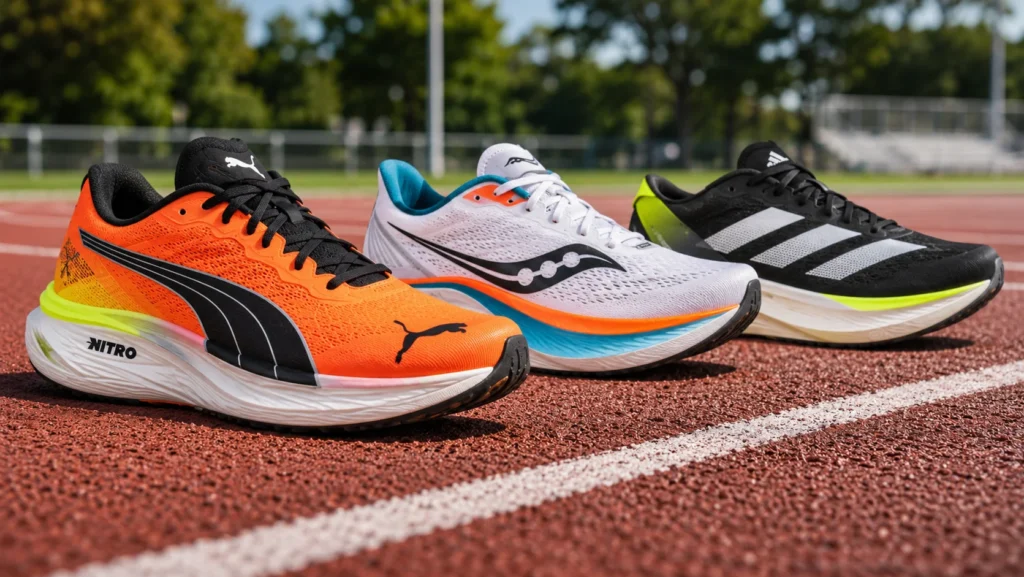
The Deviate Nitro 2 competes well on grip and versatility. Its rivals offer different benefits for runners who value speed or fit.
Puma Deviate Nitro 2 vs Saucony Endorphin Speed 3
The Endorphin Speed 3 is lighter and offers a more pronounced rolling ride. Its nylon plate suits runners who enjoy quick turnover.
Choose the Puma for strong outsole grip. Choose Saucony when lower weight matters more.
Puma Deviate Nitro 2 vs Adidas Adizero Boston 12
The Boston 12 offers a wider platform and a firmer performance ride. Its Continental rubber outsole also provides strong traction.
The Puma suits runners who enjoy softer foam. The Boston suits those who prefer a more structured feel.
| Feature | Deviate Nitro 2 | Endorphin Speed 3 | Boston 12 |
|---|---|---|---|
| Retail price | $160 | $170 | $160 |
| Lab weight | 257g | 225g | 261g |
| Plate | Carbon composite | Nylon | EnergyRods |
| Outsole | PumaGrip | XT-900 | Continental |
| Best use | Mixed training | Speed work | Fast long runs |
| Main drawback | Narrow fit | Less outsole coverage | Less upper padding |
All three are capable trainers. Your foot shape and preferred ride should guide the final choice.
Puma Deviate Nitro 2 Pricing — Is It Worth the Price?
The Deviate Nitro 2 offers its best value below the original $160 price. Older stock can make it an attractive budget performance trainer.
Price Snapshot
Original MSRP
Recent Amazon offer*
Recent tracked low**
*Running Shoes Guru price listing. **Deal.ai tracked retailer low at Shoebacca, not Amazon. Prices vary by size, seller, and stock.
A price below $100 is my suggested buying target. Near full retail, compare newer models before you order.
Puma Deviate Nitro 2 Carbon-Plated Road Running Shoes
Check available sizes and discounts before you buy.
Who Should Buy the Puma Deviate Nitro 2?
Buy the Deviate Nitro 2 if you want a plated trainer with dependable road grip. Avoid it if you need extra width or flexibility.
- Marathon runners building their weekly miles.
- Neutral runners with normal or narrow feet.
- Runners who train outdoors in rainy weather.
- Buyers seeking discounted plated running shoes.
- You need a spacious standard toe box.
- You prefer soft, flexible recovery shoes.
- You require dedicated stability features.
- Race-day weight matters more than durability.
What Are Real Buyers Saying About the Puma Deviate Nitro 2?
Buyer feedback favors grip, comfort, and value. Fit remains a recurring concern across published reviews.
50 ratings on PUMA US
70%
10%
4%
4%
12%
Amazon’s live review count and rating were not available for verification.
- Comfortable foam works well across many types of runs.
- Reliable outsole provides confidence on wet and dry surfaces.
- Tapered front can cause pressure during longer running sessions.
- Forefoot stiffness may reduce comfort at slower recovery paces.
The narrow forefoot deserves more attention than its star rating alone suggests. Try the shoe before committing to high-mileage training.
Final Verdict — Is the Deviate Nitro 2 Still Worth Buying?
Yes. The Puma Deviate Nitro 2 remains a useful performance trainer, especially when you find it on sale.
Its greatest strength is the mix of grip, cushioning, and training versatility. The biggest reason to skip it is the narrow toe box.
PUMA customers give it 4.2 out of 5 stars across 50 ratings. Independent RunRepeat lab testing also supports its strong value.
I would choose it for regular tempo runs and steady marathon training. Pair it with a flexible daily trainer for easier days.
Buy at a discount, but never sacrifice fit just to save money.
Puma Deviate Nitro 2 Neutral Carbon-Plated Road Running Shoes
A versatile plated trainer for runners who value grip and discounted pricing.
Frequently Asked Questions
Is the Puma Deviate Nitro 2 good for daily running?
Yes, it can handle daily runs if you enjoy plated shoes. Its foam provides enough cushioning for steady mileage.
However, the stiff forefoot may feel less comfortable during slow runs. A flexible daily trainer can work better for relaxed recovery sessions.
Does the Puma Deviate Nitro 2 have a carbon plate?
Yes, it uses a carbon composite PWRPLATE within its dual-layer foam midsole. The plate helps control flex and supports forward transitions.
It works best alongside the foam and sole shape. The plate alone does not guarantee better running times.
Is the Puma Deviate Nitro 2 good for marathons?
Yes, it works well for marathon training and can serve as a race shoe. Its cushioning and traction help during longer road runs.
Test the fit during long workouts first. A narrow toe box can become uncomfortable as your feet swell.
Does the Puma Deviate Nitro 2 run true to size?
Most runners report normal shoe length, so your usual running size is a sensible starting point. The forefoot feels narrower than many daily trainers.
Runners with broad feet should test the wide version where available. A return-friendly seller reduces fit risks.
How long does the Puma Deviate Nitro 2 last?
Its thick rubber outsole supports good training durability. Published tests report strong traction retention after extended road use.
Actual lifespan depends on your running style, body weight, and surfaces. Replace the shoes when cushioning or grip declines enough to affect your runs.
Is the Puma Deviate Nitro 2 suitable for beginners?
Beginners can use it if the fit feels right and they want a shoe for faster training. Its plate is not essential for new runners.
A flexible daily trainer may offer a simpler starting point. Prioritize comfort and a secure fit over racing technology.
Affiliate Disclosure: As an Amazon Associate, I earn from qualifying purchases. Affiliate links may earn me a small commission at no extra cost to you.