

Quick Answer
No, beginners do not need expensive running shoes. A comfortable, properly fitted pair costing around $60–$120 can be enough for regular beginner training. Paying $180–$250 does not automatically provide better comfort or injury protection. Follow comfort-first running shoe guidance instead of choosing by price alone.
What Beginners Should Prioritize
- Comfortable fit: Your toes need space without your heel slipping.
- Adequate cushioning: Choose a shoe that feels comfortable during easy jogging.
- Secure support: Your foot should feel stable without uncomfortable pressure.
- Suitable outsole: Match the shoe’s traction to your running surface.
- Reasonable price: Spend more only when a specific feature improves your fit or comfort.
My Buying Rule
- Compare three pairs: Try a budget shoe, a midrange model, and a premium option.
- Choose by feel: Buy the least expensive pair that fits comfortably and meets your training needs.
Starting to run should not require spending hundreds of dollars on footwear. Yet when you see premium shoes promoted everywhere, it’s easy to wonder whether cheaper options are good enough.
My advice is to start with the basics. I’ll explain what different price ranges offer, when paying more makes sense, and how to find comfortable running shoes without overspending.
Do Beginners Really Need Expensive Running Shoes?
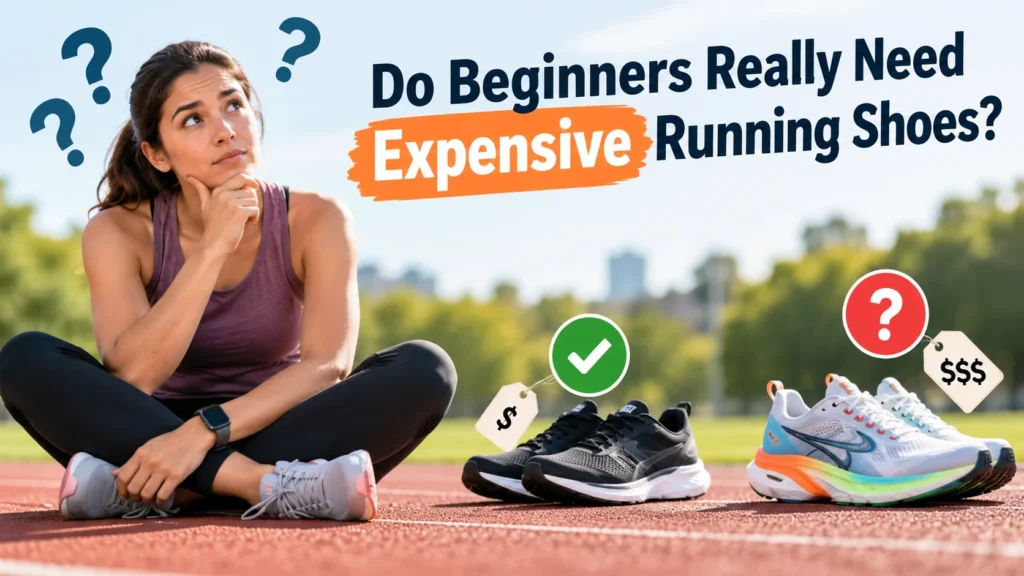
No, expensive running shoes are not necessary for most beginners. A well-fitting everyday running shoe can handle walking, short jogs, and gradual mileage increases.
For this guide, expensive running shoes generally means models priced above $150 at regular US retail prices. This is a practical shopping definition, not an official industry standard.
The important distinction is between a shoe designed for running and one that simply looks athletic. Even an affordable running-specific model may provide appropriate cushioning, traction, and flexibility.
- New runners: Usually need one comfortable everyday training shoe.
- Run-walk beginners: Can often start with a basic cushioned running model.
- Recreational runners: May benefit from better materials as training increases.
- Competitive runners: Might value lightweight foams, specialized geometry, or racing technology.
Higher prices can buy additional features. However, those features are not automatically useful during a beginner’s first few weeks.
Why Are Some Running Shoes So Expensive?
Premium running shoes cost more because manufacturers invest in specialized materials, construction, development, and marketing. Some improvements are meaningful, while others target specific running goals.
Advanced Cushioning Technology
Premium models may use lightweight, highly responsive midsole foams. These materials can produce a different running feel compared with conventional cushioning.
However, a soft or springy sensation does not guarantee better comfort for every runner.
Carbon-Fiber Plates
Some racing shoes contain stiff carbon-fiber plates combined with responsive midsoles. Their purpose is generally to support efficient running at faster speeds.
Beginners usually don’t need this technology for short, easy runs.
Lightweight Materials and Specialized Designs
Expensive models may use engineered uppers, reduced-weight construction, and specialized outsole materials. These features can matter more during racing or demanding training.
- Premium foam: May deliver a lighter or more responsive ride.
- Specialized plates: Often target racing performance.
- Advanced uppers: May improve ventilation or reduce weight.
- Brand positioning: Marketing and product development also affect prices.
My approach is simple: pay for features you can identify and use. Don’t pay extra just because a shoe belongs to a premium collection.
How Much Should Beginners Spend on Running Shoes in 2026?
For many new runners, $60–$120 is a reasonable starting budget in the US market. This range includes entry-level and midrange training shoes.
These are approximate shopping categories rather than fixed prices. Discounts, regional markets, and individual models can change what you pay.
| Price Range | Typical Features | Best Fit | My Verdict |
|---|---|---|---|
| Under $60 | Basic construction or discounted older models | Occasional short runs | Consider carefully |
| $60–$100 | Conventional cushioning, mesh uppers, everyday outsoles | Most new runners | Best starting range |
| $100–$150 | Broader cushioning and support choices | Regular recreational runners | Worth comparing |
| $150–$250+ | Specialized foams, premium cushioning, or racing designs | Specific training preferences or performance goals | Usually optional |
For example, the Nike Revolution 8 has a listed US price around $75, while the New Balance Fresh Foam 680v9 has been offered around $85. Both illustrate how running-specific shoes can cost less than $100.
Prices and availability can change. Always check the current version, your size, and the retailer’s return policy.
Are Cheap Running Shoes Good Enough for Beginners?
Yes, affordable running shoes can be good enough when they fit properly and suit your activity. The lowest-priced option isn’t necessarily the best value, though.
A $70 running shoe from an established manufacturer may be suitable for beginner training. An unrelated fashion sneaker at the same price might feel less comfortable during repeated running.
Signs an Affordable Running Shoe Is Worth Buying
- It is clearly designed and marketed for running.
- Both shoes fit comfortably without pinching.
- The midsole feels appropriate during walking and jogging.
- The heel stays secure without excessive movement.
- The outsole provides traction on your usual running surface.
- The upper and stitching show no obvious manufacturing defects.
When Should You Avoid a Cheap Shoe?
A low price is not worth discomfort. Avoid footwear that causes repeated rubbing, toe pressure, instability, or pain.
Also be careful with heavily worn secondhand shoes. Their remaining cushioning and structural condition may be difficult to judge.
- Poor fit: Your toes touch the front or your heel slides repeatedly.
- Uncomfortable ride: The shoe feels harsh or awkward while jogging.
- Visible wear: The outsole or midsole already shows substantial deterioration.
- Wrong purpose: The design suits fashion or court activities rather than your running needs.
What Features Matter More Than Running Shoe Price?
Fit, comfort, cushioning, and suitable traction should influence your decision more than the price tag. Start with how the shoe feels on your feet.
1. Proper Fit and Toe Room
Your toes should move comfortably without hitting the front of the shoe. Many fitting guides suggest approximately a thumb’s width of space ahead of the longest toe.
Try shoes while wearing your usual running socks. Check both feet because they may differ slightly in size.
2. Comfortable Cushioning
Cushioning is the material beneath your foot that compresses when you land. Different foams create different sensations.
You don’t automatically need maximum cushioning. Choose a level that feels comfortable during your normal running pace.
3. Stable, Secure Support
A shoe should hold your foot securely without forcing it into an uncomfortable position. Stability features can help some runners feel more supported.
However, additional support is not always necessary. Comfort and your individual movement matter more than a label.
4. Breathability and Upper Comfort
Breathable mesh can improve ventilation during warm-weather runs. The upper should also flex comfortably without rubbing your toes or heel.
5. Outsole Traction
Road-running shoes generally suit pavement, tracks, and many treadmills. Technical or muddy trails often require more specialized traction.
- Roads: Look for an everyday road-running outsole.
- Treadmills: Prioritize comfort, fit, and flexibility.
- Smooth park paths: Road shoes may work when conditions are suitable.
- Rocky or muddy trails: Consider trail-specific footwear.
Do Beginners Need Neutral or Stability Running Shoes?
Beginners do not automatically need stability running shoes. Neutral and stability models serve different preferences and support needs.
Neutral shoes generally avoid strong corrective features. Stability shoes incorporate designs intended to guide or support foot movement.
Evidence does not show that simply matching shoe categories to static foot posture reliably prevents running injuries. A Cochrane review of running shoes and injury prevention explains these uncertainties.
- Choose neutral: When it feels comfortable and provides sufficient support.
- Consider stability: When you prefer a more guided or supportive sensation.
- Get individual advice: If recurring pain, injury, or a diagnosed foot condition affects your running.
Don’t assume flat feet automatically require an expensive stability model. Your comfort, symptoms, and individual needs deserve greater attention.
Can Expensive Running Shoes Prevent Running Injuries?
There is no reliable evidence that a higher price alone prevents running injuries. Premium materials may change running feel, but price is not a proven safety measure.
Injury risk also depends on training progression, recovery, previous injuries, and individual factors. No running shoe can eliminate those risks.
Does More Cushioning Mean Better Protection?
Not necessarily. More cushioning changes how a shoe feels and behaves, but it does not guarantee fewer injuries.
Different runners may prefer firmer or softer shoes. Comfortable, well-fitting footwear is a reasonable starting point.
What Matters Beyond Footwear?
- Increase running duration gradually.
- Include recovery between demanding sessions.
- Start at a comfortable, conversational pace.
- Pay attention to recurring discomfort.
- Seek qualified medical advice for persistent or worsening pain.
A beginner training consistently in comfortable $80 shoes may have a better experience than someone using uncomfortable $200 racing shoes. That’s an illustration, not a guarantee of injury prevention.
Are Last Year’s Running Shoes a Better Deal?
Previous-generation running shoes can offer excellent value. Retailers frequently discount older colors and models when updated versions arrive.
A previous model may retain familiar cushioning and fit characteristics. However, manufacturers can also change shoe geometry, sizing, or materials between generations.
How to Save Money on Running Shoes
- Check previous models: Compare last year’s version with the current release.
- Look beyond popular colors: Less fashionable colors may receive larger discounts.
- Compare several retailers: Prices can vary for the same model and size.
- Check return policies: Make sure you can resolve sizing problems.
- Inspect the condition: Prefer genuine, unused footwear from trustworthy sellers.
Sales are useful only when the shoe suits your feet. I would rather pay full price for a comfortable budget model than buy an uncomfortable premium model on clearance.
Should Beginners Buy $200 Running Shoes?
Most beginners can start without spending $200. However, a higher-priced model may be reasonable when it solves a specific comfort or fit problem.
Premium footwear can also appeal to runners who know exactly what kind of cushioning or ride they prefer.
When Spending More May Make Sense
- A more expensive model fits noticeably better than affordable alternatives.
- You need a specific width or construction unavailable in suitable cheaper shoes.
- You have an established preference for a particular running-shoe design.
- Your regular training justifies investing in features you genuinely appreciate.
When Spending More Is Probably Unnecessary
- You are just beginning a run-walk program.
- You run short distances at an easy pace.
- A less expensive shoe already fits comfortably.
- You are purchasing mainly because of advertising or appearance.
For additional beginner shoe-selection guidance, see REI’s beginner running shoe recommendations. Its buying advice emphasizes comfort, terrain, fit, and shoe characteristics.
How Should Beginners Choose Their First Running Shoes?
Start with your running habits, then narrow down the shoes. You don’t need an advanced gait analysis or an expensive model to begin comparing options.
Step 1: Set a Realistic Budget
Consider beginning around $60–$120, adjusting for your local market. This gives you room to compare several running-specific options.
Step 2: Identify Your Running Surface
Think about whether you will run mostly on roads, treadmills, or trails. Select a shoe designed for your primary surface.
Step 3: Try Multiple Models
Try at least two or three options when possible. Walk and jog briefly in each pair where the retailer permits it.
Step 4: Check Your Fit Carefully
Pay attention to the heel, midfoot, and toe box. Your feet should feel secure without pressure points.
Step 5: Compare Comfort, Not Just Specifications
Don’t automatically choose the lightest shoe or thickest midsole. Pick the model that feels most natural during easy movement.
Step 6: Check the Return Policy
Some retailers offer generous trial policies, while others only accept unworn footwear. Understand the conditions before purchasing.
Step 7: Build Running Time Gradually
Start with manageable sessions and increase training progressively. Give yourself time to adjust to both the shoes and the activity.
What Would I Buy With a $100 Beginner Running Shoe Budget?
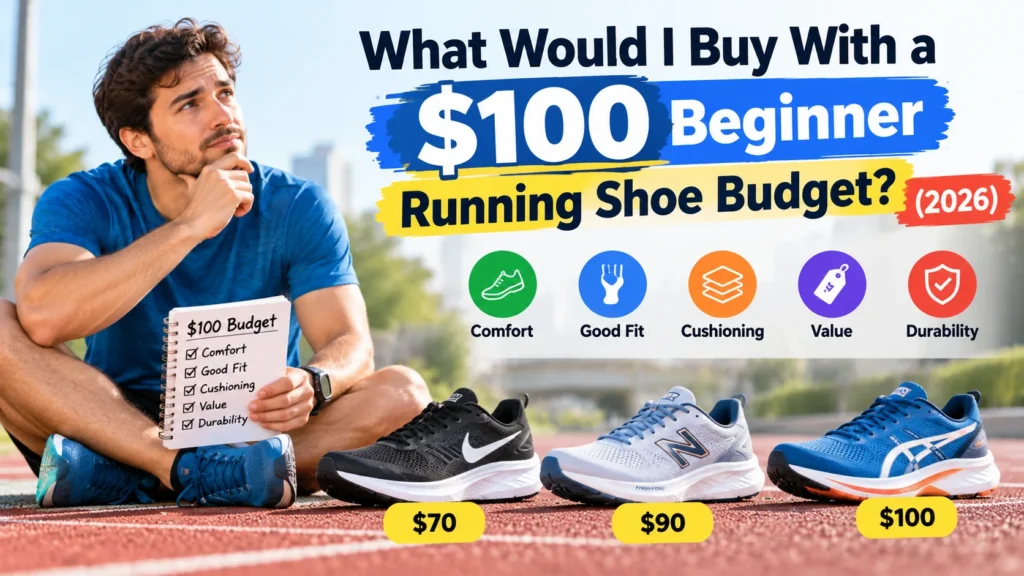
I would first compare everyday running shoes from established brands instead of chasing a premium racing model. My shortlist would focus on comfort, suitable width, reliable construction, and availability.
Suppose three models fit the budget. I would choose according to the following priorities:
- Best fit: The pair with secure heels and comfortable toe room.
- Best running feel: The pair that feels natural during an easy jog.
- Best value: The lowest-priced model that meets those requirements.
My practical insight is that the best-value shoe is not always the cheapest shoe. It is the least expensive one that meets your actual needs.
If none fits comfortably, I would adjust the budget or try more models. I wouldn’t buy an unsuitable shoe just to stay below an arbitrary price.
Can Beginners Use Regular Sneakers for Running?
Some everyday sneakers may feel acceptable for occasional short jogs. However, dedicated running footwear is generally a more suitable choice for consistent running.
Running shoes are built around the repeated movements involved in running. Their cushioning, upper construction, flexibility, and outsoles vary by intended use.
When Should You Replace Your Running Shoes?
There is no universal mileage at which every running shoe must be replaced. Materials, running surfaces, usage, and wear patterns all influence lifespan.
The American College of Sports Medicine’s running shoe guidance mentions approximately 350 miles as a general reference while emphasizing that individual shoes vary.
- Visible deterioration: Outsole material is heavily worn or damaged.
- Reduced comfort: A previously comfortable shoe feels noticeably different.
- Structural problems: The midsole, upper, or heel support is damaged.
- Persistent discomfort: New symptoms appear and the footwear may be contributing.
Don’t replace shoes solely because they reached a particular number. Inspect their condition and consider how they feel during use.
Affordable Running Shoes Beginners Can Consider in 2026
If you’re ready to choose your first pair, these three established running-shoe models are reasonable starting points. They offer different practical advantages without requiring premium racing-shoe prices.
The star scores below are editorial beginner-fit assessments based on published features, not customer review averages or hands-on laboratory testing. Always confirm your fit and the current model specifications.
💰 Best Entry-Level Budget Pick
Nike Revolution 8
★★★★☆ 4/5
This entry-level road-running shoe features a foam midsole, breathable mesh upper, and flexible forefoot. With a US list price around $75, it would be one of my first options to compare for easy beginner runs.
Best for: Budget-conscious road runners and short run-walk sessions.
👟 Best to Consider for Wider Feet
New Balance Fresh Foam 680v9
★★★★☆ 4/5
The 680v9 combines Fresh Foam cushioning, a breathable mesh upper, and a rubber outsole. Its available width options make it especially worth considering when standard-width running shoes feel restrictive.
Best for: Everyday training and runners seeking width choices.
🏃 Best Alternative for Daily Comfort
ASICS Gel-Contend 9
★★★★☆ 4/5
The Gel-Contend 9 uses rearfoot Gel cushioning, Amplifoam+ cushioning, and an engineered mesh upper. I would consider it when comparing comfortable entry-level shoes for easy jogging and walking.
Best for: Beginners comparing cushioned, everyday running options.
Affiliate disclosure: As an Amazon Associate, we may earn from qualifying purchases. Product availability, pricing, and seller details vary.
Frequently Asked Questions
Is $100 Enough for Good Running Shoes?
Yes. A $100 budget can provide several running-specific options from established footwear brands. Look for comfortable cushioning, suitable traction, adequate toe room, and secure fit rather than choosing exclusively by brand recognition.
Are $200 Running Shoes Better Than $80 Running Shoes?
Not automatically. A $200 model may include premium foams, advanced construction, or specialized racing features, but it won’t fit every runner better. An $80 shoe that feels comfortable and suits your training can be a more sensible purchase.
Can Beginners Run in $50 Shoes?
Yes, provided the shoes are suitable for running, fit properly, and remain in good condition. Discounted previous-generation models can be worthwhile. However, avoid footwear that causes pressure, excessive slipping, or discomfort merely because the price is attractive.
Do Beginners Need More Than One Pair of Running Shoes?
No. One suitable pair is generally enough when beginning a simple running routine. A second pair may become convenient as training volume increases or when you regularly alternate between different running surfaces.
Do Expensive Running Shoes Last Longer?
Not necessarily. Price does not guarantee greater durability, and some premium racing designs prioritize performance over long-term daily use. Shoe lifespan depends on materials, training volume, terrain, care, and individual wear patterns.
Final Verdict: Should Beginners Spend More on Running Shoes?
Most beginners do not need expensive running shoes to start running comfortably. A properly fitted everyday running shoe is usually a more practical investment than specialized racing footwear.
Start by comparing options around $60–$120 and adjust your budget based on fit. Spending more makes sense when you can identify a genuine benefit for your feet or training.
My final recommendation is simple: choose comfort before price, fit before fashion, and consistency before expensive technology.
Ready to begin? Compare two or three comfortable everyday running shoes, choose the pair that fits best, and build your running routine gradually.


