
Quick Answer
To choose running shoes for daily training, start with a comfortable fit, appropriate cushioning, and dependable support for your usual running surface. Most runners can begin with versatile daily trainers rather than specialized racing shoes. Compare neutral and stability options based on comfort and movement, not arch shape alone. For more guidance, see this neutral vs stability running shoes guide.
Six Steps to Choose Your Daily Running Shoes
- Identify your surface: Choose shoes suited to roads, treadmills, or trails.
- Check your fit: Leave about a thumb’s width beyond your longest toe.
- Choose cushioning: Find a comfortable balance between softness and responsiveness.
- Assess stability: Select support that feels natural during running.
- Check durability: Look for reliable outsole coverage and secure upper construction.
- Test before buying: Jog briefly and check for pressure, slipping, or discomfort.
Best starting point: A comfortable, neutral, moderately cushioned road-running shoe works well for many runners who have no specific support requirements.
Choosing running shoes for daily training can feel confusing when every brand promises better cushioning, speed, and comfort. The good news is that you don’t need the most expensive shoe to train consistently.
I recommend starting with how a shoe feels during your normal running routine. This guide explains the key features, fitting methods, and buying mistakes worth understanding in 2026.
What Are Daily Training Running Shoes?
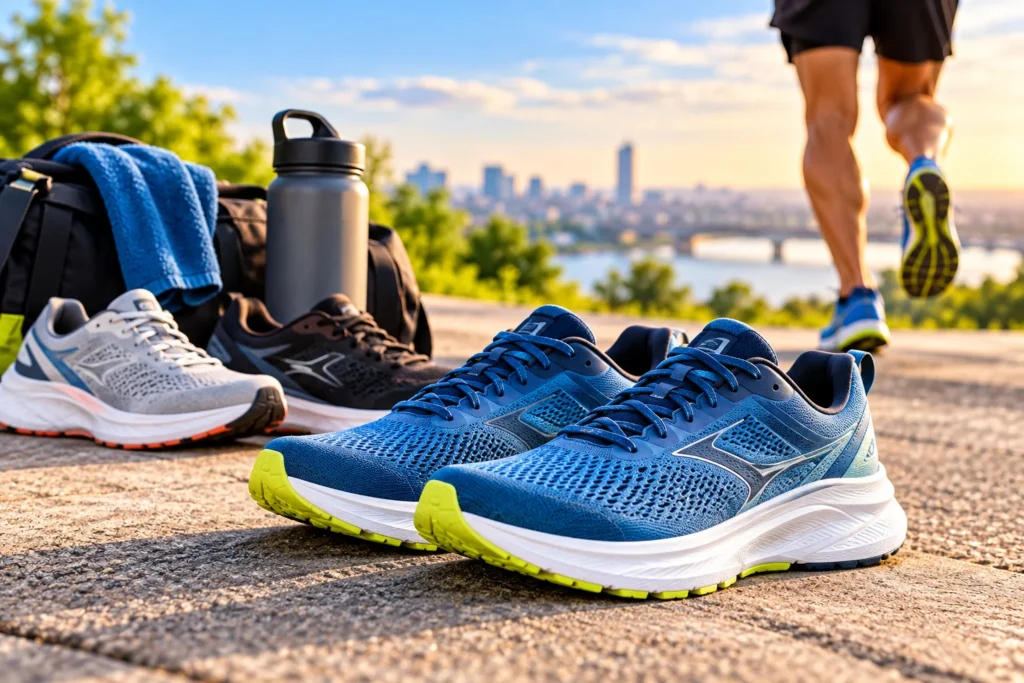
Daily training running shoes are versatile running shoes designed for regular workouts, including easy runs, moderate-distance training, and occasional faster efforts. They generally prioritize comfort, durability, and predictable movement over maximum racing performance.
Unlike lightweight racing shoes, daily trainers usually have more protective cushioning and practical outsole coverage. These features make them useful for repeated training sessions.
What Makes a Good Daily Trainer?
A good daily trainer should feel comfortable at your usual pace without forcing your feet into an awkward position. It should also maintain a secure fit as your training distance increases.
- Comfortable cushioning: Helps manage repeated landing forces.
- Secure upper: Keeps the foot positioned without squeezing.
- Durable outsole: Provides traction and protects high-wear areas.
- Smooth transitions: Supports natural forward movement.
- Appropriate support: Feels stable without excessive restriction.
- Breathable materials: Help improve comfort during warm-weather running.
Not every runner needs the same combination. Someone training three days weekly may prioritize different features than someone running every morning.
How Do You Choose Running Shoes for Daily Training?
Choose daily training shoes by matching the shoe’s purpose to your running surface, weekly mileage, foot shape, and comfort preferences. Evaluate these factors before comparing brands or prices.
Step 1: Identify Where You Run Most Often
Your usual running surface affects traction, outsole durability, and the level of protection you need. A shoe designed for pavement may not grip loose or muddy trails effectively.
- Roads and sidewalks: Look for a road-running trainer with cushioning and durable rubber.
- Treadmills: Choose a comfortable, flexible road-running shoe.
- Gravel paths: Consider improved outsole traction and stability.
- Technical trails: Choose dedicated trail shoes with suitable grip and protection.
- Mixed surfaces: Consider a road-to-trail shoe if you frequently change terrain.
For mostly paved routes, a standard road trainer is usually the simplest choice. Specialized traction becomes more important when surfaces are loose, wet, or uneven.
Step 2: Match Your Shoes to Your Weekly Running Distance
Weekly mileage helps determine how much attention you should give to repeated-use comfort and durability. However, mileage alone cannot tell you which shoe will fit best.
| Weekly Distance | Suggested Priority | Suitable Shoe Type |
|---|---|---|
| 5–15 miles | Comfort and fit | Versatile daily trainer |
| 15–30 miles | Balanced cushioning and durability | Cushioned everyday trainer |
| 30–45 miles | Consistent long-run comfort | Durable cushioned trainer |
| 45+ miles | Training-specific comfort and wear management | Daily trainer or multi-shoe rotation |
These mileage categories are practical shopping examples, not medical thresholds. Choose according to your actual training needs and how your feet respond.
Step 3: Choose Your Preferred Cushioning Level
Cushioning affects how soft, firm, or responsive a running shoe feels underfoot. More cushioning doesn’t automatically mean better comfort or fewer injuries.
- Moderate cushioning: A versatile starting point for daily running.
- Maximum cushioning: Often preferred for an especially soft underfoot feel.
- Firm cushioning: Can provide a more direct sensation of the ground.
- Responsive cushioning: May feel more energetic during faster running.
I suggest comparing two cushioning levels during the same fitting session. This makes differences in softness and stability easier to notice.
A shoe that feels wonderful while standing may behave differently during a run. Test it at your natural training pace before deciding.
Step 4: Decide Whether You Need Neutral or Stability Shoes
Neutral running shoes allow relatively unrestricted natural foot movement, while stability shoes add features designed to guide or control movement. Neither category is automatically better for every runner.
Pronation is the normal inward rolling movement of the foot during walking and running. Pronation alone doesn’t prove that you need a stability shoe.
- Try neutral shoes: If they feel comfortable and controlled during your normal stride.
- Try stability shoes: If additional guidance improves your running comfort.
- Avoid automatic assumptions: Flat feet do not always require stability footwear.
- Seek professional advice: If you experience recurring pain, injuries, or significant discomfort.
The American College of Sports Medicine emphasizes individual shoe selection rather than relying only on arch height or a brief walking assessment. A good fit remains central to the decision.
For additional information about support and foot shape, read our guide to running shoe arch support.
How Should Daily Running Shoes Fit?
Daily running shoes should fit securely around your heel and midfoot while leaving sufficient room for your toes. Your feet should not experience pinching, numbness, or persistent rubbing.
The American Academy of Orthopaedic Surgeons recommends adequate space around the toes and a secure heel fit. Check both feet because their sizes may differ.
Check Toe Room
Leave approximately one thumb’s width between your longest toe and the shoe’s front. The correct clearance depends on your foot and how the shoe fits while standing.
Don’t assume your longest toe is your big toe. Some runners have a longer second toe.
- Stand with your full weight on both feet.
- Check the space beyond your longest toe.
- Wiggle your toes to confirm there is sufficient width.
- Make sure the upper does not press against your toenails.
- Repeat the process on your larger foot.
For a more detailed fitting method, see how much toe room running shoes should have.
Check Heel and Midfoot Security
Your heel should stay securely positioned without excessive slipping. The midfoot should feel comfortably supported rather than tightly compressed.
A small lacing adjustment may improve fit. However, don’t rely on extremely tight laces to compensate for an unsuitable shoe shape.
Try Shoes Later in the Day
Feet can swell during physical activity and throughout the day. Trying shoes in the afternoon or evening can provide a more realistic fit assessment.
- Wear your normal running socks.
- Bring any orthotic inserts you regularly use.
- Try both shoes rather than testing only one.
- Walk and jog before judging comfort.
- Choose the size that fits, not your usual casual-shoe number.
What Is the Difference Between Daily Trainers and Racing Shoes?
Daily trainers prioritize regular-use comfort and durability, while racing shoes often prioritize lightweight construction and efficient running at faster speeds. The differences matter when choosing a shoe for repeated workouts.
| Feature | Daily Trainer | Racing Shoe |
|---|---|---|
| Main purpose | Regular training | Race performance |
| Cushioning | Comfort-oriented and versatile | Often lightweight and responsive |
| Outsole | Often more durable coverage | May prioritize weight savings |
| Plate | Usually not required | Often uses a stiffening plate |
| Best use | Easy runs and everyday mileage | Races and selected fast sessions |
If you only want one pair, start with a versatile daily trainer. You can add a specialized shoe when your running goals become more specific.
How Much Cushioning and Heel Drop Do You Need?
Choose cushioning for comfort and heel-to-toe drop for a running feel that suits your body. There is no single ideal combination for all runners.
Understanding Heel-to-Toe Drop
Heel-to-toe drop is the difference in sole height between a shoe’s heel and forefoot. A shoe with 35 mm under the heel and 27 mm under the forefoot has an 8 mm drop.
- Zero drop: Heel and forefoot sit at approximately equal heights.
- Low drop: Often around 1–6 mm.
- Moderate drop: Often around 7–9 mm.
- Higher drop: Commonly 10 mm or more.
These categories are descriptive rather than fixed industry standards. Different brands may use slightly different definitions.
Changing drop can alter loading demands around the ankle, calf, and other parts of the leg. Make substantial changes gradually, especially when moving toward zero-drop footwear.
Should You Choose Maximum Cushioning?
Maximum-cushion shoes are worth considering if you enjoy a soft underfoot feel during easy runs. However, thicker midsoles can change how stable or connected to the ground a shoe feels.
Test your preferred shoe on turns and during walking. It should feel predictable rather than excessively wobbly.
How Important Are Shoe Durability and Breathability?
Durability and breathability matter because daily shoes experience repeated movement, friction, moisture, and ground contact. Choose construction appropriate for your training volume and climate.
Look for Durable Outsoles
The outsole is the bottom rubber layer that contacts the ground. Its material and coverage influence grip and resistance to abrasion.
- Check rubber coverage beneath the heel and forefoot.
- Look for secure bonding between the outsole and midsole.
- Consider your usual road or trail surface.
- Inspect high-wear areas regularly.
Choose Breathable Uppers
Mesh uppers can improve airflow during warm-weather training. A breathable upper should still hold your foot securely during turns and changes of pace.
For wet conditions, think about drying time and grip rather than breathability alone. Waterproof footwear may trap more heat during warmer runs.
How Can Beginners Test Running Shoes Before Buying?
Beginners should test running shoes through a short, controlled fitting routine rather than judging them only by appearance. A few minutes of walking and jogging can reveal problems that standing still may hide.
A Simple Five-Minute Shoe Test
- First minute: Stand, check toe clearance, and examine the heel fit.
- Second minute: Walk naturally and notice any tight spots.
- Third minute: Jog easily at your usual training pace.
- Fourth minute: Make gentle turns and assess foot security.
- Fifth minute: Compare the shoe’s comfort against another candidate.
This five-minute routine is a practical shopping test, not a scientific performance assessment. Follow the retailer’s fitting rules and only run where testing is permitted.
I find that a side-by-side comparison is more useful than trying to remember how a shoe felt several days earlier. Write down any pressure points immediately.
What Mistakes Should You Avoid When Choosing Daily Running Shoes?
The biggest buying mistakes involve prioritizing marketing claims over actual fit and running comfort. Avoid choosing solely by color, price, popularity, or a technical specification.
- Buying tight shoes: Running shoes should feel comfortable from the beginning.
- Following trends: Popular shoes may not suit your foot shape.
- Ignoring width: A longer shoe isn’t always the answer to a narrow toe box.
- Assuming softness is always better: Extra cushioning may feel unstable for some runners.
- Choosing support from arch shape alone: Foot movement and comfort matter too.
- Buying the wrong outsole: Road shoes may lack traction on difficult trails.
- Changing shoe geometry abruptly: Sudden major changes can require physical adaptation.
- Ignoring early discomfort: Persistent pressure or numbness is a reason to reassess fit.
Also avoid buying shoes several sizes larger simply to gain toe room. Too much movement can create new fit problems.
How Long Do Daily Running Shoes Usually Last?
Many runners use approximately 300–500 miles as an initial replacement-check range for conventional running shoes. Actual lifespan varies with the shoe, running surface, training habits, and wear patterns.
Don’t replace shoes strictly because a mileage counter reaches a particular number. Inspect their physical condition and your running comfort.
Signs Your Daily Running Shoes May Need Replacing
- The outsole has worn through or lost important traction.
- The midsole feels noticeably different from when it was new.
- The shoe has developed significant uneven wear.
- The heel counter or upper no longer holds your foot securely.
- You notice repeated discomfort associated with an aging pair.
One practical approach is to compare your current shoes with a fresh pair of the same or a similar model. A clear difference in comfort or structure can help guide replacement.
How Can You Make Daily Running Shoes Last Longer?
Basic care can help preserve the condition of running shoes. Focus on keeping them clean, dry, and free from unnecessary heat exposure.
- Remove excessive dirt after outdoor running.
- Air-dry damp shoes at room temperature.
- Avoid direct heat sources when drying.
- Untie your shoes before removing them.
- Inspect the outsole and upper regularly.
- Consider a second pair if your training frequency justifies it.
Which Running Shoes Are Worth Considering for Daily Training in 2026?
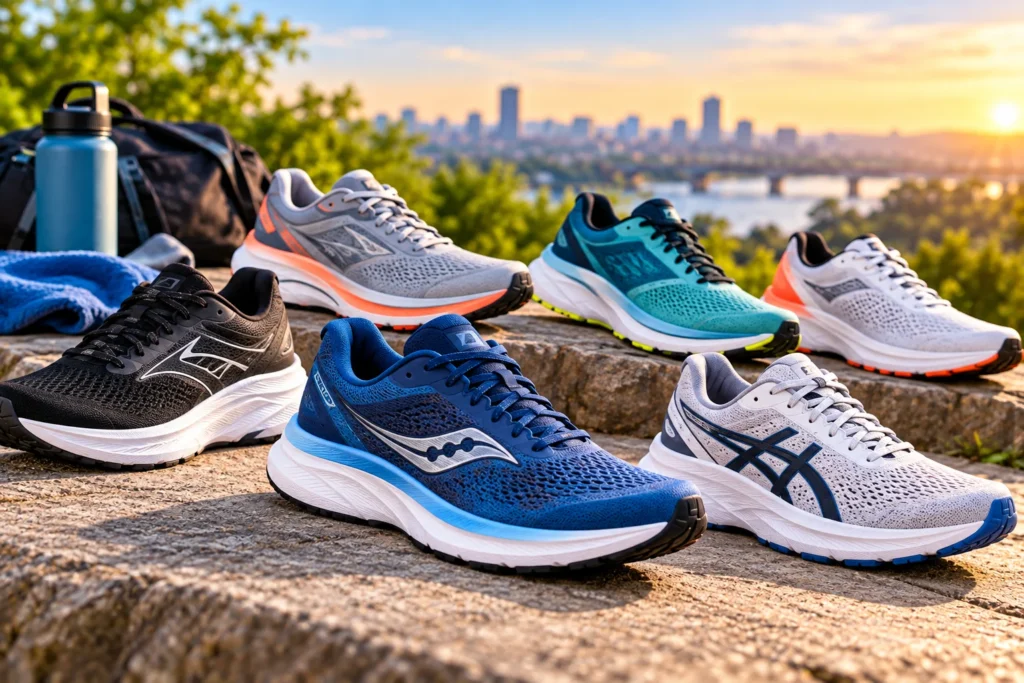
Good daily training options include versatile neutral shoes with dependable cushioning and a comfortable fit. The Saucony Ride 18, Brooks Ghost 17, and ASICS Gel-Nimbus 28 represent three different cushioning priorities.
These are specification-based options to try, not personally wear-tested rankings. Compare their fit before purchasing, and consider newer versions where available.
Affiliate disclosure: This section contains Amazon affiliate search links. We may earn a commission from qualifying purchases at no additional cost to you.
🏆 Versatile Daily Training
Saucony Ride 18
★★★★☆
The Ride 18 combines PWRRUN+ cushioning, an 8 mm drop, and a breathable mesh upper. Its versatile design makes it a useful first comparison for runners seeking one shoe for easy and moderate training days.
👟 Traditional Cushioned Feel
Brooks Ghost 17
★★★★☆
The Ghost 17 uses nitrogen-infused DNA LOFT v3 cushioning and a 10 mm drop. It’s worth trying if you prefer a familiar, cushioned road-running design with a smooth everyday feel.
☁️ Extra-Soft Cushioning
ASICS Gel-Nimbus 28
★★★★☆
The Gel-Nimbus 28 features FF BLAST PLUS cushioning, PureGEL technology, and an 8 mm drop. I’d put it on the shortlist for runners who want to compare an especially soft daily-training feel against firmer alternatives.
Note: The star symbols above indicate editorial shortlist impressions, not verified customer-review averages or laboratory testing scores.
Frequently Asked Questions About Daily Training Running Shoes
Can I use the same running shoes every day?
Yes, many runners use one comfortable pair for everyday training. Allow damp shoes to dry between runs, inspect wear regularly, and consider a second pair if your mileage or drying needs make rotation practical.
Should daily running shoes be tight or loose?
Daily running shoes should feel secure around the heel and midfoot while allowing your toes to spread comfortably. Avoid excessive movement, pinching, or numbness. Try shoes with your usual running socks and check the fit while standing and jogging.
Are expensive running shoes better for daily training?
Not necessarily. Higher prices may reflect advanced materials, lighter components, or additional technology, but those features don’t guarantee a better fit. A moderately priced shoe that suits your feet can be a more sensible daily-training choice.
Do beginners need stability running shoes?
No. Beginners do not automatically need stability shoes, even if they have low arches. Start by comparing comfortable neutral and stability models, and choose the option that feels secure during running. Seek professional guidance for recurring pain or specific foot problems.
Should I buy different shoes for long runs and easy runs?
You don’t necessarily need separate pairs. A versatile daily trainer can handle many easy and long runs. A second, more cushioned or specialized shoe may be useful when your mileage increases or your training goals become more demanding.
Final Thoughts: Choosing the Right Running Shoes for Daily Training
The best daily running shoe is one that fits your feet, feels comfortable at your normal pace, and suits the surfaces you run on. You don’t need every new feature or the most expensive model.
Start with two or three daily trainers, compare them carefully, and choose the shoe that feels most natural. Pay attention to fit, cushioning, support, and durability before making your decision.
For additional independent guidance, explore the resources from REI’s running shoe buying guide, the American Academy of Orthopaedic Surgeons, and the FootCareMD athletic shoe fitting guide.
Your next step: Try a few comfortable daily trainers, take a short test run, and let your feet guide the final choice.


Steven is a former sportsperson and now a full-time businessman and research writer. He is the mastermind of this site, and he created this site to help people who need specialized shoes for different activities. When he was a sportsperson, he was very passionate about different types of shoes for his sports purpose. The passion he had for shoes at that time now turned into his profession. Besides his shoe business, he loves sharing his knowledge and experience with people and helping them maintain healthy feet.
More Posts