
Quick Answer
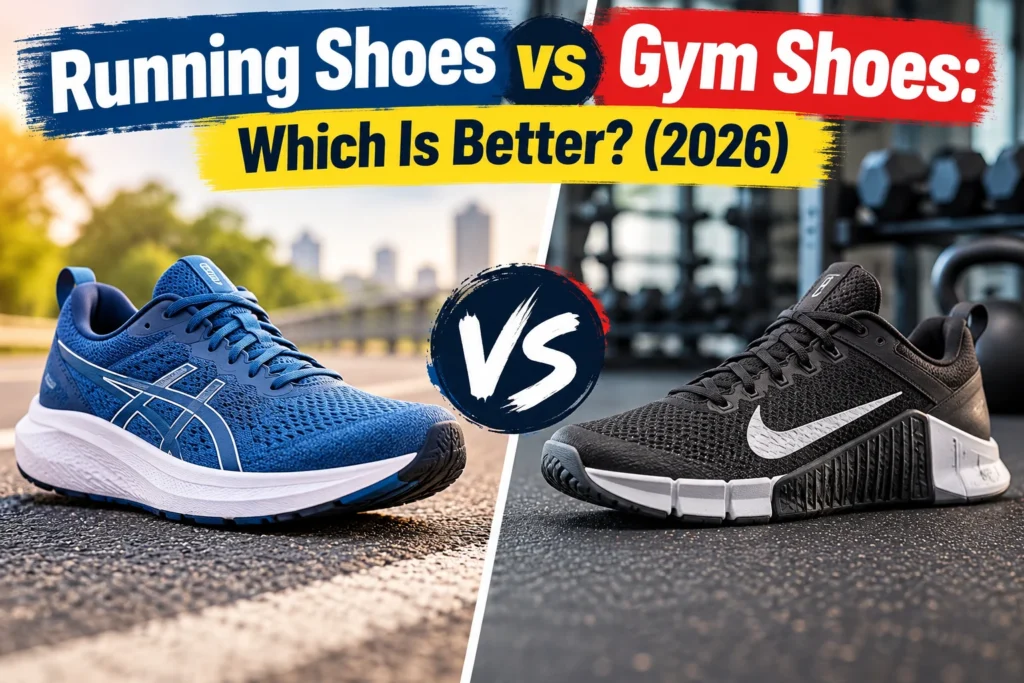
Running shoes are designed for forward movement, repetitive impact, and comfortable running. Gym shoes are generally built for side-to-side movements, strength training, and mixed workouts. Choose running shoes for regular jogging or treadmill runs, and gym shoes for lifting, HIIT, and agility exercises. The ASICS running and training shoe comparison explains these design differences.
Key differences to remember
- Running comfort: Running shoes generally prioritize cushioning and forward transitions.
- Gym stability: Training shoes usually offer a firmer, wider base.
- Side movements: Gym shoes provide support for lateral exercises.
- Weightlifting: Stable gym shoes are preferable to soft running shoes.
- Mixed workouts: Choose footwear based on your main activity.
Running shoes and gym shoes can look almost identical, but their designs serve different purposes. The wrong pair can make an otherwise simple workout feel awkward.
I recommend choosing shoes based on the movements you perform most often. This guide covers the major differences, common mistakes, and practical buying considerations for 2026.
What Is the Difference Between Running Shoes and Gym Shoes?

The biggest difference between running shoes and gym shoes is the type of movement they support. Running shoes prioritize repeated forward strides, while gym shoes prioritize stability across varied movements.
Gym shoes are often called training shoes or cross-training shoes. However, specialized weightlifting shoes are a separate category.
What Are Running Shoes?
Running shoes are athletic shoes designed for repeated running strides. Their cushioning, outsole shape, and upper construction work together to support forward movement.
Most road-running shoes use a foam midsole that compresses under load. Their designs vary considerably, from lightweight racing shoes to highly cushioned daily trainers.
- Cushioned midsole: Helps provide comfort during repeated impacts.
- Heel-to-toe transition: Supports movement through each stride.
- Breathable upper: Helps manage heat and moisture.
- Running outsole: Provides traction on intended running surfaces.
- Secure fit: Helps limit unwanted foot movement.
Different running shoes also provide different stability characteristics. A softer or taller shoe is not automatically better for every runner.
What Are Gym Shoes?
Gym shoes are training-focused athletic shoes designed for activities involving different movement directions. They usually emphasize a supportive platform and controlled flexibility.
Their relatively firm base can make squats, lunges, and resistance exercises feel more predictable. Reinforced sidewalls may also help during lateral drills.
- Stable platform: Offers a consistent base for strength exercises.
- Lateral support: Helps contain the foot during sideways movement.
- Durable outsole: Handles varied indoor training activities.
- Controlled cushioning: Balances comfort with ground contact.
- Versatility: Supports circuit training and general fitness sessions.
Not every gym shoe is suitable for heavy lifting. Cross-training shoes balance several needs, while dedicated lifting shoes serve more specialized purposes.
Running Shoes vs Gym Shoes: Side-by-Side Comparison
Both shoe categories can work for general exercise, but their design priorities differ. The following table summarizes typical characteristics rather than universal rules.
| Feature | Running Shoes | Gym Shoes |
|---|---|---|
| Primary purpose | Repeated running strides | Strength and mixed workouts |
| Cushioning | Often softer or more substantial | Often firmer and more controlled |
| Platform | Optimized for forward transitions | Typically flatter and wider |
| Lateral support | Varies; generally not the focus | Usually a key design priority |
| Treadmill running | Preferred for sustained sessions | Suitable for some short intervals |
| Weightlifting | Less suitable when heavily cushioned | Generally better for general lifting |
| HIIT and agility | Better for running-dominant intervals | Better for multidirectional drills |
My preferred starting point is simple: identify your most demanding movement. A shoe that feels comfortable standing still may behave differently during a workout.
How Do Cushioning and Stability Differ?
Running shoes usually prioritize comfort during repeated ground contact. Gym shoes generally prioritize controlling movement against the floor.
Running Shoe Cushioning
Running midsoles commonly use specialized foams to cushion each step. Some designs also use curved soles, known as rockers, to encourage forward transitions.
Higher cushioning does not automatically mean improved protection against injuries. Fit, personal comfort, training load, and shoe geometry also matter.
Gym Shoe Stability
Gym shoes commonly feature firmer midsoles and wider platforms. This combination can reduce the unstable sensation associated with standing on highly compressible foam.
For example, consider performing a loaded squat in a soft running shoe. Compression under your foot may make maintaining consistent balance more difficult.
The Under Armour footwear comparison also explains how outsole grip, foam firmness, and platform shape affect training.
Can You Wear Running Shoes to the Gym?
Yes, running shoes can work for some gym activities, especially treadmill workouts and light exercise. However, they are less suitable for demanding lifting or rapid side-to-side movements.
What matters is the exercise itself, not the building where you exercise.
When Running Shoes Make Sense
- Treadmill running: Suitable for steady jogging and longer sessions.
- Walking workouts: Comfortable for many users during sustained walking.
- Light cardio: Useful for low-complexity forward movement.
- Easy machine workouts: May be adequate when stable footing is not a limiting factor.
When Running Shoes Are Less Suitable
- Heavy squats: Soft midsoles can compress under substantial loads.
- Heavy deadlifts: Excess cushioning may reduce a grounded feel.
- Lateral jumps: Running shoe uppers may offer insufficient sideways containment.
- Agility drills: Quick directional changes benefit from training-focused traction and support.
I wouldn’t choose a highly cushioned running shoe as my default for serious strength workouts. A firmer training shoe makes more practical sense.
Can You Run in Gym Shoes?
Yes, many gym shoes can handle short runs and brief treadmill intervals. They are usually less comfortable for sustained running than purpose-built running shoes.
A few minutes of jogging between exercises may be perfectly manageable. A lengthy outdoor run places different demands on cushioning, fit, and forward transitions.
What About Short Treadmill Runs?
Cross-training shoes can be appropriate for short warm-ups when they feel comfortable. The suitable distance depends on the model, individual, and running intensity.
Don’t assume every gym shoe has the same running capacity. Some hybrid models are designed specifically for workouts that combine short runs with strength exercises.
What About Long-Distance Running?
For regular long-distance running, choose dedicated running shoes. They are designed around repetitive strides rather than frequent changes of direction.
Focus on comfort, fit, and your intended running surface. Excess cushioning isn’t necessarily required, but the shoe should suit sustained running.
Which Shoes Are Better for Different Gym Workouts?
The right shoes depend on how much you run, lift, or move laterally. Use the following activity guide before buying another pair.
| Workout | Recommended Footwear |
|---|---|
| Long treadmill session | Running shoes |
| General weight training | Stable gym shoes |
| Heavy Olympic lifts | Specialized lifting shoes when appropriate |
| HIIT with lateral drills | Cross-training shoes |
| Short cardio warm-up | Comfortable gym or running shoes |
| Running-focused intervals | Running shoes |
| Mixed lifting and short runs | Hybrid training shoes |
How Do You Choose Between Running Shoes and Gym Shoes?
Choose shoes by matching their construction to your workout routine. The best choice is not necessarily the most expensive or most cushioned model.
Step 1: Identify Your Main Workout
Review the activities you perform during a normal week. Give priority to the workouts that occupy the most time or demand the greatest stability.
- Mostly running: Start with running shoes.
- Mostly lifting: Start with stable training shoes.
- Mostly HIIT: Consider cross-training shoes.
- Substantial running and lifting: Consider two pairs.
Step 2: Check the Shoe Platform
Place the shoe on a flat surface and examine its midsole. Notice the height, width, firmness, and heel shape.
For gym training, look for a stable platform that doesn’t feel excessively soft. For running, prioritize a smooth and comfortable stride.
Step 3: Test the Fit
Your heel should remain secure without painful pressure. The forefoot should allow your toes to spread and move comfortably.
Don’t assume your running and gym shoes must share the same size. Brands and models use different shapes.
Our running shoe toe-room guide explains how to assess front-foot clearance.
Step 4: Perform a Movement Test
Don’t judge a training shoe entirely by walking around the store. Try gentle movements similar to those you perform during workouts.
- Walk normally and check heel security.
- Perform controlled bodyweight squats.
- Try a few gentle side steps.
- Test a brief jog if the shoe is intended for running.
- Check for pressure, slipping, or instability.
The shoe should feel comfortable from the beginning. Don’t depend on painful break-in periods to fix an unsuitable fit.
Step 5: Consider Support and Personal Comfort
Arch height alone doesn’t determine the perfect shoe. The entire combination of fit, comfort, geometry, and stability matters.
Our article on whether running shoes need arch support covers this issue in more detail.
Do You Need Separate Running Shoes and Gym Shoes?
You don’t necessarily need two pairs for occasional exercise. However, separate shoes are useful when both running and gym training become regular parts of your routine.
For example, consider someone who runs several times weekly and also performs demanding strength workouts. Dedicated footwear can provide a better match for each activity.
When One Pair Is Enough
- You mainly perform one type of workout.
- Your secondary activity is brief and low intensity.
- Your shoes provide suitable traction and support.
- You feel comfortable and stable during exercise.
When Two Pairs Make More Sense
- You regularly perform sustained runs.
- You also lift substantial weights.
- Your gym sessions include explosive lateral movement.
- Your current shoes feel unstable during certain exercises.
My recommendation is to prioritize function before building a shoe collection. Buy the category that addresses your most frequent workout first.
What Mistakes Should You Avoid When Choosing Workout Shoes?
Several common buying mistakes can leave you with shoes that look suitable but perform poorly. Avoid these problems before spending money.
1. Choosing Shoes Based Only on Appearance
A stylish running shoe isn’t automatically a suitable gym shoe. Look beyond the upper design and examine the sole construction.
2. Assuming More Cushioning Is Always Better
Soft cushioning may feel pleasant during running but unstable under heavy loads. Match the firmness to your workout.
3. Ignoring Lateral Support
Quick side steps and jumps create different forces from forward running. Gym shoes should contain the foot without excessive slipping.
4. Buying Shoes That Are Too Tight
Tight footwear can create pressure and discomfort during exercise. Choose a secure fit without compressing your toes.
5. Using Worn-Out Shoes
Older shoes can lose traction, cushioning quality, or structural support. Inspect the outsole, upper, and midsole regularly.
Read our guide on recognizing worn-out running shoe cushioning to understand common replacement signs.
6. Treating Every Training Shoe as a Lifting Shoe
General cross-trainers and specialized weightlifting shoes have different purposes. Some lifting shoes use firm, elevated heels to support particular lifting techniques.
Choose according to your exercise and movement requirements. An elevated lifting heel isn’t universally necessary.
Which Running and Gym Shoes Are Worth Considering in 2026?

If you’re ready to shop, start with models built for your actual activity. These three options represent different needs rather than a universal ranking.
Product details and availability can vary by version. Ratings below are editorial suitability scores, not verified customer-review averages.
🏃 Best for Running
Brooks Ghost 17
★★★★½ (4.5/5)
A neutral road-running model intended for comfortable daily mileage. I would shortlist this type of shoe for someone prioritizing treadmill workouts and regular running rather than heavy lifting.
🏋️ Best for Strength Training
Nike Metcon 10
★★★★½ (4.5/5)
A training-focused model with a design emphasizing stability and gym performance. This is the type I would prioritize for lifting and controlled functional training instead of sustained outdoor runs.
⚡ Best for Mixed Gym Workouts
Nike Free Metcon 6
★★★★☆ (4/5)
A flexible gym-training option designed for a combination of movement and support. I would consider this category for circuit workouts, short cardio intervals, and general fitness training.
These options aren’t interchangeable. Compare sizing, current specifications, and your intended exercises before choosing.
You can also review Nike’s gym shoe guidance for more details about stability, flexibility, and training-specific footwear.
Frequently Asked Questions About Running Shoes vs Gym Shoes
Are running shoes better than gym shoes?
Running shoes are better for regular running, while gym shoes generally suit lifting and multidirectional training. Neither category is universally superior. Choose footwear based on your main activity, comfort, and the level of stability required.
Can I use the same shoes for running and gym workouts?
Yes, one pair can work for light mixed exercise. However, frequent long runs and demanding strength workouts benefit from different shoe characteristics. If both activities are important to your routine, separate pairs may be more practical.
Are gym shoes good for treadmill running?
Many gym shoes work for short treadmill warm-ups and brief jogging intervals. Running shoes are generally more suitable for sustained treadmill sessions because they are designed for repetitive forward strides and running comfort.
Can I lift weights while wearing running shoes?
Running shoes may be adequate for some light exercises, but highly cushioned models can feel unstable during heavy lifting. A firmer gym shoe generally offers a more consistent platform. Specialized lifting shoes may suit certain advanced exercises.
What is the difference between gym shoes and training shoes?
The terms are often used interchangeably when describing general fitness footwear. Cross-training shoes typically support lifting, circuit workouts, and multidirectional movement. However, specialized lifting shoes and sport-specific court shoes have different designs and should not automatically be grouped together.
Final Verdict: Running Shoes vs Gym Shoes
The best shoes depend on the exercises you perform most often. Running shoes prioritize repeated forward strides, while gym shoes provide stability and versatility for varied workouts.
- Choose running shoes for treadmill miles, jogging, and regular running.
- Choose gym shoes for lifting, HIIT, and agility workouts.
- Choose hybrid trainers for mixed sessions with limited running.
- Consider two pairs when both running and strength training are major priorities.
Before buying, test the fit and movement stability. A comfortable shoe designed for your workout is a better investment than choosing based on appearance alone.
Start with the activity you do most, and choose footwear that supports it.


Steven is a former sportsperson and now a full-time businessman and research writer. He is the mastermind of this site, and he created this site to help people who need specialized shoes for different activities. When he was a sportsperson, he was very passionate about different types of shoes for his sports purpose. The passion he had for shoes at that time now turned into his profession. Besides his shoe business, he loves sharing his knowledge and experience with people and helping them maintain healthy feet.
More Posts
