QUICK ANSWER
It depends. The HOKA Arahi 7 offers firm, secure stability for road runs and walks. Its 5 mm drop and J-Frame help guide steps, but the narrow toes, modest bounce, and weak wet grip limit its appeal.
Three facts that decide the purchase:
- Independent lab: 70.0 mm big-toe width versus a 73.2 mm test average.
- Firm CMEVA foam and a guided, stable platform.
- Original US list price: $145; seller prices vary.
Best for firm, guided everyday miles
7.9/10 — RunRepeat published overall score (79/100). This is an external rating, not our own test score.
Best for: Narrow-to-average feet seeking structured daily support.
Skip if: Your toes need space or you prefer plush foam.
Amazon: 4.5/5 from 523 ratings on the checked listing; its featured price was unavailable.
INDEPENDENT TESTER SCORECARD
Running Shoes Guru’s published editorial category scores; not standardized lab scores.
I’m Steven Tyler. This HOKA Arahi 7 review uses independent lab tests, wear reviews, and buyer feedback. I have not tested the shoes myself.
Does firm guidance justify a tighter fit? The evidence helps decide.
What Is the HOKA Arahi 7 and Who Is It For?
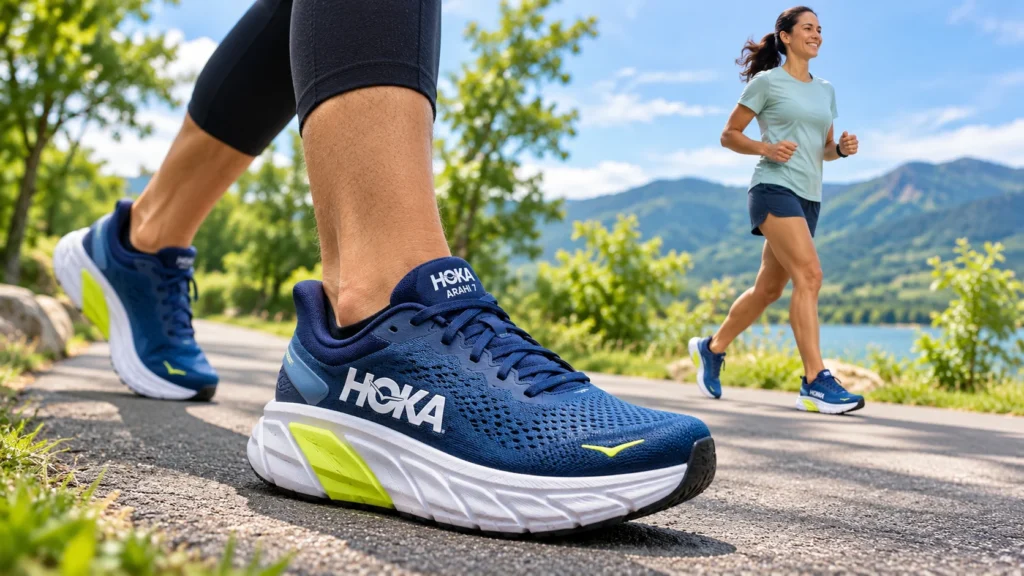
The Arahi 7 is HOKA’s road-running stability trainer for runners who want help managing excess inward foot motion. A firmer J-Frame wraps the inner midsole and heel, while the wide base and rocker guide each step.
The flat-knit upper and gusseted tongue fit securely. Reviewers favor it for walking and easy runs, not speedwork.
- Prefer a firm sole and a stable landing.
- Have narrow or average-width feet.
- Run easy miles on paved roads.
- You need a naturally roomy forefoot.
- You want a soft, lively midsole.
- You often run on wet pavement.
HOKA Arahi 7 Pros and Cons
Its greatest strength is stability without bulk. Its drawback is a narrow, tapered fit.
- J-Frame creates firm, steady guidance without a classic medial post.
- Independent lab weighed a men’s sample at 266 g.
- Rubber-covered outsole earned strong lab abrasion results.
- Padded gusseted tongue helps keep the midfoot securely wrapped.
- Big-toe room measured below the running-shoe test average.
- Firm foam gives less bounce than soft alternatives.
- Wet-traction reading trailed the independent lab’s average.
- Some testers reported heel slip or uncomfortable lace pressure.
HOKA Arahi 7 Key Features: What Do Tests Show?
Does the J-Frame Give Enough Stability?
Yes, it gives noticeable guidance for mild to moderate overpronation. RunRepeat rated its twisting resistance 5/5, compared with a 3.6/5 shoe average in that testing set.
Lab rigidity benchmark (higher = harder to twist)
Takeaway: The platform resists twisting; that is stability, not evidence that every runner needs correction.
The forefoot platform measured 120.7 mm versus a 115.1 mm lab average.
Is the Cushioning Too Firm for Long Runs?
The cushioning is firm, not plush. RunRepeat measured 56.1% forefoot energy return, below its 61.5% shoe average.
Takeaway: Expect protection and predictable landings rather than springy takeoffs.
Wear testers praised protection but wanted more bounce.
Is the HOKA Arahi 7 Toe Box Narrow?
Yes, especially near the big toe. RunRepeat measured 70.0 mm there, compared with a 73.2 mm shoe average.
Big-toe width: independent lab measurements
Bars show millimeters on a 100 mm reference scale, not review scores.
Takeaway: True-to-size length does not mean a roomy front.
Wide stock varies. Check width before sizing up.
Fit warning: If your toes touch the sides while standing, the knit may not solve that squeeze on long runs.
Does the Knit Upper Keep Feet Cool?
The flat-knit upper locks down well but runs warmer than expected. RunRepeat gave it 3/5 for breathability, below its 3.6/5 average.
Takeaway: Secure hold comes with a ventilation trade-off.
Wear testers praised comfort; lab results showed weaker airflow.
How Good Are the Outsole Grip and Durability?
Durability impressed lab testers more than wet grip. RunRepeat measured wet traction at 0.40 against its 0.53 average.
Takeaway: Use it mainly on dry roads, not slippery trails.
Toe fabric and heel-lining abrasion each earned 5/5, but lifespan remains unknown.
Does the Rocker Make the Ride Smooth?
Yes, the early-stage Meta-Rocker helps the shoe roll forward. The stated heel-to-toe drop is 5 mm, though measured drop varies by lab.
Takeaway: The rocker helps transitions; it does not add bounce.
The firm foam feels less lively at speed.
Try-on tip: Walk, jog, and turn in the shoes. Check for arch pressure, toe squeeze, and heel lift.
How Does the HOKA Arahi 7 Perform in Independent Tests?
These independent results show firm stability, not softness.
Measured performance snapshot
For test methods, see RunRepeat’s Arahi 7 lab report. Labs use different measurement methods.
HOKA Arahi 7 Full Specifications
Specifications vary by sample size.
| Shoe specifications | |
|---|---|
| Design and support | |
| Type | Stability road trainer |
| Support system | J-Frame foam |
| Midsole | Compression-molded EVA |
| Rocker | Early-stage Meta-Rocker |
| Carbon plate | ✗ No |
| Fit and dimensions | |
| Stated drop | 5 mm |
| Men’s stated stack | 37 mm heel / 32 mm forefoot |
| Women’s stated stack | 34 mm heel / 29 mm forefoot |
| Men’s listed weight | 9.9 oz (size 10) |
| Women’s listed weight | 8.1 oz (size 8) |
| Upper and outsole | |
| Upper | Flat-knit fabric |
| Gusseted tongue | ✓ Yes |
| Removable insole | ✓ Yes |
| Outsole | Zonal Durabrasion rubber |
| Wide option | ✓ Yes (availability varies) |
The stated 5 mm drop differs from some lab measurements.
How Does the HOKA Arahi 7 Compare to Competitors?
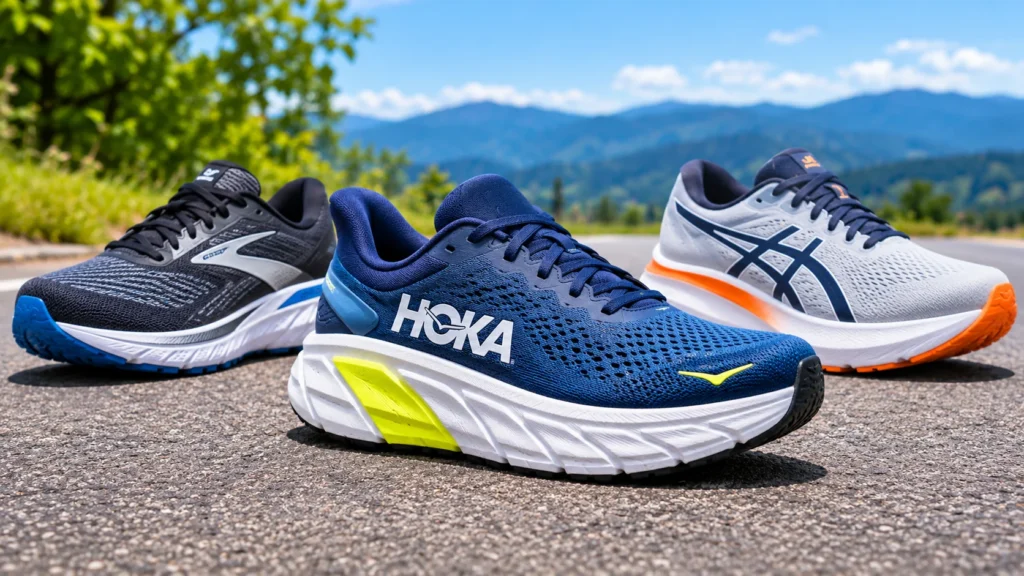
Brooks suits softer, traditional support; ASICS suits lighter stability with livelier foam.
HOKA Arahi 7 vs Brooks Adrenaline GTS 24
Arahi offers firmer 5 mm-drop support. Brooks offers softer DNA LOFT v3 foam, a 12 mm drop, and GuideRails.
HOKA Arahi 7 vs ASICS GT-2000 13
ASICS wins on softness with FF BLAST PLUS foam and an 8 mm drop.
Prices are launch MSRPs.
| Feature | Arahi 7 | Adrenaline GTS 24 | GT-2000 13 |
|---|---|---|---|
| Launch MSRP | $145 | $140 | $140 |
| Drop | 5 mm | 12 mm | 8 mm |
| Men’s stated weight | 9.9 oz (M10) | 10.0 oz | 9.7 oz |
| Support | J-Frame | GuideRails | 3D Guidance |
| Foam | CMEVA | DNA LOFT v3 | FF BLAST PLUS |
| Ride character | Firm, guided | Softer, structured | Softer, balanced |
Also see RTINGS’ independent Arahi 7 measurements.
HOKA Arahi 7 Pricing: Is It Worth the Price?
It is worth considering discounted if its firm fit works. Launch MSRP: $145.
One Amazon tracker showed $152 and a limited-period low of $145. An earlier retailer sale hit $99.99.
Amazon showed no featured offer for the checked listing. Verify the seller and returns.
HOKA Arahi 7 J-Frame Stability Road Running Shoes
Worth considering when discounted and fitted correctly; avoid inflated resale prices.
Who Should Buy the HOKA Arahi 7?
Buy for structured road guidance only if you like firm cushioning.
- Narrow-footed walkers who prefer an anchored, supportive feel.
- Easy-pace runners who do not need springy foam.
- Shoppers finding the right width at a fair discount.
- Your toes spread widely or feet swell during runs.
- Soft cushioning, quick pace, or wet traction matter most.
Bottom line: Fit matters most.
What Are Real Buyers Saying About the HOKA Arahi 7?
Amazon showed 4.5/5 from 523 ratings, not necessarily verified purchases.
REI showed 4.4/5 from 82 reviews. Praise centers on support; complaints on fit.
Buyer sentiment snapshot: Amazon 4.5/5 · 523 ratings
- Support for daily walking and longer hours on feet.
- Secure fit for buyers with narrower feet.
- Less bulky feel than traditional stability footwear.
- Narrow forefoot and potential pressure around the midfoot.
- Firm ride that lacks soft bounce.
Themes include retail feedback and expert reviews.
Check recent fit reviews. See REI’s product specifications and customer reviews.
Final Verdict: Stability Comes With a Firm, Narrow Fit
The Arahi 7 is best for runners who value stability over bounce. Its J-Frame, broad platform, and rocker guide easy miles. But narrow toes, modest airflow, and weak wet grip limit its versatility. Fit should matter more than star ratings. Try it on first. If the width feels right and the price is fair, it remains a dependable daily trainer.
HOKA Arahi 7 Lightweight J-Frame Stability Running Shoe
Pick it for secure everyday support; pass if narrow toes or firm foam bother you.
Frequently Asked Questions
Is the HOKA Arahi 7 good for overpronation?
Yes. Its J-Frame and broad base guide mild-to-moderate overpronation without a hard medial post. Yet not every runner with inward rolling needs correction. Judge comfort first.
Does the HOKA Arahi 7 run true to size?
Yes, generally in length. But the big-toe area measured only 70.0 mm in RunRepeat’s lab. Check width rather than choosing extra length to fix toe pressure.
Is the HOKA Arahi 7 good for wide feet?
Not in standard width for most wide-footed runners. A wide model exists, but stock varies. Try it standing and jogging; wider knit does not guarantee a wider platform.
Can you walk all day in the HOKA Arahi 7?
Yes, if you enjoy firm support. Its J-Frame and rocker also suit walking. Test comfort during a long shift, and stop if you feel new arch or toe pain.
Is the HOKA Arahi 7 good for plantar fasciitis?
It may feel supportive, but cannot treat plantar fasciitis. The 5 mm drop and J-Frame feel firm underfoot. Seek clinical advice for lasting heel pain.
What is different about the HOKA Arahi 7 and Arahi 8?
The Arahi 8 is softer with more cushioning. Independent lab comparisons call the Arahi 7 firmer and slightly more stable. Choose the older pair only for its fit or discount.
Affiliate Disclosure: As an Amazon Associate, I earn from qualifying purchases. Affiliate links may earn a commission at no extra cost to you.


Steven is a former sportsperson and now a full-time businessman and research writer. He is the mastermind of this site, and he created this site to help people who need specialized shoes for different activities. When he was a sportsperson, he was very passionate about different types of shoes for his sports purpose. The passion he had for shoes at that time now turned into his profession. Besides his shoe business, he loves sharing his knowledge and experience with people and helping them maintain healthy feet.
More Posts