
QUICK ANSWER
Yes, for steady runs and mild support. The Saucony Guide 18 pairs a broad, stable base with an airy upper. RunRepeat measured a 121.9 mm forefoot platform. However, the firm PWRRUN foam feels flat at faster paces, and exposed outsole foam raises wear concerns. It’s best for easy miles, not fast workouts.
Should you choose the Guide 18?
- Best for mild guidance, daily road runs, and walking.
- Published lab test: 36.0 mm heel stack and excellent ventilation.
- Skip if you want a springy, agile, or trail-ready shoe.
Overall
Comfort
Value
Upper
Published expert scores from Running Shoes Guru; not FootwearHiker test scores.
Best for: mild-support runners seeking stable, easy miles.
Not ideal for: speed sessions or slick trails.
Price: $150 original retail; current Amazon price varies by size and color.
PUBLISHED CATEGORY SCORES
Scores: Running Shoes Guru expert review. Bars show its ratings out of 10.
I’m Steven Tyler of FootwearHiker. This review uses independent lab data, not personal test miles.
What Is the Saucony Guide 18 and Who Is It For?
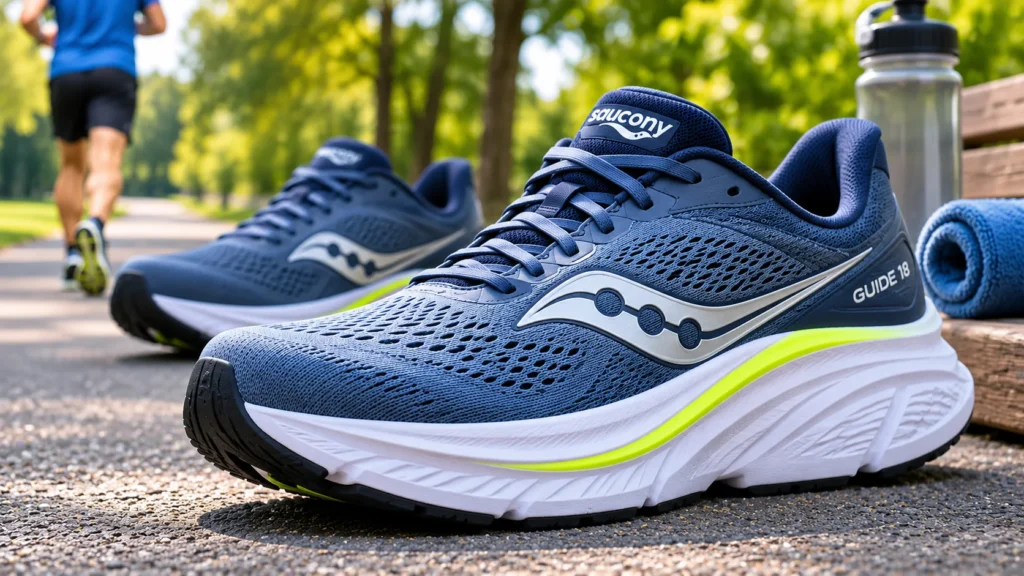
The Saucony Guide 18 is a cushioned road trainer for people seeking mild stability without a stiff medial post.
Saucony uses CenterPath geometry: a broad platform, high sidewalls, and a rockered sole. Rather than pushing hard against the arch, the shoe aims to keep the foot centered.
- Want gentle support without a hard arch post.
- Run mainly at conversational pace.
- Prefer a wide, planted landing platform.
- Need a faster, springier ride.
- Often run on wet leaves or loose trails.
- Prefer stronger, more noticeable support.
Saucony Guide 18 Pros and Cons
Its stable platform and airy upper stand out. Its muted foam and exposed outsole remain drawbacks.
- Wide 121.9 mm forefoot platform improves planted feel.
- Mesh earned 5/5 breathability in lab testing.
- CenterPath sidewalls guide movement without a medial post.
- Rocker and flexible forefoot suit daily walking.
- Basic PWRRUN foam feels flat during faster sessions.
- Wide 105.0 mm heel can feel bulky.
- Exposed midsole foam risks wear outside rubber patches.
- Heel lining scored only 2/5 for abrasion resistance.
Saucony Guide 18 Key Features — What Do Tests Show?
Does CenterPath Technology Provide Enough Stability?
Yes, for mild guidance. The Guide 18 combines raised sidewalls and a wide base instead of a conventional medial post.
RunRepeat measured the forefoot platform at 121.9 mm, versus its 115.1 mm lab average. This creates room for the shoe to guide landings.
FOREFOOT PLATFORM WIDTH — LAB COMPARISON
Bars use a shared 130 mm scale, not subjective quality scores.
Takeaway: A broad base creates gentle stability, not guaranteed correction for severe overpronation.
Is PWRRUN Cushioning Soft and Responsive?
It’s protective but not especially lively. Saucony’s EVA-based PWRRUN foam favors consistent landings over springy acceleration.
RTINGS measured cushioning at 6.7/10 and energy return at 3.1/10. Those are its laboratory scores, not our own ratings.
Takeaway: Choose it for relaxed miles, not pace changes or fast intervals.
How Breathable and Secure Is the Upper?
The engineered mesh is a major upgrade. RunRepeat scored breathability at 5/5 in its laboratory method.
Its padded collar and gusseted tongue hold the foot; reviewers disagree about toe volume.
Takeaway: Try your usual running size first, then check toe clearance carefully.
Check fit while standing, using the socks you run in. Your toes should move without sliding.
Will the Outsole Last on Wet Roads?
XT-900 rubber resists abrasion, but leaves foam exposed. RunRepeat recorded 0.6 mm rubber wear.
Takeaway: Rubber quality is good; rubber placement is the bigger concern.
Use care on ice, wet leaves, gravel, and debris-covered trails. This is primarily a road shoe.
Is the Guide 18 Comfortable for Walking?
Yes, its stable base and rolling shape suit walking. RunRepeat measured a modest 13.2 N bending force.
Takeaway: It can serve as one shoe for errands and easy runs.
Does the Heel Collar Hold Up?
Heel-collar longevity is a weak spot. RunRepeat scored heel-padding abrasion resistance at 2/5, below its 3.4/5 average.
The same lab rated toebox durability 4/5. That contrast matters: a strong upper does not mean every lining area lasts equally well.
HEEL PADDING DURABILITY — LAB COMPARISON
Takeaway: Inspect heel lining for fraying, especially if your heel slips.
How Does the Saucony Guide 18 Perform in Real Tests?
Published tests favor stability and airflow over speed. The measurements below retain their original units.
PUBLISHED MEASUREMENTS
Saucony Guide 18 Full Specifications
Saucony’s published dimensions describe the design; independent lab figures may vary with the measurement method.
| Official Specs and Test Notes | |
|---|---|
| Design | |
| Category | Mild-stability road trainer |
| Stability system | CenterPath geometry |
| Main cushioning | PWRRUN foam |
| Sockliner | PWRRUN+ (Saucony listing) |
| Dimensions | |
| Advertised stack | 35 mm heel / 29 mm forefoot |
| Advertised drop | 6 mm |
| Lab-measured drop | 8.3 mm (RunRepeat) |
| Men’s listed weight | 272 g / 9.7 oz |
| Women’s listed weight | 245 g / 8.6 oz |
| Upper and Outsole | |
| Upper | Engineered mesh |
| Outsole | XT-900 rubber zones |
| Removable insole | ✓ Yes |
| Carbon plate | ✗ No |
Saucony lists a PWRRUN+ sockliner, but RunRepeat identifies PWRRUN PB in its lab sample.
How Does the Saucony Guide 18 Compare to Competitors?
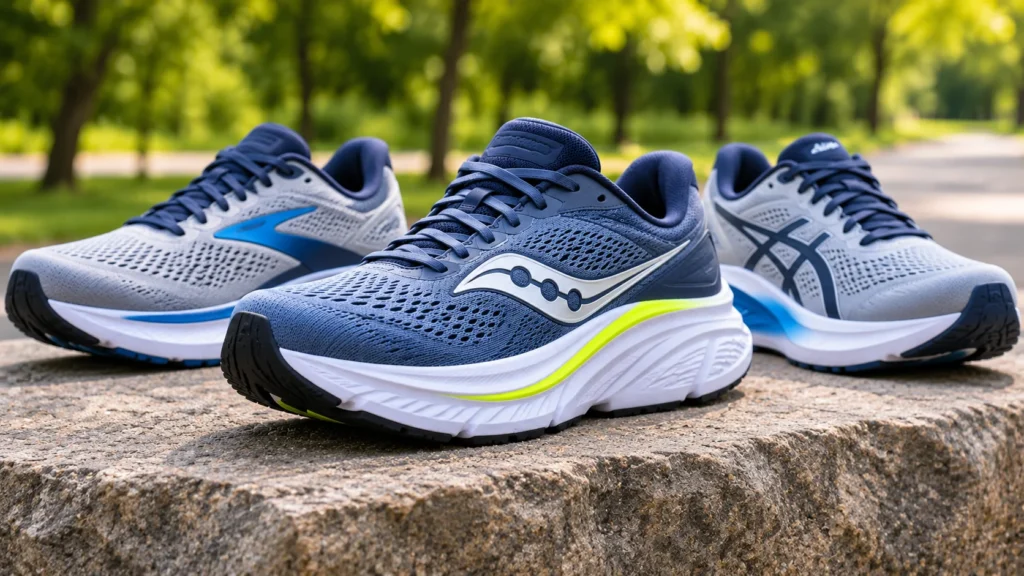
Guide 18 offers gentle guidance. Brooks Adrenaline GTS 24 feels more structured; ASICS GT-2000 13 offers balanced support.
Guide 18 vs Brooks Adrenaline GTS 24
Choose the Guide 18 for a lower advertised drop and less intrusive guidance. Choose the Brooks for GuideRails support and a higher 12 mm drop.
Guide 18 vs ASICS GT-2000 13
Choose the Guide 18 for a broader, firmer landing feel. The GT-2000 13 offers 3D Guidance and an 8 mm advertised drop.
These are original retail figures and published manufacturer specifications, not live sale quotes.
| Feature | Guide 18 | Adrenaline GTS 24 | GT-2000 13 |
|---|---|---|---|
| Original retail | $150 | $140 | $140 |
| Advertised drop | 6 mm | 12 mm | 8 mm |
| Men’s listed weight | 272 g | 283.5 g | About 275 g |
| Support system | CenterPath | GuideRails | 3D Guidance |
| Best use | Gentle guidance | Structured support | Balanced support |
Research references: Saucony’s specifications, RunRepeat’s lab measurements, and Doctors of Running’s wear test.
Saucony Guide 18 Pricing — Is It Worth the Price?
Yes, at a meaningful discount. The Guide 18 launched around $150, but later listings have offered it much lower.
A tracker reported $91.91 for one men’s Amazon variant, with a $73.52 recorded low. These aren’t live quotes.
At about $90, value improves. Verify size, seller, and return terms.
Saucony Guide 18 Men’s Stable Road Running Shoes
Who Should Buy the Saucony Guide 18?
Choose this model if you run easy miles and want discreet, consistent support. It also makes sense for walking-focused buyers who enjoy a stable platform.
- Easy-run and recovery-day runners.
- People who prefer mild stability.
- Walkers seeking a planted sole.
- You want a lively speedwork shoe.
- You need aggressive motion control.
- You frequently run technical trails.
What Are Real Buyers Saying About the Saucony Guide 18?
Third-party snapshots suggest favorable ratings, but cannot establish verified-buyer consensus. One listing showed 4.4/5 from 513 ratings.
- Stable platform feels calm at easy running pace.
- Airy upper improves comfort on warm days.
- Rolling shape supports smooth walking and steady strides.
- Foam feels dull during faster or uphill efforts.
- Exposed outsole raises wear and grip concerns.
- Wide platform can feel awkward during pace changes.
Final Verdict — Stable Enough to Excuse the Firm Foam?
The Saucony Guide 18 is worth considering if your priority is mild stability at an easy pace. Its wide platform and breathable mesh deliver a reassuring everyday feel. The outsole’s exposed foam and subdued energy return remain real weaknesses, though. At a discount, these trade-offs are easier to accept. If your runs include fast intervals, steep hills, or slippery trails, shop elsewhere. The most useful takeaway is that stability comes largely from the shape, not a hard arch post. That can make this shoe feel more natural than its bulky silhouette suggests. It is a daily trainer first.
Saucony Guide 18 Cushioned Mild Stability Running Shoe
Frequently Asked Questions
Is the Saucony Guide 18 a stability shoe?
Yes. Saucony designed it as a guided daily trainer with CenterPath geometry. The sole uses a wide base and raised sidewalls rather than a traditional medial post. RunRepeat measured a 121.9 mm forefoot platform, which helps explain the steady feel.
Is the Saucony Guide 18 good for walking?
Yes, especially if you like a stable base and rockered movement. RunRepeat measured a 13.2 N bending force, suggesting useful forefoot flexibility. Its broad heel may still feel bulky to anyone used to low-profile walking shoes, so try it indoors first.
Does the Saucony Guide 18 run true to size?
Many hands-on reviewers found their usual size worked, though RunRepeat reported a slightly short fit tendency. The shoe has a generous outer platform but a more ordinary interior width. Check the toe box carefully, and consider the wide version if needed.
Is the Saucony Guide 18 good for overpronation?
It can suit mild overpronation when gentle guidance feels comfortable. Doctors of Running describes the support as mild rather than forceful. The broad platform provides stability without a stiff post, but runners needing more correction should compare structured models and seek fitting advice.
What is the heel-to-toe drop of the Guide 18?
Saucony advertises a 6 mm drop, from a 35 mm heel stack to a 29 mm forefoot. RunRepeat measured 8.3 mm using its laboratory method, while RTINGS measured 8.7 mm. These differences show why the published specification is not the whole story.
Is the Saucony Guide 18 better than the Guide 17?
Not by a large margin. The Guide 18 mainly updates upper comfort and airflow while keeping a similar stability concept. Doctors of Running found little reason for happy Guide 17 owners to replace their shoes early. Check discounts before choosing either generation.
Affiliate Disclosure: As an Amazon Associate, I earn from qualifying purchases. Eligible links may earn a commission at no extra cost to you.