
Quick Answer
Carbon plate running shoes generally provide a stiffer, more race-focused ride, while nylon plate running shoes usually offer greater flexibility and versatility for training. Choose carbon for competitive racing and nylon for tempo runs, workouts, and mixed training. The best option still depends on cushioning, fit, and running mechanics. Saucony’s Endorphin collection comparison illustrates both approaches.
Key Differences
- Plate stiffness: Carbon-fiber plates are generally more rigid than nylon plates.
- Running performance: Carbon-plated racing systems can improve running economy, although results vary.
- Training comfort: Nylon plates often provide a more adaptable ride across different paces.
- Price: Nylon-plated trainers are often less expensive than premium carbon racing shoes.
- Best use: Carbon usually suits dedicated racing; nylon suits frequent speed training and some races.
My Buying Advice
- Start with fit: Compare both materials at your normal training and racing speeds before purchasing.
Choosing between carbon plate vs nylon plate running shoes can be confusing. Both promise a faster, smoother stride, but their designs serve different purposes.
I prefer comparing complete shoe designs instead of assuming an expensive carbon plate guarantees better performance. This guide explains the differences, research, and practical buying considerations.
What Are Carbon Plate and Nylon Plate Running Shoes?
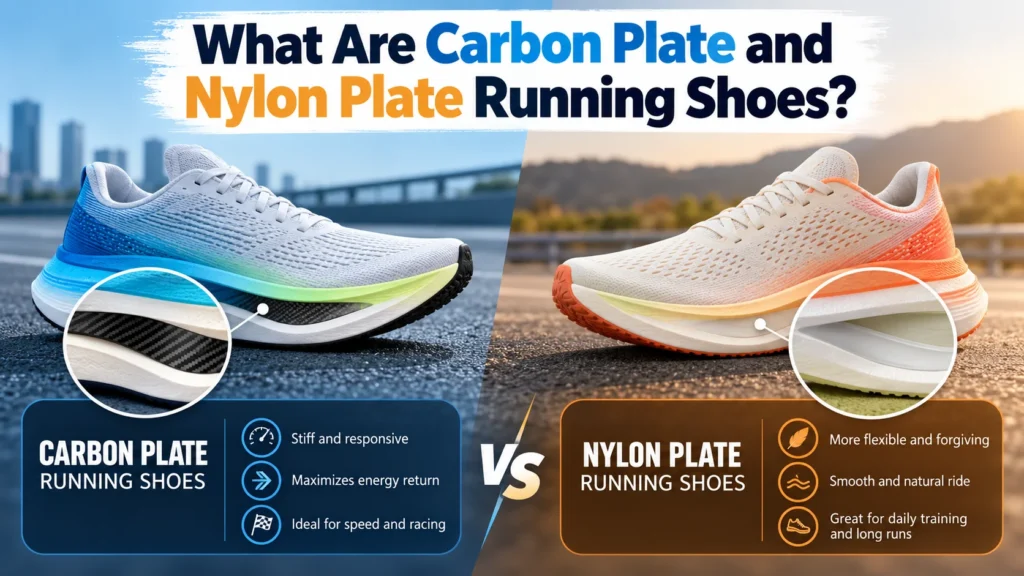
Carbon plate and nylon plate running shoes contain a reinforcing structure inside the sole. That structure changes how the shoe bends and interacts with its cushioning.
The plate works alongside the foam and sole shape. It doesn’t act like a spring that independently powers every step.
What Is a Carbon Plate Running Shoe?
A carbon plate running shoe contains a carbon-fiber-reinforced structure, usually embedded inside its midsole. This structure increases resistance to bending along the shoe’s length.
Carbon plates often appear in advanced road-racing shoes. Manufacturers combine them with lightweight foams and curved sole designs to influence running efficiency.
- Material: Carbon-fiber composite.
- Typical characteristic: High bending stiffness.
- Primary application: Competitive road racing.
- Associated technology: Responsive foam and rocker geometry.
- Example: Saucony Endorphin Pro 5.
Carbon plates differ in thickness, curvature, position, and flexibility. A slotted carbon plate may behave differently from a continuous, rigid design.
What Is a Nylon Plate Running Shoe?
A nylon plate running shoe uses a nylon-based structural component within its midsole. Nylon is a polyamide material that can provide reinforcement with more flexibility than many carbon-fiber designs.
Nylon plates are common in performance trainers designed for faster workouts. Their flexibility depends on the plate’s thickness, shape, and construction.
- Material: Nylon-based polymer.
- Typical characteristic: Relatively flexible bending response.
- Primary application: Tempo runs, intervals, and versatile training.
- Associated technology: Responsive cushioning and smooth transitions.
- Example: Saucony Endorphin Speed 6.
A nylon plate isn’t automatically softer underfoot. Firm cushioning or an aggressive rocker can still make a nylon-plated shoe feel stiff.
How Do Running Shoe Plates Work?
Running shoe plates change the way the forefoot bends during a stride. They can also influence how forces move through the foot and ankle.
The technical term is longitudinal bending stiffness. It describes how strongly a shoe resists bending from heel to toe.
Three components work together:
- Plate: Changes bending resistance and how forces transfer through the shoe.
- Midsole foam: Compresses and rebounds during ground contact.
- Rocker geometry: Uses a curved sole profile to influence forward transitions.
I consider this combination more informative than the plate material alone. Two carbon shoes can feel less alike than a carbon shoe and a nylon model.
Carbon Plate vs Nylon Plate Running Shoes: Key Differences
The biggest practical differences involve stiffness, intended running pace, versatility, and cost. However, individual shoe designs can overlap.
| Feature | Carbon Plate | Nylon Plate |
|---|---|---|
| Material | Carbon-fiber composite | Nylon-based polymer |
| Typical flexibility | Lower | Higher |
| Primary purpose | Racing performance | Fast training and racing |
| Easy-pace comfort | Model-dependent; sometimes awkward | Often more adaptable |
| Running economy evidence | Benefits demonstrated for complete shoe systems | Less direct comparative evidence |
| Typical price positioning | Premium racing tier | Performance training tier |
| Example model | Saucony Endorphin Pro 5 | Saucony Endorphin Speed 6 |
Important: These are typical characteristics, not universal engineering rules. Plate geometry and midsole construction can change the comparison considerably.
Do Carbon Plates Make You Run Faster Than Nylon Plates?
Carbon-plated racing shoes can improve running economy, but research doesn’t establish that every carbon design beats every nylon alternative. Running speed depends on the complete shoe and the individual runner.
Running economy describes the energy required to maintain a given pace. Using less energy at the same speed can provide a competitive advantage.
What Does the Research Say?
A 2026 systematic review and meta-analysis reported approximately 2–3% lower metabolic demand with carbon-plated footwear across analyzed outcomes.
The researchers also noted an important limitation. Foam, geometry, shoe weight, and other features contributed to the observed differences.
Those findings don’t demonstrate a 2–3% speed improvement for every runner. They also don’t establish a carbon-versus-nylon performance advantage of that size.
A separate review of shoe bending stiffness found mixed running-economy responses when stiffness changed. Plate position and geometry influenced the results.
Why Doesn’t Greater Stiffness Always Mean More Speed?
Stiffer plates change how the foot bends during push-off. However, the ideal amount of stiffness varies with shoe design and individual running mechanics.
Excessive stiffness may make a particular shoe feel awkward. A less rigid design might produce smoother movement for another runner.
- Running pace: Some aggressive racing designs feel better at faster speeds.
- Body mechanics: Foot strike, ankle movement, and stride patterns affect shoe interaction.
- Foam properties: Cushioning behavior contributes to running economy.
- Shoe geometry: Plate curvature and rocker shape influence transitions.
- Fit: Unstable or uncomfortable footwear can undermine practical performance.
My recommendation is to treat performance research as a reason to test suitable shoes. It shouldn’t replace your own comfort and pace comparison.
Which Plate Feels More Comfortable for Everyday Running?
Nylon-plated shoes often feel more adaptable during regular training because their plates can bend more readily. Carbon-plated shoes may feel firmer or more structured during slower movement.
Neither material determines cushioning softness by itself. A soft carbon racer can feel more cushioned than a firm nylon trainer.
How Does a Nylon Plate Feel?
A typical nylon-plated performance trainer combines flexible reinforcement with responsive foam. This can produce smooth transitions without the highly rigid feeling of some racing shoes.
That balance makes nylon worth considering when your weekly training includes changing paces.
- Tempo runs at a controlled, challenging pace.
- Interval workouts with faster repetitions.
- Long runs that include quicker sections.
- Road races where comfort and versatility matter.
How Does a Carbon Plate Feel?
Many carbon-plated racing shoes emphasize a firm, directional transition. Their stiffness and curved shape can create a distinctive rolling sensation.
Some runners enjoy that feeling immediately. Others need time to become comfortable with an unfamiliar riding style.
Carbon plates also don’t provide corrective stability automatically. If support is important, review our neutral vs stability running shoes comparison.
Are Nylon Plate Shoes Good for Half Marathons and Marathons?
Yes, nylon-plated running shoes can work for half marathons and marathons. They may suit runners who value comfort, familiar handling, and flexible training use.
A carbon-plated racer may offer greater performance potential for some athletes. However, marathon suitability also depends on cushioning, fit, stability, and late-race comfort.
When Should You Choose Nylon for a Race?
- First race: You want footwear that feels familiar from training.
- Flexible ride: Highly rigid shoes feel uncomfortable.
- Limited budget: One performance shoe must cover workouts and races.
- Variable pace: You expect to run at several speeds.
- Comfort priority: A nylon model remains more comfortable during longer efforts.
For many recreational runners, a familiar shoe is more useful than an unfamiliar premium racer. Race-day confidence matters.
When Might Carbon Be the Better Racing Choice?
Carbon-plated racing shoes become attractive when competitive performance is your primary goal. Their design emphasizes efficiency at faster sustained efforts.
I would consider carbon for a dedicated race shoe after confirming the model’s fit and comfort during demanding training sessions.
A good race shoe should feel controlled even when you’re tired. Don’t judge it from a brief walk around a store.
Can Carbon or Nylon Plate Running Shoes Cause Injuries?
Neither carbon nor nylon plates are proven to prevent injuries universally. Both change shoe mechanics, and individual runners may respond differently.
Plated shoes can alter how the foot and ankle move. However, changing joint mechanics doesn’t automatically establish higher or lower injury risk.
A 2026 biomechanical meta-analysis found that carbon-plated footwear didn’t consistently change several measured joint-power and stiffness outcomes.
Research still leaves questions about long-term injury outcomes. Avoid treating plate material as a medical safety rating.
How Should You Introduce Plated Running Shoes?
- Start with a short run: Evaluate comfort before using the shoes for demanding workouts.
- Increase use gradually: Allow time to adapt to unfamiliar footwear mechanics.
- Monitor discomfort: Watch for recurring foot, calf, or ankle symptoms.
- Keep suitable alternatives: A comfortable regular trainer can remain useful.
- Address persistent pain: Seek guidance from a qualified healthcare professional.
There’s no universal break-in mileage that guarantees injury prevention. Adapt based on comfort, workload, and your existing training.
How Do Foam, Stack Height, and Weight Affect Plated Running Shoes?
Foam, stack height, and weight can influence running feel as much as plate material. Comparing these features helps explain differences between real shoe models.
Why Does Midsole Foam Matter?
Midsole foam absorbs and returns mechanical energy during running. Its formulation affects softness, resilience, and overall ride characteristics.
Advanced racing foams commonly work alongside stiff plates. However, responsive foam also appears in nylon-plated and non-plated shoes.
Does Higher Stack Height Mean More Speed?
No. Stack height measures how much sole material sits beneath the foot, not how quickly a shoe moves.
Higher stacks can accommodate additional cushioning. However, stability, ground feel, weight, and rocker design also change.
Real 2026 Shoe Specifications
These manufacturer-listed specifications illustrate how complete plated designs differ. Both examples are neutral road-running shoes.
| Specification | Endorphin Speed 6 | Endorphin Pro 5 |
|---|---|---|
| Plate | Nylon | Slotted carbon |
| Foam | PWRRUN PBX | PWRRUN HG / PWRRUN PB |
| Heel stack | 38 mm | 39.5 mm |
| Forefoot stack | 30 mm | 31.5 mm |
| Heel-to-toe drop | 8 mm | 8 mm |
| Men’s listed weight | 233 g | 206 g |
| Primary use | Fast training | Road racing |
Source: Saucony’s official 2026 Endorphin collection specifications. Published weights are manufacturer figures and may vary by size.
The carbon-plated Pro 5 is lighter than the nylon-plated Speed 6 in these listings. That doesn’t prove every carbon shoe is lighter than every nylon shoe.
How Should You Choose Between Carbon and Nylon Plates?
Choose based on your running goals, comfort, and budget rather than plate material alone. Your normal training pace is a useful starting point.
Five Steps to Choosing the Right Plate
- Identify your main purpose: Decide whether the shoes will serve regular workouts, long runs, or competition.
- Compare the complete design: Check foam, stack height, drop, and rocker geometry alongside plate material.
- Test the fit: Confirm secure heel hold and comfortable toe space.
- Run at different paces: Compare easy running, controlled tempo efforts, and faster strides where practical.
- Evaluate overall value: Consider how often you’ll use each model and whether its specialized features help.
Proper sizing deserves special attention in aggressive racing shoes. Use our running shoe toe-room guide before choosing your size.
Forefoot width matters too, particularly during long races. Our running shoe width guide
Which Plate Fits Your Running Goals?
- Beginner runner: Prioritize a comfortable daily trainer; a plate isn’t essential.
- Recreational runner: Consider nylon when you want a versatile performance shoe.
- Frequent tempo runner: Compare nylon-plated models with flexible carbon training options.
- Competitive racer: Test carbon-plated racing shoes for performance and fit.
- Budget-conscious runner: Compare overall usefulness rather than paying extra solely for carbon.
If I had to choose one plated pair for varied weekly workouts, I’d start by evaluating nylon. For a separate competition shoe, I’d give carbon-plated racers serious consideration.
Do Carbon and Nylon Plate Shoes Meet Racing Rules?
Both materials can be compatible with road-racing regulations. However, competition legality depends on the complete shoe, not whether its plate contains carbon or nylon.
Under the 2026 World Athletics Athletic Shoe Regulations, the maximum sole thickness for covered road-running events is 40 mm. Additional requirements govern rigid structures and shoe approval.
The relevant regulations took effect on April 20, 2026. Consult the official World Athletics rules before competing in a regulated event.
Manufacturer stack measurements don’t replace official approval. Confirm the exact model and event requirements rather than assuming all retail racing shoes qualify.
What Mistakes Should You Avoid When Choosing a Plated Running Shoe?

The biggest mistake is assuming that a carbon plate automatically makes a shoe superior. Plate material is only one part of its overall design.
- Ignoring fit: A fast shoe cannot compensate for an uncomfortable toe box or unstable heel.
- Choosing maximum stiffness: A rigid plate may not suit your preferred movement pattern.
- Overlooking cushioning: Midsole foam strongly influences underfoot comfort and responsiveness.
- Assuming nylon is slow: Nylon-plated shoes can perform well during demanding workouts and races.
- Expecting injury prevention: Neither plate material guarantees protection against running injuries.
- Copying elite runners: A professional athlete’s racing setup may not suit your pace or experience.
- Ignoring shoe condition: Worn cushioning or damaged components can change how footwear performs.
I recommend choosing the shoe that performs consistently during your own runs. Marketing claims matter less than real comfort and suitability.
Recommended Carbon and Nylon Plate Running Shoes for 2026
These two models provide a useful comparison of current plated-shoe technology. My selections reflect verified specifications and intended buyer fit, not claims of personal wear testing.
The editorial ratings below assess suitability for each stated use case. They aren’t Amazon customer ratings or independent laboratory performance scores.
🏆 Best for Versatile Speed Training
Saucony Endorphin Speed 6
★★★★☆ 4.0/5 editorial fit
Plate: Nylon | Drop: 8 mm | Men’s listed weight: 233 g
The redesigned nylon plate works with PWRRUN PBX foam and SPEEDROLL geometry for faster training. I’d shortlist it for tempo sessions and versatile workouts, while checking upper comfort carefully because early independent reviews have reported occasional hot spots.
🏁 Best for Dedicated Road Racing
Saucony Endorphin Pro 5
★★★★½ 4.5/5 editorial fit
Plate: Slotted Carbon | Drop: 8 mm | Men’s listed weight: 206 g
This dedicated racer combines a slotted carbon plate with PWRRUN HG and PWRRUN PB cushioning. I’d consider it for runners prioritizing competitive road-racing performance, although its specialized purpose makes it less versatile than a regular trainer.
Affiliate disclosure: As an Amazon Associate, we may earn from qualifying purchases. Product prices, stock, sizes, and availability can change.
Frequently Asked Questions
Are Carbon Plates Better Than Nylon Plates for Running?
Carbon plates aren’t universally better than nylon plates. Carbon-plated systems often target maximum racing efficiency, while nylon-plated designs typically prioritize flexible, versatile performance. The right choice depends on the entire shoe, your preferred running pace, fit, and whether you’re training or competing.
Can You Run a Marathon in Nylon-Plated Shoes?
Yes, you can run a marathon in suitable nylon-plated running shoes. Models designed for longer distances can provide cushioning, responsive transitions, and a more flexible ride. Test your chosen pair during long training sessions before race day to confirm comfort and fit.
Are Carbon-Plated Shoes Good for Beginners?
Beginners can wear carbon-plated running shoes, but they don’t need them to start running. A comfortable daily trainer often offers better general-purpose value. If you’re interested in carbon plates, try a suitable pair gradually and compare its comfort against your normal shoes.
Do Nylon Plates Last Longer Than Carbon Plates?
There’s no reliable universal durability advantage based solely on plate material. Shoe lifespan depends on foam construction, outsole wear, usage, and overall design. A carbon plate may remain structurally intact even after the surrounding cushioning loses its original feel.
Are Nylon-Plated Running Shoes Cheaper Than Carbon-Plated Shoes?
Nylon-plated performance trainers are often cheaper than premium carbon-plated racing shoes. However, prices vary across brands, models, and sales. Compare overall comfort, construction, intended use, and current selling prices rather than assuming nylon is always the better-value option.
Final Verdict: Carbon Plate vs Nylon Plate Running Shoes
Choose carbon plate running shoes when dedicated racing performance is your priority. Choose nylon plate running shoes when you want responsive footwear for regular workouts and occasional races.
Neither material automatically guarantees better speed, comfort, or injury protection. The complete shoe design and your individual running needs matter more.
My final recommendation is simple: compare fit, cushioning, and performance at your actual pace before buying. The best plated running shoe is the one that helps you run comfortably and consistently.