

Quick Answer
The safest way to dry running shoes is to remove the insoles, absorb excess moisture with paper towels or newspaper, and let the shoes air-dry in a well-ventilated room. A fan can help them dry faster without exposing them to damaging heat. Avoid tumble dryers, radiators, and direct sunlight. These recommendations also align with Nike’s shoe-drying guidance.
6 Quick Steps to Dry Running Shoes Safely
- 1. Remove the insoles: Take out removable insoles and loosen the laces to improve airflow.
- 2. Remove excess water: Blot the uppers and lining with a clean, absorbent towel.
- 3. Add absorbent paper: Loosely stuff paper towels or plain paper inside each shoe.
- 4. Replace wet paper: Check it after 10–30 minutes and replace it when damp.
- 5. Use gentle airflow: Place shoes near a room-temperature fan, away from direct heat.
- 6. Check before wearing: Make sure the toe box, heel lining, and insoles are completely dry.
Important Safety Tip
- Allow roughly 12–24 hours for many wet shoes, but heavily soaked footwear or humid rooms may require 48 hours or longer. Always judge dryness by touch, not the clock.
Wet running shoes can turn a good workout into a frustrating cleanup job. Whether you’ve run through rain or washed a muddy pair, drying them incorrectly can damage materials and leave unpleasant odors.
I recommend prioritizing airflow over heat. This guide explains the safest drying methods, realistic drying times, common mistakes, and practical ways to protect your running shoes in 2026.
What Does It Mean to Dry Running Shoes Safely?
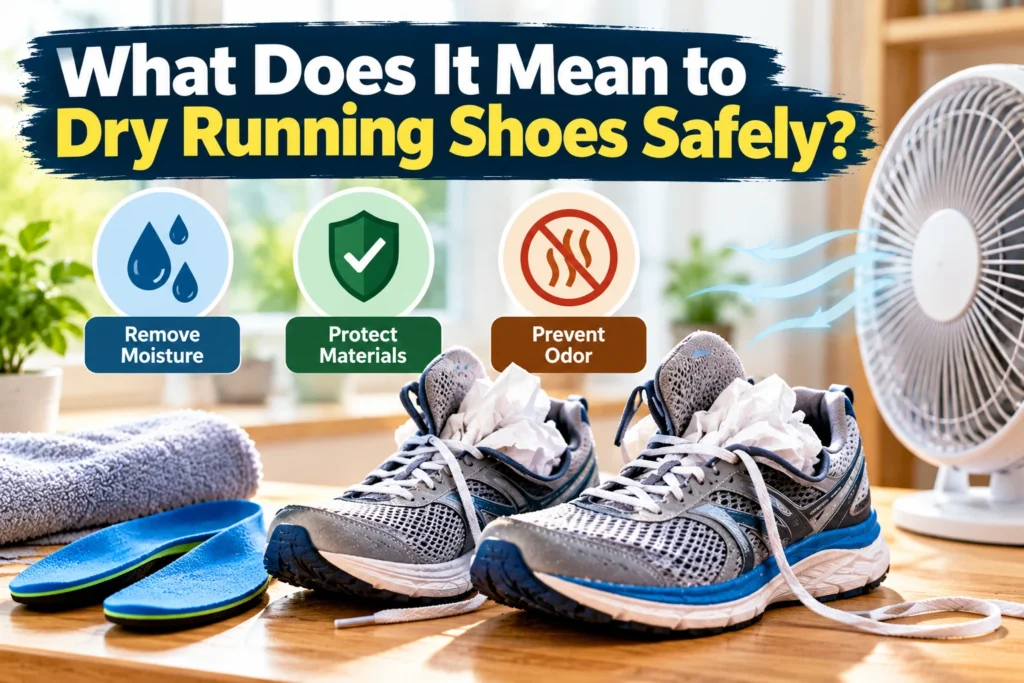
Drying running shoes safely means removing moisture while protecting the materials, cushioning, shape, and adhesives that hold the shoes together.
Modern running shoes combine several materials that respond differently to moisture and heat. Mesh uppers, foam midsoles, rubber outsoles, and bonded components all require careful treatment.
A safe drying process should achieve three things:
- Remove moisture: Dry the outer fabric, inner lining, removable insoles, and hard-to-reach areas.
- Protect construction: Avoid excessive temperatures that may weaken adhesives or distort materials.
- Prevent odor: Reduce the time moisture remains trapped inside the shoes.
It’s important to understand that a dry-looking upper doesn’t guarantee a dry interior. The padding around the heel and tongue can retain moisture after the outer fabric feels dry.
My preferred approach is simple: remove trapped water first, improve ventilation, and check every component before wearing the shoes again.
How Do You Dry Running Shoes Safely Step by Step?
The best method combines absorbent paper with room-temperature airflow. You don’t need specialized equipment for most wet running shoes.
Step 1: Remove Insoles and Loosen Shoelaces
Start by taking out the removable insoles. Loosen the laces and pull the tongue forward to expose more of the shoe’s interior.
This creates additional airflow around areas that normally remain enclosed.
- Remove removable insoles without pulling on glued components.
- Loosen or remove shoelaces.
- Open the tongue and collar.
- Place insoles separately on a clean, dry surface.
If your shoe has a permanently attached footbed, leave it in place. Forcing it out could damage the interior construction.
Step 2: Blot Away Excess Water
Before using paper inside your shoes, remove as much surface water as possible. This reduces the moisture that must evaporate later.
Use a clean microfiber towel or another absorbent cloth.
- Press the towel gently against the mesh upper.
- Blot moisture from the tongue and heel lining.
- Tip the shoes downward if standing water remains inside.
- Absorb remaining moisture without twisting the shoes.
Avoid aggressively squeezing the midsole or wringing the upper. Running shoes aren’t designed to be twisted like wet clothing.
Step 3: Stuff Running Shoes With Paper Towels
Place loosely crumpled paper towels or plain absorbent paper inside the shoes. The paper draws moisture from the lining and helps maintain the original shape.
White paper towels are a convenient choice for light-colored shoes. Printed newspaper may transfer ink onto damp fabric.
For the best result:
- Use enough paper to contact the damp interior.
- Avoid packing it so tightly that airflow becomes restricted.
- Replace saturated paper with dry sheets.
- Remove the paper when most free moisture has been absorbed.
Check the first batch after approximately 10–30 minutes. Replace it sooner if the paper becomes saturated quickly.
ASICS recommends using absorbent paper when drying running shoes. Its running shoe cleaning guide also emphasizes ventilation and avoiding direct heat.
Step 4: Choose a Well-Ventilated Indoor Location
Place the shoes in a dry room where air can circulate around them. Keep them away from direct sunlight, radiators, and heating vents.
I prefer an open shoe rack or a clean towel on the floor rather than an enclosed cabinet.
- Good locations: An open room, shaded covered area, or ventilated laundry space.
- Poor locations: Closed closets, damp bathrooms, sealed containers, or direct sunlight.
- Helpful conditions: Lower humidity, moderate room temperature, and unrestricted airflow.
Keep the shoes separated instead of stacking them. Each shoe needs exposure to moving air.
Step 5: Use a Fan to Speed Up Drying
A room-temperature fan can shorten drying time by moving moisture-laden air away from the shoes. It offers a practical alternative to applying heat.
Place the fan where its airflow reaches the open shoe interiors.
- Set the fan on a stable, dry surface.
- Place the shoes nearby with their openings facing the airflow.
- Keep electrical equipment away from dripping water.
- Use a gentle or moderate fan setting.
- Check the shoes periodically until completely dry.
You don’t need to aim an extremely powerful fan directly into the fabric. Consistent airflow matters more than high speed.
Step 6: Check Whether the Shoes Are Completely Dry
Before wearing your running shoes, check more than the outside surface. Hidden moisture often remains in the heel lining, toe box, and removable footbed.
Use this simple inspection checklist:
- Touch the inner toe box with dry fingers.
- Press a dry paper towel against the heel lining.
- Check both sides of each removable insole.
- Inspect the tongue and padded collar.
- Look for damp patches or a persistent musty smell.
If the paper towel collects moisture, continue drying. Reinstall the insoles only when all parts feel dry.
How Long Does It Take Running Shoes to Dry Naturally?
Running shoes often need approximately 12–24 hours to air-dry, although lightly damp shoes may dry faster. Heavily soaked shoes can take 48 hours or longer, especially in humid conditions.
These are practical planning estimates, not guaranteed drying times.
The actual duration depends on:
- Moisture level: Sweat-damp shoes dry faster than shoes soaked by heavy rain.
- Upper material: Lightweight mesh generally releases moisture more readily than thick, padded constructions.
- Humidity: Moist air slows evaporation.
- Ventilation: Moving air can make drying more efficient.
- Insole thickness: Thick foam footbeds can retain moisture longer.
Running Shoe Drying Methods Compared
The table compares common approaches based on practical use and material safety. Actual results vary with shoe construction and room conditions.
| Method | Speed | Risk Level | Recommendation |
|---|---|---|---|
| Indoor air-drying | Moderate to slow | Low | Best everyday method |
| Absorbent paper and airflow | Moderate | Low | Best for soaked interiors |
| Room-temperature fan | Usually faster | Low | Best faster option |
| Shoe dryer with no-heat mode | Varies by model | Generally low when used correctly | Useful for frequent wet shoes |
| Tumble dryer or direct heater | Potentially fast | High | Avoid |
My recommendation: Plan for overnight drying whenever possible. If you run daily, rotating between two pairs removes much of the pressure to dry one pair quickly.
Can You Dry Running Shoes Faster Without Damaging Them?
Yes. The safest way to accelerate drying is to combine moisture absorption, increased airflow, and lower room humidity.
Instead of increasing temperature, focus on helping moisture escape.
Use Paper and a Fan Together
For shoes soaked by rain, start with paper towels to absorb the available moisture. Replace the paper, remove it once it’s no longer collecting much water, and finish with a fan.
This two-stage method handles both trapped water and the remaining moisture inside the fabric.
Reduce Humidity in the Room
Humidity matters because damp air slows evaporation. A dehumidifier or air conditioner can help create better drying conditions.
Position the shoes in the room rather than directly against the equipment.
Rotate Running Shoes Between Workouts
Keeping a second running pair can be useful when you train frequently. It allows wet shoes to dry thoroughly without rushing the process.
England Athletics also recommends rotating shoes as part of running shoe maintenance.
What Should You Never Do When Drying Running Shoes?
The biggest drying mistakes involve excessive heat, restricted airflow, and wearing shoes before their interiors are dry.
These practices can affect comfort, durability, and hygiene.
1. Never Put Running Shoes in a Tumble Dryer
Tumble dryers combine heat with repeated mechanical movement. Together, these can damage adhesives, deform components, and accelerate wear.
Even a low-temperature setting may expose shoes to conditions their manufacturer doesn’t recommend.
2. Avoid Radiators and Hair Dryers
Direct heating can create localized hot spots, especially around rubber, synthetic uppers, and bonded materials. A hair dryer also concentrates heat unevenly.
Use room-temperature airflow instead.
3. Don’t Leave Shoes in Strong Direct Sunlight
Sunlight may seem like the fastest free drying option. However, excessive solar heat and prolonged ultraviolet exposure can contribute to discoloration or material deterioration.
Choose shade with airflow rather than exposing your footwear to intense sunshine.
4. Don’t Store Damp Shoes in Closed Spaces
Putting wet running shoes straight into a gym bag or closet traps moisture. It can encourage persistent odors and microbial growth.
Open the shoes and dry them before storage.
5. Don’t Put Insoles Back Too Soon
A dry outer shoe doesn’t mean its removable footbed has finished drying. Damp insoles can reintroduce moisture into the interior.
Keep both components separate until fully dry.
How Should You Dry Different Types of Running Shoes?
Most running shoes benefit from the same basic process. However, specialized materials may require additional precautions.
Mesh and Knit Running Shoes
Mesh and knit uppers are often lightweight and breathable. They generally respond well to gentle blotting and room-temperature airflow.
- Use a soft towel to absorb moisture.
- Avoid pulling or stretching the knit upper.
- Keep the shoes supported in their normal shape.
- Let the interior padding dry completely.
Highly Cushioned Running Shoes
Max-cushion shoes may contain thick foam midsoles and padded collars. Some areas can remain damp after the upper feels dry.
Inspect the lining and footbed carefully. Avoid applying direct heat in an attempt to speed up the process.
Carbon-Plated Racing Shoes
Performance racing shoes often use specialized foams, bonded structures, and lightweight uppers. I recommend the most conservative approach for these expensive shoes.
Blot gently, use absorbent paper when needed, and air-dry at room temperature. Follow the specific model’s care instructions if available.
Trail Running Shoes
Trail shoes commonly collect mud, sand, and water around the tread and upper. Remove loose debris before drying.
Some waterproof trail shoes may release interior moisture more slowly than breathable mesh designs. Remove the insoles and allow extra drying time.
Leather or Suede Running Shoes
Leather and suede require material-specific care. Excessive water, harsh cleaners, and direct heat may alter their finish or texture.
Consult the manufacturer’s care guidance before cleaning or drying these materials.
What Should You Do After Running Shoes Get Soaked in Rain?
After a rainy run, remove the shoes promptly and begin drying them indoors. Don’t leave them wet overnight inside a bag.
Use this short post-run routine:
- Remove loose mud and surface debris.
- Take out removable insoles.
- Blot the lining and outer fabric.
- Loosely fill the shoes with absorbent paper.
- Replace wet paper and open the shoes for ventilation.
- Use a fan if additional airflow is needed.
If your shoes were exposed to dirty floodwater or contaminated standing water, ordinary drying may not be sufficient. Assess whether they can be safely cleaned and disinfected according to the manufacturer’s instructions.
How Do You Dry Running Shoes After Washing Them?
After washing, gently remove excess rinse water before starting the drying process. Allow the upper, tongue, lining, and insoles to dry separately where possible.
Hand cleaning is generally the safer maintenance approach for many running shoes. Adidas recommends drying footwear at room temperature and avoiding heaters in its running shoe care instructions.
Follow these precautions after cleaning:
- Rinse away any remaining mild cleaning solution as directed.
- Blot instead of twisting or wringing the shoes.
- Keep removable insoles outside the shoes.
- Use paper towels to collect excess moisture.
- Allow unrestricted airflow until every part is dry.
Avoid placing freshly washed shoes directly on a hot surface. The adhesives and foam components may be more vulnerable to damage than ordinary clothing.
How Can You Prevent Running Shoes From Smelling While Drying?
Preventing odors starts with drying shoes completely and promptly. Moisture trapped in the lining creates conditions where odor-producing microbes can thrive.
The best preventive habits are straightforward:
- Remove moisture early: Start drying soon after wet runs.
- Clean dirty insoles: Follow the manufacturer’s cleaning instructions.
- Use clean socks: Change out of wet socks after workouts.
- Improve ventilation: Allow airflow between uses.
- Keep storage dry: Avoid sealed bags and humid closets.
If the shoes smell after drying, inspect the insoles and lining for remaining moisture. Clean them appropriately and dry them again.
Persistent mustiness, visible mold, or damaged interior materials deserve more attention. Heavily contaminated shoes may need replacement rather than another drying attempt.
How Do You Know When Wet Running Shoes Are Safe to Wear Again?
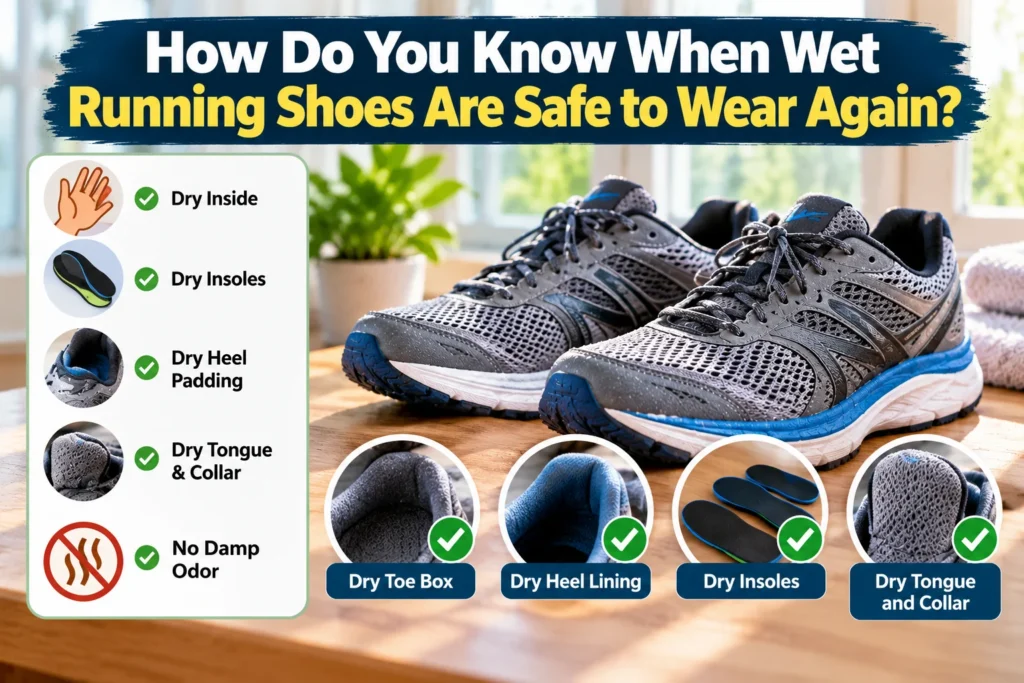
Running shoes are ready to wear when the internal fabric, padding, and removable insoles are completely dry. A dry outsole alone isn’t enough.
Before your next run, confirm the following:
- The toe area feels dry inside.
- The heel padding has no damp spots.
- The tongue and collar are dry.
- The removable insoles are dry on both sides.
- There is no persistent damp or musty odor.
Also inspect the shoe for any changes in shape or separation between components. Drying cannot repair adhesives or cushioning that have already suffered damage.
Which Running Shoe Drying Tools Are Worth Considering in 2026?
Most runners can dry their shoes safely with paper towels and an ordinary fan. A dedicated dryer becomes more useful when you regularly deal with wet footwear.
For running shoes, I prioritize products with adjustable airflow or a no-heat setting. Always follow both the dryer instructions and the footwear manufacturer’s restrictions.
Affiliate disclosure: The product links below may earn a commission from qualifying purchases at no additional cost to you. The star scores are editorial feature-fit assessments, not hands-on test results or customer ratings.
🏆 Best for Faster Drying
DryGuy Force Dry DX
★★★★☆ 4.5/5
The DryGuy Force Dry DX features forced airflow, a heat/no-heat switch, a three-hour timer, and four drying ports. Its manufacturer reports drying many items in one to two hours under suitable conditions. I favor its no-heat mode for running shoes when rapid drying matters.
👟 Best for Multiple Pairs
PEET Advantage Plus Dryer
★★★★☆ 4.5/5
The PEET Advantage Plus uses fan-assisted airflow and offers heated and unheated settings. It accommodates two pairs of shoes and has a timer. I would consider it for households that regularly need to dry several pairs, using the unheated option when appropriate.
Important: Manufacturer drying-time claims aren’t guarantees for every running shoe. Also check electrical voltage compatibility before purchasing an imported shoe dryer.
Frequently Asked Questions
Can I put running shoes in the dryer on low heat?
It’s generally best not to put running shoes in a tumble dryer, even on low heat. Heat and repeated movement can damage adhesives, cushioning, and synthetic materials. Remove the insoles, use absorbent paper, and air-dry the shoes with good ventilation instead.
Can running shoes dry overnight?
Yes, many lightly or moderately wet running shoes can dry overnight in suitable conditions. Heavily soaked shoes or footwear drying in humid rooms may need much longer. Check the heel padding, toe box, tongue, and insoles before assuming the shoes are completely dry.
Can I use a hair dryer to dry running shoes?
A hot hair dryer isn’t recommended because concentrated heat can affect synthetic materials, rubber components, and adhesives. Using a regular fan is a safer choice. Room-temperature airflow helps moisture evaporate without exposing your shoes to unnecessarily high temperatures.
Is newspaper safe for drying running shoes?
Newspaper can absorb excess moisture and help shoes hold their shape. However, printed ink may transfer onto light-colored interiors when wet. White paper towels or unprinted absorbent paper are safer alternatives. Replace saturated paper and allow the shoes to finish air-drying.
Should I wear running shoes if they are still slightly damp?
It’s better to let running shoes dry completely before wearing them. Damp linings can increase friction and discomfort while allowing moisture-related odors to persist. If your shoes remain wet, use a different pair and continue drying the original shoes with gentle airflow.
Final Takeaway: What’s the Safest Way to Dry Running Shoes?
The safest approach is simple: remove the insoles, blot excess water, use absorbent paper, and let the shoes dry with gentle airflow. Avoid direct heat and always inspect the interior before wearing them again.
In 2026, you don’t need an expensive drying device to care for running shoes properly. Consistent, gentle drying and sensible shoe rotation are often enough to protect your footwear.
Make these steps part of your post-run routine. Your shoes will be better prepared for the next workout without unnecessary heat exposure.


Steven is a former sportsperson and now a full-time businessman and research writer. He is the mastermind of this site, and he created this site to help people who need specialized shoes for different activities. When he was a sportsperson, he was very passionate about different types of shoes for his sports purpose. The passion he had for shoes at that time now turned into his profession. Besides his shoe business, he loves sharing his knowledge and experience with people and helping them maintain healthy feet.
More Posts
