

Quick Answer
The ASICS GEL-KAYANO 31 is the better buy for heel-collar comfort, lasting heel lining, and wet-road grip. Independent lab tests rated its heel padding 4/5, against 1/5 for the GEL-KAYANO 30. Both suit easy running and walking. Choose the 30 if it fits well and costs meaningfully less in your size.
What truly changed between the GEL-KAYANO 31 and 30?
- Heel-lining abrasion score improves from 1/5 to 4/5 in one lab.
- Both retain 4D GUIDANCE, FF BLAST PLUS ECO, and rearfoot PureGEL.
- The 30 remains strong for value and ventilated easy miles.
Quick Verdict: GEL-KAYANO 31 vs GEL-KAYANO 30
GEL-KAYANO 31
Independent editorial score converted from 9/10
From $113.61 observed men’s Amazon offer; size varies
Original US list price: $165
Best for
Runners who want improved heel-lining durability and dependable wet-road traction.
GEL-KAYANO 30
Independent editorial score converted from 9/10
From $128.86 observed men’s Amazon offer; size varies
Original US list price: $160
Best for
Budget-minded runners who find a genuine clearance deal in their correct width.
Amazon offer snapshots from November 21; they are not guaranteed live checkout prices. Editorial scores are not Amazon customer ratings.
| Category | Kayano 31 | Kayano 30 |
|---|---|---|
| Overall winner | 🏆 | — |
| Best value at observed men’s offers | ✅ | ❌ |
| Heel-lining durability | ✅ | ❌ |
| Lab-tested breathability | ❌ | ✅ |
| Wet-forefoot traction test | ✅ | ❌ |
Bottom line: The GEL-KAYANO 31 wins for runners who want tougher heel padding and stronger tested wet grip; choose the 30 when its fit is better or its actual price is substantially lower.
- The GEL-KAYANO 31 leads overall because its heel padding scored 4/5 versus 1/5.
- Both launched near $160; the newer 31 cost only $5 more at retail.
- Both suit slow long runs, but neither excels at fast interval sessions.
- The GEL-KAYANO 30 can save money when a matching clearance size appears.
- The 31 tested better for wet grip; the 30 scored better for airflow.
You need a stable running shoe, and both Kayano models look like safe choices. The ASICS GEL-KAYANO 31 and GEL-KAYANO 30 share a thick sole, a broad base, and the same core support technology.
So why pay more for one? The answer lies in smaller details. Heel padding, outsole grip, upper fit, and the price in your size matter more than the model number.
I’m Steven Tyler. This comparison draws on ASICS specifications, independent wear reviews, and published lab measurements. I have not performed a new hands-on test of both pairs. Where labs report different weights, I name the test source instead of mixing figures.
The key surprise is that the GEL-KAYANO 31 can cost less than the older model on some listings. That does not make every size a bargain. The right pair is the one that fits and meets your daily running needs.
What Is the ASICS GEL-KAYANO 31 Designed to Do?
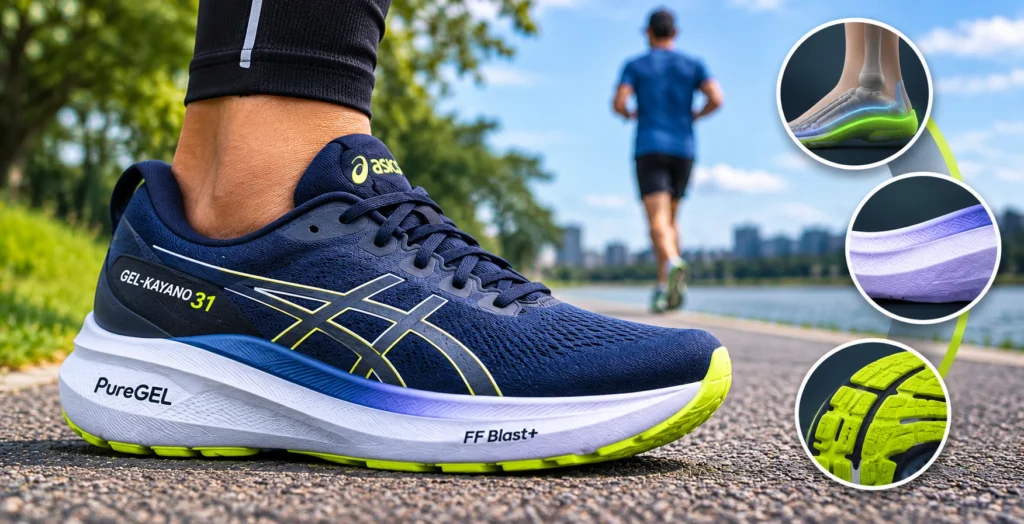
Quick verdict: The GEL-KAYANO 31 is a cushioned stability road shoe for easy running, long steady miles, and walking. Its improved heel lining and tested wet grip make it the stronger all-round choice here.
The ASICS GEL-KAYANO 31 uses a 4D GUIDANCE SYSTEM to help steady the foot. FF BLAST PLUS ECO foam provides its main cushioning. PureGEL sits in the heel to soften landings.
ASICS lists a 10 mm heel-to-toe drop and a 40 mm heel stack. That high heel suits runners who land heel-first. The wide base offers guidance without a stiff, old-style post.
The updated upper includes engineered mesh, generous tongue padding, and a soft heel collar. RunRepeat measured the tongue at 8.3 mm thick. The 31 also uses a HYBRID ASICSGRIP outsole with protective rubber in high-wear zones.
It is not a speed shoe. Its substantial build and modest energy return suit relaxed training. For a broader look at competing models, our ASICS GEL-KAYANO 31 review covers the same shoe against other stability trainers.
- Heel-lining abrasion score of 4/5 in lab testing
- Wet-traction coefficient of 0.83 in one forefoot test
- Plush heel collar and padded tongue
- Steady platform for easy road miles
- Heavy beside faster daily trainers
- Not much spring at quicker paces
- Breathability scored 4/5, below the older shoe
- Arch and toe fit may not suit every foot
ASICS Men’s GEL-KAYANO 31 Running Shoes
A strong choice for supported easy miles. Compare your size, width, seller, and return terms.
What Is the ASICS GEL-KAYANO 30 Designed to Do?
Quick verdict: The GEL-KAYANO 30 is still a capable stability trainer for steady road running and walking. Its main strength is proven cushioning and guidance at a good clearance price.
The GEL-KAYANO 30 introduced the broad, high-stack design carried into the next model. It pairs 4D GUIDANCE with FF BLAST PLUS ECO foam and rearfoot PureGEL. Its published drop is also 10 mm.
RunRepeat measured a 124.3 mm forefoot platform and 105.4 mm heel platform. Those wide measurements help explain its planted feel. It delivers a supportive ride without needing a rigid traditional stability post.
The upper includes soft fabric, ample padding, and a secure midfoot. Independent reviewers describe it as comfortable for slower miles. It can feel warm or snug for some feet, despite strong laboratory airflow results.
Its biggest weakness is the inner heel fabric. One abrasion test gave that lining just 1/5. Our ASICS GEL-KAYANO 30 review explores that drawback alongside its durable outsole and cushioned feel.
- Broad cushioning and stable heel base
- Breathability scored 5/5 in one lab
- Solid 0.9 mm outsole abrasion result
- Great value when discounted below the 31
- Heel-lining abrasion scored only 1/5
- Wet-traction score trails the newer model
- Bulky for fast repeats and racing
- Remaining sizes may be limited
ASICS Men’s GEL-KAYANO 30 Running Shoes
A good fallback if the older version feels right and offers a genuine size-specific discount.
How Do the GEL-KAYANO 31 and 30 Specs Compare?
Both models have nearly identical core cushioning and support features. The clearest measured differences involve heel-lining wear, outsole grip, and airflow.
The figures below use the same RunRepeat laboratory where possible. Measured weights can differ from brand specifications because sample sizes and methods vary.
| Specification | GEL-KAYANO 31 | GEL-KAYANO 30 | Winner |
|---|---|---|---|
| Original US list price | $165 | $160 | 30 at launch |
| Men’s offer snapshot, Nov 21 | From $113.61 | From $128.86 | 31 in snapshot |
| RunRepeat lab weight, men | 295 g / 10.4 oz | 303 g / 10.7 oz | 31 |
| Listed heel-to-toe drop | 10 mm | 10 mm | Tie |
| RunRepeat measured drop | 11.5 mm | 12.0 mm | Tie by preference |
| Listed heel / forefoot stack | 40 / 30 mm | 40 / 30 mm | Tie |
| Support | 4D GUIDANCE SYSTEM | 4D GUIDANCE SYSTEM | Tie |
| Main midsole | FF BLAST PLUS ECO | FF BLAST PLUS ECO | Tie |
| Heel cushioning insert | PureGEL | PureGEL | Tie |
| Upper construction | Updated engineered mesh | Earlier engineered upper | 31 for collar feel |
| Breathability test | 4/5 | 5/5 | 30 |
| Forefoot wet traction | 0.83 | 0.53 | 31 |
| Heel-padding wear test | 4/5 | 1/5 | 31 |
| Outsole abrasion depth | 1.1 mm | 0.9 mm | 30 |
| Removable insole | Yes | Yes | Tie |
| Published expert score | 9/10 | 9/10 | Tie |
| Warranty and returns | Check current seller terms | Check current seller terms | Tie |
For original lab methods, inspect the GEL-KAYANO 31 laboratory review and the GEL-KAYANO 30 laboratory review. A lower abrasion depth indicates less rubber removal in that test. Neither number is a guaranteed lifespan.
Which GEL-KAYANO Offers Better Stability on Easy Runs?
Winner: Tie for most easy-run needs. The GEL-KAYANO 31 and 30 both guide foot motion through a broad base and 4D GUIDANCE. Neither adds a whole new stability system.
The main job of each model is to help keep foot movement controlled. That can feel reassuring on tired legs. Their 40 mm listed heel stack also gives both shoes a tall landing platform.
RunRepeat measured the 30 at 124.3 mm across the forefoot. The 31 measured 122.1 mm in the same lab. The older shoe has a slightly broader base, yet width alone does not prove better support for every runner.
The 31 also narrows the heel platform in the lab figures. That can make it feel less broad underfoot. However, a narrower platform does not suit everyone. Some walkers prefer the extra contact area of the 30.
Both pairs have a structured heel counter and a supportive midfoot. The midfoot foam works with the outsole shape rather than a rigid correction post. That is useful for runners who dislike harsh support under the arch.
Do you roll inward as you run? That foot motion is called pronation. It is normal in moderation and does not always require special footwear. Our running overpronation basics guide explains when extra guidance may feel useful.
The important point is comfort during your stride. If one shoe presses into your arch, its impressive support features will not fix that poor fit. Choose the pair that stays comfortable over your normal training distance.
Which Feels Better: GEL-KAYANO 31 Cushioning or 30 Fit?
Winner: GEL-KAYANO 31 for heel-collar comfort; a tie for core cushioning. Both pairs use FF BLAST PLUS ECO and rearfoot PureGEL. The 31’s more padded upper is the main comfort update.
The 31 has a soft collar, thicker tongue, and revised upper shape. RunRepeat measured 8.3 mm of tongue padding on the 31. The 30 measured 7.7 mm. Extra padding can reduce lace pressure for some feet.
Yet padding comes with tradeoffs. Some runners want more space and less fabric around the ankle. Both models have structured heels, and each can feel bulky against a lighter neutral trainer.
The surprise comes from ventilation tests. RunRepeat gave the GEL-KAYANO 30 a 5/5 breathability score. The newer GEL-KAYANO 31 scored 4/5. Both passed as well-ventilated shoes, but the test did not crown the newer upper.
That finding differs from some wear reviewers who describe the 31 as airier. You can reconcile both views by testing your own feet. Fabric layers, socks, heat, and running pace all change how warm a shoe feels.
The foam story is simpler. Neither version has the spring of a light tempo trainer. They work best at relaxed speeds, when a secure landing matters more than a lively toe-off.
Fit tip: Test each pair with your usual running socks. Leave space at the toes, then check whether the midfoot holds without squeezing.
If standard width feels tight, do not assume a longer size will solve it. Extra width and extra length solve different fit problems. Our running shoe width guide explains that choice.
Which GEL-KAYANO Gives Better Price and Value?
Winner: GEL-KAYANO 31 at the observed men’s offers. The 31 appeared from $113.61, while the 30 appeared from $128.86 in a November 21 retailer snapshot. That result can reverse with another shoe size or color.
The original retail gap was small. The GEL-KAYANO 31 launched around $165 in the United States. The GEL-KAYANO 30 cost about $160. Paying $5 more for a better heel lining is a sensible trade when both fit equally well.
Clearance pricing changes that decision. If you see the 30 at $90 and the 31 at $125 in your exact size, the 30 saves $35. The amounts in that example are a buying scenario, not checked offers.
At that difference, the 30 can be a smart choice for casual walking or occasional easy runs. The 31 earns more money when you often wear through inner heels or need stronger tested wet-road traction.
Check the seller and color before buying. A low headline price may apply to a single size. Shipping costs and return rules can erase a discount. A missing wide option can make the cheapest listing worthless to you.
Do not choose by original retail price alone. Compare two pairs you can actually wear, from sellers with clear return policies. That gives you a real value decision rather than a marketing number.
Which Has Better Wet Grip and Long-Term Durability?
Winner: GEL-KAYANO 31 for tested wet grip and heel-lining wear. In RunRepeat’s forefoot wet-traction test, the 31 scored 0.83. The 30 recorded 0.53 using the same reported test method.
The higher reading means more measured friction in that lab setup. That is useful for runners who train on damp pavement. It does not mean either shoe can prevent slips on leaves, ice, loose gravel, or painted road lines.
The heel lining shows a sharper upgrade. RunRepeat gave the 30 a 1/5 abrasion score. The 31 earned 4/5. That difference matters if your heel rubs the shoe each time you step.
Outsole abrasion tells a different story. The older model lost 0.9 mm of rubber in one wear test. The newer model lost 1.1 mm. A lower number is better there, so the 30 has the edge for that single outsole measure.
Neither result proves exactly how many miles your shoes will last. Your body weight, road surface, stride, and rotation all affect wear. Check the heel fabric and outsole every few weeks.
Wet traction is also a safety topic. Slow down on slick surfaces, and keep tread clear of grit. Supportive shoes do not replace careful footing or proper training habits.
Warning: Do not use either road shoe as a substitute for footwear designed for ice, deep mud, or technical trails.
Which Model Wins in Real-World Running Situations?
The GEL-KAYANO 31 wins most close-price choices. Its measured traction and inner-heel durability are useful upgrades. The 30 still makes sense for an excellent fit or a deeper sale.
| Situation | Winner | Why |
|---|---|---|
| Easy daily road miles | Tie | Both use similar cushioning and support. |
| Walking in light rain | 31 | Higher wet-forefoot traction reading. |
| Frequent heel-collar wear | 31 | Fourfold score difference in a 1–5 abrasion rating. |
| Hot-weather slow runs | 30 in lab | Its breathability scored 5/5 versus 4/5. |
| Cold, dry pavement | Tie | Both cushion and guide; neither is an ice shoe. |
| Long shifts on your feet | 31 if fit matches | Softer collar and durable inner heel fabric. |
For faster workouts, neither shoe is the clear winner. A lighter model, such as the Saucony Tempus, better matches pace-focused sessions. For all-day work, the right width matters more than small spec differences.
Is the GEL-KAYANO 31 Worth the Extra $5 at Launch?
Yes, for most runners comparing equal-priced new pairs. The 31’s heel-lining result and wet-traction measurement provide useful reasons to pay the original $5 premium. However, today’s remaining stock can price either shoe much higher or lower.
Think in terms of total use. A pair for four weekly walks needs a good fit and stable cushioning. A pair for wet morning runs also benefits from outsole traction. Your use should decide how much an upgrade matters.
Try a simple price rule. If the 31 costs the same as the 30, choose the 31 unless the older upper fits better. If the 30 saves $25 or more, check whether the wear differences matter to your feet.
That $25 figure is a practical shopping threshold, not a measured performance limit. A runner who destroys heel linings could still prefer the 31 at a larger premium.
Stock age is also worth checking. An unworn older pair is not always a bad purchase. Yet storage conditions, seller trust, and return terms deserve extra care when buying older models.
Check width availability before chasing the lowest number. Losing the correct width can make a $20 discount feel expensive after your first long walk.
Who Should Buy the GEL-KAYANO 31 or GEL-KAYANO 30?
Choose the 31 for its improved heel lining and wet grip. Choose the 30 if it fits your foot better or costs substantially less in your exact size.
- Often wear holes through heel padding
- Run on wet city sidewalks
- Prefer a plush upper around the ankle
- Find your width at a fair price
- Find a deeper deal in your size
- Already love the older model’s fit
- Value the stronger lab airflow result
- Mostly walk or jog on dry roads
- You need faster intervals: consider the Saucony Tempus.
- You want a neutral cushioned ride: try ASICS GEL-NIMBUS.
- Your foot dislikes high drops or tall midsoles.
A flat foot does not automatically require a stability shoe. Shoe comfort and fit remain the better starting points. Avoid buying either model solely because a product page says it controls pronation.
What Do Buyers and Independent Testers Say About Both Shoes?
Both shoes earn strong marks for comfortable, steady support. Independent reviews also agree on their weak point: neither delivers lively speedwork. Buyers should pay close attention to fit and heel lining rather than only star ratings.
Footwear Hiker recorded earlier Amazon snapshots of 4.5/5 from about 1,650 ratings for the 31 and 4.5/5 from about 3,451 ratings for the 30. Those counts belong to specific past listing snapshots. They are not fresh Amazon-wide totals.
Buyer Sentiment Snapshot
4.5/5 ★★★★★ — GEL-KAYANO 31
Historical listing snapshot: about 1,650 ratings
Common praise
- Comfortable heel cushioning
- Stable feel on easy miles
- Secure upper and supportive fit
Recurring concerns
- Heavy feel when running faster
- Arch or toe pressure for some feet
4.5/5 ★★★★★ — GEL-KAYANO 30
Historical listing snapshot: about 3,451 ratings
Common praise
- Cushioned steady road feel
- Broad, stable platform
- Comfort for walking and recovery
Recurring concerns
- Heel lining can wear quickly
- Midfoot fit can feel tight
Running Shoes Guru assigned both models a 9/10 expert score. Its comparison favored the 31’s comfort, upper, and overall durability. It favored the 30’s toe-off and lower listed weight.
Those scores come from that publication, not a new test here. RunRepeat’s separate laboratory reported the 31 as lighter in its tested pair. That difference shows why reviewers should state their methods instead of treating one weight as universal.
Most positive comments reflect the same buying goal: secure and cushioned easy miles. The most useful complaints concern the details that make a shoe hard to wear. Test the heel, arch, and toe box before trusting an average rating.
How Should You Care for GEL-KAYANO Running Shoes?
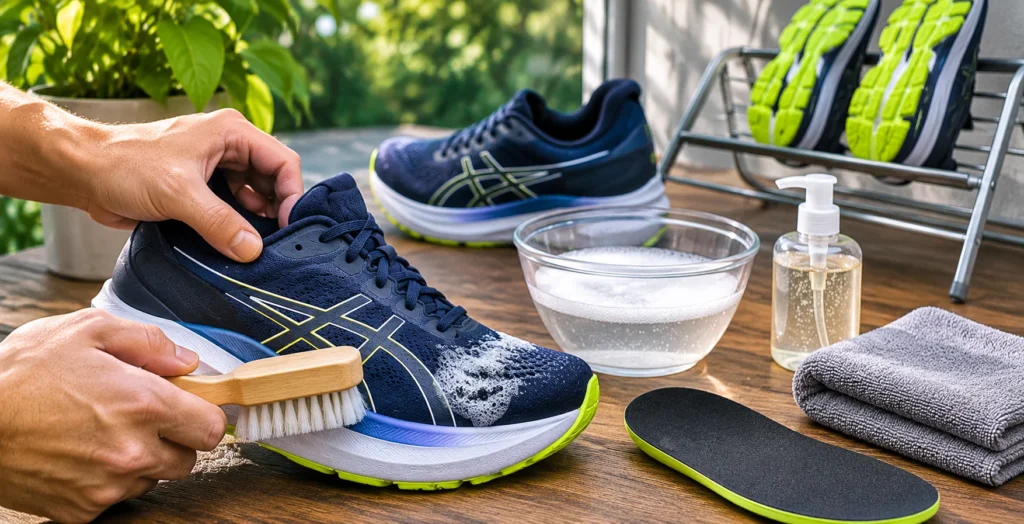
Clean both pairs gently and let them air-dry. A soft brush, mild soap, and cool water can remove road dirt. Avoid a washing machine, hot dryer, or heater.
Start by clearing grit from the outsole grooves. Dirt can reduce usable tread contact. Then remove the laces and insoles before cleaning the fabric upper with a soft brush.
Use a small amount of mild soap, rinse residue gently, and wipe off extra water. Set each part in a ventilated place. Drying beside a heat source can damage foam or adhesives.
ASICS explains the process in its official running shoe cleaning advice. For a simple home checklist, see our running shoe cleaning guide.
Check the inner heel after each longer run. That area showed the greatest durability difference between these two models. Loose fabric, holes, or growing friction are signs to assess your shoes.
Inspect rubber tread and any uneven midsole compression as well. There is no fixed mileage guarantee for either model. Replace the pair when cushioning, tread, or fit no longer meets your needs.
Rotate pairs if you run on several days each week. That gives damp shoes time to dry. Store them away from direct heat, and loosen the laces before taking them off.
Final Verdict: Is the ASICS GEL-KAYANO 31 Worth Buying?
Yes, the GEL-KAYANO 31 is worth buying for stable easy miles when it fits well. Compared with the 30, it offers better measured wet traction and a much tougher heel lining in published abrasion tests.
That is enough to give the newer model the overall win. It is not enough to make the 30 obsolete. Both shoes share the same basic cushioning, 10 mm listed drop, and 4D GUIDANCE stability approach.
The strongest reason to upgrade is not a dramatic change in foam. It is the higher heel-lining durability score. A runner who often damages that fabric has a clear reason to prefer the 31.
If your 30 still feels good, keep using it. A new model number alone does not improve your training. If you are buying from scratch, compare actual prices and try the correct width.
Best for durable heel comfort and wet-road traction.
Best when it fits better or saves meaningful money.
Frequently Asked Questions
Which is better, the ASICS GEL-KAYANO 31 or 30?
The GEL-KAYANO 31 is the better overall choice when both fit and cost about the same. Its heel padding scored 4/5 in a lab wear test, compared with 1/5 for the 30. The older model is still a good buy for easy running when its price or fit is better.
What is the main difference between GEL-KAYANO 31 and 30?
The biggest practical difference is the updated upper and stronger heel lining on the 31. Both shoes share 4D GUIDANCE support, FF BLAST PLUS ECO foam, PureGEL, and a listed 10 mm drop. The 31 also posted better wet-traction results, while the 30 scored higher for airflow in one lab.
Is the GEL-KAYANO 31 worth upgrading from the 30?
The GEL-KAYANO 31 is worth an upgrade when your old shoes are worn or you need its better heel-lining durability. It is not a must-buy for a runner whose GEL-KAYANO 30 remains comfortable. Both provide a similar guided, cushioned ride for easy runs and walking.
Are GEL-KAYANO 31 shoes good for flat feet and overpronation?
Yes, the GEL-KAYANO 31 is designed for runners who enjoy extra guidance, including some with flat feet or inward foot roll. Its broad platform and 4D GUIDANCE SYSTEM help steady landings. Flat feet do not always need special support, so choose the shoe by comfort and fit rather than foot shape alone.
Can the GEL-KAYANO 31 handle wet roads and cold weather?
The GEL-KAYANO 31 performed well in a laboratory wet-forefoot traction test, so it is a sensible road-running option in light rain. It is not designed for ice or technical winter trails. In cold weather, wear suitable socks, inspect the tread, and move carefully on slippery surfaces.
Affiliate Disclosure: As an Amazon Associate, I earn from qualifying purchases. If you click a link on this page and make a purchase, I may receive a small commission — at no extra cost to you. I only recommend products I genuinely believe will help you. This helps keep the site free and running. Thank you for your support.


