

Quick Answer
The ASICS Novablast 5 wins for most neutral runners because its FF BLAST MAX foam feels softer and returns more energy. Independent lab testing measured 74.0% heel energy return versus 68.7% for the Novablast 4. Choose the Novablast 4 if you prefer a firmer ride and find your size at a clear discount.
What matters most when choosing Novablast 4 or 5?
- Novablast 5: softer cushioning, improved rebound, more airy upper.
- Novablast 4: firmer feel and a better buy at a meaningful discount.
- Both: neutral road trainers with an 8 mm drop and no plate.
Quick Verdict: ASICS Novablast 4 vs Novablast 5
ASICS Novablast 4
Amazon rating snapshot: 4.7/5 from 705 ratings, previously reported; not live.
$140 original US list price; actual offer varies
Best for
Budget-minded neutral runners who like a firmer, steadier daily shoe.
ASICS Novablast 5
Amazon rating snapshot: 4.6/5 from 2,562 ratings, previously reported; not live.
$140 original US list price; actual offer varies
Best for
Neutral runners who want soft landings and an easy, lively daily ride.
| Category | Novablast 4 | Novablast 5 |
|---|---|---|
| Overall winner | ❌ | 🏆 |
| Best value at a deep discount | ✅ | ❌ |
| Soft cushioning | ❌ | ✅ |
| Firmer ground feel | ✅ | ❌ |
| Breathability | ❌ | ✅ |
Bottom line: Novablast 5 wins for soft, everyday road comfort; Novablast 4 makes sense when its firmer feel suits you and the price is clearly lower.
- Novablast 5 leads on measured heel energy return: 74.0% against 68.7%.
- Both shoes launched at $140; the better current deal depends on size and seller.
- Novablast 4 suits runners who dislike overly soft cushioning.
- Novablast 5 has FF BLAST MAX foam and a more breathable mesh upper.
- Neither is a dedicated stability shoe or a wet-road traction specialist.
Trying to choose between the ASICS Novablast 4 and Novablast 5? The name alone won’t tell you which shoe fits your run. Both are high-stack, neutral road trainers. Yet they feel different when you pick up the pace or settle into easy miles.
I’m Steven Tyler. This comparison draws on ASICS specifications, independent lab reports, and published runner feedback. It is a research-based buying guide, not a claim that I personally wear-tested either pair. For a closer look at the older shoe, read my ASICS Novablast 4 review.
The big question is simple. Is the newer, softer ride worth paying more for? We’ll compare foam, fit, comfort, grip, wear, and real prices so you can choose with care.
What Is the ASICS Novablast 4 Best For?
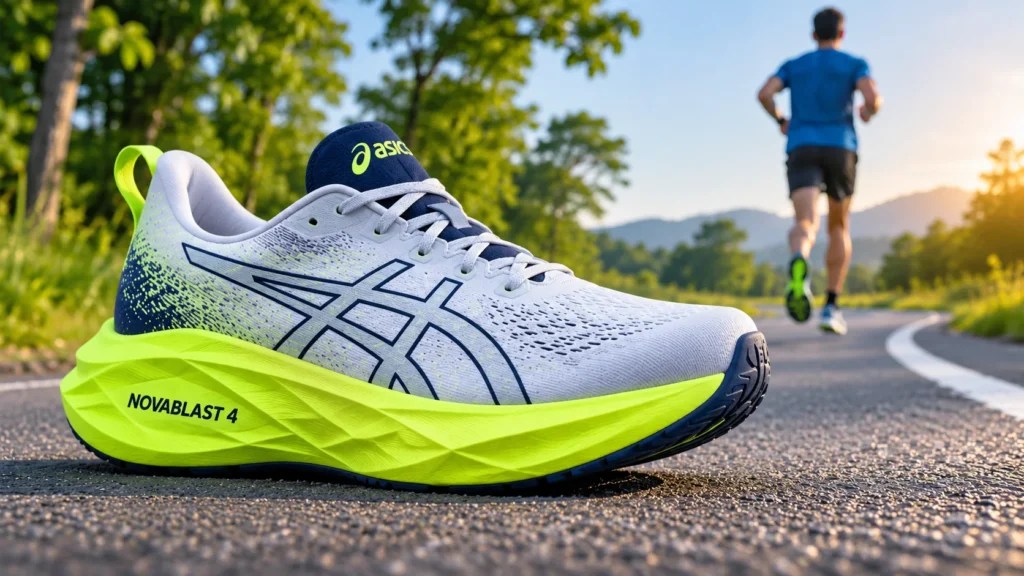
The Novablast 4 is best for neutral runners who want a cushioned, fairly steady ride without a soft, sinking feel. ASICS built it for road training, from easy sessions to longer runs. Its thick FF BLAST PLUS ECO midsole looks soft, but independent reviews often describe a firmer feel than its shape suggests.
Quick verdict: Best as a discounted, high-stack daily trainer for runners who favor control over plushness.
The men’s model has an advertised 8 mm heel-to-toe drop. The listed stack is about 41.5 mm in the heel and 33.5 mm up front. A shaped heel and broad landing base help the shoe feel more grounded than its tall silhouette suggests. These are useful traits during steady road miles. For original design details, see ASICS’ official Novablast 4 announcement.
The upper uses engineered woven fabric. It wraps the midfoot securely, but airflow can be limited. RunRepeat awarded its breathability 3 out of 5 in lab testing. That makes the Novablast 4 less appealing for hot, humid runs than many buyers expect.
ASICS also fitted AHAR-family rubber beneath the sole. The rubber improves wear protection on hard surfaces, though it does not make the shoe a rain specialist. For runners who often hit wet paint or slick tiles, grip needs more attention than midsole height.
- Steady ride for a high-stack neutral trainer
- Protective cushioning for road miles
- Durable rubber at key wear areas
- Good choice when heavily discounted
- Can feel firm instead of springy
- Woven upper can run warm
- Wet traction is not a strong point
- Older sizes and colors may be scarce
ASICS Men’s NOVABLAST 4 Running Shoes
Original US list price: $140. Check size, seller, and current offer before buying.
What Is the ASICS Novablast 5 Best For?
The Novablast 5 is better for neutral runners who want a softer, livelier daily trainer. ASICS changed the midsole to FF BLAST MAX foam, updated the upper, and adjusted the geometry. The result is a more forgiving ride at relaxed speeds while keeping enough rebound for occasional faster work.
Quick verdict: Better all-round choice for easy miles, long road runs, and runners who value soft landings.
Its advertised heel-to-toe drop remains 8 mm. Both models also use high cushioning and avoid a stiff carbon plate. So the main difference is not a new shoe category. It is the feel of the foam, the shape beneath your foot, and how the upper vents heat.
ASICS describes the update in its official Novablast 5 announcement. The company says the newer foam improves bounce compared with the prior generation. RTINGS measured heel energy return at 74.0% for the Novablast 5, against 68.7% for the Novablast 4. That supports the case for the newer model without promising faster race times.
The engineered jacquard mesh upper is designed for better breathability. The fit still needs a close check. Some runners find the front roomy, while others enjoy that space during longer runs. Read my ASICS Novablast 5 review for more model-specific details.
- Softer FF BLAST MAX cushioning
- Higher measured energy return
- Improved upper ventilation
- Smooth ride for long, easy miles
- Soft feel won’t suit every runner
- Wet grip still has limits
- Roomy fit can bother narrow feet
- Not built as a dedicated race shoe
ASICS Men’s NOVABLAST 5 Running Shoes
Original US list price: $140. Check size, seller, and current offer before buying.
How Do the Novablast 4 and 5 Specs Compare?
The Novablast 5 changes the foam and upper more than the basic shoe shape. Both models keep the same advertised 8 mm drop, neutral design, and lack of a carbon plate. The table uses US launch prices, listed men’s specifications, and comparable RTINGS lab measurements. Advertised weights can differ from lab weights because sample size and methods vary.
| Feature | Novablast 4 | Novablast 5 | Advantage |
|---|---|---|---|
| Category | Neutral road trainer | Neutral road trainer | Tie |
| Midsole foam | FF BLAST PLUS ECO | FF BLAST MAX | 5 for softer rebound |
| Advertised drop | 8 mm | 8 mm | Tie |
| Men’s listed weight | About 260 g | About 255 g | 5, slight edge |
| RTINGS tested weight | 255.4 g | 248.2 g | 5 |
| RTINGS heel energy return | 68.7% | 74.0% | 5 |
| RTINGS forefoot energy return | 71.9% | 77.3% | 5 |
| Upper | Engineered woven | Engineered jacquard mesh | 5 for airflow |
| Plate | None | None | Tie |
| Original US list price | $140 | $140 | Depends on sale |
| Wet-road grip | Use care on slick surfaces | Still not a wet-grip leader | Neither |
Most runners will feel the foam change more than the small weight gap. The 5 is not a different class of shoe. It simply makes easy and steady miles feel less firm. For a source-by-source look at the lab numbers, consult RTINGS’ measured comparison.
Which Feels Better on Runs: Novablast 4 or 5?
The Novablast 5 wins for soft cushioning and easy-run comfort. Its FF BLAST MAX foam offers more compression and rebound than the earlier FF BLAST PLUS ECO platform. That matters most when your pace stays relaxed and you want less harsh contact with the road.
The Novablast 4 has a different appeal. Some runners enjoy its firmer platform for steady runs and light tempo work. A firmer shoe can feel more controlled when you’re pushing off, even if a lab machine shows lower energy return. This is one reason a higher foam score does not pick the right shoe for every foot.
RTINGS recorded 68.7% heel return for the 4 and 74.0% for the 5. Its forefoot results were 71.9% and 77.3%. These figures come from independent lab work, not from a test on this site. They show a clear material difference under one test method.
What do those percentages mean? The newer shoe releases a larger share of stored energy during that controlled test. It does not mean you’ll run 5% faster. Fitness, pace, form, surface, and fit still shape your experience.
Which Shoe Is Better for Slow and Recovery Runs?
The Novablast 5 is the safer comfort pick for slow road runs. Its softer foam is easier to enjoy when your legs feel tired. The Novablast 4 remains useful if excessive softness bothers your feet or makes your stride feel less sure.
For example, a runner doing an easy 8 km after a hard workout may prefer the Novablast 5. Another runner who prefers a firmer landing can find the 4 more natural. Both offer more cushioning than a low-profile speed shoe.
Which One Works Better for Tempo Sessions?
The Novablast 4 can feel better for runners who favor firmer transitions. The Novablast 5 remains able to handle tempo efforts, but its softer foam isn’t everyone’s favorite at speed. Neither model has a stiff racing plate or a narrow, race-focused platform.
For a weekly workout with short faster blocks, either shoe can work. For repeated track intervals or peak race efforts, a purpose-built lightweight trainer may feel more direct. Learn how foam shape affects your stride in our running shoe responsiveness guide.
Which Fits Better: Novablast 4 or Novablast 5?
The Novablast 5 gets the edge for upper ventilation, while fit depends on your foot shape. ASICS replaced the 4’s engineered woven material with a more open jacquard mesh on the 5. That is useful for runners whose feet heat up during long road sessions.
The Novablast 4 upper has a secure, padded feel. Runners who value that wrap may prefer it. Its drawback is heat. RunRepeat’s 3/5 breathability score points to modest airflow. In a warm climate, that can make the shoe feel less comfortable before the foam wears out.
The Novablast 5 has improved airflow, but buyers should still check heel security. A roomy forefoot helps toes spread as the foot swells. Yet extra volume can lead to rubbing for narrow feet. A good fit should hold the heel without squeezing the toe box.
Wear your usual running socks when testing either model. Stand up, walk, jog briefly if allowed, then check pressure around the big toe. Don’t choose a smaller size just to fix loose heel lockdown. Different lace tension or a different last can be safer.
Should Wide-Footed Runners Pick the Novablast 5?
Both models deserve a try, including available wide versions. The Novablast 5 can feel more generous in upper volume, but the shape under the toes varies. RTINGS measured different internal widths between models, so a blanket claim that one is always wider would be misleading.
Try on the exact width and size before ordering. If your little toe pushes hard against the upper, look for a wide option. If the heel slips, don’t assume a bigger shoe is the answer.
Which Has Better Grip and Durability?
Neither shoe is the best choice for wet or slick roads. The Novablast 4 performs well on dry pavement and has strong wear protection in several tests. The Novablast 5 keeps a road-focused outsole but does not fully solve the series’ wet-traction concern.
The old model’s rubber can last well even when the upper runs warm. RunRepeat measured 0.6 mm of outsole wear in a controlled abrasion test, compared with a 1.1 mm category average in that review. Lower wear in the test suggests a durable contact surface. It does not guarantee a set number of miles for your pair.
RunRepeat also measured 0.47 forefoot traction for the 4 against a 0.52 test average. Its Novablast 5 analysis likewise flagged room for improvement on wet pavement. These tests are not identical to running through standing water, so use the values as warnings rather than exact predictions.
Grip matters more than foam comfort on painted road lines, smooth tiles, wet metal covers, and sharp corners. Both shoes are best treated as road trainers for predictable surfaces. If rain is a normal part of your week, compare dedicated wet-grip models instead.
Safety note: A tall, soft neutral shoe does not replace structured stability support. Test fit carefully if you have ankle-control needs or recurring foot pain. Slow down on wet paint, stone, and loose gravel.
Durability also depends on foot strike and road texture. A runner who scrapes the heel can wear rubber faster than someone with smooth contact. Rotate shoes, remove trapped grit, and watch for uneven wear. Replacing a shoe before it loses grip is smarter than waiting for a hole.
Which Novablast Wins for Real-World Running?
The Novablast 5 wins more everyday situations, while the Novablast 4 wins when feel or price matters more. Both are versatile trainers. Neither is a hiking boot, winter traction shoe, or work-duty shoe. Match the model to your route rather than to marketing alone.
For Beginners Building Weekly Mileage
Winner: Novablast 5 for a softer first experience. It cushions easy road sessions well and does not force runners into a plated design. A new runner doing three short runs each week can use the same pair for steady progress.
Still, new runners need a secure fit above all. If the 5 feels loose or unstable, the 4 can be a better pick. A lower-cost shoe that fits well beats a premium shoe that rubs.
For Long Runs on Dry Roads
Winner: Novablast 5 for comfort over time. Its softer foam is attractive for long, relaxed miles on pavement. That does not turn it into a specialized marathon racer. Test the pair during regular training before race day.
For a long run lasting over an hour, toe room and sock choice can matter as much as foam. Try the actual pair you plan to wear, with the laces set for secure midfoot hold.
For Runners Who Prefer Firmer Shoes
Winner: Novablast 4 for its more controlled sensation. Some runners dislike shoes that compress deeply. The 4 gives them a different balance of comfort and feedback. That preference is valid even when the 5 leads on measured rebound.
For example, a runner adding short steady pickups to daily miles may welcome the older shoe’s firmer feel. Do not read that as proof the 4 is faster for everyone.
For Hot-Weather Road Training
Winner: Novablast 5 because its jacquard mesh ventilates better. The 4’s woven upper earned a modest breathability result. For a warm commute run, upper airflow becomes an important comfort feature.
Good socks and a secure fit still help. No fabric can keep a foot dry during heavy rain or intense sweating. Give each pair time to dry after a run.
For Cold Mornings and Winter Roads
Winner: Neither when the surface is icy. Both are regular road shoes. Their outsole patterns are not winter traction systems. On cold but dry pavement, choose based on comfort and use warmer socks that do not crowd your toes.
Foam feel can shift as temperature changes. That is a reason to test your shoe outdoors rather than judge it only in a warm shop. For ice or snow, choose purpose-built traction.
For All-Day Work or Fleet Use
Winner: Neither for commercial safety work. The Novablast shoes are running trainers, not certified slip-resistant or protective workplace footwear. They lack a work-specific safety rating, toe protection, and oil-resistant performance claims.
For a delivery shift on mixed wet surfaces, use footwear that meets your workplace’s rules. For light walking before or after work, either Novablast can feel comfortable, but that is not the same as safety suitability.
Is the Price Difference Between Novablast 4 and 5 Worth It?
Pay more for the Novablast 5 when you value soft cushioning, better airflow, and higher measured rebound. Choose the Novablast 4 when its fit feels better or its discount is meaningful. Both models launched in the United States at $140, so there was no original list-price gap.
Older running shoes often appear at scattered prices. One color may be on sale while another costs more. Scarce sizes can even cost more than newer models. Do not assume the Novablast 4 is always cheaper just because its number is lower.
Here is a practical price rule. If the Novablast 4 costs $85 and the Novablast 5 costs $125 in your exact size, the older shoe saves $40. That is an example, not a verified live offer. The gap can justify the 4 when you like a firmer ride.
If both pairs cost around the same amount, the 5 gives most neutral runners more comfort for the money. Before checking out, compare shipping, seller reputation, return terms, and whether the listing is a standard pair or an unusual variant.
At the time of this review, a reliable live Amazon price was not available for both products across sizes. The buttons in this article link to known product listings, not fixed-price promises. Check the displayed price after you select your size.
Who Should Buy Novablast 4, Novablast 5, or Neither?
Buy the Novablast 5 for soft, breathable daily comfort; buy the Novablast 4 for firmer cushioning at a better price. That choice covers most neutral road runners. Do not buy either model for serious overpronation control, icy roads, or workplace slip protection. More cushioning does not solve every footwear need.
- You like firmer daily trainers.
- Your size is in stock at a real discount.
- Most runs are on dry pavement.
- You prioritize steady feel over plush foam.
Skip it if
- Your feet overheat in thick uppers.
- You expect soft, springy landings.
- You want soft easy-run comfort.
- You run longer miles on paved roads.
- Breathability matters in warm weather.
- You value a smoother, livelier feel.
Skip it if
- You dislike soft, high-stack shoes.
- Its fit leaves your heel slipping.
Don’t buy either if you need strong wet-surface grip or a firm motion-control system. If your budget allows, compare the different outsole and ride design in our ASICS Superblast 2 review. For a lower-cost, more traditional road feel, consider the Brooks Ghost line after trying its fit.
The single most useful purchase check is a short trial on your usual surface. A correct-sized shoe should feel secure at the heel, leave toe space, and not cause pressure after several minutes. Don’t force a size because the discount looks good.
What Do Real Runners Say About Novablast 4 and 5?
Published runner feedback often splits along one line: firmer control in the Novablast 4 versus softer comfort in the Novablast 5. Some runners describe the 4 as better for faster steady running. Others prefer the more cushioned feel of the 5 during easy sessions.
That split is useful. It shows that the newer model is not an automatic upgrade for every person. In a runner discussion comparing both versions, contributors describe the 5 as softer and the 4 as firmer. Such comments are firsthand opinions, not controlled test results.
Professional testers broadly agree about the foam change. ASICS’ own announcement says the 5 uses FF BLAST MAX instead of the 4’s FF BLAST PLUS ECO. Independent lab results show improved rebound for the newer model. Yet not all reviewers agree on the best feel for workouts.
Often praised: steady platform, secure upper, durable contact areas.
Often criticized: firmer-than-expected foam, warm fabric, slick-road grip.
Often praised: soft ride, longer-run comfort, more open upper.
Often criticized: soft feel for some runners, broad upper volume, wet traction.
These are themes from independent reviews and public runner discussions, not a verified audit of Amazon review text.
A prior check of the site’s linked Amazon listings reported 4.7 out of 5 from 705 ratings for the 4, and 4.6 from 2,562 ratings for the 5. Those counts are historical snapshots and will change. Ratings alone cannot tell you which model fits your feet.
Read negative comments for fit clues, not only star averages. Note whether a complaint involves a narrow heel, hot weather, or wet ground. Then ask whether your own running matches that person’s conditions.
How Should You Care for Novablast Running Shoes?

Clean both Novablast models gently, dry them at room temperature, and inspect the outsole often. The foam and fabric should last better when you remove grit and avoid high heat. There is no need for monthly battery-style maintenance; these are running shoes, not electronic devices.
After dusty road runs, brush off dry dirt with a soft brush. Wipe the upper and outsole using a damp cloth. For stubborn marks, use a small amount of mild soap. Don’t soak the foam for hours or use a hot dryer.
Take out removable insoles when damp. Loosen the laces and let air move through the shoe. Stuffing the inside with clean paper for a short period can help absorb moisture. Replace wet paper as needed, and keep shoes away from direct heaters.
Watch the heel and forefoot rubber. Uneven wear, a smooth patch, or a shoe that feels oddly tilted can be signs to reassess it. You do not need to follow one universal mileage number. Runner weight, gait, and route can change wear rates sharply.
For step-by-step cleaning advice, see our running shoe cleaning guide. Store your shoes in a cool, dry room and avoid leaving them in a hot car. Heat can age adhesives and foam before the upper looks worn.
Final Verdict: Should You Choose Novablast 4 or 5?
For most neutral runners, I recommend the ASICS Novablast 5. It offers softer FF BLAST MAX cushioning, a more open upper, and better measured rebound. These changes matter during everyday road miles. The Novablast 4 remains a smart buy for someone who prefers a firm ride or finds a substantial discount. It is not a bad shoe simply because its foam returns less energy in one laboratory test.
The price decision needs care. Both launched at $140, and neither has one dependable price across all current sizes. Check your exact fit, verify the seller, and read the return terms. Do not pay a collector-style premium for an older size when newer options cost less.
The deciding factor is still fit. A soft midsole cannot fix heel slip, and a wide outsole cannot guarantee stability. Both are best for ordinary road training on dry, predictable ground. Runners who train through ice, oil, or frequent slick turns need different footwear.
My final rule is simple: pick the Novablast 5 when prices are close; pick the Novablast 4 when you prefer firmer foam and the savings are real. Never buy either based only on how tall the midsole looks.
Frequently Asked Questions
Is the ASICS Novablast 5 better than the Novablast 4?
Yes, the Novablast 5 is better for most neutral runners who want soft road comfort. Its FF BLAST MAX foam showed higher energy return in RTINGS testing. The Novablast 4 still suits runners who like firmer cushioning. Compare both fits and current prices before deciding.
What is the main difference between Novablast 4 and 5?
The main difference is the midsole feel. The Novablast 4 uses FF BLAST PLUS ECO, while the Novablast 5 uses softer FF BLAST MAX. The 5 also changes the upper to jacquard mesh. Both keep an advertised 8 mm drop and a plate-free road design.
Is the ASICS Novablast 4 still worth buying?
Yes, the Novablast 4 remains worth buying when it fits well and costs less than newer options. It has a steady, cushioned platform and good rubber wear results. Skip it if your feet run hot or you expect plush, springy cushioning from the first step.
Can you run a marathon in the Novablast 4 or 5?
Yes, either shoe can handle marathon training and race distance for runners who like its fit. Both are daily trainers rather than plated racing shoes. Use your chosen pair on several long runs first. Check toe room, heel hold, and comfort as the miles add up.
Which Novablast is better for rain or wide feet?
Neither model is a top pick for slippery roads. Both require care on wet paint and smooth stone. For wide feet, try the available width options and check heel security. The Novablast 5 can feel roomy, but each foot shape reacts differently to the shoe’s design.
Affiliate Disclosure: As an Amazon Associate, I earn from qualifying purchases. If you click a link on this page and make a purchase, I may receive a small commission — at no extra cost to you. I only recommend products I genuinely believe will help you. This helps keep the site free and running. Thank you for your support.


