
Quick Answer
To compare running shoe specifications, check fit, heel-to-toe drop, stack height, weight, cushioning, support, and outsole design. Compare measurements using the same shoe size and testing method whenever possible. Then prioritize comfort and your running needs over impressive numbers. The REI running shoe guide provides additional guidance on selecting suitable footwear.
Six steps to compare running shoes
- Check the fit: Compare length, available widths, toe-box space, and heel security.
- Compare the drop: Check the height difference between heel and forefoot.
- Examine stack height: Understand how much material separates your foot from the ground.
- Review shoe weight: Compare matching sizes rather than different manufacturer samples.
- Assess support: Consider stability features, cushioning feel, and overall geometry.
- Match the surface: Choose an outsole suited to roads, treadmills, or trails.
Running shoe specifications can make shopping unnecessarily confusing. One shoe advertises lightweight cushioning, while another highlights stability or advanced foam technology.
I prefer comparing shoes using a consistent checklist rather than focusing on marketing claims. This guide explains what each specification means and how to make useful comparisons before buying.
What Are Running Shoe Specifications?
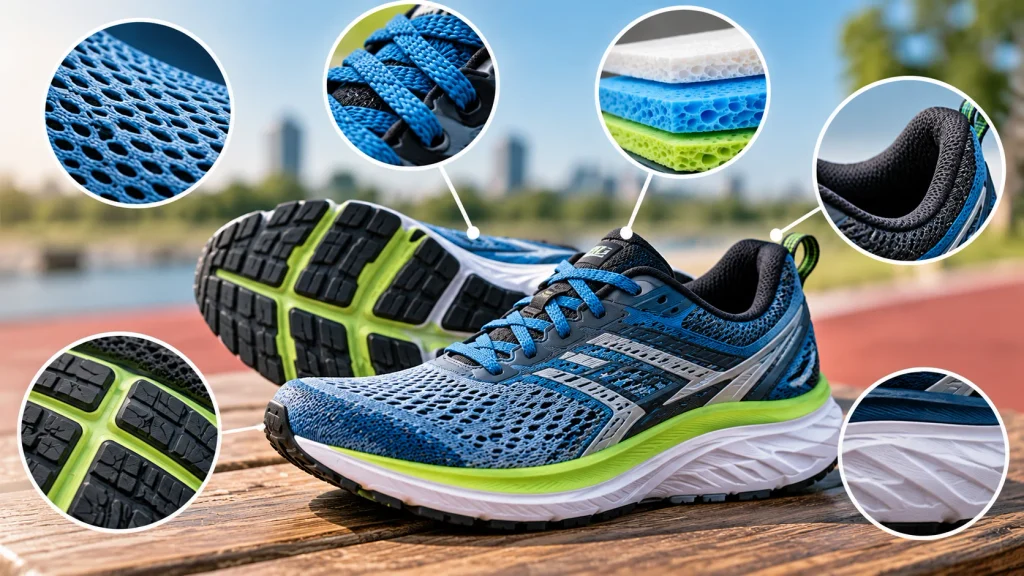
Running shoe specifications are measurable characteristics and design details that describe a running shoe’s construction, fit, and intended use.
They help shoppers identify meaningful differences between models. However, specifications cannot fully predict how a shoe will feel on your feet.
What specifications should you compare?
- Heel-to-toe drop: The height difference between the heel and forefoot.
- Stack height: The amount of material beneath the foot at specified measurement points.
- Weight: How heavy one shoe is in a stated sample size.
- Midsole: The cushioning system beneath your foot.
- Stability: Design features that influence support and foot movement.
- Upper: The fabric and structural components surrounding your foot.
- Outsole: The bottom layer providing traction and wear resistance.
- Fit: Length, width, volume, heel security, and toe-box shape.
Not every manufacturer reports these details consistently. Treat missing specifications as unknown rather than assuming two shoes are identical.
How Do You Compare Running Shoe Specifications Step by Step?
Start with your running environment and current footwear. Then compare models using a consistent order.
- Identify your running surface. Decide whether you mainly run on pavement, treadmills, gravel, or technical trails.
- Record your current shoe. Note its model, size, width, drop, and comfort.
- Compare fit information. Look for suitable length and width options before studying performance claims.
- Check drop and stack. Evaluate geometry together rather than treating either number independently.
- Compare weight and cushioning. Use equivalent sample sizes and read independent testing where available.
- Review support and traction. Match these features to the surfaces and conditions you encounter.
- Test the final candidates. Walk or jog in them when possible and check the return policy before ordering.
For example, imagine comparing two neutral road shoes with similar cushioning. One weighs 260 grams, while the other weighs 290 grams.
The lighter option may appeal to runners seeking less weight. Yet the heavier option could provide a fit or ride they prefer.
What Does Heel-to-Toe Drop Mean in Running Shoes?
Heel-to-toe drop measures the vertical difference between heel and forefoot height. Manufacturers usually express it in millimeters.
For example, a shoe measuring 35 mm at the heel and 27 mm at the forefoot has an 8 mm drop.
How do low-drop and high-drop shoes compare?
| Drop | Category | What to consider |
|---|---|---|
| 0 mm | Zero drop | Level heel and forefoot; gradual adaptation may be needed. |
| 1–4 mm | Low drop | May change loading around the calf and Achilles tendon. |
| 5–8 mm | Moderate drop | A versatile range for different running styles. |
| Above 8 mm | Higher drop | Places the heel higher relative to the forefoot. |
These categories are useful guidelines, not strict medical or performance rules. Your comfort and adaptation matter more than choosing a particular range.
A large drop change can alter how your legs experience running. Introduce unfamiliar geometry gradually, especially when moving toward zero-drop footwear.
How Does Running Shoe Stack Height Affect Performance?
Stack height describes the total thickness of material under the foot at a defined point. Higher-stack shoes generally place more material between your foot and the ground.
That does not automatically make them softer. Foam composition, shoe geometry, and construction also influence cushioning.
High stack vs low stack
- Lower stack: Often offers a more direct sensation of the running surface.
- Higher stack: Provides more space for cushioning materials and may feel less connected to the ground.
- Wider platform: Can influence stability regardless of the stack measurement.
- Rocker geometry: A curved sole can change how smoothly the shoe rolls forward.
Here’s an important distinction: two shoes can have exactly the same drop but different stack heights.
A 30/22 mm shoe and a 40/32 mm shoe both have an 8 mm drop. The second simply has more material beneath the foot.
How Important Is Running Shoe Weight?
Running shoe weight matters, particularly when comparing shoes intended for similar activities. However, a lighter shoe is not automatically more comfortable or better.
Weight may vary by size, width, and even the sample used for measurement. Check those details before comparing manufacturer listings.
How should you compare shoe weight?
- Use the same size: Ideally compare the same men’s or women’s sample size.
- Check the units: Manufacturers may report ounces or grams.
- Compare similar categories: Daily trainers and racing shoes serve different purposes.
- Consider cushioning: Extra material can add weight without necessarily reducing comfort.
- Check independent tests: Consistent laboratory measurements can reveal differences between advertised and measured weights.
For daily running, I would not reject a comfortable shoe because it weighs slightly more. A secure fit often makes a bigger practical difference.
How Do Cushioning and Midsole Materials Compare?
The midsole sits between the upper and outsole, helping shape cushioning and ride characteristics. Different foam formulations can feel noticeably different despite similar measurements.
Common running shoe materials include EVA-based foams, TPU-based foams, and PEBA-based formulations. Some midsoles combine several materials.
What cushioning specifications matter?
- Softness: How much the cushioning compresses under load.
- Energy return: How much mechanical energy the material returns after compression.
- Resilience: How consistently the foam responds through repeated loading.
- Stiffness: How much resistance the shoe offers when bending.
- Geometry: How the sole shape influences forward movement.
Manufacturers frequently describe their foam as responsive or energetic. These terms aren’t standardized measurements across brands.
For more useful comparisons, examine RTINGS running shoe testing, which provides controlled measurements of cushioning, weight, and geometry.
What Is the Difference Between Neutral and Stability Running Shoes?
Neutral running shoes generally provide cushioning without relying on pronounced motion-control systems. Stability models incorporate design features intended to guide or support foot movement.
However, neutral shoes can still feel stable. A wide base, supportive heel structure, and raised sidewalls may contribute to that sensation.
Which support features should you examine?
- Platform width: The footprint of the sole beneath the shoe.
- Heel counter: The structural support surrounding the rearfoot.
- Sidewalls: Midsole material extending upward around parts of the foot.
- Guidance systems: Elements designed to influence foot movement.
- Longitudinal stiffness: Resistance to bending along the shoe’s length.
Don’t choose stability footwear based on foot shape alone. Comfort, movement, injury history, and individual needs all deserve consideration.
How Should You Compare Running Shoe Fit and Sizing?
Fit deserves priority because impressive technical specifications cannot rescue a poorly fitting shoe. Check both length and width before making a purchase.
Most runners need room for their toes to move without excessive sliding. The heel should also feel secure during walking and running.
What makes a running shoe fit correctly?
- Toe room: Allow roughly a thumb’s width at the front as a starting point.
- Forefoot width: Avoid noticeable pressure across the widest part of your foot.
- Heel security: Look for limited slipping during movement.
- Midfoot hold: Seek a secure feeling without uncomfortable tightness.
- Upper comfort: Check for rubbing near the tongue, ankle, and seams.
Try shoes while wearing your usual running socks. If possible, test them later in the day when your feet may be slightly larger.
Consult the American Podiatric Medical Association for general foot-health resources if fit or recurring discomfort concerns you.
How Do Road, Trail, and Treadmill Shoe Specifications Differ?
Running surfaces influence which specifications deserve the most attention. A road shoe and technical trail shoe may have completely different traction requirements.
| Surface | Prioritize | Why it matters |
|---|---|---|
| Road | Fit, cushioning, outsole wear | Supports repeated running on relatively consistent surfaces. |
| Trail | Lugs, grip, protection, stability | Addresses loose, uneven, or slippery ground. |
| Treadmill | Fit, breathability, comfortable ride | Works with a predictable indoor running surface. |
For muddy trails, deeper and appropriately shaped lugs may be useful. Smooth paved routes rarely require aggressive trail traction.
The REI trail-running shoe guide explains additional considerations for different outdoor terrain.
Running Shoe Specifications Comparison: Real Examples
Let’s compare two established daily trainers: the Brooks Ghost 18 and Saucony Ride 18. Both target everyday road running, but their specifications differ.
The figures below come from published manufacturer information available in 2026. They represent manufacturer-listed specifications, not a new hands-on test.
| Specification | Brooks Ghost 18 | Saucony Ride 18 |
|---|---|---|
| Category | Road daily trainer | Road daily trainer |
| Listed drop | 10 mm | 8 mm |
| Listed men’s weight | 289.2 g | 259 g |
| Midsole foam | DNA LOFT v3 | PWRRUN+ |
| Support category | Balanced support | Neutral |
| Heel/forefoot stack | Not listed in cited manufacturer specifications | 35/27 mm |
Note: Published weights may refer to different sample sizes. They aren’t necessarily an exact same-size comparison.
The Ride 18 has a lower listed weight and a smaller drop. Meanwhile, the Ghost 18 emphasizes a secure fit and balanced daily-running support.
Neither difference establishes a universal winner. The better choice depends on your feet, preferences, and intended use.
What Running Shoe Specification Mistakes Should You Avoid?
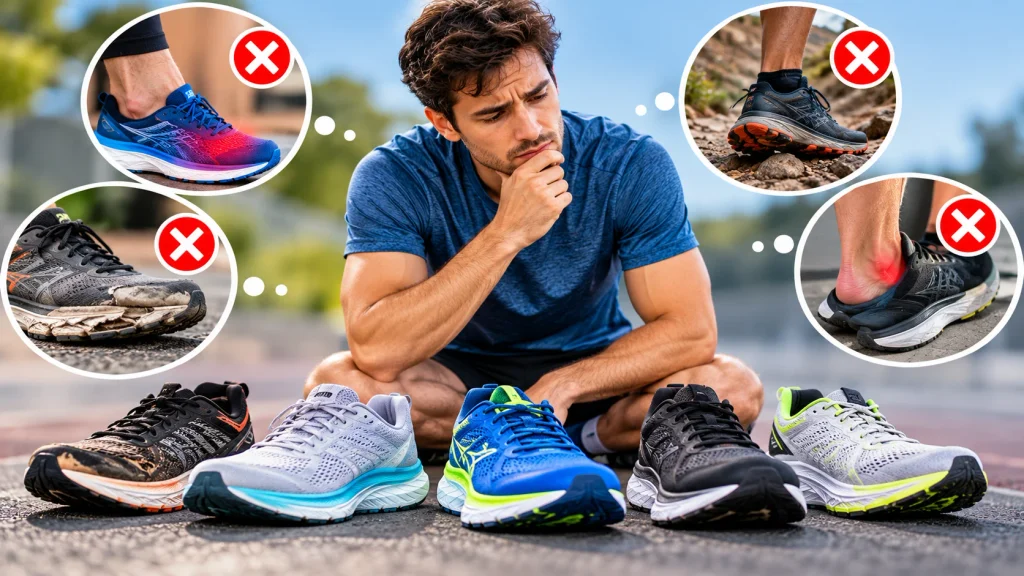
Specifications work best when interpreted together. Focusing on a single number can create misleading comparisons.
- Choosing by drop alone: Consider stack, geometry, comfort, and adaptation too.
- Assuming higher stack means softer: Different foam compounds behave differently.
- Comparing unmatched weights: Men’s and women’s samples may use different sizes.
- Ignoring width: Length alone cannot determine whether a shoe fits.
- Trusting marketing terms: Words such as responsive and maximum cushioning aren’t universal testing standards.
- Overlooking terrain: Road and trail outsoles are designed for different conditions.
- Changing shoe geometry abruptly: A gradual transition helps your body adapt.
One practical approach is comparing every new candidate with a shoe you already know. Familiar footwear provides a useful reference point.
Which Running Shoes Are Worth Comparing in 2026?
These two models illustrate different daily-training priorities. I would shortlist them for their distinct published specifications, then compare fit before making a purchase.
Disclosure: The following Amazon links are affiliate search links. Qualifying purchases may earn a commission without additional cost to you. Editorial ratings below describe my specification-based assessment, not verified customer review averages or personal wear testing.
🏆 Balanced daily trainer
Brooks Ghost 18
★★★★☆ Editorial assessment: 4/5
The Ghost 18 features a listed 10 mm drop, DNA LOFT v3 cushioning, and a men’s published weight of 289.2 grams. I would prioritize it when comparing balanced support and comfortable everyday road-running construction.
⚖️ Lower listed weight
Saucony Ride 18
★★★★☆ Editorial assessment: 4/5
The Ride 18 offers an 8 mm drop, 35/27 mm listed stack, and PWRRUN+ cushioning. Its published men’s weight is 259 grams, making it an interesting comparison for runners prioritizing a lighter daily trainer.
Frequently Asked Questions About Running Shoe Specifications
Which running shoe specification is most important?
Fit is usually the most useful starting point because uncomfortable footwear can undermine an otherwise impressive design. Check shoe length, width, toe-box room, and heel security first.
Then consider drop, cushioning, weight, support, and outsole design based on your running surface and preferences.
Is a higher heel-to-toe drop better for running?
Not necessarily. A higher drop raises the heel relative to the forefoot, but the ideal drop varies between individuals.
Your preferred running mechanics, comfort, and experience with different shoe designs matter. If switching to a substantially lower drop, consider a gradual transition.
Does higher stack height mean more cushioning?
A higher stack generally means more material beneath the foot, but it does not guarantee a softer ride. Foam firmness, construction, and geometry influence how cushioning behaves.
Compare stack height alongside midsole materials and independent performance measurements rather than using the number alone.
Are lightweight running shoes always better?
No. Lightweight designs may feel appealing, particularly during faster running, but weight alone doesn’t determine performance or comfort.
Some heavier shoes offer support, protection, or cushioning characteristics that individual runners prefer. Compare footwear within similar categories and use matching sample sizes.
Can I compare running shoe specifications without trying them on?
Yes. Manufacturer listings, size charts, independent testing, and detailed reviews help narrow the options.
However, specifications cannot fully predict personal fit. If buying online, confirm the seller’s return conditions and test footwear indoors before committing to longer runs.
Final Thoughts: How to Compare Running Shoe Specifications
Learning how to compare running shoe specifications helps you identify meaningful differences between models. Focus on fit first, then consider drop, stack height, cushioning, weight, stability, and traction.
Don’t assume the lightest, tallest, or most expensive design must be best. A suitable running shoe should match your feet, terrain, and everyday training needs.
Start by recording the specifications of your current pair. Compare two or three alternatives, examine reliable reviews, and choose the design that feels most natural.
Ready to compare your next pair? Use the checklist in this guide to shortlist suitable running shoes before shopping.


Steven is a former sportsperson and now a full-time businessman and research writer. He is the mastermind of this site, and he created this site to help people who need specialized shoes for different activities. When he was a sportsperson, he was very passionate about different types of shoes for his sports purpose. The passion he had for shoes at that time now turned into his profession. Besides his shoe business, he loves sharing his knowledge and experience with people and helping them maintain healthy feet.
More Posts