

Quick Answer
The HOKA Arahi 8 wins for runners who need extra stability. Its H-Frame provides guidance, while its 8 mm drop suits relaxed daily miles. The HOKA Mach 6 wins for neutral runners seeking speed. Its responsive foam and 5 mm drop make it a versatile choice for faster training.
Should you choose extra support or a faster ride?
- Arahi 8 offers dedicated H-Frame stability technology.
- Mach 6 uses responsive supercritical EVA foam.
- Mach 6 originally costs $10 less than Arahi 8.
By Steven Tyler | Research-Based Running Shoe Comparison
As an Amazon Associate, we earn from qualifying purchases.
⚡ Quick Verdict — HOKA Arahi 8 vs Mach 6
HOKA Arahi 8
$150 (Original MSRP)
✅ Best for:
Runners and walkers who prefer added foot guidance and steady cushioning.
🏆 EDITOR’S CHOICE
HOKA Mach 6
$140 (Original MSRP)
✅ Best for:
Neutral runners who want one light shoe for daily miles and faster workouts.
| Category | Arahi 8 | Mach 6 |
|---|---|---|
| Overall Neutral Training | — | 🏆 |
| Original Retail Value | — | ✅ |
| Added Stability | ✅ | — |
| Speed Training | — | ✅ |
| Supportive Walking | ✅ | — |
Bottom line: Mach 6 wins for neutral runners seeking versatility, while Arahi 8 wins for runners who prefer dedicated stability.
Key Takeaways
- HOKA Mach 6 offers greater versatility for neutral running.
- Mach 6 originally costs $140, compared with $150 for Arahi 8.
- Arahi 8 uses an H-Frame for added foot guidance.
- Both shoes work for daily training when their fit suits you.
- Stability and foam response matter more than their similar appearance.
Buying the wrong running shoe can turn easy miles into uncomfortable work. Two shoes may look alike yet feel different underfoot.
That’s the challenge when comparing the HOKA Arahi 8 and Mach 6. Both offer cushioning, curved soles, and a light road-running design. However, they serve different needs.
I’m Steven Tyler. This HOKA Arahi 8 review draws on published specifications, independent laboratory findings, and established running shoe reviews.
The Arahi 8 focuses on support during daily movement. Its updated frame aims to guide your feet without a bulky build.
The Mach 6 takes a different path. Its responsive foam makes it a stronger choice for varied running speeds.
You don’t need to buy a stability shoe simply because it offers more support. Likewise, a faster shoe won’t suit every foot.
The right choice depends on your stride, training goals, and preferred fit. Price matters, but comfort should come first.
One shoe stands out for speed and versatility. The other offers a useful balance of comfort and guidance. Here’s how they compare across the features that matter most.
What Is the HOKA Arahi 8 Designed to Do?
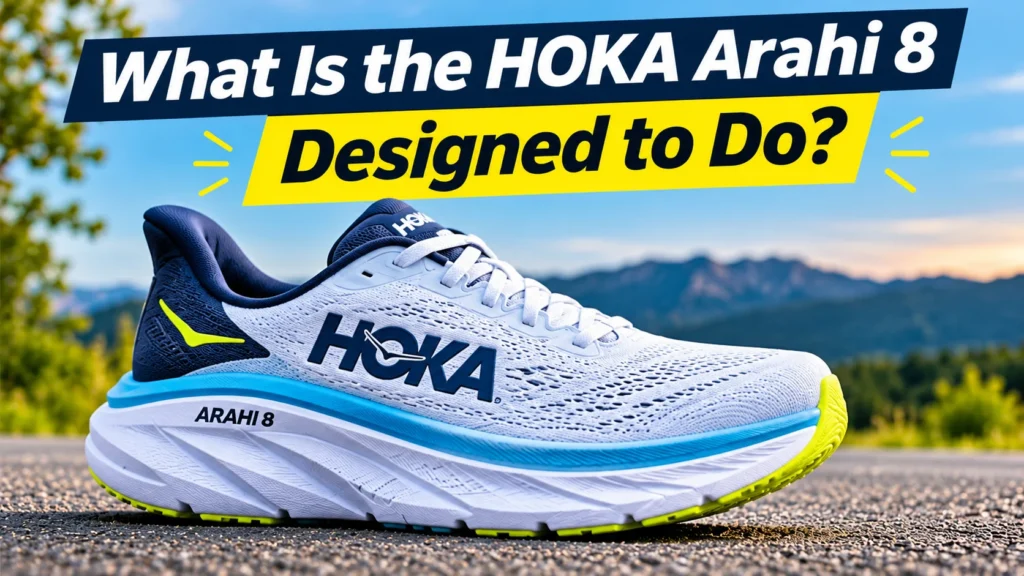
Quick Verdict — HOKA Arahi 8
The HOKA Arahi 8 is a stability running shoe built for daily miles, walking, and supportive comfort.
Best for: Easy runs, supportive walking, and runners who prefer guided foot movement.
Not ideal for: Runners seeking a highly responsive shoe for fast intervals.
The HOKA Arahi 8 uses a stability system called H-Frame technology. This frame supports the foot through each step without using a traditional hard support post.
HOKA also raised the advertised heel drop to 8 mm. The higher heel creates a different underfoot feel from the Arahi 7.
A compression-molded EVA midsole provides cushioning for routine miles. A breathable upper helps keep the foot secure during movement.
The Arahi 8 originally retailed for $150. Its main selling point isn’t raw speed or maximum bounce. Instead, it offers support in a shoe that remains practical for daily use.
Consider a runner who enjoys easy three-mile outings after work. A responsive racing shoe may add little value during those relaxed sessions. The Arahi 8 offers a more suitable support-focused design.
However, added guidance does not guarantee greater comfort for every runner. Your own fit and movement preferences should guide the final choice.
✓ Pros
- Dedicated H-Frame stability system.
- Comfortable design for relaxed daily miles.
- Higher heel drop than Mach 6.
- Suitable for supportive walking.
- Multiple width options.
- Updated upper and fit.
✕ Cons
- Less speed-focused than Mach 6.
- Higher original retail price.
- Added guidance may not suit neutral runners.
- Not designed for technical trails.
- Less lively foam than performance trainers.
Recommended Stability Running Shoe
HOKA Arahi 8 Road Running Shoes
Supportive H-Frame design, cushioned midsole, breathable upper, and an 8 mm advertised heel drop.
Original retail price: $150
Check HOKA Arahi 8 Price on Amazon
Prices and stock vary by size, width, color, and seller.
What Makes the HOKA Mach 6 Different?
Quick Verdict — HOKA Mach 6
The HOKA Mach 6 is a lightweight neutral running shoe designed for daily training, tempo runs, and faster road workouts.
Best for: Neutral daily training, tempo sessions, and recreational road races.
Not ideal for: Runners who need dedicated stability features.
The Mach 6 uses supercritical EVA foam to create a responsive ride. This foam differs from the support-focused midsole found in the Arahi 8.
Its advertised 5 mm heel drop places the heel closer to forefoot height. That geometry may appeal to runners familiar with lower-drop shoes.
HOKA also added strategic rubber coverage beneath the Mach 6. This gives the outsole protection in key contact areas.
The Mach 6 originally costs $140. It offers a useful mix of low weight, cushioning, and training flexibility.
Think about a weekly schedule with two easy runs and one tempo session. The Mach 6 can cover all three without requiring a separate speed shoe.
That flexibility makes it an attractive choice for neutral runners. However, its fit and lack of dedicated stability features remain important limits.
✓ Pros
- Lightweight construction.
- Responsive supercritical EVA foam.
- Suitable for fast training sessions.
- Versatile daily running design.
- Lower original retail price.
- No rigid carbon plate.
✕ Cons
- No dedicated H-Frame stability system.
- Standard fit can feel snug.
- Lower advertised drop requires adaptation for some runners.
- Not designed for technical trails.
- May not satisfy buyers seeking maximum softness.
Recommended Neutral Performance Trainer
HOKA Mach 6 Road Running Shoes
Responsive supercritical EVA cushioning, lightweight design, breathable upper, and a 5 mm advertised heel drop.
Original retail price: $140
Check HOKA Mach 6 Price on Amazon
Check available sizes, seller details, and return policies before ordering.
HOKA Arahi 8 vs Mach 6: How Do the Specs Compare?
The Arahi 8 offers more dedicated stability, while the Mach 6 prioritizes speed and versatility. Their foam, heel drop, weight, and support systems explain most ride differences.
Compare their main specifications before choosing your next running shoe.
| Specification | HOKA Arahi 8 | HOKA Mach 6 |
|---|---|---|
| Shoe type | Stability | Neutral |
| Original MSRP | $150 | $140 |
| Advertised heel drop | 8 mm | 5 mm |
| RunRepeat measured drop | 11.3 mm | 9.6 mm |
| Midsole foam | Compression-molded EVA | Supercritical EVA |
| Support system | H-Frame | Neutral geometry |
| Weight tendency | Heavier | Lighter |
| Upper | Jacquard mesh | Creel jacquard mesh |
| Outsole | Rubber coverage | Strategic rubber coverage |
| Carbon plate | No | No |
| Wide sizes | Available | Available |
| Main surface | Road | Road |
| Best running pace | Easy and steady | Easy through fast |
| Best user | Support-seeking runner | Neutral runner |
Manufacturer figures and independent laboratory measurements use different methods. Weight, fit, and dimensions can vary by shoe size.
Expert insight: A lower advertised heel drop does not guarantee a lower measured drop. Always consider how the entire shoe feels during movement.
Which Shoe Offers Better Stability and Support?
Winner: HOKA Arahi 8. Its H-Frame provides dedicated foot guidance that the neutral Mach 6 lacks.
Stability shoes aim to guide movement rather than stop the foot from moving. That distinction matters when comparing modern running shoes.
The Arahi 8 combines its support frame with a cushioned platform. This design targets runners who prefer controlled transitions during daily miles.
The Mach 6 can still feel stable under the right foot. Its neutral design simply takes a less corrective approach.
More support is not always better. A neutral runner may prefer the freedom of the Mach 6 platform.
Likewise, a runner who feels comfortable in guided shoes may prefer the Arahi 8. The support system becomes more useful when it matches personal needs.
How Does HOKA H-Frame Technology Work?
H-Frame technology places supportive material within the Arahi 8 midsole. It aims to guide the foot while allowing normal movement.
The frame differs from the J-Frame used in earlier Arahi models. The updated design provides guidance around more than one part of the platform.
This approach can create a balanced feel for runners seeking extra support. It also avoids relying solely on a traditional hard inner post.
However, H-Frame technology does not guarantee injury prevention. Shoe comfort depends on your stride, foot shape, and training demands.
Can the Mach 6 Provide Enough Stability?
Yes, the Mach 6 can provide enough stability for many neutral runners. Dedicated support technology is not necessary for every running style.
Its sole shape and secure fit help create a predictable platform. But the shoe lacks the guided frame found in the Arahi 8.
Choose the Mach 6 when your current neutral shoes already feel comfortable. Avoid switching solely because stability sounds like an upgrade.
Persistent pain or major movement concerns deserve advice from a qualified clinician. A shoe comparison alone cannot diagnose your gait.
Category Winner: HOKA Arahi 8
Choose Arahi 8 when added stability and guided movement are your main priorities.
Which Shoe Offers Better Cushioning and Running Performance?
Winner: HOKA Mach 6 for running versatility. Its responsive foam suits faster workouts, while the Arahi 8 favors steady support.
Cushioning describes more than softness. A shoe must also manage impact, return energy, and remain comfortable throughout your run.
The Arahi 8 uses conventional EVA foam with its stability frame. That combination emphasizes a controlled ride during relaxed sessions.
The Mach 6 uses supercritical EVA foam. Its performance-focused build makes quick changes in pace feel more natural for suitable runners.
Neither shoe needs a carbon plate to deliver useful training performance. Both rely on foam and sole geometry to shape the ride.
Your usual pace should guide this decision. A runner who rarely performs speed sessions may value support more than bounce.
Which Midsole Feels More Responsive?
The Mach 6 offers the stronger performance-oriented midsole design. Its supercritical EVA foam targets a lively ride without adding a rigid plate.
Independent testing and running reviews describe its responsive character. That quality makes the shoe useful for varied training sessions.
The Arahi 8 takes a more controlled approach. Its midsole works alongside the support frame to guide movement.
A runner seeking a quick toe-off should start with the Mach 6. Someone who prefers a restrained ride should consider the Arahi 8.
Which Shoe Is Better for Long Runs?
The Mach 6 suits neutral runners who want a light long-run shoe. The Arahi 8 suits runners who prefer added guidance over longer distances.
Long-run comfort depends on more than the amount of foam. Toe room, heel hold, and support preferences also matter.
A shoe that feels comfortable during three miles may feel different after ten. Test your chosen model on shorter outings before increasing distance.
Runners seeking maximum softness may prefer a more cushioned trainer from another HOKA line.
Which Shoe Is Better for Speedwork?
The HOKA Mach 6 wins for tempo runs, intervals, and faster road sessions. Its lightweight design offers a stronger match for these workouts.
The Arahi 8 can handle quicker running when needed. However, dedicated speedwork is not its main purpose.
For example, consider a session of six short intervals. The Mach 6 offers a design better suited to repeated pace changes.
Still, a fast shoe should never come at the expense of a comfortable fit.
Category Winner: HOKA Mach 6
Mach 6 offers greater training flexibility for neutral runners who enjoy both easy and fast miles.
Which HOKA Running Shoe Offers Better Value?
Winner: HOKA Mach 6 for neutral runners. Its original $140 price undercuts the $150 Arahi 8 while offering broader pace flexibility.
The $10 retail gap is small compared with the total shoe cost. Yet the difference still matters when both shoes suit your feet.
The Mach 6 can serve as an easy-day shoe and a tempo trainer. That flexibility may reduce the need for a second pair.
The Arahi 8 offers value in a different way. Its dedicated support makes sense for runners who already prefer stability shoes.
Buying the cheaper model won’t save money if you stop wearing it. Comfort and actual use determine the long-term value of either shoe.
Both models may appear at discounted prices as newer versions arrive. Compare available sizes and return conditions before choosing a clearance pair.
| Value Factor | Arahi 8 | Mach 6 |
|---|---|---|
| Original Price | $150 | $140 |
| Example Cost per Mile at 400 Miles | $0.38 | $0.35 |
| Dedicated Stability | Yes | No |
| Speed Training Value | Limited | Strong |
Cost-per-mile figures use a hypothetical 400-mile lifespan. They do not represent guaranteed durability or completed wear testing.
Which Shoe Has Better Fit, Grip and Durability?
The Arahi 8 is worth trying first for a supportive daily fit. The Mach 6 favors runners seeking a secure, performance-oriented fit.
Both shoes use breathable uppers and rubber outsole coverage. However, their fit and ride goals remain different.
The Arahi 8 focuses on holding the foot during relaxed movement. Its updated fit also makes it worth considering for previous Arahi users.
The Mach 6 aims for secure foot placement during faster runs. Some runners may find its standard fit too snug.
Neither model guarantees better durability across every runner. Body weight, running surfaces, stride patterns, and care all affect wear.
Inspect the outsole regularly instead of relying on mileage alone. A damaged sole or uneven wear can change how the shoe feels.
How Do the Toe Boxes Compare?
The Arahi 8 may suit buyers seeking more room than earlier Arahi models. The Mach 6 has a more performance-focused fit.
Published reviews highlight the updated fit of the Arahi 8. Independent Mach 6 testing also identifies fit as a consideration for wider feet.
Wide versions offer another option for runners who need extra space. However, width labels don’t guarantee a perfect match.
Leave roughly a thumb’s width between your longest toe and shoe tip. Your toes should also move without pressure from either side.
Try running shoes with the socks you normally wear. Thick socks can change the fit enough to affect comfort.
Which Shoe Works Better on Wet Roads?
Neither shoe earns an automatic wet-road victory based on rubber coverage alone. Grip depends on the outsole compound and surface conditions.
Both models work mainly on roads and paved paths. Their outsoles do not replace dedicated trail or winter footwear.
Wet painted lines, smooth tiles, and metal covers can become slippery. Slow your pace when crossing these surfaces.
Cold weather can also change how running shoe foam feels. Choose reliable traction before focusing on speed.
What Safety Concerns Should Runners Consider?
Fit and gradual adaptation matter more than selecting the shoe with the most support. Neither model guarantees protection from running injuries.
The Arahi 8 has an advertised 8 mm drop. The Mach 6 has a lower advertised 5 mm drop.
Moving between different shoe geometries can change how your legs feel. Introduce a new pair during short, easy sessions.
Stop running if you develop sharp pain or persistent discomfort. Seek professional advice when symptoms continue.
Important Safety Tip
Neither the Arahi 8 nor Mach 6 is certified as dedicated occupational slip-resistant footwear or designed for icy roads. Choose purpose-built footwear when those conditions require it.
Which Shoe Wins in Real-World Use Cases?
The Arahi 8 wins for supportive daily movement. The Mach 6 wins for neutral running sessions that cover different speeds.
Think about how you spend most of your time in running shoes. Your weekly routine reveals which features deserve priority.
| Use Case | Recommended Shoe | Main Reason |
|---|---|---|
| Supportive daily running | Arahi 8 | H-Frame guidance |
| Tempo runs | Mach 6 | Responsive foam |
| Recreational 5K race | Mach 6 | Lightweight design |
| Supportive walking | Arahi 8 | Guided platform |
| Neutral treadmill running | Mach 6 | Training versatility |
| Standing at work | Arahi 8 | Support-focused design if workplace rules permit |
| Icy winter roads | Neither | Requires suitable winter traction |
A walker who spends most days on paved paths may prefer the Arahi 8. Its support system matches that relaxed movement pattern.
A neutral runner preparing for a first 10K may prefer the Mach 6. Its flexible training purpose covers both easy and faster sessions.
These recommendations assume each shoe fits comfortably. Personal fit always takes priority over a category winner.
Is the HOKA Arahi 8 Price Worth Paying?
Yes, the Arahi 8 is worth its original $150 price for runners seeking added guidance. Neutral runners may receive better value from the $140 Mach 6.
The $10 difference does not buy a universally better shoe. Instead, it buys a different combination of foam and support technology.
H-Frame construction is the Arahi 8’s main reason for consideration. Runners who enjoy that support can justify the added cost.
The Mach 6 puts more emphasis on responsive cushioning. Its design offers stronger value when you need one neutral training shoe.
Clearance prices can change this comparison. A discounted Arahi 8 may cost less than a Mach 6 in your size.
Check the Arahi 9 and Mach 7 before paying full original prices for older models. Compare fit changes rather than assuming the newer version is better.
Smart Buying Rule
Buy the model that fits your needs first. Then compare actual prices, available widths, seller reputation, and return policies.
Who Should Buy the HOKA Arahi 8 or Mach 6?
Buy the Arahi 8 when stability is your main goal. Choose the Mach 6 when you want a neutral shoe for varied running speeds.
Both models offer useful features, but their ideal buyers differ. Use the following checklist to narrow your choice.
Buy HOKA Arahi 8 If:
- You prefer stability running shoes.
- You enjoy steady, relaxed road runs.
- You need a supportive walking shoe.
- You prefer a higher advertised heel drop.
- Your current guided shoes feel comfortable.
- You value control more than bounce.
Skip Arahi 8 If:
- You mainly perform fast intervals.
- You dislike guided foot movement.
- You want a light racing-oriented trainer.
Buy HOKA Mach 6 If:
- You already enjoy neutral running shoes.
- You run at different training speeds.
- You want responsive foam.
- You prefer lighter running shoes.
- You train for recreational road races.
- You want one versatile daily trainer.
Skip Mach 6 If:
- You need dedicated stability features.
- You find its upper too restrictive.
- You prefer a less performance-focused ride.
Who Should Avoid Both Shoes?
Both shoes are poor choices for technical trail running and demanding winter conditions. Neither model targets those surfaces.
Runners seeking maximum cushioning may prefer the HOKA Bondi series. Buyers needing a different stability feel could try the HOKA Gaviota.
Don’t Buy Either Without Checking These Alternatives
- HOKA Bondi: Consider for maximum cushioning and relaxed movement.
- HOKA Clifton: Consider for traditional cushioned neutral daily training.
- HOKA Gaviota: Consider for a different stability and cushioning combination.
- Brooks Adrenaline GTS: Consider for an alternative guided running platform.
- HOKA Speedgoat: Consider for dedicated trail running.
What Are Real Buyers Saying About Both Shoes?
Published retailer feedback and independent reviews highlight different strengths for each model. Arahi 8 feedback focuses on support, while Mach 6 reviews emphasize running versatility.
Individual experiences still differ because each runner has a unique foot shape. A positive review does not guarantee the same fit for you.
HOKA Arahi 8 Feedback
Positive Themes
- Supportive feel during daily movement.
- Updated comfort compared with earlier models.
- Useful width choices for different feet.
- Practical walking and daily-wear design.
Reported Limitations
- Less energetic ride than performance shoes.
- Fit changes may not suit earlier Arahi users.
- Outsole grip and wear deserve attention.
HOKA Mach 6 Feedback
Positive Themes
- Responsive ride during faster sessions.
- Low weight for daily running.
- Useful balance of speed and comfort.
- Flexibility across several workout types.
Reported Limitations
- Standard sizing can feel snug.
- No dedicated stability system.
- Not ideal for every cushioning preference.
These themes reflect published reviews and available retailer feedback. They are not a statistical survey of all buyers.
Amazon customer ratings and individual Amazon reviews could not be independently verified for this comparison. Therefore, no Amazon rating or customer quotation appears here.
Read recent feedback from buyers with similar foot widths before ordering. Comments about sizing often provide more useful guidance than star ratings alone.
How Was This HOKA Arahi 8 Review Researched?
This HOKA Arahi 8 review uses published specifications, independent laboratory findings, and established footwear reviews. It does not claim original hands-on mileage testing.
Manufacturer specifications help explain each shoe’s intended design. Independent testing adds another view of its physical construction.
RunRepeat measured an 11.3 mm drop for the Arahi 8. Its Mach 6 laboratory measurement was 9.6 mm.
Those figures differ from the advertised 8 mm and 5 mm drops. Other laboratories can produce different results because their measurement methods vary.
For example, RTINGS reports a 9.5 mm drop for the Arahi 8. Its Mach 6 measurement was 5.9 mm.
These differences show why a single number cannot explain an entire running experience. Fit, sole shape, and foam behavior also influence comfort.
Research Sources
How Should You Care for HOKA Running Shoes?
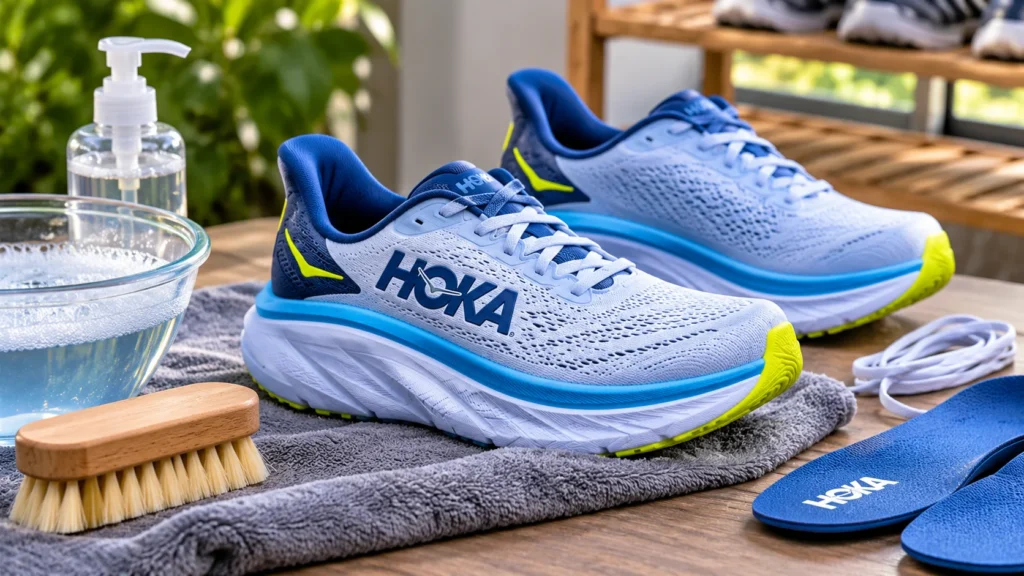
Clean both shoes by hand and let them dry naturally. Avoid machine washing, strong chemicals, and direct heat.
Proper care helps protect the upper, foam, and outsole. It also makes signs of wear easier to spot.
1. Remove Surface Dirt After Running
Use a soft brush to remove dry dirt from the outsole. Pay attention to the grooves where small stones collect.
Wipe the upper gently with a damp cloth. Avoid hard scrubbing that could damage its mesh fibers.
2. Wash Your Shoes by Hand
Mix a small amount of mild soap with lukewarm water. Use a soft cloth to clean dirty areas.
Remove the laces and removable insoles when needed. Clean these parts separately and let them dry before reassembly.
Do not soak the entire shoe for long periods. Excess water and harsh cleaning products can damage materials.
3. Let the Shoes Air Dry
Place wet running shoes in a shaded, ventilated area. Allow enough time for moisture to leave the upper.
Avoid dryers, radiators, and other direct heat sources. High temperatures can damage foam, glue, and synthetic materials.
4. Store Shoes in a Cool, Dry Place
Keep your Arahi 8 or Mach 6 away from extreme heat. A dry indoor shelf works better than a hot car.
Do not leave damp shoes inside a sealed gym bag. Trapped moisture can encourage unpleasant odors.
5. Track Your Running Mileage
Record how far you run in each pair. A training log or running app makes this task simple.
A common replacement guideline is around 300 to 500 miles. Actual shoe life depends on use, materials, and wear patterns.
Replace a shoe sooner when its cushioning or support no longer feels reliable.
6. Rotate Shoes When Practical
Using two pairs can give damp shoes time to dry between runs. Rotation also lets you choose a shoe for each workout.
A stability trainer can cover relaxed days when that support suits you. A neutral trainer can cover faster sessions if it feels comfortable.
You do not need both models simply to create a rotation. Choose shoes that match your needs.
Shoe Care Checklist
- Brush off loose dirt after outdoor runs.
- Use mild soap for deeper cleaning.
- Let damp shoes air dry naturally.
- Keep shoes away from strong heat.
- Inspect outsole wear regularly.
- Replace shoes when their performance declines.
Final Verdict: Is the HOKA Arahi 8 Worth Buying?
Yes, the HOKA Arahi 8 is worth buying if you prefer added stability. Its H-Frame provides a clear reason to choose it over the Mach 6.
The Arahi 8 works best as a supportive daily trainer. It also suits walking and relaxed road miles when the fit feels right.
The Mach 6 remains my preferred option for neutral training versatility. Its responsive foam handles a wider range of running speeds.
Original retail prices favor the Mach 6 by $10. However, discounts can reduce or reverse that difference.
Don’t choose a shoe solely because it wins more categories. The best running shoe is the one you can wear comfortably and consistently.
If you already enjoy stability shoes, start with the Arahi 8. If you want a faster neutral trainer, start with the Mach 6.
Both deserve consideration at a suitable price. Check their newer replacements before buying older stock at full retail.
Choose the Right HOKA Running Shoe
HOKA Arahi 8
Best for Stability
Choose Arahi 8 for supportive daily running, walking, and guided foot movement.
Original MSRP: $150
HOKA Mach 6
Best Neutral Training Versatility
Choose Mach 6 for responsive cushioning, lightweight comfort, and varied running speeds.
Original MSRP: $140
Prices and availability change. Confirm the exact model, size, width, and seller before purchasing.
Frequently Asked Questions
Which is better, HOKA Arahi 8 or Mach 6?
The HOKA Arahi 8 is better for runners who prefer dedicated stability. The Mach 6 is better for neutral runners seeking speed and versatility. Arahi 8 uses H-Frame guidance, while Mach 6 uses responsive supercritical EVA foam. Choose the shoe that matches your support needs and usual training pace.
What is the difference between HOKA Arahi 8 and Mach 6?
The main difference is stability. Arahi 8 uses an H-Frame support system and an advertised 8 mm heel drop. Mach 6 uses a neutral platform, responsive foam, and an advertised 5 mm drop. The Arahi 8 targets supportive daily movement, while Mach 6 targets more varied running speeds.
Is the HOKA Arahi 8 good for walking?
Yes, the HOKA Arahi 8 can work well for walking. Its cushioned platform and H-Frame make it a useful option for people who prefer guided movement. However, walking comfort depends on personal fit and support preferences. Try the shoe before wearing it for long periods.
Can neutral runners wear the HOKA Arahi 8?
Yes, neutral runners can wear the Arahi 8 if its support system feels comfortable. Not every neutral runner needs dedicated stability features. The Mach 6 may offer a more natural choice for runners who prefer an unrestricted, responsive ride. Choose based on comfort rather than gait labels alone.
Is the HOKA Arahi 8 still worth buying?
Yes, the Arahi 8 remains worth considering for runners seeking supportive cushioning. Its updated H-Frame distinguishes it from earlier Arahi models. A suitable discount can improve its value. Compare its fit and current price with the Arahi 9 before deciding which model offers the better purchase.
Affiliate Disclosure
As an Amazon Associate, Footwear Hiker earns from qualifying purchases. This article contains affiliate links. We may receive a commission when you purchase through these links at no additional cost to you. Our recommendations reflect product specifications, published research, independent reviews, and editorial analysis. Prices and availability may change.


