

Quick Answer
Most running shoes last approximately 300–500 miles (480–800 kilometers). That’s the general replacement range recommended by REI’s running-shoe experts. However, actual lifespan depends on cushioning, terrain, running habits, and shoe construction. Replace your shoes sooner if their grip, support, or comfort deteriorates.
Five Signs Your Running Shoes May Be Worn Out
- Flattened cushioning: The midsole feels noticeably firmer or less responsive.
- Worn outsole: Rubber tread becomes smooth, thin, or uneven.
- New discomfort: Familiar runs produce unexpected soreness or pressure.
- Damaged upper: Torn mesh or stretched heel materials reduce secure fit.
- High mileage: Your shoes have accumulated around 300–500 running miles.
Best Replacement Rule
- Start checking at 300 miles: Inspect wear regularly and replace shoes when their performance or comfort noticeably declines.
Wondering whether your favorite running shoes have another hundred miles left? I recommend checking their condition instead of relying entirely on the number in your running app.
In this 2026 guide, I’ll explain how long different running shoes last, what causes premature wear, and when replacing them makes sense.
How Many Miles Should Running Shoes Typically Last?
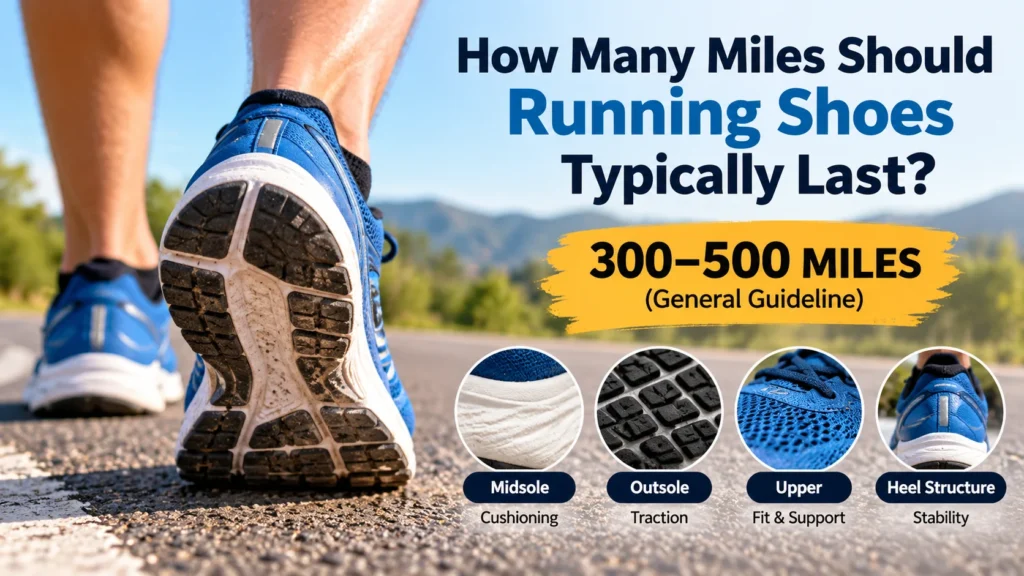
Most everyday running shoes have an expected useful lifespan of approximately 300–500 miles. This range is a practical guideline, not a guaranteed expiration point.
A well-maintained shoe might remain comfortable beyond 500 miles. Another pair could lose its preferred cushioning or fit before reaching 300 miles.
What Does Running Shoe Lifespan Mean?
Running shoe lifespan is the amount of use a shoe can withstand before wear significantly affects its intended function.
Four main components determine whether a shoe remains suitable for running:
- Midsole: The cushioning layer that compresses and rebounds during running.
- Outsole: The bottom rubber layer responsible for ground contact and traction.
- Upper: The fabric and supporting materials that hold your foot securely.
- Heel structure: The rear section that helps maintain the shoe’s shape and fit.
A shoe can look clean while its cushioning feels noticeably different. That’s why appearance alone cannot determine its remaining lifespan.
For a deeper explanation, explore our guide on how running shoe midsoles work.
Is 400 Miles a Good Replacement Target?
Yes, 400 miles is a reasonable middle checkpoint within the commonly recommended range. However, it should prompt an inspection rather than automatic replacement.
I prefer checking shoes around 300 miles and reassessing them every few weeks afterward. That approach accounts for differences between individual shoes and runners.
- Before 300 miles: Watch for unexpected wear, damage, or discomfort.
- 300–400 miles: Begin regular cushioning and outsole inspections.
- 400–500 miles: Compare your shoes against a newer pair when possible.
- Beyond 500 miles: Evaluate carefully instead of assuming the shoes remain suitable.
How Many Months Do Running Shoes Last Based on Weekly Mileage?
Running shoes commonly last several months, but the timeline depends on how far you run weekly. Higher training mileage generally brings replacement checkpoints closer together.
Use the following table to estimate your replacement schedule.
| Weekly Miles | 300-Mile Checkpoint | 500-Mile Checkpoint | Approximate Months |
|---|---|---|---|
| 10 miles | 30 weeks | 50 weeks | 7–12 months |
| 15 miles | 20 weeks | 33 weeks | 5–8 months |
| 20 miles | 15 weeks | 25 weeks | 3.5–6 months |
| 30 miles | 10 weeks | 17 weeks | 2–4 months |
| 40 miles | 7.5 weeks | 12.5 weeks | 2–3 months |
These estimates assume consistent weekly mileage and use the 300–500-mile guideline. Actual replacement timing may differ.
Example: Running 20 Miles Per Week
Suppose you run four days weekly, averaging five miles per run. Your shoes accumulate approximately 80 miles every four weeks.
You’ll reach 300 miles after 15 weeks and 500 miles after 25 weeks. That provides a useful window for planning your next purchase.
Do Different Types of Running Shoes Last Different Distances?
Yes, different running shoe designs can wear at different rates. Cushioning materials, outsole coverage, and intended use influence durability.
Here is a practical comparison of common shoe categories.
| Shoe Type | Mileage Guidance | Main Wear Concern |
|---|---|---|
| Everyday road trainers | Usually 300–500 miles | Cushioning and tread |
| Max-cushion trainers | Generally use the 300–500-mile checkpoint | Foam compression and ride changes |
| Lightweight racing shoes | May lose peak performance sooner | Foam response and outsole wear |
| Trail running shoes | Varies considerably by terrain | Lugs, grip, and upper damage |
These are inspection guidelines, not model-specific durability guarantees. Always follow manufacturer advice when more specific information is available.
Do Carbon-Plated Racing Shoes Wear Out Faster?
Some lightweight racing shoes may lose their preferred racing performance sooner than conventional daily trainers. Thin outsole coverage and specialized cushioning can influence that change.
However, a carbon plate does not automatically determine a shoe’s lifespan. Construction and actual wear matter more than the plate alone.
What Factors Affect How Long Running Shoes Last?
Shoe construction and running conditions determine how quickly materials wear down. Two runners using the same model can experience noticeably different durability.
1. Running Surface and Terrain
Rough pavement, gravel, and rocky trails can increase abrasion against shoe outsoles. Sharp surfaces may also damage exposed foam and upper materials.
Regularly inspect shoes used on abrasive or uneven ground.
2. Runner Weight and Landing Mechanics
Each stride compresses the midsole under load. Body weight, running speed, landing pattern, and individual movement affect that loading.
Higher loads can contribute to faster material fatigue, although weight alone cannot predict exact shoe lifespan.
3. Cushioning Materials
Running shoes use different foam formulations, including EVA, TPU, and PEBA-based materials. Their resilience and durability depend on the specific manufacturing process.
Never assume every shoe using the same foam family lasts an identical distance.
4. Training Frequency and Additional Use
Daily running increases mileage faster than occasional training. Walking, commuting, and wearing running shoes at work also contribute to material wear.
Those activities belong in your overall usage estimate.
5. Fit and Foot Movement
Incorrect shoe sizing can produce excessive friction, heel damage, and premature upper wear. A secure fit helps reduce unnecessary movement inside the shoe.
Review how tight running shoes should be if your heel slips or the shoe feels restrictive.
What Are the Signs That Running Shoes Need Replacing?
The clearest replacement signs include deteriorating cushioning, damaged tread, unstable fit, and new discomfort. Look for several indicators rather than relying on mileage alone.
1. The Midsole Feels Flat or Unresponsive
Repeated compression can change the way cushioning behaves. A familiar route may begin feeling noticeably harder underfoot.
Compare the old shoe with a newer example of the same model when possible.
2. The Outsole Tread Is Worn Down
Check the heel and forefoot for smooth rubber, exposed foam, or missing tread sections. Poor traction deserves particular attention on wet surfaces.
Visible outsole damage can justify replacement before 300 miles.
3. You Experience New Discomfort
Unexpected foot, ankle, or leg soreness during familiar runs may indicate deteriorating footwear. It can also result from training changes, fatigue, or other conditions.
The Cleveland Clinic’s running guidance discusses replacing worn shoes and protecting your knees.
Persistent or worsening pain deserves evaluation by a qualified healthcare professional.
4. The Heel Structure Loses Its Shape
An overly soft, collapsed, or damaged heel section may stop holding your foot securely. This can contribute to rubbing or unwanted shoe movement.
Compare both shoes for changes in their rear structure.
5. The Upper Has Tears or Excessive Stretching
Small cosmetic marks are not necessarily serious. However, torn mesh or damaged eyelets can compromise fit and support.
Replace shoes when damage affects secure foot positioning.
6. Wear Becomes Uneven
Some asymmetrical tread wear is normal because running mechanics vary. Severe wear concentrated in one area deserves closer inspection.
If the shoe feels tilted or unstable, reconsider its suitability for running.
7. Your Foot Starts Sliding Inside the Shoe
A previously secure shoe may become loose as its upper or heel materials wear. This can increase rubbing and create new hot spots.
Also check your sizing against our running shoe toe-space guide.
How Can You Check Running Shoe Wear at Home?
You can inspect running shoes in a few minutes using their mileage, physical condition, and comfort. No specialized equipment is required.
- Check accumulated miles: Review your running app, training log, or weekly mileage estimate.
- Inspect the outsole: Look for smooth tread, missing rubber, and heavily worn sections.
- Examine the midsole: Notice deep compression lines, permanent deformation, or unusual asymmetry.
- Check the upper: Inspect fabric, stitching, lacing eyelets, and heel lining.
- Compare cushioning: Try a newer pair of the same model if available.
- Test comfort: Walk or take a short, easy run and notice changes from your normal experience.
I place particular value on the comparison test. It makes gradual changes easier to notice than simply pressing the foam with your thumb.
According to Brooks’ replacement guidance, outsole damage, compressed cushioning, and reduced comfort are useful indicators.
Do Treadmill Miles and Walking Miles Count Toward Shoe Lifespan?
Yes, treadmill running and walking contribute to running shoe wear. The outsole, midsole, and upper still experience repeated loading.
Treadmill running may produce different outsole wear patterns than outdoor running. However, indoor running does not make cushioning deterioration disappear.
Should You Count Everyday Walking?
Include substantial walking use in your estimate, particularly when you wear the same pair for work or commuting. Running mileage alone may underestimate total wear.
There’s no universally accurate conversion between walking miles and running miles. I recommend checking shoe condition alongside your total activity.
How Do You Track Running Shoe Mileage Accurately?
The easiest approach is to record the shoes you use for each run. Many running watches and training apps support equipment tracking.
A basic spreadsheet or notebook also works.
Three Simple Mileage Tracking Methods
- Running app: Assign completed runs to your specific shoe model.
- Training spreadsheet: Add the distance of each run to your current total.
- Weekly estimate: Multiply your average weekly distance by the number of weeks used.
For example, 18 miles weekly over 20 weeks equals approximately 360 miles. That’s a sensible point for a detailed wear check.
If you rotate shoes, record mileage separately for each pair.
How Can You Make Running Shoes Last Longer?
Proper care can help running shoes maintain their intended function and prevent avoidable damage. However, maintenance cannot restore worn-out cushioning.
Seven Practical Shoe-Care Habits
- Use the right shoes: Choose models suited to your regular terrain.
- Remove dirt: Brush away mud and debris after dirty runs.
- Clean gently: Use mild soap, water, and a soft brush when appropriate.
- Air-dry naturally: Keep wet shoes away from direct heaters and high heat.
- Rotate pairs: Alternate shoes if your training schedule makes that practical.
- Untie your laces: Avoid crushing the heel while removing shoes.
- Store properly: Choose a cool, dry, ventilated location away from direct sunlight.
Avoid machine washing unless the shoe manufacturer specifically permits it. Heat, agitation, and prolonged moisture exposure can damage footwear materials.
Most importantly, don’t confuse a clean shoe with a fully functional shoe.
Does Rotating Two Pairs Make Running Shoes Last Longer?
Rotating two pairs distributes weekly mileage across separate shoes. It also gives you an alternative when one pair becomes wet or uncomfortable.
However, owning two pairs does not guarantee more total miles per dollar. Each pair still experiences wear whenever you use it.
Example of a Two-Shoe Rotation
Imagine running 30 miles weekly while alternating equally between two pairs. Each pair accumulates approximately 15 miles weekly.
At that rate, either pair reaches 300 miles after about 20 weeks. The total mileage across both shoes would be 600 miles.
Rotation can help you compare cushioning and comfort between shoes. That comparison is useful when deciding whether an older pair needs replacing.
Do Running Shoes Expire Even If You Do Not Use Them?
Running shoes can deteriorate during long-term storage, even without regular use. Adhesives, foam, and other components may change with age and storage conditions.
However, there is no universal expiration date that applies to every unworn running shoe.
Before using an older pair, inspect its cushioning, glue bonds, outsole, and flexibility. Replace it if materials crack, separate, or feel unreliable.
When Should You Replace Running Shoes Instead of Waiting?

Replace running shoes promptly when significant damage, inadequate grip, or loss of secure fit makes running uncomfortable or unsafe. Don’t wait for an arbitrary mileage target.
The following situations deserve particular attention:
- The outsole is severely worn or slippery.
- The shoe feels noticeably unstable or uneven.
- Cushioning has become uncomfortable compared with a newer pair.
- The upper or heel structure no longer holds your foot properly.
- Several wear indicators appear together.
If discomfort persists despite changing footwear, consider other causes. Shoes aren’t the only factor influencing running comfort.
Which Running Shoes Are Worth Considering as Replacements?
If your current shoes are ready for retirement, choose replacements based on fit and running needs. The following established models suit different priorities.
These are editorial recommendations, not tested durability guarantees. The scores below represent general suitability for each stated use case, not customer-review averages.
🏆 Best for Everyday Road Running
Brooks Ghost 18
★★★★★ 4.5/5 Editorial Fit
The Ghost 18 offers balanced cushioning, a 10 mm heel-to-toe drop, and a secure road-running design. I’d consider it for runners who prefer a familiar, versatile daily trainer over highly specialized racing footwear.
☁️ Best for Plush Cushioning
ASICS GEL-NIMBUS 28
★★★★★ 4.5/5 Editorial Fit
The GEL-NIMBUS 28 combines FF BLAST PLUS cushioning, PureGEL technology, and a HYBRID ASICSGRIP outsole. I’d shortlist it for neutral runners who value a soft underfoot feel during easy runs and longer distances.
⚡ Best for Versatile Training
Saucony Ride 19
★★★★★ 4.5/5 Editorial Fit
The Ride 19 features reformulated PWRRUN+ cushioning, an 8 mm drop, and forefoot flex grooves. I like its balanced design as a candidate for runners mixing relaxed mileage with steady training sessions.
Buying reminder: These models are not guaranteed to outlast one another. Choose comfortable footwear that suits your feet, and continue monitoring wear regardless of price.
Frequently Asked Questions
Can Running Shoes Last 600 Miles?
Some running shoes remain usable beyond 500 miles, including at 600 miles. However, that does not mean every pair remains suitable for running at that distance. Inspect tread, cushioning, structure, and comfort carefully. Replace the shoes if their performance has noticeably deteriorated.
Is It Bad to Run in Shoes That Are Over 500 Miles Old?
Running in shoes beyond 500 miles is not automatically harmful, but the likelihood of significant wear may increase. Check for compressed cushioning, poor traction, unstable fit, and unusual discomfort. Mileage alone cannot determine whether a specific shoe is safe or comfortable.
How Often Should Beginners Replace Running Shoes?
Beginners can use the same general 300–500-mile inspection range as experienced runners. Someone covering 10 miles weekly reaches those checkpoints after approximately 30–50 weeks. Replace shoes sooner if they develop substantial wear, lose their comfortable fit, or become unreliable.
Do Expensive Running Shoes Last Longer?
Not necessarily. A higher price may reflect cushioning technology, lightweight materials, or specialized performance features rather than greater durability. An affordable daily trainer may outlast a premium racing model under certain conditions. Compare construction, intended use, and actual wear instead of relying on price.
Can You Use Old Running Shoes for Walking?
Sometimes. Running shoes retired because they no longer feel responsive may still work for occasional walking if their fit, grip, and structure remain satisfactory. Avoid using shoes with severely worn tread, instability, or significant discomfort. Continued walking also adds wear.
Final Takeaway: How Many Miles Do Running Shoes Last?
Most running shoes last approximately 300–500 miles, but the right replacement time depends on their actual condition. Treat mileage as a useful checkpoint rather than a guaranteed expiration date.
My recommendation is straightforward: track your miles, inspect your shoes regularly, and compare their comfort against a newer pair.
When grip, cushioning, or fit deteriorates, replacing your shoes makes more sense than chasing an extra mileage target. Prioritize comfortable, reliable footwear for every run.


Steven is a former sportsperson and now a full-time businessman and research writer. He is the mastermind of this site, and he created this site to help people who need specialized shoes for different activities. When he was a sportsperson, he was very passionate about different types of shoes for his sports purpose. The passion he had for shoes at that time now turned into his profession. Besides his shoe business, he loves sharing his knowledge and experience with people and helping them maintain healthy feet.
More Posts
