

Quick Answer
The HOKA Bondi 9 wins for most walkers and easy runners. Its supercritical EVA foam offers a softer, livelier ride than the Bondi 8’s traditional EVA. HOKA also lists the newer shoe about 8.5 grams lighter. Choose Bondi 8 for a firmer feel or a large clearance discount, but check fit first.
What changes when you move from Bondi 8 to Bondi 9?
- Bondi 9 gains a supercritical EVA midsole and 2 mm of advertised stack height.
- Bondi 9 suits steady road miles and walks where soft landings matter.
- Bondi 8 feels firmer and makes sense when its actual price falls substantially.
Quick Verdict: HOKA Bondi 9 vs Bondi 8
HOKA BONDI 9
Tracked buyer-rating snapshot; not a live Amazon rating
$175 original US list price
Best for
Walkers and easy runners seeking plush cushioning with improved rebound.
HOKA BONDI 8
Tracked buyer-rating snapshot; not a live Amazon rating
$165 original US list price
Best for
Buyers who like a firmer, planted ride and find a real discount.
| Category | Bondi 9 | Bondi 8 |
|---|---|---|
| Overall winner | 🏆 | ❌ |
| Best value at a major discount | ❌ | ✅ |
| Softer cushioning | ✅ | ❌ |
| More energetic easy runs | ✅ | ❌ |
| Firmer, grounded feel | ❌ | ✅ |
Bottom line: Bondi 9 wins for most comfort-first buyers because its foam is livelier; Bondi 8 is worth buying when its fit is better or the discount is substantial.
- Bondi 9 wins overall with supercritical EVA foam and improved measured energy return.
- The original US list-price gap is $10: $175 versus $165.
- Bondi 9 makes more sense for high-mileage easy runs and long walks.
- Bondi 8 can save money for walkers who like a firmer feel.
- The most important trade-off is foam feel, followed closely by toe-box fit.
You enjoy the cushion of the HOKA Bondi 8. But your pair feels flat after long days. Should you pay more for the Bondi 9, or buy another Bondi 8 at a discount?
The shoes share a familiar look, broad sole, and rolling feel. Their midsole materials are not the same. That difference matters more than the extra stack height alone.
I’m Steven Tyler, the author at FootwearHiker. For this review, I compared HOKA’s published specifications, independent lab measurements, and available buyer feedback. I did not conduct my own wear test. Any test results below are clearly credited to their sources.
My aim is simple. You should know what each shoe does well before spending money. I also explain why more cushioning is not always the right answer for every foot.
This comparison looks at comfort, fit, durability, walking, easy running, and real value. The biggest upgrade is clear. Yet one fit problem could still make the older model the smarter pick.
What Is the HOKA Bondi 9 Designed to Do?
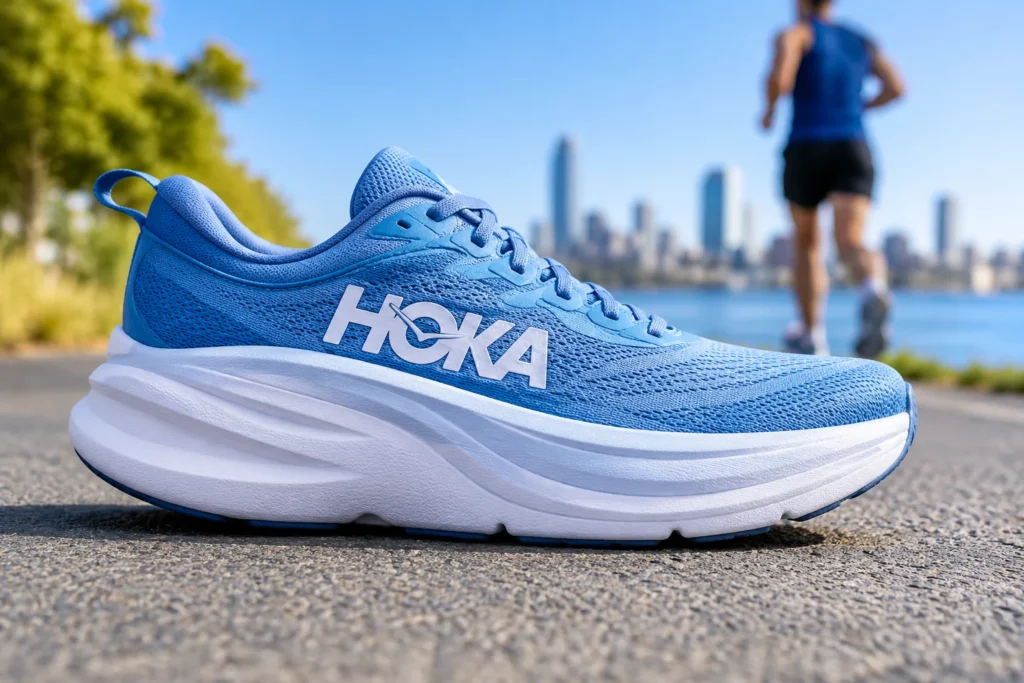
Quick verdict: The HOKA Bondi 9 is a neutral, maximum-cushion road shoe for comfortable walking and easy running. It adds softer foam without turning into a lightweight speed trainer.
Primarily, the HOKA Bondi 9 is built for relaxed road miles and long periods on your feet. Its supercritical ethylene-vinyl acetate (EVA) midsole is the key change. HOKA pairs that foam with a high stack and a curved sole shape.
The men’s model has an advertised 43 mm heel stack and 5 mm heel-to-toe drop. HOKA lists its weight around 298 g. Those figures describe the men’s reference version, not every size.
The structured knit upper includes areas designed for airflow. A molded heel collar adds padding around the ankle. Durabrasion rubber covers key wear zones beneath the shoe. The original US list price is $175.
It suits an easy five-kilometer run, a long airport walk, or a workday with steady movement. For a detailed single-shoe breakdown, the HOKA Bondi 9 review covers its fit and test results. Choose it for comfort first, not sprint speed.
- More responsive foam than Bondi 8
- Excellent independent cushioning scores
- Lighter than the previous model
- Useful heel padding and a smooth rocker
- Still heavy for fast running
- Some buyers report cramped toes
- Premium list price
- Road outsole is not built for technical trails
HOKA Men’s Bondi 9 road running shoe
Original US list price: $175. Amazon offers vary by seller, color, size, and width.
What Is the HOKA Bondi 8 Best Used For?
Quick verdict: The Bondi 8 remains useful for walking and slow running. Its traditional EVA foam feels firmer and more planted, which some buyers still prefer.
Mainly, the HOKA Bondi 8 is a thick-soled neutral road trainer. It supports comfortable, steady movement rather than quick pace changes. Its midsole uses compression-molded EVA instead of the newer supercritical formula.
HOKA designed a broad base and extended heel geometry to help steps roll forward. Its engineered mesh upper uses padding around the heel. A rubber outsole covers common landing areas while exposed foam reduces weight.
The Bondi 8 launched with a $165 US list price. Its advertised weight is about 306 g for the men’s comparison size. HOKA’s regional comparison lists a 4 mm drop, although published figures vary across markets and tests.
This shoe can serve someone who walks three miles each day and likes a firmer platform. Our HOKA Bondi 8 review explores its narrow forefoot and arch-pressure concerns. Fit matters more than how much foam appears underfoot.
- Firm, steady ride some walkers favor
- Broad outsole support
- Smooth rocker for unhurried steps
- Can be excellent value on clearance
- Much lower measured energy return
- Heavier than Bondi 9
- Toe crowding can limit comfort
- Older stock may be harder to find
HOKA Men’s Bondi 8 road running shoe
Original US list price: $165. Check actual stock and condition before buying discontinued colors.
How Do the HOKA Bondi 9 and Bondi 8 Specs Compare?
In short, the Bondi 9 is lighter and uses more advanced midsole foam. The models share a neutral road-running purpose, a thick sole, and no propulsion plate.
HOKA’s published values below use its direct Bondi comparison. Independent measurements can differ by size and testing method. The dollar figures are original US list prices, not live offers.
| Feature | Bondi 9 | Bondi 8 | Advantage |
|---|---|---|---|
| Original US list price | $175 | $165 | Bondi 8 |
| Men’s advertised weight | 297.7 g | 306.2 g | Bondi 9 |
| Midsole foam | Supercritical EVA | Compression-molded EVA | Bondi 9 |
| Advertised heel stack | 43 mm | 41 mm | Bondi 9 |
| Advertised drop in HOKA comparison | 5 mm | 4 mm | Preference |
| Upper | Structured knit | Engineered mesh | Fit dependent |
| Outsole | Durabrasion rubber zones | Zonal rubber | Tie for road intent |
| Plate | None | None | Tie |
| RTINGS cushioning score | 8.9/10 | 7.3/10 | Bondi 9 |
| RTINGS stability score | 7.1/10 | 7.7/10 | Bondi 8 |
| Heel energy return, RTINGS | 74.3% | 63.3% | Bondi 9 |
| Forefoot energy return, RTINGS | 75.4% | 65.9% | Bondi 9 |
Source notes: HOKA’s model comparison provides branded specifications. RTINGS’ side-by-side laboratory results provide measured scores. Published and lab figures should not be mixed as though they use the same method.
Which HOKA Bondi Has Better Cushioning and Energy Return?
The Bondi 9 wins cushioning and rebound. RTINGS scored it 8.9/10 for cushioning, versus 7.3/10 for the Bondi 8. The newer foam absorbs more impact in its tests.
That difference comes from the material, not just the height. Supercritical EVA is made through a process that changes the foam structure. It can combine a soft landing with more useful rebound.
RTINGS measured 74.3% heel energy return in the Bondi 9. The Bondi 8 returned 63.3% in the same test. At the forefoot, those figures were 75.4% and 65.9%.
Picture a runner doing six easy miles on pavement. A more responsive shoe can feel less dull as the run continues. Yet it does not turn a max-cushion trainer into a racing shoe.
The Bondi 8 remains a reasonable choice for someone who enjoys firm foam. Its lower rebound can feel predictable rather than lively. Softness is a preference, while energy return is a measured shoe property.
Want to understand the height figures? This running shoe stack height guide explains why sole thickness and underfoot softness are different ideas.
Which Fits Better for Walking, Wide Feet, and Long Shifts?
Neither shoe wins every fit test. Bondi 9 improves the collar and upper design, but some buyers still report toe pressure. Bondi 8 also has documented forefoot complaints.
The HOKA Bondi 9 has a structured knit upper with padded heel support. Its upper can feel secure during a walk. That security will not help if the toe shape presses against your foot.
Independent lab tests measure different aspects of fit. RTINGS found the Bondi 9 consistent in length. Yet a shoe that fits your length can still feel narrow near the toes.
For a ten-hour retail shift, check three places before buying. Your heel should stay seated. Your toes should spread without pressure. Your midfoot should not feel pushed against the arch.
Try shoes late in the day, with your usual socks. Walk, turn, and go down a few steps. Compare regular and wide sizes when offered. Do not rely on break-in time to fix pain.
Fit warning: A wide outer sole does not guarantee a wide toe box. Stop if you feel numbness, sharp arch pressure, or toe squeezing.
The Bondi 8 gets a small edge for buyers who already know its shape fits them. For first-time shoppers, try both models. The newer one is not automatically better for every foot.
Which Gives Better Value at Its Actual Selling Price?
The Bondi 9 wins value at prices close together. Its $175 original US list price was only $10 above the Bondi 8’s $165 launch price. The foam upgrade easily justifies comparing both.
Today, the actual difference can be larger or smaller. Color, size, width, retailer, and age of stock change the offer. A low advertised price is useless when your size is unavailable.
Consider a Bondi 8 at $95 and a Bondi 9 at $175. That $80 gap is meaningful. But if the older pair costs $160, the newer foam deserves the extra $15.
Check whether the listed item is a regular shoe or a special width. Some marketplace offers carry unusually high third-party prices. Never assume an Amazon seller follows HOKA’s original retail pricing.
Also read the return terms. A shoe that feels wrong after ten minutes has poor value, whatever its discount. In this comparison, the real cost is the delivered price of the exact pair you can wear.
Which Bondi Is Safer and More Durable on Everyday Surfaces?
Both are road shoes, not traction-focused trail shoes. The Bondi 9 has Durabrasion rubber in key wear areas. The Bondi 8 also uses rubber in exposed contact zones.
On dry sidewalks, each outsole is designed for normal road use. Wet tiles, slick painted lines, and loose gravel need extra care. Thick cushioning does not create reliable grip on every surface.
Independent Bondi 9 outsole abrasion testing has been promising. Still, one lab result cannot predict how long every runner’s pair will last. Foot strike, surface, body mechanics, and rotation all affect wear.
The Bondi 8 has a slightly firmer and more stable laboratory profile. RTINGS scored its stability at 7.7/10 versus 7.1/10 for Bondi 9. Neither score makes it a medical stability shoe.
Check the outsole every few weeks. Look for smooth rubber patches, uneven heel wear, or foam that feels different under one foot. Replace damaged shoes before loss of grip or balance becomes noticeable.
Bondi 9 wins for its newer upper and rubber package. Bondi 8 can still win for a wearer who prefers its firmer contact with the ground. Safety depends on fit and conditions.
Which HOKA Bondi Works Best in Real-Life Situations?
Bondi 9 is the better default for easy running and long walks. Bondi 8 becomes competitive when you prefer a firm ride or find a strong discount. The right use matters more than the model number.
Which Is Better for Easy Runs and Recovery Days?
Bondi 9 wins relaxed road runs. Its higher cushioning score and better rebound give it the edge. A runner returning from a hard training day can use it for easy pacing.
Which Is Better for Long Hours at Work?
Bondi 9 is the first pair to try for cushion-focused workdays. However, a person standing at a counter needs toe room and arch comfort more than foam height. Bondi 8 wins if its fit is clearly better.
Which Is Better for a Cold Morning Walk?
Neither shoe is a winter traction specialist. For a dry, cold paved walk, choose the pair that fits securely with your socks. On ice or snow, use footwear intended for winter grip instead.
Which Is Better for Delivery or Fleet Staff?
Bondi 9 is better for staff who walk long distances on normal pavement. Yet many delivery and fleet roles require slip-resistant or protective work shoes. If your employer specifies a safety standard, neither road runner should replace compliant footwear.
Which Is Better for Travel and Airport Walking?
Bondi 9 wins for travelers who prize soft landings on long concourses. Its weight saving is modest, not dramatic. Bondi 8 is still useful if you already own a comfortable pair.
Which Works Better for Fast Workouts?
Neither Bondi is ideal for speed sessions. Bondi 9 has more rebound, but its thick platform and weight remain noticeable. A lighter HOKA trainer is a better type of shoe for frequent faster running.
Is Paying More for the Bondi 9 Worth It?
Yes, when the real difference is small and both shoes fit. Bondi 9 adds a meaningful foam upgrade, not just a new color or logo. The more responsive ride is its main benefit.
Use the original $10 list-price gap as historical context only. Do not treat it as a live Amazon price difference. Check the delivered totals for your exact size and preferred width.
A practical rule is to try Bondi 9 first when the final prices are within $25. At a larger discount, Bondi 8 deserves closer consideration. This is a buying guideline, not a measured performance threshold.
Before paying, check seller reputation, return rules, shoe condition, and delivery fees. If you find older stock, inspect it when it arrives. A discount matters only when the shoe is authentic and comfortable.
Who Should Buy the HOKA Bondi 9 or Bondi 8?
Choose Bondi 9 for better cushioning and a more lively easy-run feel. Choose Bondi 8 when you want a firmer ride or already know its fit suits you. Skip both if their toe shape causes discomfort.
- Want softer cushioning for steady road miles
- Walk for hours on paved surfaces
- Prefer better rebound over a firmer feel
- Find a pressure-free fit in your width
- Like firm, stable-feeling cushioning
- Already own a well-fitting Bondi 8
- Find a meaningful clearance saving
- Need a simple easy-walking road shoe
Do not buy either if: Your toes feel squeezed, you need aggressive trail grip, or your job requires certified protective footwear. A lighter daily trainer can make more sense for speed-focused workouts.
For a lighter daily road trainer, check the HOKA Clifton 10 review before deciding.
Do not buy a max-cushion shoe solely to address foot pain. No Bondi model can diagnose or treat a medical condition. If pain continues, consult a qualified clinician and assess your footwear fit.
What Do Real Buyers Say About Bondi 9 and Bondi 8?
Buyer feedback favors comfort but shows real disagreement about fit. The Bondi 9 receives praise for plush daily wear. The Bondi 8 earns credit for stability, yet its firmness and toe shape divide owners.
Third-party Amazon trackers showed about 4.5/5 for one Bondi 9 listing and 4.4/5 for one Bondi 8 listing. These are listing-specific snapshots, not live ratings for every size or color.
Some Bondi 9 owners describe softer runs and more bounce. Others say the shoe feels narrow or bulky. Bondi 8 owners often like its support, while some report arch pressure and less energetic foam.
- Soft cushioning during walking
- Comfort on steady road runs
- Secure-feeling padded heel
Common concerns
- Toe-box tightness
- High price and bulky shape
- Grounded, steady platform
- Comfort for some long shifts
- Useful on sale
Common concerns
- Firm foam with limited bounce
- Toe and arch pressure
These summaries describe feedback themes, not verified complaint rates. Buyers also have different feet and uses. For a decision this personal, check the return policy and try the shoes indoors first.
The strongest independent evidence favors Bondi 9’s cushioning. The strongest buyer warning concerns fit across both models. Keep those two facts in mind when reading glowing reviews.
How Should You Care for HOKA Bondi Running Shoes?
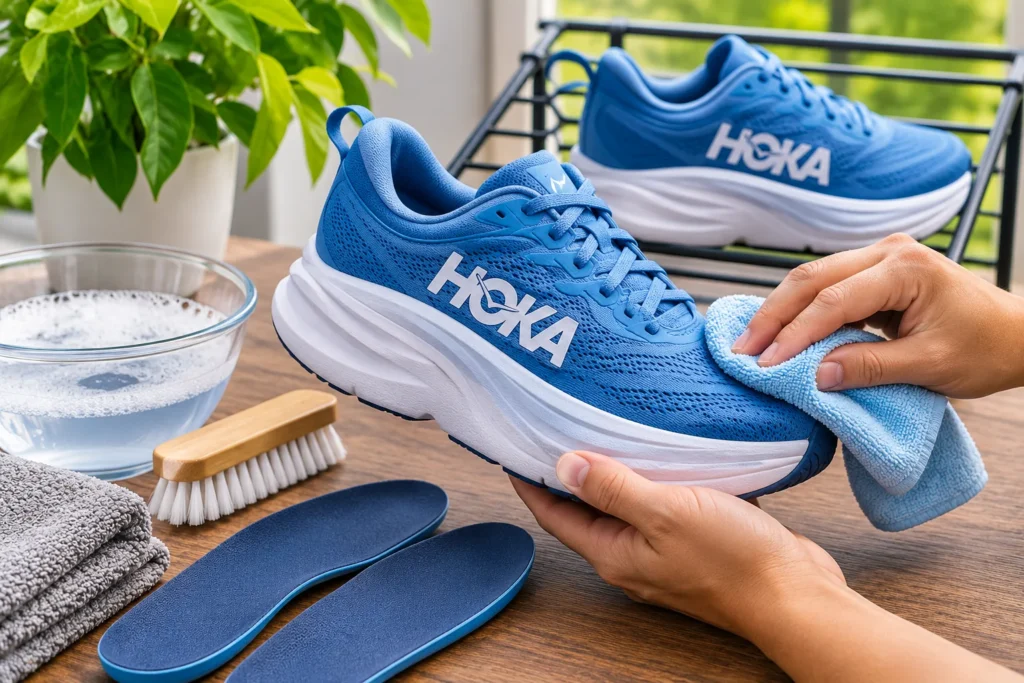
Clean both Bondi models gently and dry them without direct heat. Good care helps protect the upper, foam, and rubber. It does not make worn-out cushioning new again.
Brush away dry dirt after walks and runs. Use mild soap, a soft cloth, and cool water for spot cleaning. Avoid harsh cleaners, hot washing, and direct heat sources.
Remove the insoles after a wet walk when the care label allows it. Loosen the laces and let air move through each shoe. Stuffing clean paper inside can absorb some moisture.
Keep shoes away from radiators and direct sunlight during drying. Heat can affect foam and adhesives. Our running shoe drying guide explains safe indoor drying steps.
Rotate pairs if you walk or run on most days. Inspect the outsole for uneven wear and the upper for holes. Replace shoes when grip, fit, or cushioning no longer feels dependable.
If an older Bondi 8 has spent years in storage, inspect its condition before use. A fresh-looking shoe is not automatically a fresh-feeling shoe. This matters when shopping old inventory.
Final Verdict: Is HOKA Bondi 9 Worth the Upgrade?
Yes. The HOKA Bondi 9 is the stronger pick for most walkers and easy runners. Its supercritical EVA foam and better measured energy return provide a real upgrade over the Bondi 8.
At close prices, I would choose Bondi 9 if both shoes fit well. The added rebound is more useful than the small difference in stack height. It also weighs slightly less in HOKA’s comparison.
Bondi 8 still has a place. Its firmer platform suits some feet and preferences. A steep discount makes it more appealing. But a great price cannot fix a narrow toe box.
The final choice should start with fit, then daily use, then price. That order helps avoid buying a popular shoe that never feels comfortable on your feet.
Frequently Asked Questions
Which Is Better, HOKA Bondi 9 or Bondi 8?
The Bondi 9 is better for most walkers and easy runners. Its newer supercritical EVA foam provides deeper cushioning and more rebound than the Bondi 8. Choose the older shoe if you like its firmer ride, find a meaningful discount, and know that its fit suits your feet.
What Is the Biggest Difference Between Bondi 9 and Bondi 8?
The biggest difference is the midsole foam. Bondi 9 uses supercritical EVA, while Bondi 8 uses compression-molded EVA. Independent tests show more energy return in Bondi 9. HOKA also increased the advertised stack by 2 mm and reduced the men’s reference weight by about 8.5 g.
Is the HOKA Bondi 9 Worth $10 More Than Bondi 8?
Yes, if both pairs fit and the actual price difference is $10. The newer model provides a meaningful cushioning upgrade. However, $10 is the gap between original US list prices. Today’s offers may differ by size, color, width, and seller, so check the delivered total.
Is Bondi 9 Good for Walking All Day?
Yes, Bondi 9 is a strong walking option when its fit is comfortable. The thick foam and rockered sole suit steady paved movement. Check the toe box and arch before a long shift. Cushioning alone cannot correct a poor fit, and workplaces may require certified shoes.
Does Bondi 9 Fit Wider Than Bondi 8?
Not reliably for every foot. The Bondi 9 has a revised knit upper, but some buyers still report toe pressure. The Bondi 8 also has documented forefoot complaints. Try regular and wide versions in your usual length, then check toe spread while standing and walking indoors.
Affiliate Disclosure: As an Amazon Associate, I earn from qualifying purchases. If you click a link on this page and make a purchase, I may receive a small commission — at no extra cost to you. I only recommend products I genuinely believe will help you. This helps keep the site free and running. Thank you for your support.


