

Quick Answer
The HOKA Mach 6 wins for lightweight running and faster training. It weighs 232 grams in independent lab tests, compared with 281 grams for the Nike Pegasus 41. However, the Pegasus 41 offers a traditional 10 mm heel drop, making it appealing for heel strikers, beginners, and relaxed daily runs.
Which shoe fits your daily running routine?
- The Mach 6 weighs 49 grams less per shoe in lab tests.
- The Pegasus 41 suits relaxed runs and traditional cushioning preferences.
- The Mach 6 offers greater versatility for faster training sessions.
⚡ Quick Verdict — Nike Pegasus 41 vs HOKA Mach 6
Nike Pegasus 41
Editorial rating
$145 (reference retail price)
✅ Best for:
Beginners, heel strikers, walkers, and runners who enjoy easy daily miles.
HOKA Mach 6
Editorial rating
$140 (reference retail price)
✅ Best for:
Runners seeking a lightweight shoe for daily miles, tempo runs, and faster workouts.
| Category | Pegasus 41 | Mach 6 |
|---|---|---|
| Overall Winner | — | 🏆 |
| Best Value at Reference Price | — | ✅ |
| Traditional Daily Comfort | ✅ | — |
| Lightweight Performance | — | ✅ |
| Tempo Runs | — | ✅ |
Bottom line: The Mach 6 wins for mixed-pace running, while the Pegasus 41 remains a smart choice for traditional comfort and discounted daily training.
- The HOKA Mach 6 wins overall for its lightweight, versatile design.
- The Mach 6 has a reference retail price around $5 lower.
- Tempo runners benefit from the Mach 6 supercritical foam midsole.
- The Pegasus 41 suits runners who prefer a traditional 10 mm drop.
- The biggest difference is the Mach 6’s lower weight and faster ride.
Finding the right running shoe can feel harder than planning your weekly runs. You want comfort, lasting support, and enough bounce for faster miles.
The Nike Pegasus 41 and HOKA Mach 6 both promise everyday running comfort. However, their designs serve different types of runners.
I’m Steven Tyler, and my focus here is helping you compare footwear through practical buying factors. This Nike Pegasus 41 review draws on published specifications, independent laboratory findings, and public runner feedback.
The Pegasus 41 combines ReactX foam with two Air Zoom units. Its traditional shape suits runners who enjoy a familiar ride.
Meanwhile, the HOKA Mach 6 uses lightweight supercritical foam for a more energetic feel. It also weighs considerably less than the Nike shoe.
Neither shoe needs a carbon plate to handle everyday training. Both can cover short runs, treadmill sessions, and longer road miles.
Your best choice depends on your pace, foot shape, training goals, and budget. A large discount can also change which shoe offers better value.
Let’s start with what each running shoe does best.
What Is the Nike Pegasus 41 Designed to Do?
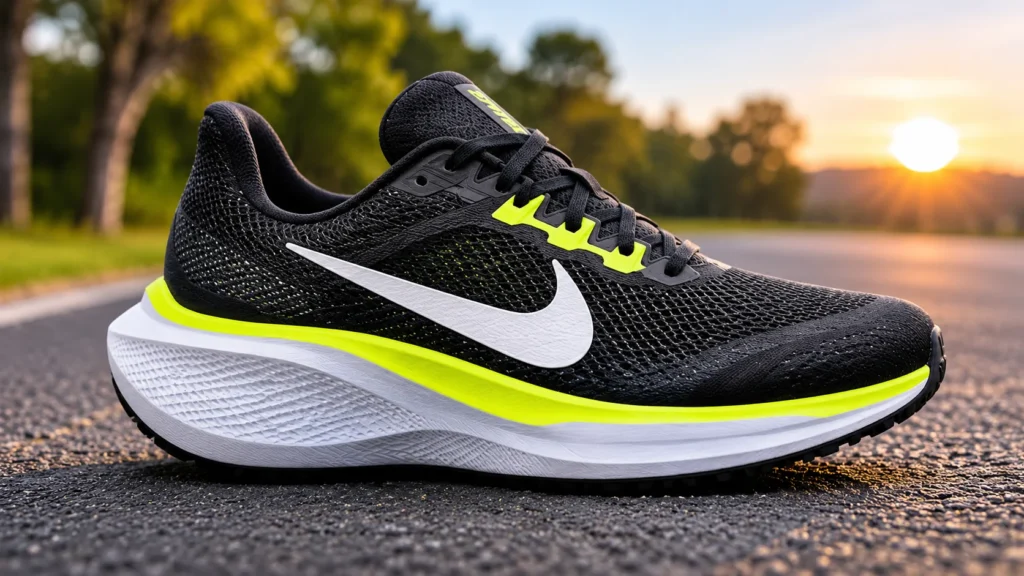
Quick Verdict
The Nike Pegasus 41 is a dependable neutral road running shoe for comfortable daily training.
Research-based editorial scores.
Best for: Daily running, beginners, walking, and heel strikers.
Not ideal for: Runners seeking the lightest possible speed training shoe.
Reference retail price: $145.
The Nike Pegasus 41 belongs to Nike’s long-running Pegasus road shoe line. It aims to provide balanced comfort across different types of training.
Nike uses ReactX foam throughout the midsole. Two Air Zoom units add cushioning beneath the heel and forefoot.
The men’s shoe weighs 281 grams in published independent laboratory measurements. Its stated 10 mm heel drop offers familiar geometry for traditional running shoe users.
An engineered mesh upper wraps the foot while allowing airflow. The rubber outsole uses Nike’s familiar waffle-inspired traction pattern.
These features make the Pegasus 41 useful for steady runs and general exercise. You can also wear it for walking or treadmill sessions.
The shoe’s reference retail price is $145, although older stock can cost less. Check your preferred size before judging the overall value.
The Pegasus 41 makes more sense as a dependable training partner than a dedicated racing shoe.
- Comfortable everyday running design.
- ReactX foam cushioning.
- Two Air Zoom units.
- Traditional 10 mm stated drop.
- Substantial rubber outsole coverage.
- Suitable for walking and treadmill running.
- Selected wide-width options.
- Heavier than the HOKA Mach 6.
- Less lively during fast workouts.
- Forefoot Air Zoom unit can feel firm.
- Not designed as a technical trail shoe.
- Higher drop may not suit every runner.
Nike Pegasus 41 Men’s Road Running Shoes
ReactX foam, dual Air Zoom cushioning, engineered mesh, and rubber traction.
Reference retail price: $145
Current price and availability depend on size and color.
What Is the HOKA Mach 6 Designed to Do?
Quick Verdict
The HOKA Mach 6 is a lightweight road trainer that balances daily cushioning with faster running performance.
Research-based editorial scores.
Best for: Tempo runs, daily training, and mixed-pace road running.
Not ideal for: Runners requiring a dedicated stability shoe or a spacious standard-width fit.
Reference retail price: $140.
The HOKA Mach 6 belongs to HOKA’s performance-focused Mach running shoe line. It combines a low-weight design with cushioning for regular training.
The midsole uses supercritical EVA foam rather than separate air units. This foam construction supports a lively ride without a carbon plate.
Independent laboratory measurements place the Mach 6 at 232 grams per shoe. HOKA lists a 5 mm heel-to-toe drop for this model.
The lightweight mesh upper aims to hold your foot securely during faster movement. Strategic rubber coverage protects key areas of the outsole.
The Mach 6 handles easy runs without feeling limited to slow speeds. Its lighter build also makes it appealing for tempo workouts.
At a reference retail price of $140, the Mach 6 competes directly with the Pegasus 41. Wide-footed runners should check the fit before buying.
Its main appeal is the ability to handle several training sessions with one pair.
- Lightweight 232-gram lab-tested build.
- Responsive supercritical foam.
- Useful for easy and fast runs.
- No stiff carbon plate.
- Smooth running transitions.
- Strategic rubber outsole coverage.
- Competitive reference retail price.
- Standard fit can feel snug.
- Lower stated drop requires adaptation for some runners.
- Not a dedicated stability shoe.
- Exposed foam can show wear.
- Older-model stock can limit size choices.
HOKA Mach 6 Men’s Running Shoes
Supercritical foam cushioning, lightweight mesh, and versatile road running performance.
Reference retail price: $140
Current price and availability depend on size and color.
How Do the Nike Pegasus 41 and HOKA Mach 6 Specs Compare?
The HOKA Mach 6 wins on weight, while the Pegasus 41 offers a higher stated heel drop. Both shoes use different cushioning systems to serve daily road runners.
The following table compares their main specifications and practical features. Manufacturer measurements and independent laboratory results appear separately where needed.
| Feature | Nike Pegasus 41 | HOKA Mach 6 | Advantage |
|---|---|---|---|
| Reference retail price | $145 | $140 | Mach 6 |
| Men’s model number | FD2722 | 1147790 | — |
| Lab-tested weight | 281 g / 9.9 oz | 232 g / 8.2 oz | Mach 6 |
| Manufacturer-stated drop | 10 mm | 5 mm | Personal preference |
| Lab-measured drop | 11.4 mm | 9.6 mm | Personal preference |
| Midsole foam | ReactX | Supercritical EVA | Mach 6 for speed |
| Air cushioning units | Heel and forefoot | None | Pegasus 41 for Air Zoom fans |
| Upper | Engineered mesh | Creel jacquard mesh | Fit dependent |
| Outsole | Waffle-pattern rubber | Strategic rubber coverage | Pegasus 41 for coverage |
| Carbon plate | No | No | Tie |
| Support type | Neutral | Neutral | Tie |
| Wide sizes | Selected versions | Selected versions | Fit dependent |
| Easy running | Good | Good | Tie |
| Tempo training | Capable | Strong | Mach 6 |
| Walking | Good | Good | Pegasus 41 for traditional fit |
Sources: Manufacturer specifications and independent laboratory measurements. Shoe weight varies with size. Prices represent reference retail figures, not guaranteed current offers.
One important detail is the difference between stated and measured heel drop. Independent laboratory measurements do not always match manufacturer figures.
That difference matters when switching shoes based on published specifications alone. Your actual running experience also depends on foam compression and foot strike.
Which Shoe Offers Better Cushioning and Comfort?
The Nike Pegasus 41 wins for runners who prefer traditional daily comfort. The HOKA Mach 6 offers a stronger balance between cushioning and fast running.
How Does ReactX Compare With HOKA Supercritical Foam?
ReactX provides balanced cushioning, while the Mach 6 foam favors lightweight responsiveness. Their different structures create distinct sensations beneath your feet.
The Pegasus 41 combines foam with separate Air Zoom units. These units sit beneath the heel and forefoot.
HOKA takes a different approach with its continuous supercritical foam midsole. This construction removes the need for separate air chambers.
The result is a more performance-focused cushioning design. Runners who dislike distinct cushioning units may prefer the Mach 6.
However, familiar cushioning remains valuable during daily training. A shoe does not need maximum bounce to feel comfortable.
Which Shoe Is Better for Heel Strikers?
The Nike Pegasus 41 is the stronger starting choice for traditional heel strikers. Its higher stated drop and heel Air Zoom unit support that preference.
Heel strikers contact the ground with their heels before rolling forward. Many everyday runners use this natural running pattern.
The Mach 6 also works for heel strikers who enjoy its geometry. Foot strike alone should never determine your entire shoe choice.
Consider your previous running shoes and where you feel comfortable. Avoid changing your running form simply to match a new shoe.
Which Shoe Feels Better on Longer Runs?
The Mach 6 is a strong choice for longer runs with changing pace. The Pegasus 41 suits runners who prioritize a familiar, relaxed ride.
During a planned 10-mile run, the Mach 6 offers flexibility in training pace. You can start slowly before increasing your speed.
For a relaxed 5-mile weekend run, the Pegasus 41 remains capable. Its extra weight matters less when speed is not the goal.
Neither model guarantees comfort over every distance. Your fit, running experience, and preferred cushioning remain important.
Choose cushioning based on how your feet feel during running, not how soft the shoe feels when pressed by hand. Softer foam does not automatically mean better comfort.
Which Shoe Offers Better Running Performance?
The HOKA Mach 6 wins for faster running because of its lower weight and lively midsole. The Pegasus 41 performs best as a steady daily trainer.
Does Lower Shoe Weight Make the Mach 6 Faster?
The Mach 6 offers a clear weight advantage over the Pegasus 41. Published laboratory measurements show a 49-gram difference per shoe.
That equals 98 grams across a pair of shoes. The difference represents roughly 17 percent less weight per shoe.
Lower shoe weight can help runners feel less burdened during faster workouts. It does not guarantee a faster race time.
Your fitness, pacing strategy, weather, and running technique still matter. Shoes only form one part of the performance equation.
Which Shoe Is Better for Tempo Runs?
The Mach 6 wins for tempo runs and other controlled speed sessions. Its lightweight foam supports a more energetic training experience.
A tempo run involves sustained running at a challenging but controlled pace. Such sessions benefit from shoes that handle faster movement comfortably.
For example, consider a workout with three 10-minute tempo efforts. The Mach 6 offers a design better suited to those pace changes.
The Pegasus 41 can complete the same workout. However, its heavier build makes it less specialized for speed.
Can the Nike Pegasus 41 Handle Race Training?
Yes, the Pegasus 41 can handle race preparation and general training. It works well for runners who focus on building consistent weekly mileage.
You can use the Pegasus 41 for a beginner 5K training plan. It can also cover the easy miles within a longer race program.
The Mach 6 makes more sense when faster workouts form a larger part of your schedule. It offers greater flexibility without requiring a plated racing shoe.
Experienced racers can still benefit from a separate race-day model. Neither shoe replaces every specialized performance option.
Which Running Shoe Offers Better Value for Money?
The Mach 6 wins at the reference retail prices of $140 and $145. However, a meaningful Pegasus 41 discount can reverse that value decision.
The original price difference is small enough to make fit more important. Saving $5 rarely justifies choosing a shoe that feels uncomfortable.
Instead, compare the actual price for your preferred size. Older running shoes often appear at different prices across available colors.
A Pegasus 41 costing $90 would be $50 cheaper than a $140 Mach 6. That is an illustrative discount scenario rather than a verified live offer.
For someone running three easy sessions each week, that saving can outweigh the weight difference. Faster runners may still prefer the Mach 6.
Value also depends on how often you use each shoe. A versatile trainer can reduce the need for multiple specialized pairs.
Choose the shoe that fits your normal schedule. Do not pay for performance features you rarely use.
Which Shoe Has Better Durability, Fit, and Traction?
The Pegasus 41 has the edge for substantial outsole coverage and traditional daily use. The Mach 6 balances outsole protection with its lighter construction.
Which Running Shoe Has Better Outsole Durability?
The Pegasus 41 is the stronger choice for runners prioritizing rubber coverage. Its waffle-inspired outsole protects much of the ground-contact area.
The Mach 6 also uses rubber in areas that experience repeated contact. However, sections of its midsole remain exposed.
Visible foam wear does not always mean a shoe has stopped working. Check the condition of the rubber and the quality of the ride.
Running surface and foot strike can change wear patterns. Rough pavement often causes more abrasion than smooth treadmill belts.
Neither model has a guaranteed mileage lifespan for every runner.
Which Shoe Is Better for Wide Feet?
Both shoes offer selected wide versions, but the Mach 6 deserves careful fit checks. Its standard-width construction can feel snug around the forefoot.
The Pegasus 41 also requires attention if your toes need extra space. A familiar brand name does not guarantee a perfect fit.
Try shoes with the socks you wear during normal training. Check for heel movement, toe pressure, and rubbing around the midfoot.
Buying a longer size does not always solve a width problem. A proper wide version often provides a better starting point.
Which Shoe Works Better in Wet or Cold Conditions?
The Pegasus 41 is a reasonable choice for everyday cold-weather road running. However, neither standard shoe offers specialized protection against ice or deep snow.
Both models use mesh uppers designed primarily for regular road conditions. Water can enter through these materials during wet runs.
Cold temperatures can change the feel of midsole foam. Actual traction also depends on the surface beneath your shoes.
Do not assume either shoe provides reliable grip on black ice. Consider dedicated winter running footwear for hazardous conditions.
Neither the Nike Pegasus 41 nor the HOKA Mach 6 is a dedicated technical trail or ice-running shoe. Avoid using standard road footwear on dangerous surfaces without suitable traction.
Which Running Shoe Wins in Real-World Use Cases?
The Mach 6 wins for mixed-pace training, while the Pegasus 41 suits relaxed daily use. Your regular training schedule offers the best starting point.
| Running Situation | Recommended Shoe | Reason |
|---|---|---|
| Relaxed 3-mile run | Pegasus 41 | Traditional daily cushioning |
| Tempo workout | Mach 6 | Lower weight and lively ride |
| Beginner 5K plan | Pegasus 41 | Approachable daily trainer |
| Mixed-pace long run | Mach 6 | Versatility across paces |
| Walking and casual wear | Pegasus 41 | Familiar everyday construction |
| Indoor treadmill intervals | Mach 6 | Lightweight training design |
These recommendations describe practical use cases rather than guaranteed individual results. Your preferred fit can override any category winner.
Which Shoe Is Better for Beginner Runners?
The Pegasus 41 is a strong starting option for beginners seeking traditional cushioning. Its design works well for easy runs and gradual mileage building.
Imagine starting with three short running sessions each week. You need a comfortable shoe before worrying about faster race times.
The Mach 6 can also serve beginners who enjoy its fit. A lighter shoe is not limited to experienced athletes.
Which Shoe Is Better for Treadmill Running?
The Mach 6 wins for faster treadmill sessions, while the Pegasus 41 suits steady exercise. Both work on standard indoor treadmill surfaces.
Treadmill belts generally expose shoes to fewer rough stones and sharp road edges. This reduces the need for aggressive outdoor traction.
Focus on comfort and secure footing when selecting an indoor running shoe. Avoid choosing a model based only on its outsole appearance.
Is the Price Difference Between the Pegasus 41 and Mach 6 Worth It?
The small reference price difference favors the Mach 6 for performance-focused buyers. However, discounted Pegasus 41 stock can offer stronger value for easy running.
| Pricing Factor | Pegasus 41 | Mach 6 |
|---|---|---|
| Reference retail price | $145 | $140 |
| Price difference | $5 higher | $5 lower |
| Current selling price | Varies by listing | Varies by listing |
Both models have received newer generations within their product lines. This makes older inventory worth checking before paying full retail prices.
Compare the final delivered cost, including shipping and any applicable charges. A low advertised price does not always mean a lower total cost.
Return policies also deserve attention, particularly when buying older stock. A final-sale discount loses value if the shoe does not fit.
At similar prices, the Mach 6 earns my performance recommendation. For easy miles, a heavily discounted Pegasus 41 remains a sensible purchase.
Compare the exact size and width you need. The lowest price shown for another size may not be available for your preferred shoe.
Who Should Buy the Nike Pegasus 41 or HOKA Mach 6?
Buy the Pegasus 41 for traditional daily comfort and relaxed running. Choose the Mach 6 if lightweight versatility matters more to your training.
Nike Pegasus 41
Buy it if:
- You mainly run at relaxed paces.
- You prefer a traditional heel drop.
- You enjoy Nike Air Zoom cushioning.
- You need a shoe for running and walking.
- You find your size at a substantial discount.
Skip it if:
- You prioritize a lightweight performance shoe.
- You regularly complete fast intervals.
- You dislike a traditional high-drop ride.
HOKA Mach 6
Buy it if:
- You want a lighter daily running shoe.
- You combine easy runs with tempo training.
- You prefer responsive foam cushioning.
- You enjoy a lower stated heel drop.
- You want one versatile road trainer.
Skip it if:
- The standard fit squeezes your toes.
- You need dedicated stability features.
- You prefer maximum soft cushioning.
Neither model is ideal for every type of running. Consider these alternatives if you have more specific footwear needs.
- Maximum cushioning: Explore the HOKA Bondi or ASICS GEL-Nimbus series.
- Dedicated stability: Consider the HOKA Arahi or Brooks Adrenaline GTS.
- Technical trails: Explore the HOKA Speedgoat or Nike Pegasus Trail series.
- Lower-cost training: Look for discounted Pegasus 40 or similar daily trainers.
- Dedicated racing: Consider purpose-built race-day footwear that fits your needs.
Remember that shoe categories offer guidance rather than medical prescriptions. Seek professional advice if pain repeatedly affects your running.
What Are Real Buyers Saying About Both Running Shoes?
Public runner feedback highlights the Pegasus 41’s familiar comfort and the Mach 6’s lightweight ride. However, individual preferences lead to different experiences.
Runner Feedback Summary
Positive feedback
- Familiar everyday fit.
- Comfort during steady running.
- Useful for multiple daily activities.
- Dependable training construction.
Common criticisms
- Less exciting ride than faster trainers.
- Higher weight than lightweight alternatives.
- Cushioning can feel firm to some runners.
Positive feedback
- Lightweight running experience.
- Responsive foam cushioning.
- Useful for several training paces.
- Secure performance-focused fit.
Common criticisms
- Snug fit for some foot shapes.
- Width concerns in standard sizes.
- Not the plushest HOKA option.
Summary of public runner discussions, published reviews, and retailer feedback. Amazon customer reviews were not independently accessible.
One Pegasus 41 user reported a true-to-size fit after an initial tempo run. Another public discussion described satisfaction with the shoe’s everyday comfort.
A Mach 6 owner reported preferring its lighter feel over a previous daily trainer. Other retailer feedback raised concerns about the available width.
These are individual experiences rather than controlled tests or representative buyer surveys. Treat them as clues about what to check before purchasing.
The strongest lesson is that comfort remains personal. A highly rated shoe can still feel wrong on your feet.
How Was This Nike Pegasus 41 vs HOKA Mach 6 Comparison Researched?

This comparison uses manufacturer information, independent laboratory measurements, published running reviews, and public runner feedback. It does not claim firsthand testing of either shoe.
The main research sources include the following published reviews and product information:
- RunRepeat Nike Pegasus 41 review for independent shoe measurements.
- RunRepeat HOKA Mach 6 review for laboratory performance data.
- Running Shoes Guru comparison for comparative running impressions.
- Solereview HOKA Mach 6 review for construction and running analysis.
- Solereview Nike Pegasus 41 review for daily training characteristics.
- Pegasus runner discussion for individual user impressions.
- Mach 6 runner discussion for individual user impressions.
The editorial assessment considers cushioning, training versatility, weight, fit, and reference retail pricing. These factors help identify the stronger choice for each use case.
The ratings reflect editorial judgment rather than a measured laboratory scoring system. They also do not represent Amazon customer ratings.
Individual shoe fit cannot be confirmed through research alone. Trying both shoes remains the most useful final step when possible.
Retail prices and stock can change without warning. Always confirm the exact model, size, and width before placing an order.
How Should You Care for Nike and HOKA Running Shoes?
Clean both shoes gently, dry them naturally, and store them away from direct heat. Regular care protects the upper, outsole, and cushioning materials.
How Should You Clean Running Shoes?
Hand cleaning with mild soap and water offers a sensible starting method. Always check the manufacturer’s care guidance before using cleaning products.
- Remove loose dirt with a soft brush.
- Take out removable insoles and laces.
- Mix a small amount of mild soap with water.
- Clean the upper gently with a soft cloth.
- Wipe away remaining soap with a damp cloth.
- Leave the shoes to dry naturally.
- Replace dry insoles before wearing the shoes.
Avoid washing machines unless the manufacturer explicitly approves them. Excess movement and heat can damage shoe materials.
How Should You Store Running Shoes?
Store running shoes in a cool, dry place with enough airflow. Avoid leaving damp shoes inside closed bags after exercise.
Allow sweat and moisture to dry before storing your shoes. Remove dirt that collects around the outsole and upper.
Do not place either model beside a heater or radiator. High temperatures can damage foam, adhesives, and other materials.
When Should You Replace Running Shoes?
Replace your shoes when their condition or running feel shows meaningful deterioration. Mileage provides a useful guide rather than a fixed expiration date.
Many runners use 300 to 500 miles as a general inspection range. Actual shoe life depends on body weight, surfaces, gait, and construction.
Watch for uneven outsole wear, damaged uppers, or changes in cushioning. Also check whether your feet remain comfortable during familiar runs.
A shoe can look worn while remaining usable. Likewise, a clean upper does not guarantee that the midsole still performs well.
Track your weekly shoe mileage. Inspect the outsole and midsole regularly instead of replacing shoes based only on appearance or a fixed mileage number.
Final Verdict: Is the Nike Pegasus 41 Worth Buying Over the HOKA Mach 6?
The HOKA Mach 6 is my overall choice for versatile road running. Its lightweight construction offers a clear advantage when your training includes faster sessions.
The 49-gram laboratory weight difference helps explain that recommendation. Its supercritical foam also provides a distinct alternative to Nike’s Air Zoom design.
Still, the Nike Pegasus 41 remains worth buying for relaxed daily training. Its traditional geometry suits runners who already enjoy similar running shoes.
Price can change the decision considerably, especially for older-model inventory. A well-fitting discounted Pegasus 41 can offer excellent practical value.
Choose the Mach 6 when performance versatility matters most. Choose the Pegasus 41 when familiar daily comfort and a better deal lead your priorities.
The best running shoe is the one that helps you train comfortably and consistently. Your normal weekly routine matters more than an isolated specification.
Choose Your Running Shoe
HOKA Mach 6
Best for lightweight running, tempo sessions, and versatile road training.
Frequently Asked Questions
Is the Nike Pegasus 41 better than the HOKA Mach 6?
The Nike Pegasus 41 is better for runners who prefer traditional cushioning and relaxed daily miles. The HOKA Mach 6 offers stronger lightweight performance for faster workouts. Both shoes handle regular road training, but the best choice depends on your preferred fit, running pace, and budget.
What is the difference between the Nike Pegasus 41 and HOKA Mach 6?
The main differences are cushioning technology, shoe weight, and running geometry. The Pegasus 41 uses ReactX foam and two Air Zoom units. The Mach 6 uses supercritical EVA foam and weighs 49 grams less in published laboratory measurements. Their manufacturer-stated heel drops are 10 mm and 5 mm.
Is the Nike Pegasus 41 good for long-distance running?
Yes, the Nike Pegasus 41 can handle long-distance training for runners who enjoy its cushioning and fit. Its traditional geometry and substantial outsole suit regular road miles. However, runners seeking greater responsiveness or a lighter shoe for faster long runs may prefer the HOKA Mach 6.
Can you use the Nike Pegasus 41 for walking every day?
Yes, the Nike Pegasus 41 can work well for daily walking. Its cushioned midsole, engineered mesh upper, and rubber outsole suit general everyday movement. Make sure the shoe provides enough space around your toes. People who need specialized walking support should consider footwear designed for those needs.
Is the Nike Pegasus 41 still worth buying?
Yes, the Nike Pegasus 41 remains worth buying when it fits well and offers a competitive price. It provides dependable daily running features without requiring specialized racing technology. Compare discounts, available sizes, and newer Pegasus models before buying. The HOKA Mach 6 remains a stronger lightweight performance alternative.
Affiliate Disclosure: As an Amazon Associate, I earn from qualifying purchases. This article contains affiliate links. If you purchase through these links, I may earn a commission at no additional cost to you.


