

Quick Answer
The HOKA Mach 6 wins for neutral runners who want lightweight, responsive daily training. The Nike Structure 26 offers better guidance for runners who prefer added stability. Nike uses ReactX foam and a 10 mm drop, while HOKA combines supercritical EVA foam with a lower 5 mm drop.
Which shoe balances speed, comfort and stability better?
- Nike Structure 26 provides dedicated midfoot support for daily training.
- HOKA Mach 6 offers lighter construction for faster workouts.
- Both shoes have a reference retail price of $140.
⚡ Quick Verdict — Nike Structure 26 vs HOKA Mach 6
Nike Structure 26
Editorial assessment
$140 (Reference retail price)
✅ Best for:
Runners who prefer supportive cushioning, stable transitions and comfortable daily miles.
HOKA Mach 6
Editorial assessment
$140 (Reference retail price)
✅ Best for:
Neutral runners seeking a lightweight shoe for daily miles, tempo runs and faster training.
| Category | Structure 26 | Mach 6 |
|---|---|---|
| Overall Winner | — | 🏆 |
| Best Value at MSRP | ✅ | ✅ |
| Dedicated Stability | ✅ | — |
| Speed Training | — | ✅ |
| Lightweight Design | — | ✅ |
Bottom line: The HOKA Mach 6 wins for versatile neutral running, while the Nike Structure 26 makes more sense when dedicated stability matters.
Ratings reflect editorial judgments based on design, specifications, intended use and published reviews. They are not Amazon customer ratings or original laboratory test scores.
- The HOKA Mach 6 offers a lighter platform for varied running paces.
- Both shoes have a $140 reference retail price, creating a $0 MSRP difference.
- The Nike Structure 26 features a dedicated midfoot support system.
- The Structure 26 uses a traditional 10 mm heel-to-toe drop.
- The Mach 6 combines supercritical EVA cushioning with a 5 mm drop.
Choosing between the Nike Structure 26 and HOKA Mach 6 can feel tricky. Both shoes offer cushioning, road grip and comfort for regular training.
However, they solve different running problems. One focuses on support, while the other puts more emphasis on speed.
I’m Steven Tyler, and this Nike Structure 26 review compares both shoes through published specifications, independent reviews and practical training needs.
The most important difference is how each shoe supports your stride. Nike builds extra guidance into the Structure 26 for runners who prefer stability.
HOKA takes a different approach with the Mach 6. Its lighter foam platform suits runners who want faster transitions.
Your ideal shoe depends on more than body weight or running pace. Foot shape, preferred heel height and comfort also matter.
A lighter shoe does not automatically make every runner faster. Likewise, a stability shoe does not automatically prevent injuries.
This comparison examines cushioning, fit, support, price and long-term ownership. It also explains when neither shoe offers the right solution.
Let’s start with what each running shoe is designed to do.
What Is the Nike Structure 26 Designed to Do?
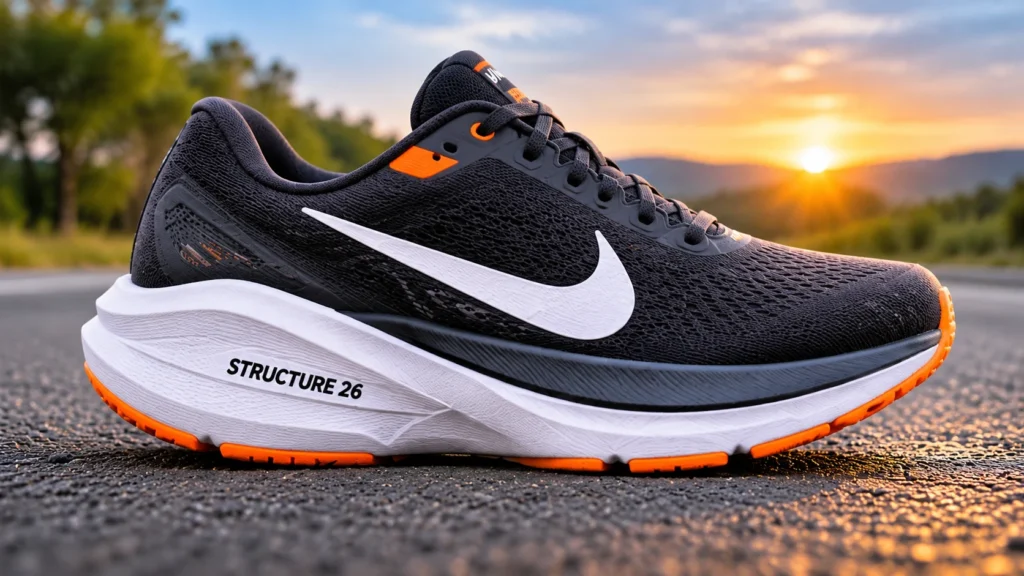
Nike Structure 26 — Quick Verdict
Best for: Supportive daily running, easy miles and runners who prefer extra guidance.
Not ideal for: Runners seeking a lightweight speed shoe or aggressive racing performance.
Reference retail price: $140.
Editorial ratings based on available product information.
The Nike Structure 26 is a stability road running shoe. It combines ReactX cushioning with dedicated support around the midfoot.
This support system helps create a guided transition through each stride. The cushioned platform suits runners who prefer a controlled daily ride.
Nike lists a 10 mm heel-to-toe drop and approximately 321 grams for a men’s US size 10. These specifications place the shoe in the supportive daily trainer category.
The Structure 26 replaces the previous generation’s cushioning approach with full-length ReactX foam. Its higher stack also changes the cushioning experience compared with the Structure 25.
A padded heel area helps hold the rearfoot comfortably. Engineered mesh provides coverage across the upper without relying on a heavy leather construction.
The Structure 26 makes the most sense for easy runs and steady training. Its additional weight becomes less appealing during faster intervals.
✅ Nike Structure 26 Pros
- Dedicated midfoot support system.
- Full-length ReactX foam cushioning.
- Comfortable padded heel area.
- Suitable for regular road training.
- Traditional 10 mm heel drop.
- Reinforced rubber around the heel.
- Available in selected wide sizes.
❌ Nike Structure 26 Cons
- Heavier than the HOKA Mach 6.
- Less suited to fast interval sessions.
- Support system may not suit every runner.
- Not a dedicated race-day shoe.
- Higher drop may not appeal to low-drop users.
Nike Structure 26 Road Running Shoes
★★★★☆ 4.4/5 editorial rating
$140
Reference retail price. Check Amazon for current pricing and availability.
Recommended for runners who want stable cushioning and comfortable daily training.
What Is the HOKA Mach 6 Designed to Do?
HOKA Mach 6 — Quick Verdict
Best for: Neutral runners who want lightweight cushioning for easy runs and faster workouts.
Not ideal for: Runners who require dedicated stability features or dislike a close-fitting upper.
Reference retail price: $140.
Editorial ratings based on available product information.
The HOKA Mach 6 is a neutral road running shoe. Its supercritical EVA midsole combines cushioning with a responsive training platform.
The shoe weighs approximately 232 grams in a men’s US size 9, according to published review measurements. That makes it a lightweight option among cushioned road trainers.
HOKA uses a 5 mm heel-to-toe drop in the Mach 6. This lower offset creates a different geometry from the Nike Structure 26.
The lightweight build helps the Mach 6 handle changes in pace. Runners can use it for steady miles, tempo sessions and shorter races.
Its rubber outsole also improves ground coverage compared with earlier Mach generations. However, the upper can feel snug around wider feet.
Our detailed HOKA Mach 6 review examines its cushioning, fit and daily training performance in greater depth.
✅ HOKA Mach 6 Pros
- Lightweight construction.
- Responsive supercritical EVA foam.
- Suitable for multiple running paces.
- Improved rubber outsole coverage.
- Breathable creel jacquard upper.
- No rigid carbon-fiber plate.
- Available in selected wide sizes.
❌ HOKA Mach 6 Cons
- No dedicated stability guidance system.
- Standard width can feel snug.
- Lower drop may require adjustment.
- Not ideal for technical trails.
- Ride may feel firm to some runners.
HOKA Mach 6 Road Running Shoes
★★★★☆ 4.6/5 editorial rating
$140
Reference retail price. Actual Amazon prices depend on size, color and availability.
Recommended for neutral runners who want a versatile daily trainer with faster workout potential.
How Do Nike Structure 26 and HOKA Mach 6 Specifications Compare?
The Nike Structure 26 offers more dedicated stability features. The HOKA Mach 6 delivers a lighter build with a lower heel drop.
Both shoes target road runners, but their materials and geometry create different running experiences.
| Specification | Nike Structure 26 | HOKA Mach 6 |
|---|---|---|
| Brand | Nike | HOKA |
| Shoe category | Stability daily trainer | Neutral daily trainer |
| Midsole material | ReactX foam | Supercritical EVA |
| Heel-to-toe drop | 10 mm | 5 mm |
| Men’s reference weight | 321 g / 11.3 oz (US 10) | 232 g / 8.2 oz (US 9) |
| Upper | Engineered mesh | Creel jacquard mesh |
| Outsole | Rubber with heel reinforcement | Durabrasion rubber |
| Dedicated stability system | Yes | No |
| Carbon-fiber plate | No | No |
| Running surface | Road | Road |
| Wide sizing | Selected markets and sizes | Selected markets and sizes |
| Easy running | Excellent use case | Suitable |
| Tempo running | Less specialized | Excellent use case |
| Reference retail price | $140 | $140 |
| Best for | Supportive daily training | Versatile neutral running |
Weight figures refer to different men’s shoe sizes and should not be treated as a controlled same-size measurement. Prices represent reference retail prices rather than live Amazon offers.
Which Shoe Offers Better Stability and Cushioning?
The Nike Structure 26 wins for dedicated stability and guided transitions. The HOKA Mach 6 wins for responsive cushioning during varied training paces.
These shoes use different methods to manage the forces created during running.
How Does ReactX Compare With Supercritical EVA Foam?
ReactX offers a cushioned platform suited to Nike’s stability design. Supercritical EVA helps the Mach 6 achieve a lighter and more responsive construction.
The foam in the Structure 26 works alongside its support system. This combination creates a shoe focused on controlled daily movement.
HOKA uses supercritical processing to change the foam’s cellular structure. This helps reduce weight while supporting cushioning and rebound.
The important difference is not simply how soft each shoe feels. Foam thickness, sole shape and material firmness also affect the ride.
A soft shoe can feel less controlled for some runners. A firmer shoe can offer a more predictable transition during faster workouts.
Which Shoe Provides Better Foot Support?
The Nike Structure 26 provides more dedicated support than the HOKA Mach 6. Its midfoot support system helps guide movement through the stride.
The Mach 6 does not contain a comparable dedicated stability system. However, its neutral geometry can still feel stable for suitable runners.
Runners who dislike traditional stability shoes may prefer this neutral approach. Others will appreciate the additional guidance provided by Nike.
Consider the HOKA Arahi 7 if you prefer HOKA’s geometry but want a stability-focused alternative.
How Does Heel Drop Affect Running Comfort?
The Structure 26 uses a 10 mm heel drop. The Mach 6 uses a 5 mm heel drop.
Heel drop measures the height difference between the heel and forefoot. A lower number places these areas closer to the same height.
Moving toward a lower-drop shoe can change how your calves and ankles work. That change deserves attention if you normally use higher-drop trainers.
Start with shorter runs when switching shoe geometry. Increase running distance only when the new shoe feels comfortable.
Choose the Structure 26 when dedicated guidance and stability matter more than lightweight performance.
Which Shoe Performs Better During Running Workouts?
The HOKA Mach 6 wins for versatile running performance. Its lighter construction suits tempo runs and frequent changes in training pace.
The Nike Structure 26 remains a strong option for controlled daily mileage.
Which Shoe Is Better for Easy Runs?
The Nike Structure 26 is the better choice when easy runs require added support. ReactX cushioning also suits comfortable, steady training.
The Mach 6 handles easy runs well for neutral runners. Its performance-oriented build does not prevent it from working at slower speeds.
Imagine completing a relaxed five-kilometer morning run before work. You need a comfortable fit more than maximum speed.
Choose Nike if extra guidance improves your comfort. Choose HOKA if you prefer less weight around your feet.
Which Shoe Is Better for Tempo Runs and Speed Training?
The HOKA Mach 6 is better suited to tempo sessions and faster road workouts. Its lightweight foam platform helps create quicker-feeling transitions.
The Structure 26 can handle occasional faster efforts. However, its support-focused construction does not prioritize speed.
For runners who regularly alternate easy miles with tempo sessions, the Mach 6 offers greater versatility.
The Nike Pegasus Plus also deserves consideration if you prefer a lighter, performance-focused Nike running shoe.
Which Shoe Is Better for Long-Distance Running?
The Structure 26 suits long runs where stability remains important. The Mach 6 suits neutral runners who prefer a lighter platform over longer distances.
A ten-mile training run can reveal comfort issues that shorter runs hide. Toe pressure, heel movement and midfoot discomfort deserve attention.
Do not select a marathon training shoe from weight alone. The best option must remain comfortable throughout your planned distance.
Both models can support long-distance training when their fit matches the runner. Neither guarantees better endurance or injury prevention.
The Mach 6 offers the more versatile platform for neutral runners who combine easy miles with faster workouts.
Which Running Shoe Offers Better Value for Money?
Both shoes have a reference retail price of $140. The better value depends on which design matches your regular training needs.
The Nike Structure 26 offers dedicated support without a higher reference price. That makes it attractive to runners seeking stability.
The HOKA Mach 6 combines everyday comfort with faster training potential. Neutral runners may find that one shoe covers several workout types.
| Value Factor | Structure 26 | Mach 6 |
|---|---|---|
| Reference price | $140 | $140 |
| Reference price difference | $0 | $0 |
| Support-focused value | Winner | Neutral design |
| Speed-focused value | Daily miles | Winner |
Consider a shoe that costs $140 and lasts 400 miles. Its example cost per mile would equal $0.35.
A discounted pair costing $105 would reduce that example to roughly $0.26 per mile. These figures illustrate ownership cost rather than verified durability.
Never assume that every pair lasts the same distance. Running surface, body mechanics and training habits affect wear.
Buy according to your running needs. A discount can change the value verdict when both shoes fit comfortably.
Which Shoe Offers Better Fit, Comfort and Durability?
The Structure 26 leads for support-focused comfort and padded construction. The Mach 6 leads for a lighter, performance-oriented fit.
Neither shoe offers a universal fit for every foot shape.
Which Upper Offers Better Comfort?
The Nike Structure 26 prioritizes comfortable coverage and rearfoot padding. Its engineered mesh upper suits the shoe’s daily training purpose.
HOKA uses creel jacquard mesh in the Mach 6. The design provides a more streamlined fit around the foot.
Runners who prefer a substantial heel collar may favor the Nike design. Those seeking less bulk may prefer HOKA’s approach.
Breathability also depends on socks, temperature and the tightness of your laces. Neither upper is designed as a waterproof barrier.
Which Shoe Is Better for Wide Feet?
Neither model automatically wins for every wide-foot runner. Both offer selected wide-size options, depending on market availability.
The Mach 6 has received feedback about its close-fitting forefoot. Runners with broad toes should pay particular attention to sizing.
Measure both feet before ordering. Your larger foot should guide your initial size choice.
Try the shoes with your normal running socks. Check toe movement, heel hold and pressure along the sides.
A larger standard size does not always replace a proper wide fit. Excess length can cause unwanted movement inside the shoe.
Which Shoe Has Better Outsole Durability?
Both shoes use rubber in key outsole areas. The Structure 26 emphasizes reinforced heel coverage, while the Mach 6 uses Durabrasion rubber.
Heel strikers may notice greater wear toward the rear of the shoe. Forefoot strikers can wear different rubber sections more quickly.
The Mach 6 improves outsole coverage over the previous Mach generation. That change addresses a common concern about earlier models.
However, available specifications alone cannot establish a universal mileage winner. A controlled long-term wear test would provide stronger evidence.
What Safety Concerns Should Runners Consider?
The main concerns involve fit, traction and changes in shoe geometry. Neither model should cause persistent pain during normal running.
The Structure 26’s guidance system may feel intrusive to some neutral runners. The Mach 6’s lower drop can require an adjustment period.
- Introduce unfamiliar running shoes through short sessions.
- Avoid using road shoes on technical or icy trails.
- Stop running if a new shoe causes persistent pain.
- Check your outsole for uneven wear and reduced grip.
- Seek professional assessment for recurring foot or joint pain.
A stability shoe is not a medical treatment for foot problems. Select footwear through comfort, fit and professional guidance when necessary.
Long-term outsole durability depends on individual wear patterns, so neither shoe receives an unconditional durability win.
Which Shoe Wins in Real-World Running Scenarios?
The Nike Structure 26 wins when support and stability take priority. The HOKA Mach 6 wins when neutral runners need greater pace versatility.
The following examples explain how their designs match common training situations.
| Use Case | Recommended Shoe | Reason |
|---|---|---|
| Supportive daily running | Nike Structure 26 | Dedicated midfoot guidance. |
| Tempo workouts | HOKA Mach 6 | Lighter, responsive platform. |
| Neutral half-marathon training | HOKA Mach 6 | Handles varied training paces. |
| Long work shifts | Nike Structure 26, if comfortable | Support-oriented construction. |
| Dry, cold-weather running | Depends on fit and support needs | Neither is a dedicated winter shoe. |
| Treadmill speed sessions | HOKA Mach 6 | Lightweight workout design. |
These recommendations describe expected suitability based on each shoe’s design. They do not represent original side-by-side field test results.
Is the Nike Structure 26 Worth Its Price?
The Nike Structure 26 is worth its $140 reference price for runners who benefit from dedicated guidance. It offers a supportive platform with modern ReactX cushioning.
However, neutral runners may not need its additional stability features. The Mach 6 offers a lighter alternative at the same reference price.
Consider your weekly training plan before making a purchase. A runner completing four easy sessions has different needs from someone running two interval workouts.
The Structure 26 suits the first routine when support matters. The Mach 6 fits the second routine when neutral cushioning feels comfortable.
Previous-generation discounts can also change your decision. Always compare the final price, return policy and available shoe widths.
A $30 discount means little if the shoe causes discomfort. Fit should remain the first buying requirement, regardless of price.
Who Should Buy Nike Structure 26 or HOKA Mach 6?
Buy the Nike Structure 26 if you prefer added guidance and supportive daily cushioning. Buy the HOKA Mach 6 if you prefer a lightweight neutral trainer for multiple running paces.
Use your existing comfortable running shoes as a starting point. Their heel drop, fit and support can help guide your next purchase.
Buy Nike Structure 26 If…
- You prefer dedicated stability features.
- Your training mainly consists of easy runs.
- You like a higher heel-to-toe drop.
- You value a padded heel area.
- You prefer a controlled daily ride.
- Your current neutral shoes feel insufficiently supportive.
Buy HOKA Mach 6 If…
- You run comfortably in neutral shoes.
- You want a lightweight daily trainer.
- You regularly perform tempo workouts.
- You prefer a lower heel drop.
- You want a versatile non-plated shoe.
- The Mach 6 fits your foot shape comfortably.
Who Should Skip Both Running Shoes?
Neither shoe is ideal for every runner.
- Technical trail runners should choose dedicated trail footwear.
- Competitive racers may prefer specialized racing shoes.
- Runners seeking waterproof footwear should consider weather-specific models.
- People with persistent foot pain may need professional assessment.
- Runners with extra-wide feet should prioritize suitable width options.
The Nike Vomero 17 provides another option for runners who prefer cushioned neutral training over dedicated stability.
The Nike Pegasus 42 also offers an alternative for runners seeking a traditional neutral daily trainer.
What Are Real Buyers and Reviewers Saying About Both Running Shoes?
Published reviews favor the Structure 26 for support and controlled cushioning. The Mach 6 receives attention for its lightweight design and responsive ride.
Feedback also highlights several limitations that deserve consideration before buying.
Nike Structure 26 Review Themes
Common positive themes
- Supportive construction.
- Comfort during steady running.
- Secure rearfoot fit.
- Daily training suitability.
Common limitations
- Higher overall shoe weight.
- Less excitement during fast workouts.
- Guidance that may not suit neutral runners.
HOKA Mach 6 Review Themes
Common positive themes
- Lightweight construction.
- Responsive running feel.
- Versatility across different paces.
- Improved outsole coverage.
Common limitations
- Close-fitting standard-width upper.
- Ride firmness for some runners.
- No dedicated stability system.
Individual runner preferences explain why reviews can disagree about cushioning. Foot shape, pace and previous shoe experience influence comfort.
Pay particular attention to feedback from runners with similar training habits. A fast runner’s favorite shoe may not suit your recovery miles.
These summaries reflect published review themes. Amazon customer comments, review counts and star ratings were not independently verified.
How Should You Clean and Maintain Your Running Shoes?
Clean both shoes with mild soap, cool water and a soft brush. Proper drying and regular outsole checks help maintain their condition.
Neither shoe requires complicated maintenance. A simple routine can protect the upper, cushioning and rubber outsole.
How Should You Clean Nike Structure 26 and HOKA Mach 6?
Remove loose dirt before washing either running shoe. Use a soft brush around the mesh and rubber outsole.
- Remove the laces and removable insoles.
- Brush away dry mud and loose debris.
- Mix a small amount of mild soap with cool water.
- Gently clean the upper using a soft cloth.
- Clean the outsole grooves with a soft brush.
- Remove soap residue using a damp cloth.
- Allow every part to air-dry completely.
Avoid washing machines, tumble dryers and strong chemical cleaners. Excessive heat can damage foam, adhesives and upper materials.
How Should You Store Your Running Shoes?
Store both models in a dry, ventilated space. Avoid direct sunlight and enclosed spaces with trapped moisture.
Remove wet shoes from your gym bag after training. Let air circulate around the upper and insoles.
Do not place damp shoes beside a heater. Slow air drying reduces exposure to damaging temperatures.
Alternating pairs can provide extra drying time between sessions. A rotation also lets you choose footwear for different workouts.
When Should You Replace Your Running Shoes?
Replace running shoes when cushioning, fit or traction noticeably deteriorates. Mileage provides a useful guide, but physical wear matters more.
Many runners use roughly 300 to 500 miles as an initial inspection range. This range does not guarantee the lifespan of either model.
Running Shoe Replacement Checklist
- Rubber has worn through in important contact areas.
- The shoe feels less comfortable than before.
- The midsole shows uneven compression.
- The heel collar no longer holds your foot securely.
- The upper contains tears that affect fit.
- Traction has noticeably declined.
Track mileage with a running app or training log. Combine that information with regular inspections instead of relying on mileage alone.
How Was This Nike Structure 26 vs HOKA Mach 6 Comparison Researched?

This comparison uses published product specifications, independent shoe reviews and practical analysis of running needs. It does not claim original hands-on testing or personal mileage results.
The evaluation focuses on six areas that influence running shoe purchases.
| Research Factor | Assessment Method |
|---|---|
| Cushioning | Midsole material and published ride descriptions. |
| Stability | Support features and shoe geometry. |
| Performance | Weight, intended use and independent review findings. |
| Fit | Upper design, available widths and reported fit issues. |
| Durability | Outsole construction and published wear observations. |
| Value | Reference retail pricing and intended training versatility. |
Manufacturer specifications establish each shoe’s stated materials and dimensions. Independent reviews add context about fit, ride quality and practical limitations.
Editorial scores summarize suitability for the intended runner. They do not predict the comfort or performance of every individual.
Research Sources
Final Verdict: Nike Structure 26 or HOKA Mach 6?
The HOKA Mach 6 wins for neutral runners who want one shoe for several training paces. The Nike Structure 26 wins when dedicated stability and supportive cushioning matter more.
Both models have the same $140 reference retail price. Their value depends on how well their construction matches your needs.
The Structure 26 offers a traditional 10 mm heel drop and ReactX cushioning. Its midfoot guidance makes it a strong stability-focused option.
The Mach 6 combines a lower 5 mm drop with lightweight supercritical EVA foam. That combination supports daily training and faster sessions.
My overall editorial choice is the Mach 6 for neutral running versatility. However, runners who benefit from stability should prioritize the Structure 26 instead.
The best running shoe is not always the lightest model. Choose the shoe that remains comfortable throughout your normal training routine.
Our Final Recommendations
BEST FOR STABILITY
Nike Structure 26
4.4/5
$140 reference retail price
Supportive daily miles, guided transitions and a higher heel drop.
🏆 EDITOR’S CHOICE FOR NEUTRAL RUNNERS
HOKA Mach 6
4.6/5
$140 reference retail price
Lightweight daily training, tempo workouts and versatile performance.
Editorial ratings are research-based assessments. Retail prices and product availability can change.
Frequently Asked Questions
Is the Nike Structure 26 Good for Daily Running?
Yes. The Nike Structure 26 works well for runners who prefer supportive daily training. Its ReactX midsole provides cushioning, while the midfoot support system helps guide each stride. It suits easy miles and steady road workouts better than fast racing sessions.
Is the Nike Structure 26 Better Than the HOKA Mach 6?
The Nike Structure 26 is better for dedicated stability. The HOKA Mach 6 is better for lightweight neutral training and faster workouts. Choose Nike when added support improves your comfort. Choose HOKA when you prefer a lower-drop shoe with responsive cushioning.
Is the Nike Structure 26 Good for Flat Feet?
The Structure 26 can suit some runners with flat feet who prefer added guidance. However, flat feet alone do not establish a need for stability shoes. Comfort, running mechanics and individual support requirements matter. Seek professional assessment if you experience persistent foot pain.
Can You Run a Marathon in the Nike Structure 26?
Yes. You can run a marathon in the Structure 26 if its cushioning, fit and support remain comfortable during long training runs. Its heavier construction makes it less focused on racing speed. Runners prioritizing comfort and stability may still find it suitable.
Is the HOKA Mach 6 Better for Speed Training?
Yes. The HOKA Mach 6 is better suited to speed training than the Nike Structure 26. Its lighter construction and responsive supercritical EVA foam support varied workout paces. It works well for neutral runners who want a non-plated shoe for tempo sessions and intervals.
Affiliate Disclosure
As an Amazon Associate, Footwear Hiker earns from qualifying purchases. This article contains affiliate links. We may receive a commission when you purchase through these links, at no additional cost to you. Product recommendations reflect our editorial assessment of available specifications, independent reviews and intended use. Prices, sizes and availability may change. This article does not claim original hands-on testing of either running shoe.


