

Quick Answer
The HOKA Mach 6 wins for lightweight performance and versatile road training. Its 5 mm drop and supercritical EVA foam suit neutral runners. The Nike Structure 25 offers better guidance with its 10 mm drop and Cushlon 3.0 midsole. Choose Nike for additional support or HOKA for faster daily runs.
The biggest differences between Nike Structure 25 and HOKA Mach 6:
- Nike Structure 25 provides more structured stability for steady road miles.
- HOKA Mach 6 offers lighter construction for faster training.
- Both shoes originally retailed for $140 in the United States.
⚡ Quick Verdict — Nike Structure 25 vs HOKA Mach 6
Nike Structure 25
Editorial assessment
$140 (Original retail price)
✅ Best for:
Runners seeking additional stability, heel support, and comfortable daily mileage.
HOKA Mach 6
Editorial assessment
$140 (Original retail price)
✅ Best for:
Neutral runners seeking lightweight cushioning, faster transitions, and versatile training.
| Category | Structure 25 | Mach 6 |
|---|---|---|
| Overall Winner | — | 🏆 |
| Best Value at Equal Prices | — | ✅ |
| Stability and Guidance | ✅ | — |
| Lightweight Performance | — | ✅ |
| Tempo Running | — | ✅ |
Bottom line: HOKA Mach 6 wins for versatile neutral running, while Nike Structure 25 remains the stronger choice for runners who need additional guidance.
Ratings reflect editorial judgments about intended use, not Amazon customer ratings. Current prices and availability may vary.
- HOKA Mach 6 wins overall for lightweight, versatile road training.
- Both shoes launched at $140, leaving no original retail price difference.
- Mach 6 suits runners who mix daily mileage with faster workouts.
- Structure 25 offers more guidance for runners who prefer supported landings.
- The biggest difference is stability-focused construction versus lightweight neutral performance.
Finding the right running shoe becomes difficult when two models serve different purposes. Both promise comfort, but they deliver it in different ways.
The Nike Structure 25 focuses on support during regular road runs. The HOKA Mach 6 combines low weight with responsive cushioning.
I’m Steven Tyler, and this Nike Structure 25 review examines those differences through published specifications and independent testing. My comparison focuses on fit, stability, cushioning, durability, and practical value.
Neither shoe needs a carbon plate to deliver its intended ride. However, their midsole designs create distinct running experiences.
Some runners need a stable platform for relaxed daily mileage. Others want a shoe that handles easy runs and faster training.
Buying the wrong model can leave you with unnecessary weight or insufficient guidance. A comfortable fit matters more than choosing the most popular brand.
The right decision starts with understanding what each shoe offers. The differences become clear once you examine their construction and intended uses.
What Is the Nike Structure 25 Designed to Do?
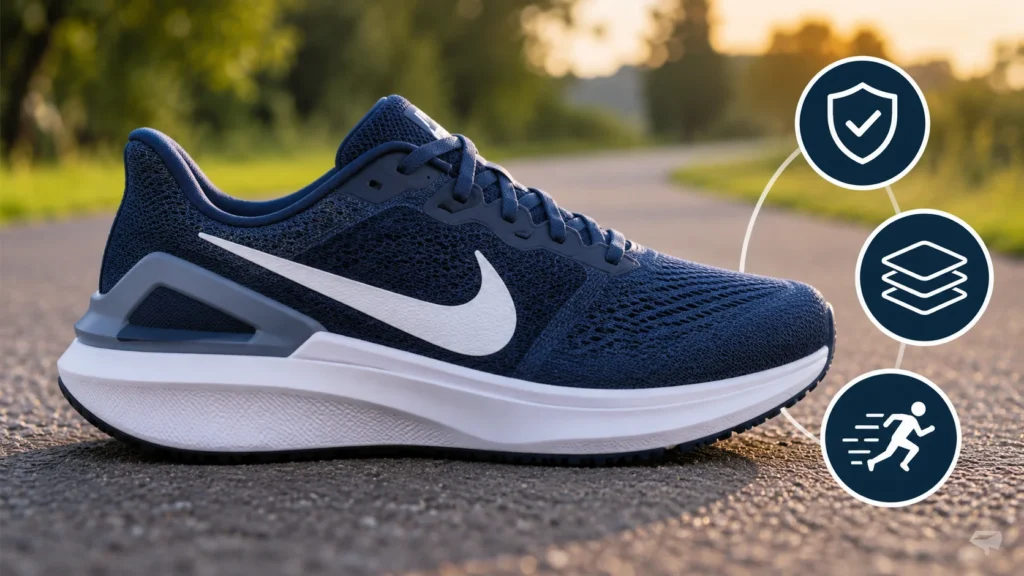
Quick Verdict: Nike Structure 25
Best for: Supported daily running, easy mileage, and relaxed road training.
Not ideal for: Speed-focused runners or feet sensitive to firm arch pressure.
Original retail price: $140.
Editorial ratings based on intended use and published research.
The Nike Structure 25 is a stability road shoe for supported daily mileage. It combines Cushlon 3.0 foam with a forefoot Zoom Air unit.
Nike designed the midfoot structure to guide movement during each stride. A broad heel platform also helps create a steady landing.
The shoe has a manufacturer-listed 10 mm heel-to-toe drop. This geometry suits runners who prefer a more traditional running shoe.
Its engineered mesh upper and padded heel create a secure fit. The rubber outsole protects high-contact areas during repeated road use.
However, the Structure 25 carries more weight than most speed-focused trainers. Independent reviewers also report a noticeable arch shape beneath the midfoot.
Our dedicated Nike Structure 25 review explains this supportive design in more detail. Pay particular attention to the arch before choosing your size.
At its original $140 price, the Structure 25 targets dependable everyday training. Its strongest benefit is guidance rather than explosive speed.
- Supportive midfoot construction.
- Broad and stable heel platform.
- Comfortable padding around the ankle.
- Durable rubber outsole.
- Traditional 10 mm heel drop.
- Suitable for relaxed daily mileage.
- Wide sizing available in selected markets.
- Heavier than HOKA Mach 6.
- Less suited to fast workouts.
- Firm arch can cause discomfort.
- Upper can feel warm in hot weather.
- Limited appeal for runners seeking a lively ride.
Nike Structure 25 Stability Road Running Shoes
A supportive daily trainer with Cushlon 3.0 cushioning, Zoom Air, and a structured heel.
Original retail price: $140
Check Nike Structure 25 Price on Amazon
Check current availability, size, seller, and price before ordering.
What Is the HOKA Mach 6 Designed to Do?
Quick Verdict: HOKA Mach 6
Best for: Neutral daily running, tempo training, and faster road workouts.
Not ideal for: Runners needing dedicated stability or generous forefoot space.
Original retail price: $140.
Editorial ratings based on intended use and published research.
The HOKA Mach 6 is a lightweight neutral shoe for versatile road training. Its full-length supercritical EVA midsole provides cushioning without excessive weight.
The curved sole geometry supports smooth transitions during repeated strides. A manufacturer-listed 5 mm drop creates a lower-drop running platform.
HOKA uses a creel jacquard mesh upper for secure foot hold. Targeted rubber coverage adds protection to key outsole areas.
The Mach 6 works well for runners who vary their training pace. It handles relaxed mileage, progression runs, and controlled faster sessions.
However, its snug forefoot does not suit every foot shape. Runners with wider toes should examine the wide version before buying.
Our detailed HOKA Mach 6 review examines its narrow toe shape and performance. Those fit differences matter during longer training sessions.
At its original $140 price, the Mach 6 provides broad training versatility. Its lighter build makes it particularly appealing to neutral runners.
Pros
- Lightweight construction.
- Responsive supercritical EVA cushioning.
- Smooth forward transitions.
- Suitable for easy and faster runs.
- Improved rubber outsole coverage over Mach 5.
- No rigid carbon racing plate.
- Good versatility for neutral runners.
Cons
- Snug and tapered forefoot.
- No dedicated stability system.
- Lower drop can require adjustment.
- Not the softest long-distance option.
- Limited remaining stock in some sizes.
HOKA Mach 6 Lightweight Road Running Shoes
A versatile neutral running shoe featuring supercritical EVA cushioning and smooth transitions.
Original retail price: $140
Check HOKA Mach 6 Price on Amazon
Check current availability, size, seller, and price before ordering.
How Do Nike Structure 25 and HOKA Mach 6 Specifications Compare?
The HOKA Mach 6 offers lower weight and a lower heel drop. The Nike Structure 25 provides a more structured support system.
Both shoes belong to the road training category. However, their designs address different needs during daily running.
| Specification | Nike Structure 25 | HOKA Mach 6 |
|---|---|---|
| Shoe category | Stability daily trainer | Neutral daily trainer |
| Original US price | $140 | $140 |
| Approximate men’s weight | 289–306 g | 232–234 g |
| Heel-to-toe drop | 10 mm | 5 mm |
| Nominal stack height | Approximately 37/27 mm | Approximately 37/32 mm |
| Midsole foam | Cushlon 3.0 | Supercritical EVA |
| Additional cushioning | Forefoot Zoom Air unit | Full-length foam cushioning |
| Support system | Midfoot guidance and broad heel | Neutral platform |
| Upper material | Engineered mesh | Creel jacquard mesh |
| Outsole | Durable rubber tread | Strategic rubber coverage |
| Carbon plate | No | No |
| Rocker geometry | Traditional rolling transition | MetaRocker geometry |
| Width options | Standard and selected wide options | Standard and wide options |
| Best training pace | Easy and steady | Easy to moderately fast |
| Running surface | Road and treadmill | Road and treadmill |
| Primary strength | Guided daily running | Lightweight versatility |
Specifications are based on manufacturer descriptions and published specialist reviews. Weight and stack measurements vary by shoe size and testing method. Live retail prices may differ from original retail prices.
The weight gap deserves particular attention during faster training sessions. However, additional structure may justify that weight for support-focused runners.
Which Shoe Provides Better Stability and Support?
Winner: Nike Structure 25. Its broad heel and structured midfoot provide more dedicated guidance. The Mach 6 offers neutral support without the same stability-focused construction.
Stability matters most when your preferred running motion benefits from guidance. A secure platform can help you feel more confident during repetitive landings.
The Structure 25 uses a firm midfoot shape and supportive sidewalls. Its padded heel also helps maintain a secure rearfoot fit.
RunRepeat’s laboratory assessment found a broad heel platform on the Nike. That construction contributes to its steady underfoot feel.
The HOKA Mach 6 also provides a reasonably secure neutral platform. Its lower weight and curved sole promote smooth transitions.
However, a neutral shoe does not offer the same type of guidance. Runners who prefer structured support should consider that difference.
The important point is comfort rather than pronation alone. A stability shoe should not create painful pressure beneath your arch.
Is Nike Structure 25 Better for Overpronation?
Yes, the Nike Structure 25 is the more suitable starting point for runners seeking additional pronation guidance. Its design prioritizes support throughout the midfoot and heel.
However, overpronation does not automatically mean you need a stability shoe. Natural inward foot movement occurs during normal running.
Choose the Structure 25 when its support feels comfortable and useful. Avoid it when the arch pushes against your foot.
Persistent discomfort deserves assessment by a qualified healthcare professional. Shoes alone cannot diagnose or correct every running-related problem.
Can HOKA Mach 6 Feel Stable Without a Stability System?
Yes, the Mach 6 can feel stable for many neutral runners. Its platform and secure upper help control unwanted movement.
That natural stability does not make it a dedicated support shoe. Runners who need stronger guidance have different requirements.
For example, a neutral runner may enjoy the Mach 6 during a relaxed 10K. Another runner may prefer the Structure 25’s more pronounced support.
Category Winner: Nike Structure 25
Choose the Nike when structured guidance is your main buying concern. Choose HOKA when neutral support feels sufficient.
Which Shoe Has Better Cushioning and Running Performance?
Winner: HOKA Mach 6 for versatile running performance. Its lighter construction works well across different paces. Nike Structure 25 favors steady cushioning and a more guided ride.
Both shoes provide enough cushioning for regular road training. Their foam types and overall construction create different experiences.
Cushlon 3.0 gives the Structure 25 a traditional cushioned platform. Its forefoot Zoom Air unit adds a distinct cushioning element.
The Mach 6 uses supercritical EVA throughout its midsole. This foam helps keep the shoe light without a racing plate.
Independent reviewers generally describe the HOKA as more suitable for pace changes. Its lower weight also makes repeated faster efforts easier to manage.
However, lower weight does not guarantee better running economy for everyone. Fit, comfort, and individual movement also affect performance.
Which Shoe Is Better for Easy and Recovery Runs?
Nike Structure 25 wins for support-focused easy runs. Its stable platform suits relaxed training when pace is not the main concern.
The additional structure may feel reassuring during slower miles. Its weight becomes less noticeable when you maintain an easy pace.
Neutral runners can also use the HOKA Mach 6 for recovery sessions. However, runners seeking an especially soft recovery shoe have other options.
For a different cushioning approach, our Nike Vomero 17 review covers another road training option.
Which Shoe Is Better for Tempo Runs?
HOKA Mach 6 wins for tempo training and controlled faster efforts. Its lower weight and rolling transition better match these workouts.
A tempo session requires a sustained pace above easy running speed. Excess shoe weight can become more noticeable during repeated efforts.
The Mach 6 also avoids the rigid feel of a carbon racing plate. That makes it useful for runners who prefer traditional training shoes.
The Structure 25 can handle occasional faster strides. However, frequent speed sessions are not its main design purpose.
Which Shoe Is Better for Long Runs?
HOKA Mach 6 wins for neutral runners who prefer lighter long-distance shoes. Nike Structure 25 remains a suitable choice when additional guidance matters more.
Consider a 15-kilometer training run at a comfortable pace. The Mach 6 reduces carried shoe weight across repeated strides.
Meanwhile, the Structure 25 provides a more structured platform during those miles. Runners who prefer that guidance may find it more comfortable.
Forefoot space also becomes important as your feet swell during longer runs. Test both shoes before committing to extended mileage.
Does the Heel-to-Toe Drop Affect Performance?
Yes, the 10 mm Nike drop and 5 mm HOKA drop create different running platforms. Neither measurement guarantees better performance on its own.
The Structure 25 suits runners accustomed to higher-drop shoes. The Mach 6 places the heel and forefoot closer together vertically.
Switching to a lower-drop shoe can change loading around the lower leg. Some runners need a gradual transition to become comfortable.
Start with short, relaxed sessions when changing your usual heel drop. Increase distance only when the new shoe feels comfortable.
Category Winner: HOKA Mach 6
The Mach 6 offers broader pace versatility, while the Structure 25 works best for guided, steady mileage.
Which Running Shoe Offers Better Price and Value?
Winner: HOKA Mach 6 at equal prices for neutral runners. Both shoes originally retailed for $140. The HOKA covers more training paces with its lighter design.
Value depends on how well a shoe matches your training needs. A less expensive shoe offers little benefit when it causes discomfort.
The Structure 25 provides excellent practical value for support-focused runners. Its durable construction suits repeated easy road mileage.
The Mach 6 appeals to runners who want one versatile trainer. You can use it for relaxed runs and selected faster workouts.
That flexibility can reduce the need for a separate tempo shoe. However, competitive runners may still prefer a dedicated speed model.
Both models are older releases, so discounts deserve attention. Compare their prices against newer alternatives before placing an order.
| Value Factor | Structure 25 | Mach 6 |
|---|---|---|
| Original retail price | $140 | $140 |
| Original price difference | $0 | $0 |
| Support-focused value | Excellent | Conditional |
| Pace versatility | Moderate | Strong |
| Best discounted purchase | Stability runners | Neutral runners |
For example, a hypothetical $100 sale price changes the value calculation. A comfortable Structure 25 at that price could outperform an unsuitable $140 Mach 6 purchase.
Buying Tip
Compare the exact size, width, seller, and return policy. An advertised discount may apply only to limited sizes or colors.
Which Shoe Has Better Fit, Durability, and Unique Features?
Winner: Nike Structure 25 for structured fit; HOKA Mach 6 for lightweight versatility. Both offer encouraging outsole durability. Their fit and internal construction create different limitations.
Running shoe fit includes more than your usual size number. Heel hold, arch shape, and toe space deserve equal attention.
The Structure 25 uses substantial padding and a more structured upper. That construction creates secure support but can reduce airflow.
The Mach 6 uses lighter upper materials and a snug forefoot. Its shape can feel secure without excessive padding.
Both shoes use rubber to protect important outsole contact areas. Independent abrasion tests suggest promising rubber durability for both models.
However, outsole wear is only one part of shoe lifespan. Midsole compression and internal lining damage also affect useful life.
Which Shoe Has the Better Toe Box?
Nike Structure 25 generally offers the more forgiving forefoot shape. HOKA Mach 6 has a narrower toe region in independent laboratory measurements.
Runners with wider toes should examine pressure around the forefoot. A shoe can fit correctly in length while feeling narrow.
A wide-width option can improve comfort for some foot shapes. However, width labels do not guarantee suitable toe geometry.
Try running shoes while wearing your normal training socks. Leave enough space for comfortable toe movement during weight-bearing activity.
Which Shoe Has Better Upper Breathability?
The HOKA Mach 6 is the better starting point for warm-weather training. Its lighter mesh construction promotes a less bulky upper.
Nike Structure 25 uses more structured materials around the foot. Some reviewers find this construction warm during summer running.
A warm upper can become uncomfortable during long outdoor sessions. Sock choice and weather conditions also affect perceived heat.
For cold-weather training, the Nike’s thicker construction may feel useful. Neither shoe is a dedicated waterproof winter running model.
Which Shoe Has Better Outsole Durability?
Both shoes offer promising rubber durability, with a slight laboratory abrasion advantage for HOKA Mach 6. Nike Structure 25 also provides substantial rubber protection.
RunRepeat reported relatively limited rubber damage during its abrasion testing. However, laboratory results do not establish an exact running lifespan.
Your landing pattern determines which outsole areas experience repeated contact. Rough pavement can increase wear compared with smooth roads.
Inspect the heel and forefoot regularly as mileage increases. Replace the shoe when grip or cushioning becomes noticeably unreliable.
What Unique Technology Does Each Shoe Offer?
Nike Structure 25 offers dedicated midfoot guidance and a forefoot Zoom Air unit. HOKA Mach 6 offers supercritical EVA cushioning and MetaRocker geometry.
The Nike combines traditional cushioning with support-focused construction. Its design targets consistent road running instead of maximum speed.
HOKA prioritizes lightweight movement through its foam and curved sole. These features help create a more versatile training platform.
Neither shoe contains a carbon plate or electronic diagnostic tool. Their performance depends on mechanical construction rather than embedded technology.
Are There Any Safety Concerns When Switching Between These Shoes?
The main concern involves changing support levels and heel-to-toe drop too quickly. Nike and HOKA create different loading patterns and underfoot sensations.
Runners accustomed to a 10 mm drop should introduce Mach 6 gradually. Short initial sessions help you judge its lower-drop geometry.
Likewise, runners unfamiliar with firm arch support should test Structure 25 carefully. Stop using it if pressure becomes painful.
A running shoe cannot guarantee injury prevention. Persistent pain, numbness, or swelling requires appropriate professional assessment.
Important Fit Warning
Do not continue running in shoes that cause sharp pain, numbness, or persistent pressure. Choose comfort and suitable fit over brand loyalty.
Which Shoe Wins in Real-World Running Situations?
HOKA Mach 6 wins for most mixed-pace neutral training situations. Nike Structure 25 wins when runners prioritize guidance and steady daily mileage.
Your weekly running schedule provides useful clues about the better choice. Consider the workouts you complete most often.
| Running Situation | Recommended Shoe | Main Reason |
|---|---|---|
| Support-focused daily runs | Nike Structure 25 | Dedicated guidance |
| Tempo workouts | HOKA Mach 6 | Lighter and more versatile ride |
| Neutral 5K training | HOKA Mach 6 | Better suited to pace changes |
| Relaxed walking with guidance | Nike Structure 25 | Structured heel and midfoot |
| Neutral long runs | HOKA Mach 6 | Low weight and smooth transitions |
| Cold-weather road running | Nike Structure 25 | Warmer upper and encouraging cold-test performance |
| Warm-weather training | HOKA Mach 6 | Lighter upper construction |
| Treadmill intervals | HOKA Mach 6 | Better fit for faster workouts |
Which Shoe Is Better for a Beginner Runner?
Nike Structure 25 suits beginners who feel comfortable with added guidance. HOKA Mach 6 suits beginners who prefer a lighter neutral trainer.
A beginner does not need stability support simply because they lack experience. Comfort and appropriate fit should guide the decision.
Start with short, relaxed runs before increasing your weekly distance. Your shoes should feel secure without creating pressure points.
Which Shoe Is Better for Half-Marathon Training?
HOKA Mach 6 is more versatile for neutral half-marathon training. It handles easy mileage, steady efforts, and selected faster workouts.
The Structure 25 remains useful for runners who need more support. Its weight matters less during relaxed endurance sessions.
Test your chosen shoe during progressively longer runs before race day. Avoid relying on a new model without prior experience.
Which Shoe Works Better for Walking and Standing?
Nike Structure 25 is a reasonable choice for supported walking. Its padded heel and broad base create a structured platform.
HOKA Mach 6 offers a lighter option for neutral walkers. However, its narrow forefoot can become uncomfortable during extended standing.
Walk indoors for several minutes before keeping either model. Check whether your toes, arch, and heel remain comfortable.
Is the Price Difference Between Nike Structure 25 and Mach 6 Worth It?
There was no original retail price difference between these running shoes. Both launched at $140, but current discounts can change their relative value.
A discounted Structure 25 makes sense when you need additional guidance. A discounted Mach 6 appeals to neutral runners who vary their pace.
Older models should generally offer a meaningful saving against newer equivalents. Compare current prices before buying remaining inventory.
For example, a $30 hypothetical saving can improve the value considerably. However, a discount cannot solve an unsuitable arch or narrow toe box.
Check return eligibility, especially when purchasing clearance footwear online. Some discounted shoes carry more restrictive return conditions.
Also examine the condition of older stock before using it. Damaged glue, distorted foam, or unusual stiffness may justify returning the pair.
The best price is the lowest available cost for a shoe that fits. Do not confuse a large advertised discount with better running performance.
Who Should Buy Nike Structure 25 or HOKA Mach 6?
Buy Nike Structure 25 if you prefer supported daily mileage. Buy HOKA Mach 6 if you want lightweight neutral training versatility.
Neither shoe is the perfect choice for every runner. Your foot shape and normal training routine determine the better match.
Buy Nike Structure 25 If:
- You prefer stability-focused running shoes.
- Most of your training involves relaxed road mileage.
- You are comfortable with a higher heel drop.
- You appreciate secure heel padding.
- The structured arch fits without pressure.
- You find a worthwhile discount in your size.
Skip Nike Structure 25 If:
- You complete frequent tempo sessions.
- You prefer lightweight neutral trainers.
- You dislike firm arch contact.
- You want maximum upper airflow.
Buy HOKA Mach 6 If:
- You prefer neutral road running shoes.
- You want one shoe for several training paces.
- Low weight is a major priority.
- You enjoy responsive cushioning.
- You tolerate a 5 mm heel drop comfortably.
- The snug forefoot suits your foot shape.
Skip HOKA Mach 6 If:
- You need dedicated stability guidance.
- You have uncomfortable forefoot pressure.
- You strongly prefer high-drop shoes.
- You want an especially plush recovery trainer.
Don’t Buy Either Shoe If:
- You need aggressive trail grip for technical terrain.
- You experience uncomfortable pressure in both models.
- You want a dedicated carbon-plated racing shoe.
- You require a specialized fit that neither model provides.
- You cannot find an authentic pair with suitable return conditions.
Consider other stability, neutral, or trail models based on your intended running surface.
What Are the Best Alternatives to Nike Structure 25?
Brooks Adrenaline GTS, ASICS Gel-Kayano, and HOKA Arahi offer alternative stability-focused designs. Each uses a different approach to guiding foot movement.
The Brooks Adrenaline GTS combines daily cushioning with GuideRails support. ASICS Gel-Kayano emphasizes cushioned stability for regular training.
Our HOKA Arahi 7 review explores another supportive option against Mach 6. It provides useful context for runners comparing stability designs.
What Are the Best Alternatives to HOKA Mach 6?
Nike Pegasus, ASICS Novablast, and New Balance FuelCell Rebel offer alternative neutral training experiences. Their fit and foam characteristics differ from Mach 6.
Nike Pegasus suits runners who prefer a more traditional daily trainer. ASICS Novablast emphasizes cushioned and lively road running.
Our Nike Pegasus Plus review examines another lightweight training option. Compare its fit and cushioning before choosing a final model.
What Are Real Buyers and Independent Reviewers Saying?
Published feedback highlights support as a major Nike Structure 25 strength. HOKA Mach 6 receives favorable attention for its lightweight and versatile design.
However, both models have recurring fit concerns. Some runners dislike the Nike’s firm arch, while others find HOKA’s forefoot narrow.
Independent testing helps explain these differences through measurable shoe construction. It also shows why comfort remains individual.
Nike Structure 25 — Published Feedback
Positive Feedback
- Secure and supportive heel feel.
- Dependable performance during relaxed runs.
- Substantial outsole rubber.
- Comfortable ankle padding.
- Predictable daily training ride.
Reported Concerns
- Noticeable arch pressure.
- Heavier construction.
- Limited appeal during fast sessions.
- Upper warmth during hot conditions.
Feedback reflects recurring themes in published reviews and previously reported customer experiences. It is not a fresh Amazon review sample.
HOKA Mach 6 — Published Feedback
Positive Feedback
- Lightweight feel during training.
- Smooth running transitions.
- Useful cushioning across different paces.
- Improved outsole coverage over Mach 5.
- Good everyday training versatility.
Reported Concerns
- Narrow or tapered toe area.
- Limited dedicated stability guidance.
- Firmness compared with softer trainers.
- Potential wear around the internal heel lining.
Published testing supports these strengths and limitations. Current Amazon buyer ratings and individual reviews could not be independently verified.
The overall feedback points toward two different buyer profiles. The Nike serves support-focused runners, while HOKA targets neutral training versatility.
Customer feedback should guide questions rather than determine your final size. Test the specific shoe on your own feet whenever possible.
How Should You Maintain Nike Structure 25 and HOKA Mach 6?
Maintain both running shoes through gentle cleaning, natural drying, and proper storage. Avoid excessive heat and harsh washing methods.
Running shoes contain foam, mesh, rubber, and bonded materials. Poor cleaning habits can damage these components.
Regular inspection also helps identify wear before it affects your runs. Pay attention to the outsole, midsole, and internal heel lining.
How Should You Clean These Running Shoes?
Clean both shoes by hand with mild soap and lukewarm water. Remove loose dirt before applying a damp cloth.
- Remove the laces and removable insoles.
- Brush dry dirt from the outsole.
- Prepare a mild soap and water solution.
- Gently clean the mesh with a soft brush.
- Wipe away soap using a damp cloth.
- Allow the shoes to air dry completely.
A washing machine can expose shoes to unnecessary movement and soaking. Hand cleaning provides better control over delicate materials.
How Should You Dry and Store Running Shoes?
Air dry both models in a shaded and ventilated location. Avoid direct contact with heaters, radiators, and clothes dryers.
Excess heat can affect adhesives and alter foam properties. Direct sunlight can also damage materials during prolonged exposure.
Store dry shoes in a cool location with adequate airflow. Avoid sealed containers when the shoes remain damp.
How Long Do Nike Structure 25 and Mach 6 Last?
A common running shoe replacement guideline is approximately 300 to 500 miles. However, neither model has a guaranteed lifespan within that range.
Body weight, landing pattern, and running surfaces influence material wear. Different runners can experience different replacement needs.
Monitor the shoes for these signs of deterioration:
- Smooth or heavily worn outsole rubber.
- Noticeable loss of cushioning comfort.
- Uneven midsole compression.
- Damaged heel lining or loose upper materials.
- New discomfort during familiar running sessions.
Replace worn shoes based on their condition and performance. Mileage tracking provides a useful reminder to inspect them.
Can Rotating Running Shoes Improve Their Useful Life?
Rotating shoes distributes weekly mileage across multiple pairs. It also provides additional time for damp shoes to dry.
For example, you could use Structure 25 for supported easy sessions. Mach 6 could handle selected faster runs if its neutral platform suits you.
However, rotating different support levels and heel drops requires individual tolerance. Introduce unfamiliar models through shorter sessions first.
Maintenance Tip
Record your running mileage and inspect each shoe regularly. Good cleaning habits and dry storage help protect its materials.
How Was This Nike Structure 25 vs HOKA Mach 6 Comparison Researched?

This comparison combines published product specifications, independent laboratory assessments, and specialist running shoe reviews. It does not claim original hands-on testing of either model.
I prioritized measurements that help runners make practical buying decisions. These include weight, heel drop, cushioning construction, fit, and outsole wear.
Manufacturer specifications explain the intended purpose of each running shoe. Independent testing provides additional insight into its measured characteristics.
External reviewers also help identify fit and performance limitations. These observations are particularly useful when comparing different shoe categories.
The editorial scores reflect suitability for intended use rather than customer ratings. They consider support, comfort, versatility, fit, and original retail value.
Live Amazon prices and reviews could not be independently confirmed. Therefore, this comparison does not present unverified customer ratings or current offers.
Research Sources
- RunRepeat Nike Structure 25 laboratory review
- RunRepeat HOKA Mach 6 laboratory review
- Doctors of Running Nike Structure 25 review
- Doctors of Running HOKA Mach 6 review
- RTINGS HOKA Mach 6 performance assessment
- Solereview HOKA Mach 6 review
Measured specifications can vary according to shoe size and laboratory methods. Running comfort also depends on individual fit and preferences.
Final Verdict: Is Nike Structure 25 Better Than HOKA Mach 6?
HOKA Mach 6 is the overall winner for versatile neutral road training. Its lightweight construction and responsive foam suit a wider range of paces.
However, Nike Structure 25 wins when dedicated stability is your main priority. Its structured midfoot and broad heel provide a more guided experience.
The Structure 25 performs best during steady mileage and relaxed road sessions. It suits runners who prefer traditional cushioning and higher-drop geometry.
The Mach 6 makes more sense for runners mixing different training speeds. It handles daily mileage without the bulk of a stability-focused trainer.
Both shoes originally cost $140, making fit the stronger deciding factor. Current discounts may offer an additional reason to choose either model.
My final recommendation is to prioritize support needs before comparing speed. A lighter shoe only provides value when its fit remains comfortable.
Choose Your Running Shoe
Nike Structure 25
Best for supported daily mileage, steady training, and runners who prefer structured guidance.
Editorial rating: 4.2/5
🏆 EDITOR’S CHOICE
HOKA Mach 6
Best for neutral daily running, lightweight performance, and mixed-pace workouts.
Editorial rating: 4.5/5
Compare current offers and confirm the correct model, size, width, and seller before purchasing.
Frequently Asked Questions
Which is better, Nike Structure 25 or HOKA Mach 6?
HOKA Mach 6 is better for neutral runners seeking lightweight versatility. Nike Structure 25 is better for runners who prefer dedicated stability. Both offer everyday road cushioning, but their construction serves different needs. Choose the model that fits your foot and training routine.
Is Nike Structure 25 good for overpronation?
Yes, Nike Structure 25 provides additional midfoot guidance and a stable heel platform. These features suit runners who prefer support during daily mileage. However, not everyone who overpronates needs stability footwear. Check arch comfort before choosing this model.
Is HOKA Mach 6 good for long-distance running?
Yes, HOKA Mach 6 works well for many neutral long-distance runners. Its lightweight construction and supercritical EVA foam support versatile road training. However, its narrow forefoot may become uncomfortable during extended runs. Test the shoe over shorter distances before increasing mileage.
Which shoe is lighter, Nike Structure 25 or HOKA Mach 6?
HOKA Mach 6 is considerably lighter than Nike Structure 25. Men’s reference weights are approximately 232–234 grams for HOKA and 289–306 grams for Nike. Actual weight varies by shoe size and measurement method. The HOKA’s lighter construction better suits faster training.
Should beginners choose Nike Structure 25 or HOKA Mach 6?
Beginners should choose Nike Structure 25 when additional guidance feels comfortable. HOKA Mach 6 is suitable for beginners who prefer neutral running shoes. Neither model is automatically better for new runners. Focus on fit, comfort, and gradual training progression.
Affiliate Disclosure: As an Amazon Associate, I earn from qualifying purchases. This article contains affiliate links. I may receive a commission when you purchase through these links, at no additional cost to you. Editorial recommendations reflect product suitability and published research rather than commission potential.


