

Quick Answer
The HOKA Mach 6 is better for daily training, comfort, and overall value. Its $140 reference price makes it a practical choice for most runners. The Nike Alphafly 3, priced at $285 at launch, offers a carbon-fiber plate and dual Air Zoom units for competitive marathon racing.
Which shoe makes more sense for your running goals?
- The HOKA Mach 6 wins for daily running and versatility.
- The Nike Alphafly 3 wins for competitive marathon racing.
- The Mach 6 costs $145 less at reference retail prices.
⚡ Quick Verdict — Nike Alphafly 3 vs HOKA Mach 6
Nike Alphafly 3
Editorial rating
$285 (reference retail price)
✅ Best for:
Competitive runners seeking a dedicated half-marathon or marathon racing shoe.
HOKA Mach 6
Editorial rating
$140 (reference retail price)
✅ Best for:
Runners seeking one lightweight shoe for daily miles, tempo runs, and occasional races.
| Category | Alphafly 3 | Mach 6 |
|---|---|---|
| Overall Winner | — | 🏆 |
| Best Value | ❌ | ✅ |
| Marathon Racing | ✅ | ❌ |
| Daily Training | ❌ | ✅ |
| Versatility | ❌ | ✅ |
Bottom line: The Mach 6 wins for everyday runners seeking better value, while the Alphafly 3 earns its premium through dedicated race-day technology.
Ratings reflect editorial assessments of intended use, features, versatility, and reference retail prices. They are not Amazon customer ratings or firsthand test scores.
Key Takeaways
- The HOKA Mach 6 is the better all-purpose running shoe.
- The Mach 6 costs $145 less at original reference prices.
- The Alphafly 3 combines ZoomX foam, a carbon plate, and two Air Zoom units.
- The Mach 6 offers a lightweight, plate-free platform for daily training.
- The biggest difference is race specialization versus everyday versatility.
Buying a fast running shoe can feel more complex than it should. Do you need premium race technology, or will a simple trainer work?
The Nike Alphafly 3 and HOKA Mach 6 both promise a responsive ride. Yet these shoes solve different running problems.
The Alphafly 3 targets runners who want to improve race-day performance. The Mach 6 focuses on useful speed across regular training sessions.
I’m Steven Tyler. This Nike Alphafly 3 review compares published specifications, independent laboratory findings, and professional running shoe reviews. It does not claim firsthand wear testing.
The comparison looks at cushioning, fit, weight, energy return, price, and practical use. These factors matter more than choosing the shoe with the most advanced technology.
A runner covering 25 miles each week needs different features from a competitive marathon racer. Someone buying their first running shoe also faces a different decision.
The most expensive shoe is not always the most useful one. Understanding where each model excels can help you spend your money wisely.
Let’s start with what makes these two running shoes different.
What Is the Nike Alphafly 3 Designed to Do?
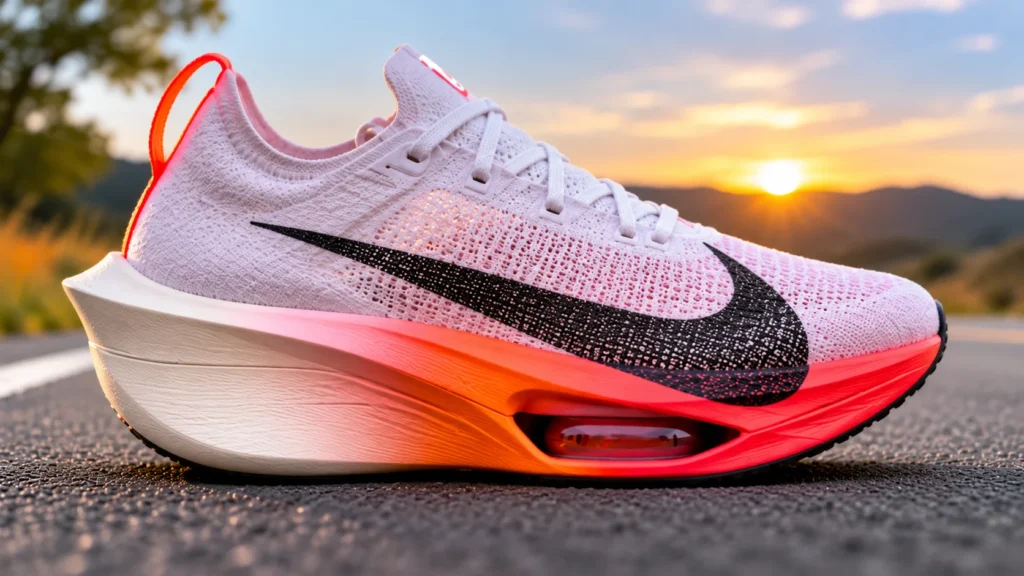
Nike Alphafly 3 — Quick Verdict
The Nike Alphafly 3 is a premium road racing shoe designed for fast half-marathons and marathons.
Best for: Competitive long-distance road racing.
Not ideal for: Everyday jogging, tight budgets, or runners who dislike stiff plated shoes.
Reference price: $285.
Scores are editorial assessments, not customer or laboratory ratings.
The Nike Alphafly 3 belongs to Nike’s premium marathon racing lineup. Its design places running efficiency and race performance ahead of daily versatility.
Nike combines ZoomX foam with a full-length carbon-fiber Flyplate. Two Air Zoom units sit beneath the forefoot to support a responsive push-off.
An Atomknit upper keeps the design light while securing the foot. Nike lists an 8 mm heel-to-toe drop and approximately 218 grams in men’s US size 10.
These features make the Alphafly 3 appealing for race-specific sessions. However, its stiff sole, distinct arch shape, and high price limit its everyday appeal. Runners should check the fit during training before relying on it for a marathon.
- Responsive ZoomX foam.
- Full-length carbon-fiber plate.
- Dual forefoot Air Zoom units.
- Lightweight racing construction.
- Strong long-distance racing potential.
- Breathable Atomknit upper.
- Smooth connected midsole design.
- High reference retail price.
- Limited everyday versatility.
- Arch shape may not suit everyone.
- Distinct and sometimes noisy ride.
- Stiff platform requires adaptation.
Nike Alphafly 3 Road Racing Shoes
Premium marathon racing shoes with ZoomX cushioning, carbon-fiber Flyplate, and Air Zoom technology.
Reference retail price: $285.
Check current availability, seller details, size, and price before ordering.
What Is the HOKA Mach 6 Designed to Do?
HOKA Mach 6 — Quick Verdict
The HOKA Mach 6 is a lightweight neutral trainer built for regular road miles and faster workouts.
Best for: Daily runs, tempo sessions, and versatile road training.
Not ideal for: Runners seeking maximum softness or dedicated carbon-plated race technology.
Reference price: $140.
Scores reflect editorial assessments rather than direct wear testing.
The HOKA Mach 6 gives runners a fast shoe without a carbon plate. It uses a supercritical foam midsole to balance cushioning and responsiveness.
HOKA adds strategic rubber coverage beneath the shoe for road use. Its lightweight upper supports faster running without the stripped-down feel of some racing shoes.
The Mach 6 features a published 5 mm heel-to-toe drop. Men’s weight is approximately 232 to 235 grams, depending on the reference sample.
Daily runners benefit from the ability to change pace in one shoe. You can start with an easy warm-up before moving into a tempo session. The Mach 6 offers this flexibility without requiring a second dedicated speed shoe.
- Lightweight daily training design.
- Responsive supercritical foam.
- Versatile across different running paces.
- Lower purchase price.
- Strategic rubber outsole coverage.
- Wide sizes available in some markets.
- No rigid carbon-fiber plate.
- Standard-width fit can feel snug.
- Less specialized for competitive marathons.
- No carbon plate or Air Zoom units.
- Not designed as a stability shoe.
- Some runners prefer softer cushioning.
HOKA Mach 6 Road Running Shoes
A lightweight neutral running shoe with responsive foam for daily miles and faster training sessions.
Reference retail price: $140.
Current prices and available widths depend on the seller and size.
Nike Alphafly 3 vs HOKA Mach 6: Full Specifications
The Alphafly 3 offers more specialized race technology. The Mach 6 delivers a simpler platform with broader training use.
These specifications show why the two shoes serve different runners. Published figures can also differ from independent laboratory measurements.
| Specification | Nike Alphafly 3 | HOKA Mach 6 | Winner |
|---|---|---|---|
| Brand | Nike | HOKA | Preference |
| Category | Marathon racing shoe | Performance daily trainer | Use dependent |
| Reference price | $285 | $140 | Mach 6 |
| Men’s weight | Approx. 218 g, US 10 | Approx. 232–235 g | Not directly comparable |
| Published drop | 8 mm | 5 mm | Preference |
| Midsole foam | ZoomX | Supercritical foam | Alphafly 3 for racing |
| Carbon plate | Full-length Flyplate | None | Alphafly 3 for racing |
| Air units | Two forefoot units | None | Alphafly 3 |
| Upper | Atomknit | Creel jacquard mesh | Preference |
| Outsole | Race-focused rubber | Strategic rubber coverage | Mach 6 for training |
| Support type | Neutral | Neutral | Tie |
| Surface | Road | Road | Tie |
| Daily training | Limited versatility | Primary purpose | Mach 6 |
| Marathon racing | Primary purpose | Capable alternative | Alphafly 3 |
| Overall versatility | Specialized | High | Mach 6 |
Prices are reference retail prices, not live Amazon offers. Weight varies with shoe size and measurement method.
Which Shoe Offers Better Speed and Race Performance?
Winner: Nike Alphafly 3. The Alphafly 3 offers the stronger design for competitive road racing. Its carbon plate, ZoomX foam, and Air Zoom units work together to create a responsive platform.
How Does the Carbon Plate Affect Running Performance?
The Alphafly 3 uses a rigid carbon-fiber plate to shape its running mechanics. The plate works alongside the foam and sole geometry.
This combination creates a different ride from a standard training shoe. It changes how the shoe bends during each stride.
The HOKA Mach 6 avoids a rigid plate altogether. Its performance comes from its foam, lightweight construction, and curved sole.
Some runners prefer this simpler approach because it feels more familiar. Others enjoy the structured movement of a plated race shoe.
Which Shoe Has Better Energy Return?
The Nike Alphafly 3 leads in published independent energy return measurements.
RunRepeat reported forefoot energy return of 73.9% for the Alphafly 3. Its published Mach 6 result was 67.0%.
| Laboratory metric | Alphafly 3 | Mach 6 |
|---|---|---|
| Forefoot energy return | 73.9% | 67.0% |
| Heel shock absorption | 144 SA | 135 SA |
Source: RunRepeat laboratory reviews. Mechanical energy return does not directly equal a runner’s speed improvement.
The difference supports the Alphafly 3’s specialized racing role. However, it does not guarantee a personal best for every runner.
Which Running Shoe Offers Better Comfort and Fit?
Winner for everyday comfort: HOKA Mach 6. The Mach 6 offers a more conventional training platform. The Alphafly 3 prioritizes racing mechanics over broad everyday comfort.
Which Shoe Has Better Cushioning?
The Nike Alphafly 3 offers the more specialized race cushioning system. ZoomX foam and forefoot Air Zoom units support its race-oriented design.
The HOKA Mach 6 provides cushioning through a simpler foam structure. Its ride suits runners who enjoy a responsive training shoe.
Comfort also depends on where your foot lands. A heel striker may experience each shoe differently from a forefoot striker.
Neither shoe guarantees comfort simply because it has advanced foam. Fit and movement patterns remain important.
Which Shoe Works Better for Wide Feet?
The HOKA Mach 6 offers the more practical option for wide-footed runners because selected versions come in wide sizes.
The standard Mach 6 can still feel narrow around the toes. Try the wide version if the regular fit creates pressure.
The Alphafly 3 uses a close-fitting racing upper. Its arch and midfoot shape may not suit every foot.
Try running shoes with your usual running socks. Check toe room, heel security, and arch comfort before committing to long runs.
Which Shoe Feels Better at an Easy Pace?
The HOKA Mach 6 is the better easy-pace choice for most runners comparing these two models.
Its plate-free construction accommodates changes in stride and pace. You do not need a race-specific session to make use of its design.
The Alphafly 3 can handle slower running, but that misses its main purpose. Saving it for key workouts and races can make more financial sense.
Which Shoe Offers Better Price and Value?
Winner: HOKA Mach 6. Its $140 reference price makes it a stronger investment for runners who need one versatile pair.
The Nike Alphafly 3 launched at $285. That creates a $145 difference between the two reference retail prices.
| Price comparison | Amount |
|---|---|
| Nike Alphafly 3 | $285 |
| HOKA Mach 6 | $140 |
| Price difference | $145 |
| Mach 6 reference price savings | 50.9% |
Does the Alphafly 3 Justify Its Higher Price?
The Alphafly 3 can justify its higher price for runners with specific racing goals. Its specialized midsole and plate system offer features unavailable in the Mach 6.
However, expensive technology does not replace regular training. A well-fitted daily trainer often contributes more to your weekly running routine.
For example, someone running four times each week can use the Mach 6 regularly. A marathon racer with an existing training shoe has a stronger reason to consider the Alphafly 3.
How Should You Compare Cost per Mile?
Compare the purchase price with the number of comfortable miles you receive. This approach helps you understand long-term ownership value.
For illustration, a $140 shoe used for 400 miles costs 35 cents per mile. A $285 shoe used for 200 miles costs about $1.43 per mile.
These figures are examples, not verified lifespan estimates. Actual wear depends on your stride, body weight, running surface, and shoe condition.
Which Shoe Offers Better Durability and Practical Stability?
Winner for everyday use: HOKA Mach 6. Its training-focused build makes more sense for frequent road miles. The Alphafly 3 remains a specialized racing tool.
Which Shoe Is Better for Regular Road Wear?
The Mach 6 is designed for repeated training sessions. HOKA adds rubber coverage in key outsole areas to manage road wear.
The Alphafly 3 uses a lightweight race-focused build. Its design prioritizes performance rather than maximizing everyday use.
Neither shoe has a guaranteed mileage limit. Inspect the outsole, foam, and upper rather than relying only on a mileage counter.
Which Shoe Provides a More Practical Running Platform?
The Mach 6 offers a more conventional platform for varied training sessions. It is a neutral shoe without a rigid carbon-fiber plate.
Nike improved the Alphafly 3 with a wider plate than its predecessor. Its connected midsole also changes the transition through each step.
However, both models remain neutral running shoes. Neither should replace a stability shoe when extra support is necessary.
Introduce unfamiliar shoes through shorter sessions before attempting a long race. Stop running if new shoes cause persistent pain. Seek qualified medical advice when pain continues or affects your normal movement.
Which Shoe Is Better for Cold Weather Running?
The Mach 6 is the more practical choice for routine winter road training. However, neither model functions as a dedicated winter running shoe.
Cold conditions can alter how running shoe foam feels. Wet roads and ice also introduce traction concerns.
Use a shoe with suitable winter grip when roads become slippery. Avoid treating either model’s rubber outsole as protection against ice.
Real-World Running Scenarios: Which Shoe Wins?
The HOKA Mach 6 wins most everyday running scenarios. The Nike Alphafly 3 wins when competitive race performance becomes the main goal.
| Running scenario | Best choice | Why it wins |
|---|---|---|
| Daily 3–6 mile runs | Mach 6 | Practical daily versatility. |
| Competitive marathon | Alphafly 3 | Specialized race technology. |
| Weekly tempo sessions | Mach 6 | Responsive plate-free design. |
| Competitive half-marathon | Alphafly 3 | Race-specific cushioning and stiffness. |
| First running shoe | Mach 6 | Lower cost and broad training use. |
| Routine running club sessions | Mach 6 | Works across changing workout paces. |
Which Shoe Should a Beginner Choose?
The HOKA Mach 6 makes more sense for most beginners choosing between these models. Its simpler platform supports regular road running.
New runners often benefit from building a consistent training schedule. A premium marathon racer is rarely essential for that goal.
Start with manageable distances and a comfortable fit. Choose race-specific footwear later if your training goals change.
Can You Use Both Shoes in a Running Rotation?
Yes. The Mach 6 and Alphafly 3 can form a complementary two-shoe running rotation.
Use the Mach 6 for easy miles, tempo sessions, and regular workouts. Save the Alphafly 3 for selected race rehearsals and important races.
This arrangement lets each shoe serve its intended purpose. It also avoids placing every training mile on the more expensive racer.
💡 Shoe Rotation Tip
If your budget covers only one pair, choose the shoe that matches most of your weekly miles rather than your fastest planned race.
Is the $145 Price Difference Worth It?
The price difference is worth considering for serious marathon racers. It is harder to justify for runners who mainly complete ordinary training sessions.
The Mach 6 costs less while covering more types of workouts. That makes its value easier to understand.
The Alphafly 3 offers a narrower but more specialized purpose. Runners chasing a race target may place greater value on that purpose.
What Could Change the Buying Decision?
A significant discount can make the Alphafly 3 more attractive. Shoe availability and fit can also change which model offers better value.
Compare current prices rather than relying solely on launch prices. Check whether the seller offers returns when the fit feels wrong.
A discounted racing shoe remains poor value if you cannot run comfortably in it. Proper fit should come before savings or advanced features.
Who Should Buy the Nike Alphafly 3 or HOKA Mach 6?
Choose the Alphafly 3 for dedicated race performance. Choose the Mach 6 if your main goal involves flexible, affordable road training.
Buy Nike Alphafly 3 If:
- You plan to race a competitive marathon.
- You already own a daily training shoe.
- You enjoy stiff plated running shoes.
- You want a premium race-day platform.
- The price fits your running budget.
- The arch shape feels comfortable.
Skip It If:
- You mainly run at easy training paces.
- You need one affordable running shoe.
- You dislike rigid racing platforms.
- You experience discomfort around the arch.
Buy HOKA Mach 6 If:
- You run several times each week.
- You enjoy responsive daily trainers.
- You want one shoe for varied workouts.
- You prefer a plate-free platform.
- You have a limited footwear budget.
- You occasionally enter road races.
Skip It If:
- You want dedicated carbon-plated race technology.
- You need a structured stability shoe.
- You prefer a highly plush recovery trainer.
- Neither available width fits comfortably.
When Should You Skip Both Shoes?
Neither shoe offers the best solution for every runner. Consider these alternatives when your needs differ.
- HOKA Bondi: Consider for a more cushioned daily running experience.
- Brooks Adrenaline GTS: Consider if you prefer added guidance and support.
- Nike Vaporfly 3: Consider for a different carbon-plated racing design.
- HOKA Speedgoat: Consider for technical trail running rather than road racing.
What Are Reviewers and Real Buyers Saying About Both Shoes?
Published reviews highlight the Alphafly 3’s race-focused responsiveness and the Mach 6’s training versatility. Fit and price remain important concerns.
Nike Alphafly 3 Review Themes
What reviewers praise:
- Responsive cushioning during fast runs.
- Long-distance racing potential.
- Lightweight construction.
- Improved platform compared with previous Alphafly versions.
Common concerns:
- High purchase price.
- Distinct arch fit.
- Limited everyday appeal.
- Unusual ride and footfall sound.
HOKA Mach 6 Review Themes
What reviewers praise:
- Useful performance at different paces.
- Low weight for a daily trainer.
- Responsive midsole.
- Strong overall training value.
Common concerns:
- Snug standard-width fit.
- Not soft enough for some recovery runners.
- No dedicated carbon racing system.
These themes come from published professional reviews and accessible retailer feedback. They are not invented Amazon customer testimonials.
How Should You Maintain the Alphafly 3 and Mach 6?
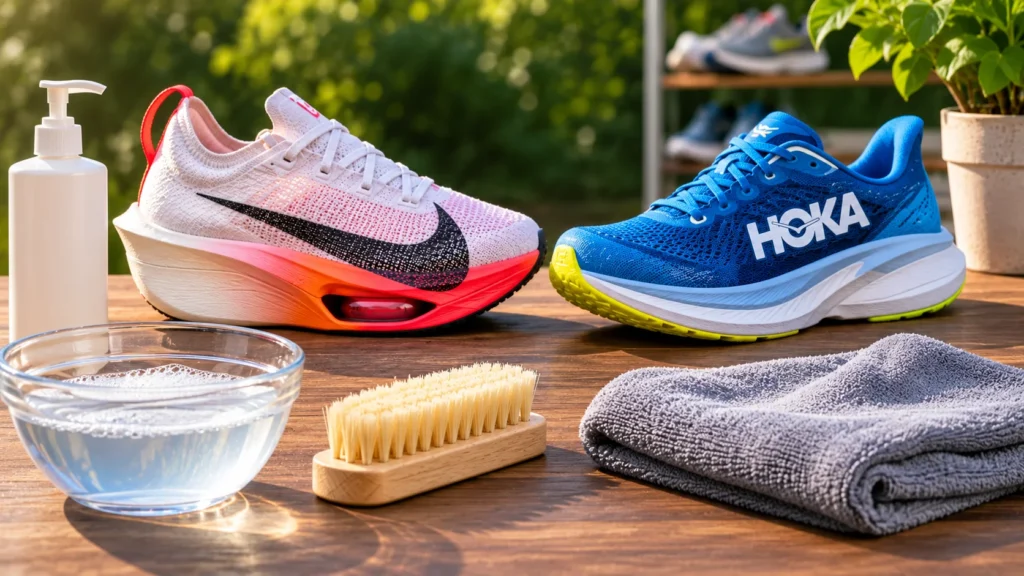
Clean both shoes gently, dry them naturally, and inspect them regularly. Proper care helps preserve their materials and allows you to spot damage.
How Should You Clean Running Shoes?
Hand cleaning is the preferred method for these running shoes. Avoid harsh cleaning methods that can damage the upper or sole materials.
- Remove loose dirt with a soft brush.
- Mix lukewarm water with mild soap.
- Gently wipe the upper and outsole.
- Remove soap residue with a damp cloth.
- Let the shoes air-dry at room temperature.
Avoid bleach, strong solvents, and direct high heat. Follow any additional cleaning instructions supplied by Nike or HOKA.
How Should You Store Running Shoes?
Store running shoes in a dry, ventilated area away from direct sunlight. Keep them away from heaters and hot car interiors.
Allow damp shoes to dry before putting them away. Avoid crushing their uppers beneath heavy equipment.
For the Alphafly 3, protect the racing shoe from unnecessary wear. Store it safely between planned workouts and events.
When Should You Replace Your Running Shoes?
Replace running shoes when damage or wear affects their comfort, grip, or normal movement. Mileage alone cannot tell you everything.
Check for worn rubber, uneven foam compression, and upper damage. Pay attention to sudden changes in how the shoe feels.
A marathon shoe should also receive a careful inspection before race day. Do not rely on a damaged shoe during an important event.
How Was This Nike Alphafly 3 vs HOKA Mach 6 Comparison Researched?
This comparison uses published brand specifications, independent laboratory measurements, and professional reviews. It separates verified product features from editorial recommendations.
Manufacturer information establishes the intended purpose of each model. Independent testing helps explain differences that specifications alone cannot show.
Laboratory results support comparisons of cushioning and mechanical energy return. However, these results do not guarantee identical experiences for every runner.
The editorial ratings assess intended use, construction, versatility, and reference price. They do not represent personal mileage tests or Amazon customer ratings.
Reference prices provide a consistent basis for comparison. Actual seller prices, return policies, and product availability can change.
Research Sources
- Nike Alphafly 3 official specifications
- RunRepeat Nike Alphafly 3 laboratory review
- RunRepeat HOKA Mach 6 laboratory review
- Doctors of Running HOKA Mach 6 review
- Fleet Feet Alphafly 3 review
- REI HOKA Mach 6 tested review
Final Verdict: Is the Nike Alphafly 3 Better Than the HOKA Mach 6?
The HOKA Mach 6 is the overall winner for most everyday runners. It combines responsive cushioning, versatile performance, and a lower purchase price.
The Nike Alphafly 3 remains the stronger choice for dedicated marathon racing. Its specialized carbon plate and Air Zoom system serve a clear performance goal.
However, a racing shoe does not automatically make a better training shoe. Your regular workout needs should shape the buying decision.
Choose the Mach 6 when purchasing one pair for different running sessions. Choose the Alphafly 3 when you already have a trainer and want a separate racer.
The most useful shoe is the one that fits your foot and supports consistent running. Race technology becomes more valuable when your training and fit already support your goals.
Our Final Recommendations
Nike Alphafly 3
Best for competitive marathon racing.
$285 reference retail price.
Frequently Asked Questions
1. Which is better, Nike Alphafly 3 or HOKA Mach 6?
The HOKA Mach 6 is better for most everyday runners because it costs less and supports more types of training. The Nike Alphafly 3 is better suited to competitive marathon racing. Your choice should depend on whether you need a versatile daily trainer or a specialized racing shoe.
2. What is the difference between Nike Alphafly 3 and HOKA Mach 6?
The main difference is their intended purpose and midsole construction. The Alphafly 3 uses ZoomX foam, a carbon-fiber plate, and two Air Zoom units. The Mach 6 uses supercritical foam without a plate. Nike focuses on race performance, while HOKA targets versatile daily training and faster workouts.
3. Is the Nike Alphafly 3 worth the money?
The Nike Alphafly 3 can be worth its price for competitive runners who benefit from its race-specific design. Its $285 reference price makes it a premium purchase. Runners who mainly complete ordinary training sessions may receive better overall value from the less expensive and more versatile HOKA Mach 6.
4. Can you run a marathon in the HOKA Mach 6?
Yes, the HOKA Mach 6 can work for marathon running if it suits your feet and training needs. Its lightweight construction and responsive foam make it capable of handling long road efforts. Complete several long training runs in the shoe before deciding whether it provides enough comfort for race day.
5. Is the Nike Alphafly 3 suitable for daily running?
The Nike Alphafly 3 can handle daily running, but its specialized racing design makes it less practical for that purpose. Its stiff carbon plate and premium price favor dedicated workouts and important races. Most runners will find the HOKA Mach 6 a more flexible option for regular road training.
Affiliate Disclosure: As an Amazon Associate, I earn from qualifying purchases. This article contains affiliate links. If you purchase through these links, we may earn a commission at no extra cost to you. Our recommendations reflect independent editorial assessments.


