

Quick Answer
It depends. The Adidas Ultraboost 5 works well for easy runs, walking, and everyday wear, but it is not a great speed shoe. Independent testing found a 292 g weight and a roomy knit upper. Buy it for comfort and versatility, on sale; skip it for speed sessions.
What matters before you buy:
- RunRepeat scored it 85/100 for daily running.
- Its Continental outsole and breathable Primeknit upper suit mixed daily use.
- Weight, possible heel movement, and long-run irritation are real drawbacks.
*RunRepeat’s published scores and laboratory rating; these are not my own test scores.
| Best for | Easy road miles, walking, casual use, medium-to-wide forefeet |
| Not ideal for | Intervals, racing, narrow heels, very soft long-run cushioning |
| Recent price | $105.27 in one tracked Amazon listing; size and color vary |
Published Category Scores
I’m Steven Tyler. This review uses RunRepeat lab data and published wear tests from Runner’s World and Tom’s Guide, not my own testing.
What Is the Adidas Ultraboost 5 and Who Is It For?
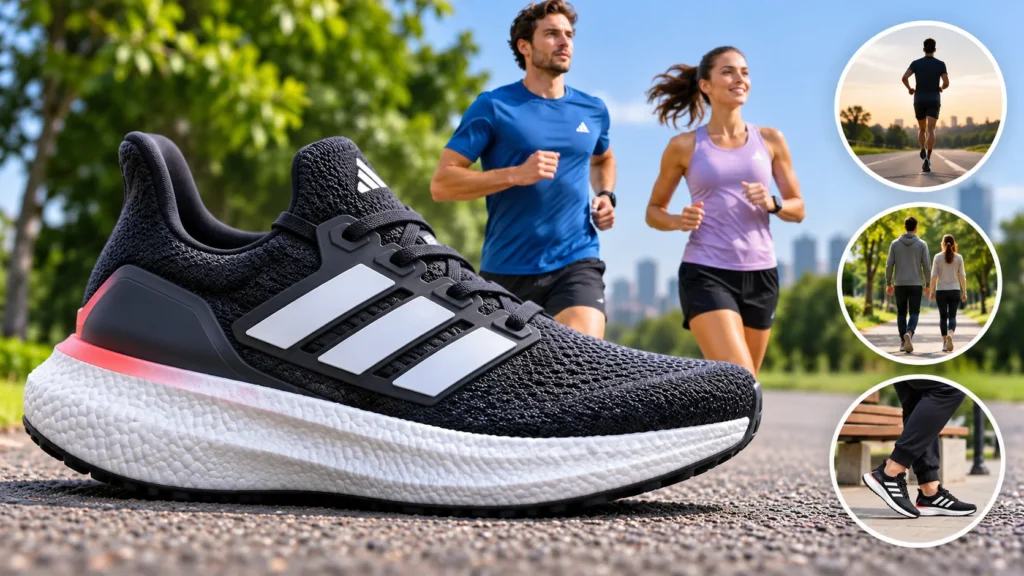
The Adidas Ultraboost 5 is a neutral road shoe for easy runs and casual wear. It combines Light BOOST V2, Primeknit, Torsion support, and Continental rubber.
The roomy forefoot fits many feet; weight limits speed.
- Run easy miles on roads or treadmills.
- Want one pair for walks and errands.
- Need more room near your toes.
- You run fast workouts regularly.
- You want a light shoe for long mileage.
- Your narrow heel slips in knit collars.
Adidas Ultraboost 5 Pros and Cons
Its strengths are airflow, toe room, and outsole wear resistance. Its downsides are weight, long-run irritation, and limited speed.
- Lab breathability earns the top grade of five out of five.
- Toe-box width reaches 78.6 mm in independent testing.
- Continental rubber delivered only 0.8 mm abrasion in testing.
- Versatile design suits steady runs, walking, and casual outfits.
- Lab weight reaches 292 g in a men’s test pair.
- Independent runners report limited comfort on longer outings.
- Soft knit collar can allow heel movement for some.
- Original $180 price rivals more focused running shoes.
Adidas Ultraboost 5 Key Features — What Do Tests Show?
Does Light BOOST V2 Feel Soft and Responsive?
Light BOOST V2 feels smooth, not plush. RunRepeat measured 66.0% heel energy return versus a 58.7% average.
Heel Energy Return — Same Lab Method
Selected comparison, not absolute best or worst in class. RunRepeat laboratory data.
Takeaway: The foam returns energy, but that does not make the shoe quick.
Is the Primeknit Upper Roomy Enough?
Yes, the forefoot is notably roomy. RunRepeat recorded a 98.4 mm overall fit width and 78.6 mm at the toe box.
Takeaway: Toe room is a bigger selling point than race-day speed.
The stretchy upper accommodates toe spread, but narrow feet may move around. Adidas advises choosing your normal size.
Try both shoes with running socks and check heel hold before removing tags.
Does the Shoe Breathe Well in Warm Weather?
Yes. RunRepeat gave its breathable knit upper 5/5 in its smoke-based airflow test, above the lab’s 3.6/5 average.
Takeaway: Airflow is one of its most convincing strengths.
How Good Are Grip and Outsole Durability?
The Continental outsole showed 0.8 mm abrasion, but its wet-concrete friction was 0.46 in lab testing.
Takeaway: Its rubber lasts well in the lab, but wet grip is not class-leading.
Good wear resistance does not guarantee secure traction on every slick surface.
Does the Heel and Torsion System Feel Stable?
The midfoot resists twisting: 4/5 torsional rigidity and 3/5 heel-counter stiffness in RunRepeat testing.
Takeaway: Structural support is not the same as a locked-in heel.
Is the Ultraboost 5 Too Heavy for Fast Running?
Yes, weight is a drawback for speed work. RunRepeat weighed its sample at 292 g versus a 261 g lab average.
Takeaway: Choose it for easy miles rather than personal records.
Tom’s Guide ran 35 miles and favored the shoe for easy, not fast, runs.
If you train fast twice weekly, reserve a lighter pair for those sessions.
How Does the Adidas Ultraboost 5 Perform in Real Tests?
Independent tests favor airflow and outsole wear over weight and wet traction.
Measured Performance — Independent Lab
Lab average: 261 g; lower weight is generally preferred for speed.
The surprise: durable rubber does not guarantee exceptional wet grip. Read RunRepeat laboratory measurements.
Adidas Ultraboost 5 Full Specifications
Adidas supplies the construction details below; independent measurements show how one tested pair compares.
| DESIGN | |
| Shoe type | Neutral road running |
| Upper | Primeknit textile |
| Midsole | Light BOOST V2 |
| Outsole | Continental rubber |
| Torsion System | ✓ Yes |
| BRAND SPECIFICATIONS | |
| Listed weight | 292 g (UK 8.5) |
| Heel / forefoot stack | 39 / 29 mm |
| Heel-to-toe drop | 10 mm |
| Recycled material content | At least 20% |
| INDEPENDENT LAB SAMPLE | |
| Measured heel / forefoot | 35.2 / 24.6 mm |
| Measured drop | 10.6 mm |
| Toe-box width | 78.6 mm |
| Removable insole | ✓ Yes |
| Reflective elements | ✗ No |
Brand and lab stack heights use different methods. See Adidas product specification page.
How Does the Adidas Ultraboost 5 Compare to Competitors?
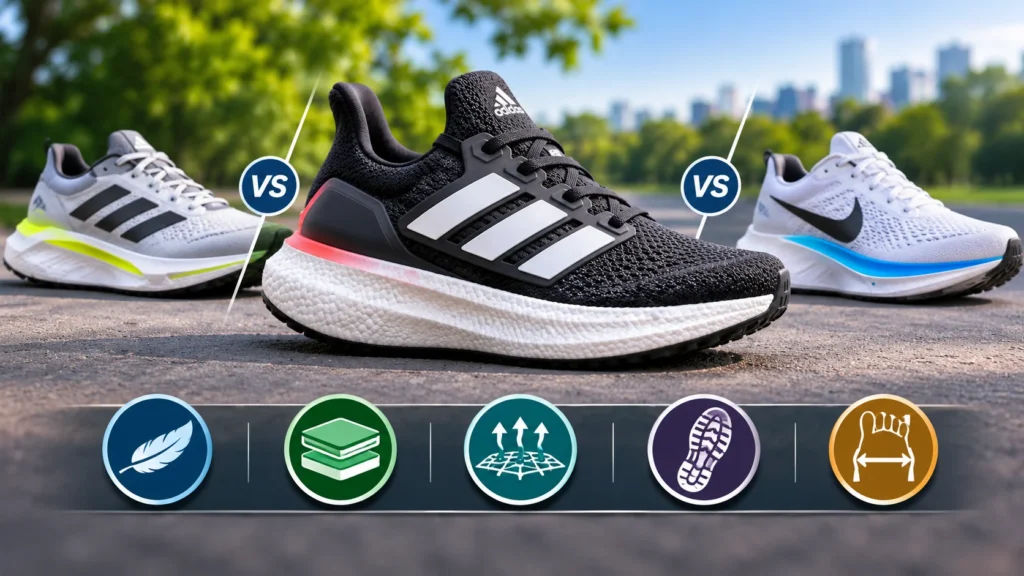
Choose Ultraboost 5 for the knit fit; Supernova Rise for lighter easy runs; Pegasus 41 for a narrower traditional fit.
Adidas Ultraboost 5 vs Adidas Supernova Rise
Supernova Rise weighs 278 g versus 292 g and launched $40 cheaper. Its Dreamstrike+ foam targets daily running more directly.
Adidas Ultraboost 5 vs Nike Pegasus 41
Ultraboost 5 has more toe room and heel energy return. Pegasus 41 weighs 281 g and launched at $140.
| Feature | Ultraboost 5 | Supernova Rise | Pegasus 41 |
|---|---|---|---|
| Original MSRP | $180 | $140 | $140 |
| Lab weight | 292 g | 278 g | 281 g |
| Measured drop | 10.6 mm | 9.7 mm | 11.4 mm |
| Toe-box width | 78.6 mm | 76.5 mm | 72.9 mm |
| Heel energy return | 66.0% | 71.2% | 55.5% |
| Upper style | Primeknit | Mesh | Mesh |
| Best use | Run + daily wear | Easy runs | Steady training |
Adidas Ultraboost 5 Pricing — Is It Worth the Price?
At its original $180 price, the Ultraboost 5 faces stronger running-focused options. On sale, its mixed-use value improves.
A tracker displayed $105.27 for one Amazon listing, with an $84 low on October 3. Prices differ by size, color, and tracking period.
Adidas Ultraboost 5 Light BOOST Primeknit Road Running Shoes
Compare the live size-and-color price before paying full retail.
Who Should Buy the Adidas Ultraboost 5?
- Walkers who also jog on roads several times weekly.
- Runners with wider forefeet who prefer soft stretch-knit uppers.
- Shoppers finding it well below the original retail price.
- You want lightweight shoes for intervals or fast races.
- You often develop heel rubbing on sock-like collars.
Bottom line: Try it for fit, then buy on sale if its dual-use appeal matters.
What Are Real Buyers Saying About the Adidas Ultraboost 5?
The Adidas UK product page reports 4.7/5 from 616 reviews, mostly praising comfort. Some report wear or price concerns.
That is not an Amazon rating; Amazon’s verified review total could not be checked.
Customer Feedback on Adidas
- Soft cushioning works well for walks and everyday commuting.
- Stretch-knit fit feels comfortable across a range of activities.
- Many buyers appreciate its casual styling with running features.
- Some wearers report visible foam wear or sole separation.
- Price and heel fit do not work for everyone.
Evidence note: Store reviews and expert road tests describe different experiences; neither guarantees your fit.
Final Verdict — Is the Ultraboost 5 Worth Buying?
The Ultraboost 5 earns a place for easy runs and everyday wear, especially on sale. Its stretchy upper and roomy toe box matter more than speed.
Independent tests support its airflow and outsole wear resistance, but the weight is high. Some runners also report toe rubbing or loose heel hold.
Adidas customers rate it 4.7/5 from 616 reviews; that is not an Amazon rating. Faster runners should choose a lighter trainer.
Casual runners seeking a second purpose may appreciate this versatile pair.
Adidas Ultraboost 5 Comfortable Primeknit Everyday Running Shoes
A sale price helps its comfort-first design make more sense.
👉 Buy Adidas Ultraboost 5 — Check Price ↗
Compare Alternatives ↗
Frequently Asked Questions
Does the Adidas Ultraboost 5 run true to size?
Yes. Adidas recommends your usual size, and RunRepeat agrees. Its measured forefoot width is 98.4 mm, but fit varies. Use your normal running socks and check both heel hold and toe clearance before wearing the shoes outside.
Is the Adidas Ultraboost 5 good for walking?
Yes. The stretchy knit and controlled cushioning suit walking, though the tested shoe weighs 292 g. It is not ultra-light. Walk in it indoors before committing, especially if stiff heel collars have caused rubbing or blisters for you in the past.
Can you run long distances in the Ultraboost 5?
You can, but comfort varies. Runner’s World reported rubbing during a 22 km run, while Tom’s Guide logged 35 miles across its tests. Build distance gradually and check the toe area before relying on the Ultraboost 5 for long runs.
Is the Ultraboost 5 good for wide feet?
Yes, many medium-to-wide forefeet fit well. RunRepeat measured 78.6 mm at the toe box versus a 73.2 mm category average. The Primeknit upper stretches, but Adidas still calls this a regular-width model. Check heel hold before buying, especially if your heel is narrow.
Is the Ultraboost 5 good for fast running?
No. RunRepeat scored it 72/100 for tempo and 55/100 for racing, versus 85/100 for daily running. Its tested 292 g weight is a drawback for pace changes. Choose a lighter trainer for intervals, races, or workouts where quick turnover matters.
How does the Ultraboost 5 differ from the Ultraboost 5X?
The 5X is a lighter sibling, not a colorway. It removes the Ultraboost 5’s external midfoot cage; Adidas lists it as 17 g lighter. Both use Primeknit and Continental rubber. Check the model name before ordering, since their fits feel different.
Affiliate Disclosure: As an Amazon Associate, I earn from qualifying purchases. Links may earn a commission at no extra cost to you.