
Quick Answer
The best way to store running shoes is in a cool, dry, well-ventilated place away from direct sunlight. Clean and air-dry them first, keep each pair upright, and avoid crushing the uppers. An open shoe rack works well for everyday storage, while breathable containers suit longer storage periods. Follow these ASICS shoe care tips to help protect your footwear.
Six Steps to Store Running Shoes Properly
- Clean the shoes: Remove dirt, dust, and mud before storage.
- Dry completely: Allow moisture to escape at room temperature.
- Remove insoles: Air them separately after sweaty or wet runs.
- Maintain their shape: Insert clean paper loosely if needed.
- Choose ventilation: Use an open rack or breathable storage container.
- Avoid heat and humidity: Keep shoes away from hot cars, damp floors, and direct sun.
Running shoes need more than a convenient place in your closet. Poor storage can leave them smelling unpleasant, misshapen, or damaged before their useful running life ends.
I recommend a simple routine rather than expensive storage equipment. This guide explains daily storage, seasonal protection, small-space organization, and common mistakes to avoid.
What Does Proper Running Shoe Storage Mean?

Proper running shoe storage means keeping footwear clean, dry, ventilated, and protected from unnecessary pressure. The goal is to preserve the shoe’s fit, materials, and usability between runs.
Modern running shoes combine breathable mesh, foam midsoles, rubber outsoles, and adhesives. Each component responds differently to heat, moisture, and compression.
- Mesh uppers: Need airflow and protection from crushing.
- Foam midsoles: Should stay away from prolonged extreme heat.
- Rubber outsoles: Benefit from cleaning before storage.
- Adhesives: Can deteriorate with excessive heat and aging.
- Removable insoles: Need time to release trapped moisture.
Proper storage does not stop natural material aging. However, it helps prevent avoidable problems caused by poor environmental conditions.
How Should You Store Running Shoes After Every Run?
After running, place your shoes somewhere dry with enough airflow to release moisture. Avoid immediately putting sweaty shoes inside a closed gym bag or storage box.
Use the following routine after regular training sessions.
Step 1: Remove Loose Dirt and Debris
Check the outsoles for gravel, mud, and grass. Use a soft brush or dry cloth to remove surface debris.
For muddy trail shoes, allow heavy mud to dry enough to brush away easily. Clean remaining dirt gently with mild soap and water when needed.
Step 2: Loosen the Laces
Untie the laces before removing your running shoes. This helps avoid unnecessary pressure on the heel counter.
Open the tongue slightly to improve airflow inside the shoe. Avoid pulling aggressively on delicate mesh or eyelets.
Step 3: Air-Dry the Shoes
Place the shoes indoors in a well-ventilated area. Remove damp insoles and allow them to dry separately.
If the shoes are soaked, insert clean absorbent paper temporarily. Replace damp paper as needed, and never apply direct heater or dryer heat.
Step 4: Place Them on a Shoe Rack
An open rack allows air to circulate around the shoes. Position pairs upright without piling heavy footwear on top.
I prefer keeping frequently worn running shoes at an easy-to-reach height. This makes the after-run storage routine easier to maintain.
Step 5: Inspect Them Before the Next Run
Check for unusual odors, loose outsoles, torn mesh, and excessive wear. Make sure the insoles and shoe interiors feel completely dry.
If you rotate several pairs, keeping them organized also makes tracking their condition easier.
Where Is the Best Place to Store Running Shoes?
A bedroom closet, ventilated shoe cabinet, or indoor shoe rack usually works well. Choose a location with moderate temperatures and minimal moisture.
Not every convenient storage location offers suitable conditions. Compare common options before choosing one.
| Storage Location | Suitability | Important Consideration |
|---|---|---|
| Open indoor shoe rack | Excellent | Provides airflow and convenient access. |
| Dry bedroom closet | Very good | Ensure shoes are dry before putting them away. |
| Ventilated shoe cabinet | Very good | Keep ventilation openings clear. |
| Under-bed organizer | Good | Best for clean, dry, less frequently worn pairs. |
| Garage or basement | Conditional | Humidity and temperature must be controlled. |
| Hot car trunk | Avoid | Heat can damage foam, adhesives, and shoe materials. |
These suitability ratings are practical storage guidance, not laboratory-tested rankings. Actual conditions matter more than the room’s name.
How Do You Store Running Shoes for a Long Time?
For long-term storage, clean and dry the shoes before placing them in breathable protective containers. Store them indoors where temperatures and humidity remain reasonably stable.
This method works for seasonal running shoes, backup trainers, and pairs you temporarily stop using.
- Clean thoroughly: Remove dirt from the upper, outsole, and grooves.
- Dry completely: Allow sufficient time for the interior and insoles to dry.
- Protect the shape: Add loosely packed acid-free tissue paper if necessary.
- Select a container: Choose a breathable fabric box or ventilated organizer.
- Store separately: Avoid placing heavy items against the shoes.
- Inspect periodically: Check for moisture, odors, material changes, and pests.
Should You Use the Original Shoe Box?
Original shoe boxes can work well for storing completely dry running shoes. They protect against dust and help keep individual pairs organized.
However, ordinary cardboard boxes offer limited ventilation. In humid environments, inspect stored footwear and avoid placing boxes against damp surfaces.
Can You Store Running Shoes for Several Years?
You can physically store running shoes for several years, but their materials may deteriorate even without use. Foam compounds, adhesives, and rubber can age while sitting on a shelf.
Before running in an older pair, inspect the soles for cracking or separation. Check the cushioning, traction, fit, and overall condition rather than relying only on appearance.
A shoe that looks new is not automatically safe or comfortable for demanding workouts.
Should Running Shoes Be Stored in Boxes or on Racks?
Open racks are generally better for everyday running shoes because they provide easier ventilation. Boxes are more suitable for clean, dry pairs that need dust protection during storage.
Neither solution is automatically best for every situation.
- Open racks: Best for regular training, quick access, and drying between runs.
- Ventilated boxes: Best for organized collections and infrequently used shoes.
- Fabric organizers: Useful for seasonal storage in dry closets.
- Closed cabinets: Suitable when ventilation and indoor humidity are managed.
- Airtight plastic containers: Generally avoid for recently worn or potentially damp footwear.
For runners who train several times weekly, I would choose a basic open rack first. It solves the everyday storage problem without requiring complicated equipment.
How Can You Prevent Running Shoes From Smelling During Storage?
The most effective approach is preventing trapped moisture and cleaning shoes when needed. Putting damp running shoes into enclosed storage can worsen odors.
Sweat, dirt, and microorganisms contribute to unpleasant smells. Good airflow and regular cleaning help control these conditions.
Use a Simple Odor-Prevention Routine
- Air shoes immediately: Remove them from gym bags after running.
- Dry insoles separately: Take them out after particularly sweaty workouts.
- Wear clean socks: Change into fresh running socks before each run.
- Clean when necessary: Use mild soap and follow manufacturer care instructions.
- Rotate footwear: Give wet or sweaty shoes time to dry before reuse.
- Inspect stored pairs: Address dampness and musty odors before wearing them.
Do not rely on fragrance sprays to solve moisture problems. A fresh scent can temporarily hide an underlying storage issue.
Should You Put Baking Soda Inside Stored Running Shoes?
Baking soda may help absorb some unwanted odors, but it is not essential for proper shoe storage. Avoid leaving loose powder in shoes without considering the manufacturer’s care instructions.
If you use it, remove residue thoroughly before wearing the shoes. For persistent odors, cleaning and complete drying are more important.
How Do You Store Wet Running Shoes Safely?
Never place wet running shoes directly into long-term storage. Dry them thoroughly at room temperature before returning them to a closet or organizer.
Wet shoes need special care because moisture can remain inside the lining and insole area.
- Remove excess surface water with a clean towel.
- Take out removable insoles and loosen the laces.
- Place absorbent white paper loosely inside each shoe.
- Replace the paper when it becomes wet.
- Leave the shoes in a dry room with gentle air circulation.
- Check the interiors carefully before storing them.
A room-temperature fan may improve air circulation, but avoid concentrated heat. Never use a tumble dryer unless the shoe manufacturer expressly permits that method.
The safest drying time depends on saturation, humidity, materials, and ventilation. Do not assume every pair dries completely overnight.
How Should You Store Running Shoes in a Small Apartment?
Small apartments benefit from compact racks, vertical organizers, and dedicated closet spaces. The key is creating organized storage without restricting airflow.
Start by keeping frequently used shoes accessible. Place clean seasonal pairs in separate organizers.
Space-Saving Storage Ideas
- Three-tier shoe rack: Organize several pairs vertically without taking much floor space.
- Narrow closet shelving: Create a dedicated shelf for running footwear.
- Under-bed storage: Protect clean, completely dry pairs from dust.
- Wall-mounted shoe organizer: Save floor space where suitable.
- Stackable ventilated boxes: Keep a larger collection organized and visible.
Measure your shoes before purchasing any organizer. Running footwear can be wider and taller than casual shoes.
A shelf that squeezes the heel or toe box can cause unnecessary deformation over time.
What Running Shoe Storage Mistakes Should You Avoid?
The biggest storage mistakes involve heat, moisture, restricted ventilation, and unnecessary pressure. Avoiding these problems usually costs nothing.
1. Leaving Shoes Inside a Gym Bag
Closed gym bags trap moisture and odors after workouts. Remove your running shoes promptly and allow them to air out.
2. Storing Shoes Near Heaters
Direct heat can affect adhesives, synthetic fabrics, and foam components. Keep shoes away from radiators, hot pipes, and heating equipment.
3. Leaving Shoes in Direct Sunlight
Prolonged intense sunlight can contribute to material deterioration and discoloration. Choose a shaded indoor storage location.
4. Stacking Heavy Shoes on Top
Heavy boots or equipment can deform flexible uppers and heel sections. Give each running shoe enough room to maintain its normal shape.
5. Using Airtight Containers for Damp Shoes
Sealed containers can trap residual moisture. Always dry shoes completely and consider ventilated storage alternatives.
6. Ignoring Closet Humidity
A closet may appear dry while retaining excess humidity. Watch for condensation, musty smells, and visible mold.
7. Forgetting About Stored Shoes
Long-term storage does not guarantee long-term usability. Periodically inspect the foam, outsole bonding, and upper materials.
How Does Running Shoe Storage Change in Hot or Humid Weather?
Hot or humid weather requires extra attention to indoor ventilation and moisture control. Avoid damp storage areas, direct sun, and enclosed spaces that become excessively hot.
This is particularly important during rainy seasons or in homes with persistently high indoor humidity.
- Choose indoor storage: Prefer a ventilated room over a hot balcony or damp shed.
- Allow full drying: Give recently worn shoes more time when humidity is high.
- Use moisture control: Consider appropriate room dehumidification when needed.
- Check hidden surfaces: Inspect shelves, walls, and storage boxes for dampness.
- Keep shoes elevated: Avoid placing stored shoes directly on potentially damp floors.
Small desiccant packets may help manage residual moisture inside dry storage containers. They are not a substitute for drying wet footwear or controlling serious humidity problems.
Can Proper Storage Make Running Shoes Last Longer?
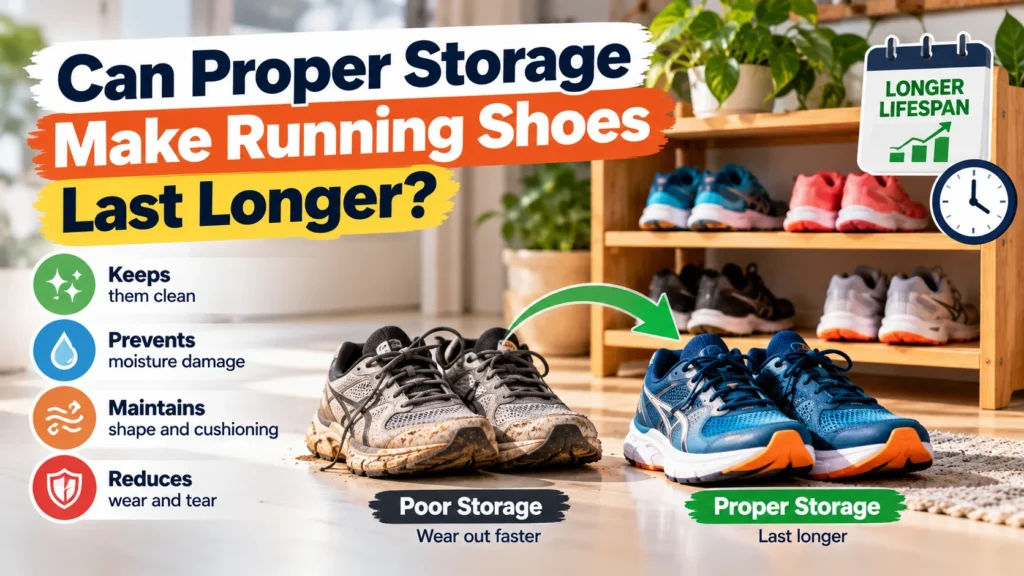
Proper storage can help prevent avoidable damage, but it cannot eliminate normal running wear. Mileage, running surfaces, shoe construction, and individual use all influence durability.
Many everyday running shoes are commonly assessed for replacement around 300 to 500 miles. This is a general guideline rather than a guaranteed lifespan.
Follow established running shoe maintenance recommendations from England Athletics when cleaning and storing your footwear.
Storage Care Versus Normal Running Wear
- Good storage: Helps minimize moisture-related odors and avoidable heat damage.
- Regular cleaning: Removes dirt that accumulates on footwear.
- Proper rotation: Gives wet pairs time to dry between workouts.
- Routine inspection: Helps identify wear before it becomes a bigger problem.
- Timely replacement: Addresses deterioration that storage cannot reverse.
If your shoes have lost traction or developed structural damage, better storage will not restore their performance. Replace them when their condition makes them unsuitable for running.
What Are the Best Running Shoe Storage Products to Consider?
You do not need expensive accessories to store running shoes properly. A sturdy rack, breathable shoe box, or compact organizer can handle most storage needs.
These three options cover everyday access, closet organization, and budget-friendly storage. The recommendations reflect their intended use rather than hands-on product testing.
🏆 Best for Everyday Storage
Whitmor 3-Tier Shoe Rack
Editorial suitability: 4.5/5
A multi-tier rack provides separate levels for organizing frequently worn shoes. I recommend this type of open storage for runners who want easy access and ventilation. Check the dimensions of the selected model before buying.
📦 Best for Closet Organization
IKEA SKUBB Shoe Box
Editorial suitability: 4.5/5
This fabric shoe box features a mesh panel that allows airflow and lets you identify the contents. It is a useful option for organizing fully dry shoes inside a closet. Confirm that your running shoe size fits.
💰 Best Budget Rack Option
Simple Houseware 3-Tier Shoe Rack
Editorial suitability: 4/5
A compact multi-level organizer can keep several pairs off the floor. I would consider it for a small entryway or closet where space matters. Compare the available versions for stability, size, and material.
Affiliate disclosure: As an Amazon Associate, we may earn from qualifying purchases. The suitability scores above are editorial assessments, not verified customer ratings or laboratory-test scores.
Frequently Asked Questions About Storing Running Shoes
Is It Better to Store Running Shoes Inside or Outside?
Indoor storage is usually better because temperatures and humidity are easier to manage. Store running shoes in a dry, ventilated closet or on an open rack. Outdoor areas can expose footwear to sunlight, rain, temperature extremes, and excess moisture that may damage materials.
Should You Remove Insoles Before Storing Running Shoes?
Remove insoles when your shoes are wet or especially sweaty so both parts can dry thoroughly. For clean, completely dry shoes, keeping removable insoles inside is generally acceptable. Always follow the manufacturer’s instructions and avoid forcing out insoles that are permanently attached.
Can Running Shoes Be Stored in Plastic Boxes?
Yes, clean and fully dry running shoes can be stored in suitable plastic boxes. Ventilated containers are generally preferable, especially in humid environments. Avoid sealing damp shoes inside airtight containers, because retained moisture can encourage unpleasant odors and mold growth.
How Often Should You Check Running Shoes in Long-Term Storage?
Checking stored running shoes every few months is a reasonable preventive routine, although there is no universal inspection interval. Look for moisture, unusual odors, cracking, separation, or changes in material condition. Inspect footwear again before returning it to regular training.
Can You Store Running Shoes Under Your Bed?
Yes, under-bed storage can work for clean, completely dry running shoes. Choose a breathable organizer and make sure the area stays dry. Avoid tightly compressing footwear or storing heavy objects above it. Frequently worn pairs may benefit from a more accessible open rack.
Final Takeaway: The Best Way to Store Running Shoes
Learning how to store running shoes properly is straightforward. Keep them clean, completely dry, ventilated, and protected from direct heat or excessive pressure.
For everyday use, an open shoe rack is my preferred starting point. For seasonal storage, a breathable shoe container in a dry indoor closet makes practical sense.
Build a simple after-run routine and inspect your footwear regularly. Good storage protects your investment, while timely replacement helps keep your running equipment dependable.