
Quick Answer
To clean mesh running shoes, remove loose dirt, take out the laces and insoles, and gently wipe the mesh with mild soap and lukewarm water. Remove soap with a clean damp cloth, then air-dry the shoes away from heat. Hand cleaning is generally safer than machine washing, as explained in the ASICS running shoe cleaning guide.
6 Quick Cleaning Steps
- Remove dry dirt: Gently brush away dust and dried mud.
- Take out removable parts: Remove shoelaces and insoles.
- Prepare mild soap: Mix a small amount with lukewarm water.
- Clean the mesh: Dab or lightly brush stained areas.
- Remove soap: Wipe repeatedly with a clean, damp cloth.
- Air-dry completely: Stuff with paper towels and keep away from direct heat.
Mesh running shoes are comfortable because their lightweight fabric allows air to circulate around your feet. Unfortunately, that same open construction can trap dust, mud, sweat, and other debris.
The good news is that you don’t need complicated equipment. In this guide, I’ll explain how to clean mesh running shoes safely, handle stubborn stains, and avoid damaging the fabric.
What Does Cleaning Mesh Running Shoes Actually Involve?
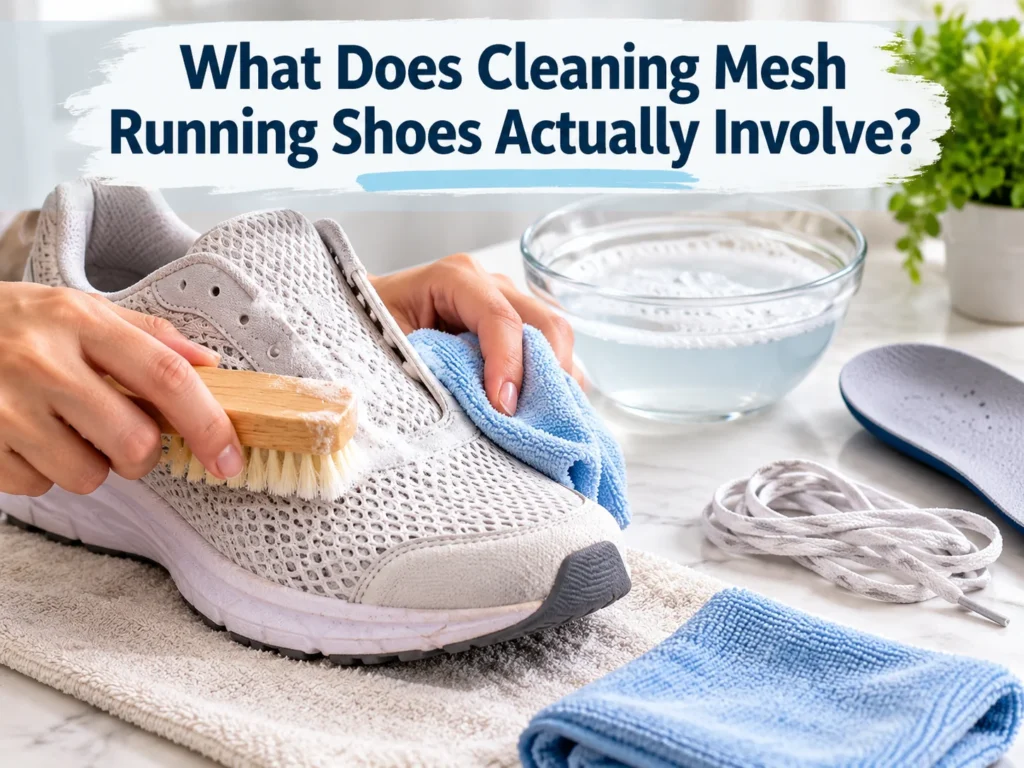
Cleaning mesh running shoes means removing dirt, stains, and residue from their breathable fabric without weakening its construction. The process typically involves gentle hand washing, careful rinsing, and natural air drying.
Mesh is different from solid leather or rubber. Its woven or knitted structure contains small openings that allow airflow but can also hold fine particles.
Why Does Mesh Need Special Care?
Mesh uppers often use thin synthetic fibers such as polyester or nylon. These materials offer flexibility and ventilation, but aggressive scrubbing can cause fraying or surface damage.
Some running shoes also contain bonded overlays, foam padding, and adhesive connections. Excessive soaking or high heat can affect these components.
- Open weave: Fine dirt can settle between the fibers.
- Delicate threads: Stiff brushes may cause snagging or fraying.
- Lightweight construction: Excessive force can distort the upper.
- Mixed materials: Glue, padding, and synthetic overlays may require separate care.
My preferred approach is to start with the gentlest cleaning method. I only increase cleaning effort when a stain remains.
What Supplies Do You Need to Clean Mesh Running Shoes?
Most mesh running shoes can be cleaned with ordinary household supplies. A soft brush, mild soap, clean cloth, and water are usually enough.
You don’t necessarily need an expensive sneaker cleaning kit. The important thing is using tools that won’t damage the mesh.
Basic Cleaning Supplies
- Soft-bristled toothbrush: Removes surface dirt without aggressive scrubbing.
- Microfiber cloth: Gently wipes delicate mesh panels.
- Mild liquid soap: Helps loosen ordinary dirt and grime.
- Lukewarm water: Dilutes soap and loosens deposits.
- Small bowl: Holds your cleaning solution.
- Paper towels: Absorb moisture during drying.
- Soft sponge: Cleans larger fabric sections evenly.
Choose a mild, bleach-free soap that rinses away easily. Check the manufacturer’s instructions before using any specialized cleaner.
Which Cleaning Products Should You Avoid?
Harsh household cleaners are unnecessary for most mesh shoes. They can discolor fabric or damage sensitive shoe components.
- Chlorine bleach and aggressive whitening chemicals
- Strong solvents and stain removers not approved for footwear
- Stiff wire brushes or abrasive scouring pads
- Undiluted concentrated detergent
- Very hot water
- Harsh powders rubbed directly into delicate mesh
Even products marketed as sneaker cleaners should be tested first. Try a small, inconspicuous section before treating the entire upper.
How to Clean Mesh Running Shoes Step by Step
The safest general method is to clean mesh running shoes by hand with limited moisture. Work gently, remove detergent thoroughly, and let every component dry before wearing the shoes.
Follow these eight steps for a complete cleaning routine.
Step 1: Let Mud Dry and Brush Away Loose Dirt
Start by allowing wet mud to dry naturally. Brushing wet mud immediately can spread it deeper into the mesh openings.
Once dry, use a soft toothbrush or cloth to lift loose debris. Apply very light pressure to avoid pulling individual fibers.
- Hold the shoe firmly without squeezing the upper.
- Brush gently along the fabric surface.
- Tap out loose dirt before introducing water.
- Use a slightly firmer brush only on durable rubber outsole areas.
Step 2: Remove the Shoelaces and Insoles
Take out the shoelaces and removable insoles before washing. This exposes hidden dirt around the tongue and eyelets.
It also helps the shoe interior dry more thoroughly. Do not forcibly remove an insole that is permanently attached.
Step 3: Prepare a Gentle Cleaning Solution
Fill a small bowl with lukewarm water. Add a few drops of mild liquid soap and mix gently.
The solution should feel lightly soapy, not thick or heavily foamy. Too much detergent takes longer to remove from the mesh.
- Use clean, lukewarm water.
- Add a small amount of mild soap.
- Mix until the soap disperses.
- Keep a second bowl of plain water for rinsing the cloth.
Step 4: Gently Clean the Mesh Upper
Dip a microfiber cloth or soft sponge into the cleaning solution. Squeeze out excess liquid before touching the shoe.
Gently dab stained sections, then make short, light wiping motions. Avoid forceful scrubbing, especially over thin or loosely knitted mesh.
For dirt trapped inside the weave, use a soft toothbrush with minimal pressure. Repeat gentle passes rather than scrubbing harder.
Step 5: Clean the Rubber Outsole Separately
The outsole usually collects more grit than the mesh upper. Clean it separately to avoid transferring dirty water onto the fabric.
Use a toothbrush and mild soapy water to loosen debris around tread grooves. Wipe the rubber clean afterward.
- Remove trapped stones carefully.
- Clean outsole grooves with a suitable brush.
- Wipe dirt from the midsole sidewalls.
- Keep dirty outsole brushes away from delicate mesh.
Step 6: Wash the Laces and Insoles
Clean shoelaces separately with mild soapy water. Rinse thoroughly and leave them to air-dry.
For removable insoles, use a damp cloth and a small amount of soap. Avoid soaking foam insoles, which may absorb excess water.
Gently wipe away the detergent with a clean cloth. Set both components in a ventilated location until completely dry.
Step 7: Remove Soap Residue From the Mesh
Dip a clean microfiber cloth into plain water and squeeze it well. Wipe the mesh repeatedly until the visible soap residue disappears.
Use fresh water when necessary. Avoid pouring large amounts of water directly through the shoe.
Residual detergent can leave marks or make the fabric feel stiff. Careful wiping is more useful than aggressive rinsing.
Step 8: Air-Dry the Shoes Completely
Place clean paper towels inside each shoe to help absorb moisture and maintain its shape. Replace damp paper when necessary.
Leave the shoes in a shaded, well-ventilated area. A room fan can support airflow without exposing the shoes to excessive heat.
- Keep shoes away from direct sunlight and radiators.
- Never use a tumble dryer unless the manufacturer explicitly approves it.
- Allow insoles and laces to dry separately.
- Check the interior for remaining moisture before reassembly.
Drying may take several hours or longer depending on humidity and how wet the shoes became. Don’t wear them until the interior and upper feel completely dry.
How Do You Remove Stubborn Stains From Mesh Running Shoes?
Stubborn stains should receive gentle, repeated cleaning rather than aggressive scrubbing. The safest treatment depends on the stain and the material surrounding the mesh.
Start with mild soap before considering a footwear-specific cleaner. Always check care instructions first.
How to Remove Dried Mud
Let mud dry before brushing away loose particles. Then use a damp, soapy cloth to treat remaining marks.
Repeat the process when necessary. Avoid pushing dirt into the fabric openings.
How to Remove Sweat Marks
Sweat can leave visible residue around collars and fabric panels. Gently wipe affected areas with a diluted mild soap solution.
Follow with a clean damp cloth to remove detergent and residue. Let the area dry completely before wearing the shoes again.
How to Clean White Mesh Running Shoes
White mesh shows dirt and discoloration more easily than darker fabric. Gentle, repeated cleaning usually offers a safer starting point than harsh whitening treatments.
Use a clean microfiber cloth and mild detergent. Avoid bleach, abrasive whitening pastes, or stiff brushes unless the shoe manufacturer specifically approves them.
Some yellowing comes from aging, adhesives, or material changes rather than surface dirt. Cleaning may not fully reverse those changes.
How to Remove Grass or Oily Marks
Grass stains and oily residue can be harder to remove than ordinary dust. Blot fresh residue instead of rubbing it across the fabric.
Apply a small amount of approved shoe cleaner to a hidden test area first. Stop if the material changes color or texture.
Hand Washing vs. Machine Washing Mesh Running Shoes
Hand washing is generally the safer method for mesh running shoes. Machine washing can expose the fabric, cushioning, and adhesive joints to unnecessary stress.
Some manufacturers provide model-specific washing instructions. Always follow those directions instead of assuming every mesh shoe is machine washable.
| Factor | Hand Washing | Machine Washing |
|---|---|---|
| Mesh abrasion | Low with gentle cleaning | Greater abrasion risk |
| Moisture control | Targeted, limited water | Usually more saturation |
| Cleaning effort | More hands-on work | Less hands-on work |
| Adhesive and foam risk | Lower when moisture is limited | Potential stress from soaking and agitation |
| General recommendation | Preferred approach | Only when explicitly approved |
The Brooks shoe cleaning guidance recommends hand washing with mild detergent and avoiding machine washing or drying.
How Can You Dry Mesh Running Shoes Without Damaging Them?
Dry mesh running shoes naturally at room temperature with good ventilation. Avoid concentrated heat, which can affect adhesives, foam, and upper materials.
For faster drying, place a fan nearby and remove removable insoles. You can also insert absorbent paper towels, changing them when they become damp.
What Is the Best Drying Method?
- Gently blot excess surface moisture with a clean towel.
- Remove insoles and laces if you haven’t already.
- Loosely fill the shoes with absorbent paper towels.
- Place the shoes in a shaded, ventilated room.
- Use a fan to improve airflow if needed.
- Reassemble only when everything has dried completely.
The REI running shoe care guide also recommends air drying and avoiding concentrated heat sources.
Can You Dry Mesh Shoes in Direct Sunlight?
Direct sunlight is not the best routine drying method. Prolonged heat exposure can affect certain synthetic materials and adhesives.
A shaded area with moving air offers better control. Use indoor ventilation when outdoor conditions are excessively hot or humid.
How Often Should You Clean Mesh Running Shoes?
Clean mesh running shoes when dirt becomes visible, after especially muddy runs, or when odors develop. A full wash after every run is usually unnecessary.
Cleaning frequency depends on your routes, weather, sweat levels, and how you store your shoes. Light maintenance between runs reduces the need for more intensive washing.
Suggested Cleaning Schedule
- After muddy runs: Remove accumulated dirt once it dries.
- After wet runs: Remove insoles when appropriate and dry the shoes thoroughly.
- Every week or two: Inspect the uppers, outsoles, and interior.
- When visibly dirty: Spot-clean affected areas.
- When odors persist: Clean removable insoles and examine the shoe interior.
These are practical guidelines, not fixed manufacturer schedules. Shoes used on dusty trails may need attention more often than shoes worn on clean indoor surfaces.
What Are the Biggest Mistakes When Cleaning Mesh Running Shoes?
The most common mistakes involve excessive force, harsh chemicals, and improper drying. These can create damage that ordinary cleaning cannot repair.
Watch for the following problems.
- Scrubbing too hard: Can snag and fray delicate threads.
- Using bleach: May discolor synthetic fabric and damage other materials.
- Soaking the entire shoe: Can saturate cushioning and adhesive areas.
- Using hot water: Creates unnecessary heat exposure.
- Machine drying: Can distort the shoe or weaken glued components.
- Leaving detergent behind: May cause residue and discoloration.
- Wearing damp shoes: Can encourage recurring odor and discomfort.
- Cleaning every surface identically: Ignores differences between mesh, rubber, leather, and coated overlays.
For especially fragile mesh, the HOKA footwear care guidance recommends very gentle cleaning pressure to avoid fraying.
How Can You Keep Mesh Running Shoes Cleaner for Longer?
Regular light maintenance helps prevent dirt from becoming deeply embedded in mesh. Drying shoes properly after use is equally important.
You don’t need to wash your shoes constantly. A few small habits can reduce buildup and help preserve their appearance.
Easy Maintenance Habits
- Brush away dust before it builds up.
- Clean heavy mud soon after it dries.
- Air out shoes after sweaty runs.
- Remove wet insoles when the manufacturer allows it.
- Store footwear away from excessive heat and moisture.
- Use clean running socks to reduce interior dirt.
- Inspect fraying, worn tread, and damaged cushioning regularly.
Another useful habit is rotating between pairs when practical. That gives each pair more opportunity to dry between runs.
When Should You Replace Mesh Running Shoes Instead of Cleaning Them?
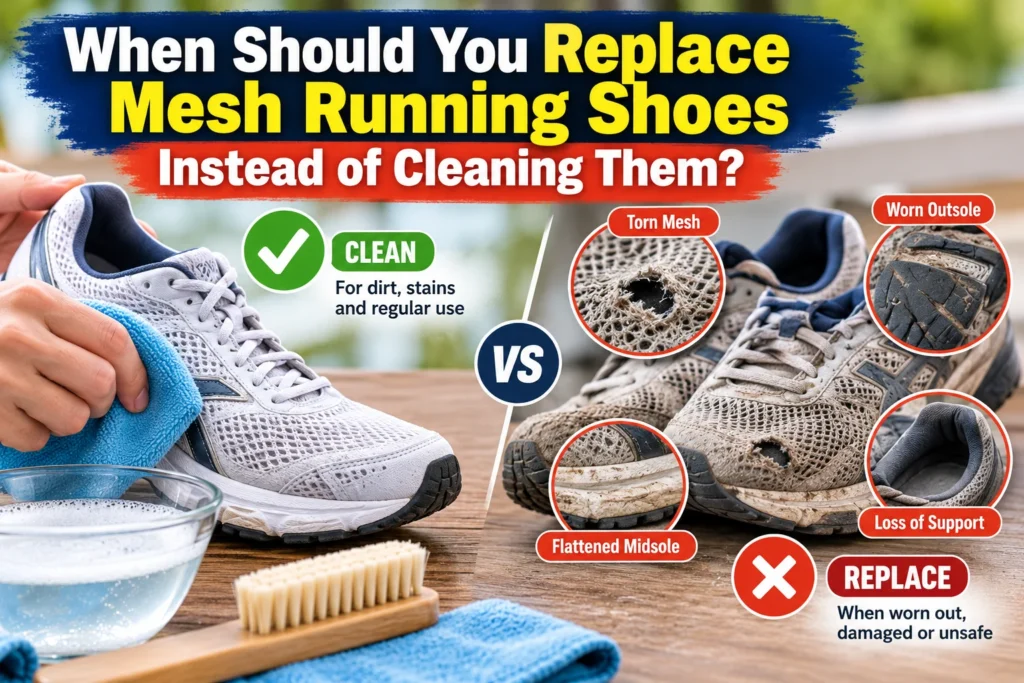
Replace mesh running shoes when structural wear affects their fit, support, or safe use. Cleaning can remove dirt, but it cannot restore damaged cushioning or worn-out construction.
A clean shoe is not necessarily a functional shoe. Inspect more than the appearance of the upper.
Signs Your Shoes May Need Replacing
- Torn mesh: Significant holes or tears compromise containment of the foot.
- Worn outsole: Smooth or uneven tread may reduce traction.
- Damaged cushioning: Midsole changes may affect ride comfort.
- Unstable fit: The shoe no longer holds your foot securely.
- Separating components: The upper or sole is pulling away.
- Persistent discomfort: Pain or unusual pressure occurs despite a proper fit.
Don’t judge replacement needs by dirt alone. Evaluate the entire shoe, especially if its performance has changed.
Which Shoe Cleaning Products Are Worth Considering in 2026?
You can clean mesh running shoes with mild soap and a soft cloth, so a dedicated product isn’t required. However, a quality soft-bristle brush or footwear cleaner may make routine care more convenient.
Here are three established product options for different cleaning needs. The ratings below are editorial suitability scores, not verified Amazon customer ratings.
Affiliate disclosure: As an Amazon Associate, this website may earn from qualifying purchases made through eligible links, at no additional cost to you.
🏆 Gentle Cleaning
Jason Markk Premium Shoe Cleaning Brush
★★★★☆ 4.5/5
A dedicated softer-bristle brush option for delicate sneaker materials. I’d prioritize gentle bristles over aggressive scrubbing when caring for mesh.
Editorial suitability score
🧼 Complete Kit
Jason Markk Essential Kit
★★★★☆ 4.4/5
A footwear cleaning kit combining cleaner and brush components. I’d consider this for someone who regularly maintains several pairs, while checking brush suitability for delicate mesh.
Editorial suitability score
👟 Multi-Shoe Care
Reshoevn8r Essential Shoe Cleaning Kit
★★★★☆ 4.3/5
A multipiece footwear care kit aimed at cleaning different shoe surfaces. I would use only the gentlest suitable tool on mesh and reserve firmer brushes for durable areas.
Editorial suitability score
Frequently Asked Questions About Cleaning Mesh Running Shoes
Can You Put Mesh Running Shoes in the Washing Machine?
Hand washing is generally safer than machine washing mesh running shoes. Washer agitation and prolonged soaking may damage mesh, foam, or adhesive connections. Follow the instructions for your specific shoe model, and avoid machine washing when the manufacturer advises against it.
What Is the Best Homemade Cleaner for Mesh Running Shoes?
A small amount of mild liquid soap mixed with lukewarm water is usually sufficient for routine cleaning. Apply it using a damp microfiber cloth or soft sponge. Avoid bleach and aggressive household cleaning chemicals, and test unfamiliar products on a hidden area first.
How Do You Clean Mesh Running Shoes Without Ruining Them?
Remove dry dirt first, then gently clean the mesh with mild soapy water. Avoid soaking, hard scrubbing, and concentrated heat. Wipe away detergent with a clean damp cloth and let the shoes air-dry completely before wearing them again.
Can You Use Baking Soda to Clean Mesh Running Shoes?
Baking soda can help with some shoe odors, but abrasive rubbing is not ideal for delicate mesh fabric. For the upper, mild soap and water are generally a safer starting point. If using baking soda inside removable insoles, follow the manufacturer’s care instructions.
How Long Does It Take Mesh Running Shoes to Dry?
Mesh running shoes may dry within several hours, but heavily wet shoes can require a day or longer. Drying depends on room temperature, humidity, airflow, and cushioning thickness. Use absorbent paper and a fan if needed, and wait until all components are completely dry.
Final Thoughts: Keep Mesh Running Shoes Clean Without Damage
Learning how to clean mesh running shoes doesn’t require expensive tools or complicated techniques. Gentle hand washing, mild soap, limited moisture, and proper air drying are the essentials.
Pay particular attention to delicate fabric, removable insoles, and drying conditions. Small cleaning habits can help preserve your shoes’ appearance and reduce unnecessary wear.
Before your next run, inspect the mesh, check the outsole, and make sure the shoe interior is dry. Clean your running shoes when needed, but replace them when their structure or performance has deteriorated.


Steven is a former sportsperson and now a full-time businessman and research writer. He is the mastermind of this site, and he created this site to help people who need specialized shoes for different activities. When he was a sportsperson, he was very passionate about different types of shoes for his sports purpose. The passion he had for shoes at that time now turned into his profession. Besides his shoe business, he loves sharing his knowledge and experience with people and helping them maintain healthy feet.
More Posts