

Quick Answer
At the checked Brooks prices, the Glycerin Max 2 is the better buy: $129.95 versus $149.95 for the original Glycerin Max. Both have DNA Tuned cushioning and a 6 mm drop. Choose the original for its lighter, softer feel. Pick the Max 2 for a firmer, more guided ride and the current savings.
What matters most in this Brooks Glycerin Max review?
- The Max 2 costs $20 less on the specific Brooks listings checked.
- The original weighs 10.5 oz, compared with 11.3 oz for Max 2.
- Neither shoe is designed for fast racing or technical trails.
⚡ Quick Verdict — Brooks Glycerin Max vs Max 2
ORIGINAL GLYCERIN MAX
RunRepeat review score
Checked Brooks price; selected color
Easy-paced runners who prefer a softer, lighter max-cushion feel.
GLYCERIN MAX 2
RunRepeat review score
Checked Brooks price; selected color
Recovery miles and walkers wanting a more controlled rocker ride.
| Category | Max | Max 2 |
|---|---|---|
| Overall winner at listed prices | — | 🏆 |
| Best value at listed prices | ❌ | ✅ |
| Softer underfoot feel | ✅ | ❌ |
| Lighter shoe (Brooks listed) | ✅ | ❌ |
| Firmer, more guided transition | ❌ | ✅ |
Bottom line: Glycerin Max 2 wins for value-focused easy runners at the checked prices; the original Glycerin Max is worth buying when its softer, lighter feel fits better or its price drops.
- Max 2 gets the value win at the checked listings because it costs $20 less.
- The original remains compelling for its 10.5 oz listed weight and softer feel.
- Max 2 uses a firmer-feeling platform that better controls some slow strides.
- Both shoes suit easy road miles more than fast interval training.
- A higher stack does not guarantee fewer injuries or better stability.
I’m Steven Tyler, the author behind FootwearHiker, and this Brooks Glycerin Max review tackles a simple buying problem. Should you grab the original shoe, or does the Brooks Glycerin Max 2 make more sense now?
I compared Brooks’ published specifications, independent lab results, current retailer listings, and reported owner experiences. I have not personally wear-tested these two pairs. That distinction matters, because a soft midsole feels different to every runner.
The price comparison also has one catch. Brooks shows different deals across colors and sizes, while Amazon pricing changes independently. Use the figures below as a checked snapshot, not as a promise of your checkout total.
What Is the Original Brooks Glycerin Max Designed to Do?
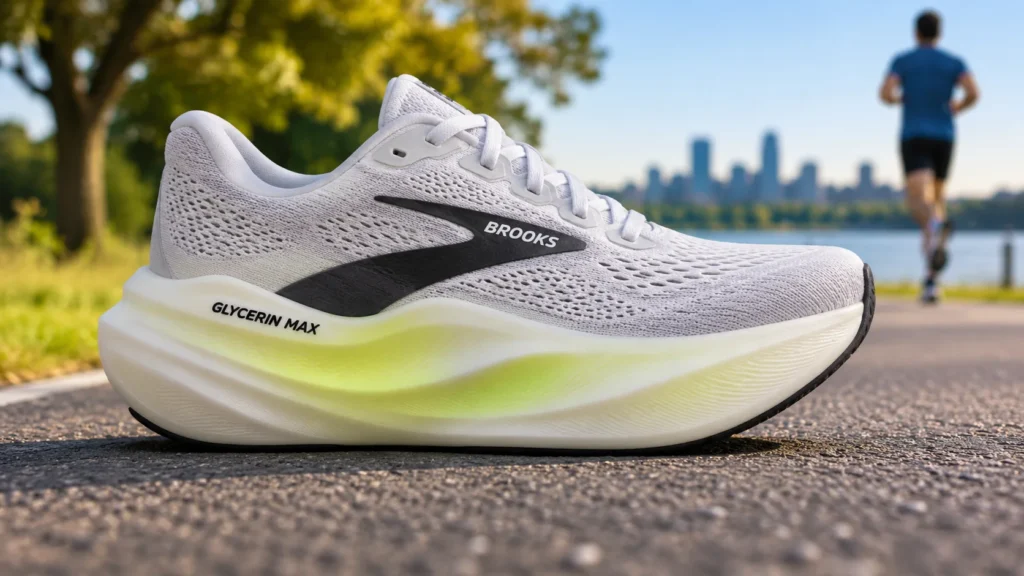
Quick verdict: The original Glycerin Max is a soft, tall neutral road trainer best suited to recovery runs, easy daily miles, and relaxed long runs.
The original Glycerin Max introduced Brooks’ DNA Tuned midsole. This nitrogen-infused foam changes the feel between the heel and forefoot. The design aims to cushion landings while helping the foot roll forward.
Its GlideRoll Rocker shape is also central to the experience. A curved sole encourages the shoe to move through each step. You do not need a fast pace to notice that motion. Walkers and easy runners can benefit from a steady roll.
Brooks lists a 6 mm drop and 10.5 oz men’s weight. That weight is not featherlight, but the shoe is lighter than its direct successor. The large heel and forefoot platforms also make it different from a classic low-profile daily trainer.
There is a trade-off. The thick foam reduces ground feel, and the shoe is not built for quick direction changes. If you prefer lower stacks, the max cushion running shoes guide explains the broader fit and ride differences.
- Plush, forgiving ride
- Less listed weight than Max 2
- Helpful rollover shape
- Comfort focus on paved roads
- Limited fast-pace snap
- Tall feel can take adjustment
- Outsole rubber coverage is selective
- Older sizes can be hard to find
Brooks Men’s Glycerin Max Neutral Running & Walking Shoe
Brooks checked price: $149.95 for one listed colorway. Amazon may show another color, size, or price.
What Does the Brooks Glycerin Max 2 Change?
Quick verdict: Max 2 keeps the high stack and DNA Tuned midsole, but its firmer feel and shaped rocker offer a more guided ride.
The Brooks Glycerin Max 2 is not a new type of shoe. It still targets long runs, recovery sessions, daily miles, and comfortable walking. Brooks lists the same 6 mm drop for both shoes.
The newer model weighs 11.3 oz in the manufacturer’s men’s specification. That is 0.8 oz more than the original. At a relaxed pace, some runners accept that extra mass for a smoother sense of control. Others notice the bulk after longer outings.
Independent tests by RTINGS describe the Max 2 as slightly firmer and more assertively rockered. Their findings support a better-defined forward transition, not a dramatic jump in spring or racing performance. The thicker upper can also feel warmer.
The Max 2 has broad cushioning and a stable-feeling platform, but it remains a neutral shoe. Brooks’ “max support” product label does not mean a medical support device or a motion-control shoe. Check comfort and gait needs before choosing.
- More guided rocker sensation
- Deep cushioning for slower miles
- Substantial heel and foot coverage
- Strong value at checked sale price
- Heavier than the original
- Thick upper can run warm
- Low bounce for speed work
- May feel bulky for nimble runners
Brooks Men’s Glycerin Max 2 Running Shoe
Brooks checked price: $129.95 for one listed colorway. Amazon price and stock may differ.
How Do the Brooks Glycerin Max and Max 2 Specs Compare?
Both shoes share the core traits of a plush, neutral max-cushion trainer. The largest listed differences are weight, upper construction, and the way independent reviewers describe the ride. The checked price is another key distinction.
| Category | Original Glycerin Max | Glycerin Max 2 | What it means |
|---|---|---|---|
| Checked Brooks U.S. price | $149.95 | $129.95 | Max 2 is $20 cheaper for these listings |
| Original list price | $200.00 | $200.00 | Same $200 starting reference |
| Manufacturer drop | 6 mm | 6 mm | No stated drop change |
| Manufacturer men’s weight | 10.5 oz / 297.7 g | 11.3 oz / 320.3 g | Original is 22.6 g lighter |
| Midsole | DNA Tuned | DNA Tuned | Both target soft landings |
| Outsole concept | Road rubber, selected zones | Road rubber, wider coverage reported | Check wear and wet grip |
| Ride feel in independent reviews | Softer, forgiving | Firmer, more guided | Choose by preferred underfoot feel |
| Rocker | GlideRoll Rocker | GlideRoll Rocker, revised feel | Both guide forward motion |
| Support category | Neutral | Neutral | Neither is a rigid stability shoe |
| Plate | No | No | Neither is a plated racer |
| Best surface | Paved roads, sidewalks | Paved roads, sidewalks | Not technical trail shoes |
| Upper recycled content | 66.4% | 65.4% | Brooks published upper figures |
| Fit note | Try normal size first | Try normal size first | Check individual color and width |
| Primary use | Recovery and easy running | Recovery, easy and long running | Both favor comfort |
The two manufacturer weight claims use the same retail information source, but weights still depend on size. Lab results also depend on test methods. For example, RTINGS reports differing measured stack heights from its own protocols; avoid treating any one height as universally exact.
You can cross-check the figures on the Brooks original product page and Brooks Max 2 product page. For the measured ride differences, see the RTINGS side by side comparison.
Which Brooks Glycerin Max Has Softer Cushioning?
Winner: original Glycerin Max for a softer sensation. Both versions use DNA Tuned foam, but independent reviewers describe the first model as more forgiving. The Max 2 is a touch firmer and can feel more composed during slow, weighty landings.
This does not make the original the safer choice for everyone. Midsole softness is a feel, not a medical outcome. A runner who dislikes a sinking sensation may prefer the steadier response of Max 2, even while asking for maximum cushioning.
One useful contrast is between softness and rebound. The original can feel more plush at the moment of impact, yet that does not make it faster. Independent RunRepeat testing reports limited energy return for the original, and the Max 2 also scores modestly for energetic response.
Imagine a gentle five-mile recovery jog on smooth streets. The original lets you settle into cushioned steps without demanding speed. If that same runner wants a firmer platform on tired legs, the Max 2 may feel more controlled. For more context, see our soft versus firm cushioning guide.
Which Shoe Rolls Forward More Smoothly on Long Runs?
Winner: Glycerin Max 2 for a more pronounced, guided roll. The redesigned feel suits runners who like a rocker to assist heel-to-toe motion. This is a design preference, not an automatic speed gain.
Both versions use a GlideRoll Rocker. A rocker means the sole curves to help the foot move from landing to toe-off. In practice, the shape changes how the shoe feels during walking and steady jogging.
The Max 2 pairs that motion with slightly firmer cushioning, according to RTINGS. Its transition can feel more deliberate instead of melting into each landing. Runners who enjoy a flexible forefoot or a flatter sensation can dislike that effect.
Consider a paved ten-mile training route with long straight sections. A consistent rocker may ease the sensation of rolling through each step. However, sharp corners, slanted pavements, and quick surges show the cost of a high, bulky design. Neither shoe is ideal for those demands.
Before a half-marathon build, try either model on your usual easy route. The long distance running shoes guide covers fitting and testing choices for longer outings.
Which Brooks Glycerin Max Is Better Value for the Price?
Winner: Glycerin Max 2 at the checked Brooks prices. A specific original Glycerin Max listing showed $149.95, while the compared Max 2 listing showed $129.95. That makes the successor $20 cheaper, even though both carried a $200 original price.
This is a snapshot, not a guaranteed nationwide deal. Color and size availability can reverse the comparison. Amazon can also list a different amount from Brooks. Check the exact variant you plan to order before deciding.
A simple test avoids overspending: compare two pairs in the same size, then check the return terms. If you find the original for $100 and Max 2 for $150, the softer old model becomes a strong value choice. That is an example threshold, not a verified live offer.
The buyer’s mistake is assuming the newest shoe must cost more. Sales make version numbers less important than fit and checkout price. The running shoe discount guide explains how to compare closeout deals without ignoring return rules.
Which Has Better Fit, Grip, and Everyday Stability?
Winner: Max 2 for runners who favor a more controlled platform; no universal grip winner is proven. Both are neutral shoes with tall midsoles. Fit and outsole contact are as important as how soft the foam feels.
RTINGS notes the Max 2’s more controlled ride, and independent reviewers describe added outsole coverage. That may suit high-mileage road use. Still, rubber coverage alone cannot promise traction on every wet surface.
The original’s upper can feel airy and plush, while the Max 2 adds padding that some wearers may find warm. Neither is automatically the right choice for wide feet. Review toe height, heel hold, and arch comfort in your size.
Use a thumb-width check for length, then walk and jog indoors on a clean floor. Your heel should remain secure. The toes should not press the front. If one model squeezes your instep, switching the version can matter more than switching the size.
Surface warning: Both models have tall cushioning. They are not designed for rocky trail descents, slippery slopes, or fast lateral sports. Test wet-pavement traction carefully and avoid assuming thick foam prevents injuries.
Which Brooks Glycerin Max Wins in Real-World Use?
The better shoe depends on the activity, especially when prices change. Easy road miles are the common strength. Gym agility work, muddy tracks, and race-day speed are not their natural settings.
Which Is Better for Easy Recovery Runs?
The original Glycerin Max wins for runners who prefer deep softness. Its forgiving feel suits short recovery jogs after harder sessions. Max 2 wins instead when your feet prefer a firmer transition and less of a sinking sensation.
Try the choice at conversational pace, not during a sprint. Comfort during the first minute matters less than comfort after a full easy run. Neither model can substitute for reduced training load when your legs need recovery.
Which Is Better for Long Road Runs?
The Max 2 wins for a guided, cushioned roll on paved long runs. The original still wins for runners who value the lighter listed weight and enjoy its softer midsole.
For a long, flat route, test how the shoe feels near the end of the run. Look for heel movement, toe pressure, and arch discomfort. A thicker midsole is not useful if the upper creates blisters.
Which Is Better for Walking and Standing at Work?
The Max 2 is the practical starting point for slow walking if you enjoy a firmer rocker. The original can feel softer for casual walks and short commutes. Neither is certified slip-resistant work footwear.
For hospital, hospitality, or warehouse shifts, first check workplace footwear rules. Wet tiles, oil, and moving equipment demand appropriate traction. A running shoe that feels comfortable on pavement may fail those requirements.
Which Is Better in Cold Weather?
Neither shoe has a clear cold-weather win from published manufacturer specifications. Both rely on foam and road outsoles rather than winter-specific rubber or insulation. Cold can change cushioning feel and grip.
On a dry, chilly sidewalk, choose the version that fits securely with your socks. On icy or snowy ground, use footwear designed for those conditions. High cushioning does not replace reliable traction.
Which Works for Heavy Daily Mileage?
Max 2 gets a narrow preference for runners who want a controlled, cushioned platform. Its reported broader rubber contact is useful context, but it does not provide a guaranteed longer lifespan than the original.
Track the outsole tread and midsole feel across your training cycle. A shoe may still look good after the cushioning becomes less comfortable. Rotate footwear when one pair starts causing rubbing or unstable landings.
Which Is Better for Fast Training?
Neither model wins fast workouts. Their height, mass, and soft-cushion focus make them less nimble than speed-oriented trainers. The Max 2’s firmer roll does not turn it into a racing shoe.
For short intervals, look for a lighter model with strong grip and a responsive midsole. A lower-cost performance trainer can serve that task better than either $200-list-price max-cushion shoe.
Is the Price Difference Worth Paying for Either Version?
Choose the Max 2 when it costs the same or less, unless the original fits your feet better. Paying extra for the older shoe only makes sense when its softness, lower weight, or personal fit justifies the premium.
At the checked prices, $20 buys nothing additional by choosing the original. You would pay that amount for its specific ride feel instead. Someone who dislikes a firm rocker can make that trade confidently after trying both pairs.
Watch for hidden costs. A nonreturnable closeout pair can become expensive if it rubs your toes. Shipping and taxes can change the final difference. Amazon marketplace sellers may have different policies, even when the product name looks identical.
Compare model numbers and product photos before buying. The original men’s model is associated with style number 110447. The Max 2 men’s model uses style number 110479. Colors, widths, and Amazon ASINs vary by listing, so verify the offered item.
Who Should Buy the Brooks Glycerin Max or Max 2?
Buy the shoe that matches your easy-running needs and your foot shape. Version numbers should come second. For neutral road runners who want deep cushioning, both are plausible choices, but the following fit checks make the decision clearer.
- You want the softer sensation.
- You notice shoe weight on long walks.
- You find a lower price in your size.
- You have tried it and know the fit works.
Skip it if:
You need a firmer feel or dislike tall, soft soles.
- You want a more guided rocker.
- You prefer controlled, slow cushioning.
- It costs the same or less.
- You want a newer model for road miles.
Skip it if:
You dislike extra weight or thick, warm uppers.
Don’t buy either: If you need a lightweight race shoe, certified slip-resistant work footwear, technical-trail traction, or a lower-stack feel, consider a model built for that exact job.
For context, a standard daily trainer such as the Brooks Glycerin 22 offers a different balance of cushioning and ground feel. Our Brooks Glycerin 22 review is a useful alternative if these taller models feel excessive.
What Are Real Buyers and Independent Testers Saying?
Most published feedback centers on comfort for slower miles, not speed. The original receives praise for plushness, while its weight and muted energy return draw criticism. The Max 2 earns comments for its guided ride but also for bulk and upper warmth.
RunRepeat’s published review gave the original 84 out of 100 and Max 2 85 out of 100. Those are RunRepeat scores, not our own lab results. Its lab work described strong impact cushioning but modest energy return for both versions.
Independent RTINGS testing sees the Max 2 as a refinement rather than a major upgrade. It describes the older shoe as softer and the newer shoe as firmer and more rockered. Such differences can be more meaningful than a one-point score gap.
User discussions add a useful warning about personal preference. Some owners love the first version’s foam and do not enjoy the follow-up. Others prefer the firmer Max 2. These comments are individual reports, not a representative consumer survey.
- Often praised: soft landings, steady walking comfort, recovery-run cushioning.
- Often criticized: heavy feel, low speed-work snap, bulky build.
- Most useful takeaway: fit and ride preference can outweigh small review-score differences.
I would not call either shoe universally better for knee pain, plantar fasciitis, or joint conditions. A comfortable shoe can reduce perceived discomfort, but a product review cannot establish a treatment benefit. Ask a qualified clinician when pain persists.
How Do You Care for Brooks Glycerin Max Running Shoes?
Keep both versions clean, dry, and away from high heat. Road grit can wear the outsole, while poor drying can leave the upper damp. Simple care helps protect the shoe, but it cannot stop normal foam aging.
- After each run: Brush dirt from the outsole and check for sharp debris.
- For a light clean: Use mild soap, cool water, and a soft cloth or brush.
- To dry: Remove the insoles when possible and air-dry at room temperature.
- For storage: Keep shoes out of direct sunlight, heaters, and hot vehicle interiors.
- For rotation: Alternate pairs if you run on most days.
- For inspection: Watch uneven tread wear, tearing, heel slip, and a changed ride feel.
Do not put either shoe in a tumble dryer. Heat can affect adhesives and foams. Avoid soaking shoes in strong cleaners or bleach. If the material changes shape, gentle cleaning will not restore the original structure.
There is no single mileage limit that fits every runner. Body size, running surface, stride, and storage all influence wear. Replace a pair when support and comfort fade, not just when the outsole looks dirty.
Fit tip: Use the socks you actually run in. Try a short indoor jog before removing tags, and check the retailer’s return terms before outdoor testing.
Final Verdict: Is the Original Brooks Glycerin Max Still Worth It?
Yes, the original Glycerin Max remains worth buying for its softer ride and lighter listed weight. However, the Max 2 is the better deal in the Brooks listings checked for this review. It costs $20 less while delivering a more guided, firmer transition.
The original is not outdated simply because Max 2 exists. Both use DNA Tuned cushioning, carry a 6 mm manufacturer drop, and focus on slower road miles. If the old shoe fits your foot well, upgrading without a clear need offers limited benefit.
For a new buyer who has tried neither shoe, I favor Max 2 at the verified prices. If the original drops further or feels better during your own fitting, choose it without hesitation. That fit decision will matter more than a small specification difference.
Original: softer and lighter
Max 2: better deal at checked price
Frequently Asked Questions
Is the Brooks Glycerin Max better than the Max 2?
The original Brooks Glycerin Max is better if you prefer a softer ride and lower listed weight. The Max 2 is better if you want a firmer, more guided rocker or find it at a lower price. Both target easy and recovery miles, so fit and current price should decide.
What is the biggest difference between Glycerin Max and Max 2?
The biggest difference is ride feel rather than a new purpose. Both have DNA Tuned cushioning and a listed 6 mm drop. Independent comparisons describe the original as softer, while the Max 2 feels a little firmer and more guided. The newer shoe also weighs more in Brooks’ specifications.
Are Brooks Glycerin Max shoes good for walking?
Yes, both Brooks Glycerin Max versions can work well for casual walking on paved surfaces. They offer deep cushioning and rocker-style transitions. However, their tall build can feel unusual at first. They are not substitutes for certified slip-resistant work shoes or shoes designed for rough trails.
Can I use the Glycerin Max for a marathon?
You can use either Glycerin Max for long, easy training runs, but neither is primarily a racing shoe. Their generous cushioning favors comfort over quick turnover. If you race at a relaxed pace and love the fit, they remain options. Faster runners often prefer lighter, more responsive footwear.
Should I size up in the Brooks Glycerin Max 2?
Do not size up automatically. Start with your usual Brooks running-shoe size, then check toe space, width, and heel hold. Foot shape matters more than a general sizing rule. Try the pair with running socks and confirm returns before taking it onto outdoor roads.
Affiliate Disclosure: As an Amazon Associate, I earn from qualifying purchases. If you click a link on this page and make a purchase, I may receive a small commission — at no extra cost to you. I only recommend products I genuinely believe will help you. This helps keep the site free and running. Thank you for your support.


