
Quick Answer
To clean trail running shoes, remove loose mud, take out the insoles and laces, gently scrub the outsoles and uppers, and rinse away dirt. Air-dry everything away from direct heat before wearing the shoes again. This hand-cleaning approach follows established running shoe care guidance.
6 Quick Cleaning Steps
- Remove loose mud: Knock off large clumps and gently brush away dirt.
- Take shoes apart: Remove laces and insoles for separate cleaning.
- Clean the outsoles: Scrub mud from the tread grooves using a brush.
- Wash the uppers: Use water and a shoe-safe cleaner when needed.
- Rinse carefully: Remove remaining grime without prolonged soaking.
- Air-dry completely: Keep shoes away from direct sunlight and heaters.
Important: Avoid machine washing unless the manufacturer specifically permits it.
Trail running shoes face a different kind of dirt than road running shoes. Mud, sand, small stones, and wet vegetation can collect across the upper and inside deep outsole grooves.
Fortunately, cleaning them doesn’t need to become a major project. This guide covers a practical routine, safer cleaning methods, and common mistakes worth avoiding.
What Does Cleaning Trail Running Shoes Actually Involve?
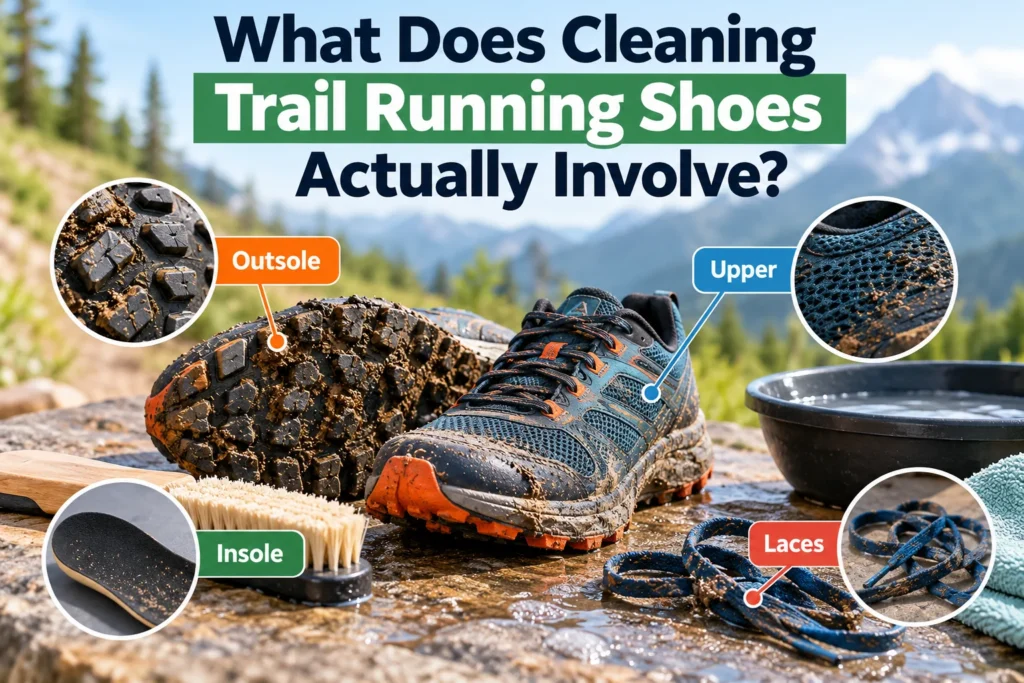
Cleaning trail running shoes means removing accumulated dirt from the outsole, upper, insole, and other exposed surfaces without damaging the shoe’s construction.
The goal isn’t to make every shoe look brand-new. It’s to maintain traction, comfort, and the condition of the materials.
Why Do Trail Running Shoes Need Special Cleaning?
Trail shoes usually have aggressive tread patterns and durable uppers designed for uneven terrain. These features also create places where mud and debris can accumulate.
- Deep outsole lugs: Mud can become trapped between the raised tread sections.
- Mesh uppers: Fine dust and grit can settle into fabric openings.
- Reinforced toe areas: Dirt collects around the edges of protective overlays.
- Padded collars: Sweat and moisture can leave unpleasant odors.
- Waterproof membranes: These require compatible cleaning products.
Cleaning should protect these components instead of exposing them to unnecessary scrubbing or heat.
What Happens If You Never Clean Trail Running Shoes?
Leaving mud and grit on your shoes can affect traction and contribute to material wear. The problem becomes more noticeable after repeated muddy runs.
- Accumulated mud can reduce the effectiveness of outsole traction.
- Embedded grit can rub against upper materials.
- Persistent moisture can encourage unpleasant odors.
- Stones trapped in tread grooves may damage the outsole.
- Dirt can conceal developing damage or loose sections.
Salomon’s running shoe cleaning advice recommends removing mud and allowing footwear to dry in a ventilated area.
What Supplies Do You Need to Clean Trail Running Shoes?
You only need a few basic supplies for most trail shoe cleaning jobs. Expensive cleaning equipment is optional.
- A soft-bristle shoe brush or old toothbrush
- A slightly firmer brush for durable rubber outsoles
- A bowl of lukewarm or cool water
- A mild, manufacturer-approved shoe cleaner
- A microfiber cloth or soft sponge
- A clean towel
- Plain paper or an absorbent cloth for drying
Choose your cleaning solution carefully. Waterproof shoes may require a dedicated cleaner rather than ordinary laundry detergent.
Should You Use Soap or a Special Shoe Cleaner?
For many non-waterproof synthetic running shoes, a small amount of mild soap can help remove stubborn dirt. Always check the manufacturer’s instructions first.
For waterproof trail shoes, use a cleaner specifically approved for waterproof-breathable footwear. This helps avoid products that may interfere with water repellency.
| Cleaning Method | Best Use | Main Precaution |
|---|---|---|
| Water and soft brush | Loose dirt and light mud | Avoid excessive force on mesh. |
| Mild soap solution | Dirty synthetic uppers | Confirm material compatibility. |
| Waterproof-footwear cleaner | Gore-Tex and similar footwear | Follow the product instructions. |
| Damp cloth | Small stains and spot cleaning | May not remove embedded dirt. |
| Washing machine | Generally not recommended | May damage foam, adhesives, or fabric. |
How Do You Clean Trail Running Shoes Step by Step?
The safest general approach is to clean your shoes by hand, starting with the muddiest areas. Work from the outsole toward the upper, then finish with removable components.
Step 1: Remove Excess Mud and Debris
Start by checking how much mud has accumulated. Heavy, wet mud is often easier to remove before it hardens on the upper.
- Take the shoes outside or place them over a suitable cleaning area.
- Gently knock off large clumps of mud.
- Remove visible stones and loose debris from the outsole.
- Use a soft brush to loosen remaining dirt.
If mud is concentrated in the rubber tread, allowing it to dry slightly can make brushing easier. Avoid letting thick wet mud remain embedded in the mesh for days.
Step 2: Remove the Laces and Insoles
Take out the laces and removable insoles before deeper cleaning. This exposes areas that normally stay hidden during a quick rinse.
- Set the laces aside for separate hand washing.
- Remove both insoles gently.
- Inspect the shoe interior for sand or small stones.
- Shake loose particles out before adding water.
Removing the insoles also improves air circulation during drying.
Step 3: Scrub the Outsoles Carefully
The outsole is the rubber bottom of the shoe that contacts the trail. It’s often the dirtiest part after muddy runs.
- Hold the shoe with its outsole facing upward.
- Use a brush to loosen mud between the lugs.
- Apply a little water to stubborn areas.
- Remove stones trapped in tread grooves.
- Rinse away the loosened dirt.
You can use a slightly firmer brush on durable rubber, but avoid sharp metal tools. They can damage the outsole.
Practical tip: Clean between the tread lugs rather than focusing only on the flat rubber surfaces.
Step 4: Clean the Mesh and Upper Material
The upper is the fabric and supportive material surrounding your foot. Most modern trail running shoes use synthetic mesh, overlays, or reinforced panels.
- Wet a soft cloth or brush with clean water.
- Add a small amount of compatible cleaner if necessary.
- Gently work across dirty sections.
- Pay attention to the toe box and sides.
- Remove cleaning residue with clean water.
Use lighter pressure around thin mesh and glued overlays. Repeated aggressive scrubbing can weaken delicate surfaces.
Step 5: Wash the Insoles and Shoelaces
Insoles can retain sweat and odor even when the outer shoe looks clean. Washing them separately makes it easier to target those areas.
- Laces: Hand wash with mild soap, rinse, and lay flat to dry.
- Insoles: Wipe or gently scrub with a compatible cleaner.
- Interior: Remove loose debris with a dry cloth or soft brush.
- Odor: Use a material-safe footwear deodorizer if necessary.
Avoid soaking insoles for extended periods. Some have layers or adhesives that may deteriorate with excessive water exposure.
Step 6: Rinse Away Remaining Dirt
Use a gentle flow of clean water or a damp cloth to remove loosened dirt and cleaning solution.
Don’t leave soap residue on the upper. It can affect the fabric’s appearance and may attract additional dirt.
Step 7: Air-Dry Your Shoes Properly
After cleaning, let your trail running shoes dry naturally in a ventilated location. Don’t use a heater or tumble dryer.
- Shake away excess water.
- Blot the outside with a clean towel.
- Place absorbent paper inside if needed.
- Replace damp paper periodically.
- Dry the insoles and laces separately.
- Reassemble everything only when completely dry.
A fan can improve airflow without exposing shoes to damaging heat. Avoid prolonged exposure to intense direct sunlight.
Brooks also recommends hand cleaning and air drying in its running shoe cleaning instructions.
How Do You Clean Waterproof Trail Running Shoes?
Waterproof trail shoes need cleaning methods compatible with their membrane and water-repellent outer materials. Follow the manufacturer’s instructions rather than using a general laundry product.
Gore-Tex and similar membranes are designed to keep liquid water out while allowing moisture vapor to escape under suitable conditions.
Cleaning Waterproof Trail Shoes Safely
- Remove surface dirt with a soft brush.
- Rinse loose mud using clean water.
- Apply a cleaner approved for waterproof footwear.
- Clean the upper gently and rinse as directed.
- Allow the shoe to dry naturally.
- Check whether the outer fabric still repels water.
If water stops beading on the outside, a compatible durable water-repellent treatment may help. Cleaning alone cannot repair a torn membrane.
Check Nikwax footwear care recommendations for material-specific cleaning and reproofing advice.
Can You Put Trail Running Shoes in the Washing Machine?
Machine washing is generally not recommended for trail running shoes. The mechanical action, prolonged soaking, and heat can damage materials or adhesives.
Even shoes that look durable may contain lightweight cushioning foam and bonded construction elements.
Why Is Hand Washing Usually Better?
- It lets you control pressure on delicate fabric.
- You can target mud without soaking the whole shoe.
- It reduces unnecessary stress on glued components.
- You can clean the outsole more precisely.
- It allows separate care for laces and insoles.
Follow your specific shoe model’s care instructions if they differ from general advice.
How Do You Dry Trail Running Shoes Without Damaging Them?
Air drying at room temperature is the safest general approach. Use ventilation and absorbent materials instead of high heat.
Drying time varies with humidity, footwear construction, and how wet the shoes became. Don’t assume they’re ready simply because the outer fabric feels dry.
What Should You Avoid When Drying Shoes?
- Do not place shoes directly against a radiator.
- Avoid hair dryers on hot settings.
- Don’t put shoes inside a tumble dryer.
- Avoid storing damp shoes in sealed plastic bags.
- Don’t reinstall wet insoles before storage.
Check the interior lining and toe area before wearing them again. Hidden moisture can remain after the outsole looks dry.
How Often Should You Clean Trail Running Shoes?
Clean trail running shoes according to how dirty they become. A quick check after every run is more useful than following a rigid washing schedule.
| Trail Condition | Suggested Cleaning |
|---|---|
| Dry, clean trail | Brush loose dust and inspect the outsole. |
| Light mud | Remove mud after the run and air-dry. |
| Heavy mud | Clean the outsole and upper promptly. |
| Wet or stream-covered route | Rinse contaminants and dry thoroughly. |
| Extended storage | Clean, inspect, and fully dry before storing. |
These are practical guidelines rather than strict manufacturer schedules. Adjust them for local trail conditions and shoe materials.
What Are the Most Common Trail Shoe Cleaning Mistakes?
Most cleaning problems come from excessive heat, harsh products, or unnecessary scrubbing. Avoiding these mistakes protects the shoe’s materials.
- Using hot water: High temperatures may damage some materials and adhesives.
- Scrubbing mesh aggressively: This can fray delicate fibers.
- Using bleach: Harsh chemicals may discolor or weaken materials.
- Applying incompatible detergent: Residues may affect waterproof treatments.
- Drying beside a heater: Heat can compromise foam and bonded components.
- Ignoring trapped stones: Debris can remain lodged in the outsole.
- Storing damp shoes: Trapped moisture encourages odor and mildew.
- Cleaning only the upper: This leaves the muddiest tread areas untreated.
One useful habit is to inspect the entire shoe while cleaning. A loose overlay or worn tread may be easier to notice after mud is removed.
How Can You Keep Trail Running Shoes Cleaner Between Runs?
Simple after-run maintenance reduces the need for frequent deep cleaning. The main priorities are removing debris and allowing moisture to escape.
After-Run Maintenance Checklist
- Remove visible mud and stones.
- Shake loose dirt out of the shoe interior.
- Loosen laces to improve ventilation.
- Remove damp insoles when appropriate.
- Keep shoes in an airy, dry location.
- Inspect tread and upper wear periodically.
A shoe mat near your entryway makes this routine easier. It also keeps trail debris from spreading through your home.
When Should You Replace Trail Running Shoes Instead of Cleaning Them?
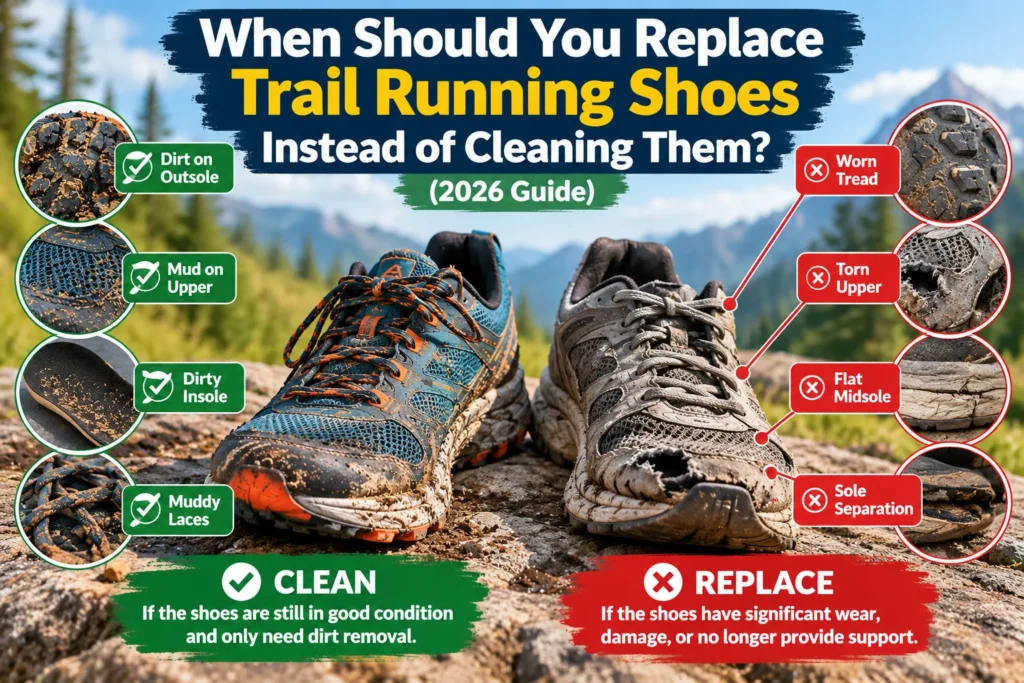
Cleaning can remove dirt, but it cannot restore worn-out tread, damaged foam, or structural support. Replacement may be necessary when the shoe no longer performs safely.
Signs That Cleaning Won’t Solve the Problem
- Worn tread lugs: The outsole has lost significant grip on familiar surfaces.
- Exposed cushioning: Rubber wear reveals the midsole in important contact areas.
- Damaged upper: Large tears reduce fit or protection.
- Loose sole sections: Separation continues or creates a tripping hazard.
- Unstable ride: The shoe feels uneven or noticeably different underfoot.
- Persistent discomfort: Pain or pressure continues despite correct fit and cleaning.
Mileage alone cannot determine when a trail shoe needs replacing. Terrain, running style, materials, and maintenance all affect wear.
If you’re unsure, compare the shoe against a newer pair and inspect its tread. Replace shoes when their condition compromises comfort, fit, or dependable traction.
Which Products Help Clean Trail Running Shoes?
Most trail shoes can be maintained with a good brush and water. Specialized products are most useful for stubborn grime or waterproof materials.
Here are three practical options to consider for a compact cleaning kit.
🏆 Waterproof Footwear Pick
Nikwax Footwear Cleaning Gel
★★★★☆
A dedicated cleaner for outdoor footwear, including suitable waterproof-breathable shoes. It’s a practical choice when ordinary soap isn’t recommended for your trail shoes.
🪥 Gentle Brush Option
Jason Markk Premium Shoe Cleaning Brush
★★★★☆
A softer shoe-care brush suited to controlled cleaning of many upper materials. I favor this type of tool over a stiff brush when working around lightweight mesh.
💨 Odor-Care Option
Gear Aid Revivex Odor Eliminator
★★★★☆
An odor-control treatment designed for suitable washable gear. Consider it when cleaning and ventilation alone don’t fully address persistent smells.
Product suitability ratings above are editorial assessments, not verified customer ratings. Check current product labels and compatibility before use. As an Amazon Associate, qualifying purchases may earn a commission.
Frequently Asked Questions About Cleaning Trail Running Shoes
Can You Wash Trail Running Shoes With Water?
Yes. Most trail running shoes can be cleaned using water and gentle brushing, subject to the manufacturer’s care instructions. Avoid prolonged soaking, particularly when shoes contain delicate foam, leather, or bonded materials. Waterproof footwear may require a compatible cleaner.
Should You Clean Muddy Trail Shoes Immediately?
Remove heavy wet mud reasonably soon after a run, especially when it covers the fabric upper. For mud trapped only in rubber tread, allowing it to dry slightly may simplify brushing. Clean the shoes before dirt becomes deeply embedded.
Can You Use Dish Soap on Trail Running Shoes?
A small amount of mild soap may be acceptable on certain non-waterproof synthetic shoes, but dish soap isn’t universally appropriate. Some formulas contain additives that leave residue. Follow the shoe manufacturer’s recommendations and use dedicated cleaners for sensitive waterproof materials.
How Long Do Trail Running Shoes Take to Dry?
Drying time depends on humidity, ventilation, construction, and how much water entered the shoe. Some shoes dry overnight, while saturated or waterproof models can take considerably longer. Check the lining and insoles for moisture before wearing them.
Does Cleaning Trail Running Shoes Make Them Last Longer?
Regular cleaning can help by removing abrasive grit, accumulated mud, and moisture-related contamination. However, it cannot prevent normal cushioning compression or outsole wear. Careful drying, appropriate storage, and regular inspection also contribute to maintaining shoe condition.
Final Thoughts: Keep Your Trail Running Shoes Clean and Ready
Knowing how to clean trail running shoes makes post-run maintenance easier. You don’t need complicated equipment or harsh chemicals to remove everyday trail dirt.
Focus on gentle brushing, appropriate cleaners, thorough rinsing, and natural drying. Keep the outsoles clear and inspect your shoes for damage while cleaning.
The best routine is the one you’ll actually follow after muddy runs. A few minutes of basic maintenance can help keep your footwear comfortable and ready for the next trail.


Steven is a former sportsperson and now a full-time businessman and research writer. He is the mastermind of this site, and he created this site to help people who need specialized shoes for different activities. When he was a sportsperson, he was very passionate about different types of shoes for his sports purpose. The passion he had for shoes at that time now turned into his profession. Besides his shoe business, he loves sharing his knowledge and experience with people and helping them maintain healthy feet.
More Posts