
Quick Answer
Low-drop running shoes have a smaller height difference between the heel and forefoot, typically 0–4 mm. High-drop running shoes usually have more than 8 mm of difference. Neither is universally better: the right choice depends on your running habits, comfort, and ability to adapt. The REI running shoe guide also emphasizes choosing a drop that works with your natural running style.
Key Differences
- Low drop (0–4 mm): Less heel elevation and potentially greater demands on the calf and Achilles tendon.
- Moderate drop (5–8 mm): A middle-ground option for runners who prefer neither extreme.
- High drop (9 mm or more): More heel elevation, often familiar to runners using traditional training shoes.
- Injury prevention: Research does not establish one heel-to-toe drop as safest for everyone.
- Best starting choice: Begin with a comfortable, familiar drop rather than making an extreme change.
Before You Buy
- Check your current shoes: Find their stated heel-to-toe drop.
- Compare gradually: Test a different drop on short runs before increasing distance.
- Prioritize fit: Proper sizing, comfort, and stable footing matter alongside drop.
Choosing between low drop and high drop running shoes seems simple until you consider how each design affects your stride. A few millimeters can change how a shoe feels underfoot.
I prefer comparing drop alongside cushioning, fit, and training habits rather than treating one number as a performance guarantee. This guide explains the differences, injury research, transition process, and useful shoe options for 2026.
What Does Heel-to-Toe Drop Mean in Running Shoes?
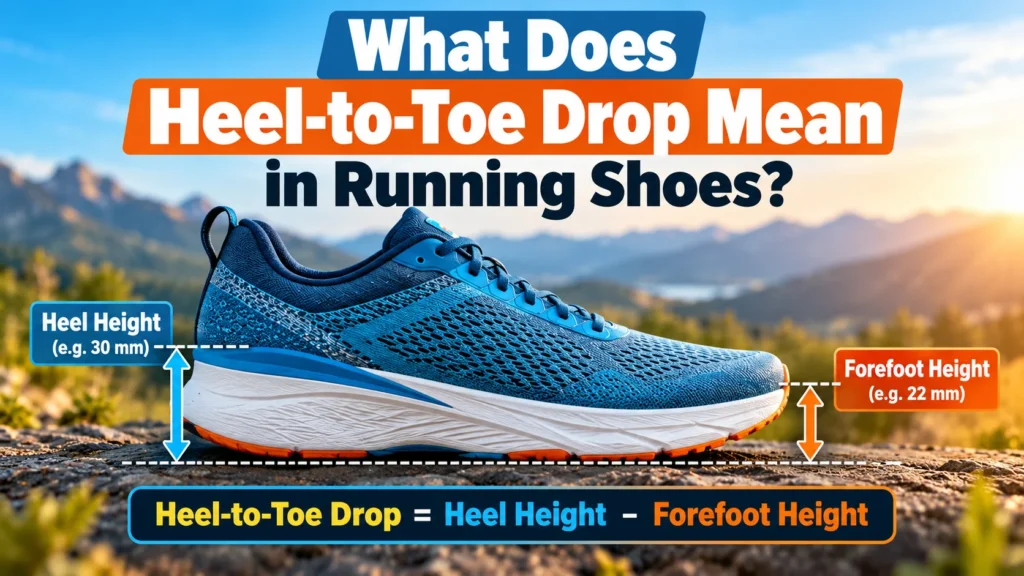
Heel-to-toe drop is the vertical height difference between the heel and forefoot of a running shoe. Manufacturers normally express this measurement in millimeters.
It is also called heel drop, shoe offset, or heel-to-forefoot drop. The measurement describes the shoe’s geometry, not its overall cushioning level.
- Heel height: The shoe’s height beneath the heel.
- Forefoot height: The height beneath the ball of the foot.
- Heel-to-toe drop: Heel height minus forefoot height.
- Stack height: The overall material thickness under a particular part of the foot.
How Is Running Shoe Drop Calculated?
The calculation is straightforward: subtract the forefoot stack height from the heel stack height. For example, a shoe with 35 mm at the heel and 30 mm at the forefoot has a 5 mm drop.
Here are four simplified examples showing why drop and total cushioning are different measurements.
| Heel height | Forefoot height | Drop | Category |
|---|---|---|---|
| 25 mm | 25 mm | 0 mm | Zero drop |
| 34 mm | 30 mm | 4 mm | Low drop |
| 35 mm | 30 mm | 5 mm | Moderate drop |
| 40 mm | 30 mm | 10 mm | High drop |
These measurements illustrate the calculation rather than specifications for particular products. Actual published stack heights may depend on measurement methods and whether the insole is included.
Low Drop vs High Drop Running Shoes: What Are the Main Differences?
The primary difference is heel elevation relative to the forefoot. That change may influence comfort, ankle mechanics, and how running loads are distributed.
However, drop does not determine every aspect of a running shoe. Midsole softness, rocker shape, width, and overall stack height also affect the ride.
| Feature | Low drop | High drop |
|---|---|---|
| Typical drop | 0–4 mm | 9 mm or more |
| Heel elevation | Small | Greater |
| Calf/Achilles demands | May increase when switching from high drop | May feel less demanding to accustomed runners |
| Foot strike | May encourage a flatter landing | Often accommodates heel striking |
| Cushioning | Can be minimal or substantial | Can be minimal or substantial |
| Adjustment | Gradual transition recommended | Often familiar to traditional-shoe users |
| Injury prevention | Not proven superior overall | Not proven superior overall |
These ranges are useful shopping categories, not universal engineering standards. A shoe with an 8 mm drop may be described differently by different reviewers.
How Does Low Drop Affect Your Running Form?
Low-drop shoes place the heel closer in height to the forefoot. This changes the starting geometry of the ankle compared with shoes that have an elevated heel.
Some runners respond with changes in landing pattern or ankle movement. Others maintain a similar stride despite switching shoes.
Does Low Drop Encourage Midfoot or Forefoot Striking?
Low-drop shoes may encourage some runners to contact the ground farther forward on the foot. They do not automatically make everyone a midfoot or forefoot striker.
Running technique also depends on speed, cadence, terrain, and individual movement habits. Trying to force a particular foot strike can introduce unnecessary changes.
- Rearfoot strike: The heel makes initial ground contact.
- Midfoot strike: The heel and forefoot contact the ground more closely together.
- Forefoot strike: The front portion of the foot contacts first.
A systematic review of running footwear biomechanics found that shoe construction can influence movement and loading. It also identified important limitations in the heel-drop evidence.
Does Low Drop Make Running More Natural?
A low drop provides less heel elevation, which some runners prefer. However, describing that design as automatically more natural or efficient oversimplifies running mechanics.
A zero-drop shoe can still have thick cushioning and a stiff platform. Likewise, a higher-drop shoe can feel flexible and responsive.
Are High Drop Running Shoes Better for Preventing Injuries?
No heel-to-toe drop has been proven to prevent running injuries for everyone. Research indicates that changing drop affects some biomechanical measurements without consistently reducing overall injury rates.
A randomized trial involving 553 recreational runners compared cushioned shoes with 0 mm, 6 mm, and 10 mm drops over six months. Overall injury risk did not differ significantly between the groups.
The researchers observed different associations among occasional and regular runners. Those subgroup findings suggest that training background may matter, but they do not establish universal prescriptions.
What Does More Recent Research Say?
A 2026 review of running shoes and injury considerations also emphasizes individualized selection. It highlights comfort, previous experience, training progression, and the limited evidence connecting shoe design directly to injury prevention.
For that reason, I would not recommend buying a low-drop shoe solely to protect your knees. I also would not choose a high-drop shoe as a guaranteed solution for heel or Achilles pain.
Which Drop Is Better for Your Achilles Tendon, Calves, and Knees?
Different heel drops can change how forces act through the ankle and lower limb. The effects depend on the runner and the rest of the shoe.
Calf Muscles and Achilles Tendon
A lower-drop shoe may demand more adaptation from the calf–Achilles complex, particularly after years of using elevated heels. A rapid switch can introduce unfamiliar strain.
Higher-drop shoes may feel more comfortable to runners accustomed to that heel position. However, comfort alone does not prove that a specific drop will treat an existing injury.
Knees and Hips
Shoe drop can influence joint angles and moments during running. However, findings vary across studies, and changes in laboratory measurements do not automatically predict pain or injury.
For persistent knee, ankle, or Achilles symptoms, seek advice from a qualified sports-health professional. Footwear decisions should support an individualized assessment rather than replace one.
Should Beginners Choose Low Drop or High Drop Running Shoes?
Beginners should prioritize immediate comfort, secure fit, and manageable training loads. A moderate or familiar drop is often a reasonable place to start.
There is no need to choose zero-drop shoes just because they are marketed as natural. The best beginner shoe should feel comfortable without requiring a dramatic gait change.
For Heel Strikers
Heel strikers often find conventional moderate- or high-drop running shoes familiar. An elevated heel may accommodate their preferred landing pattern.
However, heel striking is not automatically incorrect. Consider the entire shoe rather than trying to eliminate heel contact through footwear alone.
For Midfoot and Forefoot Strikers
Some midfoot and forefoot strikers enjoy the feel of a smaller heel offset. Low-drop models may align well with their preferences.
They can still wear high-drop shoes successfully. Comfort, forefoot cushioning, and overall geometry may matter more than the label.
For Long-Distance Runners
Marathon and long-distance runners should prioritize a shoe that remains comfortable during their normal training. Familiarity becomes particularly important as weekly mileage increases.
A sudden drop change immediately before a race adds uncertainty. Test any new shoe over repeated training sessions before trusting it for a long event.
Are Low Drop Running Shoes Better for Speedwork and Trail Running?
Low-drop shoes may appeal to runners seeking a particular ground feel or more even heel-to-forefoot platform. They are not inherently faster.
For speedwork, shoe weight, foam response, stiffness, and fit can also influence perceived performance. A responsive high-drop shoe may suit one runner better than a flexible low-drop model.
What About Trail Running?
Trail runners frequently encounter uneven ground, climbs, descents, and changes in stride. Some prefer moderate or low drops for their overall trail-running feel.
Yet outsole traction, foot security, and protection remain essential. Never choose a trail shoe by heel drop alone.
- Rocky trails: Prioritize protection and secure foot placement.
- Muddy terrain: Check outsole traction and lug design.
- Steep routes: Test how the shoe feels during climbs and descents.
- Long trail runs: Evaluate comfort as fatigue builds.
How Do You Transition From High Drop to Low Drop Running Shoes?
Transition gradually and monitor your response. Moving from a 10 mm shoe to a 0 mm shoe creates a substantial geometry change, even when both shoes have thick midsoles.
There is no universally proven transition timetable. Your running history, strength, injury history, and training volume should determine the pace.
- Identify your current drop. Check the manufacturer’s specifications so you know your starting point.
- Begin with short sessions. Use the new shoes for a small portion of your normal running rather than immediately replacing every run.
- Keep familiar shoes available. Alternate footwear while evaluating how your feet and lower legs respond.
- Increase exposure slowly. Add running time only when recent sessions have felt comfortable and recovery remains normal.
- Watch for warning signs. Persistent Achilles pain, localized foot pain, limping, or worsening symptoms mean you should stop the transition and seek appropriate advice.
- Maintain manageable training. Avoid increasing mileage, speed, and changing shoe geometry all at once.
Practical tip: A runner using a comfortable 10 mm shoe might first compare a 5–6 mm option rather than moving immediately to zero drop. This is a gradual-selection strategy, not a medically validated formula.
What Mistakes Should You Avoid When Choosing Running Shoe Drop?
Many buying mistakes happen when shoppers focus on one specification and ignore how the whole shoe fits. A drop number is useful, but it cannot describe the entire running experience.
- Confusing drop with stack height: A heavily cushioned shoe can still have zero drop.
- Assuming low drop prevents injuries: The available evidence does not support that guarantee.
- Changing shoes too quickly: Your lower legs may need time to adjust to unfamiliar geometry.
- Forcing a forefoot strike: Do not change your gait solely to match a shoe’s marketing.
- Ignoring toe-box fit: Heel drop cannot compensate for squeezed toes or a slipping heel.
- Buying for someone else’s preferences: Another runner’s favorite shoe may not suit your training.
- Testing only while standing: Walk and jog in the shoes when the retailer allows it.
How Can You Choose the Right Heel Drop for Your Running Style?
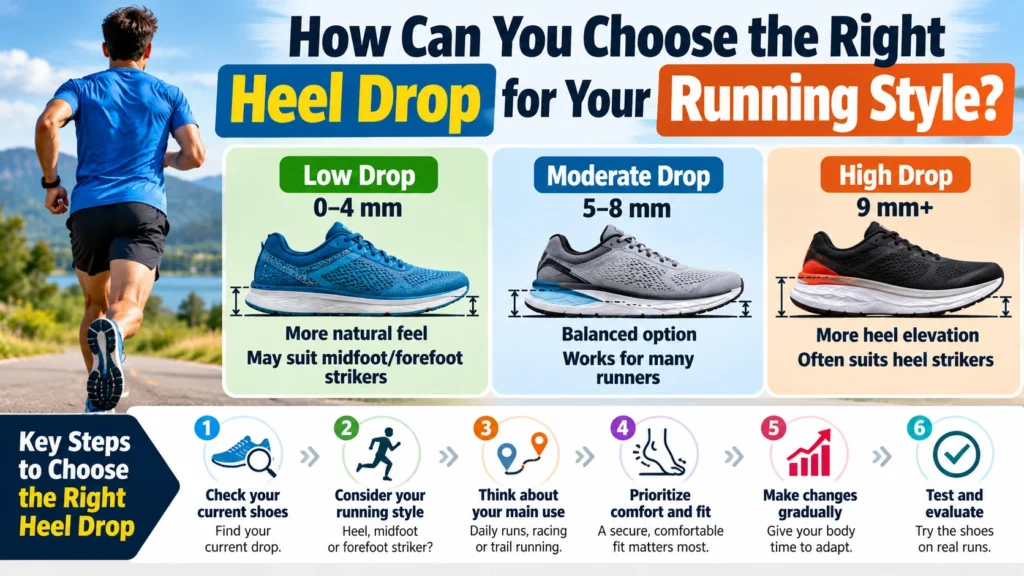
My preferred selection method starts with what already works, then changes one major feature at a time. This makes comparisons more useful than switching cushioning, drop, fit, and training volume together.
Here is a practical decision checklist.
- Check your current shoes. Record their drop and consider whether they have been comfortable.
- Identify your main use. Daily running, racing, walking, and technical trails can involve different priorities.
- Choose a reasonable range. Use 0–4 mm for low, 5–8 mm for moderate, and 9 mm or more for high as shopping guidelines.
- Compare other specifications. Evaluate foam, stack height, rocker, flexibility, support, and shoe weight.
- Test real movement. Check heel security, toe space, pressure points, and comfort during a short jog.
- Judge recovery afterward. An unfamiliar pair should not create persistent or increasing discomfort.
The England Athletics running shoe selection guide similarly recommends considering cushioning, heel drop, secure fit, and trying shoes before buying.
Best Low, Moderate, and High Drop Running Shoes to Consider in 2026
These three models demonstrate distinct heel-drop categories using published manufacturer specifications. I selected them as useful comparison examples, not as products I personally laboratory-tested.
The ratings below are editorial buyer-fit assessments based on their stated design and intended use. They are not Amazon customer ratings or independently measured performance scores.
🏃 High-Drop Daily Trainer
Brooks Ghost 17
★★★★☆ 4.0/5
With a manufacturer-stated 10 mm drop, the Ghost 17 represents a traditional elevated-heel daily trainer. Its cushioned design makes it a practical model to compare when you prefer a familiar high-drop feel, although fit and firmness remain personal preferences.
⚖️ Moderate-Drop Option
Topo Athletic Phantom 4
★★★★½ 4.5/5
The Phantom 4 has a verified 5 mm drop and a 35 mm heel / 30 mm forefoot stack. I favor its specification profile as a comparison option for runners wanting substantial cushioning without a high heel offset.
👟 Zero-Drop Flexibility
Altra Escalante 4
★★★½☆ 3.5/5
The Escalante 4 offers a manufacturer-stated 0 mm drop, 24 mm stack height, and flexible construction. I would shortlist it for runners specifically seeking a zero-drop experience, while treating the transition demands as a meaningful limitation for newcomers.
Affiliate disclosure: As an Amazon Associate, this website may earn from qualifying purchases. Product availability, sizing, and seller listings can change.
Frequently Asked Questions
Is a 4 mm Drop Good for Running?
Yes, a 4 mm drop can work well for running when the shoe fits comfortably and suits your training. It falls within the commonly used low-drop category. Runners accustomed to a much higher heel offset should introduce it gradually because their lower legs may respond differently.
Is a 10 mm Drop Too High for Running Shoes?
No, a 10 mm drop is a common high-drop configuration rather than an automatically excessive measurement. Many traditional daily trainers use elevated heels. Whether it feels right depends on your running habits, comfort, overall shoe geometry, and experience with similar footwear.
Can Heel Strikers Wear Zero-Drop Running Shoes?
Yes, heel strikers can wear zero-drop running shoes. Drop does not strictly determine where the foot lands. However, zero-drop shoes feel different from conventional elevated-heel models, so runners should consider comfort, cushioning, and gradual adaptation instead of trying to force a new landing pattern.
Are Low Drop Running Shoes Better for Knee Pain?
Low-drop shoes are not a proven treatment for knee pain. Although footwear geometry may change some running mechanics, research has not established low drop as a reliable solution for every knee condition. Persistent pain deserves individualized evaluation rather than an unsupervised major footwear change.
Can You Alternate Between Low Drop and High Drop Running Shoes?
Yes, runners can alternate between different heel drops when they tolerate both comfortably. Start with limited exposure to the less familiar pair and monitor recovery. Keeping training volume manageable is especially important when a new shoe introduces unfamiliar calf, ankle, or foot demands.
Final Verdict: Low Drop or High Drop Running Shoes?
Choose the drop that matches your comfort, running habits, and adaptation history. Low-drop shoes offer less heel elevation, while high-drop shoes provide a more raised heel position.
A moderate drop is worth exploring if neither extreme appeals to you. However, no specific millimeter measurement guarantees faster running, better form, or fewer injuries.
Before buying, compare your current shoes, check the manufacturer’s specifications, and test the fit during movement. Make major changes gradually, and give comfort and consistent training more weight than marketing claims.


Steven is a former sportsperson and now a full-time businessman and research writer. He is the mastermind of this site, and he created this site to help people who need specialized shoes for different activities. When he was a sportsperson, he was very passionate about different types of shoes for his sports purpose. The passion he had for shoes at that time now turned into his profession. Besides his shoe business, he loves sharing his knowledge and experience with people and helping them maintain healthy feet.
More Posts