
Quick Answer
To choose running shoes for long distance, prioritize comfortable fit, suitable cushioning, stable support, and durability. Select shoes for your running surface and foot shape, then test them at your normal pace before a long run. A good long-distance shoe should remain comfortable as your feet expand and your legs become tired. Start with the REI running shoe buying guide for additional fitting advice.
Six quick steps to choosing the right pair
- Identify your terrain: Choose road shoes for pavement or trail shoes for uneven surfaces.
- Check the fit: Leave approximately a thumb’s width between your longest toe and the shoe’s front.
- Choose comfortable cushioning: Compare soft and moderately firm midsoles at your usual running pace.
- Evaluate stability: Look for secure foot placement without uncomfortable pressure.
- Inspect the construction: Consider outsole grip, upper breathability, and overall durability.
- Test before committing: Complete several shorter runs before using new shoes for extended distances.
Finding shoes for long-distance running takes more than choosing a popular brand. The pair that feels perfect during a five-minute fitting might become uncomfortable after 15 kilometers.
In this guide, I’ll explain how to compare cushioning, fit, stability, and shoe design without getting distracted by marketing claims. You’ll also learn how to recognize problems before they disrupt your training.
What Are Long-Distance Running Shoes?
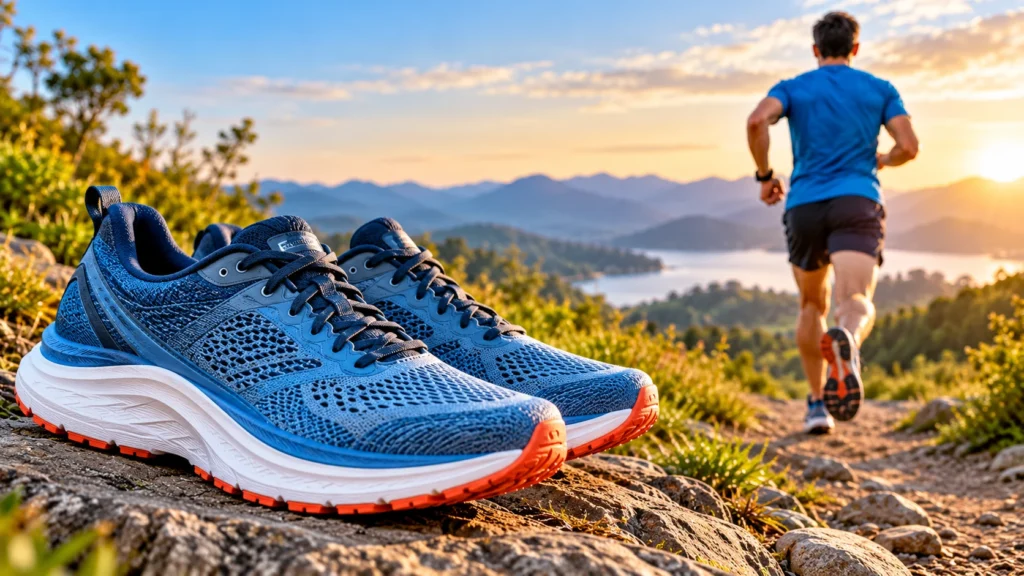
Long-distance running shoes are footwear designed to provide suitable comfort, traction, and support during extended running sessions. They’re commonly used for longer training runs, half-marathons, marathons, and endurance-focused workouts.
Unlike shoes designed mainly for short, fast efforts, many long-distance trainers emphasize consistent cushioning and predictable movement. However, there’s no universal cushioning thickness or shoe weight that makes a model suitable for every distance runner.
What Makes a Running Shoe Suitable for Longer Distances?
A suitable long-distance shoe should continue feeling secure and comfortable after repeated foot strikes. Its design must also match your individual foot shape and running conditions.
- Cushioning: A midsole that feels comfortable throughout extended runs.
- Fit: Enough toe space without excessive movement inside the shoe.
- Stability: A controlled platform that doesn’t feel excessively wobbly.
- Breathability: An upper that manages warmth and moisture reasonably well.
- Traction: Suitable outsole grip for your normal running surfaces.
- Durability: Materials that can withstand regular training mileage.
These qualities work together. Excellent cushioning cannot compensate for a shoe that constantly rubs your toes.
How Do You Choose Running Shoes for Long Distance?
Start with your running conditions, then narrow your choices by fit and comfort. Use the following eight steps to compare shoes systematically.
Step 1: Match the Shoes to Your Running Surface
Your regular running surface should influence the outsole and upper design you choose. Road running and technical trail running place different demands on footwear.
- Road running: Choose road trainers with comfortable cushioning and pavement-friendly outsoles.
- Easy gravel paths: Consider road-to-trail models when extra traction is useful.
- Technical trails: Prioritize grip, foot protection, and stability on uneven ground.
- Treadmills: Choose comfortable road shoes with secure fit and predictable movement.
A deeply lugged trail shoe isn’t automatically better on pavement. Similarly, a smooth road outsole may struggle on muddy climbs.
Step 2: Find the Correct Shoe Length and Width
Proper fit is one of the most important decisions when buying long-distance shoes. Your feet may expand during prolonged exercise, so a close-fitting casual shoe size isn’t always appropriate.
The goal is room for your toes without allowing your heels to slide excessively. REI’s shoe-fitting advice recommends approximately a thumb’s width of front clearance.
- Measure both feet and fit the larger foot.
- Try shoes later in the day when your feet may be larger.
- Wear your usual running socks during fitting.
- Check that your toes can spread and move freely.
- Choose a wide version when standard widths squeeze your forefoot.
- Make sure the heel stays secure without pinching.
Don’t automatically buy one size larger for every brand. Shoe shapes and sizing systems vary, so judge the actual fit.
Step 3: Choose Cushioning That Feels Comfortable Over Time
Long-distance cushioning should help you maintain comfort throughout your planned training sessions. More foam doesn’t always mean a better shoe.
Some runners prefer plush midsoles, while others enjoy firmer, more controlled cushioning. The best choice depends on fit, running mechanics, terrain, and personal preference.
- Soft cushioning: May feel comfortable during relaxed road runs but can feel unstable to some runners.
- Balanced cushioning: Offers a middle ground between softness and ground feedback.
- Firm cushioning: Can provide a more direct feel, although some runners dislike it during long sessions.
- Responsive cushioning: Uses foam characteristics that produce a lively sensation during foot strike and push-off.
My practical rule is to judge cushioning by how naturally you can run, not by how soft a shoe feels when standing still. A few minutes of jogging tells you more than pressing the foam with your thumb.
Step 4: Check Stability and Pronation Support
Pronation describes the inward rolling movement of the foot during walking or running. Some inward movement is normal and helps manage loading.
Excessive movement isn’t something you should diagnose from shoe wear alone. A comfortable shoe that supports your running pattern is more important than an arbitrary label.
- Neutral shoes: Usually suit runners who feel comfortable without added guidance features.
- Stability shoes: Use design features intended to guide or control foot movement.
- Structured support: Can include broader bases, sidewalls, and supportive midsole geometry.
If your current shoes cause repeated discomfort, try different support designs with a knowledgeable fitter. Persistent pain warrants assessment from a qualified healthcare professional.
Step 5: Compare Heel-to-Toe Drop
Heel-to-toe drop is the difference in stack height between a shoe’s heel and forefoot. It’s usually measured in millimeters.
Drop influences how a shoe feels, but it doesn’t determine whether a runner is a heel striker. Different drops can shift loading patterns and change comfort.
| Shoe drop | Description | Consideration |
|---|---|---|
| 0–4 mm | Low drop | May increase demands on calves and Achilles tendon when transitioning. |
| 5–8 mm | Moderate drop | Common compromise for runners who like a less pronounced heel elevation. |
| 9–12 mm | Higher drop | May feel familiar to runners accustomed to traditional road trainers. |
These are descriptive ranges, not medical prescriptions. Change shoe drop gradually, especially when moving toward a much lower-drop design.
Step 6: Evaluate Weight Without Sacrificing Comfort
Lightweight shoes can feel easier to move in, especially during faster efforts. However, removing weight shouldn’t come at the expense of comfort or secure fit.
For everyday long-distance training, a slightly heavier shoe may still be an excellent choice. A fast racing shoe isn’t necessarily the best option for regular recovery runs.
Step 7: Inspect the Upper and Outsole
The upper holds your foot in place, while the outsole contacts the running surface. Both components affect long-run comfort and reliability.
- Engineered mesh: Can provide ventilation and flexible fit.
- Padded heel collar: Helps reduce friction when appropriately shaped.
- Secure lacing: Limits unwanted movement without squeezing the foot.
- Rubber outsole: Provides traction and helps protect exposed midsole foam.
- Flexible forefoot: Allows the shoe to move naturally where its design intends.
Run your hand inside the shoe to check for rough seams or irritating construction details. Small friction points can become noticeable during a long workout.
Step 8: Test the Shoes Before a Long Run
Never make race day the first serious test of a new pair. Gradual testing helps reveal pressure points and movement problems.
- Walk around indoors to identify immediate fit issues.
- Complete an easy 15–20-minute jog.
- Check for heel slipping, toe pressure, or rubbing.
- Try a longer easy session if the first run feels comfortable.
- Evaluate comfort near the end, not only at the start.
- Increase mileage gradually while monitoring how your body responds.
A shoe that causes numbness, sharp pain, or repeated blisters deserves another fit assessment. Don’t assume every problem disappears after breaking the shoes in.
What Type of Running Shoe Is Best for Different Long Distances?
Distance alone doesn’t determine the right shoe. Your training pace, terrain, experience, and comfort needs also matter.
| Running goal | Suggested shoe category | Main priority |
|---|---|---|
| 5–10 km | Versatile daily trainer | Fit and balanced cushioning |
| 10–21.1 km | Comfortable daily or long-run trainer | Consistent comfort and stability |
| 42.2 km marathon | Long-run trainer or suitable racing shoe | Proven fit, comfort, and efficiency |
| Ultramarathon | Terrain-specific endurance shoe | Foot security, grip, and extended comfort |
These categories are starting points rather than strict rules. Experienced runners may successfully use the same comfortable trainer across several distances.
Should You Choose Neutral or Stability Running Shoes?
Choose based on comfort, foot movement, and how the shoe feels while running. Don’t select stability footwear solely because you have flat arches.
Some runners with flat feet feel comfortable in neutral shoes. Others prefer guidance features that make foot movement feel more controlled.
When Are Neutral Shoes a Good Choice?
Neutral running shoes are worth trying when you feel comfortable without additional guidance. They come in many cushioning levels and platform widths.
Look for a secure heel, stable landing, and adequate forefoot room. Those details can matter more than the category printed on the box.
When Might Stability Shoes Be Helpful?
Stability models may suit runners who prefer a more guided or supportive ride. They can also be useful when a broad, structured platform feels more secure during fatigue.
However, stability shoes don’t guarantee injury prevention. Use comfort, running history, and qualified advice when assessing recurring problems.
How Important Is Toe Room for Long-Distance Running?
Toe room is especially important because feet can change volume during extended activity. A shoe that squeezes your toes may become increasingly uncomfortable over time.
Check clearance in front of the longest toe, rather than automatically measuring from the big toe. The longest toe isn’t the same for everyone.
- Your toes should move freely without touching the shoe’s front.
- The forefoot shouldn’t feel squeezed from either side.
- Your heel should stay secure when walking downhill.
- Changing to a wider fit may work better than adding unnecessary length.
If your toes repeatedly hit the front during descents, inspect both shoe length and heel lockdown. Extra length alone won’t fix every fitting problem.
How Can Beginners Choose Shoes for Half-Marathons and Marathons?
Beginners should prioritize a familiar, comfortable shoe that performs well during training. Race-specific technology is less important than a fit you already trust.
A reliable daily trainer can handle easy runs, long runs, and many race-day situations. You don’t need a separate carbon-plated shoe to complete a marathon.
What Should Beginners Prioritize?
- A comfortable fit from the first try-on.
- Enough room for normal foot movement.
- Cushioning that feels natural at easy paces.
- A stable ride as running form becomes tired.
- Outsole traction suited to training routes.
- A price that fits the overall training budget.
My preferred shopping approach is to compare three different-feeling models instead of three nearly identical shoes. That makes differences in fit and cushioning easier to notice.
Do Beginners Need Carbon-Plated Running Shoes?
No. Carbon-plated racing shoes are optional equipment intended primarily for performance-focused running.
They can feel responsive, but their geometry and ride aren’t suitable for everyone. Beginners often benefit more from finding a comfortable trainer and building consistent mileage.
What Mistakes Should You Avoid When Buying Long-Distance Running Shoes?
The biggest buying mistakes involve ignoring fit and choosing shoes for reasons unrelated to your running needs. Avoid these common problems before committing to a pair.
- Buying only by appearance: Attractive shoes can still fit poorly.
- Choosing based only on reviews: Another runner’s favorite may not match your feet.
- Ignoring width: Tight forefoot pressure can lead to rubbing and discomfort.
- Assuming maximum cushioning is always best: Some thick midsoles feel unstable to certain runners.
- Changing drop abruptly: A major change may require gradual adaptation.
- Using technical trail shoes everywhere: Aggressive lugs may feel awkward on road surfaces.
- Ignoring running socks: Sock thickness can change shoe fit.
- Buying unfamiliar shoes immediately before a race: Unproven footwear adds unnecessary uncertainty.
There is no single best shoe for every runner. Your goal is to find a model that works consistently under your usual training conditions.
How Long Do Long-Distance Running Shoes Usually Last?
Many running shoes are commonly replaced around 300–500 miles, or approximately 480–800 kilometers. This is a broad guideline rather than a fixed expiration date.
Actual lifespan varies with shoe construction, runner mechanics, body weight, terrain, and usage. England Athletics also discusses durability and replacement considerations in its shoe selection guidance.
What Signs Suggest Your Shoes Need Replacing?
- Outsole rubber is worn down in important traction areas.
- The midsole feels noticeably different from when it was new.
- The shoe tilts or feels unstable.
- The upper or heel structure is damaged.
- Repeated discomfort appears alongside visible shoe deterioration.
Mileage is useful for tracking wear, but physical condition and comfort deserve equal attention. Compare the old pair with a newer one when evaluating changes.
Can Rotating Running Shoes Help?
Rotating two suitable pairs can spread training wear across different shoes. It also provides an alternative when one pair becomes wet or needs cleaning.
However, rotation doesn’t guarantee that each pair lasts longer in total mileage. Inspect both pairs regularly rather than relying on calendar age alone.
How Much Should You Spend on Long-Distance Running Shoes?
You don’t need the most expensive shoe to run long distances comfortably. The best value comes from reliable fit, suitable construction, and performance that matches your needs.
Premium foam and racing features can increase price, but they won’t solve a poor fit. Older models at discounted prices may be worthwhile when they provide the same comfortable experience.
How Can You Compare Value Before Buying?
- Check whether the fit suits your foot shape.
- Compare models with similar intended uses.
- Inspect outsole coverage and upper construction.
- Consider whether the shoes will serve daily training or occasional racing.
- Review return policies before purchasing.
- Choose comfort over features you won’t use.
Don’t assume a discounted shoe is a bargain if you cannot run comfortably in it. A poor-fitting purchase is rarely good value.
Which Long-Distance Running Shoes Are Worth Considering in 2026?
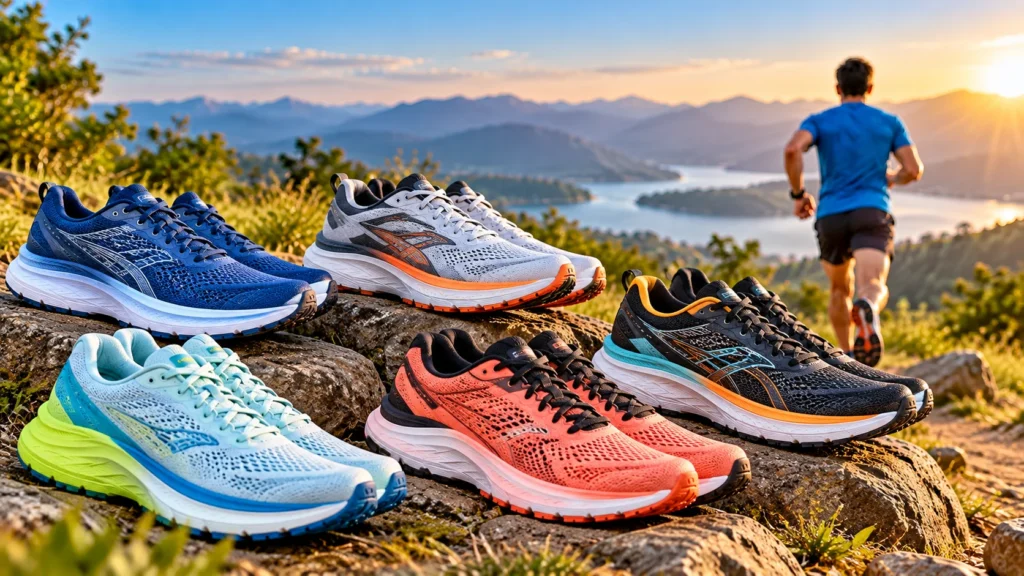
If you’re ready to compare specific shoes, these three established models cover different long-run priorities. They’re starting points for fitting and comparison, not guarantees that one shoe will suit everyone.
Affiliate disclosure: As an Amazon Associate, we earn from qualifying purchases. Product availability and pricing may change.
🏆 Cushioned road training
Nike Vomero 18
The Nike Vomero 18 is a cushioned road trainer aimed at comfortable daily mileage and longer runs. I’d include it when comparing soft, protective-feeling footwear, while checking whether its high-cushion ride feels stable for your running style.
☁️ Plush marathon training
Brooks Glycerin 23
The Brooks Glycerin 23 is a neutral, comfort-oriented road running shoe intended for regular training. It’s worth trying when you want generous cushioning without choosing a dedicated racing shoe.
🛡️ Guided stability
Saucony Guide 19
The Saucony Guide 19 is a stability-oriented daily trainer for runners who prefer a guided, secure platform. I’d compare it with neutral options to see whether its supportive geometry feels more comfortable as fatigue develops.
These are product-category recommendations rather than results of an independent hands-on comparison. Check current versions, available widths, and retailer listings before purchasing.
Frequently Asked Questions
What type of running shoes is best for long distances?
Comfortable road trainers with secure fit, suitable cushioning, and reliable stability work well for many long-distance runners. The ideal design depends on running terrain, foot shape, pace, and individual comfort. Trail runners need appropriate grip and protection instead of relying on road-shoe characteristics alone.
Should long-distance running shoes be tight or loose?
Long-distance running shoes should feel secure around the heel and midfoot without squeezing the forefoot. Aim for approximately a thumb’s width of space in front of your longest toe. Excessive looseness can cause slipping, while tightness can create pressure and rubbing during extended exercise.
Are heavily cushioned shoes better for marathon running?
Not necessarily. Heavily cushioned shoes can provide a comfortable ride, but some runners prefer moderate cushioning or a firmer platform. Comfort, stability, fit, and familiarity matter more than foam thickness alone. Test your shoes during training before choosing them for a marathon.
Can I use everyday running shoes for a marathon?
Yes. Many runners complete marathons in regular daily trainers. A familiar, comfortable shoe can be a practical choice, especially for runners prioritizing completion over racing performance. Make sure the pair has performed well during progressively longer training runs before race day.
How often should I replace long-distance running shoes?
A common reference range is 300–500 miles, but replacement needs vary considerably. Check outsole wear, midsole condition, structural damage, and changes in comfort. Don’t continue using a shoe simply to reach an arbitrary mileage number if its fit or function has clearly deteriorated.
Final Thoughts: How to Choose Running Shoes for Long Distance
Learning how to choose running shoes for long distance starts with understanding your feet, terrain, and training needs. Focus on fit first, then compare cushioning, stability, and durability.
Don’t chase the latest shoe simply because it’s popular. The right pair should feel comfortable on ordinary training days and remain dependable when your runs become longer.
Your next step: Try several suitable models, test them during easy runs, and choose the pair that consistently feels best. Comfortable, predictable footwear is a stronger foundation for distance training than any single marketing feature.


Steven is a former sportsperson and now a full-time businessman and research writer. He is the mastermind of this site, and he created this site to help people who need specialized shoes for different activities. When he was a sportsperson, he was very passionate about different types of shoes for his sports purpose. The passion he had for shoes at that time now turned into his profession. Besides his shoe business, he loves sharing his knowledge and experience with people and helping them maintain healthy feet.
More Posts