QUICK ANSWER
Yes, for runners who like a snug fit. The HOKA Mach 6 is a light, versatile road trainer for daily miles and tempo runs. Independent tests measured about 232 g and strong ventilation. Its main drawback is a sharply tapered toe box. Wide-footed runners should try it before buying.
Is the Mach 6 right for you?
- Best use: daily road running and faster training.
- Big strength: low weight with useful cushioning.
- Big caution: limited room around the big toe.
RunRepeat overall
Daily running
Tempo
US launch MSRP
Best for: Neutral runners seeking one light shoe for mixed paces.
Not ideal for: Wide forefeet or runners wanting maximum bounce.
Amazon rating: 4.4/5 from 545 ratings at research check.
LAB CATEGORY SCORES — RTINGS, OUT OF 10
These are RTINGS lab category scores, not ratings created by this site. A good length score does not mean a roomy toe box.
I’m Steven Tyler. I reviewed published laboratory tests, field reports, and Amazon data for this HOKA Mach 6 review. I did not wear-test this pair.
What Is the HOKA Mach 6 and Who Is It For?
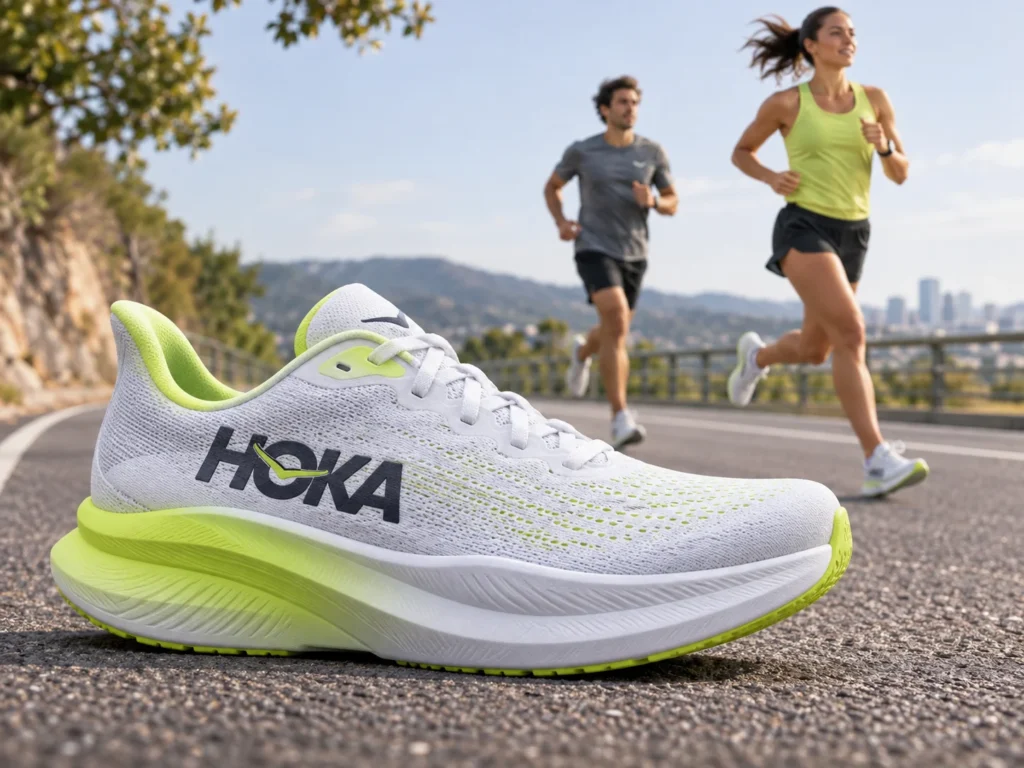
The Mach 6 is HOKA’s neutral road shoe for everyday training and faster runs. It uses supercritical EVA, jacquard fabric, and rubber patches. Unlike carbon racers, it has no plate.
It suits narrow-to-medium feet and runners who enjoy a firm, light ride. Its tapered toe box can crowd toes on long runs. It is not a support shoe or a plush recovery model.
- Have narrow or medium-width feet.
- Want one shoe for easy and quick days.
- Prefer a non-plated daily trainer.
- Need generous toe splay.
- Want the lightest speed trainer.
- Prefer a softer, springier midsole.
HOKA Mach 6 Pros and Cons
- RunRepeat measured a light 232 g test sample.
- Supercritical EVA supports both easy and faster paces.
- Rubber outsole endured just 0.6 mm lab abrasion.
- Breathability earned 5/5 in RunRepeat’s smoke test.
- Tapered toe area measures only 70.1 mm across.
- Thin 1.5 mm tongue can expose lace pressure.
- Heel padding performed poorly in abrasion testing.
- Energy return trails premium, more elastic racing foams.
HOKA Mach 6 Key Features: What Do Tests Show?
Does the Supercritical EVA Foam Feel Fast?
Yes, for a daily trainer. RunRepeat measured 67% forefoot energy return against a 61.5% sample average. That makes it useful for pace changes, though not a substitute for a specialist racer.
Forefoot energy return — RunRepeat laboratory sample
Takeaway: The foam exceeds this lab’s tested average, but bounce is not elite.
How Comfortable Is the Cushioning on Long Runs?
It’s supportive but not equally soft for every runner. RTINGS measured a 37.1 mm heel stack and found that its foam can compress too much under repeated hard loading.
Takeaway: Light cushioning is different from maximum protection.
Is the Mach 6 Too Narrow in the Toe Box?
It can be. RunRepeat measured 70.1 mm near the big toe against its 73.2 mm sample average. Doctors of Running also reported snug forefoot pressure during longer outings.
Takeaway: Fit width is the purchase decision, not the advertised drop.
Try the shoe late in the day with running socks. Check that your toes can spread without rubbing during a jog.
Fit tip: Start with your usual size, then test half a size up only if length feels short. A larger size will not fully fix a tapered toe shape.
How Breathable Is the Jacquard Upper?
Ventilation is a clear strength. RunRepeat awarded 5/5 for breathability, above its 3.6/5 lab average. The thin gusseted tongue also helps lock the midfoot in place.
Takeaway: Strong airflow comes with less tongue padding.
Will the Rubber Outsole Last?
Its rubber held up well in laboratory abrasion. RunRepeat found a 0.6 mm wear mark against the 1.1 mm shoe average, but rated heel lining durability poorly.
Takeaway: Tough outsole rubber does not guarantee every part lasts equally.
Care tip: Rotate pairs when possible and let wet shoes dry naturally. Do not apply direct heat to the midsole.
How Stable and Grippy Is the Mach 6?
The Mach 6 offers useful neutral stability on roads. RTINGS scored stability 7.4/10, while RunRepeat measured grip at 0.49 against a 0.53 average.
Takeaway: Road grip is serviceable; technical trails are outside its purpose.
How Does the HOKA Mach 6 Perform in Real Tests?
RTINGS’ categories support the Mach 6’s daily-training strengths, but do not show race-level rebound.
RTINGS test categories
HOKA Mach 6 Full Specifications
Brand figures and independent lab measurements are labeled separately because test methods differ.
| Specifications | |
|---|---|
| Design and ride | |
| Category | Neutral road trainer |
| Midsole | Supercritical EVA |
| Plate | ✗ No |
| Published drop | 5 mm |
| Published heel/forefoot stack | 37 / 32 mm, men’s model |
| RTINGS measured drop | 5.9 mm |
| RunRepeat measured drop | 9.6 mm |
| Construction and fit | |
| Upper | Creel jacquard textile |
| Tongue | Dual internal gusset |
| Outsole | Strategic rubber coverage |
| HOKA published weight | 232 g |
| RTINGS measured weight | 233.6 g |
| Removable insole | ✓ Yes |
| RunRepeat big-toe width | 70.1 mm |
How Does the HOKA Mach 6 Compare to Competitors?
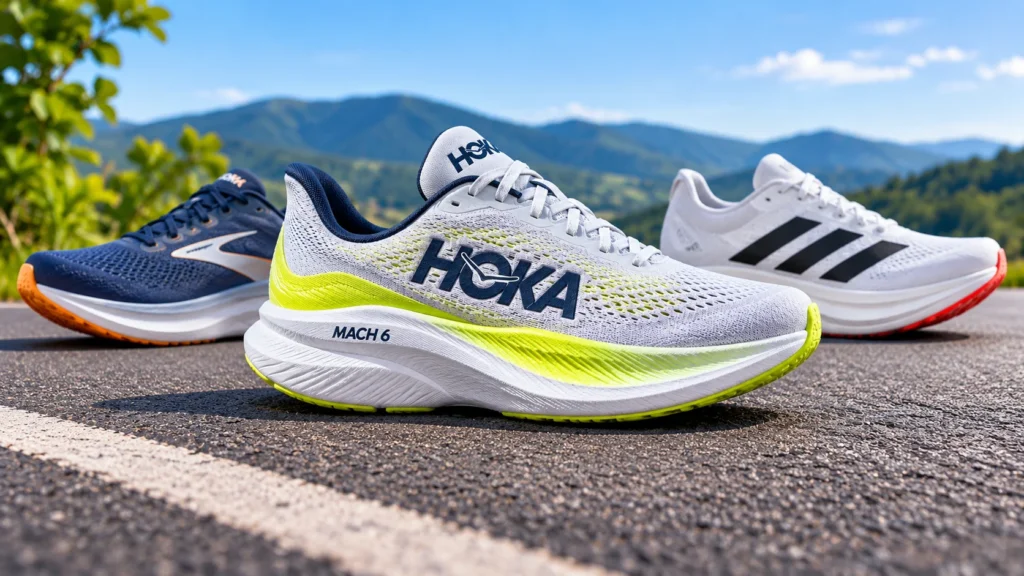
RTINGS found more cushioning in the Mach 6 than the Brooks Hyperion 2. The Adidas EVO SL offers springier foam; both alternatives have different fit strengths.
HOKA Mach 6 vs Brooks Hyperion 2: Which Is Better?
Choose the Mach 6 for a fuller underfoot feel. Choose the Hyperion 2 for a lighter, closer-to-ground speed trainer. RTINGS measured the Brooks at 200.4 g versus 233.6 g for HOKA.
HOKA Mach 6 vs Adidas Adizero EVO SL: Which Is Better?
Choose the EVO SL for more rebound and toe space. Its Lightstrike Pro foam feels livelier; HOKA provides snugger lockdown.
| Feature | Mach 6 | Hyperion 2 | EVO SL |
|---|---|---|---|
| US launch MSRP | $140 | $140 | $150 |
| Weight, approx. | 232–234 g | 200 g | 224 g |
| Brand drop | 5 mm | 8 mm | About 6–7 mm |
| Midsole | SC EVA | DNA Flash v2 | Lightstrike Pro |
| Plate | No | No | No carbon plate |
| Best use | Mixed daily paces | Light tempo work | Bouncy faster miles |
| Fit caution | Tapered toe | Lower-volume feel | Test upper lockdown |
Source data: RTINGS, RunRepeat, and HOKA.
HOKA Mach 6 Pricing: Is It Worth the Price?
Yes, near or below its $140 US launch price. A deal site advertised one size 9.5 pair at $119, but Amazon showed no featured price during this check.
Price history changes by size: a different colorway reached $134.50. That is not a universal low. Check seller credibility and returns.
HOKA Mach 6 Men’s Lightweight Road Running Shoe
Look for a size-specific discount and verify the seller at checkout.
Who Should Buy the HOKA Mach 6?
Buy it if you want a light, neutral trainer for daily runs plus occasional speed work. The toe fit is the dealbreaker, so judge that before you judge the foam.
- Runners with narrow-to-average forefeet who enjoy secure lockdown.
- Daily runners who add strides and short tempo blocks.
- Buyers finding an authentic discounted pair in their size.
- Your toes feel crowded when your feet swell.
- You expect plush cushioning throughout long heel-striking runs.
Bottom line: Fit-test first, then buy if the price beats newer alternatives.
What Are Real Buyers Saying About the HOKA Mach 6?
The checked Amazon listing showed 4.4/5 from 545 ratings. This is positive, but not enough to claim consensus from thousands of verified buyers.
Buyer Feedback Snapshot
4.4/5 — 545 Amazon ratings checked
- Light feel that works across varied training paces.
- Secure upper for faster workouts and road turns.
- Useful rubber coverage beneath a light midsole package.
- Forefoot taper limits natural toe spread on long runs.
- Thin tongue can feel harsh under tight laces.
Interpretation: The ride wins praise more consistently than the fit.
Final Verdict: Is the HOKA Mach 6 Still Worth Buying?
Yes, if the fit works and the price is right. The Mach 6 remains a strong daily and tempo shoe, though the Mach 7 has replaced it. Its low weight, airflow, and outsole durability stand out. But toe taper and moderate lab rebound restrict its appeal. Aim below the launch price and try it on first.
HOKA Mach 6 Neutral Road and Tempo Trainer
For narrow-to-medium feet, compare the current offer against the newer Mach.
Frequently Asked Questions
Does the HOKA Mach 6 run true to size?
It usually runs true in length, but feels snug around the toes. RTINGS scored true-to-size performance 8.5/10, while RunRepeat measured only 70.1 mm near the big toe. Try your usual size first, then judge toe clearance while standing and jogging.
Is the HOKA Mach 6 good for long runs?
It works for some long runs, but isn’t equally plush for everyone. Doctors of Running tested it across longer efforts, while RTINGS flagged heel cushioning limits under heavier loading. If you often finish with sore heels, compare a softer long-run trainer before choosing it.
Is the HOKA Mach 6 good for wide feet?
It is not the safest choice for wide forefeet. RunRepeat found a narrow 70.1 mm toe region, compared with its 73.2 mm average. A wide version exists in some markets, but you still need to test the toe shape rather than relying on the width label.
Does the HOKA Mach 6 have a carbon plate?
No, the Mach 6 has no carbon plate. Its faster feel comes from supercritical EVA foam and sole geometry. That makes it suitable for workouts without a stiff racing plate, but it will not match the assisted toe-off of many premium carbon racing shoes.
How durable is the HOKA Mach 6 outsole?
Lab outsole durability is encouraging, but long-term life varies. RunRepeat recorded just 0.6 mm rubber damage against a 1.1 mm sample average in its abrasion test. The same review found weak heel-lining durability, so check both rubber tread and internal heel fabric as mileage rises.
What is the difference between HOKA Mach 5 and Mach 6?
The Mach 6 adds a full supercritical EVA midsole and targeted rubber outsole coverage. It also changes the upper and forefoot feel. Independent testers found it faster and more durable underfoot, but some Mach 5 fans may dislike the snugger shape and changed stiffness.
Affiliate Disclosure: As an Amazon Associate, I earn from qualifying purchases. Links may earn a small commission at no extra cost to you.


Steven is a former sportsperson and now a full-time businessman and research writer. He is the mastermind of this site, and he created this site to help people who need specialized shoes for different activities. When he was a sportsperson, he was very passionate about different types of shoes for his sports purpose. The passion he had for shoes at that time now turned into his profession. Besides his shoe business, he loves sharing his knowledge and experience with people and helping them maintain healthy feet.
More Posts