

Quick Answer: Is the ASICS Megablast Worth Buying?
The ASICS Megablast is worth $225 for neutral runners who want one lightweight, highly responsive shoe for long runs and faster workouts. Its 230 g weight, FF TURBO SQUARED foam, and 8 mm drop deliver a versatile design. However, the narrow toe box, high price, and limited stability make it a poor choice for some runners.
- Best feature: Energetic cushioning without a full-length plate.
- Biggest concern: Snug forefoot fit and limited toe space.
- Best use: Long runs, tempo sessions, and daily training.
Quick Verdict: ASICS Megablast
ASICS MEGABLAST
$225
US retail price
Best for: Neutral runners seeking maximum bounce for fast training and long distances.
Our Editorial Verdict
Ride: Highly energetic and springy
Weight: Excellent for its cushioning
Comfort: Good when the upper fits
Stability: Neutral, not corrective
Durability: Encouraging independent wear reports
Value: Premium performance at a premium price
| Category | Verdict |
|---|---|
| Responsiveness | Excellent |
| Long runs | Strong choice |
| Tempo runs | Strong choice |
| Wide-foot fit | Below average suitability |
| Budget value | Limited |
Bottom line: Buy the Megablast for its light, lively ride across several training speeds, but consider cheaper shoes if budget or toe space matters more.
- The Megablast combines maximum cushioning with a listed weight of 230 g.
- Its full-length FF TURBO SQUARED foam provides an energetic, plate-free ride.
- The $225 price is $15 higher than the Superblast 3.
- Independent reviewers report a snug toe box, especially on long runs.
- The Megablast suits neutral runners who value bounce more than stability features.
By Steven Tyler
Finding one running shoe for every workout sounds simple. However, most running shoes make some clear trade-offs. Soft daily trainers can feel slow during intervals. Fast shoes can feel harsh when you need to recover.
The ASICS Megablast aims to solve that problem. It combines a tall midsole, lightweight construction, and high-energy foam. Its design targets runners who want comfort without giving up speed.
There is one big question: Is the $225 price justified?
For this ASICS Megablast review, I have compared official ASICS specifications with independent laboratory testing, published running reviews, and detailed owner feedback. This is a research-based assessment, not a claim of original hands-on testing.
That distinction matters. Shoe specifications tell us what ASICS built. Independent testing helps reveal how that design behaves on real roads.
The goal is to help you choose based on your running needs. Our running shoe review checklist explains why fit, comfort, and intended use deserve more attention than marketing claims.
What Is the ASICS Megablast Designed to Do?
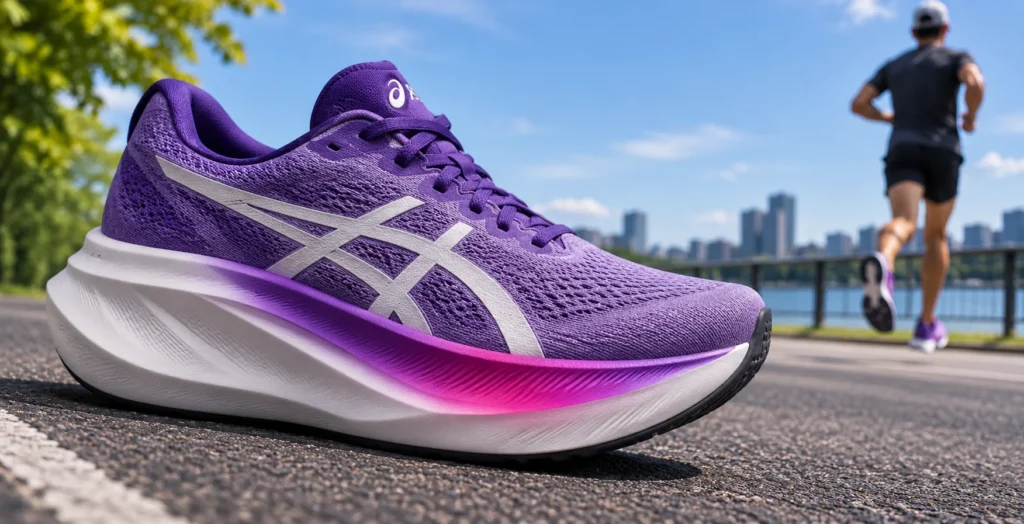
Primarily, the ASICS Megablast is a premium neutral road trainer designed for energetic running across different speeds and distances. It combines deep cushioning with a low listed weight.
The Megablast belongs to ASICS’ BLAST SERIES. This range includes the Novablast, Sonicblast, Superblast, and Megablast models. Each shoe emphasizes a different balance of cushioning, speed, and comfort.
The Megablast stands out through its full-length FF TURBO SQUARED midsole. This foam provides a responsive ride without needing a full-length carbon plate.
Its curved sole shape also helps guide the foot forward. This design can make transitions feel smoother as your running speed increases.
However, maximum cushioning does not guarantee maximum comfort. Upper fit, stability, and running technique also affect the experience.
Who Is the Megablast Made For?
The Megablast is best suited to neutral runners who want one shoe for daily miles, longer sessions, and faster efforts. Its design favors runners who enjoy a springy underfoot sensation.
Consider the Megablast if your training includes steady runs, tempo workouts, and marathon preparation. It can also suit runners who prefer training without a stiff propulsion plate.
It is less suitable for runners who require a broad toe box or dedicated stability support.
What Are the ASICS Megablast Specifications?
The ASICS Megablast weighs 230 g, features an 8 mm heel-to-toe drop, and costs $225 at US retail. It uses FF TURBO SQUARED cushioning with ASICSGRIP outsole rubber.
| Specification | ASICS Megablast |
|---|---|
| Brand | ASICS |
| Model | Megablast |
| Product code | 1013A170 |
| US retail price | $225 |
| Listed weight | 230 g / 8.1 oz |
| Heel-to-toe drop | 8 mm |
| Reported stack height | About 45 mm heel / 37 mm forefoot |
| Midsole | FF TURBO SQUARED |
| Foam material | A-TPU |
| Upper | Engineered mesh |
| Outsole | ASICSGRIP rubber |
| Full-length plate | No |
| Support category | Neutral |
| Cushioning category | Maximum |
| Primary surface | Road |
The weight figure is based on ASICS’ published reference size. Different shoe sizes will weigh more or less.
Independent reports also show slight differences in stack-height measurements. Those differences can result from measurement methods and reference sizes.
The key point is the combination of a tall sole and low weight. That design gives the Megablast a distinct position among premium running trainers.
How Does FF TURBO SQUARED Foam Affect the Megablast?
FF TURBO SQUARED is the main reason the Megablast feels different from standard daily trainers. It provides energetic rebound while keeping the midsole relatively light.
The foam uses an advanced thermoplastic polyurethane formulation, commonly called A-TPU. Its construction allows the material to compress under load and recover after impact.
Energy return describes how much mechanical energy a material gives back after compression. Higher rebound can create a lively ride, but it does not guarantee faster running.
ASICS uses the foam throughout the Megablast midsole. This differs from models that limit similar technology to a smaller forefoot section.
Independent testers consistently describe the shoe as bouncy and responsive. The lively feel becomes especially noticeable during steady and faster running.
Our running shoe responsiveness guide explains how foam, geometry, and stiffness affect running feel.
Does the Megablast Need a Carbon Plate?
No. The Megablast produces an energetic ride without a full-length carbon plate. Its foam and curved geometry supply much of the forward-running sensation.
Carbon plates can add stiffness and help control bending. However, they do not suit every runner or every training session.
The Megablast offers a more flexible approach to fast training. It can serve runners who find rigid racing shoes uncomfortable during ordinary mileage.
That does not make it an automatic replacement for a specialist racing shoe. Race performance depends on individual mechanics, comfort, distance, and the complete shoe design.
How Does the ASICS Megablast Perform on Daily Runs?
The Megablast performs well as a daily trainer for runners who enjoy a responsive, cushioned ride. Its lightweight design helps it feel less bulky than its tall midsole suggests.
The cushioning gives the foot room to compress the foam during each landing. The curved sole then supports a rolling transition toward toe-off.
At an easy pace, some runners enjoy the soft rebound. Others prefer a steadier or firmer daily shoe.
This difference appears in independent reviews. The Run Testers found the Megablast versatile across training speeds. One tester also reported less confidence in its stability during slower efforts.
These reports show why personal fit matters. A shoe can perform well in technical tests and still feel wrong for your stride.
Daily runners should judge the Megablast at their normal pace. A smooth, comfortable ride matters more than how exciting it feels during a short sprint.
Is the ASICS Megablast Good for Long Runs?
Yes. The Megablast is a strong long-run option when its fit and stability suit your feet. Its substantial cushioning supports repeated road impacts.
Many runners want a shoe that stays responsive after the first several miles. The Megablast’s foam is designed to provide rebound across long sessions.
Independent reviewers have used the shoe for extended training. The Run Testers reported successful long runs and more than 100 miles of use in one pair.
However, not every long-run experience is positive. Some owners report toe pressure as their feet expand during longer efforts.
This issue matters because feet often swell during sustained exercise. A shoe that feels comfortable during a short run can become restrictive later.
For marathon preparation, assess the fit over a realistic training distance before relying on the Megablast for race day.
Can You Run a Marathon in the Megablast?
Yes. The Megablast can work for marathon racing, particularly for runners who value cushioning and a familiar training feel. It is not limited to daily workouts.
Its foam supports energetic running, and the low weight helps reduce the bulk associated with maximum cushioning.
Still, a dedicated racing shoe may suit runners chasing their fastest possible time. Those designs can offer different geometry, stiffness, and propulsion characteristics.
The deciding factor is confidence over distance. Marathon runners should complete long training efforts in the shoe before selecting it for race day.
Is the ASICS Megablast Fast Enough for Tempo Runs?
Yes. Tempo running is one of the Megablast’s strongest uses. Its responsive foam and light construction help it adapt when the pace increases.
A tempo run involves a controlled, sustained effort that feels harder than easy training. The Megablast’s cushioning can remain comfortable during that faster work.
Independent testers praise its smooth transition and energetic response. These features help explain why it works across both moderate and demanding sessions.
The Megablast also suits some interval workouts. However, runners who prioritize sharp turns or track speed may prefer a lower-profile shoe.
The thick midsole can feel substantial during rapid changes in direction. That becomes more noticeable when an athlete runs fast bends or short repetitions.
For road tempos and longer intervals, its balance of cushion and rebound is a clear strength.
How Does the ASICS Megablast Fit?
The Megablast generally fits true to length, but its toe box can feel narrow and shallow. This is one of its most important buying limitations.
Independent testers from The Run Testers reported normal length in their usual running sizes. However, one tester experienced rubbing near the smaller toes during longer runs.
Some owners also describe limited vertical space above their toes. That issue is different from shoe length.
A shoe can have enough room from heel to toe yet still press against the top or sides of the forefoot.
The Megablast is sold in standard width, and RTINGS reports no separate wide-width option in its tested configuration.
If your feet are broad, the shoe deserves careful fitting. Do not assume moving up half a size will solve the problem.
Should You Size Up in the ASICS Megablast?
Start with your normal running shoe size unless a fit test shows a clear problem. Changing sizes without checking can create new issues.
A larger size adds length as well as some room. It can also reduce heel security and change where the shoe bends under your foot.
Check for comfortable toe movement while standing. Then walk and jog in the shoes when store policies allow.
Pay attention to pressure around the little toe, big toe, and upper forefoot. A premium foam cannot compensate for a painful fit.
Fit warning: Do not rely on a break-in period to fix persistent toe pressure. If the shoe causes rubbing, numbness, or pain, choose a different fit.
Is the ASICS Megablast Stable Enough?
The Megablast offers reasonable stability for some neutral runners, but it is not a dedicated stability shoe. Its tall, energetic cushioning can feel less controlled to certain runners.
ASICS classifies the shoe as neutral. That means it does not focus on structured support for excessive inward foot movement.
The wide platform provides some inherent support. However, the underfoot foam remains responsive rather than rigid.
Independent reviews show mixed reactions. Some testers feel secure during regular training. Others notice instability during slower running or changes in direction.
This variation is normal with highly cushioned footwear. Foot shape, running mechanics, fatigue, and speed all influence the experience.
Runners seeking stronger guidance should test the Megablast carefully. A dedicated support shoe may provide a more predictable platform.
The highest stack or liveliest foam is not always the best option. Controlled movement often matters more than bounce.
How Good Is the Megablast Outsole and Traction?
The Megablast’s ASICSGRIP outsole is designed to provide dependable traction for road running. Independent reports support its performance on common paved surfaces.
The outsole uses rubber in contact areas to improve grip and protect the foam beneath.
Several independent reviewers describe reliable traction during normal training. Owners also report positive experiences on wet pavement.
However, wet-road grip is not the same as trail traction. Mud, loose stones, deep gravel, and slick roots place different demands on footwear.
The Megablast remains a road-running model. It should not replace a dedicated trail shoe for technical off-road routes.
Road runners should also inspect outsole wear over time. Rubber can lose traction as it becomes smooth, even when the foam still feels comfortable.
How Durable Is the ASICS Megablast?
Early and extended independent wear reports suggest promising durability, but no single mileage figure applies to every runner. Shoe life depends on conditions and individual use.
The Run Testers reported limited visible wear after approximately 100 miles. Longer-term owner reports also describe shoes remaining useful beyond 200 miles.
One detailed owner review discussed the Megablast after 600 kilometers of running. The owner praised its versatility but continued to report toe-box problems.
That distinction matters. A durable outsole does not guarantee a comfortable upper.
Running surface, body weight, stride, rotation, and storage all affect wear. A runner training on smooth pavement may see different results from someone using rough roads daily.
Inspect the midsole and outsole rather than relying only on a mileage target. Uneven wear, reduced support, or new discomfort can signal replacement time.
Does the Megablast Foam Lose Its Bounce?
All running-shoe foam changes with use, including premium responsive compounds. The important question is how well the shoe maintains comfort and performance.
Some Megablast owners report sustained rebound after substantial mileage. These are useful observations, but they are not universal durability guarantees.
Compression, heat, storage, and repeated loading can affect cushioning over time.
Compare the feel of both shoes after each training block. If one shoe becomes noticeably less supportive or uneven, inspect it carefully.
Do not continue using painful footwear just because the outsole still looks new.
ASICS Megablast vs Superblast 3: Which Is Better?
The Megablast is the better match for runners who prioritize ASICS’ most energetic full-length foam. The Superblast 3 offers a compelling alternative for $15 less.
The Megablast costs $225 and weighs 230 g in ASICS’ reference size. Its midsole uses FF TURBO SQUARED throughout.
The Superblast 3 costs $210 and weighs 239 g. It uses FF LEAP cushioning and a different midsole design.
Both shoes are neutral, cushioned road trainers. Their materials and geometry create different running sensations.
ASICS describes the Superblast 3 as a long-distance trainer with energetic cushioning. The brand positions the Megablast as its most bouncy BLAST SERIES model.
The Superblast 3 is a sensible choice when long-run comfort and lower cost matter. Choose the Megablast when its distinctive rebound and lighter construction justify the premium for you.
| Feature | Megablast | Superblast 3 |
|---|---|---|
| US price | $225 | $210 |
| Weight | 230 g | 239 g |
| Drop | 8 mm | 8 mm |
| Main foam | FF TURBO SQUARED | FF LEAP |
| Main appeal | Maximum bounce | Long-run versatility |
ASICS Megablast vs Novablast 6: Is the Upgrade Worth It?
The Megablast offers a lighter, more premium full-length foam design. The Novablast 6 provides better value for routine daily training.
The Novablast 6 costs $155, making it $70 cheaper than the Megablast at listed US prices.
ASICS lists the Novablast 6 at 253 g. It combines FF BLAST MAX cushioning with an FF TURBO SQUARED section in the forefoot.
The Megablast uses FF TURBO SQUARED throughout the midsole and weighs 230 g.
That creates a meaningful difference in construction. However, it does not mean every runner needs the more expensive shoe.
The Novablast 6 is a sensible daily-training option for runners who want cushioning and energetic performance without paying $225.
Choose the Megablast if you specifically want a lighter, more responsive premium trainer for mixed-speed workouts.
Readers considering an older discounted model can also check our ASICS Novablast 5 review for another budget-conscious comparison.
How Does the Megablast Compare With the Superblast 2?

The Megablast offers a more energetic and lighter-feeling alternative to the Superblast 2, based on independent running reviews. Both shoes are highly cushioned neutral trainers.
The Superblast 2 uses a layered cushioning system. The Megablast uses full-length FF TURBO SQUARED foam.
That construction helps explain the different feel. Independent testers often describe the Megablast as livelier and smoother through transitions.
The Superblast 2 still offers substantial long-distance versatility. Its comfort and performance remain useful for runners who already own a well-fitting pair.
Upgrading is not necessary simply because the Megablast is newer or more expensive.
For an in-depth evaluation of the earlier design, see our ASICS Superblast 2 review.
What Are the Best Uses for the ASICS Megablast?
The Megablast works best for long road runs, tempo sessions, and mixed-pace training. Its combination of cushioning and rebound supports several workout types.
| Running Use | Suitability | Reason |
|---|---|---|
| Easy road runs | Good | Cushioned, but a lively feel may not suit everyone |
| Long runs | Excellent fit-dependent option | Deep cushioning and responsive foam |
| Tempo workouts | Excellent | Lightweight and energetic ride |
| Intervals | Good | Responsive, although the sole is tall |
| Marathon racing | Suitable for some runners | Comfort and familiar training feel |
| Technical trails | Not recommended | Road-focused design and traction |
| Stability training needs | Limited | No dedicated corrective support system |
A runner training for a half marathon can use the Megablast for steady distance runs and tempo sessions. This reduces the need for several specialized training shoes.
However, runners doing frequent technical trail runs need different traction. Those who require structured support should consider another category.
Is the ASICS Megablast Worth the $225 Price?
The Megablast can justify $225 for runners who use its versatility and premium cushioning often. It is harder to justify for someone who only needs a comfortable daily trainer.
The value question becomes clearer when you compare realistic alternatives.
The Superblast 3 costs $210, or $15 less. The Novablast 6 costs $155, saving $70.
That $70 difference is significant. It can cover running socks, other training supplies, or part of a future shoe purchase.
However, price alone does not measure value. A shoe that fits comfortably and supports your regular training may be worth more to you.
The Megablast makes the strongest case when one pair replaces separate daily and faster-training shoes.
Before paying full retail, review our running shoe discount tips and compare authorized retailers.
What Is the Cost Per Mile of the Megablast?
At $225, cost per mile depends on how far you safely use the shoe. Durability reports can help, but they cannot guarantee its lifespan.
Here are simple purchase-price examples:
- At 300 miles: $0.75 per mile.
- At 400 miles: about $0.56 per mile.
- At 500 miles: $0.45 per mile.
- At 600 miles: about $0.38 per mile.
These are arithmetic examples, not predicted Megablast durability. Actual shoe life varies by runner.
Remember that comfort and protection matter more than extending mileage. Replace a shoe when its condition no longer supports safe, comfortable running.
What Are the Main Pros and Cons of the ASICS Megablast?
The biggest Megablast advantages are responsiveness, low weight, and training versatility. Its main drawbacks are price, toe-box fit, and limited stability for certain runners.
Pros
- Highly energetic FF TURBO SQUARED cushioning
- 230 g listed weight
- Versatile across several running speeds
- Maximum cushioning without a full-length plate
- Reliable road grip in independent reports
- Promising long-term wear feedback
- Comfortable long-run potential for suitable feet
Cons
- Expensive $225 retail price
- Narrow and sometimes shallow toe box
- No dedicated wide-width option
- Less stable feel for some runners
- Tall sole can feel bulky at fast corners
- Not designed for technical trails
- Premium performance may exceed casual needs
The most important trade-off is not speed against cushioning. It is premium performance against fit and price.
Runners who find the upper comfortable can enjoy the foam’s main benefits. Those experiencing toe pressure should not overlook that problem because the midsole performs well.
Who Should Buy the ASICS Megablast?
Buy the Megablast if you want a lightweight, responsive neutral trainer and are comfortable spending $225. Its design is most appealing to runners mixing distance and speed work.
Buy the Megablast if:
- You run on roads several times per week.
- Your training includes tempos and long runs.
- You enjoy bouncy, responsive cushioning.
- You prefer neutral running shoes.
- Your forefoot fits comfortably in standard-width shoes.
- You want one versatile premium trainer.
The Megablast is especially attractive for runners who dislike switching shoes between ordinary mileage and faster workouts.
It can simplify a training rotation without forcing runners into a full-length carbon-plated design.
Who Should Avoid the ASICS Megablast?
Skip the Megablast if you need more toe space, stronger stability, or a lower purchase price. These are practical limitations, not minor details.
Consider Another Shoe if:
- You regularly need wide-fit running shoes.
- You experience pressure around your smaller toes.
- You want a structured stability trainer.
- Your runs are mostly relaxed and short.
- Your budget is closer to $150.
- You primarily run technical trails.
The Novablast 6 offers a less expensive daily-training route. The Superblast 3 provides another premium alternative for runners comparing long-distance shoes.
There is no benefit in paying extra for cushioning technology that does not suit your feet.
What Are Real Runners Saying About the ASICS Megablast?
Independent running reviews are generally positive about the Megablast’s energetic ride and versatility. Recurring concerns focus on the price and forefoot fit.
The Run Testers describe the shoe as effective across multiple training speeds. Their testing also found that some runners experienced toe rubbing or a less stable feel.
Detailed owner discussions on RunningShoeGeeks show similar patterns. Several runners praise the foam, traction, and ability to handle long runs.
Other owners report pressure near the toes, especially during longer efforts. Some find the fit restrictive despite choosing their normal running size.
These experiences should not be treated as a representative customer survey. They are individual reports that reveal useful problems to check before buying.
Independent Feedback Summary
- Common praise: Bounce, versatility, weight, and traction.
- Common complaints: High price, narrow toe box, and variable stability.
- Long-term reports: Encouraging wear, with comfort dependent on fit.
- Buying lesson: Test the forefoot fit before committing.
For further evidence, read the independent Megablast review from The Run Testers and the RTINGS laboratory evaluation.
How Should You Care for ASICS Megablast Running Shoes?
Keep the Megablast clean, dry it naturally, and inspect wear regularly. Good care helps protect the upper, outsole, and cushioning.
The engineered mesh upper can collect dust and dirt during road runs. Cleaning it gently helps prevent buildup around the fabric.
The midsole and rubber outsole also need attention. Embedded grit can increase wear around exposed contact areas.
How Do You Clean the Megablast?
Use a soft brush, mild soap, and cool water for routine cleaning. Avoid harsh chemicals and high heat.
- Remove loose dirt with a soft brush.
- Take out the laces when needed.
- Wipe the upper with a damp cloth and mild soap.
- Clean the outsole with a separate soft brush.
- Remove remaining soap using a damp cloth.
- Air-dry the shoes away from direct heat.
Do not place the shoes near a heater to speed drying. Excessive heat can affect footwear materials and adhesives.
How Should You Store the Megablast?
Store the Megablast in a cool, dry, ventilated area. Avoid leaving it inside a hot vehicle or sealed damp bag.
After wet runs, remove excess moisture and let the shoes dry naturally. Keep them away from direct heat sources.
If you use several running shoes, rotating between pairs can provide drying time between workouts.
Check the outsole, midsole shape, and upper regularly. Replace footwear when wear begins to affect comfort, traction, or support.
Final Verdict: Should You Buy the ASICS Megablast?
The ASICS Megablast earns a strong recommendation for neutral runners who want premium bounce and training versatility. Its full-length FF TURBO SQUARED foam is the main reason to choose it.
The 230 g weight is impressive for a maximum-cushion trainer. The shoe is also well suited to runners who mix tempo work with longer road sessions.
However, the $225 retail price demands careful consideration. The Superblast 3 costs $15 less, while the Novablast 6 costs $70 less.
More importantly, independent reports show that the Megablast’s toe box does not suit every foot.
For runners with a comfortable fit, the Megablast can be a rewarding all-round training shoe. If toe room or stability is a concern, a less expensive alternative can be the smarter purchase.
Final recommendation: Choose the Megablast for premium, lightweight bounce across a broad training range. Do not buy it on foam performance alone. Fit remains the deciding factor.
ASICS Megablast
Premium responsive running shoe | US retail price: $225
Find ASICS Megablast on Amazon
Prices, availability, and sizes can change. Amazon links open search results, not a verified individual listing.
Frequently Asked Questions
Is the ASICS Megablast good for everyday running?
Yes. The ASICS Megablast works well for everyday road running when you enjoy energetic cushioning. Its full-length FF TURBO SQUARED foam supports a responsive ride. However, runners seeking a firmer or more stable daily trainer may prefer another shoe. Its $225 price is also high for basic daily training.
Is the ASICS Megablast better than the Superblast 3?
The Megablast is better suited to runners who prioritize maximum bounce and its lighter listed weight. The Superblast 3 offers a different cushioning system and costs $15 less. Both serve neutral runners seeking premium road performance. Your preferred underfoot feel, fit, and training goals should decide the winner.
Does the ASICS Megablast run true to size?
Independent testers generally find the ASICS Megablast true to length. However, its toe box can feel narrow or shallow. This may create pressure during long runs. Start with your normal running size, check forefoot room carefully, and avoid buying a larger size without assessing the full fit.
Can beginners use the ASICS Megablast?
Yes. Beginners can use the ASICS Megablast if its neutral design and fit suit them. However, the premium foam and $225 price are not essential for learning to run. A comfortable, stable daily trainer often provides better value. Beginners should prioritize fit, predictable movement, and gradual training progress.
How long do ASICS Megablast running shoes last?
There is no guaranteed lifespan for the ASICS Megablast. Independent reports show encouraging durability after substantial mileage, but results vary by runner. Surface, weight, gait, and training frequency affect wear. Inspect traction, cushioning, and comfort regularly. Replace the shoes when deterioration affects your running experience.
Affiliate Disclosure: As an Amazon Associate, we earn from qualifying purchases. Some links in this article may be affiliate links. If you buy through these links, we may earn a commission at no extra cost to you. Our recommendations are based on product specifications, independent testing, and available buyer feedback.


