

Quick Answer
The HOKA Mach 6 is still worth buying for runners who want a light, responsive daily trainer. Its roughly 8.2-ounce build, supercritical foam, and rubber outsole support daily miles and faster workouts. However, the tapered toe box can feel tight. Discounted pairs offer the strongest value over newer alternatives.
What makes the HOKA Mach 6 worth considering?
- Lightweight construction suits daily running and tempo workouts.
- Supercritical EVA foam provides a responsive, balanced ride.
- Wide-foot runners should check the fit before buying.
⚡ Quick Verdict — HOKA Mach 6
HOKA MACH 6
RunRepeat review score
$140
Original US retail price
Current prices depend on size, color, and availability.
✅ Best For
Neutral runners who want one light shoe for daily training and faster road miles.
❌ Not Ideal For
Runners who need a broad toe box, dedicated stability support, or maximum soft cushioning.
Biggest Strength: Versatile performance without a heavy build.
Biggest Weakness: A snug fit near the toes.
| Category | Verdict |
|---|---|
| Daily Running | Excellent match |
| Tempo Workouts | Strong match |
| Long Runs | Good if the fit works |
| Wide Feet | Try the wide version |
| Value for Money | Best at a discount |
Bottom line: Buy the HOKA Mach 6 for its light, lively ride, but check toe room and newer-model prices first.
Key Takeaways
- The HOKA Mach 6 weighs around 8.2 ounces in a men’s test sample.
- Its supercritical foam supports both steady runs and faster efforts.
- Added outsole rubber improves the design over the Mach 5.
- The official heel-to-toe drop measures 5 mm.
- A tapered toe box makes proper sizing essential.
Finding one running shoe for every workout can be hard. Some shoes feel soft but lack speed. Others feel fast but become tiring on easy runs.
The HOKA Mach 6 aims to solve both problems. It combines a light build with springy foam and a smooth sole shape. That mix gives runners more freedom during weekly training.
I’m Steven Tyler, writing for Footwear Hiker. This HOKA Mach 6 review draws on published specifications, independent shoe tests, and runner feedback. I have not conducted a separate hands-on mileage test for this review.
Independent reviewers have tested the Mach 6 through road miles, speed sessions, and long runs. Their findings reveal a capable trainer with one notable fit concern.
The Mach 6 also faces competition from its newer successor. That makes price an important part of your buying decision.
But does a newer shoe always offer better value? Not when the older model meets your needs. The answer depends on your foot shape, running goals, and actual purchase price.
What Is the HOKA Mach 6 Designed to Do?
Quick Verdict
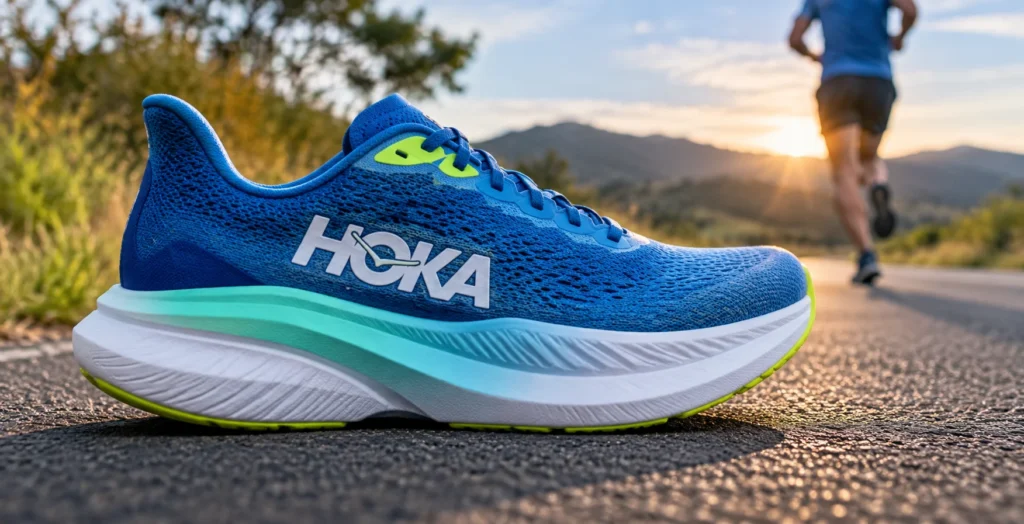
The HOKA Mach 6 is a lightweight neutral running shoe designed for daily road training and faster workouts. It offers balanced cushioning without a rigid racing plate.
Best use: Mixed-pace road running.
Not ideal for: Runners who need dedicated motion control.
The Mach 6 belongs to HOKA’s line of light road shoes. Its design sits between traditional daily trainers and specialized racing shoes.
HOKA uses a single layer of supercritical EVA foam. EVA stands for ethylene-vinyl acetate, a common material in running shoe midsoles.
The shoe also features a curved sole and a close-fitting mesh upper. These parts help create a smooth step and secure foot hold.
At its original $140 retail price, the Mach 6 occupied the mainstream performance trainer market. Its strongest appeal comes from handling several types of runs in one shoe.
HOKA Mach 6 Pros and Cons
✅ Pros
- Lightweight running shoe construction.
- Responsive supercritical EVA foam.
- Smooth heel-to-toe movement.
- Suitable for daily and tempo running.
- Secure midfoot hold.
- Rubber outsole coverage.
- Regular and wide options.
- No rigid carbon plate.
❌ Cons
- Tapered toe box.
- Thin tongue offers limited padding.
- Not a maximum-cushion shoe.
- No dedicated stability system.
- Lab drop differs from the stated drop.
- Limited stock in some sizes.
- Not designed for technical trails.
HOKA Mach 6 Running Shoes
Lightweight neutral road shoes with responsive foam and strategic rubber outsole coverage.
- Best for road running and mixed training.
- Original retail price: $140.
- Regular and wide sizes available, subject to stock.
Check the selected size, width, seller, and current price before ordering.
What Are the HOKA Mach 6 Specifications?
The HOKA Mach 6 combines a 5 mm stated heel drop with a light, plate-free design. Its foam and curved sole support a broad range of running speeds.
| Specification | HOKA Mach 6 |
|---|---|
| Brand | HOKA |
| Men’s Model Number | 1147790 |
| Shoe Category | Neutral road trainer |
| Original Retail Price | $140 |
| Men’s Lab Weight | 8.2 oz / 232 g |
| Women’s Approximate Weight | 6.7–6.9 oz |
| Official Heel Stack | 37 mm |
| Official Forefoot Stack | 32 mm |
| Official Heel Drop | 5 mm |
| Independent Lab Drop | 9.6 mm |
| Midsole | Supercritical EVA foam |
| Upper | Creel jacquard mesh |
| Tongue | Gusseted construction |
| Outsole | Strategic rubber coverage |
| Carbon Plate | No |
| Width Options | Regular and wide |
| Best Surface | Road and treadmill |
Sources: HOKA product specifications, Fleet Feet, and RunRepeat laboratory findings. Weight and sole measurements depend on sample size and measurement method.
How Comfortable Is the HOKA Mach 6?
The HOKA Mach 6 offers balanced comfort rather than an extra-soft ride. Its foam protects the foot while keeping each step light and responsive.
Some running shoes sink deeply when your foot lands. The Mach 6 has a more controlled feel. That helps when your pace changes during a run.
RunRepeat measured 36 mm of heel cushioning in its sample. That provides substantial material between the heel and the road.
The front of the shoe offers a closer connection with the ground. Runners who dislike bulky shoes can find this balance appealing.
However, comfort involves more than the amount of foam. The shoe’s narrow shape near the toes can create unwanted pressure.
A runner with a slim foot can enjoy the close hold. Someone with a broad forefoot can experience the opposite.
Try the Mach 6 with your normal running socks. Walk, jog, and change direction before judging how comfortable it feels.
How Does Supercritical Foam Improve the Mach 6?
Supercritical foam gives the Mach 6 a lighter and more responsive feel. The material helps the shoe handle both relaxed runs and stronger efforts.
Supercritical processing changes the structure of the foam. It creates small cells that influence weight, compression, and rebound.
HOKA uses this foam throughout the Mach 6 midsole. The shoe does not rely on a carbon plate to create its ride.
RunRepeat’s lab results show strong forefoot rebound for a daily trainer. Its measured energy return reached 67 percent under that test method.
This does not mean the shoe returns every bit of running effort. Lab measurements describe how the material responds under controlled conditions.
Our guide to supercritical foam running shoes explains how different foam designs affect cushioning and speed.
The main benefit is versatility. You can run at a comfortable pace and increase your speed without changing shoes.
That makes the Mach 6 useful for runners building a small shoe rotation.
Is the HOKA Mach 6 Good for Daily Running?
Yes, the HOKA Mach 6 works well for daily running. Its low weight and balanced foam suit regular road miles at different speeds.
A normal training week can include easy runs, steady miles, and short workouts. The Mach 6 can cover all three without feeling overly specialized.
Consider a runner who completes three 5-kilometer runs each week. One run feels relaxed, while another includes faster sections.
The Mach 6 gives that runner a practical single-shoe option. There is less need to purchase a separate trainer for every pace.
However, runners who favor slow and relaxed miles can prefer a softer shoe. Our HOKA Clifton 10 review covers a more comfort-focused daily trainer.
The Mach 6 makes the most sense when your training pace changes often. Its performance-focused upper also helps keep the foot secure.
Check your comfort during longer sessions before increasing weekly mileage. A light shoe still needs to fit your feet well.
Is the HOKA Mach 6 Fast Enough for Tempo Runs?
The HOKA Mach 6 is well suited to tempo runs and moderate speed sessions. Its responsive foam and low weight make faster efforts feel natural.
Tempo running involves holding a strong pace for a set period. A suitable shoe should feel stable and easy to move through each step.
The Mach 6 achieves this without a stiff racing plate. That gives runners a less specialized option for mixed training.
Consider a workout with a 10-minute warm-up and 20 minutes of tempo running. The Mach 6 can handle both parts of that session.
Dedicated racing shoes can provide more aggressive performance for hard efforts. But those designs do not always feel comfortable during slow miles.
Runners seeking a plated workout shoe can compare the HOKA Mach X 2 before deciding.
The Mach 6 favors useful speed over extreme racing features. That balance makes it appealing for runners who train more often than they race.
Can You Run Long Distances in the HOKA Mach 6?
Yes, the HOKA Mach 6 can handle long-distance running when its fit and cushioning suit you. Its light build helps reduce unnecessary shoe weight during extended efforts.
The thick heel offers protection for repeated road contact. Its curved shape also supports smooth movement from landing to toe-off.
Independent reviewers at Believe in the Run reported using the Mach 6 for runs reaching around 12 miles. Their experience supports its use beyond short training sessions.
However, longer runs can expose fit issues that short runs hide. Feet often swell as running time increases.
A toe box that feels snug during a 3-mile run can become uncomfortable after 10 miles.
Test the shoe on shorter routes before wearing it for a marathon. Pay attention to toe pressure, heel movement, and changes in comfort.
The Mach 6 provides enough versatility for distance training. But runners who want a softer ride should compare more cushioned alternatives.
Does the HOKA Mach 6 Run Small or Narrow?
The HOKA Mach 6 generally fits true to size in length, but its toe box tapers inward. Runners with broad toes can find the regular version restrictive.
RunRepeat measured the shoe’s big-toe area at 70.1 mm. Its comparison group averaged 73.2 mm.
That difference matters because your toes need room during each step. A shoe can fit across the midfoot while still crowding the front.
The widest part of the tested Mach 6 measured 95.5 mm. That shows why general shoe width does not tell the whole story.
The wide version offers another choice for runners who need extra space. However, extra width does not guarantee a match for every foot shape.
Do not automatically buy a longer shoe to solve a width problem. Extra length can cause heel movement without fixing toe pressure.
Try both widths where possible. Your best size should hold the heel securely while allowing comfortable toe movement.
⚠️ Important Fit Warning
Do not ignore numbness, sharp pressure, or repeated toe rubbing. Stop using a shoe that causes pain. Choose a different width or model if the problem continues.
Why Does the Mach 6 Heel Drop Matter?
The heel drop affects the height difference between your heel and toes. HOKA lists the Mach 6 at 5 mm, although independent measurements differ.
RunRepeat measured a 36 mm heel stack and 26.4 mm forefoot stack. Those measurements produce a 9.6 mm drop in its sample.
The difference shows why measuring methods matter. Brands and independent labs can measure different points within a shoe.
A stated drop also cannot fully describe how a running shoe feels. Sole shape and foam compression affect the ride under load.
Runners moving from higher-drop shoes should introduce the Mach 6 gradually. A change in shoe design can alter how different parts of the leg work.
Start with short, relaxed sessions rather than replacing every training mile at once.
Choose comfort and natural movement over a specific drop number. If pain develops or persists, seek advice from a qualified health professional.
How Stable Is the HOKA Mach 6?
The HOKA Mach 6 offers a reasonably stable neutral ride. However, it does not include a dedicated support system for runners who need extra guidance.
The foam has enough structure to avoid an excessively loose feel. The shoe also uses an upper designed to hold the midfoot securely.
Its curved sole encourages forward movement during each stride. These features help create a controlled road-running experience for suitable runners.
Still, a neutral shoe does not meet every support requirement. Individual foot movement and comfort matter more than broad shoe labels.
A runner who already enjoys neutral trainers can find the Mach 6 suitable. Someone prescribed supportive footwear should follow their clinician’s advice instead.
Test the shoe while turning corners and running at a comfortable pace. Check whether your foot feels secure without tight lacing.
Stability should feel natural, not forced. Choose a different model when the shoe fails to provide a comfortable and secure base.
How Durable Is the HOKA Mach 6?
The HOKA Mach 6 improves on the Mach 5’s outsole design through added rubber coverage. That change helps protect key areas from direct road wear.
Running shoes face repeated friction every time they touch the ground. Areas under the heel and forefoot often receive the most wear.
Earlier Mach designs relied more heavily on exposed foam. The Mach 6 uses rubber in important contact areas instead.
That does not make the outsole impossible to wear down. Your running form, body weight, and chosen surface affect its useful life.
One runner can wear through a heel section faster than another. Rough pavement can also cause more wear than smooth roads.
Use roughly 300 to 500 miles as a general inspection window, not a guaranteed lifespan. Some shoes lose comfort earlier, while others remain useful longer.
Inspect the foam and outsole regularly. Replace the shoe when grip, cushioning, or structural support no longer meets your needs.
How Well Does the Mach 6 Grip Wet and Cold Roads?
The HOKA Mach 6 offers useful road traction, but it is not a winter-specific running shoe. Its rubber coverage helps on pavement without replacing dedicated winter grip.
Wet roads can reduce grip even when a shoe has a rubber outsole. Painted road lines and smooth metal covers deserve extra care.
Cold weather can also change the way midsole foam feels. The amount of change depends on temperature and foam material.
A runner completing easy winter miles on cleared roads can use the Mach 6 when conditions allow.
However, packed snow and ice require different footwear choices. Standard road shoes should not be treated as slip-proof equipment.
Reduce your speed when running across wet corners. Take shorter, controlled steps when the surface feels uncertain.
The Mach 6 works best on predictable roads and treadmill belts. Choose a dedicated winter or trail shoe when conditions demand more specialized traction.
Is the HOKA Mach 6 Good for Walking and Standing?
The HOKA Mach 6 can work well for walking and light daily wear. Its low weight and curved sole help create smooth forward movement.
However, the shoe focuses primarily on running performance. Its snug upper can feel less comfortable during long periods of standing.
Walking places different demands on a shoe than running. Standing for eight hours creates another set of comfort needs.
Someone taking short walks during the day can enjoy the light design. A worker spending a full shift on hard floors should test the fit carefully.
People who prefer more cushioning can explore our HOKA Bondi 9 review for a different type of comfort.
Do not assume the thickest shoe will always feel better. A lighter shoe can suit people who dislike a bulky feel.
Choose the Mach 6 for walking when its fit feels comfortable throughout your normal activities.
How Does the HOKA Mach 6 Compare With Other Running Shoes?
The HOKA Mach 6 stands out for its mix of speed and daily comfort. Other HOKA models focus more on soft cushioning, racing performance, or specific training needs.
HOKA Mach 6 vs Mach 5
The Mach 6 offers a stronger overall design for most new purchases. Its updated foam and added outsole rubber improve the performance-oriented formula.
The Mach 5 remains a useful lightweight trainer if you already own a comfortable pair. There is no need to replace a healthy shoe solely for an updated model.
HOKA Mach 6 vs Mach 7
The Mach 6 offers better potential value when discounted significantly. The Mach 7 makes more sense when both shoes cost almost the same.
The Mach 7 retains a similar foam-based training concept. Compare upper fit, availability, and comfort before paying extra for the newer model.
HOKA Mach 6 vs Clifton
The Mach 6 is better suited to runners who mix easy miles with faster workouts. The Clifton line focuses more on everyday cushioning and relaxed running.
Runners who want another responsive Clifton option can examine Clifton PRO vs Clifton 11 for additional alternatives.
HOKA Mach 6 vs Bondi
The Mach 6 is the better match for speed-focused training. The Bondi provides a more substantial cushioning platform for comfort-focused use.
Choose the Bondi when relaxed comfort matters more than shoe weight. Pick the Mach 6 when training versatility comes first.
| Model | Main Strength | Best Use |
|---|---|---|
| Mach 6 | Light, versatile ride | Mixed training |
| Mach 5 | Lightweight design | Daily running |
| Mach 7 | Newer generation | Mixed training |
| Clifton | Everyday cushioning | Easy runs |
| Bondi | Maximum cushioning focus | Relaxed miles |
| Mach X 2 | Plated performance | Fast workouts |
Which Real-World Running Situations Suit the Mach 6?
The HOKA Mach 6 performs best when your training includes different road-running speeds. Its light design also makes it practical for travel and treadmill workouts.
| Running Situation | Suitability |
|---|---|
| Easy 5K road run | Excellent |
| 20-minute tempo workout | Excellent |
| Weekend 10-mile run | Good with proper fit |
| Treadmill session | Excellent |
| Business travel | Good for mixed use |
| Cleared winter roads | Conditional |
| Technical mountain trails | Not recommended |
A runner who travels for work can benefit from owning a versatile shoe. One pair can cover hotel treadmills and short outdoor runs.
Beginners can also use the Mach 6 while developing their running habits. But comfort should remain the priority over speed.
Experienced runners can use it between easy trainers and specialized racing shoes. Its value comes from covering several needs without excessive complexity.
Is the HOKA Mach 6 Worth Its Price?
The HOKA Mach 6 offers strong value when sold below its original $140 price. Its successor makes full-price Mach 6 purchases less attractive.
The Mach 7 carries a reference retail price of $145. That creates a $5 difference between the two original price points.
A larger Mach 6 discount changes the buying decision. At $105, for example, the older shoe costs $40 less than a $145 Mach 7.
That saving can outweigh small differences between generations. But only when the older shoe fits your feet well.
How Much Should You Pay for the Mach 6?
A price near $100 offers an attractive target for the Mach 6. These ranges represent suggested buying thresholds rather than confirmed live offers.
| Purchase Price | Buying Advice |
|---|---|
| Below $100 | Excellent potential value |
| $100–$115 | Strong buying range |
| $116–$130 | Compare newer alternatives |
| $131–$140 | Check Mach 7 pricing first |
Do not buy the wrong size simply because it costs less. A poor fit can turn even a large discount into wasted money.
Check the seller’s return policy before ordering an older model. Clearance shoes sometimes have more limited return options.
Who Should Buy the HOKA Mach 6?
The HOKA Mach 6 suits neutral runners who want one light shoe for varied training. It works especially well when you value responsiveness over extra-soft cushioning.
✅ Buy the Mach 6 If:
- You run mainly on roads.
- You enjoy light running shoes.
- You mix easy and fast workouts.
- You prefer responsive cushioning.
- You want a plate-free trainer.
- Your foot fits its tapered shape.
- You find a meaningful discount.
❌ Skip the Mach 6 If:
- You need a broad toe shape.
- You prefer maximum soft cushioning.
- You require dedicated stability support.
- You run mostly on rough trails.
- You want a specialized carbon racer.
- You experience pressure during fitting.
- The Mach 7 costs nearly the same.
Beginners do not need the fastest shoe available. They need a comfortable shoe that encourages consistent running.
The Mach 6 can serve that purpose while leaving room for faster future workouts. Still, its shape must suit your feet.
What Are Real Runners Saying About the HOKA Mach 6?
Published runner feedback often favors the Mach 6’s versatility and light feel. Fit complaints focus mainly on the tapered front and limited toe room.
Runner Feedback Summary
Common Positive Themes
- Useful across multiple running speeds.
- Low weight for a cushioned trainer.
- Secure hold around the midfoot.
- Improved outsole construction.
Common Negative Themes
- Toe crowding in regular widths.
- Limited tongue padding.
- Different comfort preferences.
- Fit issues when sizing up.
Based on independent reviews and public running community discussions. These themes do not represent a statistical survey or verified Amazon review average.
One public running community member reported covering around 900 kilometers in the Mach 6. They noticed a decline in cushioning before eventually replacing the pair.
Other runners reported returning the shoe because its front felt restrictive. Buying a longer size did not solve every fit problem.
These different experiences reveal why personal fit matters. Strong durability reports do not guarantee comfort for every runner.
Amazon customer reviews could not be independently verified for this article. No Amazon ratings or customer quotes have been fabricated.
How Should You Care for HOKA Mach 6 Shoes?
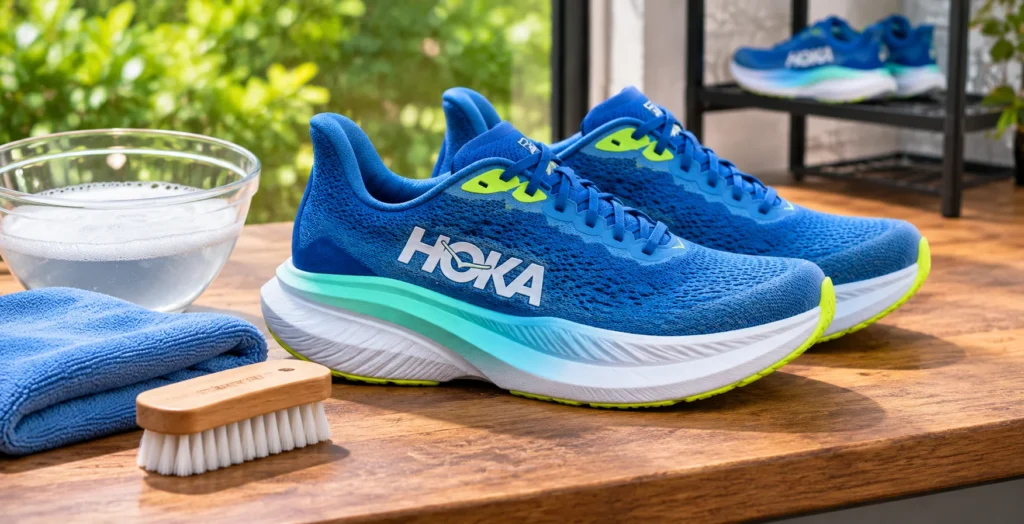
Clean the HOKA Mach 6 by hand and allow it to air-dry naturally. Avoid high heat, harsh chemicals, and unnecessary machine washing.
Good care helps preserve the mesh upper and rubber outsole. It also makes signs of wear easier to spot.
How Do You Clean the Mach 6?
Use a soft brush, mild soap, and cool water for regular cleaning. Remove loose dirt before wetting the upper.
- Remove the laces and removable insoles.
- Brush away dry dirt and loose debris.
- Mix mild soap with cool water.
- Gently wipe the mesh upper.
- Clean rubber areas with a soft brush.
- Remove soap with a damp cloth.
- Allow the shoes to air-dry completely.
Where Should You Store the Mach 6?
Store the shoes in a cool, dry, ventilated space. Keep them away from strong sunlight and direct heat sources.
A hot car or nearby heater can expose shoe materials to unnecessary heat. Damp storage can also cause unpleasant smells.
When Should You Replace the Mach 6?
Replace your shoes when cushioning, grip, or structural comfort declines. Mileage provides a useful guide but cannot predict every shoe’s lifespan.
Inspect uneven outsole wear and changes in the foam shape. Pay attention when familiar running routes start feeling less comfortable.
💡 Shoe Care Tip
Use a running app or training log to record shoe mileage. Inspect the outsole and cushioning regularly rather than relying on mileage alone.
Final Verdict: Is the HOKA Mach 6 Still Worth Buying?
Yes, the HOKA Mach 6 remains worth buying for runners seeking a lightweight, responsive road trainer. Its greatest value comes from serving several training needs in one shoe.
The supercritical foam provides a lively ride without a carbon plate. Added rubber also gives the outsole a more protective design than its predecessor.
The main drawback is the tapered toe box. Some runners need the wide version, while others need a different shoe shape.
Price is the final deciding factor. A discounted Mach 6 offers stronger value than an older pair selling near its original retail price.
Choose the Mach 7 instead when the cost difference is small and its fit works better. Consider the Clifton or Bondi if relaxed cushioning matters more.
The best reason to buy the Mach 6 is not its brand or model number. It is the freedom to move between easy and faster miles in one comfortable pair.
🏆 Recommended for Versatile Road Training
HOKA Mach 6
Lightweight. Responsive. Plate-free. Built for mixed-pace running.
Best buying strategy: Choose a discounted pair in your correct size and width.
Prices and stock can change. Verify the exact model before ordering.
Frequently Asked Questions
Is the HOKA Mach 6 good for beginner runners?
Yes, the HOKA Mach 6 can suit beginners who want a lightweight neutral running shoe. Its foam supports relaxed runs and faster workouts as fitness improves. However, beginners should prioritize comfort over speed. Try the shoe first to make sure its tapered front provides enough toe room.
Does the HOKA Mach 6 run true to size?
The HOKA Mach 6 generally runs true to size in length. However, its tapered toe box can feel narrow. Runners with broad feet should compare regular and wide versions. Avoid choosing extra length solely to fix a width problem, as that can cause unwanted heel movement.
Can you run a marathon in the HOKA Mach 6?
Yes, the HOKA Mach 6 can serve as a marathon shoe for runners who enjoy its fit and cushioning. It offers a lightweight design without a carbon plate. Complete several longer training runs before race day. This helps reveal any toe pressure, heel rubbing, or cushioning concerns.
Which is better, the HOKA Mach 6 or Mach 7?
The HOKA Mach 7 is the more attractive option when both models cost nearly the same. However, the Mach 6 can offer better value at a substantial discount. Both target versatile road training. Choose based on your actual purchase price, available width, and comfort during a fitting.
What is the difference between the HOKA Mach 6 and Clifton?
The HOKA Mach 6 emphasizes lightweight performance and responsive running. The Clifton series focuses more on smooth cushioning for relaxed daily miles. Choose the Mach 6 for mixed-pace training and tempo sessions. Consider the Clifton if easy running, walking, and everyday comfort are your main goals.
Research and Review Sources
This review uses published shoe specifications, independent laboratory findings, and public runner experiences. Laboratory results reflect the tested samples and individual testing methods.
- RunRepeat — HOKA Mach 6 laboratory review
- Doctors of Running — Mach 6 review
- Fleet Feet — HOKA Mach 6 review
- Believe in the Run — Mach 6 wear tests
- RTINGS — HOKA Mach 6 independent review
- Running community — Long-term owner feedback
Affiliate Disclosure: As an Amazon Associate, I earn from qualifying purchases. This article contains affiliate links. If you make a purchase through these links, I may earn a commission at no extra cost to you. These commissions help support Footwear Hiker.


