Quick Answer
Supercritical foam running shoes use midsoles made through a high-pressure gas-foaming process. Manufacturers typically use nitrogen or carbon dioxide to create tiny cells inside a polymer, producing lightweight, responsive cushioning. The result can be softer landings and improved energy return, although performance depends on the foam formula and shoe design. For additional context, see this scientific review of supercritical foaming technology.
Five important things to know
- Manufacturing process: Pressurized gas creates microscopic cells within the foam.
- Lower weight: Cellular structures can reduce the amount of solid material required.
- Energy return: Well-designed foams recover some energy after compression.
- Different materials: EVA, TPU, and PEBA can all undergo specialized foaming processes.
- No plate required: Supercritical foam can work without a carbon-fiber plate.
- Fit still matters: Foam technology cannot compensate for an uncomfortable or poorly fitting shoe.
Running shoe cushioning has changed dramatically, and supercritical foam is one of the technologies driving that change. But the terminology can make shopping confusing.
I’m going to explain how this technology works, how it compares with traditional foam, and when it deserves your money.
What Is Supercritical Foam in Running Shoes?
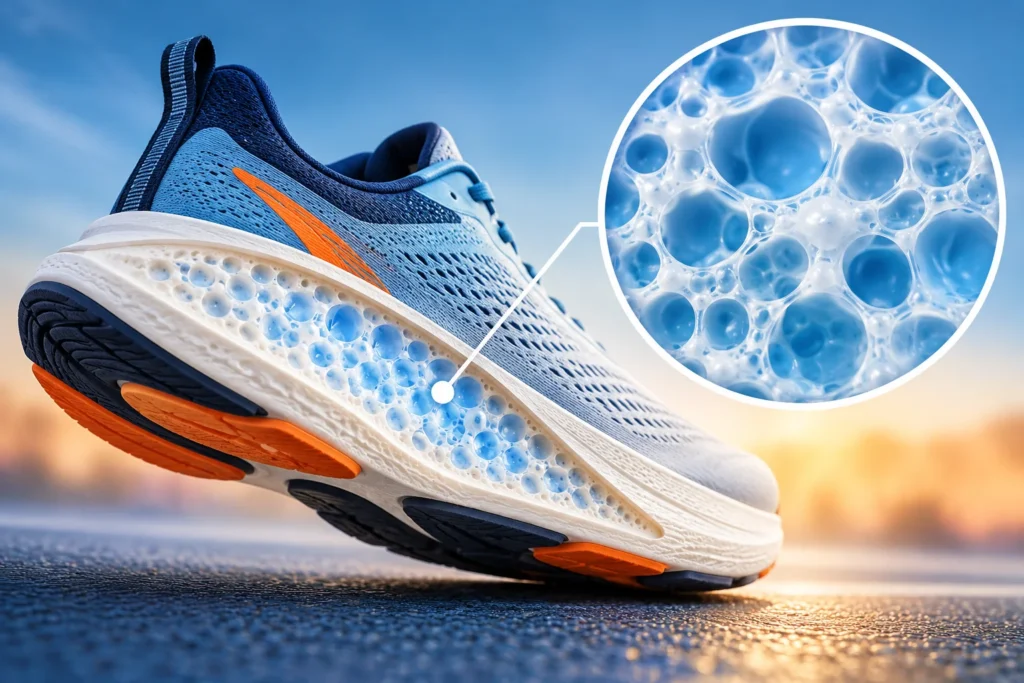
Supercritical foam is a cellular cushioning material produced using a specialized gas-based foaming process. In running shoes, manufacturers use this process to control foam density, structure, and mechanical properties.
A supercritical fluid exists when a substance exceeds its critical temperature and pressure. Under these conditions, the fluid has properties associated with both gases and liquids.
The manufacturing process often uses nitrogen or carbon dioxide. These substances help form many small cells throughout the polymer.
Why Is It Called Supercritical?
The name describes the manufacturing conditions, not the finished shoe’s softness. The polymer undergoes processing with a fluid in its supercritical state.
After pressure changes, gas can form tiny bubbles within the polymer. Manufacturers control the process to create the desired foam structure.
Which Materials Can Become Supercritical Foam?
Supercritical foaming is a manufacturing method rather than one specific chemical material. Several polymer families can undergo this process.
- EVA: Ethylene-vinyl acetate is widely used in everyday running shoe cushioning.
- TPU: Thermoplastic polyurethane can provide resilient cushioning with different firmness characteristics.
- PEBA: Polyether block amide is known for its lightweight and highly resilient properties in performance footwear.
- Other polymers: Manufacturers also experiment with additional thermoplastic elastomers and polymer blends.
The base material matters. Two supercritical foams may behave differently because their chemical formulations and cellular structures differ.
How Does Supercritical Foam Technology Work?
Supercritical foaming uses pressurized fluid and carefully controlled processing conditions to develop a cellular structure. The exact manufacturing steps vary between materials and manufacturers.
The general process involves five stages.
- Prepare the polymer: The manufacturer selects an EVA, TPU, PEBA, or alternative polymer formulation.
- Introduce pressurized gas: Nitrogen or carbon dioxide enters the processing system under controlled conditions.
- Allow gas absorption: Gas dissolves or disperses within the polymer under suitable conditions.
- Trigger cell formation: Changes in pressure or temperature encourage microscopic gas cells to develop.
- Stabilize the structure: The material cools or solidifies, preserving its intended cellular architecture.
Manufacturers may use different equipment, molds, or processing sequences. Some components also require additional shaping and finishing.
What Makes the Foam Lightweight?
The foam contains many tiny gas-filled spaces instead of solid polymer throughout its entire volume. This structure can substantially reduce density.
Lower density allows designers to use more cushioning volume without proportionally increasing weight. However, the final shoe also contains rubber, fabric, adhesives, and other components.
What Creates the Bouncy Feeling?
When your foot lands, the midsole compresses under the applied force. Its polymer structure then recovers as your foot moves forward.
The proportion of mechanical energy returned during recovery is called energy return. Higher resilience often contributes to a springier sensation.
Still, bounce depends on more than foam chemistry. Midsole thickness, firmness, geometry, and your running mechanics all influence the experience.
What Are the Benefits of Supercritical Foam Running Shoes?
Supercritical foam can offer weight and cushioning advantages, but the results vary by implementation. A well-engineered running shoe balances these properties with stability and durability.
1. Lightweight Cushioning
Reduced material density can help create a lighter midsole. That makes the technology attractive for performance trainers and racing shoes.
However, a lightweight midsole does not guarantee a lightweight finished shoe. Upper construction and outsole coverage also affect total weight.
2. Responsive Energy Return
Some advanced foams lose relatively little energy during repeated compression and recovery. This can create a more energetic underfoot sensation.
Published research has found important differences between certain PEBA and EVA foams. These findings cannot automatically be applied to every shoe using either material.
3. Greater Cushioning Design Flexibility
Low-density materials give designers flexibility when creating thick midsoles. More foam volume can help manage impact forces during running.
Yet greater stack height isn’t universally better. Very tall or soft shoes may feel less controlled during quick turns or uneven landings.
4. Versatility Across Different Running Speeds
Responsive foam can support easy running, tempo workouts, and longer efforts. The appropriate use depends on the complete shoe design.
For example, a flexible supercritical EVA trainer may feel suitable for daily mileage. A PEBA-based plated racer will typically emphasize faster running.
5. Different Cushioning Characteristics
Manufacturers can adjust foam density, cell structure, and polymer blends to create different ride characteristics. Some designs prioritize softness, while others favor a firmer response.
This means supercritical foam isn’t automatically better for every runner. Your preferred cushioning sensation remains an important buying factor.
Supercritical Foam vs Traditional EVA Foam: What’s Different?
The main difference is the manufacturing approach and resulting material properties. Conventional EVA uses established foaming methods, while supercritical processing controls cellular development through high-pressure fluid technology.
Both approaches can produce excellent running shoe midsoles. Neither manufacturing method guarantees a particular performance level.
| Feature | Conventional EVA Foam | Supercritical Foam |
|---|---|---|
| Manufacturing | Traditional polymer foaming methods | High-pressure fluid-assisted foaming |
| Polymer options | EVA | EVA, TPU, PEBA, and other suitable polymers |
| Weight | Varies by formulation | Can achieve reduced density |
| Energy return | Depends on material and construction | Can be high, but isn’t guaranteed |
| Ride feel | Ranges from firm to soft | Ranges from firm to soft and highly responsive |
| Best use | Daily training and general running | Daily training, faster workouts, and racing |
The most useful comparison is between complete shoe models rather than foam labels. Geometry, fit, and outsole construction can change how similar materials feel.
Is Supercritical Foam the Same as PEBA?
No. PEBA is a polymer family, while supercritical foaming is a manufacturing technique. A PEBA-based foam may use specialized gas foaming, but the terms are not interchangeable.
Likewise, a supercritical EVA foam doesn’t become PEBA. It retains its underlying polymer identity.
Does Every PEBA Running Shoe Feel the Same?
Different PEBA formulations and midsole designs produce different cushioning characteristics. Some shoes feel extremely soft, while others deliver a more controlled ride.
This is why I recommend comparing complete footwear designs. A material label alone cannot predict the running experience.
What Does Research Say About PEBA and EVA?
A published study compared PEBA and EVA in advanced running footwear. Twenty-two trained male runners completed trials in new and worn shoes.
The new PEBA footwear demonstrated a running-economy advantage under the study conditions. After 450 kilometers of use, the difference was no longer significant.
Read the PubMed Central research library or the published running-economy study for additional scientific context.
Do Supercritical Foam Shoes Improve Running Performance?
Some advanced running shoes improve running economy, meaning runners use less energy at a given speed. However, supercritical processing alone doesn’t establish a measurable performance benefit.
Research on advanced footwear technology evaluates the combined effects of resilient foam, shoe weight, geometry, and stiffening elements.
How Much Improvement Can Runners Expect?
A 2026 expert statement reported typical metabolic savings of approximately 2–4% for advanced footwear technology. It also described performance improvements of approximately 1–3% across relevant research.
Those values concern complete advanced footwear systems, not supercritical foam in isolation. Individual outcomes can differ significantly.
For a broader review, consult the Wiley Online Library and its published footwear science literature.
Does More Energy Return Always Mean Faster Running?
No. Laboratory energy-return measurements describe mechanical behavior, while running performance depends on the person and complete footwear system.
A shoe with excellent energy return might feel unstable or uncomfortable for a particular runner. Those problems can outweigh its theoretical advantages.
Do Supercritical Foam Running Shoes Need Carbon Plates?
No. Supercritical cushioning works in both plated and non-plated running shoes. The carbon plate serves a separate mechanical function.
A plate can increase longitudinal bending stiffness and influence how the shoe rolls forward. The foam compresses and recovers beneath your foot.
Supercritical Foam Without a Plate
Non-plated shoes usually offer greater forefoot flexibility than stiff plated racing shoes. Many runners prefer this setup for regular training.
Examples include certain lightweight trainers using advanced EVA or PEBA-blended cushioning.
Supercritical Foam With a Plate
Plated designs combine responsive cushioning with a stiffening structure. Some models use carbon fiber, while others use nylon or alternative materials.
These systems may feel more aggressive during faster running. They aren’t necessary for everyone.
Are Supercritical Foam Running Shoes Durable?
Durability depends on material formulation, foam structure, body weight, running conditions, and overall construction. Supercritical processing doesn’t guarantee a longer shoe lifespan.
Midsole properties can change through repeated compression. The outsole and upper may also wear independently.
What Are the Signs of Worn-Out Foam?
- Reduced responsiveness: The shoe feels noticeably flatter than before.
- Persistent compression: Parts of the midsole remain visibly deformed.
- Uneven support: The shoe develops an increasingly tilted or unstable feel.
- New discomfort: Familiar runs begin causing unusual irritation or soreness.
- Visible damage: Cracks, separation, or substantial outsole wear appear.
No universal mileage limit applies to every supercritical foam shoe. Evaluate how the footwear performs rather than relying on a fixed replacement schedule.
How Can You Help Your Running Shoes Last?
- Allow wet shoes to dry naturally.
- Avoid prolonged storage in extreme heat.
- Clean mud and debris without harsh chemicals.
- Use running shoes on surfaces suited to their outsole.
- Rotate pairs when practical, especially during frequent training.
Who Should Buy Supercritical Foam Running Shoes?
Runners who value lightweight cushioning and a responsive underfoot feel may benefit from considering supercritical foam models. The best choice depends on daily mileage, speed, stability needs, and budget.
Are They Good for Beginners?
Yes, beginners can wear supercritical foam running shoes. There’s no requirement to become an experienced runner before using advanced cushioning.
I would prioritize a comfortable daily trainer rather than an aggressive racing model. A stable, predictable ride makes early training easier to manage.
Are They Suitable for Long-Distance Running?
They can be excellent for long-distance training when the cushioning and fit match the runner. Low-density foam can provide substantial underfoot volume without excessive shoe weight.
However, extremely soft platforms aren’t comfortable for everyone over long distances. Test your preferred model during shorter runs first.
Are They Worth Buying for Casual Runners?
They can be worth considering when comfort, weight, and ride quality justify the price. Casual runners don’t necessarily need the most expensive foam technology.
A well-fitting conventional trainer may be a better purchase than a premium shoe that feels awkward.
How Do You Choose the Best Supercritical Foam Running Shoes?
Start by choosing the type of running you do most often. Then compare the cushioning, fit, stability, and overall construction.
- Identify your running purpose: Choose between easy training, mixed-pace workouts, long runs, or racing.
- Check the foam description: Look for the actual polymer and manufacturer technology rather than marketing terms alone.
- Evaluate heel-to-toe drop: Consider whether the shoe’s geometry suits your existing footwear preferences.
- Check stability: Examine platform width, heel construction, and how the shoe behaves when turning.
- Confirm fit: Leave suitable toe room and avoid painful pressure around the heel or midfoot.
- Try different speeds: Test slow jogging and slightly faster running when possible.
- Compare overall value: Consider durability, comfort, and intended use alongside price.
What Mistakes Should You Avoid?
- Assuming every supercritical foam is equally responsive.
- Choosing the softest midsole without checking stability.
- Buying a carbon-plated racer only because it includes premium foam.
- Ignoring heel fit, toe room, and width.
- Assuming a higher price always means better running economy.
- Expecting foam technology to correct every running injury or discomfort.
Which Supercritical and Advanced Foam Running Shoes Are Worth Considering in 2026?
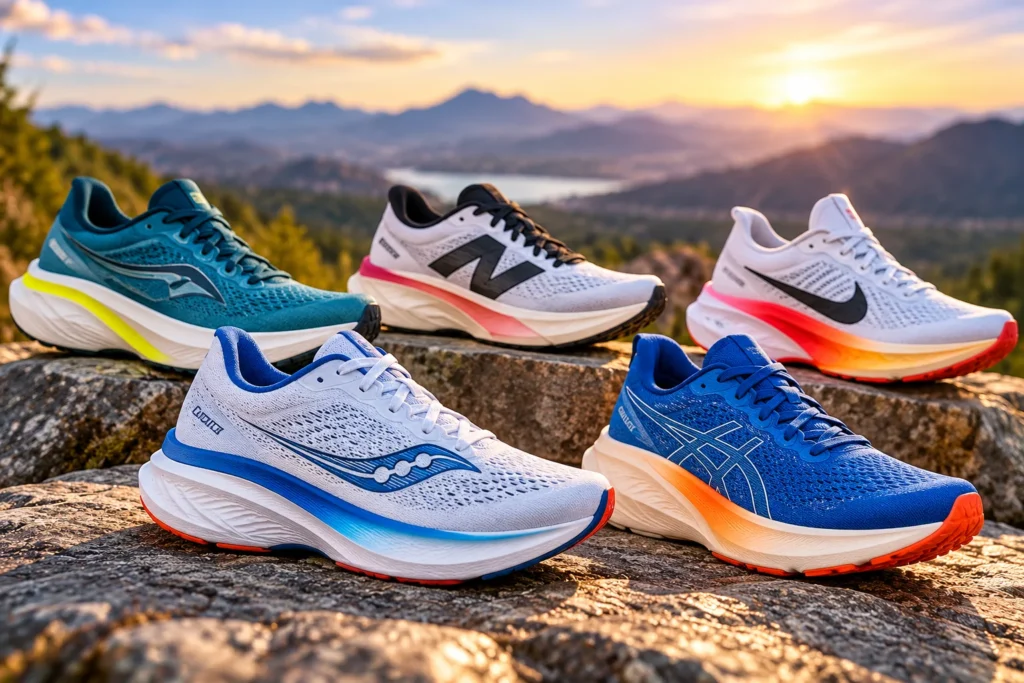
Three useful examples illustrate how modern cushioning technologies serve different running needs. They include a supercritical EVA trainer, a PEBA-blend trainer, and a PEBA-based plated speed shoe.
Not every model below is independently verified as using the same supercritical manufacturing process. The recommendations demonstrate related advanced foam approaches rather than identical production technology.
| Running Shoe | Foam | Plate | Primary Use |
|---|---|---|---|
| HOKA Mach 6 | Supercritical EVA | None | Lightweight daily training |
| New Balance FuelCell Rebel v5 | PEBA-blended FuelCell | None | Flexible mixed-pace training |
| Saucony Endorphin Speed 5 | PWRRUN PB | Nylon | Tempo runs and fast workouts |
If you’re shopping for responsive cushioning, these models offer three distinct starting points. Their specifications and intended uses are more informative than a single technology label.
🏆 Daily Training Pick
HOKA Mach 6
★★★★☆ Editorial suitability: 4/5
The Mach 6 uses a supercritical EVA midsole and a lightweight, non-plated design. I would shortlist it for runners seeking an energetic daily trainer without the stiffness of a racing plate. Fit and stability should determine the final choice.
⚡ Flexible Training Pick
New Balance FuelCell Rebel v5
★★★★☆ Editorial suitability: 4/5
This model features PEBA-blended FuelCell cushioning, a 6 mm listed heel-to-toe drop, and a plate-free design. I would consider it for runners wanting one lightweight shoe for easy miles and occasional faster sessions.
🚀 Faster Workout Pick
Saucony Endorphin Speed 5
★★★★☆ Editorial suitability: 4/5
The Endorphin Speed 5 combines PWRRUN PB foam, a nylon plate, and SPEEDROLL geometry. Its responsive construction makes it worth considering for tempo workouts and faster long runs, especially when a full carbon plate isn’t preferred.
Affiliate disclosure: As an Amazon Associate, we may earn from qualifying purchases. Product ratings above are editorial suitability assessments, not customer review averages or laboratory test scores. Prices and availability may change.
Frequently Asked Questions About Supercritical Foam Running Shoes
Is Supercritical Foam Better Than Regular EVA?
Supercritical processing can produce lightweight, responsive cushioning, but it isn’t automatically superior to conventional EVA. The final performance depends on polymer formulation, foam density, shoe geometry, and construction. Some runners prefer traditional EVA because its ride can feel more predictable or stable.
Does Supercritical Foam Make Running Shoes Faster?
Supercritical foam may contribute to better running economy when combined with an effective shoe design. However, no universal speed improvement can be attributed to the manufacturing process alone. Research on advanced footwear generally examines complete systems, including foam, weight, geometry, and plates.
Can Beginners Use Supercritical Foam Running Shoes?
Yes. Beginners can use running shoes with supercritical foam as long as the fit, cushioning, and stability suit their needs. A comfortable non-plated daily trainer is often a practical starting point. Expensive racing shoes aren’t required to enjoy responsive cushioning.
Is Supercritical Foam the Same as Nitrogen-Infused Foam?
Not necessarily. Nitrogen-infused foam is a broader marketing or manufacturing description, while supercritical foaming refers to specific processing conditions. Some nitrogen-based foaming systems use supercritical conditions, but the two terms shouldn’t automatically be treated as identical without manufacturer documentation.
How Long Do Supercritical Foam Running Shoes Last?
There is no universal lifespan for all supercritical foam running shoes. Durability varies with the polymer, foam structure, runner, surface, and training frequency. Watch for persistent midsole deformation, reduced cushioning, uneven wear, and changes in comfort rather than following a fixed mileage number.
Final Verdict: Are Supercritical Foam Running Shoes Worth It?
Supercritical foam running shoes are worth considering if you want lightweight, responsive cushioning. The technology gives manufacturers more ways to control foam structure and create different running sensations.
Still, manufacturing technology shouldn’t be your only buying criterion. The complete shoe must fit well and feel comfortable at your normal training pace.
My recommendation is simple: prioritize fit, stability, and intended use before comparing foam names. A thoughtfully designed running shoe will serve you better than a technology label alone.
Use the comparison table and product examples above to build your shortlist. Then choose the shoe that feels right during actual running, not just in the product description.


Steven is a former sportsperson and now a full-time businessman and research writer. He is the mastermind of this site, and he created this site to help people who need specialized shoes for different activities. When he was a sportsperson, he was very passionate about different types of shoes for his sports purpose. The passion he had for shoes at that time now turned into his profession. Besides his shoe business, he loves sharing his knowledge and experience with people and helping them maintain healthy feet.
More Posts