

Quick Answer
The HOKA Arahi 7 is better for runners who need added stability. Its J-Frame support guides the foot through each stride. The HOKA Mach 6 is better for neutral runners seeking speed and versatility. At 8.3 ounces, the Mach 6 is lighter than the 9.6-ounce Arahi 7.
Which HOKA shoe matches your running needs?
- Arahi 7 wins for structured stability and foot guidance.
- Mach 6 wins for speed, lighter weight and versatile training.
- Both shoes feature a stated 5 mm heel-to-toe drop.
As an Amazon Associate, we earn from qualifying purchases.
Quick Verdict — HOKA Arahi 7 vs Mach 6
HOKA Arahi 7
$145 (Original MSRP)
Best for:
Runners who prefer a firm platform with structured foot guidance.
EDITOR’S CHOICE
HOKA Mach 6
$140 (Original MSRP)
Best for:
Neutral runners who want one shoe for daily miles and faster workouts.
| Category | Arahi 7 | Mach 6 |
|---|---|---|
| Overall Versatility | — | 🏆 |
| Value at Original MSRP | — | ✅ |
| Structured Stability | ✅ | — |
| Lightweight Design | — | ✅ |
| Tempo Running | — | ✅ |
Bottom line: The Mach 6 wins for neutral runners seeking versatility, while the Arahi 7 is the better choice for runners who benefit from structured support.
Prices shown are original retail prices. Current prices and stock vary by size, color and seller.
Key Takeaways
- The HOKA Mach 6 offers greater versatility for neutral runners.
- The Arahi 7 originally cost $5 more than the Mach 6.
- The Arahi 7 uses J-Frame technology for structured support.
- The Mach 6 weighs about 1.3 ounces less per men’s shoe.
- Both shoes have a 5 mm stated drop but different midsole designs.
Choosing between two HOKA running shoes can get confusing. Both have thick midsoles, curved soles and similar retail prices.
Yet the HOKA Arahi 7 and Mach 6 serve different purposes. One offers added foot guidance, while the other favors faster movement.
I’m Steven Tyler, and this HOKA Arahi 7 review compares their designs, published specifications and independent test findings. The goal is to help you choose based on your running needs.
Do you prefer a firm shoe that guides your stride? Or would you rather have a light shoe for faster workouts?
Those questions matter more than the number of features each shoe has. A shoe with more support does not always offer more comfort.
Both models have newer versions in the HOKA lineup. That makes clearance prices an important part of this buying decision.
The right choice comes down to support, fit and how you run. Understanding these differences can help you avoid buying the wrong shoe.
What Is the HOKA Arahi 7 Designed to Do?
HOKA Arahi 7 Quick Verdict
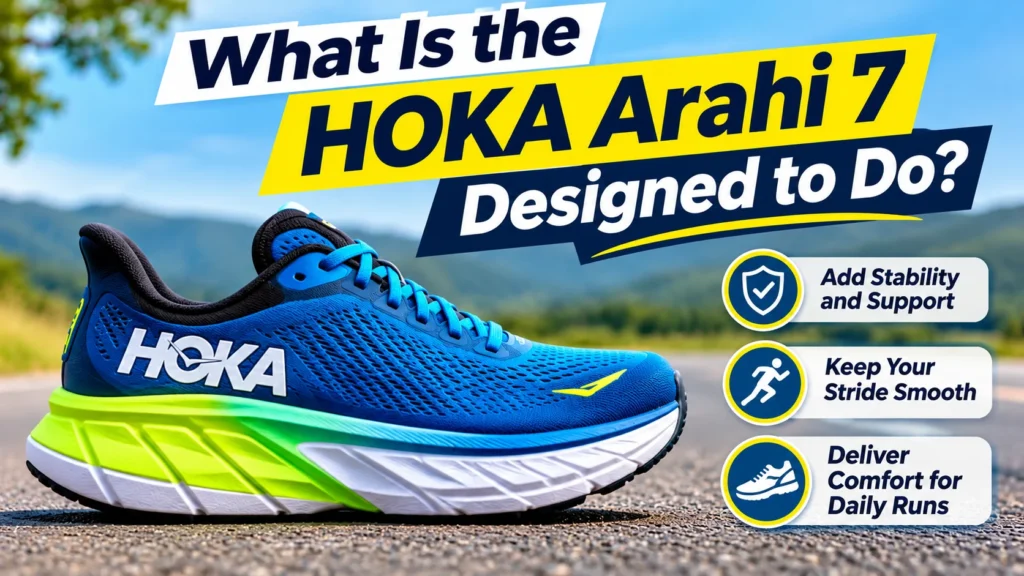
The HOKA Arahi 7 is a road running shoe built for structured stability. It uses firm J-Frame foam to guide foot movement without a traditional hard medial post.
9.6 oz
Published men’s weight
5 mm
Stated heel drop
Original retail price: $145
Best for: Daily running and walking with added guidance.
Not ideal for: Runners seeking a soft, flexible speed shoe.
The Arahi 7 sits within HOKA’s stability running shoe range. It targets runners who prefer extra guidance during each stride.
Its compression-molded EVA midsole provides cushioning beneath the foot. A firmer J-shaped section adds support around key parts of the sole.
The shoe also features a curved MetaRocker design. This shape helps the foot move from landing toward toe-off.
A flat-knit upper wraps around the foot for a secure fit. The tongue uses two attachment points to help limit movement.
The men’s model has a published weight of about 9.6 ounces. Its original $145 price places it within the premium daily trainer range.
The Arahi 7 makes sense for runners who enjoy a firm platform. However, runners who dislike pressure around the arch should try it first.
HOKA Arahi 7 Pros
- Structured J-Frame stability.
- Light for a stability trainer.
- Secure flat-knit upper.
- Smooth rocker-shaped sole.
- Available in wide sizes.
- Useful for steady daily miles.
HOKA Arahi 7 Cons
- Firm ride may not suit everyone.
- Standard width can feel snug.
- Less suited to fast workouts.
- Heavier than the Mach 6.
- Arch pressure can affect comfort.
- Older model stock may be limited.
STABILITY RUNNING SHOE
HOKA Arahi 7
Original MSRP: $145
- J-Frame midsole support
- Compression-molded EVA foam
- 5 mm heel-to-toe drop
- Road running and daily training
Check HOKA Arahi 7 Availability on Amazon
Check the exact model, size, width and seller before ordering.
What Makes the HOKA Mach 6 Different?
HOKA Mach 6 Quick Verdict
The HOKA Mach 6 is a lightweight neutral running shoe. Its supercritical foam makes it suitable for steady runs, faster training and runners who prefer a more responsive ride.
8.3 oz
Published men’s weight
5 mm
Stated heel drop
Original retail price: $140
Best for: Neutral daily runs and faster workouts.
Not ideal for: Runners who need the Arahi’s structured guidance.
The HOKA Mach 6 focuses on low weight and responsive movement. It works as a daily trainer and a faster workout shoe.
Its supercritical foam creates a different feel from traditional EVA cushioning. The design aims to balance low weight with energy return.
The Mach 6 uses a creel jacquard upper for foot coverage. Strategic rubber sections protect the sole at key contact points.
Unlike the Arahi 7, the Mach 6 has no J-Frame support system. It relies on its platform shape rather than dedicated stability foam.
The men’s model weighs about 8.3 ounces by published specifications. Its original retail price was $140.
That combination makes the Mach 6 an appealing one-shoe option. Neutral runners can use it for easy miles and faster sessions.
HOKA Mach 6 Pros
- Lightweight construction.
- Responsive supercritical foam.
- Versatile daily training design.
- Suitable for tempo workouts.
- Strategic rubber outsole coverage.
- Lower original retail price.
HOKA Mach 6 Cons
- No dedicated J-Frame support.
- Toe box can feel narrow.
- Not designed for rough trails.
- May feel firm to plush-shoe fans.
- Low drop requires some adjustment.
- Limited older-model availability.
VERSATILE NEUTRAL TRAINER
HOKA Mach 6
Original MSRP: $140
- Supercritical foam midsole
- Lightweight neutral construction
- 5 mm heel-to-toe drop
- Daily running and tempo workouts
Check HOKA Mach 6 Availability on Amazon
Prices and availability depend on the selected size and color.
How Do the HOKA Arahi 7 and Mach 6 Specs Compare?
The HOKA Mach 6 wins on weight and workout versatility. The Arahi 7 wins on dedicated stability technology. Both share a stated 5 mm heel drop, but their foam designs and intended uses differ.
| Specification | HOKA Arahi 7 | HOKA Mach 6 |
|---|---|---|
| Original retail price | $145 | $140 |
| Shoe category | Stability | Neutral |
| Men’s published weight | 9.6 oz / 272 g | 8.3 oz / 235 g |
| Stated heel drop | 5 mm | 5 mm |
| Midsole material | Compression-molded EVA | Supercritical foam |
| Stability system | J-Frame technology | Neutral geometry |
| Upper construction | Flat-knit upper | Creel jacquard upper |
| Tongue design | Dual-gusseted tongue | Internal gusset |
| Outsole | Zonal rubber | Strategic rubber coverage |
| Carbon plate | No | No |
| Wide options | Available | Available |
| Primary surface | Road | Road |
| Best running pace | Easy to steady | Easy to fast |
| Newer alternative | Arahi 8 | Mach 7 |
Published shoe weights depend on sample size. Independent measurements can differ from brand specifications.
The weight difference is roughly 37 grams per shoe. Across a pair, that adds up to around 74 grams.
However, lower weight does not guarantee better comfort or performance. The support system and fit still need to suit your feet.
Which Shoe Offers Better Stability and Support?
Winner: HOKA Arahi 7. The Arahi 7 offers more structured guidance through its J-Frame midsole. The Mach 6 lacks this dedicated support feature and serves neutral runners instead.
How Does J-Frame Technology Work?
J-Frame technology uses a firmer section of foam around the midsole. Its shape helps guide movement through the heel and inner side.
HOKA uses this system instead of a traditional hard support post. The result is a cushioned platform with added structure.
Pronation describes the natural inward movement of the foot during loading. Some runners prefer more guidance during this part of their stride.
The Arahi 7 addresses that preference through its firm support system. However, pronation alone does not mean someone needs a stability shoe.
Is the HOKA Mach 6 Stable Enough for Daily Running?
The Mach 6 offers a neutral platform suitable for many runners. Its sole shape provides a base without dedicated J-Frame guidance.
Neutral runners often benefit from choosing shoes based on comfort. Extra structure can feel restrictive when it does not suit their stride.
For example, a runner who already feels comfortable in neutral shoes can consider the Mach 6. Someone who relies on the Arahi’s firm guidance may prefer staying with that design.
Category Winner: HOKA Arahi 7
Choose the Arahi 7 if structured foot guidance is your main priority. Choose the Mach 6 if you prefer neutral cushioning.
Which Shoe Has Better Cushioning and Running Performance?
Winner: HOKA Mach 6 for versatile running. Its supercritical foam and lower weight make it a stronger choice for faster workouts. The Arahi 7 provides a firmer, more controlled platform for steady miles.
How Does the Arahi 7 Midsole Feel?
The Arahi 7 combines compression-molded EVA with firmer support foam. That design creates a more structured ride than many soft neutral trainers.
Runners who enjoy a firm platform can benefit from this approach. However, a thick sole does not always produce a soft ride.
This matters during slow recovery runs and long walks. Someone seeking deep, plush cushioning may prefer another HOKA model.
Is the Mach 6 Better for Faster Workouts?
The Mach 6 has the stronger design for tempo runs. Its lighter build and responsive foam favor changes in pace.
Consider a training session that includes easy running and fast intervals. The Mach 6 can serve both parts without a shoe change.
The Arahi 7 can handle faster running when needed. But its design priorities focus more on guidance than speed.
What Do Independent Weight Measurements Reveal?
Laboratory measurements confirm that the Mach 6 is the lighter shoe. RunRepeat measured the Mach 6 at 232 grams and the Arahi 7 at 266 grams.
That produces a 34-gram difference in the tested samples. These figures come from independent testing rather than personal testing for this review.
Weight is only one part of running performance. A comfortable, secure fit can matter more during longer sessions.
Category Winner: HOKA Mach 6
Its lighter design and responsive midsole make it the more versatile training shoe for neutral runners.
Which HOKA Shoe Offers Better Value for Money?
Winner: HOKA Mach 6 at original retail prices for neutral runners. The Mach 6 originally cost $140, compared with $145 for the Arahi 7. Its broader range of training uses adds value for runners who do not need structured support.
However, a $5 price difference should not drive this purchase. Both shoes belong to different running shoe categories.
Arahi 7 buyers pay for a dedicated guidance system. Mach 6 buyers pay for lighter construction and responsive foam.
Both models can also appear at clearance prices. A larger discount can change the value comparison between them.
| Value Factor | Arahi 7 | Mach 6 |
|---|---|---|
| Original price | $145 | $140 |
| Main benefit | Foot guidance | Versatility |
| Best value user | Stability runner | Neutral runner |
A useful way to compare value is cost per mile. Divide your purchase price by the miles you get from the shoe.
For example, a $100 shoe lasting 400 miles costs $0.25 per mile. This is an illustration, not a tested lifespan for either model.
Comfort and suitability remain more important than cost alone. A discounted shoe offers poor value if you cannot wear it.
How Do Fit, Grip and Durability Compare?
Neither shoe wins every aspect of fit and durability. The Arahi 7 offers structured upper security, while the Mach 6 favors lower weight. Both use road-focused soles and require careful size selection.
Which Shoe Fits Wide Feet Better?
Both shoes offer wide versions, making width selection important. Their standard versions can feel snug around certain foot shapes.
The Arahi 7 combines a knit upper with firm midfoot guidance. Some feet may feel extra pressure around the arch.
The Mach 6 uses a lighter upper with a tapered front. Runners with broad toes should check the available wide sizes.
Try shoes while wearing your normal running socks. Leave roughly a thumb’s width of space beyond your longest toe.
Which Shoe Has Better Outsole Durability?
Both models use rubber in selected areas of the outsole. These sections protect high-contact parts while helping control total weight.
The Arahi 7 uses zonal rubber across its road-focused platform. The Mach 6 also uses strategic rubber placement.
Individual wear patterns depend on body weight, gait and running surface. Rough pavement can wear rubber faster than smooth treadmill belts.
There is no universal mileage figure that guarantees either shoe’s lifespan. Check outsole wear and changes in cushioning instead.
Are These HOKA Shoes Safe for Wet or Winter Roads?
Both shoes are intended for road running rather than technical trails. Their soles do not provide dedicated ice traction.
Wet paint, metal covers and icy pavement can become slippery. Slow down when crossing these surfaces.
Cold weather can also change how midsole foam feels. Neither shoe should replace winter-specific footwear in severe conditions.
Important Fit and Safety Note
Do not continue running through sharp pain, numb toes or persistent arch pressure. A stability shoe cannot diagnose or treat foot injuries. Seek qualified medical advice when pain persists.
Which Shoe Works Best for Different Running Needs?
The Arahi 7 wins for runners seeking structured guidance. The Mach 6 wins for neutral runners who want greater workout flexibility. Your usual training sessions should determine which design offers more value.
| Use Case | Recommended Shoe | Main Reason |
|---|---|---|
| Daily runs with added guidance | Arahi 7 | J-Frame support |
| Neutral daily running | Mach 6 | Lightweight platform |
| Tempo workouts | Mach 6 | Responsive foam |
| Walking with preferred guidance | Arahi 7 | Structured platform |
| Treadmill intervals | Mach 6 | Pace flexibility |
| Icy winter roads | Neither | No dedicated ice traction |
Is the HOKA Arahi 7 Good for Long Runs?
The Arahi 7 can work for long, steady runs. Its structured platform suits runners who enjoy firm guidance over distance.
For a 10-mile run, comfort becomes more important than shoe weight. Check that your toes have space as your feet swell.
Runners who prefer plush cushioning may find the Arahi too firm. Test shorter runs before using it for longer sessions.
Is the Mach 6 Better for Race Training?
The Mach 6 offers greater flexibility for neutral race training. You can use it for steady runs and faster intervals.
It also works for runners who prefer shoes without stiff plates. However, it does not deliver the same design as carbon-plated racing shoes.
The Mach 6 makes sense when you want one versatile trainer. Specialized racing shoes remain an option for specific race goals.
Which Shoe Is Better for Standing All Day?
The Arahi 7 can suit people who prefer a structured standing platform. The Mach 6 can suit people who prefer lighter footwear.
Neither model guarantees comfort during an eight-hour work shift. Standing comfort depends on foot shape, floor surface and individual needs.
For jobs requiring certified slip resistance, choose suitable work footwear instead. Running shoe rubber is not a substitute for workplace safety certification.
Is the Arahi 7 Price Difference Worth It?
The Arahi 7’s original $5 price premium is worth paying for suitable support. Neutral runners who do not need that guidance gain more versatility from the Mach 6.
Clearance prices make the decision more interesting. Both older models may cost less than their newer replacements.
Compare the final checkout price rather than the advertised discount. Shipping fees, seller terms and returns can change the total cost.
Illustrative Clearance Price Buying Guide
- Below $100: Attractive value if the shoe fits correctly.
- $100 to $120: Compare available sizes and newer models.
- Above $120: Check whether a newer version offers better value.
- Near original MSRP: Try both generations before deciding.
These are editorial buying thresholds, not verified current sale prices.
Be careful with older stock from sellers offering limited returns. A low price does not offset an unsuitable fit.
Check whether the listing names the exact model and width. Look for clear seller information and an acceptable return policy.
Who Should Buy the HOKA Arahi 7 or Mach 6?
Buy the Arahi 7 if structured support improves your running comfort. Buy the Mach 6 if you prefer neutral shoes with responsive cushioning. Neither shoe is automatically better for every runner.
Buy the HOKA Arahi 7 If:
- You prefer structured stability shoes.
- J-Frame guidance feels comfortable.
- Most runs happen at steady speeds.
- You like a firmer platform.
- You want a shoe for running and walking.
Skip the Arahi 7 If:
- You dislike firm arch support.
- You want a lightweight speed trainer.
- You prefer soft, plush cushioning.
Buy the HOKA Mach 6 If:
- You enjoy neutral running shoes.
- You want lower shoe weight.
- You include tempo runs in training.
- You prefer responsive cushioning.
- You want one versatile daily trainer.
Skip the Mach 6 If:
- You need dedicated structured guidance.
- You prefer maximum plush cushioning.
- The available width feels restrictive.
When Should You Buy Neither Shoe?
Neither shoe is ideal if you need specialized trail grip, winter traction or certified workplace footwear.
- HOKA Bondi: Consider for maximum cushioning preferences.
- HOKA Gaviota: Consider for a different high-cushion stability platform.
- HOKA Clifton: Consider for neutral daily training.
- HOKA Arahi 8: Consider for updated H-Frame stability.
- HOKA Mach 7: Consider for a newer Mach training shoe.
Try the alternatives when the Arahi 7 or Mach 6 does not fit your feet comfortably.
What Are Real Buyers Saying About Both Shoes?
Public buyer feedback shows that comfort varies between these two models. Arahi 7 users often discuss its structured support, while Mach 6 users focus on its running feel. Fit remains a common concern worth checking before purchase.
HOKA Arahi 7 Buyer Feedback
Positive Feedback
A verified retail review published on REI describes repeat purchases of the Arahi 7. The reviewer reported more than 500 miles across three pairs.
Negative Feedback
Some running community members have described discomfort around the arch or toes. These experiences highlight the importance of checking width and support preferences.
Source: REI Arahi 7 customer reviews and public running community discussions.
HOKA Mach 6 Buyer Feedback
Positive Feedback
One public running community member reported that the Mach 6 felt comfortable from the first wear. The runner preferred it after experiencing discomfort in the Arahi 7.
Potential Concerns
Independent reviews identify the tapered toe box as a possible limitation. Runners with broad forefeet should consider trying the wide version.
Source: RunRepeat Mach 6 laboratory review and public running community feedback.
Individual reviews cannot establish how a shoe will fit everyone. A positive report also does not prove that a shoe prevents injuries.
Amazon-specific ratings and review counts were not independently accessible. This review does not invent those figures or present other feedback as Amazon reviews.
How Was This HOKA Arahi 7 Review Researched?
This HOKA Arahi 7 review uses published shoe specifications and independent testing. It compares measurable design differences alongside public feedback. No original hands-on running test was performed for this comparison.
I focused on features that affect a real buying decision. These include support geometry, foam construction, weight, fit and training purpose.
Brand-stated specifications and laboratory measurements are treated as separate evidence. Their figures can differ due to sample sizes and measurement methods.
Research Sources
- RunRepeat HOKA Arahi 7 laboratory review — measured shoe weight and construction.
- RunRepeat HOKA Mach 6 laboratory review — weight, materials and shoe performance findings.
- Fleet Feet HOKA Arahi 7 review — stability features and runner impressions.
- Believe in the Run Arahi 7 review — independent reviewer observations.
- RTINGS Arahi 7 review — independent measurements.
- RunningShoeGeeks HOKA discussion — individual runner experiences.
The recommendations reflect an editorial assessment of these design differences. They are not medical prescriptions or guarantees of individual running performance.
How Should You Care for HOKA Running Shoes?
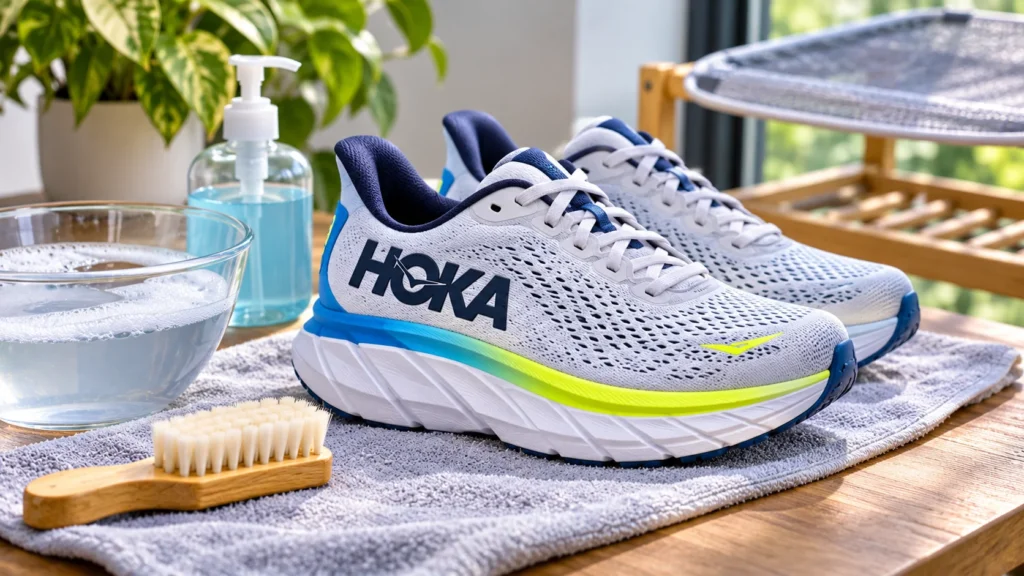
Clean your HOKA running shoes by hand and let them air dry. Avoid washing machines, dryers and direct heat. Proper care helps protect the upper, foam and outsole from unnecessary damage.
How Should You Clean the Arahi 7 and Mach 6?
Use a soft brush, mild soap and cool or lukewarm water. Remove surface dirt before cleaning the upper.
- Remove the laces and removable insoles.
- Brush loose dirt from the outsole.
- Mix mild soap with lukewarm water.
- Gently scrub dirty areas with a soft brush.
- Wipe away soap using a damp cloth.
- Leave the shoes to air dry indoors.
Avoid soaking the entire shoe for long periods. Excess water and harsh chemicals can damage some shoe materials.
How Should You Store HOKA Running Shoes?
Store both shoes in a dry, ventilated area at room temperature. Keep them away from direct sunlight and strong heat sources.
A hot car trunk is a poor storage location. Heat can affect foam, adhesives and upper materials.
Let damp shoes dry completely before putting them away. This helps control moisture and unwanted odors.
When Should You Replace the Arahi 7 or Mach 6?
Replace your running shoes when they lose useful cushioning or grip. Mileage helps track wear, but it does not tell the full story.
A common running shoe replacement guideline is 300 to 500 miles. That range does not guarantee the lifespan of either HOKA model.
Inspect the shoes for uneven wear, flattened cushioning and damaged uppers. Changes in how the shoe feels also deserve attention.
Running Shoe Care Tip
Track your running mileage and inspect the shoes regularly. Replace them based on their condition and your comfort rather than mileage alone.
Final Verdict: Is the HOKA Arahi 7 Worth Buying?
Yes, the HOKA Arahi 7 is worth buying if you prefer structured stability. Its J-Frame support, rocker geometry and relatively light construction make it a useful daily training option.
However, the Arahi 7 is not the strongest choice for every runner. Its firm ride and snug fit can limit its appeal.
The HOKA Mach 6 wins this comparison for overall neutral running versatility. It weighs less and suits a broader range of training speeds.
Still, versatility does not replace the need for suitable support. The Arahi 7 remains the better choice when its guidance feels comfortable.
Both shoes deserve consideration when available at a good clearance price. Compare their fit with newer versions before making your purchase.
Which HOKA Shoe Should You Choose?
Best for Structured Stability
HOKA Arahi 7
Choose this shoe for a firm platform and dedicated J-Frame guidance during everyday runs.
Best for Neutral Running
HOKA Mach 6
Choose this shoe for lower weight, responsive foam and versatile daily training.
Final recommendation: Choose the shoe that suits your feet and training needs. A better fit offers more lasting value than a lower price or a longer feature list.
Frequently Asked Questions
Is the HOKA Arahi 7 Good for Daily Running?
Yes, the HOKA Arahi 7 works well for daily running when you prefer structured support. Its J-Frame midsole adds guidance during steady miles. Runners who prefer softer or more flexible shoes should compare other models.
Which Is Better, the HOKA Arahi 7 or Mach 6?
The HOKA Arahi 7 is better for runners seeking dedicated stability. The HOKA Mach 6 is better for neutral runners who want speed and versatility. The best choice depends on fit, comfort and training purpose.
What Is the Main Difference Between the Arahi 7 and Mach 6?
The main difference is their support system. The Arahi 7 uses J-Frame technology and compression-molded EVA foam. The Mach 6 uses responsive supercritical foam within a lighter neutral platform.
Is the HOKA Arahi 7 Good for Walking?
Yes, the Arahi 7 can suit walking if you enjoy a structured, firm platform. Its curved sole helps guide forward movement. However, people seeking plush walking comfort should compare other cushioned models.
Does the HOKA Arahi 7 Run Narrow?
The standard Arahi 7 can feel snug, especially around the midfoot. Wide versions are available for runners who need additional space. Try your normal size and compare widths before purchasing.
Affiliate Disclosure
As an Amazon Associate, FootwearHiker earns from qualifying purchases. This article contains affiliate links. We may receive a commission when you make a qualifying purchase through these links, at no additional cost to you. Our recommendations are based on published specifications, independent research and editorial comparisons. Prices, product availability and seller terms may change. Always verify the exact product model, size, width and current price before purchasing.


