Quick Answer
It depends. The Nike Pegasus 40 handles easy runs and walking well. But its firmer ride limits plush comfort. RunRepeat measured 113 SA heel shock absorption versus a 131 SA lab average. Buy for daily use at a discount.
Is the Pegasus 40 right for your runs?
- Best for short to moderate daily road runs.
- React foam and two Zoom Air units keep the ride familiar.
- Less appealing for runners wanting thick, soft cushioning.
Dependable daily workhorse
Independent OutdoorGearLab testing: 61/100 overall.
Upper comfort
Response
Cushioning
Best for: Neutral runners seeking one flexible daily shoe.
Price: $130 original MSRP; current Amazon offer not independently confirmed.
Independent category scores — OutdoorGearLab, out of 10
These are published reviewer ratings, not scores from our own field test.
I’m Steven Tyler. I reviewed published tests, Nike specifications, and Amazon data, without claiming personal shoe testing.
What Is the Nike Pegasus 40 and Who Is It For?
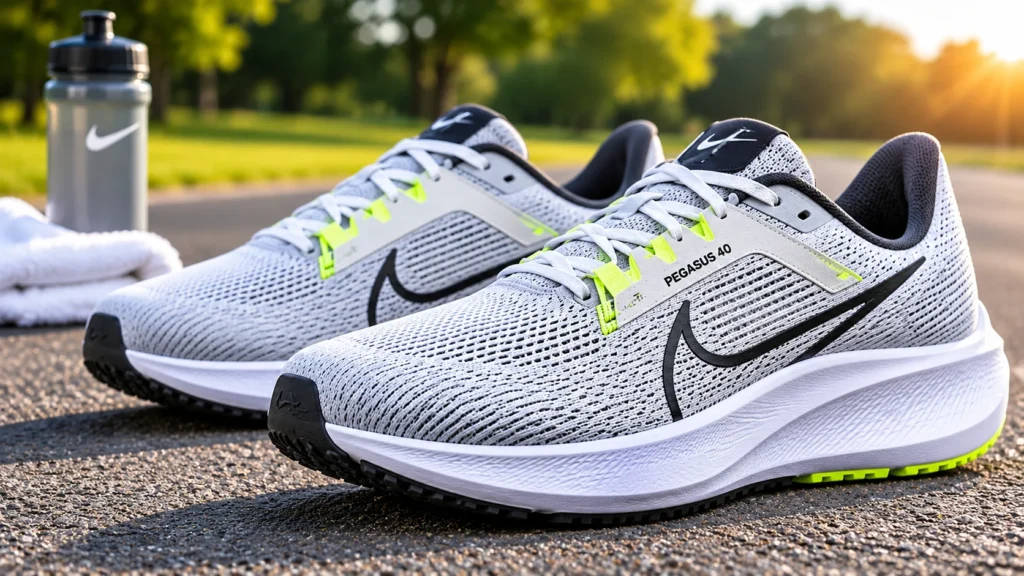
The Nike Pegasus 40 is a neutral road-running shoe built for daily training. It combines React foam with Zoom Air units beneath the heel and forefoot.
- Run mainly on roads at an easy pace.
- Prefer a familiar, moderately firm platform.
- Want running shoes that also handle daily errands.
- You need softer protection for long runs.
- You want extra room across the toes.
- You expect a lively speed-training shoe.
Nike Pegasus 40 Pros and Cons
The Pegasus 40 wins on everyday usefulness and outsole coverage. Its main drawbacks are a duller ride, moderate ventilation, and limited underfoot protection.
- Rubber outsole measured 3.4 mm thick in independent tests.
- Comfortable, padded collar and redesigned midfoot hold the foot.
- Flexible sole takes 12.4 N to bend in testing.
- Suitable for easy runs, walking, and mixed gym use.
- Heel shock absorption trails the tested shoe average.
- Toe-box width measures narrower than RunRepeat’s lab average.
- Breathability earns just 3/5 in the lab.
- Ride lacks the lively feel of newer trainers.
Nike Pegasus 40 Key Features: What Do Tests Show?
Does the React Midsole Offer Enough Cushioning?
The Pegasus 40 offers moderate cushioning, not a plush ride. RunRepeat measured 113 SA heel shock absorption, below its 131 SA lab average.
Heel shock absorption (SA; more means more impact attenuation)
Bars use the lab average as a comparison baseline, not a score out of 10.
Takeaway: Its cushioned feel doesn’t mean class-leading impact protection.
Test both shoes on a treadmill or clean floor before outdoor use.
How Responsive Are the Two Zoom Air Units?
The heel and forefoot air units add some spring, but this is not a speed shoe. RunRepeat measured 61.5% forefoot energy return, matching its lab average.
Takeaway: Expect steady transitions, not a propulsive racing feel.
Is the Upper Comfortable for Wide Feet?
The redesigned strap holds the midfoot securely, but toe room can still limit comfort. RunRepeat measured a 75.7 mm toe box against a 78.6 mm average.
Takeaway: A flexible upper does not make the front of the shoe wide.
Try the actual size and width; don’t rely on the model name alone.
Does the Waffle Outsole Grip Wet Roads?
Testers praised its traction on everyday surfaces, though wet lab grip was below average. RunRepeat recorded 0.45 against a 0.53 average.
Wet forefoot traction (higher is better)
Bars compare the two published lab values.
Takeaway: Road grip is useful, but wet traction is not exceptional.
How Durable and Breathable Is the Upper?
The padded upper resists abrasion better than the lab average, but airflow is only average. RunRepeat scored toe durability 3/5 and breathability 3/5.
Takeaway: Tougher mesh brings a comfort-versus-ventilation trade-off.
Let the shoes dry after sweaty runs rather than storing them damp.
How Does the Nike Pegasus 40 Perform in Real Tests?
Published laboratory measurements reveal an uneven profile. Its flexible sole and substantial rubber help daily use, while shock absorption and ventilation trail the lab average.
Numbers above come from RunRepeat’s independent lab testing.
Nike Pegasus 40 Full Specifications
Nike’s product listing confirms the materials and design; independent reviewers provide further fit measurements.
| Nike Pegasus 40 Specifications | |
|---|---|
| Construction | |
| Shoe type | Neutral road trainer |
| Midsole | Nike React foam |
| Air cushioning | Heel and forefoot Zoom Air units |
| Upper | Engineered mesh; redesigned midfoot strap |
| Outsole | Waffle-inspired rubber |
| Fit and dimensions | |
| Advertised heel drop | 10 mm |
| Lab-measured drop | 9.7 mm |
| Advertised stack (reviewer figure) | 33 mm heel / 23 mm forefoot |
| Lab-measured stack | 30.2 mm / 20.5 mm |
| Men’s weight (Running Warehouse, size 9) | 9.4 oz / 266 g |
| Men’s weight (RunRepeat lab) | 9.7 oz / 275 g |
| Removable insole | Yes |
| Waterproof membrane | No, standard model |
Different testers report slightly different weights and stack heights. For design details, see Nike’s official Pegasus 40 listing.
How Does the Nike Pegasus 40 Compare to Competitors?
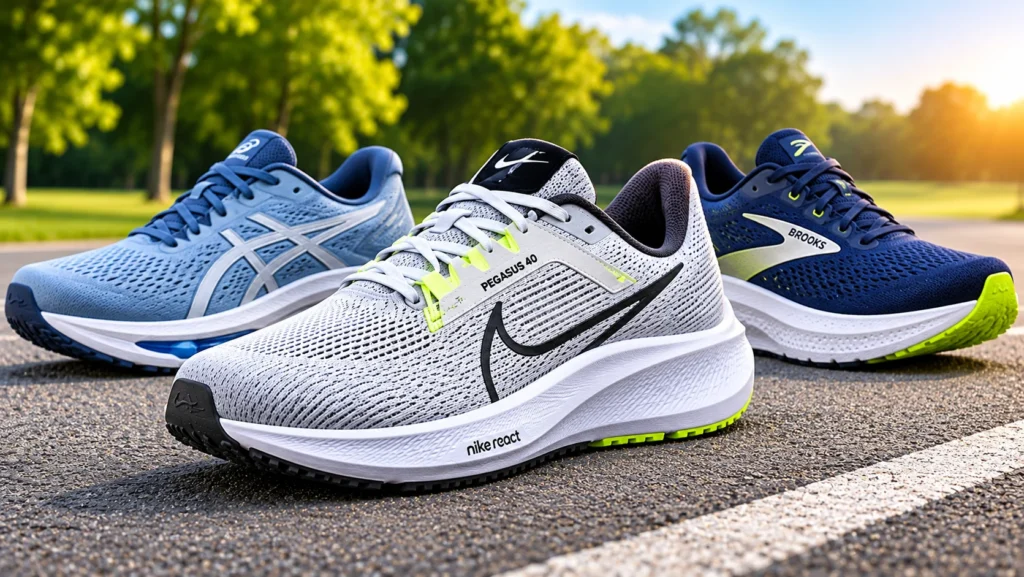
The ASICS GEL-Cumulus 25 gives you a softer-feeling alternative, while the Brooks Ghost 15 favors classic, smooth daily comfort. The Pegasus makes most sense when versatility and a good sale price matter more.
Nike Pegasus 40 vs Brooks Ghost 15
The Ghost 15 is the stronger choice for runners who prefer a softer daily ride. Its 12 mm drop exceeds the Pegasus 40’s 10 mm drop.
Nike Pegasus 40 vs ASICS GEL-Cumulus 25
The Cumulus 25 puts more emphasis on cushioning. Running Warehouse testers found it softer underfoot than the Pegasus, while Nike’s shoe handled more varied training.
| Feature | Pegasus 40 | Ghost 15 | Cumulus 25 |
|---|---|---|---|
| Launch MSRP | $130 | $140 | $140 |
| Shoe type | Neutral | Neutral | Neutral |
| Advertised drop | 10 mm | 12 mm | 8 mm |
| Men’s review weight | 9.4 oz | 10.1 oz (Brooks) | 9.3 oz (Fleet Feet) |
| Main appeal | Mixed daily use | Smooth easy runs | Softer cushioning |
| Main trade-off | Firm feel | Higher drop | Less gym versatility |
Nike Pegasus 40 Pricing: Is It Worth the Price?
The Pegasus 40 is appealing at a discount, not at any price. Its original retail price was $130, while newer daily trainers offer more modern cushioning.
For one specific men’s size-and-color Amazon listing, PriceHistory.app recorded $140 on October 2. Its tracked low was $84.73 on March 27; these are historical observations, not confirmed live offers.
Nike Pegasus 40 Neutral Road Running Shoes with React Cushioning
Worth comparing when discounted below newer, softer daily trainers.
Who Should Buy the Nike Pegasus 40?
Buy the Pegasus 40 if you want one neutral shoe for daily miles and casual movement, and the fit feels right.
- Beginners running modest distances on roads and treadmills.
- Walkers who also want a proper running shoe.
- Value shoppers finding a genuine clearance deal.
- Your feet need a broad, open toe box.
- You want soft protection during longer runs.
Bottom line: Choose the fit and price first; the Pegasus name alone is not enough.
What Are Real Buyers Saying About the Nike Pegasus 40?
The verified Amazon listing used here shows 4.5/5 stars from 67 ratings. That is useful context, but too few ratings to claim a broad buyer consensus.
Buyer Rating and Expert Patterns
Amazon: 4.5/5 stars from 67 ratings for the linked listing.
- Comfortable secure upper for regular daily training.
- Substantial outsole rubber handles mixed everyday surfaces.
- Flexible build works beyond road running.
- Less spring than many modern road trainers.
- Moderate cushioning for longer daily miles.
- Airflow and toe space may limit fit.
These themes summarize independent reviewers, not verified individual Amazon-review comments.
Final Verdict: Should You Still Buy the Pegasus 40?
Buy the Nike Pegasus 40 for shorter daily runs if the price is right. Skip it for plush cushioning, wide toe room, or fast workouts. Lab results show sturdy construction but below-average heel shock absorption and wet traction. The improved upper is helpful, yet the sole changes little from the prior model. Fit and price should settle your decision.
Nike Pegasus 40 Daily Running Shoes with Zoom Air Cushioning
Check today’s size-specific price before choosing this older daily trainer.
Frequently Asked Questions
Is the Nike Pegasus 40 good for beginners?
Yes, it can work well for beginners who like a traditional neutral shoe. Its 10 mm advertised drop and flexible sole support straightforward daily training. Start with short runs, then judge comfort and fit rather than assuming its familiar name fits everyone.
Does the Nike Pegasus 40 run true to size?
Most independent testers report a true-to-size length. Yet RunRepeat measured its toe-box width at 75.7 mm, below the 78.6 mm lab average. Try the correct size and width in person if your toes need room.
Is the Nike Pegasus 40 good for long runs?
It can handle longer outings for some runners, but softer options protect better. RunRepeat measured heel shock absorption at 113 SA compared with 131 SA on average. Running Warehouse testers preferred it for shorter daily runs and wanted more cushioning over distance.
Is the Pegasus 40 better than the Pegasus 39?
Not in every way. The Pegasus 40 mainly updates the upper and midfoot hold, while keeping the prior model’s React and Zoom Air setup. RunRepeat even scored the Pegasus 39 higher for breathability, at 4/5 versus 3/5.
Can you wear Nike Pegasus 40 shoes for walking?
Yes, the Pegasus 40 is suitable for everyday walking if its fit feels comfortable. Running Warehouse reviewers used it for walks and mixed activities as well as runs. Its moderate cushioning and secure upper suit people who prefer one shoe for several daily tasks.
Is the Nike Pegasus 40 waterproof?
No, the standard Pegasus 40 is an engineered-mesh road shoe, not a waterproof model. Nike describes its breathable upper and rubber outsole, but does not list a waterproof membrane. For regular rain, use a dedicated weather-resistant running shoe instead.
Affiliate Disclosure: As an Amazon Associate, I earn from qualifying purchases. These links may earn a commission at no extra cost to you.


Steven is a former sportsperson and now a full-time businessman and research writer. He is the mastermind of this site, and he created this site to help people who need specialized shoes for different activities. When he was a sportsperson, he was very passionate about different types of shoes for his sports purpose. The passion he had for shoes at that time now turned into his profession. Besides his shoe business, he loves sharing his knowledge and experience with people and helping them maintain healthy feet.
More Posts