

QUICK ANSWER
The ASICS Dynablast 6 is the better buy for most new shoppers. Its wider base, improved outsole grip, and roomier fit suit daily road runs. Keep the Dynablast 5 if you prefer a lighter, more flexible shoe with stronger heel impact absorption. Both carry a $120 US list price, so your actual discount decides the value winner.
What changes most between Dynablast 6 and 5?
- Dynablast 6: wider heel platform, 95.8 mm versus 90.7 mm in independent testing.
- Dynablast 5: lighter official weight, 260 g versus 276 g.
- Dynablast 6: stronger measured forefoot grip, 0.88 versus 0.47.
Quick Verdict: Dynablast 6 vs Dynablast 5
EDITOR’S CHOICE — DAILY TRAINING
ASICS DYNABLAST 6
85/100
RunRepeat published review score; not an Amazon rating
$120 US MSRP
ASICS US showed $99.95 for one men’s color when checked; prices change.
Best for: runners who want secure, steady landings and better outsole grip.
LIGHTER ALTERNATIVE
ASICS DYNABLAST 5
86/100
RunRepeat published review score; not an Amazon rating
$120 original US MSRP
Older stock may cost less; color and size determine price.
Best for: runners seeking lower weight, heel protection, or a clearance deal.
Amazon links point to specific listed variants. Verify your size, color, seller, and today’s price before buying.
| Category | Dynablast 6 | Dynablast 5 |
|---|---|---|
| Overall new purchase | 🏆 | — |
| Best value at equal price | ✅ | ❌ |
| Wet-surface lab grip | ✅ | ❌ |
| Lower weight | ❌ | ✅ |
| Heel shock absorption | ❌ | ✅ |
Bottom line: Choose Dynablast 6 for grip and a planted daily ride; choose Dynablast 5 when its lighter feel and a meaningful discount matter more.
- Dynablast 6 wins for daily training confidence because its base is broader.
- Both launched at $120, so discounts—not MSRP—set the current price gap.
- Dynablast 5 wins for cushioning under the heel: 156 versus 137 shock-absorption units.
- Dynablast 6 offers a roomier toe area in independent measurements.
- The newer shoe trades some rebound and weight for grip, structure, and comfort details.
You’re choosing a new road-running shoe, and both ASICS Dynablast models look tempting. Each promises FF BLAST PLUS foam, cushioned steps, and an accessible $120 launch price. But choosing by model number alone can lead to the wrong pair.
I’m Steven Tyler. This comparison uses ASICS specifications and published independent tests. I did not personally run in these exact pairs, so I won’t invent mileage logs or first-hand wear notes. Instead, I’ll show which measured changes are useful and where they are not.
The question is simple: should you buy Dynablast 6, grab Dynablast 5 on sale, or skip both? We will compare cushioning, outsole grip, fit, weight, road use, and ownership costs. I’ll also explain why the older model still has a fair claim to your money.
What Is the ASICS Dynablast 6 Designed to Do?
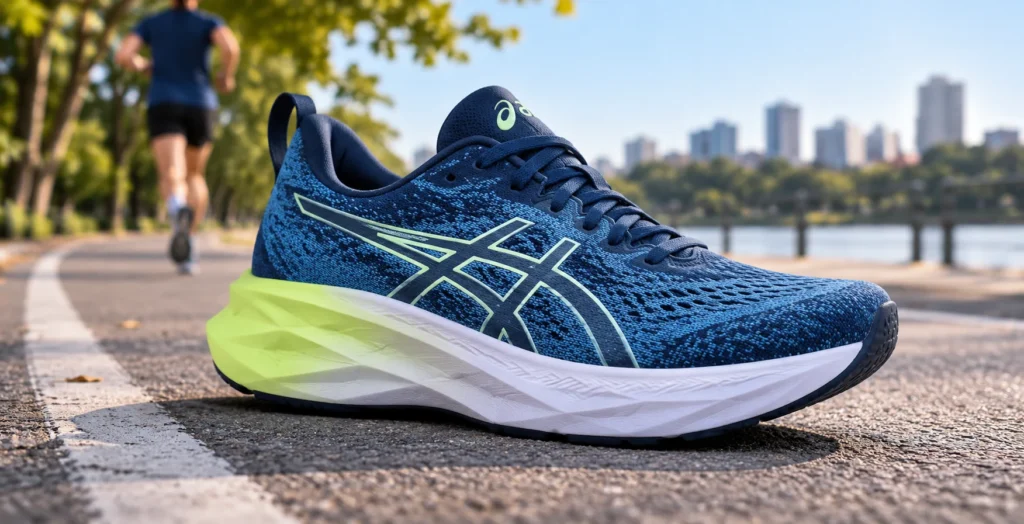
In short, Dynablast 6 is a neutral daily trainer built for road miles, treadmill runs, and regular workouts. Its shape favors a steady, rolling stride more than fast racing. ASICS uses FF BLAST PLUS foam and a centrally placed pod underfoot.
Quick verdict: Best for easy mileage and runners who like a planted landing. RunRepeat scored daily running 90/100 but tempo running only 51/100.
ASICS lists the men’s model at 276 g, or 9.7 oz. It also lists an 8 mm heel-to-toe drop. A higher heel than forefoot is common in road trainers and can suit multiple foot-strike habits.
The brand calls the cushioning high, but that does not mean marshmallow-soft. RTINGS found the shoe firm under load, especially at the forefoot. The broad platform helps stop the upper body from feeling unstable on easy runs.
ASICS added a new engineered mesh upper. RunRepeat measured a wider fit than the Dynablast 5 and found a 5.9 mm padded tongue. That creates a useful mix of toe room and snug lacing around the midfoot.
- Wider, more stable landing base
- Excellent forefoot grip in one lab test
- More toe room than version 5
- Smooth rocker for relaxed miles
- Strong heel-lining durability result
- Heavier than Dynablast 5
- Lower measured rebound than version 5
- Firm, stiff feel for sensitive feet
- Not ideal for fast intervals or racing
ASICS Men’s DYNABLAST 6 Running Shoes
US list price: $120. ASICS displayed a $99.95 sale price for one men’s color when checked. Amazon availability and price were not verified live.
What Does the ASICS Dynablast 5 Still Do Well?
Dynablast 5 remains the better fit for runners who prioritize heel cushioning and lower weight. It also uses FF BLAST PLUS foam and an 8 mm advertised drop. Its narrower platform gives a less bulky feel than the newer model.
Quick verdict: A strong sale pick for lighter road training. RunRepeat scored its overall review 86/100, just above Dynablast 6 at 85/100.
ASICS lists a 260 g men’s weight, 16 g below Dynablast 6. RunRepeat’s separately weighed test samples came in at 264 g and 272 g. The two weight comparisons use different methods, so keep each pair together.
The older shoe uses engineered jacquard mesh and a thinner tongue. Its midsole feels more accommodating for some runners who dislike stiff forefeet. RunRepeat measured a 14.5 N bending result, compared with 17.3 N for Dynablast 6.
It also has an advantage the product name does not reveal. RunRepeat recorded 156 shock-absorption units at the heel, compared with 137 for the new shoe. Runners who land heel-first may value that difference more than extra outsole grip.
That said, the fit is tighter. RunRepeat found a 71.1 mm toe-box width in the older model versus 74.2 mm in Dynablast 6. You should not assume two generations with the same size label feel identical.
- Lower listed and lab weight
- Higher measured heel impact absorption
- More forefoot energy return
- Less resistance when bending
- Potentially stronger value on clearance
- Narrower toe-box dimensions
- Weaker measured wet-surface grip
- Less wide and planted platform
- Older stock may be hard to find
ASICS Men’s DYNABLAST 5 Running Shoes
Original US list price: $120. Sale prices vary by size, seller, and color. Older stock is not guaranteed.
How Do Dynablast 6 and 5 Compare on Specs?
Dynablast 6 is wider and heavier, while Dynablast 5 absorbs more heel impact. Both share the same advertised heel drop and foam family. The table separates brand specifications from lab measurements to avoid misleading comparisons.
| Specification | Dynablast 6 | Dynablast 5 | Practical edge |
|---|---|---|---|
| Original US MSRP | $120 | $120 | Tie |
| Support class | Neutral | Neutral | Tie |
| Midsole | FF BLAST PLUS | FF BLAST PLUS | Depends on ride |
| Advertised heel drop | 8 mm | 8 mm | Tie |
| Official men’s weight | 276 g / 9.7 oz | 260 g / 9.2 oz | Dynablast 5 |
| RunRepeat lab weight | 272 g | 264 g | Dynablast 5 |
| Lab heel stack | 40.1 mm | 39.4 mm | Dynablast 6, slightly |
| Heel impact absorption | 137 SA | 156 SA | Dynablast 5 |
| Forefoot energy return | 52.3% | 58.8% | Dynablast 5 |
| Forefoot traction score | 0.88 | 0.47 | Dynablast 6 |
| Lab platform, forefoot | 125.1 mm | 118.4 mm | Dynablast 6 |
| Lab platform, heel | 95.8 mm | 90.7 mm | Dynablast 6 |
| Toe-box width, lab | 74.2 mm | 71.1 mm | Dynablast 6 |
| Tongue thickness | 5.9 mm | 3.9 mm | Dynablast 6 |
| Heel lining wear test | 5/5 | 4/5 | Dynablast 6 |
| Reflective details in tested pairs | None found | None found | Neither |
Lab numbers above come from the same testing publisher, RunRepeat’s Dynablast 6 report and Dynablast 5 report. Small differences can change with sample size and production runs. Published findings are more useful than claiming the exact same fit for every person.
Which Shoe Feels Better for Easy Runs and Long Miles?
Dynablast 5 wins on measured heel impact absorption; Dynablast 6 wins on steady foot placement. Neither is a pure speed shoe. Both are most at home when you can settle into a comfortable pace.
RunRepeat measured 156 units of heel shock absorption in Dynablast 5. The result fell to 137 in Dynablast 6. If your usual run ends with tired heels, that difference is worth noticing during an in-store try-on.
Yet a high shock-absorption score does not guarantee the softest feel. RTINGS found Dynablast 6’s forefoot particularly firm. The newer shoe rolls forward smoothly, but it does not give a sharp push at toe-off.
The Dynablast 5 has more measured rebound, too. RunRepeat recorded 58.8% forefoot energy return in the older model and 52.3% in the new one. Both fall below that lab’s 61.5% category average, so neither should be marketed as a high-energy racing option.
For a runner doing three or four relaxed road sessions weekly, both provide useful cushioning. Pick version 5 for a more forgiving heel result. Choose version 6 when a wide, controlled platform feels more secure on tired legs.
Which Dynablast Has Better Grip and Stability?
Dynablast 6 is the stronger grip and stability pick. Its wider platform creates a more planted base, and RunRepeat measured far higher forefoot traction. This is the clearest functional reason to choose the new model at a similar price.
The lab traction result rose from 0.47 in version 5 to 0.88 in version 6. The two tests use the same publisher’s method. That comparison is more meaningful than a vague claim that the outsole looks tougher.
The new platform also spreads farther across the ground. RunRepeat measured 125.1 mm at the forefoot and 95.8 mm at the heel. The older design measured 118.4 mm and 90.7 mm. Wider geometry can help neutral runners feel steadier when their stride gets messy.
These dimensions do not turn either model into a motion-control shoe. If you need structured guidance, look at a dedicated stability trainer. Stable neutral shoes and stability shoes solve different needs.
A useful comparison is the ASICS Novablast 4 review. Dynablast 6 draws from an earlier Novablast-style shape, but its foam feel and weight still differ. Do not assume matching silhouettes mean matching rides.
Safety note: Better rubber grip does not make smooth pavement safe during ice, standing water, or black ice. Slow down or change your route when conditions turn hazardous.
Which Dynablast Fits Better, Especially in the Toe Box?
Dynablast 6 offers more measured space around the toes. It also uses more tongue padding, which can help keep laces comfortable across the top of your foot. The older shoe has a slimmer front fit.
RunRepeat measured 74.2 mm inside the new toe-box area, compared with 71.1 mm before. It also measured the overall fit at 97.3 mm versus 94.9 mm. Those gains matter if the old shoe pressed against your little toe.
The 5.9 mm tongue padding in Dynablast 6 also helps with lace pressure. Dynablast 5 has a 3.9 mm tongue in the same lab. Both designs use semi-gusseted tongues that help limit sliding.
However, a wider toe area is not the same as a wide-width option. The ASICS US Dynablast 6 page shows a standard-width choice for the checked men’s version. Runners with broad feet should verify the exact width offered for their size.
For more sizing advice, use our running shoe sizing guide. Try shoes late in the day, check heel lock, and leave enough space at the longest toe. A snug upper should never numb your feet.
Is Dynablast 6 Worth More Than Dynablast 5?
Dynablast 6 is worth a modest premium if traction and fit are your priorities. Both models began at $120 in the United States. The meaningful number is the checkout price in your size, not the original list price.
ASICS US showed Dynablast 6 at $99.95 for one men’s color during this review. Older Dynablast 5 listings have appeared below their $120 launch price. Neither observation establishes a live Amazon price across every size.
Consider three simple price examples. If both cost $100, I would choose Dynablast 6 for new daily road use. If Dynablast 5 costs $70 and Dynablast 6 costs $100, the older model saves $30 and becomes a compelling dry-road option. If Dynablast 6 costs less, there is little reason to pay extra for the older fit unless it suits your feet better.
Discounts also have limits. A leftover pair can come in a color you dislike, lack your size, or have less favorable returns. Our running shoe sale timing guide explains how to judge discounts without chasing a price that never appears for your size.
Do not buy an old shoe only because the discount looks large. Check the return policy, seller reputation, storage condition, and whether the outsole feels normal. Fit matters more than saving a few dollars on shoes you will not use.
Which Model Lasts Longer on Road Runs?
Dynablast 6 has the stronger measured heel-lining and outsole wear results. However, Dynablast 5 performed better on toe-box abrasion in the same independent lab. Real lifespan still depends on surfaces, gait, use, and care.
RunRepeat rated the new heel lining 5/5 and the older one 4/5. Its abrasion tool also left a 0.6 mm mark on Dynablast 6 outsole rubber, versus 0.8 mm on Dynablast 5. A smaller abrasion mark means less material wore away in that test.
The older upper won a separate test. Dynablast 5 scored 4/5 for toe-box abrasion, while Dynablast 6 scored 3/5. This contrast matters if you often wear through fabric at the front.
Neither test can predict an exact mileage lifespan. A person running on smooth pavement wears rubber differently from someone who cuts across rough paths. Both products are road trainers, not trail shoes with deep lugs.
For winter runs, wipe off grit and road salt after use. For hot days, let soaked insoles dry away from heaters. Small maintenance habits help preserve the upper and prevent odor without damaging the foam.
Which Dynablast Is Better for Different Runners?
Dynablast 6 suits daily runners who value grip and stability; Dynablast 5 suits lighter-feel and budget buyers. The best choice changes with your routes, training speed, and fit needs. Use these scenarios before placing an order.
- Beginner with easy road miles: Dynablast 6 for its wide base, if the higher stack feels secure.
- Heel striker doing longer, relaxed runs: Dynablast 5 for its stronger measured heel shock absorption.
- Runner on wet city pavement: Dynablast 6 for its superior measured forefoot grip.
- Runner using treadmills at the gym: Dynablast 5 if it fits and costs less; dry treadmill grip reduces the traction difference.
- Runner with cramped toes: Dynablast 6 because its toe box measured wider.
- Runner mixing tempos and intervals: Neither is ideal; a lighter, livelier daily trainer deserves a look.
- Cold-weather road runner: Dynablast 6 for its more secure outsole test results, but use winter-specific footwear on snow or ice.
- Fitness center or team buying several pairs: Choose the model with dependable sizing, stock, and return terms rather than declaring a performance winner for everyone.
If you’re unsure which features to prioritize, our guide on how to choose running shoes wisely can help. Start with your usual route and pace. Then decide whether cushioning, grip, or fit has caused trouble in your previous pair.
Who Should Buy Dynablast 6, Dynablast 5, or Neither?
Buy Dynablast 6 for grip and stability, or buy Dynablast 5 for heel protection and savings. Neither is the right answer if you need a more energetic training shoe, structured support, or dedicated winter traction.
- Want a wide, steady road platform
- Often run on damp pavement
- Need more space near the toes
- Prefer a smooth, firm roll
- Want stronger heel shock absorption
- Prefer a less bulky shoe
- Like a slightly more flexible build
- Find your size on a good sale
Skip both if: You want race-day speed, strong motion-control support, or winter-ice grip. The neutral Dynablast design does not specialize in those needs.
For runners willing to spend more, a current Novablast may feel more lively. Our ASICS Novablast 5 review explains the softer, springier daily-training alternative. Do not pay extra for it unless you prefer its ride in a proper fit test.
What Do Independent Testers and Real Runners Say?
Independent testing favors Dynablast 6 for grip and stable daily mileage, while Dynablast 5 wins some comfort measures. These are published third-party findings, not shoe tests performed by this website. Amazon customer ratings could not be verified live.
Published review snapshot
- RunRepeat: Dynablast 6 scored 85/100; Dynablast 5 scored 86/100 in separate model reviews.
- RTINGS: Dynablast 6 scored 8.2/10 for stability and 7.7/10 for daily training.
- OutdoorGearLab: Dynablast 6 earned 8.0/10 for comfort and fit, and 4.5/10 for traction in its own tests.
- Testing difference: RunRepeat’s traction test looked strong while GearLab’s overall traction opinion was mixed. Different methods can produce different conclusions.
Read those results in context. The RTINGS score rates a category within its own testing system. RunRepeat’s overall score uses another method. Combining them into one invented star rating would mislead shoppers.
Owner feedback also depends on fit and running habits. A Dynablast 5 buyer review on ASICS Canada praised its stable feel and described it as less bouncy than a Novablast 3. That is one customer’s experience, not proof that every runner will feel the same.
ASICS does not promise that any model will prevent injury. The safest buying rule is to compare how the shoe fits and moves on your feet. A shoe with an excellent review score can still cause pressure at the wrong spot.
How Should You Care for Dynablast Running Shoes?

Keep either Dynablast clean, dry, and away from direct heat. Regular care can reduce odor and keep grit from damaging fabric. It cannot restore foam that has worn out from hard use.
- After wet runs: Remove the insoles, loosen laces, and air-dry the shoes indoors.
- After dusty runs: Brush off dry grit with a soft brush before it builds up.
- For stains: Spot-clean with mild soap and a damp cloth, then remove soap residue.
- For storage: Avoid hot cars, radiators, tumble dryers, and direct prolonged sun.
- For wear checks: Watch for uneven outsole wear, damaged mesh, and fresh discomfort.
- For rotation: Give damp shoes time to dry between training sessions.
Neither model needs battery care, manual overrides, or special electronics maintenance. Those rules apply to other products, not running shoes. What matters here is foam condition, grip, and upper comfort.
Replace shoes when the ride feels uneven or worn, not only when a mileage counter hits one fixed number. Two runners with the same weekly distance can wear their shoes at different rates.
Final Verdict: Is the ASICS Dynablast 6 Worth Buying?
Yes. Dynablast 6 is a smart daily-running purchase for neutral runners who value grip, fit, and stability at a reasonable price. It is not a clear upgrade in every measure. Dynablast 5 is lighter and has stronger measured heel impact absorption and energy return.
My choice for a new buyer at the same checkout price is Dynablast 6. Its wider fit and improved outsole test result will help more runners on ordinary road routes. That recommendation changes if you already love the older fit or find Dynablast 5 at a substantial discount.
The biggest lesson is that newer does not mean softer or faster. Check your routes, your heel comfort, and your actual price first. Those three facts matter more than the number on the shoe box.
Frequently Asked Questions
Is ASICS Dynablast 6 better than Dynablast 5?
Dynablast 6 is better for grip, a roomy toe box, and a stable daily ride. Dynablast 5 is lighter and has stronger heel shock absorption and forefoot rebound in RunRepeat’s tests. At the same price, Dynablast 6 is my general pick, but the right fit is more important than the model number.
What is the biggest difference between Dynablast 6 and 5?
The biggest practical difference is the wider, grippier build of Dynablast 6. RunRepeat measured forefoot traction at 0.88 versus 0.47 and heel platform width at 95.8 mm versus 90.7 mm. The older version counters with lower weight and more heel cushioning, so neither shoe wins every category.
Is ASICS Dynablast 6 good for long-distance running?
Dynablast 6 can handle relaxed long runs for neutral runners who enjoy a stable, rockered shoe. RTINGS rated it 7.2/10 for long runs but noted that its cushioning becomes less protective over distance. Runners seeking a plush heel or fast marathon pace should try other models before committing.
Does Dynablast 6 fit true to size?
RTINGS rated the Dynablast 6 highly for true-to-size fit, but individual feet differ. RunRepeat found more toe-box space than in Dynablast 5. Start with your usual running-shoe size, then confirm thumb-width toe clearance, heel security, and no side pressure. Do not assume a wider toe box means a wide-width shoe.
Should I buy Dynablast 5 on sale instead of Dynablast 6?
Buy Dynablast 5 on sale if the fit works and the price gap is worthwhile. Its 260 g official men’s weight and 156-unit heel absorption remain competitive. Pick Dynablast 6 if you value wet-road grip or extra toe room. Always check the actual size, seller, returns, and stock before paying.
Affiliate Disclosure: As an Amazon Associate, I earn from qualifying purchases. If you click a link on this page and make a purchase, I may receive a small commission — at no extra cost to you. I only recommend products I genuinely believe will help you. This helps keep the site free and running. Thank you for your support.


