

Quick Answer
The ASICS Novablast 6 is the better all-round road trainer. Its FF TURBO SQUARED forefoot insert gives faster running more bounce, while ASICSGRIP improves traction. Choose the Novablast 5 for soft, steady miles when you find a good discount. At official US prices, the upgrade costs just $5.
What changes most between Novablast 6 and Novablast 5?
- Novablast 6 adds an FF TURBO SQUARED forefoot insert.
- Novablast 6 gains ASICSGRIP traction on wet pavement.
- Novablast 5 has a wider, more planted platform.
Quick Verdict: ASICS Novablast 6 vs 5
NOVABLAST 6
OutdoorGearLab overall score
$154.95 tracked Amazon listing; selected color
Best for
Neutral runners who mix easy mileage, long runs, and faster efforts.
NOVABLAST 5
OutdoorGearLab overall score
$129.95 tracked Amazon listing; selected color
Best for
Neutral runners who favor a roomy base and soft easy miles.
| Category | Novablast 6 | Novablast 5 |
|---|---|---|
| Overall winner | 🏆 | — |
| Best discounted value | ❌ | ✅ |
| Faster training | ✅ | ❌ |
| Wet-road traction | ✅ | ❌ |
| Wider landing platform | ❌ | ✅ |
Bottom line: Choose Novablast 6 for its more lively forefoot and stronger grip; buy Novablast 5 when its lower checkout price matters more.
- Novablast 6 wins for mixed-pace training thanks to its new forefoot foam insert.
- Official US list prices differ by $5: $155 versus $150.
- Independent lab tests found far stronger forefoot traction in Novablast 6.
- Novablast 5 remains a soft daily trainer when discounted.
- The new model feels nimbler, but its narrower base can reduce planted stability.
Looking for an honest ASICS Novablast 6 review before you spend $155? The key question is whether its new foam and outsole improve your daily runs. The older Novablast 5 already offers deep cushioning, low weight, and a smooth ride. Buying the newer shoe only makes sense when those changes serve your training.
I’m Steven Tyler. This is a research-based buying guide using official ASICS specifications, independent shoe tests, and published runner feedback. I did not personally run in either shoe for this article. That distinction matters: a lab number is evidence, but it is not my firsthand mileage.
Both models are neutral road trainers. Neither includes a carbon-fiber plate or structured motion-control system. The main buyer questions concern bounce, grip, fit, and the price of a fresh pair. Below, you’ll see the measurable differences first, followed by the runners who benefit most.
What Is the ASICS Novablast 6 Best For?
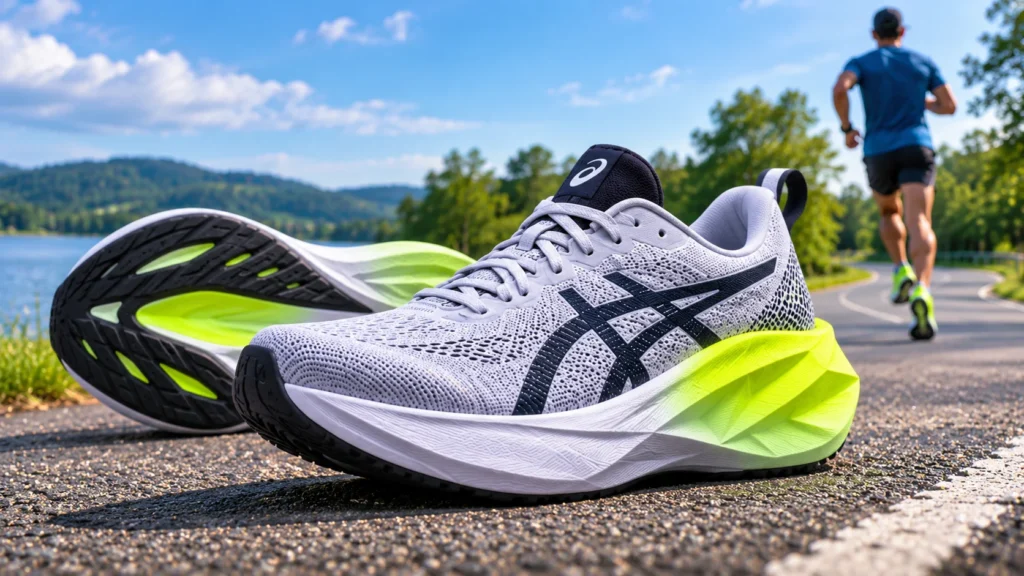
In short, Novablast 6 suits neutral runners who want one cushioned shoe for most road sessions. It balances soft landings with added bounce under the forefoot. ASICS places FF TURBO SQUARED inside the FF BLAST MAX midsole. The change is aimed at stronger toe-off, not firm racing-shoe stiffness.
Quick verdict: Best overall choice for road runners combining easy runs, steady long efforts, and tempo sessions.
The official men’s reference weight is 253 g, with an 8 mm drop. The listed 41.5 mm heel and 33.5 mm forefoot stacks give ample foam. Even with that height, the shoe has no rigid propulsion plate. That helps explain its easy-running comfort and limits during hard racing.
Independent testing offers useful context. OutdoorGearLab rated the shoe 82/100 overall, including 8.5/10 for comfort and 7.0/10 for traction. RunRepeat measured 69.1% forefoot energy return and a 0.76 forefoot friction score. Those findings point to a trainer that handles quicker miles and slippery pavement better than the previous version.
The drawback is a less broad base. RunRepeat measured 115.2 mm across the forefoot midsole, compared with 122.3 mm on the older shoe. A runner who values a wide platform can feel that change. The new shoe also has a tapered toe shape, so sizing checks remain important.
Pros
- Lively forefoot insert at faster paces.
- Strong ASICSGRIP traction.
- Only 253 g official men’s weight.
- High-stack cushioning for long mileage.
Cons
- Narrower platform than version 5.
- Tapered toe area may limit comfort.
- No specialized stability guidance.
- Not the best choice for short, flat-out races.
ASICS Men’s NOVABLAST 6 Running Shoes
Tracked Amazon listing: $154.95 for the Black/Khaki variant. ASICS US list price: $155. Size and seller prices can change.
What Is the ASICS Novablast 5 Best For?
Primarily, Novablast 5 suits runners who want soft road comfort without paying for every upgrade. Its full FF BLAST MAX midsole has a pleasant, cushioned feel. The wide platform can also appeal to runners who dislike a narrow landing zone. It works best when you run easy or steady more often than fast.
Quick verdict: Best value for easy-mile runners when stock is discounted below the newer model.
ASICS lists the men’s version at 255 g, with an 8 mm drop. Like its successor, the shoe offers 41.5 mm of heel foam and 33.5 mm up front. Those nearly matching numbers are important. You are not buying a dramatically thicker shoe by moving to version 6.
The Novablast 5 uses engineered jacquard mesh and a winged tongue to hold the midfoot. Its heel and forefoot feel cushioned across long efforts. OutdoorGearLab scored its cushioning 8.6/10 and overall performance 80/100. However, the same testing team gave traction just 5.5/10. Wet roads remain the clearest reason to choose the newer model.
For a deeper look at the older version’s comfort and fit, read our ASICS Novablast 5 review. It covers why a pleasant ride does not always translate into strong wet-weather grip. The key buying lesson is simple: a larger discount can outweigh modest performance gains.
Pros
- Soft FF BLAST MAX cushioning.
- Wider midsole landing platform.
- Comfortable easy and long runs.
- Older inventory may cost less.
Cons
- Weaker traction in independent tests.
- No special forefoot foam insert.
- Less lively during faster training.
- Soft ride still lacks structured stability.
ASICS Men’s NOVABLAST 5 Running Shoes
Tracked Amazon listing: $129.95 for the Illusion Blue/Light Blue variant. ASICS US lists $150 for the model. Check the exact size before buying.
How Do the Full Novablast 6 and 5 Specifications Compare?
In short, both shoes share a high-cushion neutral design and an 8 mm advertised drop. The differences are foam placement, outsole rubber, upper material, and platform width. Neither shoe includes a carbon plate or a built-in electronic feature. The figures below refer to men’s standard versions unless noted.
| Feature | Novablast 6 | Novablast 5 | Winner |
|---|---|---|---|
| Official US price | $155 | $150 | 5 |
| Tracked Amazon variant | $154.95 | $129.95 | 5 |
| Official weight | 253 g / 8.9 oz | 255 g / 9 oz | 6 |
| Heel / forefoot stack | 41.5 / 33.5 mm | 41.5 / 33.5 mm | Tie |
| Advertised drop | 8 mm | 8 mm | Tie |
| Main midsole | FF BLAST MAX | FF BLAST MAX | Tie |
| Added forefoot foam | FF TURBO SQUARED | None | 6 |
| Upper | Engineered woven | Jacquard mesh | Fit dependent |
| Outsole | ASICSGRIP forefoot, AHAR LO heel | AHAR LO rubber | 6 |
| RunRepeat forefoot base | 115.2 mm | 122.3 mm | 5 for width |
| RunRepeat forefoot return | 69.1% | 66.5% | 6 |
| Plate / motion control | No / no | No / no | Tie |
Official measurements are published by ASICS. RunRepeat’s platform width and energy-return figures come from separate lab tests. Values can differ across sizes and testing methods. That is why the measured weight may not match the manufacturer figure exactly.
Which Feels Better for Daily Runs and Faster Workouts?
Novablast 6 wins when a weekly schedule includes faster efforts. Its FF TURBO SQUARED insert sits under the front of the foot. This adds more return where runners push off. The Novablast 5 still feels soft and playful, especially during easy runs.
RunRepeat measured 69.1% forefoot energy return for version 6. The same lab measured 66.5% for version 5. That 2.6 percentage-point gap is real, but it does not predict your race pace. Fit, body weight, form, and training still affect the result.
Runner Nick Harris-Fry reported a more energetic forefoot in a published 40-mile test. He even wore a different version on each foot during a short comparison. That supports the idea of a noticeable change, not a complete redesign. Both models remain daily trainers rather than pure speed shoes.
For a runner with easy 5 km sessions and one weekly tempo run, version 6 offers more range. Someone running three relaxed 30-minute sessions can enjoy version 5 just as much. To learn why foam bounce and pace feel differ, see our running shoe responsiveness guide.
Does the New Foam Help on Long Runs?
Yes, the new forefoot insert can make long runs feel lively near the finish. However, the main cushioning remains FF BLAST MAX. Both shoes offer the same advertised stack heights. A long-run runner who lands heavily on the heel will not receive the same forefoot benefit.
The useful gain is choice of pace, not dramatic extra padding. A 16 km steady run can include quicker segments without changing shoes. For slow recovery runs, the older version still supplies generous cushioning and a more broad landing base.
Which Novablast Grips Better on Wet Roads?
Novablast 6 wins on wet-road grip. ASICS added its ASICSGRIP compound to the forefoot outsole. The older Novablast 5 uses AHAR LO rubber without that forefoot upgrade. This matters during damp cornering, painted road crossings, and quick push-offs after rain.
RunRepeat measured 0.76 friction in its Novablast 6 forefoot traction test. OutdoorGearLab gave the newer shoe 7.0/10 for traction, versus 5.5/10 for version 5. These numbers come from different testing systems, so compare each within its own method. Both methods point toward improved grip on the newer pair.
Cold, wet pavement deserves extra attention. Rubber compounds respond differently as temperatures fall. The Novablast 6’s improved outsole is useful for winter road sessions. However, no road shoe is slip-proof on ice, frost, oil, or smooth wet metal.
Wear either model only on surfaces suited to road running. Avoid treating the deeper-looking foam cutouts as trail lugs. Loose mud and steep gravel need a trail-specific tread. Better wet grip does not turn a neutral road trainer into a trail shoe.
Which Offers Better Price and Value?
Novablast 5 wins on price when a meaningful discount is available. ASICS lists version 6 at $155 and version 5 at $150 in the US. That is only a $5 official gap. At full price, the newer traction and forefoot foam make version 6 easy to justify.
The picture changes with size-specific offers. At the time of this review, one third-party Amazon tracker showed $154.95 for a Novablast 6 color variant. A tracked Novablast 5 variant showed $129.95. That is a $25 listing gap, not a guaranteed checkout price. Availability, seller, color, and delivery fees can change it.
If the older shoe costs $25 less, runners focused on easy miles have a clear reason to save. If the gap shrinks to $5, the improved grip favors version 6. Check that you are comparing the same width and return conditions. An unworn but older colorway is not automatically a better fit.
A cheaper shoe is not a bargain if it gives you heel slip or toe pressure. Try both on at the end of the day, when feet have expanded. Keep enough space ahead of the longest toe. Price should be the last check after comfort and movement.
Which Fits Better and Feels More Stable?
Novablast 5 wins for runners seeking a wider platform; Novablast 6 wins for a nimbler feel. The older midsole measured 122.3 mm across the forefoot in RunRepeat’s lab. The newer shoe measured 115.2 mm. That 7.1 mm change is more meaningful than the 2 g difference in official weight.
A wide foam base can feel reassuring on relaxed straight-line runs. The narrower Novablast 6 can turn and transition with less bulky sensation. Neither setup gives structured motion control. Runners who require strong pronation guidance should assess a dedicated stability trainer.
Upper shape also matters. Version 6 uses an engineered woven upper and has a more tapered toe area. Version 5 uses jacquard mesh with a secure winged tongue. Independent reviews generally describe both models as true to size, but foot shape can change the verdict.
Try both shoes with running socks. Walk, jog, and turn before judging the heel hold. Feet that swell on 90-minute runs need more room than feet that stay comfortable during short sessions. A secure midfoot should never require crushed toes.
Fit warning: A wide base is not the same as a wide toe box. Choose the width that fits your foot, not the width that looks largest from below.
Which Is More Durable and Easier to Own?
Novablast 6 has promising durability gains, but long-term mileage varies by runner. Its woven upper scored 4/5 in RunRepeat’s toebox abrasion test. The newer outsole also uses durable heel rubber plus grippier forefoot rubber. That combination targets wear resistance and traction in different contact zones.
The Novablast 5 has a proven track record for regular mileage. OutdoorGearLab reported retiring one test pair near 600 miles, but that is one tester’s experience. It is not a warranty or a fixed replacement interval. Abrasion patterns depend on pavement, gait, weather, and shoe rotation.
Check your soles every 100 to 150 miles. Look for rubber worn smooth, an uneven heel, deep side creases, and new pain after ordinary runs. Foam can lose its familiar feel before tread disappears. Once support or cushioning changes, a fresh pair may be wise even if the upper looks fine.
Neither model needs battery charging, electronic tools, or special replacement parts. Keep them dry between runs and loosen the laces during removal. A simple care habit can protect the fit of both versions over many weeks.
Which Novablast Wins for Real-World Running Needs?
Novablast 6 wins more use cases, while Novablast 5 stays competitive for steady comfort. Use this decision table to match the shoe to your weekly routine. The winner is based on its design and published test results, not a promise of individual performance.
| Situation | Pick | Why |
|---|---|---|
| Easy 5 km runs | Novablast 5 if cheaper | Soft foam and wide platform are enough. |
| Weekly tempo training | Novablast 6 | Livelier forefoot transition. |
| Long marathon-training miles | Novablast 6 | Comfort with more pace range. |
| Cold, rainy road commuting | Novablast 6 | Improved outsole friction. |
| Long standing shifts | Fit dependent | Neither is a purpose-built work shoe. |
| Running club or workplace fleet buying | Novablast 5 when discounted | Lower unit cost, if sizing is available. |
The commercial case deserves a closer look. A club buying ten pairs at $129.95 would spend $1,299.50 before fees. Ten pairs at $154.95 would cost $1,549.50. That $250 difference can fund other gear. However, clubs should never choose one shoe for every runner without checking fit.
For personal training, a two-shoe rotation also changes the decision. You can keep Novablast 5 for easy days and use a faster shoe for workouts. Our running shoe rotation guide explains how to match shoes to each session.
Is the Novablast 6 Upgrade Worth the Extra Money?
Yes, if you run faster sessions or deal with frequent wet pavement. The added forefoot foam and improved outsole serve those needs directly. They make the new version more than a fresh colorway. The narrower base is the main drawback for runners who preferred version 5’s planted feel.
At the official $5 gap, version 6 gives strong value. At a tracked $25 gap, the better purchase depends on your route and pace. Slow and dry-road runners can keep more money in their pocket with version 5. Runners who train through rainy winters get a stronger reason to upgrade.
Do you already own a sound pair of Novablast 5 shoes? There is no need to replace them early. Keep running until wear or fit calls for change. The newest release alone is not a reason to retire a comfortable, safe pair.
Who Should Buy the Novablast 6, the Novablast 5, or Neither?
Choose Novablast 6 for versatility, Novablast 5 for discounted comfort, and neither for firm stability control. Both are neutral road shoes with tall, lively foam. They are not replacements for specialist racing, trail, or motion-control models. Your feet and route should settle the final choice.
Buy Novablast 6 if…
- You train at easy and tempo paces.
- Rainy pavement is common.
- You want one all-round road trainer.
Buy Novablast 5 if…
- You mostly run easy road miles.
- You liked its broad landing feel.
- You find your size at a lower price.
Skip both if a clinician or fitting specialist recommends structured stability. Also skip both for icy trails, rugged hikes, or maximum race-day propulsion. An ASICS stability model or a dedicated trail shoe better matches those needs. Fit comes before brand loyalty.
Runners comparing older ASICS options can check our ASICS Novablast 4 review for a firmer ride. A more premium training alternative also appears in our ASICS Superblast 2 review. Neither alternative cancels the value of a comfortable Novablast at the right price.
What Are Real Runners Saying About Both Models?
Published testers praise both shoes for comfort, but they disagree on which version feels best. OutdoorGearLab awarded Novablast 6 an 82/100 overall score. It gave Novablast 5 an 80/100 score using its own test system. The newer shoe scored better for traction, while the older shoe edged ahead on measured cushioning.
One tester at Tom’s Guide reported 40 miles in version 6 and praised its stronger forefoot push-off. The same reviewer described version 5 as better suited to easy and steady running. OutdoorGearLab praised the older shoe’s comfort but warned about grip and stability. These are published testers’ experiences, not my own road test.
Independent review snapshot
Novablast 6: 82/100 overall, 8.5/10 cushioning, 7.0/10 traction.
Novablast 5: 80/100 overall, 8.6/10 cushioning, 5.5/10 traction.
Source: OutdoorGearLab’s separate men’s shoe reviews. Scores are independent editorial tests, not Amazon star ratings.
Amazon listing trackers show favorable ratings for both models, but rating totals change. A tracker reported 8.8/10 for one Novablast 6 variant and 9.2/10 for one Novablast 5 variant. Treat these as snapshots, not proof that one version fits every foot better.
For hands-on evidence, review OutdoorGearLab’s Novablast 6 test and RunRepeat’s laboratory measurements. Their methods explain why different reviewers sometimes reach different comfort verdicts.
How Should You Care for Novablast Running Shoes?
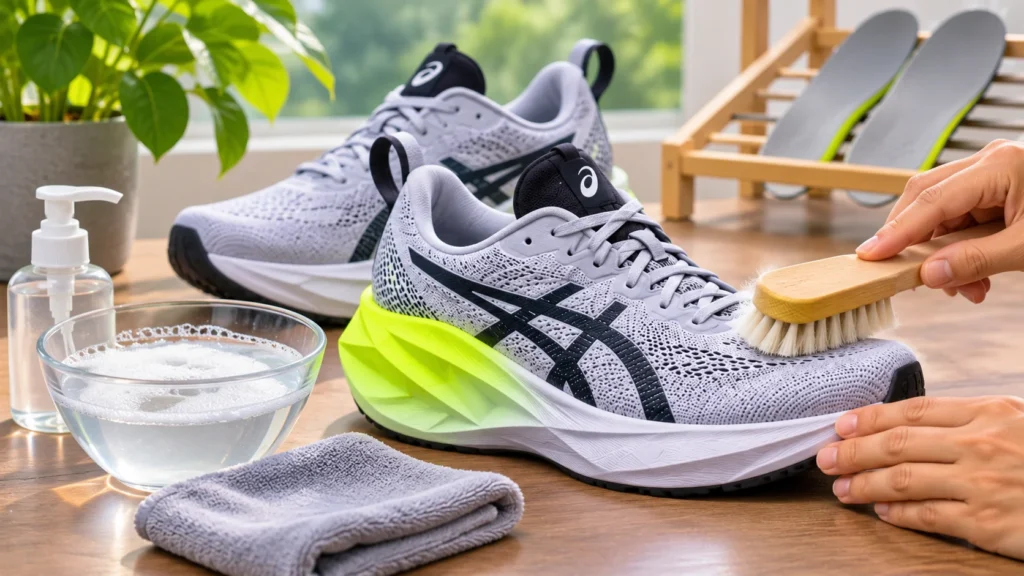
Mainly, keep both Novablast models clean, dry, and away from strong heat. Remove loose dirt with a soft brush after outdoor runs. Wipe the upper with mild soap and cool water. Use a damp cloth rather than harsh cleaners, and allow the shoes to dry at room temperature.
Pull the insole out when it needs to air. Avoid tumble dryers, heaters, and direct intense sun. Heat can affect adhesives, upper materials, and foam feel. Stuffing paper inside a damp shoe can help it hold shape while drying.
Rotate pairs when you run on consecutive days. This gives the foam time to recover its normal shape and the upper time to dry. Inspect the outsole for smooth patches, especially near your main landing area. A worn heel can change how the shoe meets the road.
There is no fixed mileage at which every pair must be thrown away. Let tread condition, midsole response, and new discomfort guide that choice. Keeping a short training log can reveal when an old pair begins to feel different from a newer one.
Final Verdict: Is Novablast 6 Better Than Novablast 5?
Yes, Novablast 6 is the stronger overall choice for most neutral road runners. The extra forefoot bounce and improved outsole grip offer clear, useful gains. These changes are more meaningful than its tiny 2 g official weight reduction. For mixed sessions and rainy roads, the $5 list-price difference is easy to defend.
Novablast 5 still makes sense for a runner who values soft, steady miles. It has a broader platform and can be cheaper in older colors. The real deciding point is not which model is newer. It is whether your route and workout need the new model’s specific improvements.
Frequently Asked Questions
Is the ASICS Novablast 6 worth buying over the Novablast 5?
Yes, if you need more lively forefoot response and better wet-road grip. Version 6 adds FF TURBO SQUARED and ASICSGRIP while keeping a familiar high-stack design. At the $5 official price gap, it is the stronger all-round buy. The older model is worth considering when discounted.
What is the biggest difference between Novablast 6 and 5?
The biggest difference is the new forefoot insert in Novablast 6, paired with improved outsole rubber. Both shoes use FF BLAST MAX cushioning and list an 8 mm drop. Version 6 has a narrower platform. Version 5 offers a broader base and can cost less in older colorways.
Is the Novablast 6 good for half-marathon or marathon training?
Yes, Novablast 6 suits many steady and long road training sessions. The tall foam offers cushioning, and the lively forefoot helps when pace increases. It is not a plated racing shoe. Test it during your longest runs before choosing it for race day, and confirm that its toe shape stays comfortable.
Does the Novablast 6 run true to size?
Independent fit feedback generally places Novablast 6 near true to size. However, its tapered forefoot can feel snug on broad feet. Try the shoe with your usual running socks, leaving clear toe room. If your feet swell on long outings, assess fit after walking or running rather than while seated.
Which Novablast is better for rainy or cold weather?
Novablast 6 is the better option for damp, cold roads because its ASICSGRIP forefoot rubber improves traction. Lab testing and published reviewers both support that advantage. Neither model is safe to treat as an ice shoe. Slow down on painted surfaces, frost, metal covers, and slick corners, regardless of which pair you wear.
Affiliate Disclosure: As an Amazon Associate, I earn from qualifying purchases. If you click a link on this page and make a purchase, I may receive a small commission — at no extra cost to you. I only recommend products I genuinely believe will help you. This helps keep the site free and running. Thank you for your support.


