QUICK ANSWER
It depends. The HOKA Rocket X 2 is an excellent carbon-plated racing shoe if its narrow upper fits your feet. Independent lab tests found 73.5% forefoot energy return and strong outsole wear resistance. It suits runners chasing fast road races, but wide-footed runners should look elsewhere. At the original $250 price, newer competitors demand comparison.
- RunRepeat rates its racing performance 92/100.
- PEBA foam and a stiff plate create a lively, quick transition.
- The measured forefoot fit is far narrower than average.
Strong race-day rebound
87/100 overall — independent RunRepeat review score, not an in-house rating.
Best for: Neutral runners with narrow feet seeking fast 5K-to-marathon efforts.
Skip if: You need a wide toe box or a relaxed everyday trainer.
Original retail price: $250. Amazon price and stock are not verified.
INDEPENDENT RUNREPEAT SCORES — OUT OF 100
These are published editorial scores, not controlled lab measurement scales.
I’m Steven Tyler. This review draws from independent tests, not invented personal mileage.
What Is the HOKA Rocket X 2 and Who Is It For?
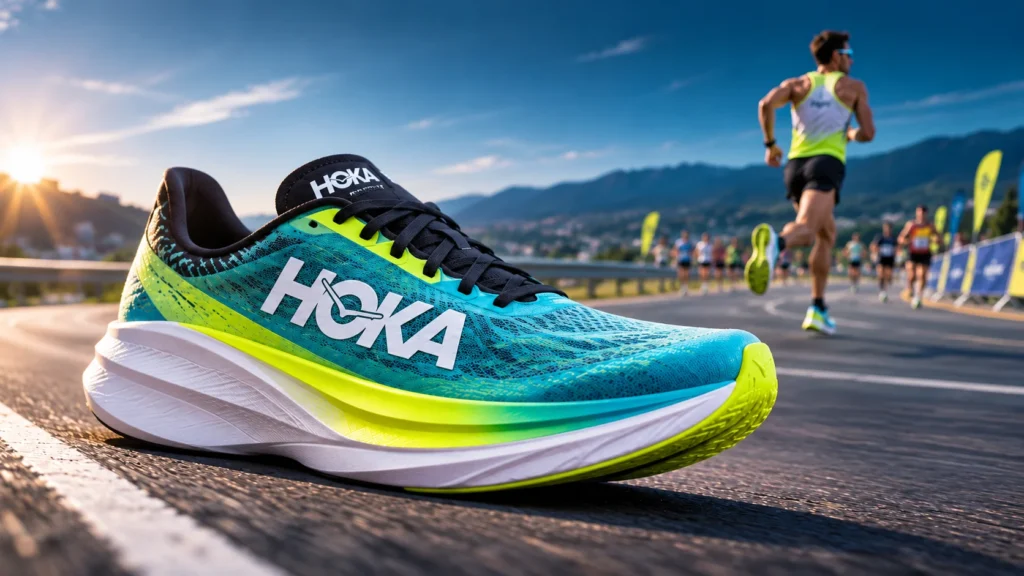
The Rocket X 2 is a neutral road racing shoe built around PEBA foam and a carbon-fiber plate. It is made for fast training and races, not daily walking or casual comfort.
Independent testers at Doctors of Running found it unusually stable for a super shoe. Yet the upper’s close fit excludes many wide-footed runners.
- Want a fast, carbon-plated road racer.
- Prefer snug lockdown over roomy toe space.
- Race distances from 5K to marathon.
- Your forefoot needs more width.
- You want the lightest racer available.
- You need shoes for mostly easy miles.
HOKA Rocket X 2 Pros and Cons
The standout benefit is efficient, springy racing performance. The biggest weakness is a cramped fit that can ruin an otherwise fast shoe.
- Lab-measured forefoot energy return reaches a strong 73.5%.
- Carbon plate offers quick, firm propulsion through toe-off.
- Rubber showed only 0.5 mm of lab abrasion.
- Guided ride feels stable relative to many racers.
- Measured forefoot fit is just 88.5 mm wide.
- Some testers report loose heels or lace pressure.
- Stiff plate can feel harsh at slower paces.
- Upper failed RunRepeat’s toebox abrasion resistance test.
HOKA Rocket X 2 Key Features: What Do Tests Show?
Does the PEBA Midsole Deliver Strong Energy Return?
Yes. RunRepeat measured 73.5% energy return in the forefoot, above its 61.5% tested-shoe average. The soft PEBA foam has real rebound.
FOREFOOT ENERGY RETURN — RUNREPEAT LAB SAMPLE
Takeaway: The foam returns more energy than the tested-shoe average. That does not guarantee faster race times for every runner.
Is the Carbon Plate Too Stiff?
It is exceptionally stiff, though that suits its racing role. RunRepeat measured 80.7 N in its older 90-degree bending test.
Takeaway: It rewards strong race-pace strides more than slow jogging.
Tip: Test the shoe at race pace before choosing it for a marathon.
Does the Rocket X 2 Fit True to Size?
Fit is its clearest drawback. RunRepeat measured 88.5 mm across the foot, versus a 95.2 mm sample average.
Takeaway: The last is narrow even by racing-shoe standards.
How Stable Is the Rocket X 2?
It is stable for a neutral racing shoe, not a dedicated support model. Sidewalls help center the foot through the middle.
Takeaway: The design feels more guided than many narrow super shoes.
RunRepeat measured a 113.3 mm forefoot platform and an 85.2 mm heel. Fast heel strikers may notice the narrower rear landing area.
Can the Outsole Handle Wet Roads and Repeated Races?
The rubber has encouraging wear results. RunRepeat measured just 0.5 mm of damage in its abrasion test, versus a 1.1 mm average.
Takeaway: Outsole durability is a strength; upper durability is not.
Tip: Save this costly racer for races and key workouts.
Is the Upper Breathable and Comfortable?
Airflow is good, though not class-leading. RunRepeat rated breathability 4/5 using its older test method.
Takeaway: A thin upper does not ensure a roomy or blister-free fit.
How Does the HOKA Rocket X 2 Perform in Real Tests?
The results show a clear split: excellent racing mechanics, but difficult fit. These figures come from independent lab tests, not personal testing.
73.5% forefoot; tested-shoe average 61.5%.
141 SA at heel; sample average 131 SA.
4/5 on RunRepeat’s older airflow test.
0.5 mm abrasion; sample average 1.1 mm.
88.5 mm; sample average 95.2 mm.
The counterintuitive point is durability: the outsole tested well, but the front upper scored 1/5 for abrasion. Judge wear by material, not one blanket label.
HOKA Rocket X 2 Full Specifications
| Specifications | |
|---|---|
| Construction | |
| Category | Neutral road racing |
| Midsole | Dual-layer PEBA / PROFLY-X |
| Plate | Carbon fiber |
| Outsole | Zonal Durabrasion rubber |
| Upper | Technical synthetic mesh |
| Dimensions and lab results | |
| Listed drop | 5 mm |
| Measured drop | 6.6 mm |
| Measured heel stack | 37.7 mm |
| Measured forefoot stack | 31.1 mm |
| Listed weight | 8.3 oz, size-dependent |
| Measured lab weight | 7.7 oz / 218 g |
| Other details | |
| Removable insole | ✓ Yes |
| Reflective details | ✗ No |
| Original MSRP | $250 |
How Does the HOKA Rocket X 2 Compare to Competitors?
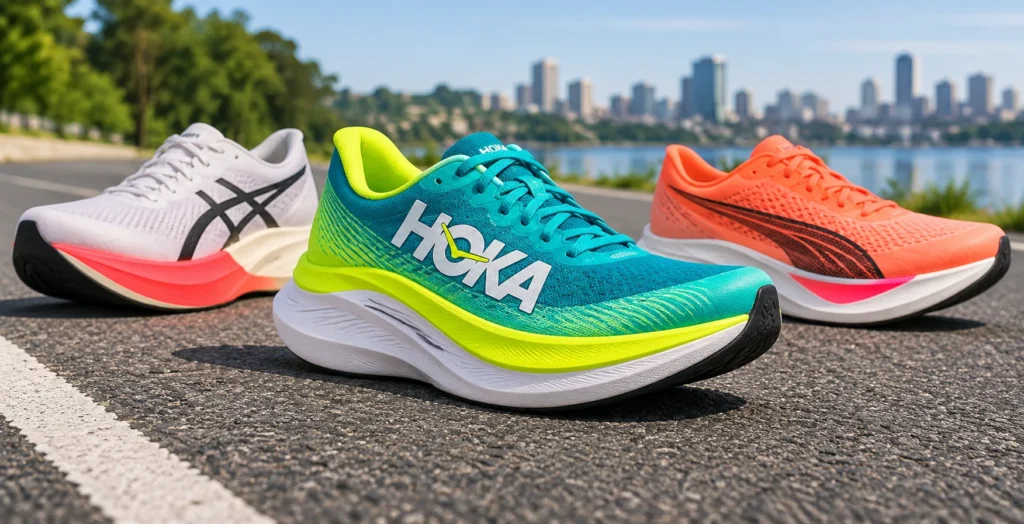
The Rocket X 3 is a sensible upgrade if you want a slightly more forgiving upper. The ASICS Metaspeed Sky Paris is substantially lighter.
Rocket X 2 vs HOKA Rocket X 3
The Rocket X 3 adds a higher listed drop and updated upper. RunRepeat’s lab measured a 92.0 mm fit width, up from 88.5 mm in the X 2. The newer shoe still runs snug.
Rocket X 2 vs ASICS Metaspeed Sky Paris
The ASICS wins on weight in RunRepeat’s comparison: 183 g versus 218 g measured. The HOKA offers a distinctive guided rocker, but fit and ride preference decide the winner.
| Feature | Rocket X 2 | Rocket X 3 | Metaspeed Sky Paris |
|---|---|---|---|
| Listed price | $250 | $250 | $250 |
| RunRepeat score | 87/100 | 88/100 | 88/100 |
| Lab weight | 218 g | 220 g | 183 g |
| Listed drop | 5 mm | 7 mm | 5 mm |
| Measured drop | 6.6 mm | 10.0 mm | 6.5 mm |
| Main reason to choose | Guided, low-drop feel | Updated upper | Lower mass |
HOKA Rocket X 2 Pricing: Is It Worth the Price?
At its $250 original price, the Rocket X 2 faces tougher value competition from newer racers. A genuine discount changes the decision.
A price tracker showed $149.95 on October 29, with limited sizes. That was its lowest tracked listing over 90 days, not a verified all-time low or Amazon price.
HOKA Rocket X 2 Carbon-Plated PEBA Road Racing Shoe
Who Should Buy the HOKA Rocket X 2?
Choose it if your foot shape suits a snug racer and you like a fast, guided roll. Its best use is hard road running.
- Neutral runners chasing a new road-race personal best.
- Narrow-footed runners who value a locked-in upper.
- Sale shoppers who can verify fit before racing.
- Your toes need extra width on long runs.
- You want a versatile shoe for easy daily miles.
What Are Real Buyers Saying About the HOKA Rocket X 2?
Public buyer feedback and independent wear tests praise the springy ride but disagree on the fit. A reliable current Amazon star average and verified review count were not available, so none is invented here.
Buyer sentiment: mixed on fit, positive on speed
- Lively cushioning supports fast efforts over longer road distances.
- Rocker helps maintain a smooth heel-to-toe transition.
- Secure midfoot can hold well through quick turns.
- Narrow front can squeeze toes during long races.
- Some users report tricky entry or heel looseness.
Final Verdict: Can the Rocket X 2 Still Compete?
Yes, with one major condition: its fit must work for you. The Rocket X 2 remains a credible race-day shoe thanks to its lively PEBA foam, strong independent racing score, and durable outsole rubber. Yet a narrow forefoot is not a small drawback when the race lasts hours. Newer rivals also weaken the case for paying full launch price. For narrow-footed runners who find a clear discount, it remains attractive. For wide-footed runners or those buying at $250, compare current alternatives first. The best carbon plate cannot compensate for cramped toes.
HOKA Rocket X 2 Responsive Carbon-Plated Race Day Shoe
Frequently Asked Questions
Is the HOKA Rocket X 2 good for marathons?
Yes, it can handle marathon racing for runners who like its fit and ride. RunRepeat measured 37.7 mm of heel cushioning and strong energy return. But several reviewers reported a narrow forefoot. Test it on a long run before trusting it for 26.2 miles.
Should I size up in the HOKA Rocket X 2?
Some runners benefit from going half a size up. RunRepeat’s fit voting leans small, although Doctors of Running testers wore their usual sizes. Measure your foot and try both sizes. Increasing length may not create enough width for a broad forefoot.
Is the Rocket X 2 a carbon-plated shoe?
Yes. HOKA places a carbon-fiber plate between two PEBA foam layers. That construction creates a stiff, responsive racing platform. RunRepeat measured 80.7 N in its older bending method, showing why the shoe feels different from a flexible daily trainer.
Can you wear the HOKA Rocket X 2 for daily training?
You can, but it makes more sense for races and fast workouts. RunRepeat scored it 92/100 for racing and only 55/100 for daily running. Its stiff plate, price, and snug fit are not ideal for relaxed everyday miles. A regular trainer is a better companion.
How durable is the HOKA Rocket X 2 outsole?
Its rubber performed well in one independent laboratory abrasion test. RunRepeat measured 0.5 mm of rubber loss against a 1.1 mm average. That does not set a guaranteed lifespan, since surfaces and running form vary. The thin upper also wore poorly in a separate test.
Is the HOKA Rocket X 2 better than the Rocket X 3?
Not for every runner. The Rocket X 3 has an updated upper and a higher listed drop of 7 mm versus 5 mm. Both launched near $250. The X 2 is appealing when discounted, while the X 3 deserves a try if you want a less restrictive fit.
Research sources: RunRepeat lab measurements, Doctors of Running wear test, and HOKA product specifications. Results differ by method and shoe size.
Affiliate disclosure: As an Amazon Associate, I earn from qualifying purchases. Links may earn a commission at no extra cost to you.


Steven is a former sportsperson and now a full-time businessman and research writer. He is the mastermind of this site, and he created this site to help people who need specialized shoes for different activities. When he was a sportsperson, he was very passionate about different types of shoes for his sports purpose. The passion he had for shoes at that time now turned into his profession. Besides his shoe business, he loves sharing his knowledge and experience with people and helping them maintain healthy feet.
More Posts